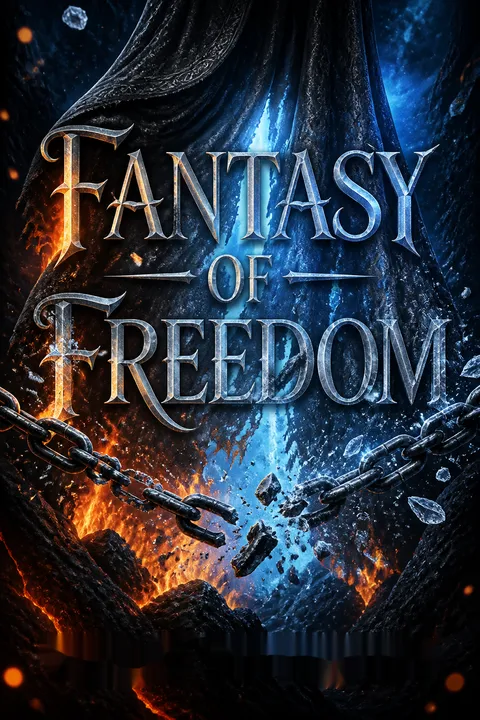


Plot Summary
The Veil Goes Public
Three weeks after helping defeat her mother’s army, Olina still hides in her room, recovering from a wound that nearly killed her. She fears the Bruma will reject her when they learn that their masked fighter, Frost, is also the blue-eyed Tatuma of Osolis and part Bruma. Jovan, king of Glacium and the man she loves, carries her into the food hall despite her panic.
Before his people, he names the ways Olina has saved them and kneels to pledge Glacium’s loyalty. The assembly follows, though one former friend, Jacquiline, remains absent. With the first public test survived, Olina’s political alliance can take shape: the Ire delegation will help her remove her mother from power.
Olina’s public unveiling is a political act made through a private wound. Her fear comes not simply from being seen, but from a lifetime in which visibility invited punishment. Jovan’s public kneeling alters that equation: he uses royal authority to make acceptance legible before the assembly can settle into prejudice. The scene also recasts leadership as mutual exposure. Olina risks rejection, while Jovan reveals grief for his dead brother and binds his kingdom to her future.
Names on a Scroll
Olina’s brother Olandon brings her a list of possible fathers, assembled from old peace delegations. Their aunt Jain has said the man was a gifted singer, but Olina is shaken by the prospect of discovering who conceived her and left her to her mother’s cruelty. At the war council, Ire leader Adox questions whether the Solati would accept a mixed-blood ruler after an invasion.
Olina persuades him that removing her mother could give all three peoples a future beyond exile and inherited hatred, so he agrees to join the campaign. Jovan then refuses to let Olina march with the army while her injuries still weaken her. She argues, but he insists she recover and follow later by Soar, forcing her to face a different kind of helplessness.
The father list turns ancestry into an unresolved political and emotional problem. Olina wants the knowledge, but fears that knowing will make abandonment more concrete. Adox’s challenge exposes a second uncertainty: military victory cannot itself confer legitimacy. Olina must persuade people who have reason to distrust her, not merely command them. Jovan’s decision to leave her behind protects her body while threatening her agency, repeating the structure of confinement she fears, even though his motive is care rather than control.
Five Weeks Apart
Jovan’s army leaves Glacium without Olina, and she watches him go with her brother, friends, and the pregnant Fiona’s husband, Sanjay. Once she is strong enough, Olina says farewell to the women who became her first female friends, leaves her dog Kaura in the care of a boy, and takes a Soar across the floating islands of the Oscala.
At the Ire, Adox reports that traps planted by Olina’s uncle have killed twenty Bruma. Olina flies onward and finds the marching army, where Jovan’s dangerous journey through the smoke to reach her confirms how deeply he feared losing her. She learns the survivors are still pressing toward Osolis, despite further deaths and the strain of the crossing.
The separation makes the cost of Olina’s political choice intimate. She does not leave Glacium as a visitor with a temporary mission; she leaves behind a home, friendships, and the ordinary care that helped her heal. Her Soar grants mobility but cannot erase danger, as the traps and deaths show. Jovan’s reunion with her is both romantic and revealing: his devotion is intense, yet their shared future remains unsettled. The army’s losses begin to turn the abstract campaign into a ledger of specific absences.
A Seedyr Arrow
After rejoining the soldiers, Olina flies ahead to train while the others travel on foot. An arrow punctures her Soar and the torn wings drop her toward a deep gap in the Oscala. She catches a narrow ledge, then hides as the archer circles overhead. When she sees his face, she recognizes one of the Ire traders whose Seedyr arrows match the fletching from the shot that killed Prince Kedrick.
Olina cannot escape before the smoke descends, but Hamish hears her calls and risks his own flight to pull her to safety. Jovan reaches her at the cave, shaken by how close he came to losing her. There, with the future still uncertain, Olina and Jovan finally choose physical intimacy.
The attack links Olina’s personal grief to the war’s new alliance: the murder clue points inside the Ire, the people she has just persuaded to join her. Her survival depends on Hamish’s help, a sharp reversal for someone who has built much of her identity around self-reliance. The rescue also changes her bond with Jovan. They stop treating desire as something postponed until politics are settled, though their intimacy cannot settle the question of where their lives will lead.
Home Beneath Smoke
The army crosses into Osolis, and Olina reaches the familiar ground where she was born. Her joy at touching the grass fades when scouts find the remains of villagers killed under her mother’s rule, including the orphanage matron who once helped her distribute food. Then her younger brothers, Ochave and Oberon, arrive with her old trainer Aquin.
They accept Olina’s uncovered face, and Aquin welcomes her as the heir he helped raise. He reports that Tatum Avanna is waiting in the Third Rotation, while the surrounding villages have been left without food or protection. Olina must now win her people’s support while keeping Jovan’s Bruma soldiers from appearing as another invading force.
The return makes home a place of recognition and accusation at once. The landscape welcomes Olina, but the dead reveal what her absence has cost. Her brothers’ arrival offers tenderness after the grim evidence, while Aquin restores a bond with the person who trained her to endure. Yet the immediate political challenge is not simply defeating Avanna. Olina must persuade the starving to distinguish a new alliance from another armed power arriving to take what little remains.
Food Before Allegiance
Olina’s forces seize a village food store guarded by her mother’s soldiers and place its contents in the open for the villagers. The people remain hidden until a severely malnourished baby wanders toward the tables.
Jovan catches the child and gently helps Olina feed her softened fruit, making the cost of Avanna’s rationing impossible to dismiss. When the villagers emerge, Olina apologizes and promises food and protection before explaining her mixed heritage.
She removes her veil, reveals her blue eyes, and identifies Avanna’s prejudice and secrecy as part of the machinery keeping Osolis hungry. Then she kneels before her people and asks them to rise with her. Aquin, Bruma soldiers, and Solati villagers kneel in response, beginning an alliance grounded in aid rather than conquest.
The baby changes the scene from political persuasion to bodily evidence. The villagers are not being asked to trust a claim about a better future while their immediate need goes unmet; they see an enemy king feed a child and an heir release stored food. Olina’s kneeling reverses the usual direction of sovereignty. She does not demand recognition first, but offers accountability and service. The gesture makes authority conditional on whether she can repair material harm.
The Brothers’ Scars
As Olina’s campaign reaches the next village, she frees her aunt Jain from the isolated house where Cassius kept her. Jain’s mind is damaged, but she recognizes Olina and greets her with an affection the girl never received from her own mother. Back at camp, Olina discovers scars around Oberon’s mouth.
He explains that Cassius sewed his lips shut after the child asked too many questions, leaving him unable to eat or drink until the stitches were removed. Ochave, who has learned to guard his twin with suspicion, confirms the week of pain. Olina promises Cassius will answer for what he did, while persuading the boys to remain with Jain and the evacuated villagers rather than enter the coming battle.
Jain and the twins expose different forms of family injury. Jain offers care despite being unable to provide stable memory, while the boys show how abuse has taught children to mistrust even the sister they love. Olina’s promise of revenge is emotionally understandable, but her decision to keep them away from battle is also an attempt to interrupt inherited violence. She cannot undo their suffering; she can refuse to make their safety depend on their usefulness as fighters.
Roscoe’s Blue Eyes
Jain recognizes Roscoe, a Glacium advisor, as the gifted singer connected to Olina’s birth. Roscoe admits that his wife died before the delegation and that he did not understand Olina was his daughter until she arrived in Glacium. Olina is furious that he had chances to tell her and did not, while his son Adnan must confront the discovery that his father hid a daughter from him.
Olina cannot yet accept Roscoe’s explanation or offer him closeness. Jovan lets her feel anger without insisting she make it reasonable. As the army prepares to move, Olina and Adnan begin cautiously to acknowledge their new sibling bond, even as both are hurt by Roscoe’s silence.
The revelation offers Olina a living parent but not the rescue she once imagined. Roscoe’s kindness in Glacium is recast as a history of missed opportunities, and the knowledge complicates rather than repairs their relationship. Adnan’s parallel injury prevents the scene from becoming a simple reunion fantasy: the secret has shaped both children differently. Jovan’s support matters because he does not prescribe forgiveness. He treats emotional inconsistency as part of processing harm, not as a failure of judgment.
Fire Closes the River
After Olina’s forces move into the Second Rotation, Avanna sets the dry land ablaze, cutting off the bridges and driving the Bruma toward the lake. Olina persuades Jovan to abandon supplies and follow a starving villager, Aguan, to a hidden tunnel connected to the underground springs.
The passage fills with water and forces the soldiers to submerge beneath a rock ledge; Jovan pushes Olina through when panic freezes her. Aguan guides hundreds to safety, then dies from exhaustion.
Two hundred seventy-three Bruma are lost, but Blizzard, Ice, and Sin survive by floating downriver on a log with other soldiers. The survivors have no equipment and little food, yet the Ire later arrive with supplies, allowing Olina and Jovan to continue the campaign.
Avanna’s fire attack weaponizes the landscape and turns the army’s advance into a survival crisis. Olina’s knowledge of Osolis and Aguan’s local knowledge become as decisive as military force. Jovan’s shove through the underwater passage is brutal but aimed at keeping the queue moving; care here cannot be gentle. Aguan’s death and the army’s losses prevent rescue from becoming a clean victory. Their survival carries grief and practical scarcity forward rather than erasing them.
The Assassin in the Forest
In the Kaur forest, tellio lizards kill soldiers who sleep without tents, worsening morale after the fire. Olina recognizes the fatal bites and orders the vulnerable Outer Rings men moved inside tents. The next morning, a glint draws her away from camp; an arrow wounds her arm, and the same Ire trader who attacked her Soar confronts her.
He admits he meant to kill Olina when Kedrick stepped in front of her, though he had been ordered to kill the prince. Olina fights the trained archer, exploits his arrogance, and brings him back bound. His capture gives Jovan and the Ire leader proof that the danger came from within their new alliance, but the reason for the killer’s obsession remains unclear.
The lizard deaths reveal how military arrangements distribute risk: the poorest soldiers, lacking tents, suffer first. Olina responds by changing conditions rather than blaming the dead for carelessness. Hayce’s admission then collapses the distinction between the past murder and the present campaign. Kedrick’s death was not an accident of battle, but neither does the confession explain why the assassin chose Olina as his intended target. The fight shifts her from pursuer of a clue to the person who can finally demand answers.
Aquin’s Hidden Son
As Hayce is questioned before the leaders, he identifies Aquin as his father. Aquin explains that he abandoned the infant to preserve his marriage and position, while Hayce grew up believing his father had chosen Olina over him. He also reveals that Avanna gave him a choice between saving Olina and saving Kedrick; he chose Olina, but never told her that her friend had been marked for death.
Olina breaks her trust with Aquin and runs from camp. Hayce later escapes long enough to stab Aquin, then is recaptured. Olina learns Aquin is badly wounded, but refuses to visit him. Before dawn, he warns her that enemy soldiers are behind the army and urges an immediate move.
Aquin’s revelation makes protection morally unstable. He saved Olina, but did so through secrecy and by accepting Kedrick’s death as the alternative. His history with Hayce shows the cost of choices made to preserve status and domestic respectability. Olina’s rejection of him is not a contradiction of her earlier gratitude; it marks the limit of what gratitude can excuse. Yet Aquin’s warning forces her to act before she has resolved the betrayal.
The Empty Palace
Olina and Hamish fly over the palace before battle, expecting to see Avanna’s army behind its walls, but find the Third Rotation and the palace grounds eerily empty. An unseen archer tears Olina’s Soar, and Hamish catches her before she falls. Jovan rebukes her recklessness, then listens when she says the palace has no visible defenders.
Later, a medic relays Aquin’s warning that troops are positioned behind them as well as at the palace. Olina and Jovan gather their commanders quietly and decide not to wait for dawn: they will attack the palace wall immediately, before the hidden army can close the trap. The order sends exhausted soldiers toward a battle in darkness.
The empty palace is not safety but an informational trap. Olina’s reconnaissance yields no enemy position, while the attempt on her life confirms that someone is watching. Aquin’s warning converts uncertainty into a time-sensitive choice. The leaders cannot wait for certainty without surrendering initiative, so they act on incomplete evidence. This is a different form of courage from Olina’s public unveiling: here she must accept that responsible leadership sometimes means choosing among risks rather than discovering a harmless option.
The Gate Gives Way
Olina’s combined army reaches the palace under cover of smoke and darkness. Solati archers rain arrows from the wall, so she climbs onto the rampart and shoots back, giving Bruma fighters time to raise ladders. The Ire take to the air once the smoke thins, while Jovan’s men batter the gate.
As the hidden Solati force arrives from the forest, the gate breaks and the allies rush inside, then barricade the entrance against the larger army. Olina fights beside Jovan across the meadow and helps direct the advance. She then climbs through an opening into her childhood rooms, where a palace cook has knocked out an archer with a pan. From the towers, Olina secures the upper floors and brings more allies into the palace.
The breach depends on coordinated differences rather than a single superior weapon. Bruma numbers, Ire flight, Solati knowledge of the palace, and Olina’s willingness to climb its walls all answer distinct tactical problems. Her return to the childhood tower is especially charged: the place once used to confine her becomes a route she controls. Yet entry is not triumph without cost. The battle continues beyond the gate, and each advance depends on keeping allies aligned under pressure.
The Tower’s Last Fall
Olina and Jovan reach the torture chamber, where Cassius surrounds himself with archers and carpets stained by Olina’s childhood blood. He offers her passage to her mother in exchange for leaving alone, and Olina accepts to prevent more soldiers dying in the room. In the tower, Avanna finally explains that Olina’s blue eyes recalled the man who left her and fed her terror of being exposed.
She acknowledges that Olina deserved love, but cannot undo what she did. Rather than face capture, Avanna climbs from the tower opening and falls to her death. Jovan and Olina return to Cassius, whom Olandon tortures before throwing him into the Fourth fire. The court and surviving soldiers submit to Olina’s rule.
Avanna’s explanation supplies context without converting cruelty into innocence. Her history helps Olina see the person beneath the Tatum, but the explanation does not repair the childhood she destroyed or the people she starved. The mother’s final choice denies Olina any clean reckoning, leaving her with grief as well as relief. Cassius, by contrast, faces punishment shaped by his victims’ anger. The contrast raises a difficult question about justice after tyranny: who gets to decide when accountability becomes revenge?
A Kingdom in Mourning
Olina declares peace among Solati, Bruma, and the Ire, then honors the dead along Lake Aveni. Malir’s body leads the funeral procession, and Olina grieves with his wife, Sadra. She later forgives Aquin as he lies dying, recalling the care that shaped her childhood; he dies during the night.
Olina also executes Hayce after he becomes a tool in a courtier’s attempt to discredit her, then strips that courtier of office and exposes officials who profited while villagers starved. She appoints the palace cook, Afranca, as Satum of Resources and redistributes food. Though Roscoe offers condolences, Olina keeps him at a distance, unable to replace Aquin with the father who failed to claim her.
The aftermath refuses to treat the crown as a reward that cancels grief. Olina’s first duties include mourning, restoring food, and deciding how to handle people who exploit the unsettled transition. Her forgiveness of Aquin is personal, not a declaration that his choices were harmless. Similarly, her treatment of Hayce rejects both endless vengeance and passive sympathy: she sees his history but also the danger he poses. Replacing a corrupt official with a village cook turns reform into a concrete redistribution of authority.
A Chosen Home
Jovan and Olina’s grief and duties pull them apart; after he leaves for Glacium, she governs Osolis and concludes that her brother is better suited to lead their people. When Jovan returns, he asks her to join him, but Olina refuses to let him abandon his kingdom. She tells him she had already planned to abdicate and leave once Osolis was stable.
Olina gives the throne to Olandon and flies toward Glacium with the twins, choosing a life beyond the role that defined her birth. At the castle, Jovan asks her to marry him through Bruma customs, and she accepts. Their reunion is not a retreat from responsibility: Olandon takes up the work of ruling, while Olina claims the freedom to choose where she belongs.
Olina’s departure completes a different kind of victory from the overthrow of Avanna. She does not confuse survival with an obligation to remain on the throne forever. By entrusting Osolis to Olandon, she recognizes that leadership can mean preparing a successor rather than making oneself indispensable. Jovan’s proposal works because it follows her choice, not because it rescues her from it. The ending therefore makes belonging something chosen and reciprocal, rather than a debt imposed by blood or title.
Epilogue
Olina turns her wedding celebration into a Dome fight with Jovan, hoping to revive the fighting arena and display the skill of Alzona’s women fighters. During the bout, Sadra interrupts with news that Olina is pregnant. Olina and Jovan realize the child was conceived months earlier, after their reunion, and the king abandons the fight to celebrate the future they will share.
Olina vows to raise their child with the protection and freedom she lacked. The announcement turns their hard-won peace into a family beginning, while the public arena lets Olina carry part of her old life into her new one.
The pregnancy revelation joins political repair to intimate inheritance. Olina’s first response is not simply delight; she imagines the kind of mother she intends to be, making her childhood history relevant without allowing it to dictate the child’s future. The Dome setting matters too. Rather than surrendering the identity she built as Frost, she brings it into the celebration and challenges Jovan in public. Their partnership accommodates strength and play, not just his protection of her. The ending imagines freedom as something transmitted through care, not secured by escape alone.
Analysis
Fantasy of Freedom treats identity as something shaped by both the body and the institutions that interpret it. Olina’s blue eyes are not inherently dangerous; their political force comes from a culture that has taught people to read mixed heritage as contamination. The veil therefore operates at two levels. It is a mechanism of personal abuse, and a public technology for preserving racial hierarchy. When Olina removes it, she does not simply reveal a hidden self. She makes the old system’s assumptions visible and forces the people around her to decide whether action or ancestry will define a ruler.
The novel also refuses a clean division between private love and public duty. Jovan’s care can be sustaining, but his protective instincts sometimes repeat the logic of confinement that Olina has spent her life resisting. Their relationship becomes viable only when each recognizes that love cannot substitute for the other person’s agency. Olina’s choice to leave Osolis after making it safer extends that principle into leadership. She refuses the idea that her suffering obligates her to remain permanently available to her people.
Family provides the story’s most difficult study of inherited harm. Avanna’s history helps explain how fear and coercion distorted her, while the damage she inflicts remains real and answerable. Aquin saves Olina but conceals the price of that choice; Hayce’s grievance is understandable but does not excuse his violence. The novel’s moral distinctions depend on what people do with pain, not whether they have suffered. Its political hope is similarly concrete: food is released, corrupt officials lose power, the Ire become visible allies, and authority is shared. Peace is not declared into existence. It is built through repeated decisions that make survival less dependent on bloodline, secrecy, or force.
Review Summary
Fantasy of Freedom concludes The Tainted Accords series with a satisfying ending. Readers praise the character development, world-building, and emotional depth. The final battle against Olina's mother is intense, with unexpected twists. While some found the plot resolution underwhelming, most enjoyed the romance between Olina and Jovan. The book balances action, humor, and heartfelt moments. Fans appreciate how loose ends are tied up and commend the author's writing style. Overall, it's considered a strong finale to a beloved series.
People Also Read

Characters
Olina
The veiled heirOlina is the central figure whose life crosses the hostile worlds of Osolis, Glacium, and the Ire. Raised under a veil and trained to anticipate punishment, she becomes a fighter, negotiator, and claimant to leadership without losing her habit of questioning her own judgment. Her instinct is to protect people in immediate danger, whether a child, a starving village, or a friend in battle. That compassion can become self-sacrifice, and she sometimes treats her own needs as less urgent than everyone else’s. Her strongest growth comes from learning that feeling fear, anger, and grief does not make her unfit to lead. She seeks a future in which mixed heritage is no longer a sentence to shame or exile.
Jovan
Glacium’s blunt kingJovan rules Glacium with directness, physical confidence, and a fierce sense of responsibility for his people. His devotion to Olina is evident in his actions, though his instinct to protect can become controlling when he is afraid. He is a grieving brother as well as a king, and the loss of Kedrick gives the campaign a personal cost that he rarely displays openly. Jovan trusts Olina’s judgment even when her decisions frighten him, and he learns that loving her cannot mean choosing her risks for her. His loyalty is practical and public: he uses his authority to make alliances visible, while struggling to reconcile the demands of two worlds with his desire for a life beside her.
Olandon
Olina’s wary brotherOlandon is Olina’s younger brother and a Solati prince shaped by the same dangerous household, though his experience has differed from hers. He is protective, observant, and often skeptical of Olina’s choices, partly because he fears losing her and partly because he has inherited the assumptions of his world. Time among the Bruma challenges those assumptions and teaches him to weigh consequences beyond his own people. His loyalty to Olina is deep, but it does not prevent them from disagreeing. He is also a brother to the twins, and his care for them gives him a role beyond court politics. Olandon’s emerging judgment makes him a meaningful partner in the struggle to change Osolis.
Adox
The Ire’s cautious elderAdox leads the mixed-blood Ire community and carries the memory of generations pushed into hiding. His caution is not cowardice; he has seen how hopeful plans can expose his people to retaliation. He tests Olina’s political convictions before committing the Ire to her campaign, needing evidence that she understands the danger as well as the promise. His experience makes him a counterweight to Jovan’s urgency and Olina’s idealism. Adox values practical protections, including the repair of the Oscala route and the safety of his people, while remaining capable of imagining a society that no longer requires concealment.
Aquin
Olina’s stern trainerAquin is the old Solati trainer who helped raise Olina and taught her how to survive physically and mentally. Stern, disciplined, and sparing with affection, he understands that preparation can be a form of care. He also knows more about Osolis’s history and politics than he initially reveals, making him a keeper of both useful knowledge and painful secrets. His relationships with Olina and Olandon are shaped by the authority he exercises over them, but also by years of training, protection, and shared hardship. Aquin’s guiding principle is that people must become capable of facing what awaits them, even when his own choices complicate that lesson.
Roscoe
The court’s quiet advisorRoscoe is a trusted Glacium advisor known for his discretion and considerate manner. He helps manage the king’s court and has a thoughtful relationship with his son, Adnan. Roscoe is not a forceful presence, but his judgment and knowledge of people make him influential in a crisis. He tends to soften conflict rather than dominate it, which can be a strength in diplomacy and a weakness when truth requires directness. His affection for music and his attentive manner suggest a man who listens closely, though listening alone does not always resolve the harm caused by silence.
Hayce
An Ire trader and archerHayce is an Ire trader whose journeys between communities give him unusual access to both Osolis and the hidden Ire world. He is physically trained, patient, and capable of concealing strong convictions behind an ordinary public role. His history makes him sensitive to the humiliation and abandonment experienced by people cast out of their birth worlds. That grievance shapes how he sees the Solati and Bruma, though his sense of injury does not make him a reliable judge of what justice requires.
Tatum Avanna
Osolis’s guarded rulerAvanna rules Osolis through secrecy, hierarchy, and a rigid hatred of mixed heritage. She is intelligent enough to plan around an opponent’s expectations, and her command of the court has allowed her to maintain power despite the suffering of her people. She values image and authority, but fear sits beneath both. Her treatment of Olina reveals a person whose private wounds have become public policy, though understanding the source of her cruelty does not excuse its consequences. Avanna embodies the danger of turning personal shame into a system that punishes everyone around it.
Cassius
The Tatum’s ruthless brotherCassius is Avanna’s brother and a powerful figure in the machinery of Osolis’s court. He uses fear, punishment, and family leverage to enforce control, treating the vulnerable as instruments rather than people. His authority is sustained by his closeness to the ruler and by the secrets he possesses. Unlike a distant political schemer, Cassius’s cruelty reaches directly into the lives of Olina’s family and the people who try to help her. He represents the violence that can flourish when a ruler delegates harm to someone who enjoys exercising power.
Kedrick
The prince who believed in peaceKedrick is Jovan’s younger brother and a prince who approaches Olina with curiosity rather than inherited suspicion. His willingness to know her as an individual gives her an early experience of being seen without the veil defining the encounter. He believes the rival worlds might one day cooperate, a hope that places him at odds with the assumptions surrounding his position. Kedrick’s warmth and idealism affect both Olina and Jovan, making his memory an emotional measure of what the war has taken and what a lasting peace might honor.
Adnan
The quiet inventorAdnan is a thoughtful Glacium inventor and Roscoe’s son. He is kind, reserved, and more comfortable with practical work than emotional confrontation. His intelligence shows in how carefully he notices patterns and how readily he considers a problem from several angles. Adnan’s relationship with Olina grows from shared uncertainty and a cautious recognition of kinship. He is not naturally drawn to violence, yet he accepts responsibility when the people he cares about are at risk. His gentleness is not passivity; it is a preference for understanding before acting.
Aquin
AquinAquin is already listed above as Olina’s trainer and should not be repeated.
Ochave
The fiercely protective twinOchave is one of Olina’s young twin brothers, quick to defend himself and even quicker to protect Oberon. His suspicion reflects what the children have endured, not a lack of love for their sister. He has learned to test promises before trusting them, and anger is one of the few tools he has for expressing fear. Beneath that guardedness, Ochave remains a child who wants his family near and safe. His bond with Oberon is the center of his world.
Oberon
The questioning twinOberon is Olina’s younger twin brother, thoughtful and perceptive, with a habit of noticing details others miss. He is more willing than Ochave to reach toward Olina, but his trust has been shaken by the violence surrounding his childhood. His questions arise from curiosity and a desire to understand, qualities that make him vulnerable in a household where curiosity is punished. Oberon’s quiet intelligence gives him a different kind of courage from his brother’s open protectiveness.
Jain
The affectionate auntJain is Olina’s aunt, a woman damaged by long abuse but still capable of warmth and recognition. Her moods and memories can shift, yet her affection for Olina remains unmistakable. Jain offers the tenderness Olina has long associated with a mother’s care, though their relationship is complicated by what Jain has survived. She carries fragments of the family history that others have concealed, making her presence both emotionally sustaining and politically significant.
Hamish
The Ire scout and archerHamish is an Ire ally who brings warning and skill to the campaign. He is brave, capable in the air, and more emotionally perceptive than his teasing manner sometimes suggests. His friendship with Olina has survived tension, including feelings that she does not return in the same way. Hamish continues to help her without making his disappointment the price of his loyalty. His courage is practical: he acts when someone is in danger, even when the rescue demands skill and personal risk.
Sanjay
The teasing family manSanjay is a spirited Bruma fighter, Fiona’s husband, and one of Olina’s trusted friends. He uses humor and pranks to puncture fear, but his attachment to his family gives those jokes a tender center. The possibility of leaving Fiona and their child without him weighs on him even as he insists on fighting beside his friends. Sanjay’s wit can irritate the people around him, yet it also restores the ordinary rhythms of friendship to a military camp.
Fiona
Sanjay’s expectant wifeFiona is a warm, emotionally open member of the Glacium assembly and Sanjay’s pregnant wife. She does not hide fear or affection, making her a vivid counterpoint to the secrecy that shaped Olina’s childhood. Fiona’s trust in Olina gives the protagonist a responsibility that feels personal rather than ceremonial. She represents the families waiting beyond the campaign and the future that makes the soldiers’ sacrifices matter.
Malir
Glacium’s field commanderMalir commands Glacium’s army and is Sadra’s husband. Experienced and disciplined, he knows how to move a force without confusing confidence with recklessness. He once served as Kedrick’s guard and has protected Olina during dangerous journeys, earning respect through competence rather than display. His private life gives the military campaign a human face: he is not only a commander but also a husband whose absence would reshape a family.
Sadra
The healer and steadfast wifeSadra is a healer who tends Olina after her near-fatal injury and does not hesitate to challenge her when she pushes too hard. Her severity comes from care, and she expects recovery to be treated as part of survival rather than weakness. As Malir’s wife, she understands the risks of loving someone whose work places him in danger. She offers Olina friendship grounded in practical help and honest concern.
Shard
Olina’s loyal fighterShard is a fighter from Olina’s old barracks who becomes a dependable advisor and companion. He is observant, dryly funny, and unusually good at reading when she needs support rather than instruction. His loyalty is expressed through action: he helps organize soldiers, protects the people around Olina, and remains steady when plans break down. Shard’s humor also gives the group a way to release tension without pretending danger has disappeared.
Sin
The irreverent showmanSin is a striking, self-assured fighter from the Outer Rings who treats charm as both entertainment and armor. He enjoys provoking Olina and flirting with nearly everyone, but his instincts in a crisis are sharper than his vanity suggests. Beneath the performance is a skilled survivor who understands how attention can be directed and how a crowd can be moved. His comic presence complicates the assumption that levity means a lack of courage.
Rian
The reformed Elite soldierRian is a former member of Avanna’s Elite who changes allegiance and offers Olina knowledge of Osolis’s military and political conditions. He is restrained and difficult to read, aware that trust cannot be demanded simply because he has chosen a new side. His earlier moments of mercy toward Olina suggest a moral independence that survived inside a brutal institution. Rian works to prove that a person can serve justice without denying the harm of their past.
Afranca
The palace cookAfranca is the palace cook and the sister of the murdered orphanage matron. She is blunt, courageous, and unwilling to treat survival as a reason to abandon what she believes is right. When soldiers threaten her home, she acts with the tools she has rather than waiting for a hero to arrive. Her practical loyalty to ordinary people makes her a valuable voice beyond the court.
Aguan
The village guideAguan is a frail villager who knows a hidden route beneath Osolis. His strength is not measured by physical power or military rank, but by his willingness to guide strangers through danger when doing so may cost him his life. He represents the knowledge held by people whom rulers overlook, and the quiet heroism that can redirect an entire war.
Ogeorg
The profiteering SatumOgeorg is a wealthy Solati official associated with the distribution of resources. He represents a court culture in which proximity to power can become a means of personal gain. His polished manner disguises a self-interest that flourishes while ordinary villagers suffer. Ogeorg’s place in the court shows why a change of ruler alone cannot guarantee a change in how people are governed.
Plot Devices
Olina’s veil
Concealment becomes disclosureThe veil hides Olina’s blue eyes, which reveal her mixed heritage and threaten her position in a society trained to condemn mixed blood. It begins as a protection imposed on her by her mother and becomes a source of fear she must confront. Removing it is both a personal act of reclaiming her face and a political act that exposes the lie behind Avanna’s rule. When Olina removes it before the villagers, she risks losing their support but gains the chance to make her identity part of a new public order.
The Soar
Flight across divided worldsThe Soar is a wearable gliding device that lets people cross the dangerous floating islands of the Oscala more quickly than the old mapped route. It gives Olina independence when she must catch up with Jovan’s army, and it allows the Ire to move soldiers and supplies between worlds. Its vulnerability also makes flight dangerous: a torn wing can turn an ordinary journey into a deadly fall. The Soar therefore represents both newfound mobility and the fact that freedom still depends on fragile tools and other people’s help.
The Oscala
A passage that exacts a priceThe Oscala is a maze of floating islands between Osolis and Glacium, made dangerous by gaps, smoke, and the need to find safe crossings. It controls the pace of the campaign and makes travel a military obstacle rather than a simple change of scenery. Cassius’s traps kill soldiers on the route, while the Ire’s ability to fly changes how quickly the allied armies can move. The smoke also forces people to shelter in caves, shaping both the march and the ambushes that follow.
Kedrick’s arrow fletching
A murder clue finds its makerOlina keeps a broken piece of arrow fletching from the shot that killed Kedrick. The material points toward Seedyr wood, which eventually connects the killing to the Ire traders. Because the clue is physical, it carries evidence across time even when the people involved conceal their motives. It draws Olina into a second attack and gives her something concrete to present when she accuses a member of her new alliance. The fletching links personal grief to the political danger of deciding whom to trust.
The underground springs
A hidden route through fireThe underground springs connect parts of Osolis beneath the surface. Aguan knows a flooded passage that offers the army a possible escape when Avanna’s wildfire blocks the bridges and surrounds the soldiers. Using the route requires the exhausted force to enter cramped darkness and pass underwater beneath a rock barrier. Olina’s panic nearly stops the line, but Jovan pushes her through so those behind her can survive. The passage saves many soldiers while costing Aguan his life and leaving the survivors without their supplies.
The Tainted Accords Series


About the Author
Other books by Kelly St. Clare



Download PDF
Download EPUB
.epub digital book format is ideal for reading ebooks on phones, tablets, and e-readers.








