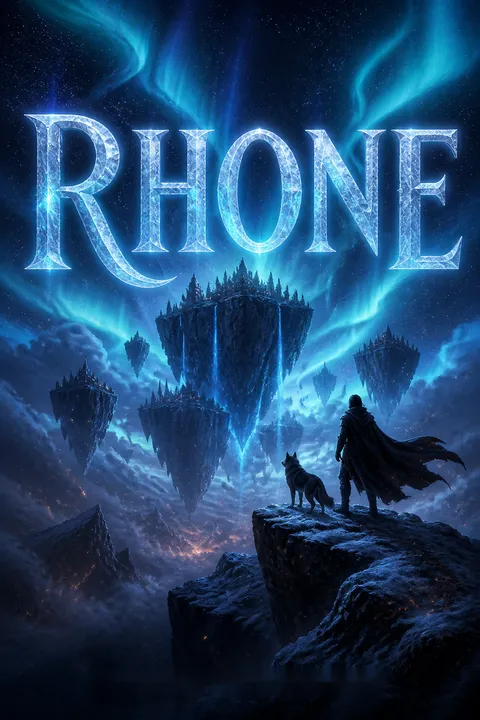


Plot Summary
A Wedding, Then Exile
At nearly twenty-five, Rhone has a place in Glacium Castle, a team of sled dogs, and no life he can imagine beyond loving Queen Olina from a distance. Watching her marry King Jovan ends the hope he has nursed since escorting her as a hostage two years earlier. He packs food and water, leaves his lead dog Leo with the kennel master, and asks his trusted friend Gyn to take over his royal messages.
Roscoe, Jovan’s adviser and Olina’s father, carries the king’s warning: Rhone may return only if he can accept the queen’s marriage. Rhone respects Jovan for once sparing his life, but heartbreak drives him out of the castle and toward the floating islands of the Great Stairway.
Rhone’s departure is less a romantic gesture than an attempt to escape the self he has built around an impossible attachment. His practical life is not empty: he has work, skill, and bonds with his dogs. Yet he treats those ties as insufficient because he has mistaken longing for purpose. Jovan’s warning makes the emotional problem public, while Roscoe’s personal connection to both men complicates the boundary between loyalty and rivalry. Rhone leaves before he can be rejected directly, preserving his pride at the cost of abandoning the community that has quietly become his home.
The Scout in Goggles
On the Great Stairway, Rhone meets Monikah, an Ire scout who flies between islands in a Soar and wears oversized goggles she invented. She is supposed to report travelers to her leader, Yarik, but her curiosity about Rhone overwhelms her duty. After she pesters him, he gives his name in exchange for her promise to leave.
She returns the next day to apologize, explains that one of her experimental Soars injured Hamish, and coaxes Rhone into admitting he loves Olina, who has chosen Jovan. Monikah bluntly points out that he never gave Olina the chance to know his feelings. Rhone, stung by her accuracy and her persistence, lashes out and orders her away. She flies off in tears, leaving him with the guilt he hoped solitude would silence.
Monikah’s humor initially looks like a refusal to recognize other people’s boundaries, but it also exposes the narrowness of Rhone’s emotional defenses. She asks the question he has been avoiding, while he responds as if being understood were another form of attack. His cruelty is not evidence that he feels nothing; it is an attempt to regain control after her words make his private fantasy seem plainly inadequate. The scene establishes their central mismatch: Monikah reaches toward people by questioning them, while Rhone protects himself by withholding. His later guilt marks the first crack in that defense.
The Pear on the Stair
Unable to stop thinking about Monikah’s hurt, Rhone leaves a pear where she might find it, his awkward apology disguised as a practical kindness. As he continues across the unstable islands, memories return from childhood: his grandmother Terah, a painter who could become absorbed in visions others mistook for absence, and the boys who mocked her while young Rhone tried to protect her.
He remembers feeling ashamed and helpless when he could not make them stop. Distracted and walking down crumbling stairs, Rhone misses his footing and falls into the Oscala below.
The impact leaves him bloodied and unconscious. His childhood memories show why he reacts so fiercely to ridicule, but his fall makes the danger immediate: this time, someone else may have to decide whether he can be saved.
The memories do not merely explain Rhone’s toughness; they reveal the cost of his early role as a child protector. He loved Terah but could not shield her from mockery, and the shame of that failure hardened into contempt for people who demean what they do not understand. Leaving Monikah the pear is a small, indirect act of repair, safer than apologizing face to face. Then the fall strips away his control altogether. The sequence links emotional distraction with physical vulnerability without treating either as weakness: Rhone’s difficulty accepting care is now a problem with literal consequences.
A Debt Paid in Bruises
Monikah finds Rhone after searching the islands for hours, and his pear tells her he regrets their quarrel. She tends his head wound, then risks carrying him to the Ire in her experimental Soar, which nearly crashes under their combined weight.
When Yarik learns she concealed Rhone’s presence, he extends her exile. Rhone steps between Monikah and the men sent to remove her, then defeats six of them without killing anyone. Yarik lets her stay if Rhone remains in the Ire for five days.
During his recovery, Rhone remembers the worse loss that followed Terah’s death: a gang took his childhood home and burned her paintings while he watched. Monikah’s community treats his memories with more care than he expects, and he begins to see her eccentricity as something worth defending.
Rhone’s violence here is both protective and morally bounded. He does not fight because he enjoys domination alone; he refuses to let Monikah be punished for saving him, and he stops short of killing the men he overcomes. The Ire’s response offers a sharp contrast to the social world he knows: Monikah may be teased, yet her community remains a place people depend on, and her inventions serve that shared life. The memory of the paintings deepens the stakes of recognition. Rhone knows what it means to lose a person’s work along with the person, which helps him understand why Monikah needs room to create.
The Offer on Sheep Island
While helping Monikah feed sheep and handle other communal chores, Rhone sees the Ire’s purpose in daily form: people share work because their ancestors needed one another to survive exile. He invites Monikah to visit Glacium and experience his dogs.
Yarik then explains that the three worlds are planning annual Interworld Games and asks Rhone to train an Ire team, partly to help the people defend themselves against attacks. Rhone refuses, insisting Glacium is his home, though he has no clear plan for what he will do there. As he leaves, Olina and Jovan arrive.
Rhone sees the queen he once loved, now pregnant and unmistakably devoted to her husband; Monikah notices his reaction. When she later disappears into an invention and misses him for three days, Rhone learns that even affection cannot make her stop following an idea.
The Ire’s communal labor gives Rhone a practical alternative to the solitary self-reliance he has mistaken for strength. Yarik’s offer is persuasive precisely because it joins Rhone’s known competence to a collective purpose, but Rhone is not ready to accept work that would require him to admit he has been lost. His refusal is therefore less a rejection of the Ire than a defense of an identity built around Glacium, his dogs, and old obligations. Olina’s arrival further tests his attachment to the past. His anger persists, but Monikah’s independent attention reveals that a new bond cannot be sustained by making her responsible for his recovery.
The Kiss Before the Race
Rhone brings Monikah to Glacium Castle, where she meets Adnan, Olina’s inventive half-brother, and quickly finds someone eager to discuss her designs. Rhone is surprised by his jealousy, especially when Adnan invites her to work with him.
He makes Monikah his partner for the coming sled race, despite Olina’s earlier interest in joining him. Training together brings them close; Monikah balances naturally on the sled, and Rhone realizes he would rather race with her than anyone else. After dinner, he kisses her outside her room.
She kisses him back, then leaves him wondering what their connection means. The next morning, Monikah is working with Adnan on a new project. Rhone takes the dogs into the Outer Rings, where he visits the ruined home of his childhood and finds Malt, one of the boys who drove him out.
Rhone’s jealousy matters because it reveals a new emotional investment, but the kiss does not instantly make him more skillful at intimacy. He still confuses private feeling with something he can manage alone. His trip to the Outer Rings is meaningful in itself: rather than merely fleeing Monikah, he returns to the scene where his childhood security collapsed and discovers that the past has not been waiting for him to reclaim it. His impulse to leave after the kiss is partly a search for context, but because he does not tell Monikah, the act reproduces the very abandonment he is trying to understand.
Back to the Burned House
Inside the decaying house, Rhone recognizes Malt as the boy who took his home and helped destroy Terah’s paintings. Malt has grown into a frightened, impoverished man. Rhone feels no urge to punish him; seeing what the Outer Rings have made of both their lives gives Rhone a measure of closure.
Back at the castle, he finds Monikah hurt and furious because he left the morning after kissing her without explanation. She had spent days waiting and wondering whether he meant to return. Rhone has failed to understand the consequence of his silence until she says it plainly.
Adnan, sent by Fiona and Jacky, confirms that Monikah cares for Rhone and that his jealousy was unnecessary. Before the race, Rhone prepares to explain himself, but the crowded start and their unresolved hurt leave the conversation waiting.
Meeting Malt lets Rhone revise an old moral story without denying the harm done. The man’s poverty does not undo the loss of Terah’s art, but it prevents Rhone from treating revenge as the only form of justice. The more urgent reckoning is with Monikah. Rhone’s disappearance repeats the abandonment he suffered as a child, this time by making another person bear the uncertainty he once endured. Adnan’s message matters less as romantic confirmation than as evidence that Rhone has been interpreting silence through fear. He must now replace inference with explanation, a practice that has never come naturally to him.
The Race Starts in Goggles
At the start of Glacium’s annual sled race, the crowd overwhelms Monikah, who has never faced so many spectators. Rhone steadies her, checks the dogs and sled, and listens as King Jovan announces the competitors.
Monikah gives Rhone a pair of her wind-blocking goggles; he puts them on despite the crowd’s laughter. Their team surges through the opening bottleneck ahead of the others, and Rhone’s confidence in her invention proves justified.
At their nighttime camp, he finally explains that he visited the Outer Rings to face the childhood past he had left unresolved, not to abandon her. Monikah accepts his apology but asks him to tell her before disappearing next time. They share the tent and begin the second day with their affection no longer hidden behind guesses.
The race turns Monikah’s inventions into public evidence of her competence. Rhone’s willingness to wear the goggles is a small but visible departure from his old habit of guarding his pride, and it matters that he accepts help from the person whose work others dismiss. Their conversation at camp repairs the relationship through information rather than grand declarations. Monikah’s request is specific because the injury was specific: she does not demand that Rhone stop needing solitude, only that he not make her interpret unexplained absence as rejection. Their intimacy begins to depend on negotiated trust instead of projection.
Leo Falls Behind
The next morning, Rhone’s dogs pull hard through fresh snow while Monikah tells him she wants to win. A broken footboard makes the sled crash and sends both riders tumbling. The team stops, but lead dog Leo has been trampled in the tangle; both his back legs are broken.
Rhone understands that Leo cannot survive as a sled dog and decides he must put him down rather than prolong his pain. Other racers offer assistance, but Rhone sends them on, unwilling to waste their chance at victory when he can manage the injured dog himself.
He gives up the race, rearranges the team, and places Leo in the sled. Monikah rides beside the dog on the journey back, stroking him gently while Rhone drives home with the loss of his closest animal companion ahead of him.
The race’s mechanical failure becomes an ethical test rather than a sports setback. Rhone’s identity is closely bound to his dogs, and Leo is not interchangeable with a damaged piece of equipment or a lost chance at the prize. By withdrawing, Rhone chooses care over the achievement that has long provided him with structure and pride. His refusal of help is more complicated: he wants to protect the other racers’ opportunity, but also defaults to carrying pain alone. Monikah’s presence beside Leo quietly challenges that isolation. She does not fix the immediate loss; she accompanies Rhone through it.
The Ire Becomes Home
Back at the castle, Rhone prepares to put Leo down, convinced that keeping the dog alive would only extend his suffering. Monikah arrives with Adnan and a wooden wheeled support they designed so Leo can move using his front legs after his wounds heal. A healer is already treating him.
Rhone’s relief turns into a decision he had been circling for days: Leo can remain in Glacium with Gyn, while Rhone returns to the Ire with Monikah and accepts Yarik’s offer to train its fighters for the Interworld Games. Olina agrees to return most of Terah’s paintings from the castle, keeping only one that reminds Jovan of his mother. Rhone accepts that choice, takes Monikah’s hand, and leaves the castle with a place to build rather than a past to escape.
The wooden wheels answer the story’s central question about what care can do when it cannot restore the old form of a life. Leo will not run as before, but Monikah and Adnan refuse to equate changed ability with uselessness. Rhone’s choice follows the same logic: he need not abandon his dogs or memories to pursue a new vocation, and he can honor Jovan’s attachment to the painting rather than insist that every loss be reversed. The Ire becomes home not through romance alone but through work Rhone can choose, a community he can serve, and a partner whose difference he has learned to value.
Epilogue
Two weeks into training, Rhone drives the remaining Ire recruits through punishing exercises while Leo moves among them on his new wheels. The group has already thinned, but Rhone sees strength and agility in those who remain and plans to prepare them seriously for the Interworld Games.
Monikah still tests her inventions and tries to surprise him from the air; he keeps outmaneuvering her, though she promises to improve her Soar. When Rhone tells her he loves her in front of the sweaty trainees, she insists that such a declaration deserves flowers and dinner. Flowers do not grow on their island, but Rhone is willing to find another way to make the gesture.
The epilogue measures change through routine rather than a ceremonial victory. Rhone is now responsible for teaching people who were once treated as outsiders, while Leo’s wheeled mobility makes him part of the training ground instead of a symbol of what has been lost. Monikah remains inventive, playful, and difficult to predict; Rhone’s growth does not require her to become more conventional. His public declaration of love is earnest but socially clumsy, and her demand for flowers turns intimacy into a continuing exchange rather than a settled reward. The Games lie ahead, keeping the ending open to work, risk, and shared ambition.
Analysis
Rhone begins with a narrow equation: love means longing for Olina, while purpose means fulfilling the duties he already knows. Monikah disrupts that equation not by curing his grief, but by giving his guarded attention somewhere new to go. Their bond grows through concrete acts: she searches for him after the fall, he defends her from Yarik’s men, and they learn to share work and risk. The story’s interest in invention echoes this emotional development. Monikah does not demand that people or objects remain unchanged; she asks what else they might become if someone bothered to understand the problem.
The novel also tests the difference between surviving and belonging. Rhone’s childhood taught him that shelters can be taken, art destroyed, and kindness overlooked. He turns those lessons into independence, but his return to the Outer Rings shows that revisiting the past need not mean reenacting its violence. Malt is not redeemed by the passage of time, yet Rhone can refuse revenge without pretending the original harm was harmless. His memories remain, but they no longer dictate every choice.
The ending joins emotional commitment to collective work. Rhone does not choose the Ire simply because Monikah is there; he accepts a role that applies his fighting experience to a community denied equal standing. Leo’s wheeled support makes the same argument in miniature: care can create a different future without restoring the old one. By returning most of Terah’s paintings while leaving Jovan the image tied to his mother, Rhone also learns that love does not require possessing every reminder. His new home is built from chosen responsibility, mutual respect, and room for difference.
Review Summary
Rhone is a novella in The Tainted Accords series that has received mostly positive reviews. Readers appreciate the character development of Rhone and his unexpected love interest, Monikah. Many found the story compelling and enjoyed learning more about Rhone's background. Some readers felt the romance developed too quickly, but overall praised the novella for its humor, depth, and connection to the main series. The book's opening surprised many fans and prompted them to reconsider earlier books in the series.
People Also Read
Characters
Rhone
Guarded fighter, loyal handlerA formidable Bruma fighter who drives Glacium’s sled dogs and carries the habits of a childhood shaped by poverty, violence, and early loss. Rhone values competence and loyalty, but treats self-sufficiency as protection against being hurt. His dry manner conceals a sharp eye for unfairness, especially when people mock those they do not understand. He is slow to name his feelings and quicker to act on them through practical gestures, whether defending someone or caring for an animal. His central tension is between the life he has inherited through duty and the purpose he might choose for himself.
Monikah
Restless Ire inventorAn Ire scout with a vivid mind, a habit of asking questions, and a talent for making useful objects from problems other people accept as permanent. Her experimental Soars and other inventions can be imperfect, but her curiosity is inseparable from her desire to make life easier for her community. Monikah can be impulsive and socially unfiltered, yet she is also attentive to fear and grief when someone lets her close. Others often mistake her unconventional thinking for foolishness. She needs both creative freedom and meaningful connection, and resists being asked to sacrifice one for the other.
Olina
Glacium's compassionate queenQueen of Glacium, married to Jovan and loved from afar by Rhone. Olina is warm toward people across social and racial boundaries, a quality that helped draw Rhone to her. She is also direct, physically capable, and not easily reduced to a ceremonial role. Her marriage and public responsibilities shape how others interpret their relationship with her, while her gentleness can sometimes obscure the firmness beneath it.
Jovan
Protective Glacium kingGlacium’s king and Olina’s husband, Jovan is powerful, blunt, and fiercely protective of the queen. He once showed Rhone mercy when he could have condemned him, creating a bond of obligation complicated by Rhone’s feelings for Olina. Jovan’s humor is often dry, and his authority can be intimidating, but his concern for those close to him is unmistakable. He stands for the political world Rhone serves, even as Rhone must decide what kind of loyalty he can offer.
Yarik
Pragmatic Ire leaderThe leader of the Ire, Yarik maintains order in a sanctuary whose people have long survived by relying on one another. He disciplines Monikah when she breaks rules, but his decisions are not simply punitive; he understands how strongly she is tied to the community. Yarik reads people well and looks for practical ways to protect his people, including strengthening their ability to defend themselves. His calm manner makes him a useful counterweight to Rhone’s suspicion and impulsiveness.
Adnan
Glacium's inventive scholarOlina’s half-brother, Adnan is an inventor who finds common ground with Monikah through their shared delight in solving practical problems. He is quieter and less physically imposing than many people around him, but his curiosity gives him confidence in his own domain. Adnan’s work connects the castle’s resources to Monikah’s inventive instincts, while his easy manner can unsettle Rhone’s jealousy. He values ideas for what they can make possible, not for how conventional their makers appear.
Roscoe
King's seasoned adviserJovan’s right-hand adviser and Olina’s father, Roscoe has a weathered, observant manner and a personal stake in the tensions surrounding Rhone. He delivers the king’s warning but does not treat Rhone as an enemy. His ability to notice a change in Rhone’s mood makes him one of the few people who can invite the fighter to speak without forcing a confession.
Gyn
Keeper of Rhone's dogsThe kennel master and Rhone’s trusted colleague, Gyn knows the dogs well enough to care for them in Rhone’s absence. He is practical, gruff, and more at ease with animals than with the castle’s social life. His reliability gives Rhone confidence that his team will be safe, while his shared affection for the dogs shows how much Rhone’s life depends on bonds that do not require elaborate words.
Leo
Rhone's lead sled dogRhone’s intelligent white-and-gray lead dog, Leo has worked beside him for years and responds closely to his care. He represents the trust Rhone has built through repeated acts of attention rather than speeches. Leo is not merely part of the sled team; his presence is tied to Rhone’s sense of home, routine, and responsibility.
Terah
Rhone's painter grandmotherRhone’s grandmother is an artist who sees what others overlook and can become absorbed in private visions. Her paintings preserve a sense of family and beauty for Rhone, even as other people misunderstand her way of moving through the world. Her influence shapes his instinct to protect creative people from mockery and destruction.
Rhone's grandfather
Patient childhood mentorRhone’s grandfather teaches him to think carefully and to understand that people may mistake another person’s inward focus for emptiness. His affection is stern but steady, and his lessons give Rhone a language for seeing value in Terah’s unusual gifts. Those early lessons remain part of Rhone’s moral compass long after childhood.
Hamish
Ire scout and Soar testerAn Ire man who has tested one of Monikah’s experimental Soars and suffered an injury. Hamish has a history with Monikah and moves easily through the community, where his past relationships are common knowledge. His presence reminds Rhone that invention carries real risks as well as promise.
Malt
Rhone's old street rivalA man from Rhone’s childhood in the Outer Rings, Malt belongs to the rough social world where children fight over shelter and survival. His past connection to Rhone carries the imprint of choices made under scarcity. He helps embody the hard environment that shaped Rhone before the castle gave him a different path.
Tatum Olandon
Osolis political representativeOlina’s brother and a representative of Osolis, Tatum joins the leaders of the three worlds in discussions that include the proposed Interworld Games. Rhone regards him as someone worth sparring with. His role connects the intimate events of Rhone’s story to the wider relations among the worlds.
Sanjay
Rhone's blunt castle friendA sociable member of the castle assembly, Sanjay uses teasing to say what others are too polite to say directly. His loud humor can embarrass Rhone, but it also helps make the castle feel less formal and more like a community Rhone might join.
Fiona
Perceptive castle friendOne of Rhone’s friends at the castle, Fiona notices the emotional currents around him and Monikah. She is warm, socially perceptive, and willing to help people communicate when pride has made them clumsy.
Jacky
Sharp-eyed assembly memberA member of the castle assembly who helps Fiona encourage Rhone to understand what Monikah feels. Jacky can be sharp in her judgments and carries prejudice toward the Ire, making her both a source of social friction and an observer of Rhone’s choices.
Sadra
Ire healerAn Ire healer involved in caring for injured animals and people. Her skill becomes important when the limits of ordinary care are tested, reflecting the practical knowledge that sustains the community.
Crystal
Monikah's Ire friendAn Ire woman connected to Monikah’s social circle. Monikah stays with Crystal’s parents while she needs space, showing how friendships and family homes create a network of support beyond the central romance.
Plot Devices
The Great Stairway
A dangerous borderlandThe Great Stairway is a chain of floating islands connecting Glacium and Osolis, with the Ire sanctuary occupying territory among them. Its cliffs, gaps, and crumbling paths force travelers to pay attention to their surroundings, while its isolation gives Rhone the solitude he seeks after leaving the castle. The same geography brings him into contact with Monikah, whose Soar lets her cross the gaps more easily. The landscape therefore creates both the hazard that injures Rhone and the unlikely route into a community he might otherwise never have encountered.
Soars and inventions
Ideas made airborneSoars are wearable flying devices used by the Ire to travel between the floating islands. Monikah experiments with lighter, quieter designs, though her early testing has consequences for other people. Her goggles, Boot Helper, and Time Teller show the range of her practical imagination. These objects are not decorative signs of eccentricity: they reveal how she notices friction in daily life and tries to remove it. Rhone’s willingness to trust her designs becomes a measure of whether he can respect her judgment even when her methods look strange to him.
Terah's paintings
Memory made visibleThe paintings made by Rhone’s grandmother preserve a connection to the family that raised him and to the creative attention he learned to value. Their loss in the Outer Rings is part of Rhone’s earliest experience of powerlessness, while a surviving group of paintings hangs in Glacium Castle. The artwork links private grief to the question of who gets to decide what is worth protecting. It also provides a concrete counterpoint to Rhone’s suspicion that the past must be escaped before a future can begin.
The Interworld Games
A shared test of equalityThe planned annual tournament brings fighters from Glacium, Osolis, and the Ire together in public competition. Yarik sees it as a chance for the Ire to become more capable of defending themselves and to challenge the assumptions other worlds make about them. Rhone’s experience as a fighter makes him a natural trainer, while his initial refusal shows that skill alone does not tell him where he belongs. The Games give his possible future a concrete shape: preparation, a team, and an opportunity to change how the Ire are seen.
The sled race
A test of chosen loyaltyGlacium’s annual dog sled race gives Rhone a familiar arena of discipline and risk, and gives Monikah a chance to share a part of his life he once kept to himself. The crowded start, the long run through snow, and the need to manage tired dogs make the race a practical test of their partnership. A failure in the sled turns the competition into a decision about responsibility and care. Its consequences also help Rhone separate his attachment to the dogs from the larger purpose he may choose to pursue.
Leo's wheeled support
Mobility after injuryMonikah and Adnan devise a small wooden support with wheels so an injured dog can move by using his front legs. The design extends the story’s interest in invention beyond convenience: it asks whether a changed body or life still has possibilities. Monikah approaches the problem by adapting the environment rather than treating the animal as beyond help. Rhone’s response tests whether he can accept a new answer when grief has made the old one seem inevitable.
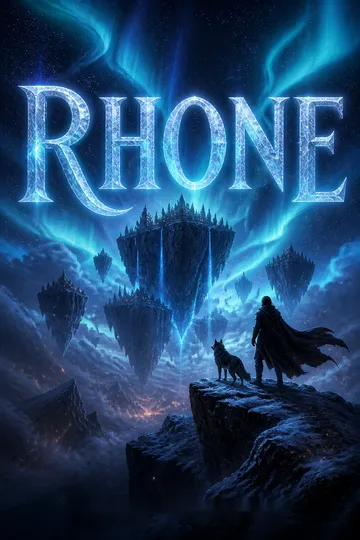
The Tainted Accords Series

About the Author
Other books by Kelly St. Clare


Download PDF
Download EPUB
.epub digital book format is ideal for reading ebooks on phones, tablets, and e-readers.








