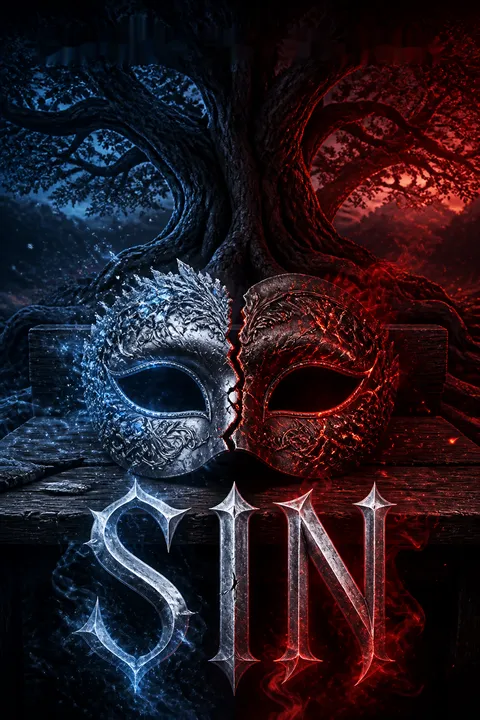


Plot Summary
The Bench Between Them
In Osolis, where the court has rejected her for rising from village poverty, Olorna spends her mornings watching from a garden bench. Sin, a handsome Bruma fighter serving as Tatum Olina’s valet, sits beside her without realizing she is there.
His careless remarks expose how completely she has learned to make herself small; her sharp answer, in turn, catches his attention. Sin offers friendship, though Olorna fears the court will punish her for accepting it. He is used to women seeking him out, and she has no interest in him.
Their first meeting unsettles both assumptions: she discovers a streak of humor beneath his vanity, while he finds himself curious about someone he would usually overlook. He conceals the real reason he came to Osolis.
Their attraction begins as an encounter between two opposing strategies of survival. Olorna manages danger by becoming inconspicuous; Sin controls attention by turning himself into a spectacle. His bluntness is not automatically kindness, and his early judgments wound her, but his presence also interrupts the court’s settled pattern of excluding her. Olorna’s refusal to flatter or pursue him gives her a small area of authority in a life where status is decided by others. The bench becomes a fragile neutral ground: neither character knows yet how much they need a place where performance can falter.
The Boy Under the Table
A nightmare returns Sin to the day his mother left their Glacium home after a violent fight with his father. Young Sin hid beneath the table, then found his injured father and accepted his explanation that they had been abandoned. The memory helps explain why the adult Sin treats intimacy as disposable and hides discomfort behind swagger.
In Osolis, Olina tells him that King Jovan has arrived and that she intends to leave her rule to her brother, Olandon, so she can return to Glacium. Sin reacts too quickly when he hears he must go back with her, then disguises his reluctance as flirtation. Olina lets him stay, unaware of his true purpose. Olorna, meanwhile, reads his intense attention to Olina as evidence of love.
The childhood scene establishes that Sin’s confidence is partly an inherited story: his father’s account gives him a simple explanation for a painful absence, and he has built his adult conduct around it. The memory is emotionally true to the child, but incomplete, a distinction that matters later. Olina’s departure also removes Sin’s borrowed role as valet and observer. His insistence on staying suggests that Osolis has become more than an assignment, even though he cannot yet name what has changed. Olorna’s mistaken interpretation shows how easily spectatorship is confused with attachment when someone hides behind a practiced persona.
A River Made of Fire
A wartime memory shows Sin with his friends Ice and Blizzard, trapped as fire closes around a Glacium army. When the escape tunnel cannot carry everyone, Sin leads men toward a river, then helps push a fallen kaur trunk into the water so the three friends can survive the current. Many who rush straight into the river drown.
The ordeal reveals a man who can act for others even while fear and pain overwhelm him. Later, as they cling to the log, Blizzard challenges Sin’s memory of his father, claiming the man abused Sin’s mother and that she left to escape him. Sin rejects the accusation and punches Blizzard unconscious, choosing anger over the possibility that the story he grew up with is false.
The river sequence complicates Sin’s self-image before it explains it. His bravado does not mean he lacks fear; it gives him a way to keep moving while others panic. Yet the decision to lead men into a dangerous alternative also carries a cost, and survival is not guaranteed for everyone. Blizzard’s accusation attacks the emotional foundation beneath Sin’s sexual cynicism: if his father was not the wronged parent, Sin’s contempt for women may be a repetition of harm rather than a defense against it. His punch is an attempt to preserve loyalty by refusing evidence, making denial an active choice rather than mere ignorance.
Village Roads, Palace Traps
After Sin’s remarks about her village past, Olorna returns to the community she left during the war. The villagers greet her warmly, and she sees that the children have food and strength again.
At the orphanage, she finds Sin caring for Banya, a baby he rescued during the famine when the child’s mother could no longer help her. The discovery unsettles Olorna’s dismissive picture of him. Back at the palace, she sees her mother, Afranca, isolated despite becoming Satum of Treasury, and accepts a marriage proposal from the powerful Satum Namas to secure their place.
Sin learns of the engagement and warns Tatum Olandon that Namas may have beaten a village boy. Olandon dismisses his suspicions and points to the tribunal process, leaving Olorna exposed to the court’s pressure.
Olorna’s return to the village gives her evidence that contradicts both trauma and shame: the people she feared revisiting have survived, and they still regard her as one of their own. Sin’s care for Banya makes his compassion observable rather than merely claimed, while his refusal to recognize Olorna’s starvation at first reveals the limits of his attention. Her betrothal is a survival calculation, not a romantic choice. The court’s hostility turns private insecurity into political leverage, and Olandon’s procedural fairness proves inadequate when a vulnerable woman is being pressured inside the very institution meant to protect her.
The Kiss and the Exile
Olorna discovers that Namas sought her partly to secure Afranca’s vote in the tribunal. When she ends the betrothal, he grips her and threatens to kill her mother and anyone else she loves unless she marries him. Sin arrives, knocks Namas unconscious, and pulls Olorna into a kiss that neither of them had planned.
Olorna responds to the kiss, then panics about the danger it creates and pushes Sin away, insisting she wants him gone. He leaves Osolis the next morning. With him absent, Orita uses the sight of their charged encounter to press Olorna for future favors, while Namas continues approaching her. Olorna hides the threats from her mother and tries to endure the wedding arrangements alone.
The kiss exposes a genuine mutual desire, but it does not undo the coercion surrounding Olorna. Sin’s intervention protects her from Namas in the moment, yet his impulsive choice to kiss her also overrides the question of what she wants next. Olorna’s rejection is therefore not simple denial: she is trying to manage a threat that could reach her mother and Sin alike. Her silence keeps Afranca safe in her imagination, but it deepens her isolation and leaves Namas with greater control. Orita’s opportunism shows how the court turns even a private moment into currency.
A Mother Named Beatrice
Back in Glacium, Sin returns to the fighting pits and beats an opponent far beyond what the match requires. He drinks heavily, and his old friend Warren confronts him with the same account Blizzard gave: Sin’s father abused his mother, and she fled to survive. Warren reveals that Sin’s mother is alive and helps him find her.
Beatrice explains that she left after years of violence, was badly injured during her escape, and could not reclaim Sin when his father recovered and kept him away. Sin recognizes how much of his childhood understanding came from the father who raised him. His mother’s account does not erase his love for that father, but it breaks the story that made his bitterness toward women seem justified.
Sin’s violence in the ring externalizes a conflict he cannot yet articulate. The crowd’s silence offers no reassurance, because the identity he built around being admired no longer steadies him. Warren’s intervention matters because it comes from a trusted friend, but Sin still seeks direct testimony rather than accepting another man’s verdict. Beatrice’s account preserves emotional complexity: she acknowledges her failure to take her child and does not demand that he stop loving his father. The revelation gives Sin a more difficult task than choosing which parent was good. He must separate the child’s need for loyalty from the adult responsibility to question inherited beliefs.
The Queen’s False Ban
Sin learns that Olina and Jovan have agreed to accept Namas’s money for protection against attacks on Ire convoys, with Olorna’s wedding treated as part of the bargain. Olina warns Sin not to interfere, and he believes she has betrayed their friendship.
Warren lets him escape the castle rather than obey the order to keep him there. At the Great Stairway, Shard reveals that Olina staged the opposition because she knew Sin would defy it. Sin reaches Osolis and proposes the Interworld Games to Olandon, offering nearly all his savings to support the Ire convoys.
Olandon rejects his request to stop the wedding, arguing that Olorna appears to have chosen Namas and that Sin has not earned her trust. He does, however, leave Sin a chance to prove himself.
Olina’s maneuver treats Sin’s stubbornness as a lever, a strategy that produces action but also risks repeating the coercive logic it opposes. His friends’ support gives him a route to choose for himself, while Shard redirects Sin’s talents from spectacle and conquest toward diplomacy. The Games proposal is both practical and personal: it offers a way to strengthen interworld relations, but Sin’s willingness to spend his savings is also a costly rejection of his former indifference. Olandon’s refusal is not simply an obstacle. By asking whether Olorna has actually chosen Sin, he forces the rescue fantasy to confront her agency and Sin’s reputation.
The Kaur Tree Interrupted
At the binding ceremony, Olorna sees Sin among the guests and realizes she loves him, but continues toward Namas, who grips her arm. A messenger tells Sin that Olandon has accepted his donation and is considering the Games; the note Afranca sends also confirms that Sin’s feelings are no secret.
Sin draws the court’s attention with a theatrical entrance, announces his new role as Master of Ceremonies, and lays out the Games. He then exposes Namas’s manipulation and asks Olorna to explain the betrothal.
When she reveals the death threats and Namas grabs her again, Afranca knocks him down with her pan. The ceremony stops. Olandon orders Namas’s conduct reviewed and tasks Sin with organizing the Games, while Afranca makes clear that the threats will be reported.
The ceremony gathers the story’s private and public conflicts in one place. Olorna’s realization occurs before anyone rescues her, so her love is not created by Sin’s spectacle; it changes what she can admit to herself. His performance is effective because it redirects the court’s attention, but Afranca’s pan, not his charisma, physically ends Namas’s control. Her intervention converts a mother previously diminished by court status into an active protector. Olandon’s response remains procedural rather than instantly punitive, preserving the political stakes. The scene’s interruption does not settle every question, but it restores Olorna’s ability to choose without the immediate threat of forced binding.
A Name Given Back
After the court disperses, Olorna tells Afranca that Namas threatened them both. Her mother admits she had hoped Olorna would end the engagement, then takes responsibility for failing to protect her daughter from the court’s contempt.
Sin and Olorna return to their garden bench, where he explains that his mother’s departure was an escape from abuse, not a rejection of him. He admits that he had mistaken his father’s bitterness for truth and asks Olorna to marry him.
She accepts and calls him Ethyn, the name he had carried before becoming Sin. They remain engaged, and he keeps his promise to wait until their wedding, even as their playful closeness makes patience difficult. Sin begins preparing the Games, now with a purpose beyond the fighting pits.
The resolution gives both characters a form of recognition they could not secure through status alone. Olorna names the coercion she had hidden, and Afranca answers by revising her own role rather than blaming her daughter. Sin’s confession links romantic trust to the work of correcting a false family history; he offers Olorna his real name only after admitting how his assumptions harmed him. Their engagement is not a cure for the political inequalities around them, but it is a decision made after Namas’s threat has been exposed and the binding halted. The Games give Sin a public responsibility that can outlast the private crisis.
Analysis
Sin’s story is built around the gap between a public identity and the private history that sustains it. He has made himself a performer: the handsome fighter, the shameless flirt, the man who appears to want nothing from anyone. That role protects him from vulnerability, but it also lets him repeat the gendered contempt he learned from a childhood account he never questioned. Meeting Olorna does not instantly cure him. He misjudges her, interrupts her choices, and responds to danger with force before he understands what she needs. His growth begins when he accepts that attraction is not proof of entitlement and that loyalty requires more than dramatic gestures.
Olorna’s conflict is shaped by class and by care for Afranca. She has learned that acceptance can mean food, safety, and a place for her mother, so marriage to Namas can seem like a rational price. The book makes clear how coercion disguises itself as choice when a person’s alternatives have been narrowed by poverty and social contempt. Olorna’s eventual refusal matters because she names the threat and is supported by Afranca, not because Sin simply claims her. Afranca’s pan becomes a sharp counterimage to her former silence: protection takes the form of action, but also of listening to her daughter’s account.
The political plot echoes the romance without reducing it to one. Olina manipulates Sin toward a useful decision, while Olandon insists that evidence and Olorna’s apparent consent matter. Neither strategy is sufficient by itself. The Interworld Games offer a new use for Sin’s talent for spectacle, turning attention toward shared competition and diplomacy. The ending is hopeful but not magically complete: Namas’s conduct still requires review, the Games still require work, and Sin and Olorna remain engaged rather than married. Their future begins with a more demanding promise than attraction: each must be seen clearly, and each must be free to choose.
Review Summary
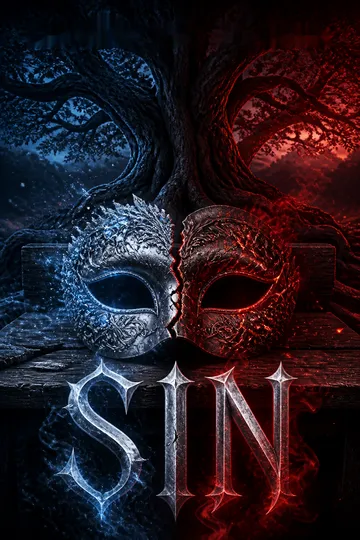
Sin is a novella in The Tainted Accords series focusing on the character Sin. Readers generally enjoyed learning more about Sin's backstory and seeing his romantic development with Olorna. Many praised the humor and character growth, though some felt the romance was underdeveloped due to the short format. There were mixed opinions on Sin's initial treatment of Olorna. Overall, fans of the series appreciated revisiting familiar characters and settings, even if they wished for a longer, more fleshed-out story.
People Also Read
Characters
Sin
The fighter behind the showA Bruma pit fighter from Glacium, Sin arrives in Osolis with a reputation for beauty, bravado, and casual intimacy. He performs confidence as if it were armor, using humor and flirtation to keep difficult feelings at a distance. His judgments can be careless, especially when he mistakes vulnerability for weakness, but he has a strong instinct to protect people in danger. Loyalty is one of his deepest capacities and one of his blind spots: he clings to the story of his father because it gives shape to childhood loss. Sin’s central tension is between being admired as a spectacle and becoming dependable when nobody is cheering.
Olorna
The watchful outsiderOlorna is the daughter of Afranca, a former village cook elevated to Osolis’s ruling court. Having endured starvation and social exclusion, she studies people closely and tries to avoid provoking those who can harm her family. She is observant, intelligent, and more resilient than her timid posture suggests, though years of insecurity have taught her to treat acceptance as something she must earn. Olorna’s care for her mother can lead her to sacrifice her own wishes, and her attraction to Sin unsettles the careful distance she maintains. Her strength lies not in fearlessness but in learning to name what she wants and what others are doing to her.
Olina
The calculating rulerTatum of Osolis after the war, Olina is decisive, politically alert, and unusually willing to unsettle convention. Her affection for Sin is genuine, but she also understands his vanity and knows how to use it to provoke action. She values the fragile peace between worlds and measures personal choices against the safety of whole communities. That pragmatism can make her methods feel manipulative, even when she believes they serve a necessary end. Olina’s bond with Jovan offers a counterpoint to Sin’s assumptions about intimacy: she chooses partnership without pretending that political responsibility disappears.
Olandon
The guarded new TatumOlina’s brother and successor as Tatum, Olandon approaches problems through procedure, evidence, and the preservation of political order. His reserve makes him difficult to persuade, and he distrusts emotional appeals when they lack proof. That caution can protect a fragile court from impulsive decisions, but it can also leave vulnerable people waiting while powerful figures shape the facts around them. Olandon is not easily charmed by Sin’s performance; he expects Sin to demonstrate that his ideas and commitments have substance.
Afranca
The steadfast motherOlorna’s mother, Afranca rose from palace cook to Satum of Treasury after the war. She is warm with her daughter and practical in public, but the court’s contempt has worn down some of the courage she once displayed openly. Her loyalty to the villagers and to the memory of those lost in the war keeps her in a position she would otherwise find uncomfortable. Afranca’s care is deep, though she sometimes mistakes silence for protection. She represents the cost of surviving a political upheaval while being expected to prove, again and again, that she belongs.
Namas
The powerful SatumSatum of Regeneration, Namas is wealthy, influential, and skilled at using court relationships to preserve his standing. His polished public manner obscures a possessive and threatening temperament. He understands that Olorna’s family is vulnerable in a court that has not accepted them, and he treats that vulnerability as leverage. Namas is not merely an unpleasant suitor; his position gives his private demands political weight. He embodies the danger of systems in which a powerful official can make coercion appear like an ordinary agreement.
Jovan
The king of GlaciumJovan rules Glacium and shares a long-standing bond with Olina. A formidable presence who is accustomed to protecting the people he loves, he has little patience for perceived threats or disrespect. His attachment to Olina reveals a capacity for tenderness beneath his imposing manner. At the same time, his authority makes him part of the political machinery surrounding Sin, whose loyalty and independence do not always fit neatly within royal plans.
Warren
Sin’s blunt old friendWarren grew up alongside Sin and knows the difference between his friend’s performance and his actual distress. He is loyal without being indulgent, willing to challenge the stories Sin tells himself when those stories become harmful. Warren’s practical steadiness makes him a counterweight to Sin’s impulsiveness, while their shared history allows him to speak with a bluntness few others could risk. He is also bound by duties to the rulers of Glacium, which makes his friendship a matter of choice rather than simple obedience.
Shard
The strategic advisorShard serves the Glacium royals and has known Sin through the fighting world. He is perceptive, dryly humorous, and adept at identifying the useful purpose inside another person’s unruly talents. Rather than simply telling Sin what to do, Shard pushes him to think from Olandon’s perspective and make himself useful to a cause larger than his own desires. His counsel is direct, but it rests on a clear understanding of Sin’s intelligence and potential.
Ice
Sin’s fellow fighterIce is one of Sin’s close friends from Glacium and stands beside him and Blizzard during the wartime escape through fire. He is observant and comparatively restrained, often noticing danger before the others acknowledge it. His presence in Sin’s circle establishes a bond formed through physical risk, shared survival, and familiarity with one another’s worst impulses.
Blizzard
The friend who challengesBlizzard is a longtime friend and fellow fighter who survives the fire escape with Sin and Ice. His bluntness can turn cruel, but he is willing to say what Sin’s other companions avoid. By challenging Sin’s idealized account of his father, Blizzard forces a painful question into the open. Their friendship is sturdy enough to contain conflict, though not without consequences.
Sin’s mother
The absent motherSin’s mother leaves his childhood home when he is very young, and her absence becomes one of the defining facts of his inner life. In Sin’s early understanding, she is the parent who chose to go, while his father is the one who stayed. That imbalance shapes how Sin approaches women and loyalty. Her place in his story is important not only because she is missing, but because the explanation for her departure has been controlled by someone else.
Orita
The court’s sharp-eyed rivalOrita is a popular court member who polices social boundaries and enjoys the influence her approval can bring. Her contempt for Olorna reflects the court’s broader hostility toward newcomers from the village. She is observant enough to turn private information into leverage, and her jealousy makes her less predictable than her polished manner suggests.
Jerin
The steady SatumSatum of Resources, Jerin is one of the senior officials involved in Osolis’s postwar government. He conducts the binding ceremony and serves on the tribunal, offering a steadier presence among court members whose loyalties are less clear.
Banya
The rescued orphanBanya is a baby left vulnerable during the famine in Osolis. Her survival connects Sin to the village’s suffering and shows Olorna a side of him that his public reputation hides.
Plot Devices
The Three-World Exchange
Peace through contactAfter the war, Glacium, Osolis, and the Ire attempt to build relations through exchanges between their peoples. The arrangement creates opportunities for familiarity but also exposes old prejudices and new attacks on Ire convoys. It places Sin and Olorna in a world where personal choices are constantly entangled with diplomacy, security, and public perception. The exchange is therefore both a setting for their meeting and a fragile political experiment that needs practical reasons to endure.
The Kaur Fastening Tree
Vows under public pressureThe kaur tree in Osolis’s palace gardens is the site of binding ceremonies. A couple’s hands are tied to the tree with white silk, turning marriage into a visible ritual witnessed by the court. The rite gives the wedding its ceremonial force, but it also sharpens the danger when a person is being pushed toward a binding they do not freely want. The tree’s place beside the bench where Olorna and Sin first meet links public expectation with their more private connection.
The Soars
A narrow route between worldsSoars allow rapid travel between Glacium and Osolis by way of the Great Stairway. Their availability is restricted, particularly as attacks on Ire convoys raise security concerns. In the story, access to a Soar determines whether Sin can reach Osolis before the binding ceremony. The devices compress distance, but they cannot solve the political and emotional obstacles waiting at the destination; Sin still has to persuade Olandon and confront the consequences of his past behavior.
The Interworld Games
A spectacle for diplomacySin proposes a recurring contest featuring events such as archery, combat, agility, and endurance. Teams from each world, along with mixed teams, would give people a shared spectacle and a reason to travel beyond compulsory exchanges. The proposal grows out of Sin’s experience commanding pit-fight audiences, but redirects that skill toward cooperation rather than individual fame. It also gives Olandon a possible public answer to the problem of sustaining relations among the three worlds. The plan becomes a new political responsibility for Sin.
The Tainted Accords Series




About the Author
Other books by Kelly St. Clare






Download PDF
Download EPUB
.epub digital book format is ideal for reading ebooks on phones, tablets, and e-readers.








