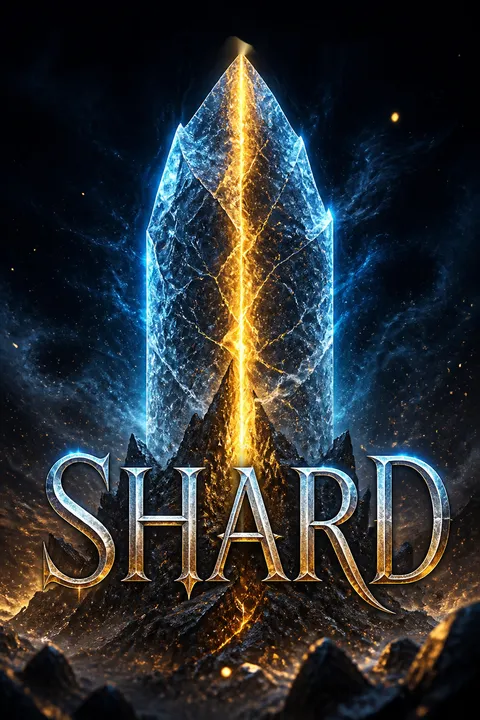


Plot Summary
The Rejection That Lingers
A year before the Interworld Games, Shard, a former pit fighter turned royal advisor, finds Arla crying alone in a castle hallway. He knows her father, Drummond, has been pressuring her to secure a high-born husband, and asks whether she is being pushed toward Prince Ashawn. Arla resents his knowledge and reminds him that his low birth makes them unequal.
When Shard admits he loves her, she tells him to stop pursuing her and leave. He does leave, taking distance from the woman he believes is hiding pain beneath her cruelty. He returns months later, but the wound remains: Arla has never openly welcomed his love, and Shard still cannot tell whether her harshness is rejection or fear.
Shard reads Arla’s cruelty as evidence of injury, a generous interpretation rooted in his own history of surviving abuse. That insight lets him see what others miss, but it also tempts him to treat understanding as permission to endure anything. Arla, meanwhile, has learned to make rejection her first defense, borrowing the class judgments and marriage ambitions of the father who shaped her. Their connection begins with a dangerous asymmetry: Shard believes he understands her better than she understands herself. His departure is therefore more than romantic frustration. It is his first attempt to distinguish steadfast care from self-erasure.
One Last Honest Question
Back at the castle for the Games, Shard catches Arla before the welcome ball and helps her evade Drummond, turning a small prank into a rare moment of ease between them. In a shadowed passage, he finally asks whether she could ever care for him. Arla dodges the question, then tells him to give up when he says he cannot keep pursuing her without an answer.
Shard accepts her refusal and leaves, convinced that patience has become another way of hurting himself. At the ball, he watches Arla dance with men from the visiting worlds and drinks until the evening blurs. Prince Ashawn and Queen Lina both recognize his distress, but neither can make the decision he has just made for himself.
The brief escape from Drummond shows that Arla can share playfulness with Shard when she is not performing for her father. Yet when Shard asks for emotional clarity, she retreats into the same defenses that have protected her from dependence. His decision to stop pursuing her is a boundary, not a tactic, though he is still hoping she will contradict it. The ball makes that contradiction visible: he sees her moving easily among other men while remaining unable to speak plainly with him. The scene turns private uncertainty into a public spectacle, exposing how little control Shard has over the story others tell about their attachment.
A Bedside Misunderstanding
After starting the Games’ drinking contests, Shard gets so drunk that his friend Avalanche carries him to the kennels and stops him from sleeping with a Solati guest. The next morning, however, the woman is still asleep in Shard’s room. Arla arrives, sees her, and accuses him of moving on too quickly.
Shard is stung by her jealousy because she has just rejected him, but he explains that nothing happened and asks Arla to give him space while he tries to let go. Later, when Jovan bars him from approaching Lina after his drunken outburst, Shard is already facing the consequences of his grief. His attempt to withdraw leaves Arla unsettled, while his public conduct has damaged a friendship he values.
The sleeping guest functions as a misread image: to Arla, it suggests Shard has transferred his devotion elsewhere; to Shard, her reaction reveals a possessiveness she has never admitted. Neither can name what the moment means, so each responds to the visible evidence rather than the hidden feeling. Shard’s request for distance is an important change from his earlier persistence. He recognizes that loving Arla does not exempt him from the cost of her behavior. At the same time, his drunkenness shows how poorly he manages that new boundary. His conflict with Lina makes emotional pain consequential beyond romance, threatening the trust that gives him a place in the royal household.
The Games Become a Wager
When Drummond confronts Shard over his prank at the ball and insults his birth, Shard strikes him, then warns him to stop controlling Arla’s marriage. Arla witnesses the fight and offers a way around her father’s opposition: she has persuaded Drummond to give her hand to the winner of the first Interworld Games.
Shard is furious that she has turned herself into a prize and has not explained whether she wants him or merely needs an acceptable husband. Still, she tells him he has something to fight for. He asks King Jovan to let him compete. Jovan agrees reluctantly, on the condition that Shard marry Arla if he wins and take her away from the castle. Shard enters the tournament with a chance at her hand, but no certainty of her heart.
The wager converts a private relationship into a public contest, using the Games’ new prestige to answer Drummond’s obsession with status. Arla’s plan is strategic, but its logic reproduces the very system she hopes to escape: her future is negotiated through male approval and public value. Shard sees this contradiction, yet agrees to compete because he mistakes a path toward marriage for evidence of mutual choice. Jovan’s condition sharpens the stakes while also exposing a paternalistic solution: remove Arla from Drummond and she may change. Shard’s own understanding is beginning to shift, but he has not yet stopped imagining himself as the person who can rescue her.
Six Events, One Chance
The Games open beneath Glacium’s Dome, where fighters from all three worlds compete in seven tests of combat and athletic skill. Shard struggles in agility, especially against the nimble Ire fighters, but advances in six events, including strength, accuracy, and weapon contests.
After the scores are announced, Arla approaches him in the warm-up area and praises his dagger work. When she asks about his past, he explains that his father forced him to throw knives around a woman tied to a chair, making every missed throw dangerous.
Arla listens instead of turning away. She confirms Drummond accepted her wager, then leaves Shard unsure whether the plan is meant to help him or simply satisfy her father. Queen Lina invites Arla to dinner, drawing the two women into a conversation Shard cannot hear.
The tournament gives Shard a measurable problem at precisely the moment his romantic life offers no reliable measure at all. His six advances show that skill can be assessed, but they do not resolve whether Arla has chosen him. His account of the knife-throwing abuse also changes what Arla sees: the weapon she admired is tied to coercion, not merely talent. Her willingness to listen marks a small movement toward intimacy, though Shard remains wary of interpreting it as commitment. Lina’s invitation matters for a different reason. It asks Arla to meet someone whose authority is not organized around Drummond’s ambitions, opening a space where her conduct might be judged on something other than rank.
Care Without a Bargain
After the first day, Fiona tells Shard that Arla has not actually slept with the men she has been seen leaving with for a year. The next morning, Shard apologizes to Lina for his drunken anger; Lina accepts, admits she had hoped his feelings would fade, and says Arla looked frightened when she watched him.
On the second day, Shard performs well in the weapon tests, though Landon defeats him in sword fighting. That night, Arla visits his room with oils to ease his bruises and offers to massage him herself.
As she works, she apologizes for humiliating him and admits she has hurt many people. Shard urges her to take responsibility rather than hide behind remorse. She kisses him, and he falls asleep beside her, believing she has finally chosen closeness.
Several forms of evidence converge here, but none substitutes for Arla’s own decision. Fiona’s report corrects Shard’s assumption that Arla’s casual exits meant sexual indifference; Lina’s observation gives his hope a credible witness, while her apology repairs a friendship strained by his grief. Most importantly, Arla’s massage is an act of care that cannot be explained by public prestige or tournament rules. Shard does not absolve her simply because she regrets her conduct; he directs her toward changed behavior. Their kiss rewards that honesty without resolving the deeper conflict. The scene’s tenderness is real, but it is still vulnerable to the fear that has governed Arla’s choices.
The Morning After Retreat
When Shard wakes in Arla’s bed, she panics that someone might see them and orders him to leave. He points out that she is treating him as a secret and asks her to tell Drummond openly that she wants him. Arla cannot do it. As Shard presses her to choose rather than keep both him and her father’s approval, she tells him to go and not return.
He leaves, wounded but unwilling to keep accepting apologies without changed behavior. The final day of the Games begins with him determined to compete for himself. He wins the dagger event by striking three moving targets and defeats Landon in the sword final, but his anger gives way to doubt. Even with the tournament nearly over, Shard wonders whether winning can repair what Arla has broken.
The morning after their intimacy reveals that physical closeness has not yet altered Arla’s governing fear. She can accept comfort in private, but she cannot tolerate being seen choosing it. Shard’s demand is not simply for public recognition; it asks her to accept that her decision may disappoint the father around whom she has organized her life. Her refusal forces Shard to separate love from rescue. He still competes, but the reason changes: the Games no longer guarantee a relationship, and his effort must belong to him. His victories over moving targets and Landon provide external mastery at the same moment he relinquishes control over Arla’s answer.
The Prize Refuses Its Terms
At the awards, Shard learns he has won dagger and placed third overall, behind King Jovan and Queen Lina. He expects the results to end his claim on Arla, but Drummond seizes his daughter’s wrist and tries to pull her from the viewing platform. Shard intervenes, and Arla reveals that she devised the marriage wager herself, expecting the leaders to withdraw and Shard to become the eligible winner.
Drummond admits he never expected Shard to win and still objects to his birth. Lina strikes Drummond after he uses a class slur. Shard then tells Arla that a contest cannot replace the eighteen months he spent trying to earn her trust. He refuses to treat their marriage as a business deal and asks her to explain what she actually wants.
The public setting strips away the privacy that has allowed Arla and Drummond to maintain their arrangement. Drummond’s grip on her wrist makes his control visible, while the gathered representatives turn a family conflict into a test of Glacium’s stated equality. Lina’s response gives that principle material force, not merely ceremonial language. Shard’s refusal is the decisive ethical turn: he will not accept Arla as a prize, even when the wager could deliver the future he wants. His demand for an explanation shifts the burden back to her. For the first time, Arla must speak not as Drummond’s daughter or a strategist, but as a person responsible for her own choice.
A Choice Made Aloud
Arla explains that her plans with Drummond once matched, and she feared that choosing Shard would make her father reject her. She apologizes to both men. Shard takes her injured hand, but makes clear that he cannot build a relationship on the wager or on her fear of disappointing Drummond.
Arla answers with gestures that recall the care Shard once offered her: she places her coat around his shoulders and accepts a pear for him when she cannot find food herself.
Shard tells her that protecting him does not require a contest, only the courage to choose him. This time, Arla says plainly that she loves him. Shard draws her close and kisses her as the crowd watches, their relationship beginning through mutual choice rather than a prize ceremony.
Arla’s confession matters because it follows, rather than replaces, her acceptance of responsibility. She names the fear that shaped her bargain and recognizes that her father’s approval has become entangled with her own sense of safety. Shard’s refusal to accept a transactional marriage prevents the tournament from dictating their private life. The coat and pear reverse earlier memories of Shard’s rejected tunic and food, turning apology into reciprocal action. Her declaration is therefore not a sudden cure for a difficult character; it is a small, observable act of agency. The crowd remains present, but the terms have changed. Arla is no longer being awarded to someone. She is choosing whom to stand beside.
Epilogue
At the closing ball, Shard and Arla sit together while the three worlds celebrate the Games and the Ire’s victory in the melee. Arla tells him she has avoided sleeping with others for a year and wants their intimacy to wait until marriage. Shard accepts, then asks about building a home in the Inner Rings; Arla agrees, provided he marries her first.
They watch their friends dance, joke about the rulers’ growing family, and see the once-divided peoples sharing the same room. Arla feels hope for their worlds. Shard, surrounded by friends and holding the woman he loves, feels ready for the life ahead.
The epilogue tests the new relationship through ordinary choices rather than another crisis. Arla sets a boundary around sex, and Shard accepts it without treating her hesitation as rejection. Their discussion of a shared home replaces the tournament’s public bargaining with practical, mutual planning. Around them, the party offers a visible measure of the political project: people from worlds marked by recent violence now dance, drink, and celebrate together. The scene does not claim that old divisions have vanished. Instead, it presents intimacy and reconciliation as habits that must be practiced, whether between two lovers or among entire peoples. Shard’s sense of belonging has finally become reciprocal.
Analysis
Shard’s story tests the difference between devotion and entitlement. He begins by treating his ability to understand Arla’s pain as a reason to persist through her repeated rejections. His insight is often accurate, but insight cannot make another person ready to trust, and it cannot turn endurance into a healthy relationship. The Games sharpen that distinction by offering Shard an external solution: victory can make him socially acceptable to Drummond, but it cannot secure Arla’s consent. His most consequential choice is therefore not winning a category, but refusing to accept a marriage that would reduce her to a prize.
Arla’s behavior grows from an intimate political education. Drummond has taught her to view marriage as a tool of prestige and has made obedience feel like loyalty. Her wager is clever within that system, yet it repeats its central assumption that her future can be negotiated around her. Shard’s boundary forces her to recognize that fear of disappointing her father is not the same as love for him, and that protecting the relationship she wants requires her own action. Her declaration matters because it follows a public acknowledgment of her strategy and an apology, not because it erases the harm she caused.
The Games extend the romance into a broader argument about social value. Glacium’s class divisions, Osolis’s political standing, and the Ire’s history of exclusion all appear in the same arena, where performance can challenge inherited rank but cannot automatically undo prejudice. Lina’s response to Drummond’s slur gives equality a cost and a consequence. The closing celebration offers hope without claiming that historical violence has disappeared. Across the novella, repair occurs through specific acts: accepting an apology, listening to a painful history, refusing a coercive bargain, and choosing companionship openly. Love and political reconciliation both begin when people stop confusing status with worth.
Review Summary
Shard by Kelly St. Clare received mixed reviews, with an average rating of 4.06 out of 5. Many readers enjoyed revisiting the Tainted Accords world and seeing familiar characters. However, opinions were divided on the main romance between Shard and Arla. Some found it unconvincing, while others appreciated the character growth. The Interworld Games were a highlight for many. Despite criticisms of Arla's character, fans of the series generally found it a satisfying conclusion, though some wished for more depth in the novella.
People Also Read
Characters
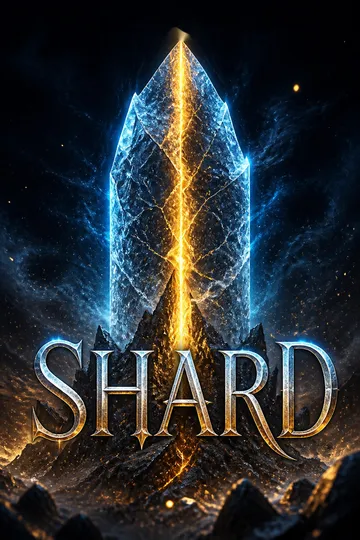
Shard
The watchful pit fighterShard is a former pit fighter from Glacium’s Outer Rings who has become an advisor to King Jovan and Queen Lina. His childhood under an abusive father taught him to observe danger, control his reactions, and rely on skill rather than status. He is devoted to Arla, but his persistence sometimes confuses understanding her pain with having to endure her cruelty. His friendships with Lina and the fighters of his old barracks anchor him in a chosen family he never expected to have. Shard’s deepest struggle is learning that love can be steadfast without becoming self-abandonment, and that another person must make her own choices.
Arla
The guarded strategistArla is Drummond’s daughter, a clever and beautiful member of Glacium’s court whose sharpness can make her seem untouchable. Raised in the castle and shaped by her father’s ambitions, she has learned to manage people through status, calculation, and emotional distance. She is not simply cold: moments of humor and vulnerability reveal a mind capable of tenderness, though she struggles to trust it. Shard sees possibilities in her that other people dismiss, but her choices remain her responsibility. Arla’s central tension lies between loyalty to the family structure that formed her and the desire to act from her own values.
Lina
The perceptive queenQueen Lina rules Glacium with warmth, sharp judgment, and a refusal to separate compassion from accountability. She is Shard’s close friend and Jovan’s wife, and she is also raising their infant daughter, Kendra. Lina initially distrusts Arla because she has watched Shard suffer at her hands. Yet she is willing to revise her view when Arla makes an effort and her guardedness becomes visible. Her leadership combines emotional perceptiveness with direct action, especially when class prejudice threatens the principles her court claims to uphold.
Jovan
The formidable kingKing Jovan is Lina’s husband and Glacium’s powerful ruler. He is a formidable fighter whose authority is balanced by an unexpectedly tender attentiveness to his infant daughter. He trusts Shard enough to rely on him for counsel and protection, but he also holds him accountable when grief and drink lead him to hurt Lina. Jovan’s family life gives Shard a close view of the loving partnership he hopes to build, while his position in the Games makes the contest both a political event and a personal challenge.
Drummond
Arla’s status-minded fatherDrummond is a senior advisor to the king and Arla’s father. He believes a prestigious marriage can secure his daughter’s future and enhance the family’s standing, but his ambitions narrow his ability to understand what she wants. His control is partly rooted in attachment: he sees himself as protecting Arla, even when his behavior limits her independence. Shard recognizes both his influence and his blind spots. Drummond’s conviction that birth determines worth makes him a direct obstacle to the more egalitarian values the Games are meant to foster.
Avalanche
Shard’s steadfast giantAvalanche is Shard’s huge, scarred friend from the pit-fighting years. His loyalty is practical: he intervenes when Shard is too drunk to protect himself, feeds him before the Games, and offers blunt advice when Shard is lost in thought. Avalanche’s easy humor keeps his size from becoming intimidation, while his dependable presence gives Shard a version of family built by choice rather than blood.
Ashawn
The teasing young princePrince Ashawn is Jovan’s younger brother and the high-born match Drummond hopes Arla will pursue. He is perceptive enough to recognize Shard’s distress and playful enough to puncture the tension with pranks and teasing. Ashawn has no desire to be used as a marriage instrument, and his easy friendship with Shard helps reveal that the rivalry Shard fears is largely imposed by Drummond’s ambitions.
Landon
The Solati TatumLandon is the Tatum of Osolis, Lina’s half-brother, and a skilled competitor in the Interworld Games. He is married to Greta and approaches Shard with a measured mixture of rivalry and respect. Their contest tests Shard’s abilities without turning Landon into a villain. His position as a leader from another world also helps make the Games a genuine meeting of powers rather than a Glacium-only celebration.
Fiona
The observant friendFiona is Sanjay’s wife and one of the people who sees more in Arla than her reputation suggests. She gives Shard information that changes how he interprets Arla’s behavior, while also defending her own relationship when others dismiss Sanjay. Fiona’s warmth is paired with independence: she supports Shard without pretending to understand every part of his situation.
Sanjay
The cheerful court witSanjay is a Bruma member of the court, known for his sociability and frequent drinking. He is married to Fiona and helps with the Games by announcing fighter pools. His comic presence softens the formal atmosphere of the tournament, while his lasting partnership with Fiona offers Shard another example of affection grounded in companionship.
Rhone
The Ire’s formidable trainerRhone is a powerful fighter who trains the Ire competitors for the Games. He is married to Monikah and carries himself with a blunt reserve that contrasts with the spectacle surrounding the tournament. His skill makes him one of the serious threats in competition, while his presence reflects the Ire’s growing confidence and participation in the tri-world community.
Monikah
The inventive Ire fighterMonikah is Rhone’s wife and an inventor whose Time Teller helps organize the Games. Her creation gives the tournament a practical structure, and her work earns the attention of leaders from other worlds. Monikah’s ingenuity represents the Ire’s contribution as makers and organizers, not merely as competitors.
Sin
The charismatic hostSin serves as master of ceremonies for the Interworld Games. His showmanship turns long days of competition into shared public spectacle. He is married to Lorna, and their affectionate partnership stands in contrast to the loneliness Shard feels before Arla makes her own feelings clear.
Lorna
The steady Solati partnerLorna is Sin’s wife and a Solati woman who helps care for the fighters during the Games. Her easy kindness and stable marriage make her part of the welcoming social fabric around the tournament. She also connects Arla to people beyond the castle’s usual hierarchy.
Alzona
The exacting pit judgeAlzona once ran the barracks where Shard learned to fight. She judges the agility events with the same sharp eye and practical standards that shaped his training.
Kendra
The royal infantKendra is the infant daughter of Lina and Jovan. Her presence brings the rulers’ private family life into the council chamber and reminds Shard of the home and children he hopes to have.
Blizzard
The outspoken ministerBlizzard is one of Shard’s friends from the fighting community and serves as Glacium’s minister of the people. He is quick to turn any situation into a long opinion, often to the exasperation of the others.
Ice
The blunt pit fighterIce is one of Shard’s former fighting companions. He speaks plainly, jokes at Shard’s expense, and competes for Glacium in the Games.
Roscoe
The royal right handRoscoe is Jovan’s right-hand advisor and Lina’s father. His son, Adnan, is among the people moving through the Games’ crowded social world.
Zelda
The agile Ire victorZelda is an Ire competitor whose nimble performance demonstrates the skill of her world’s fighters. Her success in agility gives the Ire a celebrated victory in the first Games.
Plot Devices
The Interworld Games
A public test of unityThe Games bring fifty fighters from each of Glacium, Osolis, and the Ire together for seven individual events and a group fight. Their contests give Shard a concrete route to prove his skill, while their public setting lets the three worlds test whether cooperation can survive competition. The tournament also makes the political stakes visible: winners earn recognition, and the Ire gain a platform in a gathering once divided by hostility. The event structures the novella’s rising action, but its most important test is whether personal relationships can escape the rules of rank and spectacle.
Arla’s marriage wager
Love measured by victoryArla arranges for her hand to be offered to the winner of the first Games, hoping the achievement will satisfy Drummond’s demand for a prestigious match. The wager gives Shard a reason to enter after the competitors have already trained, but it also transforms Arla into the prize of a contest without first establishing her choice. Its dramatic purpose is to expose the difference between winning access to someone and being chosen by them. Shard’s eventual refusal to rely on the bargain forces Arla to confront what she wants beyond her father’s approval.
The Time Teller
A clock built by the IreMonikah’s glass-and-dirt invention measures time during the tournament. When the device is turned, dirt runs through a narrow opening, marking the work period before fighters receive a rest. It gives the new Games a shared practical rule and showcases the Ire as inventors as well as athletes. The Time Teller is a small but concrete example of cooperation: a tool created by one world becomes part of an event hosted by another and watched by all three.
Shard’s daggers
Skill forged by violenceShard’s daggers are his most reliable weapons and a visible record of the childhood that trained him to survive. His father once forced him to throw knives around a woman tied to a chair, so accuracy became bound to fear and necessity. During the Games, Shard’s command of the blades earns him a category victory, but the skill is not presented as uncomplicated triumph. When Arla asks how he learned it, he shares the painful history behind his precision. The weapon therefore links his public competence to the private harm he has learned to carry.
The Tainted Accords Series


About the Author
Other books by Kelly St. Clare




Download PDF
Download EPUB
.epub digital book format is ideal for reading ebooks on phones, tablets, and e-readers.








