

Plot Summary
The Green Turkey
Before the financial trouble that will reshape his childhood, six-year-old Jamie Conklin sees the dead. After a cyclist is killed in Central Park, Jamie sees the injured man standing beside his covered body, and his mother, Tia, finally accepts that her son is not imagining things.
Two years later, their neighbor Mona Burkett dies, and Jamie hears her explain where she hid her wedding rings. Tia finds them there, sparing Mona's grieving husband, Marty, a fruitless search.
Jamie learns that the newly dead can look alive, answer questions truthfully, and linger only briefly. He also learns that their honesty can wound: Mona had time to criticize his hand-drawn turkey before revealing her affection for Marty. Tia makes Jamie promise to keep his ability secret.
Jamie’s gift first appears not as a weapon but as a child’s unfiltered access to private grief. He notices what adults miss, including Mona’s continuing love and Marty’s ordinary helplessness, yet cannot control when the dead speak or how bluntly they tell the truth. Tia’s response marks the emotional hinge: disbelief gives way to protection, but protection requires secrecy. The ability therefore binds mother and son more tightly while teaching Jamie that knowledge is not always comfort. His green turkey becomes a small emblem of childhood judgment: even a supernatural encounter does not spare him from the ordinary sting of criticism.
The Agency Goes Under
Tia and Jamie's comfortable life collapses after her brother Harry's investments in the Mackenzie Fund vanish in the 2008 financial crash. The fund proves to be a Ponzi scheme, while Harry's early-onset Alzheimer's, care bills, and tax debts leave Tia selling possessions and moving the family into cramped quarters.
A brief reprieve comes when a new mystery novel earns the agency a large advance, but medical costs and legal fees consume the money. Then Regis Thomas, the agency's most dependable bestseller, dies at his desk before completing the final novel in his popular Roanoke series.
Tia owes the publisher the advance and cannot repay it. Desperate, she asks Jamie to find Regis's lingering spirit and learn the unwritten story, making her son's secret ability the family's only apparent rescue.
The financial plot turns a private supernatural gift into labor. Tia is not exploiting Jamie casually; she is trapped by obligations inherited from Harry, a fraudulent fund, and the expensive machinery of care. Yet desperation still places a child in an adult role, forcing him to carry the family's future. The book's commercial world matters because it makes imagination both livelihood and debt: Regis's unwritten story is a creative mystery, but also a contractual liability. Jamie's ability crosses the boundary between intimate family knowledge and professional production, where the dead man's private invention may become a commodity.
Regis Dictates Beyond Death
At Regis's secluded New York estate, Jamie spots the novelist's spirit near the writing cabin and recognizes a detail from an interview that convinces Tia he is truly present. Regis explains his complete plan for the final Roanoke book, including its central mystery and ending, while Jamie repeats the information into Tia's recorder.
Tia later turns those notes into the novel, imitating Regis's style closely enough to satisfy his publisher and readers. The bestseller restores the agency's finances and gives Jamie and his mother a more secure home.
Liz Dutton, Tia's police-detective partner, witnesses enough of Jamie's unusual knowledge to take his gift seriously, though not without skepticism. For Jamie, the success is mixed: he has helped save his family, but adults have made his impossible secret part of a business solution.
This episode makes authorship deliberately unstable. Regis supplies the imagined world, Jamie becomes its involuntary channel, and Tia performs the craft that transforms a private plan into a marketable book. Their collaboration saves the household, but it also exposes how easily care can become instrumental when survival is at stake. Jamie's role is neither simple medium nor child prodigy; he is a messenger whose testimony adults shape into an acceptable product. The episode also establishes Liz as the person who can bridge Jamie's hidden life and the police world, a connection that later turns both useful and dangerous.
Cocaine on the Table
As the agency recovers, Liz becomes a regular presence in Jamie and Tia's home, sharing affection with Tia and sometimes playing with Jamie. Their relationship frays under heavy drinking, political arguments, and Liz's growing distance from her police work. One morning, Tia finds cocaine in Liz's spare police jacket, left in the apartment where Jamie lives.
She orders Liz to remove it and never return except to collect her belongings. The discovery confirms that Liz has concealed a dangerous life from the family, even though Tia does not yet know its full scale. Tia pours the household wine down the drain and seeks help staying sober. Jamie misses the warmth Liz once brought, but his loyalty to his mother hardens into distrust.
The rupture is powerful because the drug is physically ordinary: a package beside the household sugar bowl, where intimacy and danger occupy the same domestic surface. Tia's anger protects Jamie, but it also reveals how easily trust had been built around partial knowledge. Her decision to discard the wine suggests she recognizes that the relationship's instability has become inseparable from her own coping habits. Jamie experiences the breakup as both loss and moral clarification. He can remember Liz's tenderness without excusing the threat she brought into their home, an early lesson in holding affection and judgment together.
Thumper's Last Bomb
Years later, thirteen-year-old Jamie is approached by Liz after police identify Kenneth Therriault, known as Thumper, as a serial bomber who has killed and maimed across the region. Therriault has apparently shot himself, but a note warns that one more large bomb remains.
Liz, sidelined from the task force and fearing for her career, takes Jamie to places Therriault knew, hoping he can see the dead man. At a Queens grocery, Jamie finds Therriault's spirit on a bench and forces him to reveal that the bomb is hidden at the King Kullen supermarket where his bombing campaign began.
Liz passes the information through a fabricated tip. Police find and defuse the device before it can destroy a crowded store, but the encounter leaves Therriault's hostile presence attached to Jamie.
Jamie again acts because adults present him with a crisis they cannot solve, but this time Liz's motives are compromised by her own professional peril. Her plan saves lives, and her manipulation of the boy is real; the two facts coexist. Therriault's answer demonstrates that Jamie's gift can serve public safety, yet the bomber's refusal and visible distress break the reassuring rule that the dead are passive sources of truth. The successful defusal is therefore not a clean victory. Jamie has stopped an explosion, but his contact has opened a private conflict that cannot be handed over to the police.
A Dead Man Follows
Instead of fading like other dead people, Therriault appears outside Jamie's home, at school, and in the elevator, grinning and beckoning. He tells Jamie that Tia has cancer and that Jamie will inherit Harry's Alzheimer's, using both claims to frighten him.
Jamie's grades and swimming suffer as he watches for the apparition and hides his fear from his mother. He finally confides in Professor Martin Burkett, the widowed scholar who once lost his wife Mona.
Burkett listens, studies Jamie's account, and proposes that the presence may be more than Therriault's ordinary spirit. He invents a contest called the Ritual of Chüd, drawing partly on genuine traditions and partly on his own imagination, and advises Jamie to confront the threat rather than flee it.
Therriault's cruelty targets Jamie's attachments, not merely his body: he weaponizes fear of losing Tia and fear of becoming like Harry. That strategy turns ordinary adolescence into surveillance, with schoolwork and sports damaged by the expectation of another apparition. Burkett offers something more useful than certainty. His improvised ritual gives Jamie a script for action when evidence and adult authority have failed him. Whether the ritual is metaphysically sound matters less at first than its psychological function: it converts helpless watching into a decision Jamie can make for himself.
The Foyer Confrontation
When Therriault blocks Jamie in his apartment building's foyer, Jamie rushes forward and grabs him instead of retreating. The struggle reveals a brilliant, alien presence inside the dead man's fading body.
It threatens Jamie, bargains for release, and promises never to return, but Burkett has warned him not to accept a bargain. Jamie holds on until the entity admits fear, then orders it away and establishes that it must answer if he summons it.
The confrontation leaves the building's lights and electrical system destroyed, evidence that the struggle affected the living world. Later, Burkett dies of a heart attack while traveling to visit a friend. Jamie sees him at the cemetery, where Burkett warns him never to summon what remains inside Therriault.
Jamie wins by refusing the familiar bargain of immediate relief. His victory is an assertion of agency, but the terms he sets are perilous: command over a force he barely understands is not the same as safety. The electrical damage gives his experience material consequence, making it harder for both Jamie and the reader to dismiss as fear alone. Burkett's final warning complicates triumph with responsibility. His intellectual playfulness helped Jamie survive, yet the scholar recognizes that cleverness cannot domesticate an entity from beyond ordinary human categories. Jamie is left with power and restraint, an uneasy pairing.
Liz Returns for Jamie
Two years after helping stop Thumper, Jamie learns that Liz has lost her police job after an internal investigation and a drug test. She intercepts him after tennis practice, now gaunt and using a cocaine-heroin mixture, and threatens to expose that Tia wrote Regis Thomas's final novel with Jamie's help.
Liz has secretly recorded part of their session at Regis's estate. She forces Jamie into her car and drives toward Renfield, refusing to let him call his mother and discarding his phone so Tia cannot track him.
During the journey, Liz explains that transporting drugs helped her support her sister's family after the financial crash, then became addiction and a criminal livelihood. She now intends to use Jamie's ability to locate pills belonging to dead drug supplier Donald Marsden.
Liz's return collapses the roles she once occupied: caregiver, detective, betrayer, and addict now travel in the same car. Her account of supporting her sister gives her choices a social context, but not an absolution; she still coerces a teenager and uses his secret as leverage. Jamie's remembered affection makes resistance harder, which is precisely why her threat works. The hidden recording also converts his childhood act of helping Tia into a vulnerability. In this story, memory itself becomes evidence that can be weaponized, and the child who once served as a bridge between worlds must now defend his autonomy from a living adult.
The House Above Renfield
At Marsden's isolated mansion, Jamie sees the gatekeeper standing by the garage with his mouth destroyed, though Liz sees nothing. Inside, Liz reveals Marsden alive, bound to his bed, and shoots him when he cannot produce the cache she expects.
His spirit leads Jamie to a hidden panic room, where Liz finds only a small supply of pills and photographs showing Marsden's torture and murder of his estranged wife. Jamie tricks Liz toward canned food and bolts for the stairs. When she catches his ankle, he calls for Therriault.
The deadlight bursts from a mirror, disorienting Liz; she tumbles down the staircase and dies. Therriault arrives, now charred and blazing through its cracks, and demands another contest. Jamie refuses to embrace it and orders it away, but it leaves their bond intact.
The mansion concentrates the story's moral and supernatural dangers in one space. Liz's pursuit of drugs drives her to murder, while the hidden photographs expose a separate atrocity she did not know about when she arrived. Jamie's escape depends on invoking the very force Burkett told him to avoid; survival therefore carries no uncomplicated sense of mastery. The deadlight saves him from immediate capture but also demonstrates that its power exceeds his control. Refusing a second ritual is an act of caution rather than victory. The entity departs, yet the bond remains, leaving Jamie alive with an unresolved obligation.
The Story They Accept
Jamie calls emergency services, then his mother, and tells the authorities that Liz kidnapped him, killed Marsden, and fell while chasing him. Tia arrives with legal help, and Jamie gives a deposition rather than facing the press at the inquest.
Before police can inspect Liz's phone, Jamie deletes her recording of his childhood narration of the Roanoke plot; Tia later destroys the phone. The newspapers present Liz as a disgraced former officer who helped stop Thumper and died after killing a notorious criminal, leaving the supernatural events unspoken.
Jamie returns to school, where brief celebrity fades into ordinary teenage life. He grows taller, dates, plays tennis, and enters Princeton, while the entity's occasional place in his nightmares gradually recedes.
The public account is not wholly false, but it is radically incomplete. It preserves the crimes and the rescue while erasing Jamie's supernatural experience, allowing him to keep his secret and resume ordinary life. Deleting the recording is another exercise of agency: he refuses to let Liz's coercion expose the earlier collaboration that saved his family. Yet the cover story also isolates him. Neither the police nor the press can understand what happened, and his recovery depends on selective silence. The gradual return to school, romance, and college does not erase the haunting; it shows how a young person rebuilds a life around knowledge that cannot be shared.
Harry's Final Answer
In 2018, Tia summons Jamie to Harry's care home as pneumonia leaves her brother near death. Harry dies before Jamie arrives, but his spirit waits outside and answers the question Jamie has carried since childhood: Harry is his father. Jamie does not ask how it happened.
The narrator considers a plausible account involving grief, alcohol, and a single night between siblings, but admits he cannot know whether that story is true or whether his mother was harmed.
He worries that Harry's early-onset Alzheimer's may be inherited, and that the unseen entity still waits for him. By the time Jamie writes his account at twenty-two, he has stopped treating either uncertainty as a reason to surrender his life. He expects to face the deadlight again, on his own terms.
The final revelation does not resolve Jamie's origin so much as make certainty impossible. Harry supplies one fact, but not the circumstances around it; Jamie's refusal to ask protects him from knowledge that might be more damaging than useful. The possibility of incest, coercion, and inherited illness remains suspended rather than neatly adjudicated. This restraint echoes the novel's recurring distinction between truth and understanding: the dead may answer, but an answer cannot tell a person what to do with it. Jamie ends by choosing action over endless speculation, while acknowledging that the supernatural threat and the biological fear remain alive in his future.
Analysis
Later treats growing up as the accumulation of knowledge that cannot always be converted into certainty. Jamie can ask the dead direct questions, yet the most consequential truths remain incomplete: he cannot know why an entity chose Therriault, whether his father's history explains his gift, or what exactly happened between Tia and Harry. The supernatural rule that the dead answer truthfully does not make life transparent. It only makes particular facts available, often without the context that would make them bearable.
The novel's domestic and criminal plots mirror each other through dependence. Tia relies on Jamie's gift to save the agency; Liz relies on it to locate a bomb and later tries to exploit it for drugs. In each case, an adult's need recruits a child into a crisis. Jamie's growth consists partly in learning that being helpful does not require surrendering his judgment. His eventual refusal to repeat the ritual, even when threatened, marks a more mature form of courage than his first victory, because restraint becomes an active choice.
The book also unsettles the idea that competence protects people from harm. Tia is skilled in publishing but vulnerable to financial deception. Liz is a detective who knows how investigations work yet becomes caught in the life she thought she could control. Burkett's learning lets him offer Jamie a framework, but not certainty. Each character has some real ability and a corresponding blind spot.
Jamie ends with two inheritances he cannot resolve: a possible genetic risk of early Alzheimer's and a supernatural presence that may return. Instead of supplying a clean explanation, the ending shifts the measure of maturity from knowing the future to refusing to be governed by it. Jamie can acknowledge fear, preserve his mother's love, and choose when not to use power. His life remains exposed to uncertainty, but uncertainty no longer gets to make every decision for him.
Review Summary
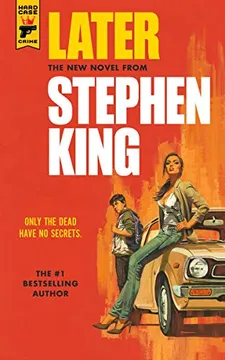
Later is a well-received Stephen King novel featuring Jamie Conklin, a boy who can see and communicate with the dead. Readers praise King's storytelling, character development, and ability to blend horror, crime, and coming-of-age elements. Many consider it a return to form, reminiscent of King's earlier works. While some criticize predictability and repetition, most appreciate the book's pacing, twists, and connections to King's other novels. The short length and engaging narrative make it a quick, enjoyable read for both longtime fans and newcomers to King's work.
People Also Read

Characters
Jamie Conklin
The reluctant mediumJamie is an observant, sharp-tongued boy raised by his single mother in New York. He can see the dead, a capacity he initially treats as an inconvenient fact rather than a calling. His instinct is to protect Tia, and that loyalty repeatedly places him between adults and problems they cannot solve. Jamie is also wary of being used, though he does not always recognize manipulation until after the harm is done. As he grows older, his humor and curiosity become ways of managing fear, while his experiences force him to distinguish helpful knowledge from dangerous power. His adult narration looks back with candor, but retains the child's longing for safety and an ordinary family.
Tia Conklin
Jamie’s determined motherTia is a literary agent who builds her life around caring for Jamie and keeping the Conklin agency alive. Attractive, funny, and fond of profanity, she can soothe her son with tenderness, yet financial pressure exposes her capacity for panic and risky judgment. She loves books as both stories and livelihoods, an outlook that makes her pragmatic without making her immune to hope. Tia's close relationships matter intensely to her, and she struggles when affection collides with evidence that someone may endanger her child. Her fierce protectiveness is not abstract: she works, sells possessions, sets boundaries, and tries to give Jamie a stable home even when the adults around them fail.
Liz Dutton
The compromised detectiveLiz is an NYPD detective, Tia's partner for a time, and a warm, playful presence in Jamie's childhood. She brings him small gifts, jokes with him, and can recognize when he needs food or comfort. Her confidence and police instincts coexist with impatience, secrecy, and a hunger for control. Liz wants to be useful and successful, but she is also drawn to the material security and status that her salary alone cannot provide. Jamie's feelings toward her are complicated because her kindness is genuine even when her decisions become harmful. She is a vivid example of how affection can survive alongside distrust, especially for a child who remembers both the games and the damage.
Martin Burkett
The thoughtful professorMarty Burkett is a retired NYU professor of English and European literature, and Mona's husband. He is scholarly without being cold, lonely without self-pity, and willing to listen seriously when Jamie brings him an extraordinary problem. His habits are old-fashioned, from loose-leaf tea to carefully composed letters, but his mind remains nimble. Burkett offers Jamie the rare adult attention of someone who does not immediately dismiss or exploit him. His love of detective stories and supernatural literature makes him a useful guide, though he understands that speculation is not the same as certainty.
Harry Conklin
The fading agency founderHarry is Tia's older brother and the founder of the Conklin Literary Agency. Once a capable businessman and a central figure in his sister's life, he develops early-onset Alzheimer's while carrying the financial decisions that burden Tia. Jamie knows him chiefly through care-home visits and fragments of the man he used to be. Harry's decline gives the family a daily encounter with memory loss, dependence, and the limits of love as practical care. His presence is important even when he can no longer participate fully in the world around him.
Regis Thomas
The secretive bestsellerRegis is the reclusive, hugely successful novelist behind the long-running Roanoke series and a major client of Tia's agency. He guards his plots closely and keeps their endings in his own mind rather than sharing outlines. His books are sensational, energetic, and commercially dependable, even as critics question their prose. Beneath the outsized adventures is a solitary man whose work has become the chief structure of his life. Regis's creative habits make his unfinished novel an especially difficult legacy for the people who depend on him.
Kenneth Therriault
The bomber called ThumperTherriault is a long-active serial bomber whose attacks make him a fixture of police investigations and public fear. He is methodical enough to evade capture for years and unpredictable enough to leave investigators uncertain about when he will strike again. His history of violence matters beyond the headlines because Jamie encounters him through a disturbing supernatural ability. Therriault's story tests the boundary between a person's identity and the force that may use what remains of them.
Donald Marsden
The hidden drug supplierMarsden is a wealthy, reclusive drug supplier living in a secluded mansion near Renfield. His immense house and guarded privacy conceal a criminal operation and a disturbing private history. He represents the insulated power at the top of a trade whose consequences are borne by people far beyond his home.
Mona Burkett
Marty's candid wifeMona is Marty's wife, remembered by Jamie as a sharp-tongued, observant woman who remains attentive to her husband's habits and feelings. Her remarks can sting, but her affection for Marty is unmistakable. Through Jamie's encounters with her, she makes grief feel intimate rather than abstract.
Barbara Means
Tia's capable assistantBarbara joins the Conklin agency as a young assistant and proves dependable during Tia's demanding work on the Roanoke novel. Over time she becomes a valued colleague, helping the agency regain stability. Her competence provides practical support without competing for the family's emotional center.
Monty Grisham
The agency's legal adviserMonty is a lawyer who advises Tia on publishing contracts and later helps her find legal support for Jamie. He is a practical professional whose warnings about the Mackenzie Fund prove sound. His role connects the family's literary business to the legal and financial systems surrounding it.
Plot Devices
Jamie’s second sight
A truth-bound bridgeJamie sees the recently dead as solid, recognizes them by the clothing they wore at death, and can speak with them before they fade. When he asks a question, they must answer truthfully, though a spirit can still speak falsely without being asked. The gift first helps locate Mona Burkett's rings, then lets Jamie recover Regis Thomas's unwritten plot and identify Thumper's final bomb. Its usefulness draws adults toward him, while his limited understanding leaves him exposed to people who want information for their own purposes.
The Roanoke manuscript
Art becomes financial rescueRegis Thomas dies with the ending of his popular series still unwritten, leaving his literary agent Tia facing repayment of a large advance. Because Jamie can communicate with Regis's spirit, he relays the complete plot while Tia records it and later writes the book. The manuscript restores the agency's finances, but it also creates an ethical vulnerability that Liz later exploits through a secret recording. The device ties creative authorship to family survival and makes Jamie's private ability part of a public literary product.
The Chüd contest
Fear becomes a confrontationProfessor Burkett gives Jamie a partly researched, partly improvised ritual for confronting the presence attached to Therriault. Rather than relying on an exorcism or a physical weapon, the ritual asks Jamie to hold on through a battle of wills and refuse the entity's bargains. Its practical force is psychological as well as supernatural: it gives Jamie a plan when the haunting has begun to disrupt school, sleep, and his trust in his own safety. Jamie's terms win him temporary control, but they do not erase the bond.
Thumper's bomb trail
A criminal pattern becomes a clueThumper's years of bombings, repeated notes, and use of Canadian dynamite create a trail that police struggle to follow. His suicide appears to end the investigation, but the warning that one more device remains turns his past into an urgent puzzle. Jamie's contact with Therriault supplies the location of the final bomb, while Liz disguises the source of the tip so the police will act on it. The trail saves shoppers from a planned explosion and simultaneously brings the hostile dead man into Jamie's life.
About the Author
Other books by Stephen King



Download PDF
Download EPUB
.epub digital book format is ideal for reading ebooks on phones, tablets, and e-readers.








