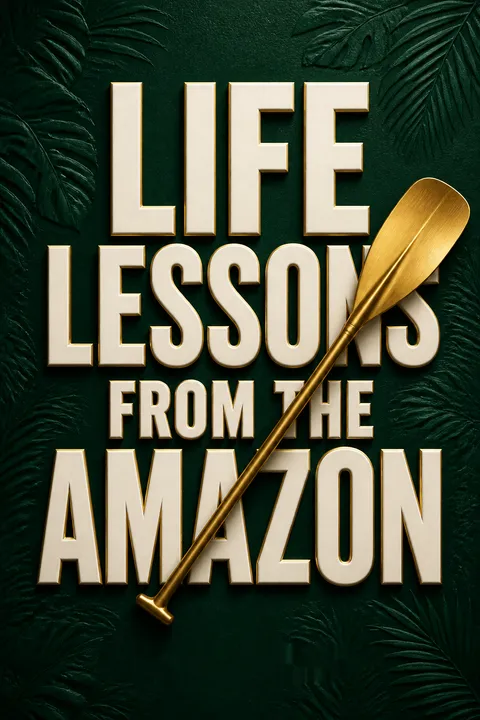


Key Takeaways
Explore by noticing your own life, not just distant places
A journey becomes a mirror. Pip Stewart joined a team attempting a source-to-sea kayak expedition down Guyana’s Essequibo River, a 1,014-kilometre route through rainforest and rapids. The world-first label mattered less to her than escaping constant connectivity and asking whether she was fully living. The expedition tested that question in vivid, sometimes dangerous ways, from jaguars and fallen trees to sickness and exhaustion.
The ordinary comes into focus. Stewart’s central idea is that adventure does not belong only to distant places. The jungle amplified familiar experiences: fear, self-doubt, friendship, distraction, and gratitude. Its lessons could have been learned at home, she suggests, but the contrast made them harder to ignore. Exploration, in this sense, means looking at the life already in front of you with fresh attention.
The expedition works as a powerful change of scale: a river journey makes everyday habits newly visible. Novel settings can interrupt automatic attention, but the insight does not depend on buying a plane ticket or seeking danger. A walk through a familiar neighbourhood can also reveal what routine has made invisible. The useful distinction is between travel as consumption and exploration as perception. Still, extraordinary experiences can distort the comparison: ordinary life may feel dull beside a near-death adventure. The book is strongest when it treats the jungle as a lens, not as proof that everyone needs an expedition.
Choose a direction, prepare carefully, then leave room for a crooked route
Start shaping before certainty arrives. Stewart compares life to working a lump of clay: a person can begin without knowing the finished form. She was inexperienced at kayaking and frightened by the expedition, so preparation mattered. The team trained, sought expert advice, arranged permits with the Waî Waî community, and planned communications and emergency measures. Yet the remote terrain meant rescue could not be guaranteed, and no plan could remove uncertainty.
Fear can travel with you. Stewart recalls abandoning confidence on a cycling trip after struggling on an early hill. Her partner Charlie reminded her that the challenge was mental as well as physical. They eventually cycled more than 10,000 miles over 13 months. The practical question is not whether fear disappears, but whether the desired direction is worth taking while fear remains.
This is a useful middle ground between reckless spontaneity and the fantasy of total control. Preparation expands the range of problems a person can meet calmly, while flexibility prevents a plan from becoming a brittle identity. The pottery image is especially apt because it makes revision part of creation rather than evidence of failure. There is one important boundary: fear is information, not an automatic instruction to proceed. Sometimes it signals a skill gap or unacceptable risk. A sound decision weighs both the pull of the goal and the real cost of pursuing it.
Track progress by the next useful step, not the whole jungle
Progress can look absurdly small. On the team’s upstream route, fallen trees repeatedly blocked the dugout canoes. During one stretch, the group spent two and a half hours travelling but moved for only 12 minutes. Laura counted the obstacles; the team cut, pushed, hauled, and sometimes squeezed under logs to continue.
Small actions keep direction alive. Stewart found it more useful to focus on the distance gained that day than to predict when they would reach the source. She applied the same idea while changing careers, taking one manageable step at a time, such as sending a pitch or arranging a meeting. Patience did not mean giving up ambition. It meant accepting that a long journey contains slow, frustrating sections, and continuing without demanding instant proof that the effort is working.
The lesson resembles process-focused goal setting: attention shifts from a distant result to actions that can be completed now. That shift can reduce overwhelm and make progress easier to notice. It also protects motivation when outcomes depend on weather, health, other people, or luck. But incrementalism is not a substitute for review. A person can take daily steps in the wrong direction. Periodic reflection, like the expedition team’s nightly sharing of highlights, helps determine whether the small actions still serve the larger purpose.
Train attention on small details before life has to shock you
Notice what habit hides. In the rainforest, Stewart initially overlooked ants because they were everywhere. Later, watching their behaviour and the small details around camp helped make the world feel more vivid. The team found beauty in things that could easily be ignored: a beetle’s sheen, light on a web, or a firefly near the cooking fire.
Attention changes the experience. Stewart wondered what she missed in London while rushing through the Tube, streets, and daily tasks. Her point is not that every ant or leaf is profound. Rather, deliberately looking closely can reveal interest and pleasure without waiting for a dramatic event. The team’s habit of sharing daily highlights helped them pause, remember, and notice more than whatever had demanded their attention most loudly.
Attention is selective: the mind gives priority to what is novel, threatening, or repeatedly reinforced. A deliberate practice of noticing can widen that selection and make ordinary surroundings feel less interchangeable. This connects naturally to mindfulness, but the book’s examples keep the idea concrete and sensory rather than abstract. There is a caution, too. Gratitude and noticing should not become compulsory optimism, especially for people facing hardship. Paying attention to beauty can coexist with anger, grief, or a need to change the conditions causing harm.
Build belonging through contribution, honesty, and shared responsibility
A team is made of different strengths. The expedition could not have reached the source without Waî Waî guides who knew the terrain, wildlife, and survival skills. Stewart struggled with some physical tasks but contributed through listening, documenting, helping, and keeping morale up. She learned that equal worth does not require identical abilities or identical jobs.
Rituals help people rely on one another. The group shared food, divided camp work, gave thanks before meals, and talked through daily highlights. Stewart also had to admit when fear overwhelmed her after a close encounter with a venomous snake. Teammates responded by staying near her at night and offering comfort. Belonging grew not from appearing capable at every moment, but from giving help, receiving it, and working toward a shared purpose.
This account challenges the idea that a valuable team member must be the fastest or most technically impressive. Groups become more resilient when different forms of competence count, including emotional steadiness, observation, care, and local knowledge. Shared rituals can also make cooperation predictable under stress. The deeper test is whether a group treats vulnerability as useful information rather than a liability. This is not an argument for forced closeness: belonging requires respect and choice. But isolation can make people hide needs that a team could otherwise help meet.
Face fear without pretending danger or grief are imaginary
Reframing is not denial. While hiking, Stewart nearly sat down beside a highly venomous lancehead snake. A guide killed it because he had previously been bitten and knew the danger. Stewart escaped unharmed, then struggled with the fact that the snake died in an encounter caused by the expedition’s presence. The incident left her shaken and raised questions she could not solve by simply thinking positively.
Support helped her process it. Stewart later had vivid nightmares, and the team moved her hammock closer to theirs and kept the campfire going longer. She learned that changing one’s response to a situation does not mean pretending the event was harmless. Humour, conversation, and companionship helped her continue, while the event also left her more aware of how fragile life can be.
The snake encounter shows why resilience should not be confused with emotional invulnerability. In trauma-informed practice, safety and supportive relationships can help people regain steadiness after a frightening event. Stewart’s teammates provide a concrete version of that principle without presenting themselves as therapists. Her discomfort about the snake also complicates the simple triumph story: survival did not erase moral unease. A limit remains, however. Reframing can help someone live with an event, but it cannot reverse harm or replace professional care when distress persists.
Speak discomfort early, before silence turns it into resentment
Unspoken needs affect the whole group. As the expedition continued, Laura became increasingly driven to get back to her young son, Ran. The team began paddling faster, while Stewart and Ness wanted more time to rest and observe. Stewart also had a kayak that was losing air, but she failed to get the attention of the others and grew angry. Rather than explain the larger problem calmly, she made a sharp complaint and held on to her frustration.
A shared plan reduces avoidable friction. Laura later apologized for her pace and Stewart recognized that she, too, had acted indirectly. They talked honestly and found a compromise: periods of focused paddling followed by time to slow down. Their experience reinforced an earlier lesson from a team coach: agree on a common goal and make room for everyone to speak.
Conflict often contains two kinds of information: an immediate problem, such as a failing boat, and a deeper disagreement about priorities. Naming both early makes it easier to solve the practical issue without turning it into a verdict on someone’s character. Explicit agreements about pace, safety, and communication can help groups working under pressure. Still, speaking up is not always equally easy for everyone. A healthy team does not merely invite honesty; leaders actively create conditions in which dissent is heard without punishment.
Slow down enough to notice people, place, and your own mind
Slowness revealed what speed concealed. On the river, the team often paddled for hours, leaving room for reflection and wildlife watching. Ant and Romel described taking breaks as part of working well, not as laziness. On a day when the group relaxed its pace, they spotted a jaguar. The pause also made space for conversation, play, and the emotional adjustment of leaving close teammates.
Connection needs attention. Back in range of the internet, Stewart found herself comparing her life with curated images online while sitting in a beautiful rainforest. She began preparing messages in advance and limiting aimless browsing. Technology remained useful for contacting family and fulfilling expedition commitments, but the experience showed her that being constantly reachable could pull her away from the people and place in front of her.
Slowing down can restore attention to relationships and surroundings that become background under constant task-switching. The expedition also makes clear that stillness may bring uncomfortable thoughts to the surface; speed can function as distraction. That does not make quiet universally restorative, nor does it mean every person can control their schedule. The more practical lesson is to protect small intervals of undivided attention. Phones can support connection across distance, but their presence does not guarantee connection with whoever is physically nearby.
Make exploration reciprocal, not a stage for your own story
Permission and local expertise matter. The expedition entered land protected by the Waî Waî community only after receiving permission. The guides led the difficult approach to the source, shared knowledge, and helped the team survive. Stewart also describes bringing supplies requested by the village. At the source, the team chose not to plant a flag, mindful of exploration’s history as a tool of conquest.
Good intentions are not enough. A reader criticized Stewart’s social media posts for centring the white traveller while obscuring Guyanese voices. She accepted the point and reconsidered how her platform represented the trip. The river also revealed the complicated effects of mining: environmental damage alongside livelihoods and economic pressures. Responsible travel, the book suggests, requires listening, sharing credit, and resisting the urge to turn other people’s homes into scenery.
This is the book’s sharpest ethical correction to the adventure genre. A traveller can be respectful in intention and still control the story, the images, and the benefits. Reciprocity is more than gratitude to helpful guides; it involves consent, accurate credit, and attention to who gains from the telling. The discussion of mining also avoids an easy moral split between pristine nature and bad people. Individual choices matter, but livelihoods and policy shape those choices. Ethical travel is an ongoing practice, not a clean certificate earned by one expedition.
Rest before your body has to make the decision for you
Endurance has a physical cost. The group pushed through long days, limited food, painful feet, and injuries. Stewart developed trench foot, a condition caused by prolonged damp exposure, while Ness became ill and collapsed at a lodge. A medic advised rest, and the enforced pause gave the team time to recover. Stewart admits that she wanted to continue partly because she did not want to let others down, even though she could have used more time to heal.
Limits are part of good judgment. The team also chose to carry kayaks around dangerous waterfalls instead of running them. Adventure required courage, but it also required assessing skill, conditions, and the consequences of a mistake far from medical help. Stopping, changing plans, or accepting assistance can protect both the individual and the group.
High-risk settings make bodily limits unusually visible, but the same principle applies to ordinary work: delayed recovery can turn a manageable strain into a crisis. Rest is not simply a reward after productivity; it is part of maintaining the capacity to act. The book usefully distinguishes chosen discomfort from needless danger. A caveat is that people do not all have equal access to time off, medical care, or safe working conditions. Advice to rest is most useful when paired with attention to those structural constraints.
Make your hard-won story useful to people facing the same disease
Survival is not the whole story. After returning home, Stewart learned that a sandfly bite had caused cutaneous leishmaniasis, a parasitic disease that can damage skin and, in some cases, affect the nose, throat, or mouth. She received specialist treatment in London, including three weeks of an intensive drug, and recovered. The experience made her confront the gap between her access to care and the limited options available to many people affected by neglected tropical diseases.
Use attention beyond yourself. The book notes nearly one million new cases a year and almost one billion people at risk across 98 countries. Stewart turned her experience toward raising awareness. The expedition’s finish did not settle every question about purpose or happiness; its clearest direction came from relationships, compassion, and using a platform to draw attention to people and problems beyond the traveller.
The illness gives the adventure a consequential ending: a remote expedition leads to a public-health issue that is easy for wealthier audiences to overlook. Personal testimony can make an abstract disease legible, especially when treatment is available to the storyteller but not to many affected communities. Its ethical value depends on what happens next. A compelling survivor narrative should direct attention toward local expertise, patient needs, and durable support, rather than making one traveller’s experience the centre of the issue.
Analysis
The book’s most useful argument is not that danger makes people wiser. It is that unfamiliar conditions expose habits that ordinary routines can conceal. The rainforest turns distraction, dependency, fear, and cooperation into practical matters: a missed signal, a poor choice of campsite, or a team member’s silence can have immediate consequences. That pressure gives the reflections narrative force, while Stewart’s humour keeps the expedition from becoming a polished tale of heroic mastery.
Its structure deliberately alternates between outdoor events and life lessons. This makes the book accessible, but it also creates a tension: a lesson drawn from extreme conditions may not transfer neatly to a reader’s daily life. The author partly resolves this by locating the familiar inside the extraordinary. The slow progress through fallen trees resembles long-term work; team dynamics resemble family and workplace relationships; the need to rest becomes a warning against treating exhaustion as virtue.
The deeper tension is ethical. Stewart travels as a privileged outsider into a place whose Indigenous residents hold authority, expertise, and histories shaped by colonization. The book’s most persuasive moments occur when that authority is visible: permission is sought, local guides lead, and the traveller’s self-centred portrayal is questioned. This turns exploration from an individual achievement into a relationship with people and place. The treatment of mining adds necessary complexity by acknowledging both environmental harm and the livelihoods that depend on extraction.
The lasting practical framework is a sequence rather than a slogan: choose a direction, prepare, notice what is happening, ask for help, communicate needs, reassess risk, and share credit. None of these actions guarantees happiness or a clean ending. The disease diagnosis and unresolved questions resist that kind of closure. Instead, the book presents attention, humility, and connection as ways to keep responding well in a life that remains uncertain.
Review Summary
Life Lessons From the Amazon received mostly positive reviews, with readers praising its inspiring adventure story, thoughtful reflections, and engaging writing style. Many appreciated the author's vulnerability, humor, and ability to transport them to the Amazon. Criticisms included overuse of platitudes and privilege. Readers found the book educational, eye-opening, and a testament to human endurance. The author's encounter with leishmaniasis and its impact on global health inequalities resonated with many. Overall, the book was described as a compelling blend of adventure and personal growth.
People Also Read





Glossary
Leishmaniasis
Sandfly-transmitted parasitic diseaseLeishmaniasis is a group of diseases caused by parasites transmitted through the bite of infected female sandflies. The book focuses on cutaneous leishmaniasis, which causes skin lesions, and explains that some infections can also threaten mucous membranes. Stewart received treatment after returning from Guyana and uses the experience to highlight unequal access to care for neglected tropical diseases.
Trench foot
Injury from prolonged dampnessTrench foot is tissue damage associated with prolonged exposure of the feet to wet conditions. In the expedition, constantly damp socks and boots left Stewart’s feet swollen, itchy, and sore. The book stresses drying the feet and monitoring changes because severe, untreated cases can lead to serious complications.
BGAN
Remote satellite internet systemBGAN stands for Broadband Global Area Network. Stewart’s expedition team carried a BGAN terminal to access broadband in remote areas when they could point it toward a sufficiently clear sky. It helped the team communicate and manage online obligations, but the device did not remove the need to cope independently when signals were unavailable.
FAQ
What's Life Lessons From the Amazon about?
- Personal Journey: The book follows Pip Stewart's source-to-sea kayak expedition down the Essequibo River in Guyana, detailing her physical, emotional, and mental challenges.
- Life Lessons: Each chapter offers a "life lesson" from the expedition, such as resilience and kindness, providing insights applicable to readers' lives.
- Cultural Insights: It explores interactions with the Waî Waî community, emphasizing sustainability and respect for nature.
Why should I read Life Lessons From the Amazon?
- Inspiration for Change: The book is described as inspiring change, encouraging readers to reflect on their own journeys and challenges.
- Adventure and Discovery: It combines personal growth with exploration, offering a thrilling account of navigating a remote jungle.
- Ethical Travel Perspective: Pip addresses issues like privilege and sustainability, making it thought-provoking for those interested in travel ethics.
What are the key takeaways of Life Lessons From the Amazon?
- Embrace Uncertainty: Encourages readers to accept life's mysteries, leading to growth and discovery.
- Value of Community: Highlights the importance of supportive relationships and belonging.
- Resilience in Adversity: Teaches that setbacks are inevitable, and resilience involves adapting and recovering.
What are the best quotes from Life Lessons From the Amazon and what do they mean?
- "Don't let your inner critic take over.": A reminder to silence self-doubt and negative self-talk.
- "You are your engine.": Emphasizes personal motivation and drive as essential for achieving goals.
- "When there is, there is, and when there isn't, there isn't.": Encourages acceptance and focusing on the present.
What life lessons does Pip Stewart share in Life Lessons From the Amazon?
- Direction and Flexibility: Life is like pottery, requiring flexibility in shaping our paths.
- Patience and Growth: Highlights the value of incremental progress over time.
- Kindness and Connection: Encourages recognizing and appreciating small acts of kindness.
How does Pip Stewart address the concept of resilience in Life Lessons From the Amazon?
- Nature as a Teacher: Compares trees to human resilience, illustrating adaptation and recovery.
- Grit and Determination: Resilience involves rising after setbacks and pushing forward.
- Emotional Vulnerability: Encourages openness about struggles to build stronger connections.
What challenges did Pip Stewart face during her expedition?
- Physical Demands: The expedition required significant endurance, testing her physical limits.
- Mental Struggles: Faced self-doubt and fear, particularly with dangerous wildlife encounters.
- Team Dynamics: Navigated interpersonal dynamics in a high-stress environment, emphasizing communication.
How does Life Lessons From the Amazon address environmental issues?
- Impact of Mining: Highlights the detrimental effects of illegal mining on rainforests and communities.
- Cultural Reflection: Emphasizes preserving indigenous knowledge and practices amid modern challenges.
- Personal Responsibility: Encourages mindful consumption habits and consideration of environmental impacts.
What role does community play in Life Lessons From the Amazon?
- Support System: Teamwork and support among expedition members are crucial for success.
- Cultural Exchange: Encounters with the Waî Waî people showcase the value of sharing knowledge.
- Emotional Bonds: Shared experiences forge strong emotional connections and a sense of belonging.
How does Pip Stewart's perspective on happiness evolve throughout Life Lessons From the Amazon?
- Redefining Happiness: Learns that true happiness comes from connection and presence in the moment.
- Acceptance of Emotions: Embraces a range of emotions as part of the human experience.
- Finding Joy in Simplicity: Discovers happiness in simple moments rather than grand accomplishments.
What lessons about self-care are highlighted in Life Lessons From the Amazon?
- Listening to Your Body: Recognizes the importance of rest and acknowledging physical limits.
- Emotional Well-being: Emphasizes mental health and seeking support when needed.
- Balance in Life: Advocates for balancing adventure with self-care for overall well-being.
How does the book explore the theme of fear?
- Confronting Fears: Faces physical dangers and emotional vulnerabilities, learning to embrace them.
- Fear of the Unknown: Highlights growth from facing fears in unfamiliar territory.
- Transformative Power of Fear: Illustrates fear as a catalyst for personal growth and discovering inner strength.
Download PDF
Download EPUB
.epub digital book format is ideal for reading ebooks on phones, tablets, and e-readers.








