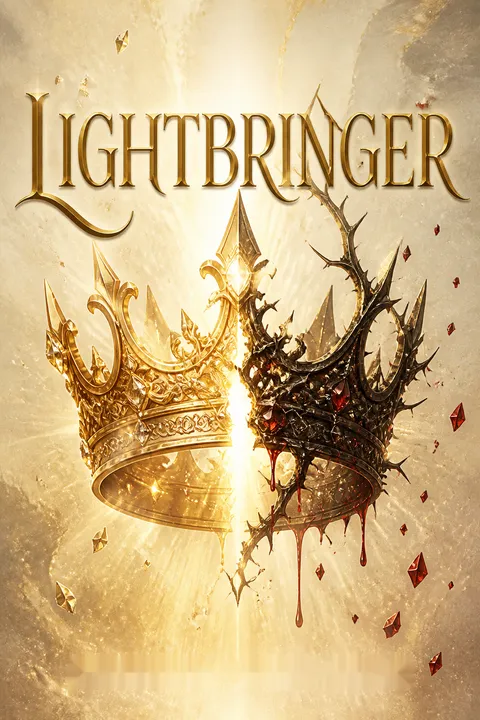


Plot Summary
Prologue
On a frozen plateau far in the future, nine-year-old Simon Randell4 is found hunting alone by Corien,5 the angel who killed Simon’s father5 and helped ruin his world. Simon4 clings to him because solitude has become unbearable, then explains that he was thrown forward through time while carrying the infant daughter2 of Queen Rielle.1
The child2 vanished during the journey. Corien5 recognizes Simon4 from a memory of the future, claims him as an ally, and tears through his mind to ensure his loyalty. Simon’s4 need for company becomes the opening Corien5 uses to possess him.
The opening makes loneliness a form of leverage. Simon knows Corien is responsible for his father’s death, yet the boy’s isolation outweighs his anger because human contact has become a survival need. Corien exploits that need with tenderness before imposing control, making affection and coercion difficult to distinguish. The future setting also establishes that time itself has already been damaged, while Simon’s missing infant passenger plants a mystery that will later reshape the past and the present.
The Queen Leaves Baingarde
After her wedding, Rielle’s1 history of killing kings and family members is exposed to Celdaria, and Audric3 rejects her in the palace gardens. Corien5 finds her in the forest and offers comfort where her husband’s3 anger has left her raw. They flee east with Obritsa,10 a Kirvayan queen and marque, and her guard Artem.
Corien’s5 influence turns Rielle’s1 thoughts hazy, dulling her guilt and her questions about their destination. He also offers to help her forget Audric.3 Rielle1 accepts, unaware that she is pregnant and that Corien5 is quietly suppressing memories of Tal11 and the life she abandoned. Her departure leaves Audric3 without his wife1 and Celdaria without its newly crowned queen.1
Rielle’s flight begins in a morally complicated place: she has genuinely harmed people, but Corien converts that guilt into proof that she deserves isolation. His comfort does not erase her agency so much as narrow it, making the choice to leave feel like the only refuge available. The fog in her mind gives emotional form to coercive intimacy: she still feels desire and attachment, but loses access to the memories and doubts that might let her judge them. Her private shame becomes the opening through which a political crisis turns into an intimate captivity.
Eliana Taken to Elysium
A thousand years after Rielle’s1 flight, Eliana Ferracora2 reaches Festival hoping to confront her mother1 and prevent the catastrophe that history records. Simon,4 the marque who once loved and protected her, shoots their allies and obeys the Empire, while Admiral Ravikant wears the body of Eliana’s adoptive father,2 Ioseph. Soldiers seize Eliana2 and her brother7 Remy.7
Chained aboard Ravikant’s ship, stripped of her castings and unable to reach the empirium, Eliana2 can do little but grieve the people Simon4 killed. At Elysium, Corien5 greets her among a gallery of sculptures and paintings depicting Rielle.1 He separates Eliana2 from Remy7 and begins using visions of her lost family and lovers to bend her toward obedience.
The betrayal is effective because it attacks Eliana’s practical trust and her emotional memory at once. Simon’s violence makes her question the relationship that once steadied her, while Ravikant’s occupation of Ioseph’s body turns a familiar face into an instrument of the Empire. Corien’s art collection extends that violation: Rielle is not merely remembered but repeatedly rendered as an object for his private gaze. Eliana’s loss of her castings makes the contrast material. Her power remains inside her, yet access to it depends on psychological conditions she can no longer control.
Audric Loses His Kingdom
Audric3 escapes Celdaria with Ludivine6 and Atheria,15 leaving Merovec Sauvillier on the throne and Rielle1 gone with Corien.5 In Mazabat, Queen Bazati grants the deposed king3 asylum, but grief keeps him in bed while Sloane18 and the Sun Guard arrive to help. Meanwhile, Tal11 searches for Rielle1 and reaches a storm-struck tavern where angels kill townspeople from inside their minds.
He sees Rielle1 vanish through Obritsa’s10 threads before Corien5 knocks him unconscious. Reports from home describe Merovec interrogating elementals and tightening his grip on the capital. Sloane18 finally persuades Audric3 to attend a war council, where he admits his failures and asks Mazabat for aid. The Senate rejects his petition, leaving him with no army for his return.
Audric’s political defeat is compounded by a collapse in his sense of self. He understands that others need him to lead, yet grief makes leadership feel like another demand imposed on a man already emptied by loss. Sloane’s insistence matters because it treats his withdrawal as consequential rather than merely private: while Audric hides, Merovec acts. Tal’s parallel search shows that loyalty can be active and still insufficient; courage cannot overcome an enemy who can invade minds and erase whole communities. The failed vote forces Audric to confront that recovery will require action without assurance of support.
Rielle Sees the Leash
In a ruined angelic city, Rielle1 remembers Tal11 reaching for her during her flight and realizes Corien5 has been hiding memories whenever they threaten his hold. She attacks him with the empirium, forces him to admit that he wants the seven saints’ castings to open the Gate, and understands that he intends her to resurrect an army of angels.
Their argument gives Obritsa10 and Artem time to flee with the castings they carried. Corien5 tracks them down and tortures Obritsa,10 but Rielle1 stops him with a burst of power. Ludivine6 reaches Rielle1 through a distant mental link, revealing that Rielle1 is pregnant and urging her to return to Audric.3 Rielle1 rejects the message, then lets Corien5 close the door on it again.
Rielle’s recovered memory restores more than information; it restores the possibility of choice. Once she recognizes that Corien has edited her inner life, the affection she feels for him can no longer serve as proof that he is safe. Yet awareness does not instantly free her. She still wants his attention and warmth, and she actively asks him to block Ludivine’s voice. The scene resists a simple victim-versus-manipulator account by showing attachment surviving alongside clear evidence of abuse. Obritsa’s escape briefly interrupts that pattern, but Rielle’s return to Corien shows how difficult freedom becomes when control has been made to feel like comfort.
Corien Breaks Eliana’s Defenses
Corien5 keeps Eliana2 in a lavish white suite guarded by adatrox, the emptied minds of enslaved humans. He feeds her false dreams of Simon,4 Remy7 and Ioseph to make captivity feel like home, then brings the real Remy7 before her and tortures him. Eliana2 initially refuses to trust what she sees, but Remy’s7 suffering forces her to reach for her castings.
Her power shakes the palace, and Simon4 briefly manages to travel across a room by space-threading. Corien5 sees the result as the first step toward using Simon’s4 power to return to Rielle.1 Eliana2 recognizes that her own anger has helped him, and Corien5 begins searching her mind more brutally for the secrets she has learned to hide.
Corien’s method turns care into a trap: he uses the people Eliana loves both as imagined comforts and as real hostages. Her refusal to react is not indifference but a strategy to preserve control over her mind, though Remy’s pain makes that strategy unbearable. The power that returns is therefore double-edged. It gives Eliana agency, yet its first eruption serves Corien’s larger aim by reawakening Simon’s threading. The moment captures the novel’s central psychological problem: a person may need to reclaim a capacity that has been exploited without surrendering authorship of how that capacity is used.
Navi Finds the Deep
Fleeing the Empire’s invasion of Astavar, Navi8 leads a small band of refugees through the Vesperian bog, determined to reach Eliana2 and build a force against Corien.5 A quake opens a strange dark fissure in the swamp. When Navi8 approaches, she sees images of the Deep and understands that the disturbance is tied to Eliana’s2 struggle.
She continues on to meet Ysabet,13 the Red Crown leader, who has been secretly building a warship from her mother’s designs. Navi8 wins her support by explaining that she means to rescue Eliana,2 not merely avenge Astavar. Ysabet13 commits her ship and scattered fighters to the mission. Their alliance gives Navi8 a fleet, but the fissure remains behind them, an unwelcome sign that the world itself is changing.
Navi’s leadership rests on persuasion rather than inherited authority alone. She is a displaced princess hiding her identity, yet she earns Ysabet’s support by naming a purpose that can hold grief without pretending to erase it. The fissure tests that hope with a scale of danger beyond any army. Navi cannot explain what she sees, but she acts on the evidence instead of waiting for certainty. Her decision to press onward establishes a useful counterpoint to the more powerful characters: she cannot command the empirium, but she can recruit, interpret risk, and make other people’s courage mutually sustaining.
Rielle Escapes the Reach
Corien5 brings Rielle1 through the Northern Reach, where she sees stolen elemental children forced to awaken their magic and ride mutilated dragons called crawlers. He also shows her the thousands of adatrox he has gathered as disposable soldiers.
With Obritsa’s10 help, Rielle1 escapes, destroys Saint Marzana’s shield and crosses the White Wastes toward the remaining castings. Obritsa10 takes her to Saint Tameryn’s hidden cavern, where Rielle1 kills the Obex guardians and claims the saint’s dagger.
The casting’s power draws her deeper toward the empirium, while Corien5 keeps reaching for her through their mental bond. Rielle1 now has a concrete reason to resist his plan: his promised new world is already being built from tortured children, stolen bodies and altered godsbeasts.
The Northern Reach makes Corien’s political ambition physically legible. His empire is not an abstraction but a system that turns children into controlled weapons and living beings into components. Rielle recognizes the horror without becoming morally simple; she has killed before, and the power of destruction still exhilarates her. Obritsa’s practical courage gives Rielle a way out, while the castings and the empirium pull her in another direction. The conflict is not simply whether Rielle will choose good over evil. It is whether she can distinguish her own hunger for power from the uses Corien has designed for it.
The Gate Opens Wide
After pursuing the remaining castings, Rielle1 reaches the Gate on the island of Iastra. She kills the Obex guarding it and opens the barrier with her bare hands, releasing about five hundred thousand angels. The force nearly consumes her, but Corien5 carries her back to the Northern Reach.
He asks her to resurrect the bodiless angels, and she successfully binds one to a living body, creating a new kind of soldier. Later, when Rielle1 meets Tal11 on the Meridian coast, he begs her to come home; she kills him after rejecting his belief that love can return her to a safe, ordinary life. Her power keeps rising, and Corien’s5 army now has both newly freed angels and bodies fashioned by Rielle1 herself.
Opening the Gate is both a political act and a transformation of Rielle’s relation to herself. She no longer needs the saints’ castings to make the world obey her, and that independence feels like liberation even as it enables mass violence. The failed first resurrection gives way to success, but technical mastery does not settle the moral question of what should be created. Tal’s death marks the cost of Rielle’s estrangement from home: he offers belonging, but frames it in terms she hears as containment. Corien’s vision of partnership remains seductive because it promises recognition without restraint.
Audric Reclaims Baingarde
The Gate’s disruption brings a hurricane to Mazabat, and Audric3 rides Atheria15 into its eye to break the storm with Illumenor, nearly burning his hands away. His courage changes the Senate’s judgment, and Mazabat grants him military aid. With Queen Bazati’s forces and Red Crown support, Audric3 returns to Celdaria through Baingarde’s hidden passages.
He confronts Merovec, who holds Queen Genoveve20 at knifepoint and has terrorized the capital with interrogations. When Atheria15 breaks into the Hall of the Saints, Audric3 kills Merovec with Illumenor and frees his mother.20 He then organizes Celdaria’s defenses, restores the throne and prepares to face Corien’s5 army. Grief has not vanished, but Audric3 has begun acting as a king again.
Audric’s recovery is measured through public responsibility rather than emotional cure. He does not stop mourning Rielle before he acts; instead, the storm forces him to place his body between a threatened city and a force he barely understands. The Senate responds to demonstrated risk, not to inherited claims, making political legitimacy something Audric must earn in public. His killing of Merovec is a necessary act that still burdens him, preserving the difference between force used to seize power and force used to end a tyrant’s rule. The return to Baingarde is a restoration of office, not a return to the life he lost.
Eliana Opens Ostia
With the Prophet’s6 secret guidance, Eliana2 learns to rebuild her strength without letting Corien5 sense each attempt. She opens a fissure in the Deep and gradually widens it toward Elysium, creating a second breach called Ostia.
When Corien5 releases Vaera Bashta’s prisoners into the streets, Eliana2 uses the resulting chaos to return to the Deep and tear Ostia open. Cruciata pour through, overwhelming the city and disrupting Corien’s5 control of his forces. Eliana2 escapes the palace with Remy7 and the Imperial trainee Jessamyn,12 who has begun doubting Corien.5
At a plaza, Simon4 kills an angel possessing a soldier and guides Eliana2 and Remy7 through a hidden entrance to Ludivine’s6 underground refuge. Corien5 has lost control of the city, but the beasts threaten everyone in it.
Eliana’s strategy is deliberately dangerous because ordinary resistance has been made impossible: she cannot confront Corien directly while he can enter her mind at will. Opening Ostia turns his own strategic blind spot into an advantage, but it also makes civilians pay for a decision they did not choose. Eliana’s survival depends on separating tactical necessity from moral innocence. The presence of Jessamyn and Simon complicates the rescue: former enemies help her, but their help does not erase what they have done. The city’s invasion creates time, not safety, and the distinction keeps the apparent victory from becoming a false resolution.
The Prophet Names Herself
Navi,8 Ysabet13 and their fighters reach Ludivine’s6 refuge, guided through Elysium by Zahra,9 whose effort leaves the wraith fading away. Eliana2 finally meets the Prophet:6 Ludivine,6 the angel who once lived in her mother’s friend’s body.6 Ludivine6 explains that Simon’s4 apparent service to Corien5 was a plan she engineered.
She trained Simon4 to deceive the Emperor, then allowed Corien5 to torture him so he would seem wholly loyal. The revelation explains why Simon4 betrayed Eliana2 at Festival and why he later helped her escape. Ludivine6 also tells Eliana2 that changing the past may erase the lives her friends now live. To return Eliana2 to Rielle’s1 time, Simon4 must recover his threading through Eliana’s2 power and trust.
The revelation reframes Simon’s betrayal without undoing its injury. His actions were part of a strategy, but Eliana experienced the bullets, captivity and humiliation as real, and the explanation cannot convert trauma into a harmless performance. Ludivine’s plan is equally unsettling: she has protected the world by treating Simon as material to be shaped, much as Corien does. Zahra’s final effort brings the cost of loyalty into the room in a form no strategy can soften. The proposed time journey adds a further ethical pressure: saving the past may erase the people whose sacrifices made the rescue possible.
Love Reawakens the Threads
Eliana2 resists Ludivine’s6 demand that she restore Simon’s4 power, then recognizes that Corien5 will soon find the refuge and that refusal could make every sacrifice pointless. She speaks privately with Simon,4 naming her anger and continuing love without pretending to trust him again. Their closeness lets his threading return.
Ludivine6 prepares them to travel to the past, explaining that Eliana2 must persuade Rielle1 to turn against Corien5 and close the Gate; if persuasion fails, Eliana2 may have to kill her own mother.1 Remy7 insists on going too. As Corien5 attacks the refuge, Simon4 opens the time-thread. Eliana2 and Remy7 cross first, landing in the royal gardens during the ancient battle that will decide whether their future ever exists.
The reconciliation is intentionally incomplete. Eliana does not forgive Simon, and the story does not require her to pretend that love automatically repairs trust. Instead, she makes a limited, purposeful choice to accept him as a person whose actions were shaped by another person’s cruelty. That distinction restores the power needed for their mission without erasing accountability. The time-thread makes intimacy consequential: Eliana’s renewed connection is not merely romantic closure but a condition of action. Her decision to bring Remy acknowledges that he is no longer only the brother she remembers; he has become an agent in his own survival.
Daughter Meets Blood Queen
Eliana2 and Remy7 arrive during the battle outside Baingarde, where Audric’s3 forces struggle against Corien’s5 angels, adatrox and crawler-riding children. They find the young Simon4 and his healer father,14 but cannot save them without exposing themselves.
Odo Laroche guides the time travelers through hidden passages toward the castle. On the terrace, Eliana2 reaches Rielle1 just as she is about to strike Audric.3 Eliana2 blocks the blow with Katell’s sword and tells her mother1 what the future holds: Corien’s5 Empire, Eliana’s2 captivity and the destruction of the world.
Rielle1 lowers her weapon and admits she wants both rest and the power she has discovered. Mother and daughter choose to fight together, turning toward the battle rather than surrendering to Corien’s5 story of who they are.
The confrontation works because Eliana does not try to absolve Rielle or deny her appetite for power. She names the consequences of that appetite while also recognizing the pain that makes Corien’s offer persuasive. Rielle’s admission that she wants both rest and more power keeps the choice unresolved at the level of desire; what changes is her willingness to choose without letting Corien choose for her. Audric’s imminent death gives the scene a concrete stake, while Eliana’s arrival also makes the prophecy intimate: the future queen is not an abstraction but a daughter intervening in her parents’ worst moment.
The Empire Falls
Corien5 invades Rielle’s1 mind and tries to pull her back into dependence, while angels and beasts attack the terrace. Rielle1 breaks his hold long enough for Eliana2 and the others to fight back. Ludivine6 arrives wielding Katell’s sword and draws Corien5 into a duel, giving Rielle1 a moment of mental freedom.
Understanding that Ludivine6 is sacrificing herself to create that opening, Rielle1 gathers the empirium and destroys both angels. Because Corien’s5 mind was connected to thousands of controlled soldiers and angelic minds, his death wipes out many of them as well, collapsing the invading force.
Eliana2 and Remy7 vanish as the altered future unravels. Rielle1 later closes the Gate and relinquishes her physical life, leaving Eliana’s2 power intact while the world’s magic falls dormant.
The victory is not clean or emotionally triumphant. Rielle’s decisive act is also an act of mass destruction, and the networked nature of Corien’s mind means that killing him destroys people bound to him, not just the tyrant himself. Ludivine’s intervention gives Rielle the freedom she has been denied, but it arrives through another sacrifice imposed by necessity. Eliana’s disappearance makes victory feel like bereavement: Rielle saves a future she cannot keep. Her final choice to quiet the empirium is a protective act that also removes magic from ordinary life, trading immediate power for a fragile interval of peace.
Epilogue
Five years later, Rielle’s1 letter explains that she left because the power inside her had become impossible to contain and she feared it would endanger Audric3 and their daughter.2 Eliana2 is growing up in Celdaria with her father,3 grandmother20 and friends, carrying the only surviving active connection to the empirium.
At Garver Randell’s14 shop, she learns to chop herbs beside Simon,4 now a solemn boy whose lost magic sometimes leaves him grieving. Audric3 brings Eliana2 home, and Simon4 waits at the garden gate to wave as they leave. The future Eliana2 remembers has been erased, but its emotional traces remain in the people who survived the rewritten past.
The epilogue refuses a simple restoration. Eliana receives a childhood and a family, but she does not retain the memories that would let her recognize the scale of what was sacrificed for her. Simon’s grief for his lost power preserves a small scar from the former timeline without turning him into the hardened adult he became there. Rielle’s absence is both the condition of safety and the cost of it. The final image of Simon waiting at the gate suggests that attachment can survive without conscious memory, though it cannot restore the lives that vanished. Peace is presented as a beginning built around loss, not its cancellation.
Analysis
Lightbringer treats power not as a simple measure of strength but as a relationship that can be cultivated, exploited or mistaken for identity. Rielle1 and Eliana2 inherit capacities that exceed ordinary human limits, yet their greatest danger comes from other people claiming to know what those capacities mean. Corien5 calls possession love; Ludivine6 calls manipulation necessity; institutions call control protection. The novel resists treating any of these labels as self-justifying. Rielle’s1 choices remain morally consequential even when her mind has been altered, and Eliana’s2 refusal to forgive Simon4 does not prevent her from making a purposeful, limited choice to trust him again.
The story’s central ethical tension is between survival and consent. Ludivine’s6 plan saves a possible world by subjecting Simon4 to years of pain and by asking Eliana2 to risk erasing the friends who helped her. Rielle’s1 final intervention protects her family, but it also silences magic for an entire population and removes herself from their lives. These acts are not presented as clean solutions. Each leaves grief behind, which prevents sacrifice from becoming an easy moral currency.
Time travel sharpens the novel’s interest in inheritance. Eliana2 is both the consequence of Rielle’s1 past and a person capable of changing it. Her intervention does not make the old future meaningless; instead, it leaves traces in the emotional patterns of a newly rewritten life. The child Eliana2 and the young Simon4 do not remember their former bond, yet they are drawn toward one another again. The ending suggests that history can be altered, but not treated as disposable. Love may survive as habit, attention and renewed choice, even when memory cannot carry it whole.
Review Summary
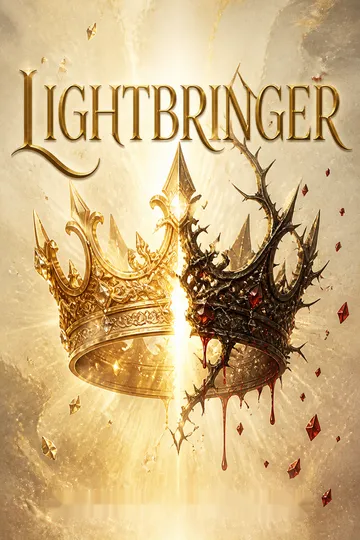
Lightbringer, the final book in the Empirium Trilogy, received mixed reviews. Many readers found it a satisfying conclusion with emotional depth and complex characters, particularly praising the development of Rielle and Eliana. Some felt the pacing was slow and the multiple POVs confusing. The time travel element and bittersweet ending were divisive. Despite criticism, most reviewers considered it a powerful finale to a beloved fantasy series, appreciating the author's world-building and ability to evoke strong emotions.
People Also Read






Characters
Rielle
The dangerous Sun QueenRielle is a Celdarian queen whose extraordinary connection to the empirium makes her capable of both creation and destruction. She has spent much of her life being judged, trained, feared and praised by people who want her power to serve their institutions. Her fierce appetite for knowledge and intensity of feeling make her vulnerable to anyone who offers recognition without restraint. She loves deeply, but shame and fear can make her mistake control for refuge. Her story is driven by a conflict between the wish to become more than human and the wish to remain connected to people who cannot share her experience.
Eliana
The future-born Sun QueenEliana is Rielle1 and Audric’s3 daughter, raised in a later age and shaped by a life of combat, loss and responsibility for her younger brother7. Known as the Dread of Orline, she is a capable fighter whose practical toughness conceals a strong hunger for family and safety. Her power is immense, but she fears becoming an instrument of other people’s plans. Eliana’s instinct is to protect those she loves, sometimes at the cost of her own well-being. Her central psychological struggle is learning that vulnerability and self-command can coexist, especially when trust has been repeatedly used against her.
Audric
The exiled LightbringerAudric is Celdaria’s king and a powerful sunspinner, devoted to Rielle1 even when her choices frighten and wound him. He is reflective, conscientious and inclined to turn private failure into public responsibility. His grief initially leaves him unable to face the people depending on him, but his sense of duty eventually draws him back into leadership. Audric values diplomacy and mercy, yet he can use force when the survival of others requires it. His relationship with Rielle1 is defined by genuine love complicated by fear, jealousy and the burden of being expected to understand a power he cannot share.
Simon
The scarred young marqueSimon is a healer’s son14 with marque abilities that let him travel through space and time. Quiet, observant and skilled at hiding his feelings, he is shaped by a childhood loss and a deep need for belonging. His sharp intelligence makes him useful to powerful people, but it also allows them to turn his loyalty into a tool. Simon’s bond with Eliana2 joins affection, shared danger and painful misunderstandings. He often expresses care through practical acts rather than explanation, while his restraint can look like coldness even to those he most wants to protect.
Corien
The beautiful angel emperorCorien is an ancient angel whose mind can enter and command other minds. Brilliant, charismatic and capable of tenderness, he is also possessive and convinced that his people’s suffering justifies almost any act of vengeance. He seeks a world remade according to his will and views Rielle’s1 power as inseparable from his love for her. Corien understands loneliness intimately, but he answers it by claiming other people rather than meeting them as equals. His emotional volatility sits beneath an elegant manner, making affection and threat feel unnervingly close.
Ludivine
The hidden angel strategistLudivine is an angel who has lived in a human body and has long acted as Rielle’s1 adviser and Audric’s3 confidante. She is patient, politically astute and capable of extraordinary mental discipline. Her protective instincts often become controlling: she withholds information when she believes others cannot bear it or might choose wrongly. Beneath her calm manner lies a capacity for deep attachment and an equally deep fear of loss. Ludivine’s difficult ethics grow from believing that survival sometimes requires people to endure what they never consented to endure.
Remy
Eliana’s storyteller brotherRemy is Eliana’s2 younger brother, a gifted reader and storyteller who brings warmth and humor to a life crowded with danger. He admires the old tales of saints and kings and often turns to stories as a way to make frightening events intelligible. His love for Eliana2 is loyal without being passive; he wants to stand beside her rather than remain a protected child. Remy’s curiosity and emotional openness are strengths, though they also leave him exposed to people who seek to manipulate his affection for his sister2.
Navi
The displaced princess rebelNavi is a princess of Astavar who conceals her identity while organizing refugees and resistance fighters. Compassionate, determined and sometimes impulsive, she builds trust by acknowledging grief rather than pretending it can be set aside. Her faith in Eliana2 gives other people a reason to risk joining her, even when the odds appear hopeless. Navi is not a natural general, but she is a strong coalition-builder who listens to those around her and gives their courage a shared direction. Her tenderness is not separate from her leadership; it is the source of it.
Zahra
Eliana’s devoted wraithZahra is an angel without a body, able to communicate through minds and, with effort, project a voice into the physical world. She regards Eliana2 with a guardian’s tenderness and treats service as a chosen bond rather than submission. Zahra carries the sorrow of long survival and the fear that she has failed those she loves. Though she has little physical presence, her resolve and intelligence make her a crucial protector and guide.
Obritsa
The captive marque queenObritsa is the young queen of Kirvaya, a marque secretly connected to a revolution against the elemental ruling class. She is sharp-minded, proud and physically resilient, even when imprisonment and exhaustion leave her at a disadvantage. Her courage appears in practical choices: she keeps moving, protects Artem and uses her threading skill to carry others to safety. Obritsa is wary of being treated as a tool, which makes her an incisive judge of how power distorts relationships.
Tal
Rielle’s devoted teacherTal is Celdaria’s Grand Magister of the Pyre and one of Rielle’s1 longtime teachers. Warm, charming and deeply loyal, he sees Rielle1 as a person before he sees her as a source of power. His affection can make him overconfident in his ability to reach her, and his faith in her goodness sometimes leaves him unprepared for the choices she may make. He is also connected to a life beyond the court through his love for Miren19.
Jessamyn
The Emperor’s trained assassinJessamyn is an Invictus trainee, trained to survive through discipline, violence and unquestioning service to Corien5. She values competence and despises vulnerability, partly because she has been taught to regard tenderness as a weakness others can exploit. Her sharp instincts make her an effective fighter and a keen observer of the palace’s shifting loyalties. Though guarded and often harsh, Jessamyn has a capacity for doubt that her training cannot entirely suppress.
Ysabet
The Vesperian shipbuilderYsabet leads Red Crown resistance in the Vespers and is building a fast warship from designs left by her mother. Bold, inventive and prone to disguising grief with wit, she has spent years fighting the Empire through small raids and sabotage. Navi’s8 mission gives her resistance a larger purpose. Ysabet values competence, but she is also capable of sudden tenderness when someone recognizes the losses behind her bravado.
Garver Randell
The healer and apothecaryGarver is a Celdarian healer, apothecary and marque, as well as Simon’s4 father. Practical and observant, he prefers useful work to grand claims of heroism. His care for patients is steady, and he provides a model of affection that does not demand obedience in return. Garver’s family life connects him to the world Rielle1 leaves behind and to the younger generation caught in the conflict.
Atheria
The loyal godsbeastAtheria is a chavaile, a powerful winged godsbeast bonded to the royal household. She carries Audric3 through exile, storms and battle, but she is not merely a mount. Her keen intelligence, physical independence and fierce loyalty give her a presence that can steady Audric3 when words fail. Her bond with Rielle1 also makes her a living reminder of the home and life the characters have lost.
Ilmaire
The displaced Borsvallic kingIlmaire is the king of Borsvall, a thoughtful ruler who would rather find a life that fits him than cling to a crown for its own sake. He has a personal friendship with Audric3 and a strong understanding of the danger Corien5 poses. Ilmaire’s doubts about kingship do not mean he lacks courage; they make his commitments feel chosen rather than automatic.
Annick
The wary marque scoutAnnick is a powerful marque and Garver’s14 wife. Suspicious of the Church because of its persecution of marques, she speaks bluntly and refuses to offer trust before it is earned. Her skepticism is grounded in experience rather than cynicism, and she remains protective of her family.
Sloane
The shadowcasting commanderSloane is Tal’s11 sister, a skilled shadowcaster and one of Audric’s3 most candid allies. She combines tactical intelligence with a fierce belief that the people around her must face their responsibilities. Her affection is expressed through challenge as often as comfort, especially when grief threatens to turn into paralysis.
Miren
The forge resistance leaderMiren is Celdaria’s Grand Magister of the Forge and a metalworker who helps organize resistance to Merovec. She is direct, disciplined and loyal to the people she loves. Her personal grief gives her anger a sharp edge, but her work remains practical: she helps build the resistance and prepares Celdaria for war.
Queen Genoveve
Audric’s grieving motherGenoveve is Celdaria’s queen mother, marked by years of personal grief and political danger. She carries herself with restraint and often speaks only after carefully considering what others need to hear. Her love for Audric3 is steadfast, though she does not try to spare him from every painful truth. She represents a royal generation forced to survive the consequences of choices made before her.
Kamayin
Mazabat’s young princessKamayin is a princess of Mazabat and an elemental who studies the history of the Angelic Wars with intense curiosity. She is brave, outspoken and warm toward people who are grieving, but she also enjoys challenging royal expectations. Her loyalty to Audric3 and her mothers is matched by a growing interest in the practical work of defending her country.
Hob
Navi’s steadfast allyHob is a close companion of Navi8 and a reliable presence among the Red Crown fighters. Broad-shouldered and quietly attentive, he offers practical support without trying to take control of Navi’s8 decisions. His loyalty is clearest in the way he stays beside those he loves through danger and loss.
Patrik
The scarred Red Crown spyPatrik is a Red Crown operative and Hob’s22 beloved. He survives the violence surrounding Festival and later rejoins the resistance. Scarred and changed by what he has endured, he remains closely connected to the people who helped him survive. His reunion with Hob22 shows the personal lives the resistance is trying to preserve.
Plot Devices
The Empirium
Power beneath the worldThe empirium is the force woven through living beings, magic and the structure of reality. Elementals draw on it through forged castings, while Rielle1 and Eliana2 can reach it at an extraordinary scale. It enables healing, destruction, resurrection and the manipulation of space, but it also exerts a pressure of its own on those who touch it. The women’s struggle is partly about whether immense power can remain an instrument of selfhood rather than becoming an identity that consumes everything else.
The Seven Castings
Saints’ elemental anchorsThe seven saints forged powerful castings that focus and shape elemental abilities. Shields, hammers, staffs, arrows, daggers and swords carry distinct forms of power, and Corien5 seeks to gather them so Rielle1 can manipulate the Gate. Eliana’s2 castings give her a physical anchor when she is trying to control her abilities. The objects are both tools and symbols: they can extend power, but neither Rielle1 nor Eliana2 is reducible to what she can wield.
Threads of Space and Time
Travel across distance and historyMarques can pull threads from the air and weave them into rings that transport people. Space-threading moves travelers between places, while time-threading is more volatile and capable of changing the future. Simon’s4 ability is central to the events that bring Eliana2 into the past and later return her to Rielle’s1 era. The threads make the story’s timeline part of the conflict rather than a neutral backdrop: each journey risks changing which people and histories can exist.
The Gate and Ostia
Doors between worldsThe Gate is the ancient barrier the saints built to imprison angels in the Deep. Rielle’s1 power can open or alter it, releasing those angels and changing the world’s access to magic. Eliana2 later creates Ostia, a second breach that reaches from the Deep into Elysium and allows cruciata to enter the city. The two openings turn private conflict into global catastrophe, forcing characters to weigh immediate survival against consequences that extend across worlds.
Adatrox and Mind Control
Bodies made into weaponsAngels can invade human minds and control bodies, leaving many victims with gray eyes and diminished agency. Corien5 uses these adatrox as soldiers, while his forces also control elemental children and bind their castings to altered dragons. The device makes domination visible in the body: people appear alive and functional while their choices have been taken from them. It also establishes why the protagonists fear mental intrusion and why control of one powerful mind can have consequences for thousands of others.
Empirium Series


Download PDF
Download EPUB
.epub digital book format is ideal for reading ebooks on phones, tablets, and e-readers.








