

Key Takeaways
Treat expertise as socially situated, not as a title on the office door
Knowledge needs support. Epistemology is the study of knowledge. A familiar account says that knowing requires a true belief supported by good reasons. But reasons often come from other people, not just personal observation. Don dismisses psychologist Greta Guttman’s cigarette research, while junior account man Pete sees that young voters may favor Kennedy. The senior executives discount both insights partly because they distrust the sources, not because the evidence is worthless.
Experience changes what is visible. Social epistemology studies how communities shape what people can know. Standpoint theory adds that a person’s social position can reveal facts others miss. Sterling Cooper’s male executives need women to generate a lipstick campaign because they lack consumers’ experience, yet they are surprised when Peggy contributes a strong idea.
What's striking is how ignorance can be institutional rather than individual. A workplace may collect diverse perspectives, then still fail to treat them as knowledge because status determines whose testimony counts. That dynamic appears in science, business, and public policy whenever decision-makers mistake their own experience for a universal vantage point. Standpoint is not a guarantee of correctness, however. It is a reason to widen inquiry, test claims, and take neglected testimony seriously, not to replace one unquestioned authority with another.
Recognize how images teach feelings before arguments can catch up
Imitation moves us. Mimesis means representation or imitation. Plato worries that emotionally powerful stories can train audiences to feel and act in ways that reason does not fully control. Aristotle sees the same human tendency as potentially useful: art can cultivate emotional responses to admirable or contemptible behavior. Mad Men complicates both views by showing how a crafted image can affect viewers even when they know it is fiction.
Ads borrow emotion. Don’s Kodak Carousel presentation turns a slide projector into a symbol of family memory and belonging. The product’s technical features matter less than the feeling attached to them. Advertising works similarly when it places an ordinary object beside images of romance, confidence, or domestic happiness. The audience may recognize the sales pitch and still feel its emotional pull.
This account helps explain why fact-checking alone rarely neutralizes persuasion. Images and stories can establish emotional associations before a viewer consciously evaluates a claim. That makes entertainment a form of informal moral education, for better or worse. Yet emotional influence is not automatically manipulation. A story can help people notice injustice or imagine another person’s experience. The useful question is not whether media affects feeling, but whether audiences have room to reflect on the feelings it invites.
Ask whether your desires are yours, or rehearsed by the market
Two freedoms collide. Economist John Kenneth Galbraith argues that advertising can create desires, particularly among affluent people who already have basic needs met. Milton Friedman counters that advertising mainly informs consumers about ways to satisfy desires they already possess, and that consumers remain free to refuse. Their disagreement turns on whether a choice reflects a person’s deeper values or preferences shaped from outside.
Betty becomes the test. Don targets well-off housewives for Heineken, and Betty later serves the beer at an elaborate dinner, believing she has chosen it independently. Don’s campaign has anticipated her behavior. The Kodak pitch complicates the critique: nostalgia is a genuine human feeling, and a useful product may help express it. The book leaves open whether persuasion reveals desire, manufactures it, or does both.
The strongest version of Galbraith’s argument is not that consumers have no agency. It is that preferences develop in environments designed by firms with more information and persuasive resources than individuals possess. Friedman’s warning matters too: calling another person’s choices false or inauthentic can become a license for paternalism. A sound analysis therefore asks both who shaped the available options and whether people can understand, question, and revise the desires those options encourage.
Do not mistake private abundance for a healthy public life
Private comforts can hide shared neglect. Galbraith describes affluent societies as capable of producing luxurious private consumption alongside poor public services. Don and Betty’s family enjoys a new Cadillac and a picnic, then leaves litter behind in a public park. Their prosperity does not automatically improve the shared place they use.
Markets miss common goods. Sterling Cooper is interested in selling products individuals can buy, not in promoting parks, roads, or public art. The agency drops a Madison Square Garden campaign when it is not profitable enough. Galbraith argues that underinvestment in public goods can accompany rising private wealth. Friedman, by contrast, worries that taxes restrict individual choice and incentives. The discussion also warns that corporations can use government power to protect themselves from competition.
The distinction between private goods and public goods remains useful because markets reward what can be sold to identifiable buyers, while clean air, public space, and resilient infrastructure benefit many people at once. The picnic scene makes the imbalance concrete: a family can enjoy a place without paying its full social cost. Still, the solution is not self-evident. Public provision can be wasteful or captured by powerful interests, so accountability matters as much as funding.
Let memory guide your next move, not prosecute your past forever
Remembering can become a trap. Drawing on Nietzsche, the book treats memory as useful when it helps life, but harmful when the past dominates the present. Pete repeatedly turns other people’s success into evidence of his own humiliation. Ken’s published story, for example, provokes jealousy and resentment rather than motivating Pete to develop his own writing.
Forgetting can be chosen. Peggy’s ambition helps her leave a painful pregnancy and adoption behind as she builds a career. Don urges her to move forward, and her past stops governing every present decision. Don himself is less successful: he has stolen an identity to escape his history, yet people and objects repeatedly force that history back into view. The three characters show that neither endless rumination nor total erasure offers an easy path forward.
The useful distinction is between remembering an event and allowing it to dictate every interpretation that follows. Psychological recovery often requires both: enough remembrance to make sense of what happened, and enough distance to act beyond it. The book’s praise of forgetting is vivid, but it needs a limit. Forgetting can protect agency, yet it can also evade responsibility when other people were harmed. Moving forward is not the same as declaring the past irrelevant.
Pleasure without commitment leaves Roger Sterling circling the same emptiness
Roger lives for the next diversion. Kierkegaard’s aesthetic stage describes a life organized around immediate pleasure, novelty, and escape from boredom, rather than durable commitments. Roger’s drinking, affairs, and comic detachment fit this pattern. Even after heart attacks prompt brief reflection, he returns to familiar pleasures and treats commitment as an inconvenience.
Comfort is not self-creation. Nietzsche’s “last man” seeks ease and modest pleasures, while his more demanding ideal involves confronting resistance and shaping oneself through difficult projects. Roger enjoys privilege and influence but does little to transform either his work or himself. The book also uses Heidegger’s idea of authenticity: living authentically requires facing personal mortality and taking responsibility for one’s choices, rather than hiding in routine and social convention.
Roger’s humor makes his evasions entertaining, which is precisely why the diagnosis works: charm can disguise a life that rarely asks what its pleasures are for. The point is not that pleasure is shallow or that everyone needs a grand mission. It is that pleasure alone cannot supply direction when it repeatedly dissolves into boredom. A more balanced view also notices that Roger’s inherited security gives him options many people lack, so his drift is partly a failure of responsibility, not merely temperament.
Reinvent yourself honestly, or freedom becomes another way to hide
A new identity has a cost. Don’s life as an advertising executive rests on Dick Whitman taking the identity of a dead soldier. The reinvention gives him escape from a brutal childhood, but also requires him to conceal his history from his wife, children, colleagues, and clients. Ordinary events, such as a photograph or an unexpected visitor, become threats because they may expose the lie.
Integrity connects a life. The book defines integrity as making choices that express a person’s deepest commitments, while allowing room for change. Don wants freedom from his past, yet he also longs for family connection and belonging. Because he refuses to reconcile those desires honestly, his life fractures across roles. Recreating oneself is not condemned; the challenge is to make change answerable to one’s relationships and values.
Don illustrates a tension between self-authorship and accountability. People do need freedom to revise inherited identities, especially when those identities were imposed by unjust circumstances. But a private reinvention can become a public deception when others rely on a false account of who they are living or working with. Integrity does not require perfect consistency. It requires enough honesty to let change become a shared reality rather than a secret escape hatch.
Persuade transparently, and treat consumers as decision-makers, not targets
Influence can respect or bypass agency. Kant’s ethics requires treating people as ends in themselves, not merely as tools for someone else’s profit. Advertising can inform and persuade, but it becomes ethically troubling when it hides its methods, exploits fear, or targets people unable to evaluate the pitch. Don’s Heineken campaign makes the issue personal: Betty realizes her husband has treated her as a predictable consumer rather than as an equal partner.
Responsibility is shared. The book considers producers, agencies, media companies, the public, and government as participants in advertising’s moral consequences. A technically true ad may still encourage a false impression, and advertising to very young children can exploit their limited ability to distinguish salesmanship from fact. Transparency helps, but disclosure alone cannot make every product or tactic ethical.
The Kantian standard reveals why accurate wording is not enough. A message can be literally true while designed to prevent its audience from seeing the interests and techniques behind it. At the same time, not every emotional appeal strips consumers of agency. People routinely use symbols, stories, and recommendations to make choices. Ethical persuasion should preserve the audience’s capacity to assess the offer, including its risks, rather than pretending that emotion itself is illegitimate.
Judge character by patterns, but leave room for situational pressure
Virtue is more than one good deed. Aristotle distinguishes a settled character from an isolated action that happens to look virtuous. Plato’s Unity of the Virtues thesis makes a stronger claim: virtues depend on one another, so a serious flaw can undermine claims to full virtue. Don shows the difficulty. He can act fairly toward talented employees and clients, yet his habitual adultery and deception damage his family relationships.
Situations also matter. Philosopher John Doris challenges the idea that people carry broad, stable traits into every circumstance. The book uses this challenge to resist easy verdicts: Don is neither simply a good man nor a villain whose every decent act is fake. His choices reveal real patterns, but those patterns are uneven and shaped by particular pressures and opportunities.
This debate is useful because moral judgment often swings between two errors: treating one admirable act as proof of goodness, or treating one serious failure as the whole person. Situationist arguments add an important reminder that context can alter behavior more than people expect. Yet describing behavior as situational can become an excuse if it erases repeated choices. A fair assessment tracks both patterns and conditions, then asks what a person does when the same moral test returns.
Notice how social power decides whose knowledge and choices count
The setting distributes authority. Mad Men’s office is shaped by sexism, racism, and rigid expectations about class and gender. Peggy has to push against being treated as a secretary rather than a copywriter. Betty’s domestic comfort comes with narrow expectations, while Joan’s competence is repeatedly confined to office management and appearance.
Visibility is unequal. Pete approaches Hollis, the Black elevator operator, for insight into Black consumers, but Hollis points out that television is not his most urgent concern. The book also criticizes the series itself: Black characters are often shown briefly, with little personal history, while white characters receive complex inner lives. Social position shapes not only what people can know, but whether others will hear them and whether the story gives them room to speak.
The distinction between a character’s prejudice and a show’s representational choices is essential. A drama can accurately depict a racist society while still reproducing its narrow field of attention. That does not make historical depiction useless; it makes perspective part of the evidence being examined. The strongest reading asks who is visible, who receives interiority, and whose account of events carries authority. Those questions apply well beyond television, including institutions that claim to describe society objectively.
Build friendships on mutual regard, not merely convenience or admiration
Aristotle sets a demanding standard. Friendships can be based on pleasure, usefulness, or a shared commitment to one another’s good. The deepest kind develops between people with comparable moral standing who wish one another well for the other person’s sake. Such friendship takes time because trust must be demonstrated.
The office offers imperfect examples. Don and Peggy’s relationship grows from a boss-secretary hierarchy toward mutual respect, as each protects the other’s vulnerability and recognizes the other’s talent. Joan and Roger also share affection and professional trust, though their past affair and unequal positions complicate the picture. These relationships are not models of perfect virtue. Their value lies in moments when care and respect exceed immediate advantage.
Friendship is a powerful counterweight to the market logic surrounding Sterling Cooper. It asks whether another person matters beyond what they can produce, provide, or reflect back. The Aristotelian ideal is demanding, but it should not be used to dismiss imperfect relationships as worthless. People can develop mutual regard while still carrying unequal power or flawed habits. The more practical test is whether trust, honest criticism, and concern for the other person can survive when convenience disappears.
Analysis
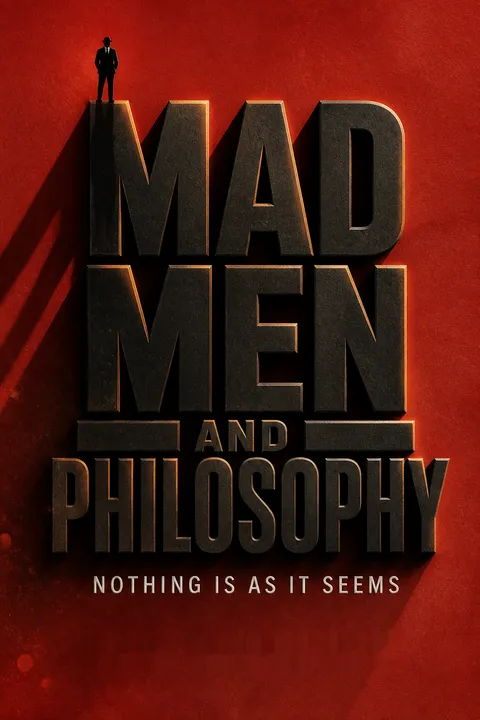
This collection uses Mad Men as a philosophical laboratory, not as a single argument with a tidy conclusion. Its central dramatic advantage is that the show places ordinary moral theories inside recognizable pressures: the pitch deadline, the dinner party, the office hierarchy, the suburban home, the secret that cannot safely be confessed. Abstract questions about knowledge, desire, virtue, and freedom become decisions with faces and consequences.
The strongest thread is the gap between appearance and reality. Don sells feelings through crafted images, lives inside an invented identity, and often mistakes the ability to perform a role for the ability to inhabit a life. The book links advertising’s power to broader forms of imitation and social influence, then asks whether consumers and characters retain meaningful agency. That question remains deliberately unsettled. Galbraith explains how desire can be engineered; Friedman warns that dismissing people’s preferences can itself become coercive. Neither account fully captures how social pressure and genuine choice coexist. The volume also resists simple moral arithmetic. Don can be fair at work and destructive at home. Peggy’s capacity to forget helps her move forward, yet forgetting can also evade responsibility. Roger’s wit and privilege coexist with a thin, repetitive life. These tensions make the characters useful philosophical cases because they expose the distance between admirable moments and a well-formed character.
A critical limit emerges in the treatment of history. Mad Men is praised for recreating early-1960s sexism and racism, but the collection notes that Black characters often remain less developed than white ones. Historical authenticity, then, is not merely accurate furniture, language, or custom. It also depends on whose experience receives complexity. The book’s most durable method is to read the show twice: first for what its characters believe, and again for what their beliefs reveal about the institutions and stories that shape them.
Review Summary
Mad Men and Philosophy receives mixed reviews, with an average rating of 3.57 out of 5. Many readers appreciate the philosophical analysis of the TV show, finding it thought-provoking and insightful. However, some criticize the repetitiveness of examples and arguments across essays. The book is praised for its exploration of themes like existentialism, ethics, and gender roles, but some feel it should have covered more seasons. Overall, fans of Mad Men and philosophy find it a worthwhile read, while others find it somewhat disappointing or redundant.
People Also Read






Glossary
social epistemology
knowledge shaped by societyAn approach to the study of knowledge that examines how people depend on others for information, testimony, and justification. It challenges the picture of a knower as an isolated individual and asks how social roles, institutions, and relationships affect what people can reasonably know.
standpoint theory
knowledge from social positionThe view that a person’s location in society and experiences can provide access to knowledge unavailable, or less visible, to people in more privileged positions. In the book, this helps explain why women, younger workers, or marginalized groups may notice facts that senior male executives overlook.
mimesis
representation through imitationA philosophical term for imitation or representation, especially in art and drama. The book uses it to discuss how a television scene can reproduce the appearance of life and stir genuine emotions, even when viewers know they are watching fiction. Such imitation may shape habits of feeling and judgment.
conventional wisdom
accepted beliefs mistaken for wisdomJohn Kenneth Galbraith’s term for ideas that gain authority through familiarity and repetition, rather than because they have been adequately tested. In the book’s discussion of affluent society, conventional wisdom treats consumer desires as independent of advertising and assumes that markets simply satisfy preferences people already possess.
bad faith
denial of personal freedomAn existentialist concept describing self-deception about one’s freedom and responsibility. A person in bad faith treats a social role, bodily condition, or external expectation as if it completely determines who they are, avoiding the responsibility of choosing what their life will mean.
deep-self compatibilism
freedom tied to deeper desiresA theory of freedom under which a choice can be free even if it has causes, provided those causes belong to the person’s deeper values or psychological makeup. The book uses the idea to frame Galbraith’s concern that advertising may create desires that do not express a consumer’s authentic self.
second-hander
self defined by othersA term associated with Ayn Rand for someone who relies on other people’s judgments, expectations, or approval rather than grounding beliefs and self-worth in an independent grasp of reality. The book applies it to characters who pursue careers, identities, or relationships mainly because society rewards them.
principium individuationis
principle separating individual selvesLatin for the principle of individuation, used in the book’s discussion of Nietzsche and artistic creation. It refers to the boundary that makes a person experience themselves as a distinct individual. The chapter argues that temporarily loosening this boundary can help an artist move beyond private experience toward a more universal perspective.
Unity of the Virtues thesis
virtues depend on one anotherA Platonic position that virtues are not independent traits. One version holds that a person cannot fully possess one virtue without the others, because defects in judgment, courage, or self-control can undermine apparently honest or just behavior. The book uses the thesis to question whether Don’s admirable qualities make him a virtuous person.
integrity
choices aligned with core commitmentsIn the book’s discussion of modern identity, integrity means organizing choices and actions around a person’s deepest values and commitments. It does not prohibit changing direction. It requires that reinvention be explainable in light of those commitments and the relationships that give a life continuity.
FAQ
What's Mad Men and Philosophy: Nothing is as it Seems about?
- Exploration of Themes: The book examines philosophical themes in the TV series Mad Men, focusing on identity, morality, and advertising's societal impact.
- Cultural Reflection: It reflects on the 1960s societal norms depicted in the show, such as sexism and consumerism.
- Philosophical Analysis: Different authors analyze characters and episodes through lenses like existentialism and objectivism.
Why should I read Mad Men and Philosophy: Nothing is as it Seems?
- Deepens Understanding: It enhances your understanding of Mad Men by providing philosophical insights into character actions and societal critiques.
- Engaging Discussions: Offers engaging discussions on ethics, capitalism, and personal identity, appealing to fans and philosophy enthusiasts.
- Cultural Significance: Contextualizes the show within broader cultural and philosophical movements, offering a valuable resource for understanding the era.
What are the key takeaways of Mad Men and Philosophy: Nothing is as it Seems?
- Complex Characters: Characters like Don Draper and Peggy Olson are analyzed as representations of philosophical concepts like existentialism.
- Advertising Ethics: Discusses the ethics of advertising, questioning the morality of manipulation and consumer culture's impact on identity.
- Historical Context: Provides insights into the 1960s, exploring how societal norms influence personal choices and relationships.
What are the best quotes from Mad Men and Philosophy: Nothing is as it Seems and what do they mean?
- Existential Solitude: “You are born alone, and you die alone.” emphasizes individualism and human solitude.
- Happiness in Advertising: “Advertising is based on one thing: happiness.” highlights emotional appeal in advertising, selling happiness.
- Forgetting the Past: “This never happened. It’ll shock you how much this never happened.” reflects the theme of moving forward by forgetting the past.
How does Mad Men and Philosophy: Nothing is as it Seems address the ethics of advertising?
- Manipulation Concerns: Raises concerns about manipulative tactics in advertising, questioning respect for consumer autonomy.
- Asymmetry of Knowledge: Discusses the knowledge imbalance between advertisers and consumers, undermining genuine decision-making agency.
- Kantian Ethics: Argues for ethical advertising that respects individuals as ends in themselves, not just means to profit.
What philosophical concepts are applied to the characters in Mad Men?
- Existentialism: Characters like Don Draper grapple with identity, authenticity, and meaning in a consumer-driven world.
- Objectivism: Examines characters’ actions in relation to Rand’s principles of rational self-interest and moral implications.
- Social Epistemology: Analyzes how knowledge and belief are shaped by social contexts, especially in advertising.
How does Mad Men and Philosophy: Nothing is as it Seems interpret Don Draper’s character?
- Identity Crisis: Don Draper struggles with identity, living under a false persona to escape his past.
- Existential Themes: His journey illustrates themes of authenticity and memory burden, reconciling past and present.
- Moral Ambiguity: Highlights Don’s moral ambiguity, questioning justification of actions within self-interest and happiness.
What role does Peggy Olson play in the philosophical discussions of Mad Men and Philosophy: Nothing is as it Seems?
- Ambition and Identity: Represents the struggle for female identity and ambition in a male-dominated workplace.
- Forgetting and Moving On: Her arc illustrates tension between remembering and forgetting, striving for success.
- Ethical Choices: Analyzed in light of ethical considerations, particularly in relationships and professional aspirations.
How does Mad Men and Philosophy: Nothing is as it Seems reflect on societal norms of the 1960s?
- Gender Roles: Critiques rigid gender roles, exploring their impact on characters’ lives and choices.
- Consumer Culture: Examines consumer culture's rise and its impact on personal identity, with advertising shaping values.
- Historical Context: Provides a backdrop that contextualizes characters’ struggles within broader social changes of the 1960s.
How does Mad Men and Philosophy: Nothing is as it Seems address the theme of race?
- Historical Context: Discusses race portrayal, noting African American characters often serve the dominant white narrative.
- Character Dynamics: Highlights interactions illustrating white characters' disconnect and ignorance of black experiences.
- Cultural Reflection: Critiques the show’s treatment of race, capturing racial tensions but often limiting black characters' depth.
What role does advertising play in Mad Men and Philosophy: Nothing is as it Seems?
- Cultural Commentary: Depicts advertising as a force shaping societal values and identities, blurring reality and illusion.
- Manipulation of Desire: Discusses how advertising creates artificial needs, influencing behavior and perceptions of happiness.
- Ethical Implications: Raises questions about advertising's morality, exploiting emotions and desires for profit.
How does Mad Men and Philosophy: Nothing is as it Seems connect to contemporary issues?
- Reflection of Society: Draws parallels between 1960s issues and contemporary challenges like gender inequality and media influence.
- Philosophical Relevance: Encourages reflection on personal values and advertising's impact on modern life.
- Cultural Critique: Critiques modern society, urging consideration of ethical implications of choices and societal norms.
Blackwell Philosophy and Pop Culture Series Series


Download PDF
Download EPUB
.epub digital book format is ideal for reading ebooks on phones, tablets, and e-readers.








