

Key Takeaways
Judge character by chosen loyalties, not inherited talents.
Ability is not character. Harry can speak Parseltongue, a rare talent associated with Salazar Slytherin, but that ability does not make him Voldemort. Dumbledore points instead to what Harry chooses: he risks himself to save Ginny and repeatedly acts for others. The chapter calls a choice understood through its motive a motive-choice. It reveals more than a bare action because it shows both what someone did and why. Snape complicates the picture: his outward conduct suggests loyalty to Voldemort, while his motive is to protect Lily's son.
Character takes time. A single good deed or bad decision is weaker evidence than a repeated pattern. Abilities can be morally neutral; resourcefulness can serve either rescue or domination. What matters is how a person uses such capacities over time.
The distinction between talent and character resists a familiar mistake: treating intelligence, charm, or unusual skill as evidence of virtue. Snape also shows why actions need context before they can be judged. Yet motives are not always transparent, even to the person acting, and a noble motive cannot erase foreseeable harm. A sound judgment therefore combines motive, behavior, consequences, and pattern. The story's strongest claim is not that intentions settle every moral question, but that inherited traits do not settle a person's moral identity.
Love seeks another's good; it cannot be brewed into consent.
Desire is not devotion. Amortentia, the most powerful love potion in Slughorn's classroom, produces obsessive infatuation, not love. Merope Gaunt uses a potion to make Tom Riddle Sr. fall for her, then stops administering it. He leaves. Her decision does not undo the coercion, but it recognizes that love cannot be proved by a person's magically compelled attachment.
Love becomes action. Snape's love for Lily is initially possessive and selfish. Over time, it moves him to protect Harry, even though he dislikes him. His care is not emotionally warm, and it does not make his bullying acceptable. The book's account of love as willing another's good also connects to its feminist argument: compassion, cooperation, and care can be sources of strength, not lesser substitutes for power.
The potion makes consent visible by removing it: an apparent romance built on control cannot count as a reciprocal relationship. Merope's eventual release of Riddle is morally significant precisely because it costs her the outcome she wants. Snape's story adds a different test: conduct can express care even when affection is absent. The association of care with traditionally feminine virtues is evocative, but those virtues need not belong to one gender. Treating them as human capacities makes the argument broader and avoids replacing one stereotype with another.
Repeated cruelty fragments a person; remorse offers a painful route back.
A Horcrux externalizes evil. To make a Horcrux, a wizard murders someone and anchors a torn piece of soul in an object, preserving a route to survival if the body is destroyed. Voldemort makes several, but the damage does not diminish his intellect or magical power. Instead, it marks a loss of humanity: he becomes less capable of love, trust, and remorse. The soul in these stories works partly as a literal afterlife entity and partly as an image of moral and emotional integrity.
Repair requires ownership. Hermione explains that remorse can begin to mend a damaged soul, but it means genuinely feeling the weight of the harm done. Harry urges Voldemort to face what he has done. Voldemort refuses. His regret over Snape's death is cold calculation, not remorse, because he feels no responsibility for the suffering he caused.
The Horcrux is a vivid image of what happens when a person treats others as disposable instruments: survival is preserved at the cost of wholeness. The distinction between regret and remorse sharpens the moral point. Regret can mean wishing an outcome were inconveniently different; remorse requires accepting responsibility. But repair is not the same as erasure. A person who changes still owes truth, restitution where possible, and accountability to those harmed. The story's spiritual metaphor is powerful even for readers who do not accept its literal account of souls.
Prophecy can influence a future without compelling anyone to fulfill it.
Prediction is not a command. Most of Professor Trelawney's forecasts are vague or wrong. Her rare involuntary prophecies are treated as more significant, but Dumbledore insists that they do not force Harry or Voldemort to act. The prophecy naming a child who could defeat Voldemort might have applied to Harry or Neville. Voldemort's decision to target Harry helps make Harry his rival, rather than simply revealing a fate already imposed on him.
The story leaves puzzles. In Prisoner of Azkaban, Harry and Hermione travel back three hours and discover that Harry himself had cast the Patronus that saved him. That episode suggests a fixed timeline, while characters also warn that time can be changed. The book's philosophical discussion does not resolve every tension between prophecy, freedom, and time travel.
A prophecy can become part of the causal landscape without becoming an irresistible force. Voldemort's response matters: his attempt to control the predicted threat helps create the relationship he fears. This resembles ordinary expectations that shape behavior, from a teacher's assumptions about a student to a leader's forecast of an enemy. Still, the series' time-travel rules resist a single tidy theory. That ambiguity is useful: it separates the ethical question of responsibility from the metaphysical question of whether the future is fixed.
A changed body can change what feels natural to the self.
Transformation is more than disguise. Sirius becomes Padfoot, a large black dog. He sometimes behaves with human familiarity, yet his excitement outdoors makes him chase his tail. The chapter argues that neither a human mind steering a dog body nor a dog mind inhabiting it explains all his behavior. Mind and body contribute together to a person's way of acting.
Bodies shape choices. When Harry uses Polyjuice Potion to become the imposing Runcorn, he finds that a commanding voice and physical force become available in ways they would not in his own body. Harry still acts for his own reasons, but the new body changes which actions feel effective. The self is not merely a mind wearing a body like a costume. Physical form affects how a person meets the world.
This account anticipates an embodied view of cognition: perception, posture, strength, and social response help shape what a person can notice and do. It makes identity less like a hidden pilot and more like a living interaction between mind and body. The magical transformations dramatize that point but cannot prove it on their own. Nor does bodily influence eliminate agency. The useful middle ground is that a body changes the available pressures and possibilities, while a person's reasons and habits still matter.
Trust leaders who fear their own desire for power.
Ambition is a warning sign. Plato's Ring of Gyges is a thought experiment about a shepherd who becomes invisible and uses the freedom from detection to seize power. The story asks whether justice survives when consequences disappear. Harry's Invisibility Cloak offers a parallel test: he mostly uses it to investigate danger, not to exploit others. Dumbledore, once tempted by power in his youth, recognizes that he cannot safely become Minister of Magic and refuses the office.
Good instincts are not a full platform. Fudge and Umbridge show how authority can serve self-protection and control. Yet distrust of corrupt officials alone does not prove that a leader supports a small government or any particular political theory. Protecting liberty, opposing discrimination, and limiting state power are related but distinct claims.
The invisibility test strips away reputation and punishment, making conduct a clearer measure of character. Dumbledore's self-knowledge is equally important: trustworthiness can involve recognizing a vulnerability rather than claiming immunity to it. The political distinction matters too. A government that abuses power needs safeguards and better institutions, but its failures do not automatically establish that government should do less. The section is strongest when it treats restraint as a character test and weakest when readers infer a complete political doctrine from a few admirable traits.
Patriotism is defensible only when outsiders count as equals.
Belonging can divide. Hogwarts Houses create loyalty and community, but competition can turn friendship across Houses into suspected betrayal. The Sorting Hat warns that division leaves the school vulnerable from within. The Death Eaters take this danger further by ranking people according to ancestry and treating Muggles and Muggle-born witches and wizards as inferior.
Local care need not mean moral superiority. The chapter uses a cosmopolitan view to defend special concern for one's own community when that care supports, rather than undermines, the well-being of others. A family can prioritize its children without claiming other children matter less. Likewise, House or national loyalty can be valuable if it does not license exploitation or deny outsiders equal worth. The challenge is keeping community rooted without making its boundaries into moral walls.
The distinction between loyalty and supremacy offers a practical standard: special obligations can be legitimate without implying that outsiders are lesser. Communities give people shared memory, mutual aid, and a sense of place, while cosmopolitan openness helps resist parochial blindness. Neither value automatically defeats the other. The hard cases arise when preserving a group's traditions restricts the freedom of its members or harms neighboring groups. The Potter examples make exclusion vivid, but the real test is whether loyalty can coexist with fair treatment beyond the circle.
Check vivid visions against independent evidence before risking someone else's life.
Certainty can distort evidence. Harry dreams that Voldemort is torturing Sirius and treats the vision as a reliable report. Hermione questions whether the scene is real and urges Harry to verify Sirius's whereabouts. Harry instead accepts Kreacher's misleading confirmation and rushes to the Ministry, where Sirius dies. His good intention does not make his evidence reliable.
People can change their filters. Dudley begins as a spoiled bully, protected from criticism by parents who reinterpret every fault as someone else's mistake. His encounter with dementors forces him to face a frightening view of himself. That shock helps him see Harry differently. Both stories show that belief is shaped by expectation, but reality can sometimes force a person to revise the story they tell about themselves.
Harry's error is not simply emotionality; it is a failure to test a high-stakes claim through independent sources. That is a useful model for decisions made under fear, especially when the information may be manipulated. A practical safeguard is to separate observation from interpretation and seek corroboration before acting. Dudley's change illustrates the value of disconfirming experience, though crisis is not a reliable or humane method of self-improvement. Correction works best when honest feedback is available before catastrophe.
Use memory, honest friends, and adversity to test your self-image.
Reflection needs distance. Dumbledore uses a Pensieve, a basin that lets a person store memories and examine them from a third-person perspective. Reviewing memories can expose details and patterns that were missed in the moment. Friends provide another kind of mirror: Hermione challenges Harry's assumptions, while his friends help Neville build confidence.
Self-review can still mislead. Gilderoy Lockhart sees himself as a gifted teacher because he cannot recognize his failures. The book therefore adds challenge and adversity to reflection: people often reveal their character when routine falls away and choices carry a cost. The discussion of the extended mind also asks whether external tools, like a notebook used constantly to support memory, can function as parts of cognition without becoming threats to personal identity.
The Pensieve captures a general advantage of externalizing thought: distance can make patterns easier to inspect. Yet memory is not automatically a neutral recording, and a confident retrospective can still serve vanity. Other people add correction, while demanding situations show how values survive pressure. These methods work best together rather than as a single self-help technique. The extended-mind idea pushes the same point outward: cognition often depends on tools and relationships, although dependence alone does not establish that every useful object becomes part of the mind.
Teach practical magic alongside judgment, history, and shared responsibility.
Hogwarts teaches by doing. Students practice spells, receive demonstrations, and learn through coaching. They understand why defensive magic matters, especially when Umbridge blocks practical instruction and they form their own lessons. This makes their education engaging and immediately useful.
Useful is not enough. The school is dangerous, employs several poor teachers, and offers a narrow curriculum centered on magical skills. It does little formal work to confront blood prejudice or the treatment of house-elves as servants. A broad education should prepare students not only to earn a living, but also to think clearly, participate in civic life, and judge how power should be used. Hogwarts has a lively community, but its students need more than technical competence to repair their society.
The contrast between practical mastery and civic judgment is still relevant wherever schools prioritize measurable skills over ethical reasoning. Hands-on learning can deepen understanding, but technique does not tell a student which ends deserve pursuit. The critique also distinguishes a school's informal moral influence from its formal curriculum: friendship and mentorship matter, yet they cannot reliably substitute for instruction about injustice. A school cannot prevent every prejudice, but silence can leave inherited hierarchies looking normal.
Accept mortality rather than mutilate others to escape it.
Voldemort's survival strategy is self-defeating. He creates Horcruxes to evade death, but the murders required to make them damage his soul and separate him from love and friendship. Harry's final walk to the Forbidden Forest is the opposite choice: he accepts what he believes is his death to protect others. The book treats that willingness as mastery of death, not as a magical technique for avoiding it.
The afterlife remains uncertain. Harry's meeting with Dumbledore at King's Cross may be a real encounter, a vision, or an experience inside Harry's mind. The book's account assumes that souls can survive bodily death, but its ethical contrast does not require readers to accept that metaphysics. It asks what a person is willing to sacrifice for life, and what is lost when survival becomes the only aim.
The opposition between Harry and Voldemort reframes courage as a relation to mortality: accepting vulnerability can protect others, while desperate self-preservation can produce harm. This is not an argument that death should be sought or that sacrifice is always noble. The relevant distinction is between freely accepting risk for a defensible good and imposing risk on others to preserve oneself. The unresolved King's Cross scene leaves room for religious and naturalistic readings while keeping the ethical question in focus.
Let the text constrain interpretation without silencing author or reader.
Fiction has explicit and implied truths. The novels directly establish some facts, while others are inferred from character and genre. Dumbledore's sexuality is not stated in the seven books, but Rowling later identified him as gay and connected his feelings for Grindelwald to his youthful political idealism. The disclosure adds information about the imagined world, even if readers did not need it to understand the published plot.
Interpretation has several sources. The chapter weighs what the text says, what readers reasonably infer, what the author intended, and what conventions of the genre make plausible. Rowling has unusual authority over the character she created, but her later statement cannot force every reader to find the detail clearly present in the original text. It helps to distinguish a fact supplied by the author from an inference supported by the story itself.
This distinction clarifies a common dispute: authorial intention can settle what an author says she meant, while textual evidence still governs what readers could reasonably have understood from the work alone. Those are related questions, not identical ones. The approach is useful beyond fiction, wherever interpretation involves both documents and their makers. Its limitation is that the categories can blur: a later clarification may change how earlier scenes are read without making that reading mandatory.
Analysis
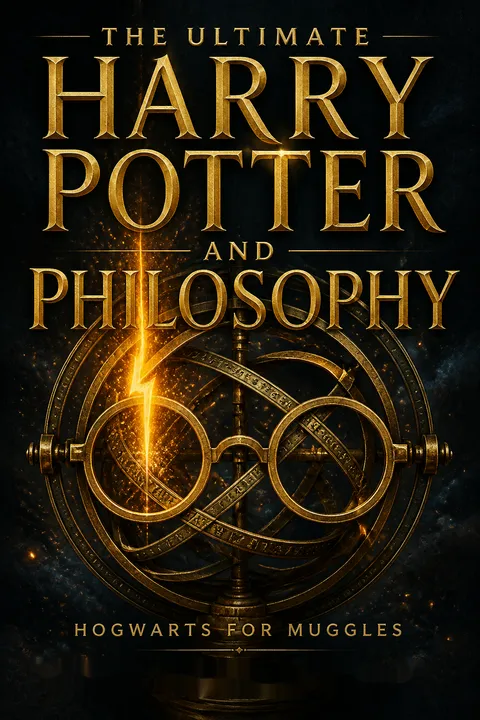
This collection works less like a single theory than a seminar staged inside a familiar fictional world. Its essays move among metaphysics, ethics, political philosophy, education, literary interpretation, and psychology, using Harry Potter's plot as shared evidence. The strongest recurring thread is moral agency: Harry and Voldemort may share talents, a magical connection, and a prophecy, but their repeated choices produce radically different characters. Love, in this account, is not merely a feeling. It is a practice of recognizing another person's good, accepting vulnerability, and resisting the temptation to treat people as instruments.
The book is most persuasive when it lets disagreement remain visible. Prophecy and time travel do not settle cleanly into one account of freedom. Dumbledore's suspicion of power does not make him a libertarian, and the criticism of Hogwarts is not a claim that every school must adopt one educational model. These tensions make the essays more valuable than a simple moral key to the novels. Their arguments show how a story can generate philosophical questions without serving as proof of any particular answer.
There are also limits to the collection's moral emphasis. Its confidence in free choice can understate how family, institutions, fear, and social position constrain what choices are available. Merope's history, Harry's childhood with the Dursleys, and the treatment of house-elves all show that agency develops under unequal conditions. The essays acknowledge these pressures, but their focus on individual character sometimes gives personal virtue more explanatory weight than institutions deserve. Likewise, the claim that love triumphs is morally compelling, but it risks making sacrifice appear sufficient where law, education, and collective action are also necessary.
Taken together, the essays offer a practical way to read both fantasy and life: treat abilities as morally ambiguous, test stories against evidence, distrust power without romanticizing its absence, and judge people by patterns of conduct while leaving room for change. The magic is not that fiction answers every question. It is that a well-built fictional world makes abstract questions hard to ignore.
Review Summary
The Ultimate Harry Potter and Philosophy receives mostly positive reviews from readers. Many appreciate the blend of philosophy and Harry Potter, finding it thought-provoking and insightful. Fans enjoy exploring deeper themes and concepts within the series. Some essays are praised for their engaging writing and interesting perspectives, while others are criticized as repetitive or superficial. The book is recommended for Harry Potter enthusiasts interested in philosophical analysis, though some philosophical background may be helpful for full appreciation.
People Also Read
Glossary
Horcrux
soul fragment anchored outside bodyA dark magical object containing a fragment of its maker's soul. In the Potter stories, murder tears the soul, and a spell anchors the fragment in an object, allowing the maker to survive bodily destruction. The process preserves existence at the cost of spiritual and moral damage.
Pensieve
basin for reviewing memoriesA magical basin into which thoughts or memories can be placed and examined. A Pensieve presents memories from a third-person perspective, allowing a viewer to notice details that may have escaped the original observer. It can also make one person's memories available to another.
Occlumency
defense against mental intrusionA magical discipline for protecting the mind from intrusion or influence, especially from Legilimency. Practitioners attempt to control or conceal thoughts and memories so another wizard cannot easily detect them. Snape's skill at Occlumency allows him to deceive Voldemort while acting as a double agent.
Amortentia
potion inducing obsessive infatuationA powerful love potion described in the series as producing intense infatuation or obsession rather than genuine love. Its effects can overwhelm the drinker's judgment and create the appearance of romantic attachment without reciprocal consent. The potion's distinctive scent differs for each person according to what attracts them.
motive-choice
choice understood through motiveA way of understanding a choice by considering the decision, the action that follows, and the motive behind it. A person who acts honestly from fear of punishment has made a different kind of choice from someone acting honestly because it is right. Motive-choice is more revealing than an action considered alone.
Extended Mind
cognition partly outside bodyThe view that some thinking can extend beyond the brain and body into external tools that are reliably integrated into a person's mental life. A frequently consulted notebook, for example, may function like stored memory rather than a mere occasional aid. The idea raises questions about where cognition ends and how it relates to identity.
cosmopolitanism
equal regard beyond one's communityA moral and political outlook that treats people beyond one's own nation or community as deserving equal consideration. It need not forbid special care for family or fellow citizens. It does require that local loyalty not justify exploitation, discrimination, or the claim that outsiders have lesser moral worth.
Ring of Gyges
invisibility test of justiceA story from Plato's Republic about a shepherd who finds a ring that makes him invisible and uses it to seize power. The tale asks whether a person would remain just if actions could be hidden from punishment and public judgment. The collection compares it with Harry's opportunities to use his Invisibility Cloak.
FAQ
What’s The Ultimate Harry Potter and Philosophy: Hogwarts for Muggles about?
- Philosophical Exploration: The book delves into philosophical themes such as love, identity, destiny, and the nature of the soul, using the Harry Potter series as a framework.
- Connection to Culture: It connects the narrative of Harry Potter to broader philosophical questions, making complex ideas accessible to a wider audience.
- Expert Contributions: Edited by Gregory Bassham, it includes essays from various philosophers who analyze moral and ethical issues in Rowling's work.
Why should I read The Ultimate Harry Potter and Philosophy?
- Unique Perspective for Fans: Offers Harry Potter fans a deeper understanding of the series and its characters through a philosophical lens.
- Philosophical Insights: Provides thought-provoking insights into questions relevant to both the wizarding world and real life.
- Accessible Philosophy: Makes philosophy approachable and enjoyable, engaging readers with significant ideas in a familiar context.
What are the key takeaways of The Ultimate Harry Potter and Philosophy?
- Power of Love: Emphasizes love as a transformative force, highlighting characters like Harry and Snape who demonstrate love's redemptive power.
- Nature of the Soul: Explores philosophical views on the soul, using Horcruxes and the Dementor's Kiss to illustrate how actions affect one's soul.
- Destiny vs. Free Will: Discusses the tension between destiny and personal choice, particularly in relation to prophecies and character responses.
What are the best quotes from The Ultimate Harry Potter and Philosophy and what do they mean?
- “Love is the most powerful magic of all.”: Highlights love's redemptive power, showing its ability to overcome darkness.
- “It matters not what someone is born, but what they grow to be!”: Emphasizes personal choices over inherent traits, advocating for character shaped by actions.
- “We are only as strong as we are united, as weak as we are divided.”: Reflects the necessity of unity in adversity, underscoring collaboration and friendship.
How does The Ultimate Harry Potter and Philosophy address the concept of the soul?
- Philosophical Conceptions: Discusses views like the Life-Source View and Materialism, showing how these manifest in the Harry Potter universe.
- Horcruxes and Identity: Examines Voldemort’s Horcruxes as a fragmentation of the soul, raising questions about identity and morality.
- Dementor's Kiss: Illustrates the idea of existing without a soul, prompting discussions on true identity and selfhood.
What role does love play in the Harry Potter series according to The Ultimate Harry Potter and Philosophy?
- Transformative Power: Portrayed as a force that redeems and protects, seen in Harry’s mother’s sacrifice and Snape’s love for Lily.
- Contrast with Voldemort: Contrasts characters who embrace love with those who reject it, showing love's role in personal growth.
- Self-Sacrifice: Highlights acts of self-sacrifice driven by love as ultimate expressions of character and strength.
How does The Ultimate Harry Potter and Philosophy interpret the theme of destiny in the Harry Potter series?
- Fallibility of Prophecies: Discusses how prophecies can be fallible and self-fulfilling, emphasizing character power to shape destinies.
- Fixed vs. Open Future: Explores whether the future is fixed or open, suggesting individual actions can alter outcomes.
- Dumbledore’s Perspective: Reinforces the idea that characters are not bound by fate but can exercise free will.
How does The Ultimate Harry Potter and Philosophy address the concept of identity?
- Identity Through Choices: Characters like Harry and Voldemort illustrate identity formed through choices, not innate qualities.
- Duality of Characters: Contrasts those who embrace their identities with those who reject or distort theirs, leading to different outcomes.
- Philosophical Perspectives: Explores theories of identity, including memory and personal continuity, in relation to character journeys.
How does The Ultimate Harry Potter and Philosophy interpret Dumbledore's character?
- Complexity and Flaws: Portrays Dumbledore as wise yet flawed, with past mistakes informing his guidance of Harry.
- Mentorship Role: Emphasizes his role as a mentor, shaping Harry's understanding of love, sacrifice, and courage.
- Acceptance of Death: Highlights Dumbledore's acceptance of mortality, teaching mastery over death through understanding.
What insights does The Ultimate Harry Potter and Philosophy provide about Voldemort?
- Fear of Death: Analyzes Voldemort as a representation of fear of death, leading to moral decay through pursuit of immortality.
- Lack of Remorse: Discusses his inability to feel remorse, isolating him and contributing to his downfall.
- Philosophical Inversion: Serves as a philosophical inversion of Harry, illustrating consequences of choosing power over love.
How does The Ultimate Harry Potter and Philosophy connect Harry Potter to real-world ethical dilemmas?
- Moral Choices: Draws parallels between character choices and real-life ethical decisions, encouraging reflection on personal ethics.
- Social Justice Themes: Explores issues like discrimination and privilege, mirroring contemporary social justice movements.
- Philosophical Reflection: Invites readers to engage in philosophical reflection on values and beliefs using Harry Potter as a springboard.
How does The Ultimate Harry Potter and Philosophy address the concept of moral regeneration?
- Process of Remorse: Discusses moral regeneration as acknowledging past wrongs, feeling remorse, and striving for a new identity.
- Character Transformations: Illustrates transformations through experiences of loss and regret, leading to stronger, virtuous characters.
- Philosophical Implications: Explores implications of moral regeneration, suggesting true change requires commitment to personal growth.
Blackwell Philosophy and Pop Culture Series Series
About the Author
Download PDF
Download EPUB
.epub digital book format is ideal for reading ebooks on phones, tablets, and e-readers.








