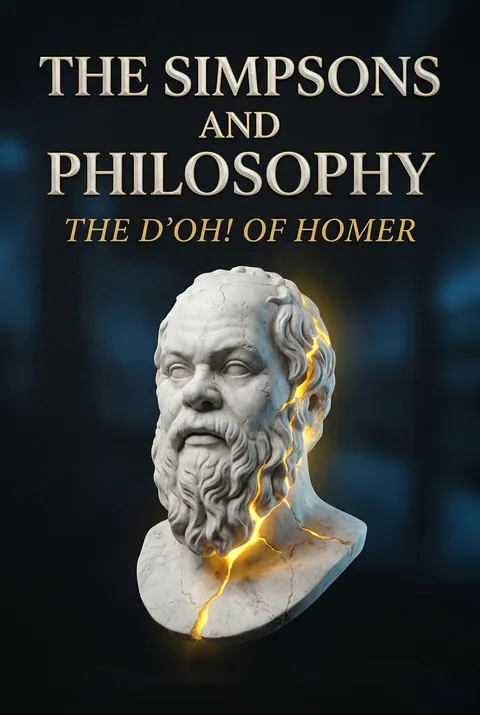


Key Takeaways
Treat popular comedy as a laboratory for real philosophical questions
A show, not a doctrine. The book does not claim that The Simpsons contains one hidden philosophy or a message its creators intended. Instead, its essays use the family and Springfield to make abstract questions tangible: Can a flawed person have an admirable trait? When should expertise guide public decisions? What does loving a neighbor require? A familiar comic scene can give readers a concrete case to examine before tackling the philosophical argument behind it.
Popularity is no disqualification. The show’s allusions, satire, and recurring characters reward close attention, but its value is not proof that every joke is profound. The essays model a way to take popular entertainment seriously without pretending it is equivalent to great literature or a philosophy textbook.
What's useful here is the book's method: a comic character becomes a test case, not an authority. That resembles case-based teaching in law and medicine, where a vivid example helps expose what a rule leaves ambiguous. The method also has limits. A character written to serve a joke is inconsistent by design, so an interpretation should illuminate a question rather than claim to settle it. Popularity opens the door to inquiry; it does not certify the conclusion.
Admire Homer’s appetite for life without mistaking it for virtue
Character is a pattern. Aristotle distinguishes the virtuous person, who desires and does what is right, from the continent person, who resists contrary desires, and the incontinent person, who gives in despite knowing better. Homer shifts among these patterns across different parts of life. His eating and drinking often show vice; his judgment is unreliable, and his family cannot count on him consistently. Yet he is not usually malicious, and he sometimes shows loyalty, affection, or courage.
A trait is not a verdict. Homer’s zest for ordinary pleasures and indifference to social polish can be attractive, especially against a bleak backdrop like Springfield. But pleasure is not the same as a flourishing life. His love of life is an admirable quality, not evidence that his overall character is admirable.
This account avoids turning moral judgment into a simple label. Contemporary character psychology likewise treats traits as context-sensitive: someone can be generous in one relationship and irresponsible in another. Homer’s vitality is compelling partly because it resists shame and status anxiety, but appetite without judgment can harm both the person and those around him. Admiring energy while refusing to excuse its costs is a more useful response than either scolding or celebrating him wholesale.
Practice virtue as a trained character, not borrowed obedience
Good judgment takes practice. Aristotle’s virtue ethics focuses on the kind of person someone becomes, not only whether one isolated act is right. Virtues are learned through habituation, and a virtuous person must judge what a particular situation calls for. Marge often illustrates this balance: she shows courage without treating every problem as a fight, and honesty even when dishonesty might benefit her. Her moral decisions generally come from conscience and practical reasoning, not automatic rule-following.
Flourishing includes relationships. Aristotle calls a life of flourishing eudaimonia. It is more than a pleasant feeling: it involves living well over time, with virtues and meaningful social bonds. Marge finds purpose in caring for her family, though that role can also confine her. Her example shows how care can be both a source of fulfillment and a demand that deserves scrutiny.
The distinction between a habit and a rule is important in fields from professional ethics to parenting. Rules cannot anticipate every circumstance, while practiced judgment can adapt without abandoning principle. Marge’s care also raises a question the virtue framework alone cannot answer: whose flourishing is supported by her domestic work, and at what cost to her own ambitions? A fuller account of virtue must consider not only admirable caregiving, but whether caregiving is fairly shared.
Respect expertise without turning intelligence into either privilege or punchline
Lisa sees what others miss. She identifies political corruption, questions popular assumptions, and sometimes supplies expertise that adults lack. Yet Springfield often treats her intelligence as irritating or elitist. The book links this response to a broader tension: democratic equality means equal standing as citizens, not that every opinion is equally informed. An expert’s advice can be relevant evidence, but expertise in one field does not make someone an authority on everything.
The show is ambivalent. Lisa can be perceptive and principled, but she can also be preachy or inconsistent. When Springfield’s Mensa members take power, they propose some sensible reforms and some foolish, unpopular schemes. One essay also notes the show’s gender imbalance: its tally finds roughly four recurring male characters for each female, while women often occupy minor or domestic roles.
The distinction between equal civic worth and equal knowledge remains central to public debate. Expertise should inform collective decisions, while remaining open to challenge and accountable for its limits. Lisa’s isolation dramatizes the social price of being right without making her infallible. The gender critique adds another layer: a fictional world can mock intellectual elitism while still giving men more narrative space and authority. Representation is not a side issue when it shapes who gets heard.
Do not mistake speechlessness for thoughtlessness or thought for inner speech
Words are not the whole mind. Maggie cannot explain herself in language, but the show gives her moments of purposeful action and perception. An essay contrasts Western traditions that prize argument and speech with Eastern traditions that sometimes treat silence as a path toward insight. It also warns against assuming that an infant is enlightened simply because she is quiet. Silence may reflect restraint, lack of ability, or exclusion; it does not reveal its own meaning.
Thought meets a world. A separate essay uses Bart to present Heidegger’s challenge to the idea that thoughts are merely private contents inside the head. Thinking can be understood as engagement with things and situations in the world. Bart’s vivid responsiveness illustrates the idea, though his impulsiveness is hardly a model of judgment.
This pairing is a useful check on speech-centered assumptions about intelligence. Developmental research distinguishes language production from other forms of attention, memory, and goal-directed behavior, though no single action proves a complex inner life. The same caution applies to Bart: being absorbed in the world is not the same as understanding it well. Attention can be direct and still be mistaken. Silence and immediacy deserve interpretation, not automatic romantic praise.
Rebellion is not self-creation when it depends on an enemy
Nietzsche is not cheering bad behavior. The essay presents Nietzsche’s ideal as a person who shapes a life creatively rather than merely obeying inherited values. In his account of master morality and slave morality, values arise from different social positions; ressentiment names the reactive bitterness that turns weakness into moral superiority over the strong. The argument is controversial, but it is not a license to bully or dominate.
Bart remains reactive. Bart defines himself largely by resisting parents, teachers, and rules. When a self-help guru persuades Springfield to imitate Bart, the town’s imitation robs him of his rebel identity. That dependence on opposition is the opposite of self-directed creation. The episode makes Bart a useful warning: breaking rules may express freedom, or it may simply let authority keep defining the terms.
The distinction between resistance and self-authorship matters beyond Nietzsche. Social movements often begin by rejecting an unjust order, but durable identity requires positive commitments as well as opposition. The essay’s reading of Bart captures this gap sharply. At the same time, Nietzsche’s account of morality can flatten genuine vulnerability into resentment if applied carelessly. The stronger lesson is narrower: neither conformity nor defiance guarantees independence; a person must take responsibility for what replaces the rejected rule.
Read allusions as invitations, not proof that every connection was intended
Recognition adds another layer. An allusion is an intended reference that asks viewers to bring in associations, not merely swap one name for another. A reference to Forrest Gump, for instance, can add meaning beyond the character or words on screen. Recognizing a reference brings pleasure and can create a sense of shared knowledge, but it can also leave out viewers who do not know the source. The essays distinguish intended allusions from connections viewers make by coincidence.
Parody can pay tribute. In Bart the Murderer, the story borrows patterns from gangster films: a young recruit rises within a criminal family, then faces a fall. The episode uses those familiar conventions for comedy and affectionate reworking, not simply for criticism. A semiotic reading adds that a signifier, such as an image or phrase, gains meaning through the cultural ideas attached to it.
This account treats interpretation as both social and disciplined. Shared references can build community, much as specialist language does, but they can also create a cultural gate. The distinction between intended reference and accidental association protects interpretation from becoming a game of seeing anything in anything. It also leaves room for viewers to make fresh connections, provided those connections are not falsely attributed to the creators.
Let fiction rehearse moral judgment, while testing what its jokes excuse
Stories offer a safe trial run. One essay argues that fiction can make moral situations vivid by drawing attention to particular people, feelings, and consequences. Viewers can imaginatively identify with characters while remaining separate from them, a condition the essay calls frustrated identification. Homer’s blunders can invite recognition without requiring viewers to repeat them. Humor can also make subjects such as prejudice or violence easier to approach.
Laughter is not automatically critique. The book’s essays disagree about how stable The Simpsons’ moral outlook is. Some see affection for family and community beneath the satire; another argues that relentless irony can undercut every position, while a Marxist reading warns that jokes about injustice may turn criticism into entertainment that changes nothing. The show can expose a problem and make it feel harmless in the same scene.
Narrative simulation can widen perspective, but emotional involvement does not guarantee ethical improvement. Viewers may identify with a character, reject the character, or enjoy the joke without considering its target. The disagreement in the book is productive because it separates satire’s subject from its effect. A practical test is to ask whether laughter clarifies who is harmed and why, or merely converts the harm into a consumable punchline.
Defend family bonds while noticing whose unpaid work keeps them intact
Attachment can sustain a flawed family. The Simpsons are not ideal parents, yet one political essay argues that their bonds matter more than either the Flanders family’s rigid piety or the state’s claim to manage every household. In the foster-care episode, Bart, Lisa, and Maggie are separated from Homer and Marge, then reunited with the parents who are attached to them. The essay connects this family to Springfield’s local institutions and its suspicion of remote authority.
The family has a cost. Another essay challenges the comforting picture. Marge is a devoted mother, but her domestic labor anchors the household while Homer and the children receive much of the attention. Lisa’s rare independence does not erase the show’s male-centered cast. The family can be a source of loyalty and refuge while reproducing unequal expectations about who must provide care.
The dispute resembles a broader political tension between care as a private bond and care as a public responsibility. Attachment can motivate commitment that formal systems cannot manufacture, yet it does not guarantee competent or equitable treatment. The feminist critique makes the praise of family more precise: preserving bonds should not mean romanticizing the labor that sustains them or treating a woman’s self-sacrifice as a natural household resource.
Honor autonomy by helping others reason, not forcing your preferred salvation
Love can conflict with intervention. Ned Flanders believes baptism is necessary for salvation and tries to baptize the Simpson children while they are in his care. The ethical puzzle is why he does not try to baptize everyone he believes to be at risk. The essay argues that loving another person can require respect for a reasoned, principled choice, even when that choice carries danger.
Choice alone is not enough. Kantian autonomy means governing oneself through principles one has reflectively adopted, rather than simply following appetite or someone else’s command. On this view, respecting a person is not passive approval of every preference; it involves supporting the capacity to reason and decide. The argument is harder to apply to children, who may not yet exercise that capacity, making guardianship a genuine moral complication.
The distinction between autonomy and mere choice helps clarify debates about religious freedom, medicine, and parental authority. A person’s decision deserves more than deference when coercion, misinformation, or developmental limits shape it. Conversely, concern for someone’s welfare can become paternalism when it overrides their considered commitments. The essay’s standard is demanding because it asks both whether a choice is genuinely self-directed and whether intervention would preserve or diminish that agency.
Call hypocrisy inconsistency, even when nobody is clever enough to hide it
A mask is not required. Hypocrisy occurs when someone acts against values they have explicitly or implicitly endorsed. It need not involve a calculated attempt to deceive. Chief Wiggum is the comic test case: he presents himself as an officer of the law while openly taking bribes, neglecting duties, and abusing his position. His hypocrisy is obvious, not sophisticated.
Context still matters. Mayor Quimby and Mr. Burns use public language to conceal self-serving conduct. By contrast, a person may violate a stated value under coercion or to achieve a morally worthwhile end. The essay points to Apu’s false presentation of himself while facing deportation as a sympathetic case. Consistency alone does not make someone good; the values being upheld matter too.
Separating hypocrisy from deception improves moral diagnosis. It catches the routine gap between public commitments and ordinary conduct, even when no one is running an elaborate con. Yet consistency can serve cruel or corrupt principles just as easily as humane ones. Ethical evaluation therefore needs two questions: does conduct match professed values, and are those values defensible? Wiggum makes the first failure hilarious, but the second remains the more important judgment.
Seek pleasures that matter in themselves, not trophies that stand for status
Burns turns life into a symbol. Mr. Burns has money, authority, possessions, and employees, but he treats them chiefly as signs of power or stepping stones to something else. In the bowling episode, he joins Homer’s team and takes the trophy as a personal prize, missing the shared pleasure of playing together. The essay links this habit to his unhappiness: if every good thing matters only because it points beyond itself, nothing is enjoyed for what it is.
Small pleasures can be real goods. Burns briefly enjoys tasting ice cream without converting the moment into a contest or an investment. The episode offers a contrast between instrumental goods, valued for what they lead to, and intrinsic goods, valued in themselves. Money and achievement can help make a life better, but they cannot supply the experience of value by themselves.
Burns’s error resembles the familiar problem of endless optimization: each achievement is valuable only as preparation for the next one. Well-being research often distinguishes momentary pleasure from broader life satisfaction, and neither is reducible to wealth alone. Still, the essay’s contrast should not turn ordinary pleasures into a cure-all. Ice cream cannot repair isolation or injustice. It shows something more modest: attention to an experience is part of enjoying it, not merely a reward earned after success.
Analysis
The book’s central achievement is not a unified theory of The Simpsons, but a demonstration of how philosophical methods can disagree productively over the same comic world. Homer can be read as morally deficient yet zestful, Lisa as a defender of expertise yet a possible elitist, and the Simpson household as both a refuge from remote institutions and a structure dependent on Marge’s undervalued labor. These tensions are not editorial noise. They expose the difference between judging an action, judging a character, and judging the social arrangements that shape both.
The anthology is strongest when it uses a specific scene to make an abstract dispute legible. The foster-care story puts attachment beside state authority; the Mensa takeover tests whether knowledge qualifies anyone to rule; Bart’s criminal detour reveals how genre conventions make moral decline entertaining. These episodes function as thought experiments, though they are not controlled experiments. Their characters change to serve the joke, so interpretations need to remain provisional.
A notable fault line concerns satire. One reading finds a durable affection for family and local community beneath the irreverence. Another sees hyper-irony as a solvent that prevents stable moral commitments, while the Marxist essay argues that exposing injustice through comedy may leave the underlying order untouched. The disagreement suggests a useful distinction: a work can represent criticism without producing critical action. Its audience may notice a contradiction, enjoy noticing it, and then move on.
The book also expands what counts as philosophical evidence. Silence, animation, allusion, and a laugh can all shape thought, but none interprets itself. The reader must ask who is invited into the joke, whose behavior is normalized, and which values survive the punchline. That approach makes the essays more than fan commentary. It treats popular culture as a public arena where moral concepts become visible, contested, and emotionally memorable.
Review Summary
The Simpsons and Philosophy receives mixed reviews, with readers appreciating its philosophical insights into the popular TV show but finding some essays tedious or irrelevant. Fans of both philosophy and The Simpsons generally enjoy the book, praising its analysis of characters and themes. However, many note that the essays vary in quality and accessibility, with some being too academic or straying from the show. Overall, readers find it an interesting exploration of philosophical concepts through a familiar cultural lens, though not consistently engaging throughout.
People Also Read





Glossary
eudaimonia
human flourishingA Greek term often translated as happiness, but used by Aristotle to mean living and doing well over a whole life. It is not simply pleasure or a passing good mood. Virtue, sound judgment, and relationships with other people contribute to it.
phronesis
practical wisdomAristotle’s term for the capacity to judge well in particular situations and act toward worthwhile ends. It is not merely factual knowledge or cleverness about how to get what one wants. Practical wisdom helps a person recognize what matters and how virtues apply in context.
akrasia
weakness of willA condition in which someone recognizes what would be right or best to do but acts against that judgment because desire or impulse wins. The book uses Homer’s choices to distinguish this failure from a settled commitment to wrongdoing.
master morality
values of the strongNietzsche’s label for a way of valuing that begins with the self-affirmation of people who see themselves as strong, active, and noble. They call their own qualities good and contrast them with what they regard as lesser or common. The concept describes a historical pattern, not a recommendation to bully others.
slave morality
reactive moral valuationNietzsche’s term for a moral system he argues develops among the weak through opposition to the powerful. It recasts qualities associated with weakness, such as humility and restraint, as good, while condemning strength as evil. The account is a contested interpretation of morality’s origins.
ressentiment
resentment turned into valuesA persistent, reactive bitterness that Nietzsche describes as generating moral judgments against those who are powerful or different. Rather than answering an injury through direct action, the resentful person reverses the scale of value and treats the other’s strength as wickedness.
Übermensch
self-creating idealNietzsche’s figure for a person who creates and shapes a life rather than relying on inherited certainties. In the essay, this ideal involves giving form to one’s drives and actions, like an artist shaping a work. It is not simply a strong person or a rule-breaking delinquent.
popular parody
comic genre reworkingA form of parody that borrows recognizable conventions from popular stories or genres, often to entertain and pay tribute rather than primarily to criticize. The Simpsons episode Bart the Murderer reworks the rise-and-fall patterns of gangster films for comic effect.
hyper-ironism
irony that undercuts positionsA style of comedy in which apparent moral or political conclusions are repeatedly destabilized by further jokes or reversals. The essay applies the term to The Simpsons’ tendency to mock institutions and values without always establishing a lasting alternative or settled position.
autonomy
self-governed moral reasoningIn the Kantian discussion, autonomy is the capacity to guide one’s conduct through principles one has reflectively adopted, rather than merely obeying authority or following immediate desire. Respecting autonomy means taking another person’s rational agency seriously, not treating every preference as equally considered.
frustrated identification
involvement with critical distanceA reader’s or viewer’s imaginative involvement with fictional characters while remaining aware that they are not real people. Fiction can invite emotional identification, yet its unreality prevents ordinary action toward the characters. That combination can prompt reflection on both the story and the viewer’s own responses.
signifier and signified
form and conveyed meaningIn semiotics, the signifier is the form that carries a message, such as a word, image, or sound. The signified is the concept or meaning associated with that form. Their relation is shaped by cultural conventions, so an image can communicate more than its literal appearance.
FAQ
What's The Simpsons and Philosophy: The D'Oh! of Homer about?
- Philosophical Exploration: The book examines the philosophical significance of characters from The Simpsons, using various frameworks to analyze their actions and personalities.
- Cultural Commentary: It critiques American culture, addressing themes like anti-intellectualism, ethics, and happiness through the lens of the show.
- Interdisciplinary Approach: By combining philosophy with pop culture, the book makes complex ideas accessible, bridging the gap between academia and mainstream entertainment.
Why should I read The Simpsons and Philosophy: The D'Oh! of Homer?
- Engaging and Fun: The book uses a beloved TV show to present philosophical concepts, making it both entertaining and educational.
- Broad Appeal: It offers insights for fans of both The Simpsons and philosophy, enhancing the viewing experience with deeper understanding.
- Thought-Provoking: The essays encourage critical thinking about everyday life, using humor and satire to explore serious philosophical questions.
What are the key takeaways of The Simpsons and Philosophy: The D'Oh! of Homer?
- Moral Complexity: Characters like Homer are shown to possess both flaws and admirable traits, sparking discussions about ethics and virtue.
- Cultural Reflection: The show serves as a mirror to society, addressing issues like capitalism and family dynamics.
- Philosophical Engagement: Readers are prompted to reflect on their own beliefs and values through relatable philosophical contexts.
What are the best quotes from The Simpsons and Philosophy: The D'Oh! of Homer and what do they mean?
- “To alcohol! The cause of—and solution to—all of life’s problems.”: This quote humorously addresses addiction and escapism, reflecting societal coping mechanisms.
- “You’re my greatest accomplishment and you did it all yourself.”: Homer’s acknowledgment of Lisa’s achievements highlights individual effort and parental pride.
- “The world is my idea.”: Referencing Schopenhauer, this quote emphasizes the subjective nature of reality and perception.
How does The Simpsons and Philosophy: The D'Oh! of Homer address Homer’s character?
- Moral Evaluation: Homer embodies both vice and virtue, illustrating the complexities of moral judgment.
- Aristotelian Framework: Analyzed through Aristotle’s character types, Homer often fails to act virtuously but has redeeming qualities.
- Ethical Dilemmas: His actions raise questions about morality, prompting readers to consider ethical behavior in everyday life.
What philosophical themes are explored in relation to Lisa Simpson?
- Anti-Intellectualism: Lisa struggles against American anti-intellectualism, often facing ridicule for her intelligence.
- Moral Integrity: She is portrayed as a moral compass, committed to her principles within the family and society.
- Isolation and Acceptance: Lisa grapples with isolation due to her intellect, prompting discussions on community and understanding.
How does the book interpret Bart Simpson’s character?
- Nietzschean Perspective: Bart’s rebellious nature challenges traditional morality and societal norms.
- Anti-Hero Archetype: He embodies the complexities of youth and the desire for freedom from authority.
- Moral Lessons: Despite his mischief, Bart shows moral growth, especially in his relationships with Lisa and the family.
What insights does The Simpsons and Philosophy: The D'Oh! of Homer provide about Marge Simpson?
- Moral Center: Marge is the moral backbone of the family, navigating motherhood and societal expectations.
- Virtue Ethics: Her character is discussed in the context of Aristotelian virtue ethics, highlighting bravery and honesty.
- Struggle for Identity: Marge’s journey reflects challenges in balancing personal aspirations with familial duties.
How does The Simpsons and Philosophy: The D'Oh! of Homer analyze the theme of family?
- Nuclear Family Dynamics: The book explores the Simpson family as a representation of the American nuclear family.
- Cultural Critique: It critiques the idealization of family life, satirizing traditional values while affirming their importance.
- Community and Belonging: The family’s interactions with Springfield illustrate the significance of social connections.
How does The Simpsons and Philosophy: The D'Oh! of Homer critique capitalism?
- Satirical Representation: The show uses humor to expose consumer culture's absurdities and materialism's emptiness.
- Class Struggle: Episodes highlight social class disparities, illustrating working-class struggles and wealthy excesses.
- Cynical Humor: The humor reveals capitalism's darker side, encouraging viewers to question consumer-driven values.
What role does humor play in The Simpsons and Philosophy: The D'Oh! of Homer?
- Tool for Reflection: Humor engages with serious topics, allowing confrontation of societal truths in a palatable way.
- Subversion of Norms: The show’s humor subverts traditional values, prompting critical thinking about cultural norms.
- Coping Mechanism: Humor helps characters navigate challenges, illustrating laughter's importance in difficult situations.
How does The Simpsons and Philosophy: The D'Oh! of Homer connect to broader philosophical discussions?
- Interdisciplinary Approach: The book links philosophy and pop culture, using The Simpsons to explore complex ideas.
- Cultural Commentary: It positions the show as a cultural artifact reflecting and critiquing contemporary society.
- Encouragement of Critical Thinking: Analyzing themes and characters encourages readers to engage in philosophical inquiry.
Popular Culture and Philosophy Series Series



About the Author


Download PDF
Download EPUB
.epub digital book format is ideal for reading ebooks on phones, tablets, and e-readers.








