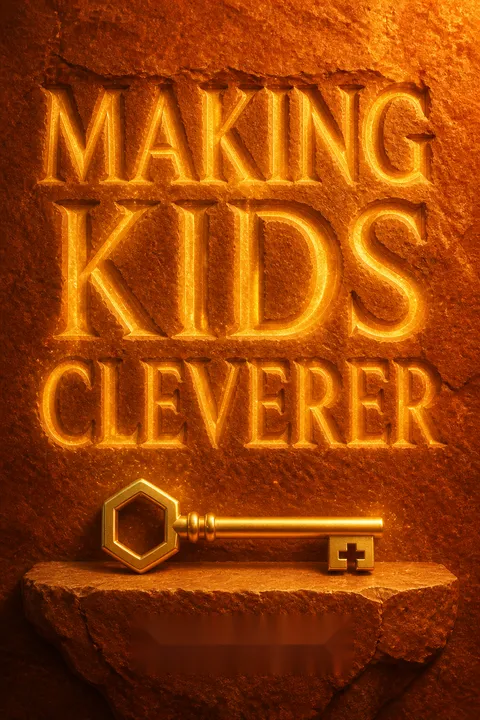


Key Takeaways
Make school supply the knowledge privilege quietly delivers at home
Opportunity starts with knowledge. Didau’s case begins with a public-speaking competition where his state-school pupils felt outmatched by students from a wealthier school. The difference was not necessarily innate intelligence: the other pupils seemed more confident partly because they knew more about the world and had more practice expressing themselves. A national attainment gap gives the problem scale: in 2016, disadvantaged pupils in England were still 19.3 months behind their peers at the end of secondary school, after narrowing the gap by only three months since 2007.
School can change the odds. Didau argues that education should make children more intellectually capable because that expands their choices and supports many valued outcomes, from employment to fuller participation in society. The aim is not to make every pupil identical, but to ensure that access to knowledge depends less on family advantage.
The argument treats knowledge as civic infrastructure, not merely exam preparation. Like reliable transport or public libraries, a school can distribute an asset that families otherwise provide unequally. This framing also avoids making disadvantaged pupils responsible for overcoming disadvantages alone. Still, better knowledge cannot by itself erase poverty, discrimination, or unequal access to opportunity. The strongest version of the claim is narrower and more defensible: schools can reduce one important source of inherited advantage by ensuring every pupil encounters substantial knowledge and receives support to learn it.
Raise children's crystallised intelligence by teaching them more
Knowledge builds capability. Didau distinguishes fluid intelligence, the capacity to reason through unfamiliar problems, from crystallised intelligence, the knowledge and learned abilities stored in memory. The book argues that fluid intelligence is difficult to change, while crystallised intelligence can grow as children learn vocabulary, mathematics, history, and other subjects. More knowledge gives pupils more material to draw on when interpreting new information.
Schooling can contribute. In a Norwegian policy change studied by researchers, each additional year of schooling was associated with an average gain of 3.7 IQ points. Other research cited in the book finds lasting educational gains especially in vocabulary, verbal reasoning, and arithmetic, rather than a lasting rise in every component of general intelligence. The practical claim is not that lessons turn everyone into a genius, but that education can expand what pupils know and can use.
The distinction between reasoning capacity and acquired knowledge helps explain why a child can become more capable without changing some underlying cognitive limits. It also makes teaching an actionable intervention rather than a search for a magic brain exercise. A caution follows: IQ is a proxy, not a complete account of human ability, and correlations between IQ and life outcomes do not prove that raising test scores automatically produces those outcomes. The valuable educational target is therefore demonstrable knowledge and its use, not an abstract promise of higher intelligence.
Teach culturally invented knowledge directly; instinct will not supply it
Some learning comes naturally. Biologically primary adaptations are abilities humans readily acquire across cultures, such as spoken language, social understanding, and everyday problem solving. Biologically secondary knowledge is culturally developed, including reading, writing, arithmetic, and scientific ideas. It usually requires deliberate instruction rather than casual exposure.
Schools transmit what home may not. Children do not need formal lessons to learn many social routines, but most will not independently discover written language or Newtonian physics. Didau points to ancient Sumerian scribal schools as an early example of institutions created to teach difficult, culturally accumulated knowledge. He argues that generic skills such as creativity and problem solving are not substitutes for subject knowledge: pupils need something specific to know before they can reason meaningfully about it.
The distinction helps explain why enjoyable exploration is not always enough. A classroom can be lively while leaving pupils to rediscover concepts that generations have already worked out. Explicit teaching is a way to give novices access to that accumulated effort. The evolutionary explanation should be treated as a useful model, not a complete account of why every child learns differently. Its practical strength lies in the distinction it draws: schools should spend scarce time on knowledge that pupils are unlikely to acquire reliably without teaching.
Build connected schemas so working memory has room to reason
Memory is not one big desk. Working memory is the small mental workspace used to hold and process information. The book describes its capacity as roughly four chunks at a time. Long-term memory, by contrast, can store enormous amounts of information. A schema is an organized network of related knowledge that can be brought to mind as a meaningful unit.
Prior knowledge eases new thinking. A chess novice trying to remember scattered pieces must track many separate details. An experienced player may recognize a familiar pattern and remember the board as one chunk. The same principle applies in school: pupils who know relevant facts can devote more attention to reasoning, while beginners must struggle to hold unfamiliar details in mind. Knowledge is therefore both something to think about and something that supports thinking.
This account makes expertise less mysterious: what looks like exceptional mental capacity often reflects well-organized knowledge that reduces the number of separate items a person must juggle. The implication for teaching is important. A pupil who falters on a complex task may not lack potential; the task may be asking working memory to carry too many unfamiliar pieces at once. At the same time, a successful performance in the moment does not prove durable learning. Teachers need to check whether knowledge remains accessible after the immediate cues and supports have gone.
Choose curriculum knowledge for intellectual power, not just exam appearance
Some knowledge opens more doors. Michael Young’s term powerful knowledge describes knowledge that offers reliable ways to explain the world beyond personal experience. It helps pupils participate in public debate, question claims, and understand ideas they would not encounter in everyday life. Didau connects this to cultural literacy: shared references and concepts can help people take part in conversations that would otherwise exclude them.
Curriculum time has a price. Every lesson spent on one topic is time unavailable for another. Didau argues that a broad curriculum should be selected for cultural value, intellectual reach, and coherence, rather than reduced to exam specifications. He also addresses the tension between teaching established traditions and including overlooked voices. His proposed balance is to give pupils access to influential knowledge, then equip them to examine and challenge it.
The argument makes curriculum selection a question of access: a shared intellectual inheritance can be a resource for pupils who were not born into it. But inherited canons are not neutral, and what a society calls valuable has often reflected who held authority. The book’s strongest answer is not to preserve tradition unquestioningly, but to learn enough to critique it. That requires deliberate inclusion of neglected contributions as well as engagement with established works. The test is whether the curriculum expands pupils’ power to interpret, not whether it simply repeats what is already prestigious.
Train toward expertise through focused practice, not an arbitrary hour count
Practice needs a target. The popular 10,000-hour rule is not a guarantee of mastery. Didau stresses that practice quality matters more than a fixed total. Purposeful practice involves a clear, specific goal, sustained attention, useful feedback, and work just beyond current competence. Repeating what is already easy may build fluency, but it does not necessarily lead to further improvement.
Expertise changes how effort feels. The book describes three broad stages of learning a procedure: first, conscious effort; then, linking steps together; finally, automatic performance. Driving offers a familiar example: beginners monitor pedals, steering, and mirrors separately, while experienced drivers can perform routine actions without conscious effort. Improvement can stall at that comfortable stage. To progress, learners need a new challenge, accurate feedback, and a clear picture of what better performance looks like.
This account usefully separates repetition from improvement. Practice is productive when it helps learners notice a gap between their current performance and a well-defined standard, then make a correction. That logic applies beyond music or sport, including writing and teaching. Yet not every valuable activity has a single measurable endpoint or an expert who can provide precise feedback. In those fields, goals and standards may need to be negotiated, and progress may be slower to assess. The principle remains practical: effort needs direction, not merely duration.
Explain new material before asking novices to discover it
Beginners have little to lean on. Cognitive load theory describes how demands on working memory can overwhelm a learner when too much unfamiliar information must be processed at once. A novice solving a difficult problem may spend all available attention searching for a solution, leaving little capacity to remember what the attempt was supposed to teach.
Guidance can make learning more efficient. Didau recommends clear explanations, modelling, worked examples, questions, and guided practice when material is new. Explicit instruction does not mean a teacher talks without interruption; it means making important steps and relationships visible. As pupils become more knowledgeable, the amount of guidance should change. Detailed examples that help beginners may become redundant for advanced learners, an adjustment known as the expertise reversal effect.
This is a case for sequencing support, not for making every lesson teacher-led. When learners lack the knowledge needed to navigate a problem, guidance reduces avoidable mental effort and helps them attend to the important structure. As their knowledge grows, the same support can become needless interference. That makes responsive teaching more demanding than choosing one method and applying it everywhere. The relevant question is not whether instruction is traditional or progressive, but whether the guidance matches what learners already know and what they are being asked to learn.
Use forgetting strategically: retrieve, space, and mix what matters
Familiarity can fool learners. Seeing notes again often feels like knowing them, even when a pupil cannot recall the material independently. Retrieval practice means attempting to bring learned information to mind, for example through a low-stakes quiz, rather than simply rereading it. The effort can reveal gaps and strengthen future access to the material.
Let time do useful work. Spacing means revisiting knowledge after an interval, once some forgetting has occurred. Didau cites research suggesting that for a test in a month, a week between study sessions can be useful. Interleaving means mixing different problem types instead of practising each type in a block. These strategies make practice feel harder in the moment, but the aim is durable learning, not a smooth performance that depends on recent exposure.
These methods challenge the assumption that ease is the same as progress. A learner who can retrieve an idea after time has passed has stronger evidence of durable access than one who recognizes it immediately after review. The practical benefit is diagnostic as well as educational: self-testing tells pupils what they can actually recall. Still, difficulty alone is not a virtue. If foundational knowledge has not been introduced clearly, quizzes and mixed problems can measure confusion rather than strengthen learning. Retrieval works best when it revisits material that has been taught.
Make academic effort a peer norm, especially where opportunity is scarce
Groups shape what feels normal. Didau draws on group socialisation theory, the idea that peer groups strongly influence children’s attitudes and behaviour. If a school’s social culture treats hard work as embarrassing, pupils may protect their status by disengaging. If effort and learning earn respect, those norms can support academic success.
Grouping can deepen early gaps. The book cites evidence that setting by attainment tends to help high-attaining pupils while harming pupils in middle and lower groups. It also warns that tests used to assign groups do not place every child accurately. Schools can respond by delaying fixed ability grouping, maintaining high expectations, and making academic participation part of an inclusive school identity. The goal is not to erase differences between pupils, but to avoid turning early differences into unequal access to learning.
Peer culture is a powerful bridge between classroom practice and institutional design. Expectations become more durable when pupils reinforce them for one another, rather than hearing them only from adults. This also clarifies why academic standards and belonging need not be opposites: a school can make serious learning part of the shared identity. Still, peer effects are not fully under a school’s control, and group norms can vary across classrooms. They are best treated as a real influence to shape and monitor, not as a guaranteed lever for closing every gap.
Analysis
The book’s central contribution is to recast educational fairness as access to intellectual resources. Instead of treating ability as a fixed ranking that schools merely identify, Didau argues that knowledge changes what pupils can understand, remember, and do. This makes curriculum and instruction moral questions: a school that leaves demanding knowledge to chance is not neutral, because chance distributes it unevenly.
The argument is strongest when it links cognitive limits to practical design. Working memory is constrained, prior knowledge supports new learning, and novices benefit from guidance that experts may not need. This combination explains why clear teaching, carefully chosen content, and repeated recall can outperform methods that assume pupils will independently uncover complex ideas. It also gives teachers a concrete way to evaluate interventions: do pupils retain and apply the knowledge, rather than merely appear engaged during a lesson?
The thesis needs careful boundaries. Intelligence is broader than IQ, and associations between intelligence and health, income, or happiness do not establish that classroom knowledge alone causes those outcomes. Nor does the distinction between fluid and crystallised intelligence make their relationship simple. The book sometimes presses a persuasive educational case into stronger causal claims than the evidence can settle. Its social argument is most compelling when it promises improved access and greater choice, not guaranteed happiness or prosperity.
A second tension concerns cultural inheritance. Shared knowledge can provide entry to public conversation, yet inherited canons also reflect historical exclusions. Teaching influential traditions without examination risks reproducing their hierarchies; excluding them risks depriving pupils of tools needed to understand those hierarchies. The constructive answer is neither reverence nor erasure, but knowledge followed by informed critique. Ultimately, the book asks schools to treat knowledge as both a common inheritance and a capacity that can be expanded. Its most durable insight is that pupils cannot critically assess, creatively transform, or meaningfully question ideas they have never had the chance to learn.
Review Summary
Making Kids Cleverer receives mostly positive reviews, with readers praising its well-researched approach to education. Many find it insightful and valuable for teachers and school leaders, appreciating its focus on knowledge-rich curriculum and cognitive science. Critics argue that it may perpetuate existing power structures and question its emphasis on IQ. Some readers find the book's practical suggestions limited but consider it thought-provoking. Overall, it's seen as an accessible and important read for those involved in education, though opinions on its effectiveness vary.
People Also Read







Glossary
Biologically primary adaptations
naturally acquired human abilitiesAbilities and forms of learning that humans readily develop across cultures because they are connected to longstanding features of human life. The book gives spoken language, social understanding, and everyday problem solving as examples. They can be supported through modelling and experience, but usually do not require the kind of formal instruction needed for culturally invented knowledge.
Biologically secondary knowledge
culturally developed knowledgeKnowledge created and accumulated through human culture that people do not reliably acquire through ordinary experience alone. Reading, writing, arithmetic, and scientific concepts are examples. Because these forms are relatively recent cultural developments, the book argues that schools should teach them deliberately and clearly rather than expect pupils to discover them independently.
Crystallised intelligence
knowledge used in new situationsThe ability to access and apply knowledge stored in long-term memory. Vocabulary, arithmetic, and understanding of how the world works contribute to it. In the book’s argument, schooling can develop crystallised intelligence by increasing what pupils know and helping them retrieve and use that knowledge. It is distinguished from fluid intelligence, which concerns reasoning through unfamiliar problems.
Schema
organized network of knowledgeA structured network of related information in long-term memory. Schemas help a learner connect new material to existing knowledge and retrieve related ideas together. As a schema becomes richer, complex information can be treated as a meaningful chunk rather than many separate details, reducing demands on working memory and making further learning easier.
Powerful knowledge
knowledge beyond everyday experienceMichael Young’s term for knowledge developed and tested within specialist fields that offers ways to explain the world beyond personal experience. It can help pupils understand unfamiliar ideas, participate in public debate, and question claims. The book argues that schools should make this knowledge available to all pupils, then support them in evaluating it.
Purposeful practice
focused practice with feedbackA form of practice aimed at improving a specific aspect of performance. It involves clear goals, sustained attention, feedback about errors or progress, and tasks that stretch current ability. Unlike simple repetition, purposeful practice targets what a learner cannot yet do reliably. The book presents it as a practical route from competence toward greater expertise.
Desirable difficulties
effort that strengthens retentionLearning conditions that make performance less smooth in the short term while supporting stronger retention or later application. The book includes retrieval practice, spacing, interleaving, varying practice conditions, and gradually reducing feedback. These difficulties are useful only when learners have been taught the material and can make progress; struggle without adequate support is not the point.
Expertise reversal effect
guidance needs change with knowledgeThe finding that an instructional method helpful to novices can become ineffective or burdensome for more knowledgeable learners. Beginners often benefit from worked examples and detailed guidance because they have few schemas to rely on. As knowledge grows, learners can use their own stored structures, and excessive explanation may duplicate information or interfere with independent problem solving.
Flynn effect
rising average IQ scoresThe observed rise in average IQ test scores across generations, reported in many countries during the twentieth century. The book notes that scores increased by about three points per decade for a long period, with especially notable gains on abstract reasoning items. It discusses James Flynn’s proposal that modern life encourages more abstract and hypothetical thinking.
FAQ
What's Making Kids Cleverer about?
- Focus on Intelligence: The book explores how intelligence can be enhanced in children through education. David Didau argues that teaching powerful knowledge can increase intelligence and prepare children for future challenges.
- Closing the Advantage Gap: It addresses the disparity in educational outcomes between advantaged and disadvantaged children, suggesting that improving knowledge can help close this gap.
- Evidence-Based Approach: Grounded in cognitive science and educational research, the book provides a framework for understanding how children learn and how to teach them effectively.
Why should I read Making Kids Cleverer?
- Insightful Perspectives: The book offers a fresh perspective on education, challenging common beliefs about intelligence and learning. It encourages readers to rethink their approach to teaching and parenting.
- Practical Strategies: Didau provides actionable strategies for educators and parents to help children become more knowledgeable and cleverer.
- Timely Relevance: In an era of educational inequality, this book presents a timely manifesto for improving educational practices.
What are the key takeaways of Making Kids Cleverer?
- Knowledge is Power: Didau emphasizes that knowledge is the foundation of intelligence, enabling critical thinking and problem-solving.
- Role of Teachers: Teachers play a crucial role in designing effective learning experiences, significantly impacting children's learning outcomes.
- Intelligence is Malleable: Intelligence is not fixed and can be improved through education and experience, particularly by focusing on crystallized intelligence.
How does Making Kids Cleverer define crystallized intelligence?
- Definition: Crystallized intelligence is the ability to access and utilize information stored in long-term memory, including knowledge gained through experience and education.
- Importance: Increasing crystallized intelligence is key to making children cleverer, achieved by teaching them rich, culturally significant knowledge.
- Contrast with Fluid Intelligence: Unlike fluid intelligence, which involves reasoning without prior knowledge, crystallized intelligence can be developed and expanded over time.
How does Making Kids Cleverer suggest we can increase children's intelligence?
- Knowledge-Rich Curriculum: Didau advocates for a curriculum that prioritizes essential knowledge, helping children build a strong foundation for further learning.
- Explicit Instruction: The book emphasizes the effectiveness of explicit teaching methods over discovery learning, leading to better retention and understanding.
- Encouraging Recall: Strategies like retrieval practice and spaced repetition are recommended to help children remember what they learn, enhancing their crystallized intelligence.
What myths about intelligence does David Didau address in Making Kids Cleverer?
- Fixed vs. Growth Mindset: Didau challenges the notion that intelligence is fixed, emphasizing the importance of fostering a growth mindset in children.
- Multiple Intelligences Theory: The book critiques Howard Gardner's theory, asserting that intelligence is more general and interconnected than the theory suggests.
- Cultural Bias in IQ Tests: Didau discusses the controversy around IQ tests and their perceived cultural bias, arguing they measure certain cognitive abilities but do not define a person's worth or potential.
What role do teachers play in making kids cleverer, according to Making Kids Cleverer?
- Educational Designers: Teachers are described as educational designers who create effective learning environments, crucial for enhancing student learning.
- Setting High Expectations: Maintaining high expectations for all students can motivate them to strive for success and improve their academic performance.
- Influencing Peer Culture: Teachers can shape classroom culture, encouraging a positive environment where hard work and intelligence are valued.
How does Making Kids Cleverer address the advantage gap in education?
- Identifying Disparities: Didau highlights the achievement gap between disadvantaged and advantaged students, often exacerbated by unequal access to quality education.
- Strategies for Equity: The book proposes strategies to help all children succeed, focusing on knowledge acquisition to provide equitable learning opportunities.
- Long-Term Impact: Improving educational practices can have a lasting impact on children's lives, helping them achieve happiness and success in adulthood.
What is "powerful knowledge" as defined in Making Kids Cleverer?
- Systematic Development: Powerful knowledge is systematically developed by experts, providing reliable explanations and frameworks for understanding the world.
- Culturally Rich: It is culturally significant, allowing students to engage in discussions about important societal issues and think critically.
- Entitlement to Knowledge: Didau argues that all children should have access to powerful knowledge, essential for their development as informed citizens.
How does Didau suggest we improve children's memory in Making Kids Cleverer?
- Retrieval Practice: Emphasizes actively recalling information rather than passively reviewing it, strengthening memory retention and identifying knowledge gaps.
- Spaced Learning: Advocates revisiting information at intervals, allowing for forgetting and relearning, which solidifies knowledge in long-term memory.
- Interleaving Practice: Suggests interleaving different content types during practice sessions to prevent familiarity and encourage deeper understanding.
What are some practical strategies for teachers outlined in Making Kids Cleverer?
- Use of Worked Examples: Recommends using worked examples to help students understand complex concepts, reducing cognitive load and facilitating schema acquisition.
- Regular Low-Stakes Quizzes: Suggests incorporating quizzes to reinforce learning and assess understanding, activating prior knowledge and encouraging retrieval practice.
- Encourage Metacognition: Emphasizes teaching students to be metacognitive, reflecting on their learning processes to identify areas for improvement.
What are the best quotes from Making Kids Cleverer and what do they mean?
- “Knowledge is opportunity”: This quote encapsulates the book's thesis that knowledge equips children to navigate life's complexities, underscoring the importance of a strong educational foundation.
- “Intelligence is a social good”: Didau argues that increasing intelligence benefits society as a whole, highlighting the broader implications of educational equity and access.
- “We can all get cleverer”: Reinforces the idea that intelligence is not fixed, encouraging belief in growth and improvement through education and effort.
Download PDF
Download EPUB
.epub digital book format is ideal for reading ebooks on phones, tablets, and e-readers.








