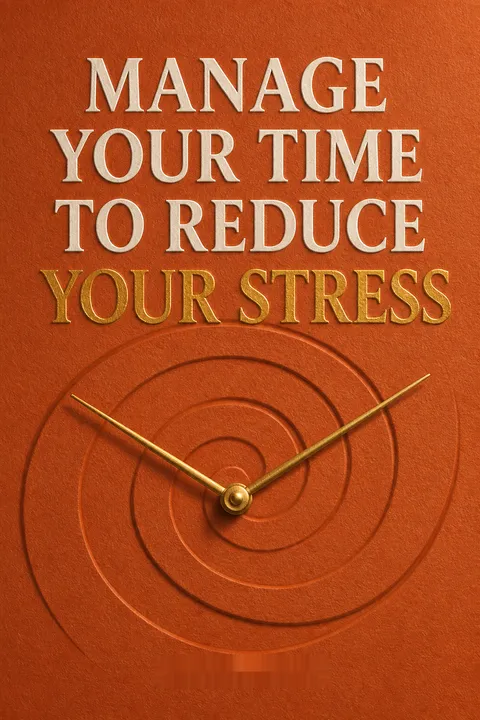


Key Takeaways
Manage your response to demands instead of waiting for life to calm down
Stress begins with a demand. Rita Emmett draws on stress researcher Hans Selye’s definition of stress as the body’s response to a demand. The same event can produce sharply different reactions. While waiting for a train, one driver raged and honked, another quietly wrote postcards, and a third fell asleep. The delay was outside their control, but their interpretations shaped how they experienced it.
Change the inner narration. Emmett argues that self-talk influences thoughts, feelings, and reactions. A person who tells herself a missed call proves someone is disrespectful may spiral into anger; reminding herself that the neighbor often forgets messages can help her try again without escalating. This is not a promise that attitude can erase every burden. It is a starting point for responding more deliberately to the parts of a situation that can be influenced.
What's useful here is the distinction between an event and its appraisal, a familiar idea in cognitive psychology. Reframing can interrupt catastrophizing and restore a sense of choice, especially in everyday frustrations like delays or misunderstandings. But the claim that people control their response should not be mistaken for total control over stress. Trauma, illness, discrimination, caregiving, and unsafe workplaces constrain what a person can simply think away. The strongest reading is practical rather than absolute: self-talk can be one lever, alongside changing conditions, asking for help, and setting limits.
Make your calendar reflect what you would hate to lose
Values need calendar space. Josh, a real-estate broker with Crohn’s disease, initially named work as his central priority. When asked what he would miss most if it disappeared, he put his wife, children, and health ahead of his career and income. Yet his actual schedule gave nearly all its time to work. That mismatch left his wife feeling like a solo parent and Josh feeling increasingly unwell.
Use time as evidence. Emmett defines time management not as squeezing in more tasks, but as spending more time on what matters. Josh began screening calls at home, checking weekend email only once a day, and paying attention to his family while with them. The adjustment did not require abandoning his career; it required making his daily choices more consistent with the relationships and health he said he valued.
The calendar functions here as a behavioral audit: stated priorities are easy to endorse, while repeated choices reveal what receives protection. This resembles values-based approaches in psychology, which distinguish meaningful direction from short-term mood or pressure. The useful question is not whether work matters, but whether its share of time is proportionate to its place in a person's chosen life. Still, schedules are not always freely chosen. Low wages, inflexible jobs, and dependent care can sharply limit options, so a mismatch may call for collective or practical support, not simply better personal discipline.
Schedule activities that restore you, not just obligations that drain you
Meaning is not the same as busyness. Emmett places burnout and being uninspired at opposite ends of a spectrum. Too many demands can exhaust a person, but a life filled only with unwanted chores can also drain energy. The right balance differs from person to person and can shift with circumstances.
Choose what brings you back to life. Mario, a security guard who missed singing after high school, joined his church choir and found renewed enthusiasm. Sam, who assumed television was his form of relaxation, realized he was bored by most of what he watched. Building a model ship, a childhood pleasure, made him feel more engaged, even when he kept the television on in the background. The point is not to pursue an impressive hobby. It is to make room for activities that feel genuinely replenishing.
This section usefully refuses the idea that recovery means doing nothing. Engagement, play, craft, music, and connection can replenish attention and motivation in ways passive downtime may not. The distinction also resonates with research on autonomy and intrinsic motivation: activities chosen for their own appeal often feel different from tasks performed for approval. Yet not every enjoyable pursuit is restorative, and some people need quiet or sleep more than another activity. The practical test is the after-effect: does the choice leave someone more present and energized, or merely add another obligation?
Replace perfectionism with excellent work and honest limits
Perfect can prevent finished. Raina, a wedding photographer, said her house stayed messy because she believed floors should be washed only after moving every chair and table. If she lacked the time to do the job completely, she avoided starting. Emmett argues for excellence, which allows effort and improvement without demanding flawlessness from oneself or others.
Question invisible rules. Sue, a credit-union supervisor, had skipped lunch for eight years because she assumed the company expected it. Her colleagues took breaks, and no one objected when she finally did too. The story shows how imagined standards can create needless strain. Perfectionism can also turn ordinary mishaps into disasters, as when families expect a wedding to go exactly right. A more realistic standard leaves room for mistakes, different ways of working, and speaking up when the load is too heavy.
The distinction between excellence and perfection is especially valuable when perfectionism disguises avoidance as high standards. In clinical psychology, rigid perfectionistic concerns are associated with distress, while high standards can remain productive when paired with flexibility and self-compassion. The book's workplace example also exposes a subtle mechanism: people may obey rules that no one actually imposed. Still, not every standard is imaginary. Some work has genuine safety or quality requirements. The better question is where precision protects people, and where it merely protects an image of being indispensable.
Set goals you control, then expect obstacles and take one small step
Make goals actionable. A useful goal is specific, measurable, time-bound, relevant, and within the goal-setter’s control. Someone can invite a colleague to meet, for example, but cannot control whether that person agrees. Eileen’s plan to care alone for her mother with Alzheimer’s sounded devoted, yet it was unsustainable. Once she asked her siblings for concrete help, they shared errands, housework, and caregiving, and eventually agreed on professional care.
Plan for interruptions. Emmett calls unexpected events that obstruct a goal “goal stoppers.” Family illness and other major changes interrupted her own efforts to write a book. Rather than waiting for a calm stretch of life, she eventually began with one hour a week. Obstacles are not proof that a goal is foolish. They are a cue to find a smaller step or a different route.
This is a strong blend of agency and realism. Goals tied to controllable actions reduce the frustration of making success depend on another person's decision, while breaking work into steps makes progress visible. Eileen's story also shows that asking for help is part of goal design, not a failure of it. The caution is that measurable goals can become another source of pressure when circumstances change. Goals need periodic review: persistence is useful when the aim still matters, but flexibility matters when the plan is harming the person it was meant to help.
Remove commitments and clutter before trying to squeeze in more
Look for what can leave. A one-week time log can reveal where attention actually goes and which activities deserve to be cut or simplified. Kevin, a CEO, discovered that he had accepted too many committees, appointments, and enjoyable activities. Saying no more often reduced the overload. Emmett also asks readers to examine purchases, debt, possessions, and information that demand time to manage. Clutter creates work: it must be stored, cleaned, maintained, and searched through.
Protect focused attention. Emmett distinguishes useful multitasking, such as planning a grocery list while loading a dishwasher, from “multifocusing,” or repeatedly jumping between demanding tasks. The latter fragments attention and makes it harder to finish. A time log, fewer incoming messages, reusable templates, and scheduled clear-out sessions can reduce both interruptions and accumulated work.
The chapter's most practical move is subtractive: before optimizing a crowded life, inspect what is filling it. That logic aligns with cognitive research on task switching, which finds that shifting attention carries costs, especially for complex work. It also connects consumption with time, since possessions and subscriptions create ongoing maintenance. The nuance is that simplification can become a new perfection project, or fail when the demands are imposed by poverty, work, or family responsibilities. A useful audit distinguishes chosen clutter from unavoidable load, then targets the most removable sources of friction first.
Protect your time with clear boundaries, not silent resentment
Boundaries make limits visible. Traci had one free evening after two demanding weeks, but her sister pressured her to join a bridge game. Traci learned that her sister might not respect her need for rest, so she needed to respect it herself and stop treating every call as an obligation. Boundaries can specify what someone will do, where they will do it, or how long they will take on a task.
Say no, and make work interruptible by choice. Jason, who worked from home, began turning off his phone during family time after realizing he had missed his daughter’s softball championship. Emmett also describes the “Fizzle Factor”: when someone is frantic, rushing in to fix the problem may make matters worse. Offer help, then give the person space to settle before stepping in. Clear limits are kinder than accumulating resentment and disappearing attention.
Boundaries are a form of expectation-setting, not a punishment. They help other people understand what is available and protect attention for relationships that are otherwise displaced by constant access. The distinction between offering help and taking over is also important: unsolicited fixing can undermine another person's agency even when it comes from care. Boundaries work best when stated early, specifically, and consistently. They are not equally easy for everyone to enforce, particularly when a person depends on an employer or family member, so the surrounding power relationship matters.
Treat rest, sleep, and enjoyment as operating costs, not prizes
Recovery belongs in the plan. Emmett's examples range from a walk with family and playing piano to gardening, meditation, and a short break away from work. The common feature is that people deliberately choose a way to regain energy rather than hoping free time appears. She recommends making an appointment with oneself and treating it as a real commitment, not an optional reward for finishing everything.
Build routines that support energy. The book suggests regular sleep and wake times, a restful bedroom, breaks, fresh air, movement, and activities that generate enthusiasm. Ken, a human-resources manager facing a large campaign, relied on evening walks with his children and piano playing to decompress. Emmett's larger point is that self-care is the worker's responsibility too. It helps sustain care for family, work, and other commitments rather than competing with them.
The maintenance metaphor corrects a common accounting error: people treat rest as a bonus while spending energy as if it were unlimited. Sleep and breaks support attention, emotional regulation, and physical functioning, so recovery can improve both well-being and performance. The book is strongest when it encourages readers to identify personally effective routines rather than prescribe one universal ritual. Its specific nutrition and sleep suggestions should be treated as general guidance, not medical advice, since health conditions and individual responses vary. Persistent exhaustion may require professional assessment or changes in workload, not just a better bedtime routine.
Turn intentions into action with one small start, a timer, and reward
Begin before the task grows. Gerri delayed thank-you notes after her wedding until the job felt enormous and shameful. She eventually gathered her supplies in one place, reduced her expectations about what each note needed to say, and wrote five or ten notes per evening. The first step mattered more than waiting for a perfect block of time.
Make starting concrete. Emmett's closing plan is to gain perspective, decide on a specific action, start small, use a timer, and reward completion. A one-hour session with interruptions set aside can create a protected space for a goal. Bob, who dreaded a short weekly report, began completing it first thing in exchange for coffee afterward. Rewards need not be grand. They make a task's finish line tangible and help break the cycle of postponement.
The advice combines several well-supported behavior-change principles: reduce the activation energy of starting, narrow attention, and make completion immediately rewarding. Gerri's notes show how delay can inflate a manageable task into an emotional burden, while Bob's ritual links an aversive chore to a predictable payoff. A timer is not a cure for every form of procrastination, which can arise from unclear instructions, fear, illness, or excessive workload. In those cases, the first small step may be clarifying the task or renegotiating its scope rather than pushing harder.
Analysis
Emmett's central argument is that overload is not solved by efficiency alone. When people become better at completing tasks, they can simply inherit more tasks, leaving the deeper problem untouched: time is being spent in ways that conflict with their values, relationships, health, or sense of vitality. Her reframing of time management as deciding what deserves a place in life is more consequential than a new scheduling trick. The book's stories repeatedly make abstract advice legible: Josh's calendar contradicts what he says he values, Sue obeys a lunch rule no one imposed, and Gerri's delayed notes grow from a small task into a source of shame.
The six-part STRESS structure gives readers a usable route through the problem: identify what matters, relax impossible standards, choose realistic goals, remove excess, set limits, and restore energy. Its strength is the interaction among these moves. A person cannot protect family time without deciding it matters, and saying no becomes easier when a goal or value gives the refusal a reason. The final emphasis on small starts also addresses a weakness common to self-help: insight can feel like progress while behavior remains unchanged.
The approach is humane, but its emphasis on personal response needs careful interpretation. Reframing a delay may reduce needless distress; it cannot resolve chronic understaffing, financial insecurity, illness, or unequal care burdens. Individual boundaries may be unavailable or risky in some workplaces. Emmett acknowledges that some people have little room to cut obligations, but the book still speaks most directly to readers with at least some discretion over schedules and spending.
The anecdotes offer memorable illustrations, not controlled evidence that each strategy causes improved health. The book's physiological claims about prolonged stress are also broader than the time-management argument requires. Its most durable contribution is therefore not a medical theory or universal formula. It is a practical ethical question: does the way a person spends time support the life that person says is worth having?
Review Summary
Manage Your Time to Reduce Your Stress receives mixed reviews, with an average rating of 3.43/5. Readers appreciate the practical advice and memorable examples, though some find the content basic or repetitive. The book's focus on aligning activities with personal values is praised. Many enjoy the author's narration and friendly tone. Criticisms include dated information and occasional insertion of personal opinions. Overall, readers find it a helpful reminder of time management principles, with exercises that encourage application to one's own life.
People Also Read










Glossary
STRESS
Six-part stress-management guideThe book's organizing mnemonic for six areas of change: identify personal values, loosen perfectionistic standards, choose realistic goals, eliminate or simplify demands, set boundaries, and restore energy. It connects time management to stress reduction by directing readers to change both how they allocate time and how they respond to demands.
goal stoppers
Unexpected obstacles to goalsEmmett's name for important events outside a person's control that interrupt progress toward a goal. Family illness, bereavement, accidents, or other major changes can consume time and emotional energy. The term distinguishes real obstacles from excuses and encourages people to recognize the interruption, then find a smaller step or alternative route.
Emmett’s Law of Goal Setting
Obstacles follow important goalsEmmett's observation that when someone commits to an important goal, significant obstacles often appear alongside it. The principle is not that goals cause bad events, but that life continues to produce demands while a person is trying to make progress. Recognizing this pattern can replace waiting for perfect conditions with adapting the plan.
multifocusing
Switching among unfinished tasksEmmett's term for repeatedly shifting attention between projects while mistaking the activity for doing several things at once. Each switch interrupts concentration and requires the person to recover the task's context. She contrasts it with combining a low-attention activity with a task that still receives adequate focus.
Fizzle Factor
Wait before helping someone franticA practical idea for responding when another person is agitated or overwhelmed. Instead of immediately taking control or trying to fix the situation, offer support and step back until the person is calmer or asks for help. The pause can prevent well-meant intervention from adding confusion or escalating conflict.
Fairy-Tale People
People presenting life as perfectEmmett's label for people who try to make others believe they have an ideal family, relationship, home, or life. The label also applies to people who expect their own lives to match that polished image. Comparing ordinary experience with this imagined perfection can create disappointment, pressure, and unnecessary stress.
FAQ
What's "Manage Your Time to Reduce Your Stress" about?
- Purpose of the book: "Manage Your Time to Reduce Your Stress" by Rita Emmett is a guide for individuals who feel overworked, overscheduled, and overwhelmed. It aims to help readers manage their time effectively to reduce stress.
- Focus on time management: The book emphasizes the importance of time management not just for productivity but for maintaining a balanced and stress-free life.
- Practical strategies: It provides practical strategies and exercises to help readers identify their values, set realistic goals, and streamline their lives.
Why should I read "Manage Your Time to Reduce Your Stress"?
- Stress reduction: If you're feeling overwhelmed by your schedule, this book offers actionable advice to help you regain control and reduce stress.
- Improved productivity: By learning to manage your time better, you can become more productive without feeling burnt out.
- Life balance: The book helps you align your daily activities with your core values, leading to a more fulfilling and balanced life.
What are the key takeaways of "Manage Your Time to Reduce Your Stress"?
- Identify values: Understanding what is truly important to you is crucial for effective time management and stress reduction.
- Set realistic goals: Goals should be specific, measurable, and within your control to avoid unnecessary stress.
- Streamline and eliminate: Focus on eliminating unnecessary tasks and streamlining processes to free up time for what matters most.
How does Rita Emmett suggest we handle perfectionism?
- Perfectionism causes stress: Emmett argues that striving for perfection is a major source of stress and is often unattainable.
- Focus on excellence: Instead of perfection, aim for excellence, which is achievable and less stressful.
- Accept imperfections: Recognize that neither you nor others will be perfect, and learn to let go of unrealistic expectations.
What are some practical strategies from "Manage Your Time to Reduce Your Stress"?
- Time logs: Keep a time log to identify where your time goes and find areas to streamline.
- Set boundaries: Establish clear boundaries between work and personal life to prevent burnout.
- Daily recharging: Incorporate daily activities that recharge your energy and reduce stress, such as exercise or hobbies.
What is the "STRESS" method mentioned in the book?
- Acronym for stress management: The "STRESS" method stands for Search for values, Trash perfectionism, Reach for realistic goals, Eliminate and streamline, Set boundaries, and Strive to recharge.
- Comprehensive approach: This method provides a structured approach to managing stress by addressing various aspects of life.
- Actionable steps: Each component of the method includes specific actions and exercises to help implement the strategy effectively.
How does "Manage Your Time to Reduce Your Stress" address goal setting?
- Realistic and rewarding: Goals should be realistic, relevant, and rewarding to ensure they contribute positively to your life.
- Avoid negative goals: Ensure goals are within your control and have specific, measurable outcomes to avoid frustration.
- Life balance: Set goals in all areas of life, not just work, to maintain a balanced and fulfilling lifestyle.
What are the best quotes from "Manage Your Time to Reduce Your Stress" and what do they mean?
- "Stress is the spice of life." This quote by Hans Selye suggests that some stress is necessary for a fulfilling life, but it must be managed effectively.
- "Perfectionism is the voice of the oppressor." Anne Lamott's quote highlights how perfectionism can be a self-imposed barrier to happiness and success.
- "Time is the coin of your life." Carl Sandburg's quote emphasizes the importance of being intentional with how you spend your time.
How does the book suggest dealing with procrastination?
- Identify causes: Understand the underlying reasons for procrastination, such as fear of failure or perfectionism.
- Break tasks into smaller steps: Tackle tasks in manageable chunks to make them less daunting and more achievable.
- Use rewards: Motivate yourself with small rewards for completing tasks to build momentum and reduce procrastination.
What role do values play in time management according to Rita Emmett?
- Foundation for decisions: Values help prioritize tasks and make decisions that align with what truly matters to you.
- Reduce stress: When your actions align with your values, you experience less stress and more satisfaction.
- Guide for goal setting: Values serve as a guide for setting meaningful and relevant goals that enhance your life.
How can setting boundaries help reduce stress?
- Work-life balance: Boundaries help separate work from personal life, preventing burnout and maintaining balance.
- Protect personal time: Establishing boundaries ensures you have time for activities that recharge and fulfill you.
- Manage expectations: Clear boundaries help manage others' expectations and reduce the pressure to meet unrealistic demands.
What are some common obstacles to effective time management mentioned in the book?
- Perfectionism: The pursuit of perfection can lead to procrastination and stress, hindering effective time management.
- Lack of boundaries: Without clear boundaries, work and personal life can blur, leading to burnout.
- Unclear goals: Vague or unrealistic goals can cause frustration and prevent progress, making it difficult to manage time effectively.
About the Author
Other books by Rita Emmett
Download PDF
Download EPUB
.epub digital book format is ideal for reading ebooks on phones, tablets, and e-readers.








