

Plot Summary
The Bridge Runs Red
Ziva Tellion, a magically gifted blacksmith, is racing toward Skiro’s capital with her sister Temra dying from a lung wound and the warlord Kymora bound in the cart. Their passage is blocked by bandits, who demand payment the travelers do not have. Ziva, mercenary Kellyn, and scholar Petrik fight them off, but Kymora uses a hidden hair clasp to cut her restraints and attack Ziva.
They recapture her and break her sound knee, but the bandits’ obstruction forces a long detour. Ziva’s anger is sharpened by an old wound: during the earlier fight that injured Temra, Kellyn rescued Ziva instead of her sister. With Temra fading and every hour precious, Ziva can only keep the cart moving.
The opening makes care a physical, time-sensitive task: Ziva must keep Temra breathing while also guarding the person responsible for her injuries. Her violence is neither casual nor triumphant. She fights because delay could cost her sister’s life, then punishes Kymora because fear has narrowed her choices to control or catastrophe. Kellyn’s earlier decision to save Ziva instead of Temra remains an active fracture between them, so the journey begins with several kinds of rescue entangled: bodily survival, moral responsibility, and trust.
A Prince Without a Healer
As the party travels through the night, Petrik reveals that Prince Skiro is his half brother, both sons of the late King Arund. His connection gives them a chance to ask for Serutha, the healer who can repair Temra’s damaged lung. At Skiro’s palace, however, they learn that Prince Ravis, Skiro’s elder brother and ruler of another territory, abducted Serutha weeks earlier.
Temra cannot survive another overland journey, so Ziva’s hope collapses just as she reaches safety. Petrik persuades Skiro to authorize a rescue, and the prince gives them access to enchanted portraits that link distant capitals. Ziva, Petrik, and Kellyn disguise themselves as servants and step through a portrait into Ravis’s palace.
Petrik’s concealed royal connection changes the group’s options, but not in the simple way Ziva needs. It provides a door to power, then reveals that power has failed to protect the healer. The portrait portals make that political failure actionable: instead of waiting for a court to solve the crisis, the travelers can cross a kingdom in an instant. Ziva’s desperation also makes consent complicated. She agrees to expose her magic because Temra may die without it, even though powerful rulers have repeatedly treated her gifts as resources to claim.
Portraits Into Prison
The portrait deposits the three travelers inside a cramped wardrobe in Ravis’s palace. They hide their weapons, slip through servant corridors, and discover that Serutha is locked in a concealed room behind magically camouflaged cloth. Kellyn draws the guards away while Ziva and Petrik free the healer.
Bells sound as they race back to the attic, and Serutha escapes through the portrait to Skiro’s palace. Ziva realizes Kellyn is not coming after them. Rather than leave him to Ravis, she smashes the portal portrait and fights the guards until they capture her. She has destroyed the route home, but prevented Ravis from following Serutha and chosen not to let Kellyn face imprisonment alone.
Ziva’s decision to break the portrait turns an escape route into a deliberate sacrifice. She does not stay because she believes she can win a fight against a palace; she stays because the thought of safety purchased by abandoning Kellyn is intolerable. That choice also reverses her usual dependence on Temra as her protector. Ziva acts without her sister beside her, accepts the immediate cost, and makes the decision herself. The rescue succeeds, but the group’s protection now depends on what Ziva and Kellyn can endure inside Ravis’s territory.
The Forge Becomes a Cage
Ravis interrogates Ziva and Kellyn, then recognizes that Ziva’s magic could arm his campaign to reunite Ghadra by force. When she refuses to cooperate, he cuts off part of Kellyn’s ear and threatens further mutilation. Ziva is taken to Ravis’s enormous forge complex, where she must direct metalworkers in producing weapons for his army.
She slows the work where she can and gives the first batch of swords modest powers: they cannot rust, break, or dull. But when Ravis interrupts her while she enchants a war hammer, it gains a far deadlier force, reducing a tree-like plant to powder. Ziva sees her gift turned toward mass destruction, with Kellyn’s safety held over her as leverage.
Ravis weaponizes more than Ziva’s magic. By placing Kellyn within sight of the forge, he makes each stroke of her hammer an act performed under threat to someone she loves. Ziva’s first enchantments show how she tries to preserve a moral boundary inside coercion: the swords last longer, but do not become harder to wield lethally. The accidental pulverizing hammer exposes the limit of intention. Her anxiety and distraction can enter the metal with her, producing power she did not consciously choose. The forge, once a refuge, becomes a place where creation and complicity feel dangerously close.
A Sword Made of Sleep
After weeks of forced labor, Ziva enchants a sword to send anyone it strikes into deep sleep. She uses it to free Kellyn and disable Ravis’s guards, then escapes the capital with Kellyn on an ore cart. The weapon buys them distance, but cannot erase what they made: Ravis now has dozens of enchanted swords and the accidental war hammer.
On the road, Ziva and Kellyn argue over his choice to reveal her abilities, then begin rebuilding their closeness as they travel alone. Ziva breaks the sleep sword so it cannot be captured and misused. Soon afterward, Ravis’s men shoot Kellyn with an arrow. Ziva defeats the pursuing guards, but Kellyn is feverish and too injured to travel unaided.
The escape gives Ziva agency without offering a clean victory. Her sleep sword saves Kellyn, yet its existence immediately raises the question of what happens when a useful invention passes into another person’s hands. Breaking it is a small act of repair, not a solution to the army already armed with her work. The road also forces Ziva and Kellyn to confront what captivity postponed: they still care for one another, but his choices have hurt her. His wound shifts their conflict into dependence again, making care a practice they must negotiate rather than assume.
Two Zivas at Court
When Ziva reaches Skiro’s palace, Petrik’s grief-stricken expression makes her believe Temra has died. Temra then appears alive, and Ziva learns that another woman wearing a magical likeness of her has been meeting with the prince. The impostor has questioned Skiro about weapons and defenses, confirming that Ravis’s agents have entered the palace.
Kellyn is brought to the infirmary, where Serutha removes the arrow and heals its infection. Ziva also learns that Elany, the overseer who watched her work for Ravis, is a gifted cotton spinner whose magic helped conceal Serutha’s prison. Temra is furious that Petrik concealed Ziva’s danger, while Ziva must face how much can happen to the people she loves when she is absent.
The false Ziva turns identity into a practical vulnerability: the enemy can borrow a familiar face to gather military information and gain access to a ruler. At the same time, Ziva’s mistaken belief that Temra is dead dramatizes how little she can control while separated from her sister. Petrik withheld the truth to protect Temra, but that protection deprived her of agency and damages their trust. Serutha’s healing provides a counterpoint to Ziva’s destructive weapons: both women can alter matter through attention, yet Serutha’s work makes recovery visible, while Ziva’s power often leaves consequences she cannot easily undo.
The Smithy Chooses Home
With Temra recovered, Ziva considers leaving before Ravis can capture her again. Temra instead joins Skiro’s guard, determined to help defend the territory, and Ziva finally recognizes that her sister’s future cannot be planned around staying beside her. Serutha urges Ziva to reclaim the forge on her own terms, so Ziva works with the blunt, capable smith Abelyn to make two hammers.
Echo can shield her and rebound attacks; Agony gathers the force of those blows for her counterstrikes. Ziva decides to remain with Temra and the people threatened by Ravis, though she will not make weapons for a ruler. She begins helping prepare the city’s defenses, choosing a form of courage that does not require pretending she is unafraid.
The new hammers are not just combat tools. Their paired design gives Ziva a way to defend herself without surrendering the distinction she is trying to preserve between protection and conquest. Echo answers force with resistance, while Agony stores its consequences. Temra’s decision to serve as a guard forces Ziva to loosen her assumption that love means keeping her sister close and safe at all times. Staying becomes an act of commitment, not control. Ziva still fears being used, but she begins to define the conditions under which her skill can serve others.
A City Under Siege
Ravis brings an army to Skiro’s capital, and the residents begin escaping through the portrait portals to Princess Marossa’s territory. Skiro releases the imprisoned Kymora in exchange for her help defending the palace. She organizes boiling water, burning oil, and the few available soldiers, slowing the attack until Ravis’s forces breach the gate.
Ziva and Kellyn hide inside the palace and overhear Kymora reveal that she had used Ravis’s ambition to assemble an army for herself. She kills Ravis and declares her intention to seize Ghadra and capture Ziva. The portals have been destroyed, but one portrait to Marossa’s capital remains intact. Ziva and Kellyn escape through it, joining Temra and Petrik on the other side.
Kymora’s release is a tactical bargain that makes visible how crisis can force cooperation without producing trust. Her command saves time, but her skill does not make her loyal; she has treated Ravis’s ambition as a tool and discards him once he is no longer useful. Ziva’s experience of being pursued by both rulers sharpens the novel’s distinction between an ability and the purpose imposed on it. The surviving portrait offers escape, but only because the travelers can reach it before Kymora. Their survival rests on a narrow opening, not on any stable authority capable of protecting them.
Armor Without Blades
In Marossa’s territory, Ziva meets the other gifted people whose abilities have also been exploited: painter Ashper and healer Serutha. Their conversation helps her see that her magic is not limited to weapons. With Abelyn and a young forge worker named Zovid, she begins enchanting existing armor so arrows and blades cannot pierce it.
When Ashper and Serutha point out that they can apply their own magic to many things at once, Ziva discovers she can do the same with metal and accelerates the work. The royals choose Lirasu, Ziva’s home city, as the place to gather defenders against Kymora. Ziva agrees to help there, finding a way to serve the coming battle without making another arsenal of weapons for a powerful ruler.
The shift from swords to armor changes the ethical shape of Ziva’s craft. She cannot guarantee that protected soldiers will use force wisely, but she can reduce the vulnerability of people facing an invading army. Her discovery that she can enchant many pieces at once emerges through collaboration, not solitary genius. Ashper and Serutha provide models for power that is practiced in service of a chosen purpose. Ziva’s magic becomes less frightening when she is permitted to define its use, and the forge begins to feel like a place she can enter by choice.
Mercenaries Return to Lirasu
Ziva returns to Lirasu with Skiro, Temra, Kellyn, and Petrik, finding her home and forge intact. The governor agrees to help, and Petrik identifies the city’s mountain and mine as useful ground for a defense. At the tournament arena, Skiro asks the assembled mercenaries to fight Kymora, but most resist because the battle is dangerous and the offered pay is small.
Ziva recognizes many of them as customers carrying weapons she made. She steps forward despite her fear of public attention, explains what Kymora’s rule would mean for their freedom, and offers her own savings to fund their service. She also promises enchanted armor. The mercenaries begin to join, giving the defenders a force large enough to attempt a stand.
Ziva’s savings represent years of labor and a hoped-for private future, so spending them is not a casual gesture of patriotism. She converts personal security into collective capacity after recognizing that the mercenaries will not be moved by royal authority alone. Her speech works because it connects Kymora’s threat to the fighters’ actual lives: their freedom to choose jobs, keep their weapons, and avoid becoming instruments of a tyrant. Ziva does not become an effortless public speaker. She acts while afraid, using the trust already built through her work.
The First Ambush Breaks
Petrik’s plan places the defenders in the forest and on the mountain near Lirasu, where Kymora’s marching army should be tired and exposed. Princess Marossa silently kills three scouts, but Kymora still notices the signs of an ambush and refuses to walk into it blindly. She orders archers to fire from the sides.
Ziva’s enchanted armor turns the arrows away, allowing the defenders to survive the first volley and charge. The fight becomes a brutal clash at close range. Ziva sees the accidental war hammer in the hands of Izan, who uses it to reduce a fighter and a magical sword to fragments. She heads toward him, determined to stop her creation from causing another death.
The failed ambush exposes the difference between a clever plan and experienced command. Petrik has studied battles, but Kymora reads terrain and human hesitation as they unfold. Ziva’s armor validates her decision to protect rather than equip the army, yet it cannot make the defenders invulnerable. Izan’s use of the pulverizing hammer brings the cost of her accidental enchantment into the center of the fight. Her response is no longer only guilt about having made it. She chooses to confront the specific person wielding it and stop further harm.
Echo in Enemy Hands
Ziva survives Izan’s attacks by using Echo to repel his crushing hammer, then strikes back with Agony, which has absorbed the force of earlier blows. But the fight turns again when Elany creates several convincing likenesses of Kymora. The false figures sow panic, while the real Kymora reaches Ziva and takes Echo. Kellyn calls the retreat before the defenders are surrounded.
They climb toward the mountain, where Temra leads the reserve force and Marossa’s cavalry charges downhill. The counterattack costs Kymora many soldiers, but the defenders also lose people, and Marossa is wounded. Kymora’s forces reach the summit in greater numbers. Petrik sends Ziva and Temra toward the mine, while he and the others stay behind to hold the line.
The loss of Echo is both tactical and personal. Ziva’s most dependable protection now belongs to Kymora, the very person she fears will turn her gift against everyone she loves. Elany’s disguises attack the defenders’ ability to identify what is real, so the battle’s confusion is psychological as well as physical. The retreat also changes Ziva’s role: she cannot stay with Temra and Kellyn simply because their presence steadies her. Petrik’s instruction sends her toward an unknown task, requiring her to trust that her skill has a purpose even before she understands it.
Iron Holds the City
Inside the mine, Ziva and Temra light oil-soaked lines of coal beside exposed iron ore. Kymora enters carrying Echo and blocks their only way out, offering Temra’s life and the remaining prisoners in exchange for Ziva’s obedience. Ziva realizes the heated iron can answer her magic. She tears metal and rock from the mine walls, drives Kymora backward, and uses the force stored in Agony to turn Kymora’s own sword against her.
With Kymora dead, Ziva reaches the ore beneath Lirasu and enchants it to prevent violence within the city. Elany cannot strike the royals or take the gathered weapons, and Kymora’s soldiers refuse to follow her away. Ziva then learns Kellyn survived, despite Kymora’s claim that he was dead.
The mine transforms Ziva’s fear of her own power into a choice about its scale and purpose. Rather than forge a single weapon for someone else to command, she works with the iron already beneath her home and gives the city a protective boundary. Killing Kymora is not presented as a clean triumph: Ziva acts to stop a direct threat to Temra and the prisoners, then grieves when the battle’s emotional cost returns. The city’s enchantment is powerful precisely because it limits what power can do there. Protection becomes a shared condition, not a weapon held by one ruler.
A Future With Room
After the battle, Serutha heals the wounded, the survivors bury the dead, and the city begins to recover. Ziva gives her savings to the mercenaries who fought for Lirasu. Temra and Petrik return to Skiro’s capital, where Temra can train as a guard and Petrik can resume his work. Their departure leaves Ziva facing the question she had avoided with Kellyn: she wants a settled home, while he loves traveling as a mercenary.
Instead of deciding for him or withdrawing from the relationship, Ziva finally explains what she fears. They agree to build a home in Amanor, where Kellyn’s family lives. He will accept four jobs a year, and Ziva will join him on two. Their future becomes a compromise they choose together.
The resolution answers the book’s recurring conflict between attachment and autonomy. Ziva has spent years treating safety as something she must secure by keeping Temra close and managing risk for everyone. Temra’s departure makes that strategy impossible, but it does not end their bond. With Kellyn, Ziva faces a different challenge: she risks a direct conversation instead of silently deciding that their needs cannot coexist. Their plan does not erase difference. It makes room for both a stable home and carefully chosen journeys, a practical form of intimacy built through negotiation.
Analysis
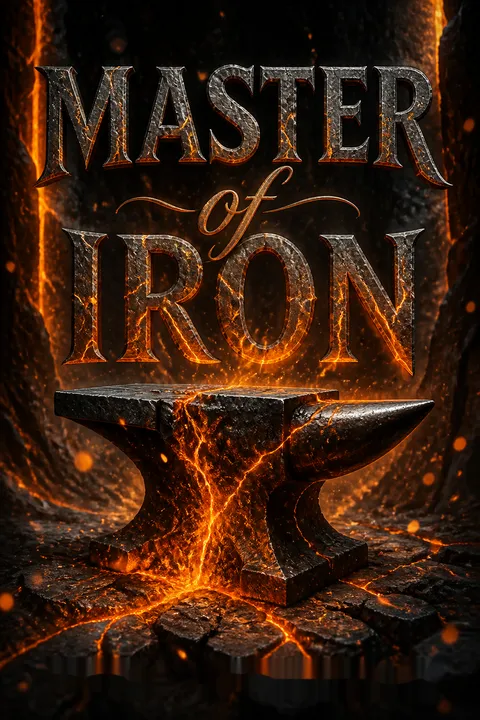
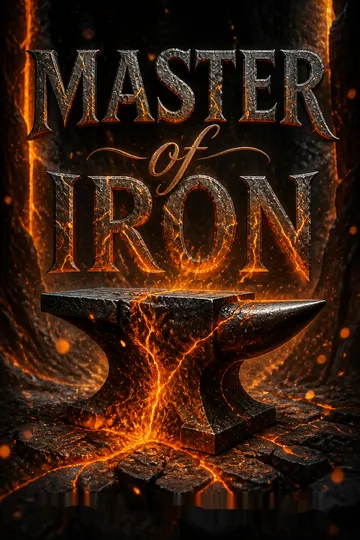
Master of Iron links political violence to the question of who controls creation. Ziva’s magic is not inherently benevolent or destructive. A blade that protects a traveler can become part of a ruler’s arsenal, and an accidental enchantment can turn a hammer into a weapon that destroys bodies in an instant. The moral burden falls on Ziva because she can imagine the consequences, but the story also shows how coercion distorts responsibility: Ravis threatens Kellyn to make her work, then claims the resulting weapons as proof of his strength.
Ziva’s development is not a simple movement from fear to confidence. She remains anxious, still needs solitude, and still struggles to speak when attention turns toward her. What changes is her willingness to act without waiting to feel fearless. She asks the mercenaries to join the fight, chooses protective armor over stronger weapons, and finally uses the iron beneath Lirasu to create a refuge. Her magic becomes safer not because she discovers perfect control, but because she takes responsibility for choosing its purpose and accepts help from others.
The relationships echo that shift. Ziva must accept that Temra can choose a life beyond her sister’s protection, while Kellyn must learn that love cannot mean deciding what is best for Ziva without her consent. Petrik’s secrecy shows how protection can become another form of control, even when motivated by care. By the ending, the characters do not resolve difference by becoming alike. Ziva and Kellyn make a practical arrangement that preserves both her desire for a home and his desire to travel. The novel’s answer to tyranny is similarly collective: no single enchanted weapon or ruler can secure the future. People must choose to stand together, and power must be shaped by those it is meant to protect.
Review Summary
People Also Read






Characters
Ziva Tellion
Anxious magical smithZiva is a tall, gifted blacksmith whose magic can change the properties of hot metal. She is deeply attached to her younger sister Temra and finds solitude, routine, and work easier to manage than crowds or conversation. Her habit of taking responsibility for everyone’s safety can make her mistake love for control and fear for proof that she is incapable. Yet she is practical, compassionate, and willing to act while frightened. Her craft is both her refuge and her greatest vulnerability: she wants to make useful things, but others see power to exploit. Ziva’s central struggle is learning to choose how her gift is used while making room for relationships and a future beyond constant vigilance.
Temra
Ziva’s daring younger sisterTemra is a spirited soldier-in-training who loves performance, company, and the energy of danger. She and Ziva have relied on each other since losing their parents, but they do not want identical lives: Ziva longs for a quiet home, while Temra wants a public life among comrades. Her confidence can look like recklessness to her protective sister, yet Temra is perceptive about what people need and stubborn about making her own choices. She cares deeply for Ziva without wanting to be defined by dependence on her. Her relationship with Petrik is tangled with attraction, anger, and a demand for honesty.
Kellyn
A mercenary with a tender heartKellyn is a skilled mercenary, a devoted son and brother, and one of the few people who can make Ziva feel both challenged and safe. He is warm, socially confident, and quick to act under pressure, qualities that sometimes lead him to make decisions for others rather than consult them. His instinct to protect Ziva can clash with her need for agency, while her silence can leave him unsure whether she still wants him close. Beneath his teasing manner is a serious desire for mutual commitment. Kellyn’s life on the road has taught him to keep moving, but he also values family and lasting connection.
Petrik
A scholar in the thick of dangerPetrik is a scholar of ancient magic whose learning becomes useful far beyond the library. He studies people as carefully as books, thinks strategically, and often tries to protect others by keeping difficult information to himself. That instinct can undermine the trust he wants, especially with Temra. He is loyal to Ziva and Temra, and his feelings for Temra are complicated by caution and self-doubt. Petrik’s knowledge gives the group plans and connections, but his growth depends on accepting that good intentions do not excuse taking away another person’s choices.
Kymora
A formidable former generalKymora is a renowned warrior and former royal general, disciplined enough to remain dangerous while wounded, bound, or outnumbered. She treats patience as a weapon and reads both military terrain and personal weakness with unsettling precision. Her relationship with Petrik is marked by withheld affection and painful history, while her pursuit of Ziva makes the blacksmith’s magic central to her ambitions. Kymora believes power is safest in the hands of someone willing to seize it. Her competence is real, but so is her willingness to treat people as instruments.
Ravis
An ambitious eldest princeRavis, the eldest child of King Arund, believes the divided kingdom should be reunited under his rule. He surrounds himself with weapon-makers, wealthy supporters, and disciplined soldiers, presenting conquest as necessary order. His polished court life conceals a coercive streak: he threatens prisoners and treats Ziva’s magic as a resource to be commanded. Ravis is trained to rule and fight, but ambition makes him mistake possession of an army for proof that he deserves a throne.
Skiro
A prince who values artSkiro rules the territory containing the Great Library and gathers artists and magic users to his court. He is affectionate toward Petrik and values beauty, books, and the preservation of knowledge. His generosity makes him willing to help Ziva, but his preference for peaceful solutions can leave him slow to accept the scale of a military threat. Skiro is not simply a sheltered patron: he takes responsibility for the people living under his protection, even when he is uncertain how to defend them.
Serutha
A healer who mends bodiesSerutha is a gifted healer who can sense damage in the body and guide tissue, bone, and infection toward recovery. Her skill has made her valuable to powerful people, and she understands that healing magic can be used coercively as well as compassionately. She is engaged to Paulia and speaks to Ziva as one craftsperson to another, helping her see that a gift does not dictate its own purpose. Serutha is compassionate without pretending that her work has left her untouched.
Elany
A watchful cotton spinnerElany works beside Ziva in Ravis’s forges and monitors her labor. Friendly and curious on the surface, she is also committed to the idea that a unified kingdom could protect people neglected by separate rulers. Her personal loss gives that belief emotional force, even as she accepts methods Ziva finds unjust. Elany’s magic and practical skill make her more than an observer, and her loyalty is shaped by a desire for justice as much as by ambition.
Ashper
A private, gifted painterAshper is a painter whose exacting memory and unusual magic make his art consequential to the safety of the kingdom. He prefers paint to socializing and can be blunt when absorbed in a task. His work connects distant places, making him an essential ally when armies and civilians must move quickly. Like Ziva, he understands a magical ability as part of a craft, not a license for rulers to claim ownership.
Marossa
A sharp-eyed ruling princessMarossa rules Ziva’s home territory and prefers riding, hunting, and practical action to the ceremony of court. She is impatient, capable with a bow, and not easily softened by political flattery. Her bluntness can make her seem indifferent, but she takes responsibility for the people and soldiers under her rule. Marossa’s direct style contrasts with Skiro’s artistic sensibility and forces their shared plans to remain grounded in what can actually be defended.
Abelyn
A blunt master smithAbelyn is the seasoned smith in Skiro’s territory, a formidable worker who has little patience for excuses or idle conversation. She initially treats Ziva as another demand placed on an already overloaded forge. Respect comes through work: once Ziva proves she knows how to hold and turn metal, Abelyn makes room for her. Her unsentimental standards give Ziva a grounded, practical model of craft.
Zovid
A young forge handZovid is a young worker whose skill at making arrowheads is hidden beneath a harsh nickname and an abusive workplace. When Ziva and Abelyn ask him to help prepare the city’s defenses, he proves capable and willing. His presence underscores how much talent can remain unseen when the wrong person controls the workshop.
Governor Erinar
Lirasu’s practical governorErinar governs Lirasu with a reputation for fairness and welcomes Ziva despite the trouble connected to his son. When Kymora threatens the city, he offers his small guard and helps bring the tournament fighters into the defense. His authority is local rather than grand, but he understands that people and resources matter more than ceremony.
Reniver
A planner beside the governorReniver is the governor’s husband and Petrik’s partner in preparing the Lirasu defenses. He helps translate the city’s geography into practical traps and positions. His quiet work supports the larger strategy without seeking attention.
Asel
The governor’s entitled sonAsel once tried to force Ziva into an unwanted kiss, then retaliated when she rejected him. His presence at the tournament brings an old humiliation back into the open. He represents the kind of local privilege that can make a person feel unsafe even before armies arrive.
Paulia
Serutha’s devoted partnerPaulia is Serutha’s fiancée and a generous cook who helps feed the people sheltering during the crisis. Her easy warmth offers Ziva a rare, uncomplicated welcome. Paulia is practical about care, turning food and hospitality into work that helps keep a community functioning.
Saydan
Skiro’s city guard commanderSaydan oversees the guards in Skiro’s capital. He understands the limits of his small force and supports negotiation when a larger army approaches. His caution reflects the practical burden of protecting a city with too few trained fighters.
Isulay
Keeper of palace operationsIsulay manages the palace’s servants and practical arrangements. As the threat grows, she coordinates space and supplies for people crowded behind the palace walls. She is attentive to the human logistics that military plans can overlook.
Bida
A civic organizerBida helps Skiro’s territory manage its people, food, and trade. Her knowledge of the city’s population makes her essential when residents must be sheltered quickly. She keeps the defense connected to the lives it is meant to protect.
Tazar
Skiro’s loyal bodyguardTazar is Skiro’s close personal guard, trained to protect the prince rather than command a full army. He stays near Skiro through danger and helps move him to safety when the palace is breached.
Strax
Ravis’s senior guardStrax leads Ravis’s personal guard and carries out the prince’s orders. He is a capable fighter whose presence helps enforce Ravis’s control over Ziva and the palace.
Izan
Wielder of the crushing hammerIzan is a powerful soldier in Ravis’s forces who tests and later wields the accidentally devastating hammer Ziva creates. His pleasure in its destructive effect makes the danger of her unintended magic immediate and personal.
Devran
A recurring road banditDevran leads the bandits who block the bridge on Ziva’s first journey to Skiro. When she encounters him again on the way back, he remembers her strength and orders his men to clear the road. His small return adds a comic note to an otherwise relentless journey.
Verak
A reluctant royal siblingVerak rules another territory and initially withholds meaningful help from Skiro and Marossa. His distance leaves the other royals with fewer allies, though his forces remain part of the larger political balance they must consider.
Plot Devices
Magicked smithcraft
Metal shaped by intentionZiva’s magic enters heated metal as she works, giving weapons and armor properties beyond ordinary craft. A sword can guide its wielder or return when dropped; armor can deflect arrows; a hammer can rebound attacks or produce devastating force. The magic reflects Ziva’s focus, emotions, and level of control, which means distraction can have consequences she did not intend. The ability drives the plot because rulers want to use Ziva as a military resource, while she must decide what she is willing to make and for whom.
Secret Eater
A blade that uncovers plansSecret Eater is a magical sword Ziva made before the events of this book. When Kymora cuts herself on it, Ziva learns of the warlord’s intention to seize power. The weapon’s ability to expose secrets sets the larger conflict in motion and explains why Kymora pursued Ziva and her craft. Its existence also haunts Ziva’s judgment: she fears that even a well-meant creation can become dangerous in another person’s hands.
Portrait portals
Paintings bridge distant capitalsThe magically gifted painter Ashper creates identical portraits in different capitals, linking them as instantaneous passages. Skiro’s family uses the portals to move people and reach allies when ordinary travel would be too slow. The portals make the rescue of Serutha possible and later provide an escape route for civilians fleeing Ravis’s assault. Because the paintings can be hidden, destroyed, or used by an enemy, their existence is both a strategic advantage and a closely guarded vulnerability.
Magical disguises
A borrowed face breaches trustElany’s cotton-spinning magic helps create convincing disguises and concealed surfaces. An impostor wearing Ziva’s likeness enters Skiro’s court to question the prince about defenses, while several false Kymoras disrupt the battle at Lirasu. The disguises turn familiarity into a threat: characters cannot rely on a known face to identify a friend or an enemy. Elany’s concealed prison door also demonstrates that her skill can alter what people believe they see.
Lirasu’s iron veins
A city becomes its own shieldThe mountain and ground beneath Lirasu contain extensive iron deposits, a fact Petrik notices while planning the defense. In the mine, heated coal and oil allow Ziva to reach the exposed iron with her magic. She uses the connected ore beneath the city to establish a protective boundary that prevents violence and stops Kymora’s followers from taking the gathered weapons. The device turns Ziva’s craft from an object held by a ruler into protection embedded in the place where she was raised.
Bladesmith Series

About the Author

Download PDF
Download EPUB
.epub digital book format is ideal for reading ebooks on phones, tablets, and e-readers.








