

Plot Summary
An Heir in Iron
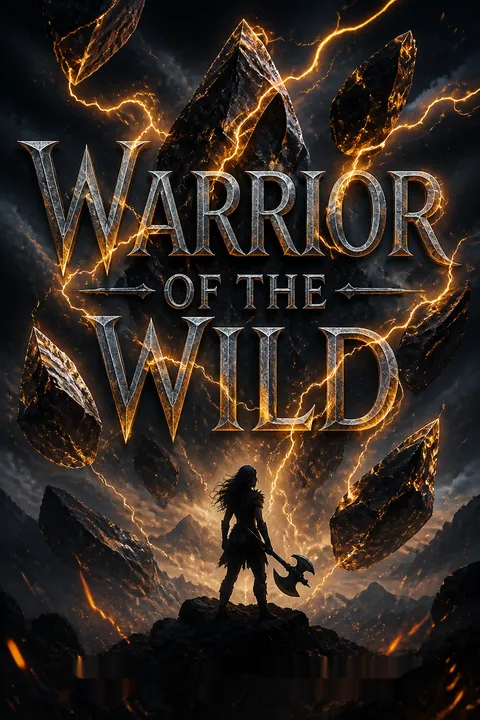
At eighteen, Rasmira Bendrauggo is Seravin’s strongest apprentice warrior, yet her father’s praise makes the other trainees resent her and her mother treat her as a rival. Rasmira wants to protect the village, not become a symbol of her father’s legacy. After Havard mocks her short hair and strikes her, she defeats him in front of the training hall, then forces an apology before releasing him.
Torrin, a trainee who recently broke with Havard’s bullying circle, walks her home and invites her to witness the annual Payment. His attention awakens Rasmira’s first hope of romance. When she learns that families may go hungry to supply the god’s tribute, she promises to make sure Torrin’s younger brothers are fed.
Rasmira’s skill gives her authority before she has learned how to use it well. She treats Havard’s public humiliation as a challenge to her legitimacy, so victory becomes both self-defense and an attempt to command respect. Her discomfort with her father’s favoritism is sharper than simple modesty: his investment in her makes her visible, but not necessarily known. The promise to feed Torrin’s family briefly shifts her attention away from rank and toward practical care. That distinction will matter as she discovers that leadership is not secured by being the most capable person in the room.
The Payment Wagon
Rasmira sneaks beyond Seravin’s boundary with Torrin and watches seven villages deliver their yearly goods. Peruxolo, the floating figure who demands the tribute, kills a village leader for bringing too few gems and leaves the body for scavengers.
He then inspects a drugged girl in the final wagon, accepted as Mallimer’s annual sacrifice. The sight turns Rasmira’s private resentment of the god into moral anger. On the return journey, Havard and two companions ambush her and Torrin.
Her father, Torlhon, finds them before the fight can escalate, sends the boys to guard the village through the night, and brings Rasmira home. There, he rebukes her mother for neglecting her, sharpening the division in a household where Rasmira is prized as an heir but resented as a daughter.
The Payment exposes a political order that disguises coercion as custom. Villages do not merely surrender food and wealth; they help select a girl for the god, while leaders kneel and call compliance service. Rasmira’s response is morally lucid but structurally powerless: she sees the victim as a person, yet knows that intervening could endanger an entire village. At home, Torlhon’s defense of Rasmira does not repair the family. His public investment in her legacy deepens the mother’s exclusion and teaches Rasmira that being favored can also make her the center of a destructive rivalry.
The Bite That Wasn't
On trial day, Torlhon gives Rasmira a finely balanced battle-ax before the apprentices enter a maze stocked with ziken, armored beasts whose venom paralyzes anyone bitten. Rasmira kills one and helps Torrin survive another attack. Then, while the crowd watches Havard’s dramatic victory, Torrin presses a severed ziken head against Rasmira’s arm, leaving a false bite.
He announces that she has been bitten, and the venom’s effects soon make the accusation appear true. Rasmira identifies the trick, but no witness supports her. Her mother saw the attack and denies seeing anything. Torlhon declares her banished and assigns a mattugr, a supposedly redemptive task designed to end in death: she must kill Peruxolo.
The betrayal works because it weaponizes Rasmira’s own longing for recognition. She has mistaken attention for care and her growing closeness with Torrin for evidence that she can be valued outside her father’s expectations. The false bite then converts social distrust into physical proof: her body convulses, so the community can treat an imposed injury as her failure. Her mother’s silence is especially consequential because it is not merely emotional rejection; it determines what the law can recognize. The mattugr gives the village a ritual language for abandoning her while preserving the appearance of moral judgment.
A Debt in the Wild
Rasmira leaves Seravin with supplies, still hoping her father has not truly condemned her. After a sleepless night, a ziken nearly reaches her while she rests, but she kills it and keeps moving. At a clearing, she finds a young man covered in bites as a dozen ziken feed on him. Rasmira cuts through the beasts and uses a healing salve made by her sister Irrenia to close his wounds.
The survivor, Soren, has lived in the wild for a year with Iric, a fellow exile who lowers him into their tree house by rope. When Rasmira explains her mission, Iric warns that mattugrs are not meant to be completed. Soren, however, declares that saving him has bound his life to hers.
The wild immediately tests the belief that strength means self-sufficiency. Rasmira survives the first night by fighting alone, but her defining choice is to stop and save a stranger whose injuries could make him a liability. Irrenia’s salve carries care from home into the wilderness, turning a sister’s knowledge into a material chance at survival. Iric’s blunt realism and Soren’s life debt offer competing models of exile: endure by abandoning hope, or endure by making obligation into connection. Rasmira trusts neither yet, but her actions have already tied her future to both men.
The Invisible Threshold
Rasmira builds a small shelter and follows the road toward the mountain where Peruxolo lives. From a tree, she watches him leave his cave and notices a trail worn through the undergrowth. When she approaches the entrance, an unseen force knocks her backward. Peruxolo returns, catches her near the barrier, and hurls her away with the same power she has heard described since childhood.
She escapes into the trees. Soren has followed her despite her attempts to stay alone, and he admits that a rockslide he caused distracted the god long enough for her to flee. Rasmira tells him her task; he answers that he owes her his life and will not abandon her to it.
The invisible barrier turns the god’s authority into a physical limit that Rasmira cannot yet interpret. She is brave enough to approach, but bravery alone produces no useful access, and Peruxolo’s effortless violence makes the power gap unmistakable. Soren’s intervention complicates her desire for independence: his help is not a claim that she is helpless, but a refusal to let a debt become meaningless. Still, she experiences care as an intrusion because her recent betrayal has made dependence feel dangerous. The scene establishes the practical and emotional problem she must solve: she needs allies without surrendering judgment to them.
The Gunda's Lake
As Soren catches up with Rasmira, a towering gunda emerges from the trees, proving that the childhood monster is real. It pursues them to a lake, where they learn it catches prey with a sticky tongue hidden beneath its armored body. Iric arrives and helps divert the beast toward a cliff. Rasmira pierces its exposed underside and drives it over the edge, but its tongue snags Iric and drags him into the water.
Soren dives after him, though Iric cannot swim; Rasmira follows and helps strip away Iric’s heavy armor underwater. They reach shore ahead of the lake creature, the hyggja, which consumes the gunda. Iric reveals that killing this water beast is his own mattugr, a task he has avoided because he fears the water.
The gunda converts folklore into immediate physical knowledge: the boys’ warnings were not superstition, and the wild cannot be mastered by dismissing what one has never seen. Rasmira’s quick decision to attack the creature’s vulnerable underside shows the difference between her training and simple aggression. Yet the rescue also depends on cooperation, especially when Iric’s fear and lack of swimming skill make him vulnerable. His mattugr reveals how exile can be engineered to exploit a person’s deepest limitation. The scene brings the trio’s separate survival strategies into contact and exposes the cost of treating fear as a reason to postpone action.
Blood on the Barrier
Rasmira returns to the mountain and tests the barrier, finding that her iron armor and ax cannot pass through it. Peruxolo catches her again and demands the name of her village, threatening to punish it. Rather than answer, she throws a rock and cuts his cheek. It is the first evidence that he can bleed. Peruxolo retaliates with a silver dagger that pierces her abdomen, then leaves her outside his cave to die.
Soren, who has secretly followed her, carries her back to the tree house with Iric’s help. They use the last of Irrenia’s salve to close the wound. As Rasmira recovers, she learns that Soren deliberately failed his own trial to accompany Iric into exile, while Iric still carries anger over the choice that led to his banishment.
The rock wound gives Rasmira her first evidence that Peruxolo’s apparent invulnerability may be a performance, but the discovery is bought at a steep cost. Her attack is brave and strategically premature; she has learned that he can be hurt without yet learning how to reach or defeat him. The dagger nearly turns that insight into her final mistake. Soren’s repeated presence is not simply romantic devotion, but a pattern of self-erasure rooted in guilt toward Iric. Rasmira is forced to accept help while injured, beginning to see that loyalty can be both sustaining and unhealthy when it leaves no room for one’s own survival.
A Door Kept Shut
While Rasmira heals in the tree house, she hears how Soren persuaded Iric to abandon smithing for the warrior trial, feeding his fear that Aros might prefer a warrior. Iric failed almost immediately, and Soren failed on purpose afterward, leaving both men in exile. Rasmira recognizes that neither can return alone.
She apologizes for dismissing Iric’s beliefs, then blocks the tree-house hatch until he and Soren confront their anger. Soren admits his mistake and asks to restore their brotherly bond; Iric accepts. Rasmira offers to teach Iric to swim if he helps create nonmetal armor for her. Iric agrees to consider the bargain, and his willingness to learn gives the group a practical way forward.
Rasmira’s first effective act of leadership in the wild is not defeating an enemy but creating conditions for a difficult conversation. She does not force reconciliation by declaring the past irrelevant; she makes avoidance inconvenient and lets Soren name the harm he caused. Iric’s story also mirrors Rasmira’s: both were diverted from what they wanted by someone else’s influence, then punished as though the outcome were solely their fault. Their bargain is therefore more than an exchange of skills. It is a tentative agreement to treat each other as agents capable of choosing a different future.
The Hyggja's Head
Rasmira teaches Iric to float and hold his breath in the spring pools, while Iric forges spears that can be thrown from shore and hauled back by ropes. At the lake, the hyggja rises after Soren skips a stone across the water. Iric wounds it first, but the creature pulls Soren over the cliff and into the lake.
Rasmira and Iric dive after him, then work together to pin the beast with ropes and spear shafts. Once they drag it partly onto shore, Iric cuts through its thick neck. He has completed his task, and the victory allows him to tell Soren that his anger has been hiding his own responsibility. The three leave the lake with the hyggja’s head preserved for Iric’s return to Restin.
Iric’s victory is made possible by the very skills his trial did not measure. His knowledge of metal and Aros’s hunting stories produce a weapon suited to the lake, while Rasmira’s lessons make the water survivable. The plan nearly fails when Soren obeys Iric’s warning too literally and is dragged under, showing how loyalty without judgment can become another danger. Iric’s killing blow matters, but so does his acknowledgment that blaming Soren had protected him from facing his own choices. The completed mattugr brings no automatic spiritual certainty; it offers, instead, a concrete achievement and the possibility of returning home.
The Otti's Feather
Soren’s mattugr requires a feather from the legendary otti, a giant bird said to live high on the mountain. He and Rasmira climb together, sharing a shelter against the cold and finally speaking openly about her betrayal by Torrin and her family. They kiss, and Rasmira realizes she can want Soren without confusing him with the boy who deceived her.
A mountain cat attacks, but an enormous blue bird swoops down and carries it away. At the nest, Rasmira rigs a net while Soren draws the otti toward it. He plucks a feather, but the bird lifts him into the air with the tangled net. Rasmira catches him after he lets go. Together they drive the bird off, and Soren secures the feather.
The climb makes intimacy a consequence of shared risk rather than a cure for Rasmira’s distrust. She chooses to tell Soren what happened, and his patient attention lets her narrate the betrayal without being reduced to it. Their affection grows alongside her recognition that desire need not mean surrendering judgment. The otti episode tests Soren’s habit of putting himself in danger for others; Rasmira’s catch saves him, but their coordinated fight afterward makes protection reciprocal. The feather is proof of a completed task, while the more important change is that neither has to perform invulnerability to remain valued by the other.
The Lodestone Secret
On the descent, a bright-veined rock repels Rasmira’s iron armor. She recognizes the force as a powerful lodestone, not divine magic, and realizes the metal explains both the barrier and Peruxolo’s ability to hurl iron-wearing people away. Returning to the mountain without iron, she enters his cave and finds tribute stored beside shackles, then discovers a forge containing metal fragments and sharp projectiles.
Iric shapes armor from ziken hides and forges Rasmira a lodestone ax, while Soren agrees to carry invitations to the villages. The group plans a public challenge at the Payment clearing, where they can expose Peruxolo in front of the people he has ruled through fear.
The lodestone revelation does not make Peruxolo harmless; it makes his power legible. Rasmira’s investigation replaces inherited awe with material reasoning, showing how isolation has allowed a mortal technique to masquerade as supernatural inevitability. The cave’s stores and shackles place the political cost of that deception beside its machinery. Iric’s inventions turn knowledge into counterforce, while Soren’s role shifts from following Rasmira into danger to carrying her challenge across village boundaries. Their plan recognizes that defeating a tyrant physically will not be enough if the people remain unable to interpret what they witnessed.
Restin's Open Gate
Iric and Soren return to Restin carrying the hyggja’s head and the otti feather, and the villagers acclaim them as heroes. Their parents embrace them, and Iric reunites with Aros. Rasmira watches from outside the boundary, then waits for the men to return. When they stay away past nightfall, she fears they have chosen their old lives over her.
They eventually come back with Aros, who joins their cause, and Soren explains that the blonde girl who approached him in Restin meant nothing to him. After gathering lodestone for Iric’s forge, Soren travels to invite the seven village leaders. He returns with news that they will attend, along with Rasmira’s sister Irrenia and her father, Torlhon.
The homecoming gives Iric and Soren what exile had withheld, but Rasmira experiences their welcome from the outside, where hope and abandonment become difficult to distinguish. Her jealousy of the girl near Soren is less about possession than the fear that she is once again the temporary choice, useful until someone more familiar appears. Their return confirms that the bond formed in the wild is not merely a survival arrangement. The invitations also enlarge the stakes: Rasmira no longer wants only to complete a private task. She needs witnesses, because public knowledge is the tool that can dismantle public fear.
A God in the Clearing
Before the duel, Rasmira’s mother admits that she saw Torrin sabotage the trial, but Rasmira refuses to abandon her challenge. Peruxolo arrives using lodestones to appear airborne and attacks with small metal projectiles.
Rasmira’s new ax deflects them, and her strikes expose the hidden devices beneath his clothes. She wounds him, while a snare made with Aros’s rope lifts him before the watching villages. Peruxolo breaks free and gains the advantage, but Rasmira draws him toward iron boulders she and her allies positioned to block his movement.
When he is trapped, she retrieves the silver dagger he used to stab her and cuts his throat. She carries his body to Torlhon, forcing the people who feared a god to face the dead man beneath the costume.
The duel’s public setting matters as much as its violence. Peruxolo’s authority depends on spectators interpreting spectacle as proof of divinity, so Rasmira answers spectacle with demonstration: the airborne god can be trapped, the projectiles can be deflected, and his body bleeds. The staged boulders make collective knowledge operational, while Rasmira still delivers the final blow herself. Her mother’s confession does not erase the harm or derail the fight; Rasmira chooses to finish what she has begun. The victory is therefore neither a private revenge nor a simple liberation scene. It is an attempt to give the villages evidence they can carry into political change.
The Heir Reclaims Her Name
The Mallimer leader recognizes the dead man as Cadmael, a warrior banished fifteen years earlier, though the Payment had been attributed to Peruxolo for far longer. Rasmira explains that generations of exiles may have inherited the role, using poisoned wells and lodestones to maintain the legend.
She condemns the village leaders for creating the mattugrs that bred such revenge. Torlhon reinstates her as heir and warrior, while Irrenia treats her injuries.
When her mother and Torrin are brought before the elders, Rasmira orders her mother kept away from her and sends Torrin, with Havard, into exile for three months. She accepts the work of recovering the stored food and changing Seravin’s laws. Soren chooses to remain beside her, joining the village warriors.
The exposure of Cadmael reframes the entire political system: the god was not an isolated supernatural threat but an inherited role sustained by the villages’ practice of abandoning people. Rasmira’s anger therefore reaches beyond personal vindication toward the institutions that made revenge possible. Her judgments distinguish between remorse and accountability. She does not kill her mother, but she refuses immediate reconciliation; Torrin faces the kind of exile he once intended for her. The ending does not restore the old family arrangement. Rasmira claims authority on terms she has chosen, using survival not as proof that the system was fair, but as leverage to change it.
Analysis
Warrior of the Wild asks what a community means when it defines honor as obedience and adulthood as survival of an intentionally lethal test. The mattugrs appear to offer redemption, but they mainly transfer the costs of village failure onto individuals already judged expendable. Rasmira’s exile therefore exposes a system rather than simply punishing one betrayal. Her most important change is not becoming a more formidable fighter; she is already formidable. She learns to distinguish authority from leadership by listening, apologizing, teaching, and making plans that depend on other people’s strengths.
The novel also treats belief as something shaped by material conditions. Peruxolo’s apparent divinity is sustained by distance, spectacle, and the villages’ inability to compare knowledge. Rasmira’s discovery of lodestones does not trivialize the suffering he caused. It shows that understanding the means of oppression is necessary to stop mistaking it for natural law. Her public victory matters because it makes that knowledge visible to the people who have been taught to fear him.
The romance with Soren develops alongside, rather than in place of, Rasmira’s recovery from betrayal. She does not regain trust by forgetting Torrin; she learns to judge Soren through his choices and to set limits when his self-sacrifice becomes dangerous. The final return also avoids a simple restoration of the old order. Rasmira accepts responsibility for leading, but insists that authority must include reform. She refuses both revenge without measure and forgiveness on demand, choosing consequences that protect her boundaries and challenge the customs that created the crisis.
Review Summary
People Also Read




Characters
Rasmira Bendrauggo
warrior heir in trainingRasmira is a physically powerful young warrior whose skill sets her apart in a village that expects women to choose other trades. She wants to protect Seravin, but her father’s attention has taught her to measure worth through competence and approval. Her bluntness is partly armor: she would rather control a confrontation than risk being made small by it. Beneath that hardness, she notices hunger, injury, and unfairness quickly, and her instinct is to intervene. Her central psychological tension is between independence and connection. She dislikes being managed, yet she longs to be known and loved beyond her usefulness as a fighter.
Soren
loyal exile and warriorSoren is a capable warrior who has spent a year surviving in the wild beside Iric. He is generous, impulsive, and guided by a strong sense of obligation, sometimes to the point of putting himself in needless danger. His loyalty to Iric is tangled with guilt, making it difficult for him to distinguish care from self-punishment. With Rasmira, he tries to offer help without denying her competence, though he must learn that protecting someone does not mean deciding for them. His warmth and humor make him an inviting companion, but his most important quality is his willingness to remain present when another person is frightened, angry, or difficult to reach.
Iric
inventor afraid of waterIric is a resourceful metalsmith whose intelligence is practical and inventive. In the wild, he has built a forge, traps, and tools that help him and Soren survive. He is sharp-tongued, proud, and wary of being seen as weak, especially where water is concerned. His complicated bond with Soren combines affection with resentment, since he believes Soren helped steer him into a life that was not his own. Iric’s attachment to Aros gives his hope a human shape, but he resists risking the life he has made for the possibility of return. He respects competence and honesty, even when he makes both difficult to earn.
Peruxolo
the feared low godPeruxolo is the terrifying power at the center of the villages’ annual tribute. He appears in a hood and cloak, floats above the ground, and punishes leaders who fail to meet his demands. His control depends on making resistance seem impossible, and his treatment of people as possessions reveals the cruelty beneath his cultivated spectacle. He demands goods, food, and a human sacrifice, while the villages teach their children to fear him. Peruxolo functions as both an external threat and a political fact: the people’s isolation has shaped their beliefs about what power is and what they are allowed to challenge.
Torlhon Bendrauggo
leader and demanding fatherTorlhon leads Seravin and trains Rasmira personally. He admires strength, discipline, and the continuation of his legacy, and he sees his daughter’s warrior talent as the answer to a long-held hope for an heir. His affection is real but limited by his ambition; he often treats Rasmira as the future of the village before treating her as a person. Torlhon’s authority gives his approval unusual weight, which helps explain why Rasmira works so hard to earn it. His relationship with his wife is strained by the favoritism he directs toward Rasmira.
Kachina Bendrauggo
jeweler and distant motherKachina is Seravin’s celebrated beauty and a skilled jeweler, accustomed to receiving admiration and social deference. She resents the attention Torlhon gives Rasmira and has difficulty seeing her daughter outside the rivalry created by their household. Her tenderness toward Rasmira is largely buried beneath years of resentment, and she treats femininity as a standard by which her daughter falls short. Kachina’s place in the family shows how affection can be distorted when a parent experiences a child as evidence of lost status rather than as a separate person.
Irrenia
healer and devoted sisterIrrenia is Rasmira’s older sister, a gifted healer whose compassion often keeps her working long after others have gone home. She is practical as well as kind, experimenting with medicines and trying to solve the dangers her community faces. Irrenia offers Rasmira affection without making it conditional on success, a contrast that helps her resist her parents’ judgments. Her instinct is to care for people directly, through treatment, reassurance, and useful gifts. She believes moral integrity matters, though she is not always certain how to act when truth and loyalty collide.
Torrin
trainee and new companionTorrin is a young warrior trainee from Havard’s circle who becomes close to Rasmira shortly before her trial. He is physically capable and more attentive to her than she is accustomed to receiving from her peers. His presence gives Rasmira a first glimpse of companionship that might become courtship, while his history among the boys who torment her makes the relationship difficult to read. He matters because Rasmira has little experience separating genuine affection from the approval she has spent years trying to earn.
Havard
resentful training rivalHavard is the second-ranked apprentice warrior and a long-standing bully of Rasmira. He resents being outperformed and knows how to target her insecurity about her appearance and her place in the village. His physical size makes him intimidating, but his deeper threat comes from his willingness to turn competition into humiliation.
Aros
hunter and Iric's belovedAros is a Restin hunter whose stories and practical knowledge influence Iric’s inventions. He is deeply important to Iric, and their bond gives Iric a reason to imagine life beyond exile. Aros is steady and affectionate, with a directness that cuts through the other men’s teasing. He has the confidence to join a dangerous undertaking rather than treat Iric’s return as the end of his own involvement.
Rasmira's sisters
her loving family circleRasmira’s sisters offer different forms of warmth and recognition within a family divided by Torlhon’s favoritism and Kachina’s resentment. They support her warrior ambition even when it conflicts with the work their mother and older sisters have chosen. Their affection gives Rasmira a picture of family life not governed entirely by inheritance or approval. Irrenia is the sister she is closest to, but the others reinforce that Rasmira’s identity extends beyond being her father’s heir.
Master Burkin
unyielding warrior instructorBurkin trains Seravin’s apprentice warriors and recognizes Rasmira’s exceptional ability. His praise raises her standing but also makes her more conspicuous among the other trainees. He represents a training culture that rewards effectiveness while paying too little attention to the resentments it creates.
Naftali
Mallimer's village leaderNaftali leads Mallimer, the village responsible for supplying the girl demanded in the annual Payment. His insistence on the old account of Peruxolo reflects how deeply fear and custom govern the leaders’ understanding of their own choices.
Rexasena
unseen high goddessRexasena is the high goddess whom Rasmira believes watches over the mortal world and promises Paradise after death. Her teachings emphasize goodness, honesty, and care for others. Because Rexasena remains unseen, people interpret her will through village custom, leaving room for institutions to claim divine authority without proof.
Plot Devices
The mattugr
exile disguised as redemptionA mattugr is a supposedly honorable challenge assigned to someone who fails a professional trial or loses standing in the village. Each task is designed around exceptional danger, and completing it is presented as the path back to the community and to Rexasena’s Paradise. Rasmira’s task is to kill Peruxolo; Iric must kill the hyggja, and Soren must obtain an otti feather. The device drives the three exiles into the wild while revealing how village leaders use the language of honor to legitimize abandonment. It also forces the characters to decide whether redemption comes from completing a task, from returning home, or from changing the system that imposed it.
The Divine Payment
tribute that maintains fearEach year, the villages gather food, water, gems, medicines, and other goods for Peruxolo. Mallimer also supplies a girl as a sacrifice. The Payment establishes the economic and moral cost of the god’s rule before Rasmira is sent into the wild, and it gives the villages a shared ritual for submitting to him. The tribute also creates concrete stakes for the conflict: families go hungry, leaders fear punishment for shortfalls, and the missing supplies later become a resource the communities need to recover.
Ziken venom and salve
injury becomes recoverableZiken are armored, fast predators whose bites paralyze their victims, making the warrior trials genuinely dangerous. Their ability to regenerate from most wounds means that killing them requires a decisive strike to the head. Irrenia experiments with ziken blood and develops a salve that rapidly closes wounds. The medicine saves Soren after a horde attacks him and helps Rasmira survive Peruxolo’s dagger wound, though the supply is limited. The device turns knowledge gathered from a threat into an imperfect tool for survival, while keeping injuries consequential rather than easily erased.
Lodestones and iron
spectacle built from natural forcesA powerful lodestone found on the mountain reacts against iron, preventing Rasmira from crossing the barrier around Peruxolo’s lair while she wears iron armor. The same force explains how Peruxolo repels armored people and appears to float when lodestones in his boots interact with metal buried in the ground. Once Rasmira understands the mechanism, Iric can forge a lodestone ax and she can enter the cave wearing ziken-hide armor. The discovery transforms a supposedly divine advantage into a physical system that can be understood, resisted, and eventually used against its owner.
Improvised wildcraft
survival through shared skillThe outcasts’ inventions and practical adaptations let them survive beyond the villages’ usual boundaries. Iric builds a forge, iron traps, and spears attached to ropes; Soren finds food and builds shelter; Rasmira teaches Iric to swim and fights the wild’s predators. Aros’s hunting knowledge informs the hyggja plan, while his rope trap later helps restrain the otti and Peruxolo. These tools are not merely conveniences. Each one translates a character’s knowledge into collective action, allowing the group to face dangers that none of them could manage alone.
About the Author



Download PDF
Download EPUB
.epub digital book format is ideal for reading ebooks on phones, tablets, and e-readers.








