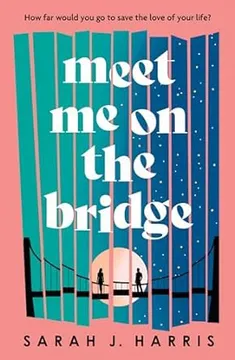


Plot Summary
Prologue
In 2004, Marianne Hockney races through Euston with her five-year-old daughter, Julia, and her own anxious mother, Sylvia. Marianne is exhausted, frightened by worsening sleep attacks, and desperate to take a week of catering work in Scotland. At the train, Julia refuses to let go.
Marianne gives her mother a gold pendant with a spinning stone, then boards without her daughter’s goodbye. As the train pulls away, Julia runs after it, crying for her mother to return. Marianne can only watch through the glass, carrying the weight of a departure neither of them understands.
The opening makes separation physical before it becomes a family history: a train window divides mother from child, while Marianne’s exhaustion and unexplained fear suggest that leaving is not simply a choice. The pendant passes from one generation to another at the moment of rupture, becoming both keepsake and unanswered question. Julia’s refusal to say goodbye gives the departure a child’s painful finality, but the scene also leaves room for a more complicated truth than abandonment. By beginning with Marianne’s perspective, the novel plants evidence that Julia’s later memories cannot provide: her mother’s love is present even when her mother disappears.
The Necklace Returns
At twenty-five, London Gazette secretary Julia Hockney is losing control of her narcolepsy, falling asleep without warning and waking to embarrassment. Her boyfriend, Ed, makes her symptoms a joke at a work dinner, then leaves bruises on her arm while trying to wake her.
In the restaurant bathroom, an elderly stranger named Patricia urges Julia to question why she keeps defending him. The next morning, Julia visits her grandmother Sylvia, whose Alzheimer’s has made her frightened and confused.
Sylvia insists Julia’s long-absent mother has returned to search for her necklace. While helping search, Julia finds the gold pendant hidden in Sylvia’s coat lining. Sylvia gives it to her, repeating a childhood lullaby about spinning its stone and changing the world.
Julia’s illness makes her vulnerable to other people’s interpretations: Ed treats an involuntary episode as a social failure, while Patricia reads the bruises as evidence of danger. Sylvia’s confusion appears, at first, to be another loss Julia must manage. Yet her search brings the pendant into Julia’s hands precisely when Julia feels least able to shape her own life. The necklace is introduced through care, not spectacle: it is an heirloom passed from a fading grandmother to a granddaughter who longs to recover her mother. That ordinary intimacy gives the later fantasy its emotional force. Julia does not initially seek power; she wants connection and relief.
A Stranger in the Archives
After a nap in the Gazette’s flooded archives, Julia experiences a vivid encounter with Alex, a curly-haired artist she has never knowingly met. In the vision, they meet at a bar and arrange to see each other on Hammersmith Bridge. The details echo Julia’s real life, including her coffee-stained dress, so she searches the newspaper archive and finds that Alex Martin died there a year earlier while rescuing a couple from the Thames.
At his friend Samira Patel’s gift shop, Julia learns Alex had described a red-haired woman from the Gazette and planned to meet her at the bridge. He had even begun a portrait of her. Julia recognizes her family name on the artwork and realizes the dream may have been an actual encounter.
The archive turns Julia’s new job, a punishment she resents, into the instrument that challenges her sense of reality. Dates, clippings, and a half-finished portrait make the vision independently verifiable; her private dream becomes a public record. The discovery also binds romance to responsibility before Julia has met Alex in ordinary life. Samira’s grief gives the dead artist a network of relationships beyond Julia’s imagined soulmate, complicating the fantasy she is beginning to cherish. Julia now faces an ethical question disguised as a romantic one: if the encounter was real, can she alter its ending without altering everyone else’s?
One Date Rewrites Everything
Falling asleep in the archives while turning the pendant, Julia wakes at High Street Kensington station on the night she once missed a work party. She boards the past rather than returning to her present. At the Swan, she meets Alex exactly as her vision foretold, but changes their proposed date from Hammersmith Bridge to Kew Gardens.
The next day they connect at the lake, and Julia’s time in 2023 continues into a relationship filled with shared work, family visits, and affection. At the one-year mark, she wakes in 2024 beside Alex, now her partner, and learns he has proposed. Her return has not merely saved a man from his recorded death; it has replaced her life with one in which they have built a future together.
Julia’s first successful jump converts longing into action, but she treats a single changed detail as if it could be safely isolated. Moving a date from one landmark to another seems a modest intervention, an act of romantic protection. The resulting year with Alex rewards that confidence with precisely the life she has been missing: attentive partnership, family belonging, and a future spoken of as shared. Yet the jump also makes her memories unreliable. She must inhabit a relationship she has both lived and not lived, so happiness arrives alongside disorientation. The novel makes wish fulfillment feel convincing, then asks what it costs to mistake one desired outcome for a harmless change.
Love Has a Body Count
Julia’s new happiness is set against an altered London. Without Alex at Hammersmith Bridge, Louise and Charles Marshall drown; later, Louise’s husband Andrew and their sons die in a house fire. A train crash at Barnes kills nearly a hundred people because no passerby pushes a broken-down car clear of the tracks. The Night Prowler, whom Julia remembers being arrested, remains free and attacks again.
Sylvia’s clippings and confused recollections contain fragments from both versions of events, while Julia’s fiancé Alex remembers none of them. Julia confesses her guilt to him without explaining the time travel. His answer unsettles her: he would risk his own comfort to save strangers, even without certainty that anyone could be saved.
The first altered timeline exposes the false arithmetic behind Julia’s choice. She saved Alex from one death, but the chain of events around his absence removed the person who would have rescued the Marshalls and helped prevent the later disaster at Barnes. Her guilt is not simply fear of punishment; it comes from recognizing that other people’s lives were never hers to rearrange for private happiness. Alex’s compassion sharpens the dilemma because he values strangers without ranking them beneath himself. Sylvia’s residual memories serve as a human ledger of the change, while Alex’s blankness makes Julia alone with its consequences.
The Hockney Inheritance
In Sylvia’s photo album, Julia finds a letter from her late aunt Rose, who had the same narcolepsy. Rose wrote that the Hockney women can slip between timelines while asleep, but the family pendant allows them to travel deliberately and change events.
She had meant to prepare Julia before her twenty-fifth birthday. Julia’s attempts to reach 2004 instead return her to 2023, and every jump brings headaches, nosebleeds, and exhaustion. A woman in a red dress appears during the journeys and warns that each intervention creates further harm.
Julia nevertheless decides to return to the bridge, believing she can save Alex and repair the wider damage. She prepares by researching the Thames current, practicing outdoor swimming, and mapping possible rescue routes.
Rose’s letter reframes narcolepsy without erasing its medical reality: Julia’s involuntary sleep is both an illness that constrains her and the doorway to a family inheritance. The pendant does not grant clean control; it makes intervention possible while leaving Julia exposed to bodily damage and uncertain timing. Her preparation shows a shift from romantic impulsiveness to responsibility. She studies river conditions and practices rescue because she has begun to understand that good intentions do not equal competence. Yet the woman’s warnings reveal the limit of planning: Julia can research the water, but she cannot calculate every human decision made on the bridge.
The River Takes Its Price
On another return to May 2023, Julia reaches Hammersmith Bridge as Charles threatens to jump with Louise. Alex arrives too and leaps into the Thames when the couple fall. Julia follows from the bank, using a scarf and overhanging branches to help pull Louise ashore with Alex. Charles disappears beneath the current before they can reach him.
The rescue keeps Alex alive, but the loss follows him into their changed future. He suffers flashbacks, depression, and chronic fatigue after the river infection, while Julia’s own health worsens. His art commission collapses under the strain. By late May 2024, Julia discovers Alex after he has taken an overdose. She later wakes injured and confused, unable to tell which version of her life remains.
Julia’s second intervention makes the moral problem bodily. She and Alex enter the same dangerous water, and her effort to save one person cannot save everyone. Charles’s death is not an abstract consequence but a face Alex carries into nightmares, making survival itself a source of trauma. Julia has preserved the relationship she wanted while damaging the man she wanted to protect. The overdose marks the failure of romantic rescue as a complete solution: Alex remains alive, but his life has become nearly unrecognizable to him. Julia’s damaged health and memory show that the pendant extracts a cost from its user as well as from the people around her.
The Coffee Stain's Meaning
As Julia pieces together another damaged timeline, she discovers that the man who repeatedly collided with her at High Street Kensington was Andrew Marshall, Louise’s husband. In the original chain, Andrew caught his train, discovered Louise’s affair, and threatened to take their children; that threat helped send Louise to the bridge.
Julia also learns that Charles later survived in another version and pushed the Barnes car off the tracks, preventing the crash. Private investigator Oscar Simmonds adds a second mystery: Marianne’s bank records place her in London on the night she vanished, and Sylvia misled police about her return.
Julia realizes that stopping Andrew from reaching home could spare the family, keep Charles alive, and prevent the disaster that first cost Alex his life.
The coffee stain, initially a comic nuisance in Julia’s story of meeting Ed, becomes a causal hinge between private and public catastrophe. Recognizing Andrew turns coincidence into an actionable pattern: the small delay that Julia once endured can change what he discovers at home. Charles’s later rescue of the train makes the moral geometry more complex still, since saving him may protect people Julia has never met. Oscar’s records then connect the present mystery to Marianne’s disappearance, suggesting that Julia’s family has been entangled with time travel longer than she knew. The plot’s clues are not merely puzzles; each reveals how one person’s arrival or absence redistributes risk.
The Mother in the Current
Julia makes one last journey to 2023. At the Swan, she meets Alex but refuses a date and warns him against the woman arranging a bridge photoshoot. She then tries to change the events at Hammersmith Bridge herself.
Louise and Charles fall into the Thames; Julia enters the water and helps bring them both to safety, but nearly drowns. An elderly woman pulls her from the river, and Julia recognizes Patricia as her own mother, Marianne, aged decades by uncontrolled time travel.
In hospital, Marianne explains that she returned to London in 2004, confronted the Night Prowler in Sylvia’s house, and lost the pendant when he attacked her. Julia also learns that Marianne’s repeated journeys began as attempts to save Julia and Sylvia from the burglar.
The climactic rescue reverses Julia’s first impulse: rather than arrange for Alex to take the fatal risk, she enters the river herself and accepts responsibility for the people in it. Marianne’s appearance transforms Patricia’s earlier warning into an act of maternal care across decades, though the recognition arrives only when both women are close to death. The Night Prowler’s attack explains the missing years without making Marianne’s absence painless or simple. She did not choose to abandon Julia, but love alone could not overcome the loss of the pendant or the bodily damage of repeated travel. The family’s power is therefore inherited alongside grief, secrecy, and limits.
The Loop Breaks
Marianne tells Julia that she had once altered the same May 11 and May 12 events to save Sylvia and her daughter. In the original chain, Julia died from a head injury after the Night Prowler entered the house; Marianne’s repeated returns were attempts to bring her back. She is now failing, and insists Julia must not change her death or make another jump.
Before the time window closes, Julia gives police the correct address of the internet café where Dennis Clements, the Night Prowler, is hiding. Marianne dies after asking her daughter to live forward. The timeline resets to Julia’s twenty-fifth birthday in 2024, where Alex has never become her partner and the wider tragedies have been prevented.
The revelation that Julia died as a child makes the novel’s time loop an expression of parental love taken to its furthest and most damaging extreme. Marianne’s interventions began as the same refusal Julia has practiced: neither can accept the loss of someone beloved. Her final request breaks that repetition by asking Julia to distinguish love from control. Julia still acts, but she uses her remaining time to report the Night Prowler’s exact location rather than to secure a private future. The reset restores a world in which Alex and the Marshalls can live, while leaving Julia with grief that cannot be edited away.
A Life Without Rewinding
Back at her birthday party, Julia recognizes that Ed and her best friend Vicky are having an affair. She confronts them, ends both relationships, and refuses to let Ed blame her narcolepsy for his betrayal. Soon afterward, she quits the Gazette rather than accept Rod’s bullying, warns the archives chief about a dangerous leak, and challenges Sylvia’s care home to restore the services it has cut.
She recovers the pendant from Sylvia’s coat but, after one last visit to Hammersmith Bridge, drops it into the Thames instead of making another jump. Julia accepts that she cannot retrieve her mother or claim Alex without risking other lives. She begins rebuilding through journalism, new friendships, and care for Sylvia.
Julia’s final strength is not a supernatural feat but a series of unglamorous refusals. She rejects Ed’s blame, Vicky’s excuses, Rod’s authority, and the belief that the past can be made harmless through another attempt. Her advocacy for Sylvia’s scissors, newspapers, hairdressing, and nail care translates grief into attention to another person’s dignity. Discarding the pendant is not the erasure of love; it is an acknowledgment that memory cannot be repaired by force. Julia’s new life remains marked by loss, but she begins to choose its shape through work, boundaries, and acts of care she can sustain.
Epilogue
A year later, Julia has become a freelance journalist and published a feature about living with narcolepsy. At Alex’s art exhibition, she recognizes the portrait he began after their first meeting, now finished beside a second image of them together. His niece Hannah brings Julia inside, and Alex sees her across the gallery.
He remembers the woman he met in the bar, though he cannot know the lives they once shared. Julia does not ask the past to return. She takes his hand and accepts the possibility of beginning again, this time without a time jump or a promise that love can spare anyone from loss.
The reunion offers hope without undoing the cost that produced it. Alex’s paintings preserve a relationship he and Julia cannot consciously remember, while Julia’s choice to enter the gallery lets coincidence work in the present rather than forcing it through the pendant. Hannah, one of the children whose family Julia once feared losing, becomes the person who opens the door. Alex’s recognition does not restore their former life; it creates a new meeting between two people changed by separate histories. The unfinished spaces in the artwork become an invitation, not a guarantee. Julia can love again only after accepting that love cannot be secured by controlling time.
Analysis
The novel makes time travel a problem of care rather than escape. Julia first uses the pendant to correct the most intimate wound she can name: Alex’s death. Each apparent success then reveals people who depended on the event she changed, from the Marshall family to passengers on a train and victims of the Night Prowler. This is not a simple warning against intervention. Julia’s final actions do save lives, but only after she stops treating her preferred romantic outcome as the measure of a good timeline.
The repeated jumps also give form to the psychology of unresolved loss. Julia revisits the belief that Marianne abandoned her, and discovers that memory can preserve love as well as injury. Sylvia’s Alzheimer’s complicates that recovery: her fragments are sometimes inaccurate, sometimes vital, and never available on demand. The family archive therefore belongs not only to paper but to bodies, habits, and the stories people tell to survive what they cannot explain.
Narcolepsy is central without being reduced to magic. Julia’s sleep disorder exposes her to humiliation, lost time, and physical risk before it becomes a route into alternate events. The power magnifies an existing struggle over agency: other people already decide whether her symptoms are real, whether she is dependable, and what care she deserves. Her growth comes when she makes decisions she can own in the present, including confronting Ed, leaving Rod’s newsroom, defending Sylvia’s dignity, and relinquishing the pendant.
The ending offers renewal without a restored past. Alex can meet Julia again, but neither receives the life they once imagined. Their possible future begins only after Julia accepts uncertainty and refuses to make love synonymous with possession. The final gesture is not forgetting. It is choosing to carry grief without turning it into permission to rewrite everyone else’s life.
Review Summary
Meet Me on the Bridge receives generally positive reviews, with readers praising its emotional depth, unique time travel concept, and compelling characters. Many highlight the heartfelt romance between Julia and Alex, and appreciate how the story blends mystery, family legacy, and magical realism. Common criticisms include pacing issues, an underdeveloped romance, and occasionally confusing plot threads. Comparisons to The Time Traveler's Wife and The Unmaking of June Farrow are frequent. Most readers found it an engaging, emotional page-turner, particularly enjoyed by fans of time travel and romance genres.
People Also Read









Characters
Julia Hockney
Sleepwalking truth-seekerA twenty-five-year-old Gazette employee with narcolepsy, Julia is observant, self-deprecating, and deeply afraid of being left alone. Her mother’s disappearance and her grandmother’s Alzheimer’s have taught her to cling to fragile relationships, even when they hurt her. She is drawn to stories and records, though her job initially keeps her away from the reporting she wants to do. Julia’s care for others is genuine, but it can become entangled with a need to control outcomes and secure love. Her journey tests the difference between protecting someone and deciding their future for them. She grows toward self-trust by setting boundaries, valuing her own work, and accepting that grief is not a problem she can solve by rewinding.
Alex Martin
Artist with a rescuer's heartAlex is a gifted young painter whose work centers on landscapes, storms, and vivid geometric portraits. He is warm, funny, and instinctively protective, with a romantic nature that makes him willing to believe in immediate connection. His loyalty extends beyond his partner to his sister, nieces, friends, and strangers in danger. That generosity can place his own safety last, and his sense of responsibility is difficult to quiet when events go badly. Alex’s openness gives Julia a model of affection that does not make her illness a source of shame. His art also records relationships in a form that can survive when memory and circumstance cannot.
Marianne Hockney
Missing motherMarianne is Julia’s mother, a red-haired young woman whose life is shaped by narcolepsy, frightening dreams, and an unexplained family legacy. She loves Julia, but exhaustion and fear make her desperate for a break from the responsibilities pressing in on her. Her departure leaves Sylvia and Julia with unanswered questions that harden into abandonment. Marianne’s story is tied to the Hockney women’s unusual relationship with sleep and time, though she is not defined by that inheritance alone. She is a mother trying to protect her child while struggling to understand her own body, and her long absence becomes the central wound Julia must learn to interpret.
Sylvia Hockney
Grandmother holding memoriesJulia’s grandmother raised her after Marianne disappeared and remains her closest family connection. Once independent, affectionate, and proud of her appearance, Sylvia now lives with Alzheimer’s and alternates between recognition, fear, and confusion. She loves newspaper cuttings, family photographs, and familiar routines, even when staff see those interests as inconveniences. Her memories do not vanish cleanly; scraps of family history and events from different versions of life surface unpredictably. Sylvia’s care for Julia is expressed through practical devotion and imperfect attempts to protect her from painful knowledge. Her fading memory makes every lucid connection precious, but never wholly dependable.
Ed Slater
Comfort turned controlEd is Julia’s boyfriend, a marketing professional who initially sweeps her into a fast, romantic relationship. He values order, professional approval, and a comfortable domestic life, but grows resentful as Julia’s narcolepsy disrupts plans. His need to appear supportive can turn into minimizing her symptoms and making her feel responsible for his embarrassment. Ed is not simply a villain to Julia; he represents the familiar security she fears losing, even after the relationship becomes damaging. His conduct forces her to ask whether affection is still love when it depends on her being less inconvenient.
Vicky
Julia's oldest friendVicky met Julia at university and became her closest friend, a nurse whose sharp humor often pulls Julia out of a low mood. Confident and socially vivid, she appears to be a dependable counterweight to Julia’s anxieties. Vicky’s own romantic disappointments and desire for validation complicate that role. Their friendship reveals how long history can create intimacy, but not immunity from selfish choices. She matters to Julia because she once offered belonging outside the family, making the strain between them another test of Julia’s fear that everyone eventually leaves.
Patricia
Blunt bathroom strangerPatricia is an elderly woman Julia meets in a restaurant bathroom, where she notices the marks on Julia’s arm and challenges her easy defense of Ed. Her manner is direct, sometimes intrusive, but her concern comes from having seen women excuse treatment that hurts them. She speaks to Julia as someone whose judgment still matters, rather than as a patient or spectacle. Patricia’s brief intervention gives Julia language for doubts she has been suppressing. Her identity and connection to Julia remain unclear to Julia at first, making the encounter feel like an unsettling interruption in ordinary life.
Rose
Aunt and family guideRose was Sylvia’s younger sister and Julia’s aunt, a gifted cellist who traveled with an orchestra. She shared the Hockney family’s narcolepsy and knew more than the others about what that inheritance could mean. Her practical, protective nature is preserved in a letter she left for Sylvia, intended to prepare Julia before adulthood. Even after her death, Rose acts as a guide through the family’s history. Her story links artistic freedom, illness, and the danger of managing a powerful ability without support.
Samira Patel
Keeper of Alex's memorySamira owns Hidden Things, a Brentford gift shop, and was one of Alex’s close friends. She speaks openly about his art, his family, and the grief left by his death. Her shop sells handmade objects and prints connected to Alex’s work, with proceeds supporting Alzheimer’s research. Samira’s loyalty makes her an important witness to the life Alex had before Julia entered his story. She also gives Julia crucial facts, though Julia’s questions place her in the painful position of revisiting a loss she has not overcome.
Zoe Martin
Protective older sisterZoe is Alex’s older sister and the devoted mother of twins Sally and Hannah. She is practical, affectionate, and fiercely protective of her family, while still making room for Alex’s ambitions and friendships. Her relationship with her brother shows how much his choices affect people beyond a romantic partner. Zoe’s welcome gives Julia a glimpse of the extended family she has long wanted, and her steadiness offers support when Alex is struggling.
Hannah and Sally
Alex's twin niecesHannah and Sally are Zoe’s seven-year-old twins, who adore their uncle and play with Disney princess dolls. Hannah is slightly shorter and has a small lisp; Sally is her taller sister. Their affection for Alex reveals his gentleness with children and gives his family life a lively, ordinary texture.
Louise Marshall
Mother caught in crisisLouise is a married mother of two whose relationship with her husband has become unhappy and strained. Her choices are shaped by fierce love for her sons and fear of losing custody of them. She is not easily reduced to the affair that changes her family’s future; she is a woman trying to make decisions under pressure, with children’s security at the center of every calculation. Her experiences parallel Julia’s questions about staying in a damaging relationship and the cost of choosing for oneself.
Charles Fielding
A troubled bridge witnessCharles is Louise’s lover, a physically imposing man whose emotional crisis unfolds on Hammersmith Bridge. His desperation and volatility make him difficult to read, while later events reveal that he can act with courage on behalf of strangers. His role complicates simple judgments about who deserves rescue and whether a person can make amends after causing harm. Charles becomes a hinge between the private fracture of a marriage and the public consequences that follow.
Andrew Marshall
Husband and worried fatherAndrew is Louise’s husband and the father of Daniel and Oliver. He is a professional man whose suspicion and fear of losing his family harden into threats. His choices help set events in motion, but he is also shaped by a marriage already under pressure. Andrew’s story demonstrates how a single journey home, and what he discovers there, can alter the future of several families.
Merv Drury
Reporter and allyMerv is a veteran Gazette reporter who takes Julia seriously when senior staff dismiss her. He remembers Sylvia’s name, understands the strain of Alzheimer’s, and sees the value of old newspaper records. His cluttered desk and battered notebooks reflect a reporter who trusts accumulated evidence over polished appearances. Merv offers Julia a path toward journalism and encourages her to look for answers in the archive, making him both a professional ally and a reminder that useful work can survive office politics.
Raquel
Gran's patient carerRaquel is a young Spanish caregiver at Ravensbrook who quickly becomes one of Sylvia’s favorite people. She treats Sylvia’s distress with patience and helps her use photographs and name prompts to stay oriented. Raquel also gives Julia a glimpse of care shaped by warmth rather than mere procedure. Her absence or return can unsettle Sylvia, showing how even dependable routines become emotional anchors in a care home.
Rod
Bullying news editorRod is the Gazette’s news editor, a forceful manager who uses sarcasm and demotion to keep staff in line. He sees Julia’s administrative role as a reason to dismiss her ambitions, and treats her sleep disorder as a workplace inconvenience. His behavior gives the newsroom its hierarchy and provides a concrete obstacle to Julia’s professional growth. Rod’s authority is strongest when Julia believes she has no alternative.
Oscar Simmonds
Persistent private investigatorOscar is a former detective who investigates Marianne’s disappearance for Julia. He is energetic and thorough, following financial records and old police logs even when the case yields painful possibilities. Oscar does not promise certainty; instead, he insists that Julia deserves to hear what the evidence supports. His work shifts the mystery away from Julia’s assumptions about Spain and toward a specific night in London.
Carole
Care-home rule keeperCarole is Ravensbrook’s duty manager, a strict administrator who enforces sign-in rules and worries about Sylvia’s disruptive newspaper cutting. Her attention to policy often makes Julia feel judged, though she is responsible for the care home’s routines. Carole represents the tension between institutional order and the small pleasures that preserve a resident’s identity.
Jeremy
Archives chiefJeremy oversees the Gazette’s paper archives and treats Julia with patience when she falls asleep at work. He wants old records preserved despite the newspaper group’s indifference and budget pressures. His practical knowledge of damaged documents gives Julia a place to contribute, while his respect contrasts with Rod’s hostility. Jeremy’s work embodies the value of keeping stories available for people who may need them later.
Layla
Gazette colleagueLayla is a journalist at the Gazette and a friend of Julia’s who organizes work gatherings. Her quick concern during Julia’s attacks helps establish the difference between colleagues who notice and those who look away. She offers practical companionship in the newsroom and bar scenes.
Miranda
Flirtatious new colleagueMiranda is a new recruit at Ed’s marketing firm, known for her outgoing manner and attention to him at work gatherings. Her late messages feed Julia’s suspicions, though her presence also highlights how little Ed communicates honestly about his relationship.
Plot Devices
The Hockney pendant
Key to altered timeThe gold family pendant has a rotating stone and a faint ticking sound. Julia receives it from Sylvia after it turns up in the lining of a coat that belonged to her mother. Alongside sleep, the necklace enables Julia to travel deliberately into earlier timelines and change events, though she cannot reliably choose a destination or control the consequences. The pendant links the women of the Hockney family across generations, while its loss helps explain Marianne’s long disappearance. Its power is real, but its limits are physical and moral: repeated journeys worsen Julia’s health, and each intervention can redirect danger toward someone else.
Narcoleptic time slips
Sleep opens other timelinesJulia’s narcolepsy causes involuntary sleep attacks, cataplexy, nightmares, and episodes of disorientation. The family inheritance gives some of those sleep states a second function: Julia can slip into another time or version of events. Ordinary dreams remain frightening and indistinct, while certain encounters feel vivid enough to leave physical clues in the present. The condition never becomes a convenient superpower. It interrupts work and relationships, brings nausea and nosebleeds, and makes Julia uncertain about her own memories. The story keeps the disability’s daily burdens visible even as it uses sleep to open a speculative plot.
The ripple effect
One rescue reshapes many livesEvery change Julia makes in 2023 alters later events, often in ways she could not foresee. Preventing Alex from reaching Hammersmith Bridge removes the rescuer who would have saved Louise and Charles, whose later actions also affect a train emergency. Julia’s attempts to improve one outcome therefore produce new losses, while Sylvia retains fragments of timelines that other characters cannot remember. The ripple effect gives the plot its central ethical pressure: intention cannot predict consequence, and saving one person does not make another life less valuable. It also turns minor incidents, such as a commuter catching a train, into major hinges.
Newspaper archives
Evidence hidden in old recordsThe Gazette’s damaged paper archive supplies Julia with dates, names, crime reports, and clues that the digitized library does not contain. Sylvia’s clippings lead Julia toward the Night Prowler, while Merv and Oscar help her understand how records can expose overlooked connections. The archive is both a practical workplace and a material memory bank, vulnerable to water damage and institutional neglect. Its files make the time shifts testable rather than purely mystical: Julia can compare what happened in one timeline with what appears in another. Preserving those records parallels her effort to preserve people’s stories without pretending she can control them.
Download PDF
Download EPUB
.epub digital book format is ideal for reading ebooks on phones, tablets, and e-readers.








