

Key Takeaways
Name misogynistic extremism before its online roots become invisible
Language shapes recognition. Laura Bates argues that violence against women is often described as something that happens to women, rather than something men choose to do. When a killer is called a monster or a lone wolf, the label can obscure the ideology and networks that influenced him. The same blind spot appears when misogynistic mass violence is discussed as a personal crisis but not as extremism, even when the attacker leaves a manifesto explaining his motive.
The silence helps it spread. Bates’s own experience of sustained threats after creating the Everyday Sexism Project shows how routine online abuse can be. She also describes boys repeating identical anti-feminist claims in schools, often without knowing where the claims originated. Her central point is not that men as a group are guilty, but that refusing to examine male-supremacist movements leaves their influence unchallenged.
What's striking is how much naming changes the questions institutions ask. A crime framed only as an individual's breakdown invites attention to diagnosis and biography. A crime also examined as ideological violence prompts questions about recruitment, propaganda, and warning signs. That shift must be made carefully: treating a pattern seriously is not the same as treating every man as suspect. Precision strengthens the argument, because it distinguishes accountability for perpetrators and networks from blanket blame based on gender.
Track how grievance becomes belonging in online recruitment
A grievance becomes an identity. Bates illustrates incel recruitment through a fictional young man, Alex, who feels lonely, unsuccessful, and resentful of conversations about sexism. In an incel forum, those ordinary vulnerabilities are recast as proof that women and society are conspiring against him. The red pill is the community's metaphor for discovering this supposedly hidden truth. It offers a ready-made explanation, a brotherhood, and an enemy.
The origin was different. In the 1990s, a woman named Alana created an involuntary celibacy support project for people struggling with loneliness. It began as a broadly supportive space, then evolved into a much more hostile, male-dominated network. Bates shows how repeated exposure can normalize extreme ideas: a newcomer may first lurk, then absorb the group's language and assumptions until cruelty feels ordinary. Some recruits are also vulnerable people in urgent need of real support.
Belonging is not a superficial lure. It supplies identity, explanation, and social reinforcement at once, which helps an ideology feel less like a set of claims and more like a home. The fictional Alex makes that conversion legible without implying that loneliness inevitably produces misogyny. The important distinction is between unmet needs and the story used to exploit them. Support that addresses isolation without assigning women as its cause offers a competing route to connection.
Distinguish the manosphere's factions without mistaking them for unrelated worlds
Different groups, shared premises. The manosphere is Bates’s term for a loose online ecosystem of communities centered on men’s grievances and often hostile to women. Incels blame women for withholding sex. Pickup artists sell methods for obtaining it. Men Going Their Own Way, or MGTOW, promote withdrawal from relationships with women. Men’s Rights Activists, or MRAs, claim to champion men while frequently attacking feminism and women’s rights.
The boundaries are porous. These groups differ in their proposed response, but share ideas about female power, male victimhood, and rigid gender roles. They borrow vocabulary, circulate arguments, and connect with racist and far-right communities. Bates stresses that membership is not uniform: some participants are vulnerable or seeking advice, while others openly promote abuse. Genuine issues affecting men, including suicide and mental health, can be exploited as recruiting material rather than addressed constructively.
The ecosystem model is useful because it avoids two tempting mistakes: treating every online participant as equally dangerous, and treating each forum as an isolated curiosity. Shared language and grievance can move between groups even when their members dislike one another. At the same time, the boundaries matter for understanding risk. A community that teaches withdrawal, one that coaches coercion, and one that incites violence do not have identical aims or consequences.
Treat consent as a boundary, not a tactic to overcome
A sales pitch can conceal coercion. Pickup artistry is an industry that teaches men scripted techniques for approaching and pursuing women. Some advice is ordinary confidence-building, but Bates documents practices that treat women as targets and their refusals as obstacles. Techniques include backhanded compliments designed to unsettle women, escalating physical contact without consent, and isolating women from friends. The language makes people sound like pieces in a game rather than partners.
The business profits from insecurity. Training courses, books, and bootcamps sell men the promise of control and sexual success, sometimes at great expense. Bates recounts cases in which pickup instructors boasted about assault, and a 2016 case in which three self-described pickup artists were jailed after a woman found online accounts describing her rape. The problem is not teaching someone to make conversation. It is presenting persistence, pressure, or force as legitimate ways to obtain sex.
The distinction between social confidence and coercion is essential. Advice that helps someone communicate honestly can reduce anxiety for both people; advice that teaches someone to reinterpret refusal as hidden desire disables the other person's agency. The commercial framing matters too, since it turns another person's consent into a result to be engineered and insecurity into a market. Criticism should target these practices, not assume that every person seeking dating advice endorses them.
Read misogyny and racial supremacy as mutually reinforcing, not separate
Control links the ideologies. Bates argues that misogynistic and white-supremacist communities often share a vision of society organized around the authority of straight white men. In this vision, women’s sexual freedom threatens male power, while interracial relationships and immigration are framed as threats to racial dominance. The groups are not identical, and membership in one does not prove membership in another, but their ideas and online networks can overlap.
The overlap has consequences. The book discusses white supremacists at the 2017 Charlottesville rally, where a man drove into counter-protesters and killed Heather Heyer. Their slogans and fantasies included demands to control white women's reproduction and exclude non-white people. Bates also notes that news coverage of extremist men may highlight racism while overlooking misogyny, or the reverse. Treating these hatreds as separate can hide how they reinforce one another.
This intersectional lens improves diagnosis: ideologies that defend hierarchy often share assumptions about who should control bodies, families, and public life. It also prevents a narrow account of misogyny that centers only the experiences of white women. The needed caution is one of evidence. Overlap between movements should be demonstrated through rhetoric, networks, or actions, rather than inferred from a person's identity or from a single offensive remark.
Recognize coordinated trolling as a campaign to remove women from public life
Harassment can be organized. Bates describes trolling as conduct that may include baiting, abuse, and coordinated attacks, not merely a person posting an irritating comment. During Gamergate, online mobs targeted game developers and critics, including Zoë Quinn and Anita Sarkeesian. Participants used threats, stolen personal information, and mass posting. The campaign was framed as a debate about ethics in gaming, even as women bore the overwhelming share of the attack.
The costs reach offline. Research cited in the book found that nearly a quarter of women surveyed across eight countries had experienced online abuse or harassment. Among those affected, more than a quarter had received threats of physical or sexual assault, and many changed their online behavior or stopped expressing opinions. Bates describes writer Brydie Lee-Kennedy leaving journalism after repeated abuse. Telling targets to log off transfers the cost from harassers to the people they silence.
Coordinated harassment works as a form of participation control: the target is punished, while observers learn what speaking publicly may cost. That can distort whose views remain visible, even without a formal ban. The account also invites a useful distinction between criticism and abuse. Robust disagreement is compatible with public debate; threats, doxxing, and organized intimidation are tactics for suppressing it, not contributions to it.
Treat domestic abuse as a warning signal, not a private tragedy
Abuse is often about control. Bates connects intimate-partner violence with the same drive for power that appears in male-supremacist rhetoric. Domestic abuse can be used to enforce obedience and punish a partner who asserts independence. The book cites research indicating that, in at least 54 percent of US mass shootings from 2009 to 2015, an intimate partner or family member was among the victims. Another investigation found a history of domestic abuse, stalking, or targeting women in at least 22 mass shootings since 2011.
A warning is not a prediction. Most people who abuse a partner do not commit mass murder, and the presence of domestic violence does not prove that a larger attack is imminent. But Bates argues that treating abuse as a private dispute can conceal a serious pattern of coercion and risk. She also shows how media coverage can sympathize with perpetrators while minimizing victims, making warning signs easier to overlook.
The connection is valuable because it places private violence inside a broader analysis of power, rather than treating each incident as an inexplicable domestic drama. The figures support attention to overlap, not a claim that partner abuse reliably predicts terrorism. That distinction matters for sound prevention: institutions can take coercive behavior seriously, protect victims, and assess risk without turning every abusive person into a presumed mass attacker.
Challenge the respectable voices that turn men's grievance into public fear
Extremist ideas travel upward. Bates traces how arguments from online forums can be repeated by influencers, commentators, and politicians, where they sound more respectable. The result can be a broad fear that women routinely invent accusations or that equality deprives men of jobs and status. Yet the book cites a UK estimate that an adult man had a 0.0002 percent chance of being falsely accused of rape in a year, while only 1.5 percent of reported rape cases led to a charge or summons in the cited period.
Balance can mislead. Media coverage often treats false accusations and sexual violence as equally widespread crises, despite the sharply different evidence. Some prominent figures also profit from grievances they claim to solve, selling advice, books, or political visibility. Due process matters, but repeating unsupported claims about women as a group can make the public less willing to hear victims or examine actual institutional failures.
The account highlights a powerful route from fringe claim to common sense: repetition by familiar institutions can confer credibility without improving the evidence. This is a problem of information quality as much as ideology. Responsible scrutiny should ask who is making a claim, what data support it, and how representative an example is. It should also preserve legitimate due-process concerns without treating them as proof that reports of abuse are generally false.
Give boys better conversations and communities before algorithms supply their answers
Exposure often arrives uninvited. Bates describes boys encountering anti-feminist material through YouTube recommendations, gaming chats, memes, and forums they did not seek out. In the book, a facilitator working with boys estimated that about 70 percent had encountered this kind of material, though its influence varied. One reported platform figure was that recommendations accounted for 70 percent of videos watched on YouTube. The concern is not that every viewer becomes radicalized, but that repeated, one-sided content can make misogyny seem normal.
Prevention requires more than bans. Bates argues for teaching consent, healthy relationships, media literacy, and the pressures of masculinity, while giving boys places to discuss loneliness and fear without blaming women. She describes a school that combined student-led discussion, staff support, counselling, parent education, and consistent follow-up. Over five years, the atmosphere shifted from open hostility to a more active and questioning debate. The change came from sustained work, not a single assembly.
Prevention is strongest when it offers both critical tools and belonging. Telling young people that a source is wrong may have little force if the source is also their main community; guided examination lets them test claims without being shamed for asking questions. The school example suggests that institutional consistency matters. A single workshop cannot compete with constant online exposure, so education, family engagement, and safer digital environments need to reinforce one another.
Analysis
The book's strongest contribution is to connect phenomena that are too often studied in separate boxes: online misogyny, extremist violence, dating advice, domestic abuse, political rhetoric, and the everyday harassment that drives women out of public life. Its ecosystem model shows how an idea can change clothes as it travels. Open advocacy of violence may remain on a fringe forum, while a softened claim about false accusations or men's declining status can enter mainstream discussion through an influencer or politician. The argument is therefore not simply that dangerous people use the internet. It is that networks, media incentives, and public language can make a hierarchy seem like common sense.
The book also resists a false choice between seeing lonely men as vulnerable and recognizing that they can participate in hateful movements. That dual perspective matters for prevention. Compassion without accountability can excuse harm; accountability without understanding recruitment leaves the conditions for repetition intact. The most persuasive sections keep both truths visible.
There are limits to the evidence presented. Online communities are difficult to measure, membership counts do not establish how many people accept or act on a group's most extreme ideas, and connections between rhetoric and particular crimes can vary in strength. A few violent cases cannot establish that a broad community causes violence. Bates's case is strongest when it relies on direct evidence of influence, repeated praise for attackers, and documented recruitment patterns, rather than assuming causation from shared language alone. This qualification does not weaken the call to investigate. It clarifies what a rigorous response should do: distinguish exposure from endorsement, association from incitement, and a warning sign from a prediction. The practical agenda follows from that discipline: improve how institutions recognize the problem, protect targets, and offer credible alternatives to the communities that exploit men's real distress.
Review Summary
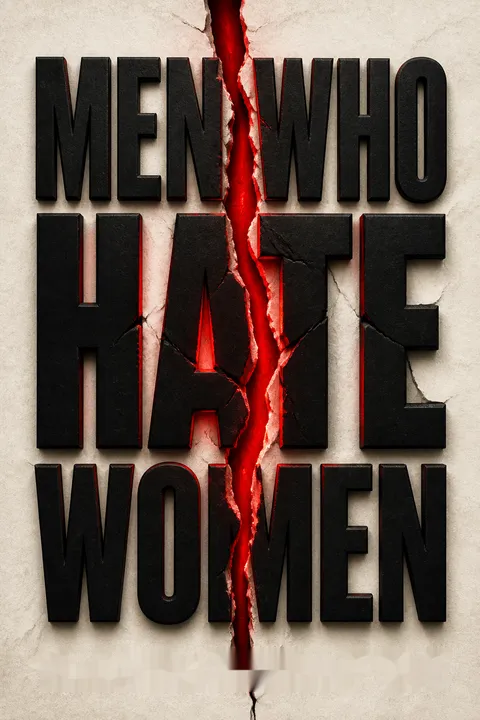
Men Who Hate Women is a disturbing but necessary exploration of online misogyny and extremism. Bates investigates various "manosphere" communities, including incels and pickup artists, revealing their toxic ideologies and real-world impacts. While praised for its thorough research and importance, some criticize the book's structure and dated examples. Many readers found it eye-opening but emotionally challenging. The book highlights the urgent need to address online radicalization and its effects on both women and vulnerable young men, though opinions differ on its effectiveness in proposing solutions.
People Also Read



Glossary
manosphere
online men's grievance networkA loose, interconnected collection of online communities, forums, influencers, and organizations focused on men's issues and grievances. In Bates's account, parts of this network promote anti-feminist and misogynistic beliefs, while other participants may be seeking advice or support. The communities differ in their aims, but their language and ideas can overlap.
incel
involuntarily celibate community memberShort for involuntary celibate, a term first used for people who felt unable to find romantic or sexual relationships. Bates describes modern incel communities as largely male online spaces, many of which blame women for members' lack of sexual relationships and promote a broader misogynistic worldview. The term's origin was a support project, not the later ideology.
red pill
claimed awakening to hidden truthA metaphor borrowed from the film The Matrix. In manosphere communities, taking the red pill means supposedly waking up to a hidden reality in which men are portrayed as the real victims of a society controlled by women or feminism. The metaphor makes the community's beliefs feel like a revelation rather than a contested interpretation.
blackpill
belief that change is impossibleA fatalistic outlook common in some incel communities. Blackpilled members believe that appearance, genetics, and social hierarchies permanently determine men's romantic prospects, leaving self-improvement pointless. Bates notes that the outlook can intensify despair and self-hatred, while the same communities may also direct anger toward women and men they consider more attractive.
pickup artistry
systematic dating influence techniquesA commercialized approach to approaching and pursuing women, promoted through books, online forums, training, and bootcamps. Some material focuses on confidence and conversation. Bates documents other techniques that treat women as targets, encourage manipulation, or advise men to disregard resistance. The community's jargon can make coercive behavior sound technical, playful, or routine.
MGTOW
men withdrawing from womenAn abbreviation for Men Going Their Own Way, a manosphere movement that advocates avoiding relationships with women, sometimes extending to broader withdrawal from society. Members vary in how far they follow the principle. Bates describes its ideology as grounded in distrust of women and claims that relationships expose men to unfair legal, financial, or emotional risks.
Men's Rights Activists
anti-feminist men's movementA label used by groups that claim to defend men's rights and address men's problems. Bates distinguishes these groups from men's organizations that work constructively on issues such as mental health and gender stereotypes. She argues that prominent MRA organizations often use real concerns, including suicide and custody disputes, to attack feminism and spread claims that women are the true oppressors.
contextual safeguarding
safeguarding within young people's environmentsAn approach to protecting young people that considers the places and social settings where harm occurs, rather than focusing only on the home or on an individual child. Bates discusses its possible relevance to online spaces, where young people form relationships, encounter harmful ideas, and seek status. Interventions would need to engage with those environments and build trust.
Overton window
range of publicly acceptable ideasA term for the range of ideas considered acceptable in public discussion at a given time. Bates uses it to explain how increasingly extreme claims can gain room in mainstream debate when influential voices first promote more moderate versions of related arguments. The shift can make ideas once regarded as fringe seem ordinary or politically discussable.
FAQ
What's Men Who Hate Women about?
- Exploration of Misogyny: The book investigates various forms of misogyny in modern society, with a focus on online communities that express extreme hatred towards women.
- The Manosphere: Laura Bates examines groups within the manosphere, such as incels, pickup artists, and Men Going Their Own Way (MGTOW), highlighting their ideologies and potential dangers.
- Real-World Impact: Bates emphasizes how online misogynistic rhetoric can lead to real-life violence and harassment against women, making the issue urgent and critical.
Why should I read Men Who Hate Women?
- Awareness of Issues: The book provides insights into the often-overlooked problem of misogyny in contemporary culture, especially in the digital age.
- Empowerment Through Knowledge: Understanding the ideologies that fuel hatred towards women can help readers engage in discussions about gender equality and advocate for change.
- Call to Action: Bates encourages readers to confront these issues head-on, making it essential for those interested in feminism, social justice, or gender dynamics.
What are the key takeaways of Men Who Hate Women?
- Understanding the Manosphere: The book outlines how groups like incels and pickup artists share a common thread of misogyny and entitlement.
- Connection to Violence: Bates illustrates the link between online misogyny and real-world violence, citing cases where ideologies have led to tragic outcomes.
- Need for Awareness: Recognizing and addressing these ideologies is crucial to prevent further harm and promote a more equitable society.
What are the best quotes from Men Who Hate Women and what do they mean?
- “You don’t have to imagine that world – you already live in it.”: Highlights the pervasive nature of misogyny, suggesting many are unaware of its extent.
- “The majority of men are good and kind and would never dream of committing such crimes.”: Acknowledges that while most men are not violent, addressing ideologies that lead to violence is crucial.
- “We cannot confront the real threat these groups pose unless we are prepared to look it directly in the eye.”: Emphasizes the need to acknowledge and address misogynistic groups rather than dismissing them as fringe elements.
What is the manosphere, as defined in Men Who Hate Women?
- Definition of the Manosphere: An interconnected spectrum of online communities promoting misogyny, including incels, pickup artists, and Men’s Rights Activists.
- Shared Ideologies: These groups often view women as objects and blame them for men’s perceived failures in life and relationships.
- Dangerous Ecosystem: Bates argues that the manosphere functions as a living ecosystem, where ideas circulate and reinforce each other, leading to radicalization and real-world consequences.
Who are incels, and what do they believe?
- Definition of Incels: Involuntarily celibate individuals who feel entitled to sex and blame women for their lack of romantic success.
- Misogynistic Ideology: They view women as the enemy, believing women are responsible for their loneliness and sexual frustration, leading to extreme resentment.
- Connection to Violence: Bates highlights that incels have been linked to numerous acts of violence against women, as their ideology can justify violence as a response to perceived injustices.
What are the tactics used by pickup artists (PUAs)?
- Manipulative Techniques: PUAs use strategies to manipulate women into sexual encounters, such as negging (backhanded compliments) and kino escalation (unwanted physical contact).
- Objectification of Women: Their language and tactics often reduce women to objects or targets, stripping away individuality and humanity.
- Encouragement of Harassment: Many PUAs advocate for ignoring women’s refusals, which can lead to sexual assault and other forms of violence.
How does Men Who Hate Women connect misogyny to real-world violence?
- Citing Real Cases: Bates provides examples of violent acts by individuals influenced by incel and other misogynistic ideologies.
- Psychological Impact: The book discusses how normalizing misogynistic rhetoric can desensitize individuals to violence against women.
- Call for Accountability: Bates argues that society must confront these ideologies to prevent further violence and protect women’s rights and safety.
What is the significance of the term "toxic masculinity" in Men Who Hate Women?
- Definition of Toxic Masculinity: Refers to cultural norms promoting harmful behaviors in men, such as aggression and emotional suppression.
- Impact on Men and Women: Bates explains that toxic masculinity harms both women and men, pressuring them to conform to unrealistic standards.
- Need for Change: The book advocates dismantling these harmful ideals to create a healthier society for all genders.
How can readers take action after reading Men Who Hate Women?
- Awareness and Education: Bates encourages readers to educate themselves and others about misogyny and its ideologies.
- Support for Victims: Highlights the importance of supporting survivors of violence and advocating for their rights.
- Engagement in Activism: Urges readers to engage in activism, whether through grassroots movements or community organizing, to combat misogyny and promote gender equality.
How does Men Who Hate Women address the role of media in perpetuating misogyny?
- Media Representation: Bates critiques how media often portrays male violence against women as isolated incidents, desensitizing the public.
- Coverage of Incidents: Discusses how media focuses on perpetrators’ backgrounds rather than victims’ experiences, undermining accountability.
- Call for Responsible Reporting: Urges media outlets to adopt responsible reporting practices that promote awareness and understanding.
How does Men Who Hate Women propose to change societal attitudes towards masculinity?
- Redefining Masculinity: Calls for a redefinition of masculinity, moving away from stereotypes of strength and dominance.
- Role Models: Highlights the importance of positive male role models who challenge toxic masculinity and promote gender equality.
- Community Engagement: Suggests engaging men in discussions about masculinity and gender equality to create allies in the fight against misogyny.
About the Author
Download PDF
Download EPUB
.epub digital book format is ideal for reading ebooks on phones, tablets, and e-readers.








