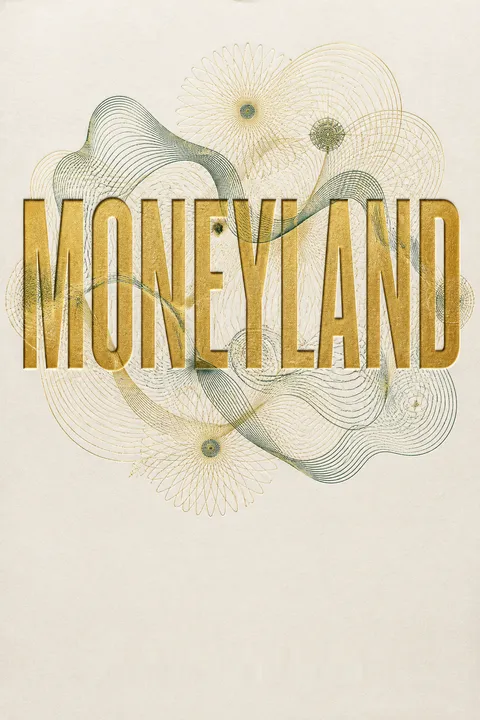


Key Takeaways
Treat offshore wealth as a borderless political system, not a distant scandal
A palace reveals the system. After Ukraine’s 2014 revolution, protesters explored President Viktor Yanukovich’s lavish estate, filled with art, gold-colored ornaments, and even televisions positioned beside the toilets. The spectacle raised a question: how could a president on a state salary own so much? The answer was obscured through companies in Ukraine, Britain, and Liechtenstein, each layer hiding the next owner. That is Moneyland: the author’s name for a virtual system in which the wealthy select laws and jurisdictions that suit them, moving assets across borders while investigators remain constrained by national laws. It is not a secret organization. It grows from the ordinary incentives of lawyers, banks, and governments competing for money.
The estate makes an abstract problem visible: public wealth can be converted into private luxury while its ownership is made unreadable. This resembles a familiar problem in political accountability: responsibility is easiest to evade when decision-making is divided among many actors. No single lawyer or jurisdiction has to control the whole structure for the result to be effective. The concept also needs careful boundaries. Cross-border ownership can be legitimate, and secrecy can protect people in danger. The central issue is not mobility itself, but the unequal access to opacity and the difficulty of distinguishing protection from concealment.
Trace Moneyland to the loophole where money outran postwar rules
The escape began in London. In 1944, the Bretton Woods agreements sought to restrain destabilizing capital flows through fixed exchange rates and limits on speculative money moving between countries. In the late 1950s, London banks began trading dollars held outside the United States, beyond American regulation and largely ignored by British regulators. These became known as eurodollars. In 1963, banker Siegmund Warburg’s team created eurobonds, arranging issuance, tax treatment, and interest payments across several jurisdictions. The first deal was $15 million; the market reached $510 million in 1964 and passed $1 billion in 1967. Rules began to chase money. As one place loosened its laws to attract business, others faced pressure to follow, steadily weakening the barriers the postwar system had built.
The history shows how financial innovation can be politically consequential without being centrally planned. A technical workaround becomes a market, then a competitive pressure on governments. That resembles regulatory arbitrage in other industries: when rules differ across jurisdictions, firms can relocate the activity rather than accept the stricter standard. The analogy has limits, since freer capital also supports legitimate trade and investment. The book’s sharper point is that governments did not simply lose control through technology. They repeatedly made choices to accommodate mobile finance, often because the short-term gains were concentrated and the costs dispersed.
Demand identifiable owners behind companies, not merely tidy paperwork
A company can conceal its controller. A shell company is a legal entity that may have little or no independent business activity, yet can own property, accounts, or other companies. Nested across jurisdictions, such entities make it hard to see who benefits from an asset. At London’s 29 Harley Street, more than 2,000 companies were registered at one address, including structures linked to Yanukovich’s property. Investigators often had to spend months seeking ownership records from foreign authorities. The same technique can shield fraud: a New Zealand company tied to an arms shipment was fronted by a young employee who said she had been paid to act as a director. Limited liability still matters. Companies support ordinary enterprise, but secrecy about control can turn a useful legal tool into cover for abuse.
The distinction between a company’s legal existence and its human controller is a basic accountability problem. Ownership registers can reduce the time investigators spend finding the pieces, rather than connecting them, but self-reported data can still be false or outdated. There is also a real design tension: the same corporate separation that encourages investment can protect owners from excessive personal liability. A sound reform therefore targets anonymous control and weak verification, rather than treating incorporation itself as suspicious. Transparency is most useful when records are accurate, searchable, and accessible to authorities with a legitimate purpose.
See corruption as a system that makes public services fail
The hospital shows the human cost. Ukraine’s constitution promised free healthcare, yet families at the Cancer Institute described paying for treatment, operations, and basic care because the public system did not reliably provide them. A secret-service report described officials and businesses manipulating procurement, inflating patient numbers, or weakening drug doses to divert money. In 2012, activists found that prices for HIV and tuberculosis medicines were 150 to 300 percent above those paid by charities. Reformers struggled to replace the networks while patients still needed care. The book calls this kind of system kleptocracy: government organized to extract private gain, rather than merely occasional officials taking bribes. The damage includes trust. When patients cannot tell whether a doctor’s advice is care or self-interest, institutions lose legitimacy.
The hospital account connects corruption to the quality of everyday life, not just to abstract measures of governance. It also illustrates a principal-agent problem: citizens rely on officials and professionals to act for them, but have limited information and little power to challenge decisions. The system becomes especially resilient when those asked to report abuse depend on the same institution for treatment or wages. Still, the book’s description of corruption as a total system risks making distinctions between different actors less visible. The story itself shows why distinctions matter: patients, junior doctors, and senior managers can face very different choices and incentives.
Follow the professionals who turn stolen wealth into respectable assets
The money needs facilitators. Officials cannot easily spend vast sums stolen at home, but banks, lawyers, accountants, and company agents can help move wealth, obscure its source, and make it usable abroad. In one example, Uzbek leader Islam Karimov’s daughter Gulnara used a Gibraltar company and accounts in several countries to receive more than $114 million in telecoms bribes, according to US prosecutors. Banks also accepted politically connected clients without adequate checks. A British regulator found that three-quarters of surveyed banks had failed to properly assess whether such clients’ money was legitimate. Dirty and merely hidden money mix. Tax avoiders, people seeking privacy, and recipients of criminal proceeds may use similar tools, making the whole system harder to police and easier to defend as ordinary business.
The account challenges the comforting idea that corruption is contained within the country where a bribe is paid. The financial chain is transnational, so responsibility is shared among institutions that may each claim to have performed only a narrow service. This resembles supply-chain accountability: a product’s harm can depend on many intermediaries, not just its originator. The categories still deserve separation. A person escaping political persecution, a tax evader, and a kleptocrat are not morally or legally equivalent, even when their structures look alike. Effective oversight must examine risk and conduct without treating every foreign client as suspect.
Recognize how wealth buys better laws, passports, and legal protection
Mobility is for sale. Some small states sell citizenship to investors, allowing wealthy applicants to obtain passports and travel access unavailable to many ordinary citizens. St Kitts and Nevis sold six investment passports in 2005; after the programme was redesigned, annual sales exceeded 2,000 by 2013. Wealth can also buy access to favorable courts and asset-protection rules. In London, Saudi billionaire Walid al-Juffali became an ambassador for St Lucia while facing a divorce claim from his former wife. A British court ultimately rejected his immunity because he had already been resident in Britain before taking the post. The advantage is legal choice. The wealthy can select jurisdictions, while most people remain subject to the laws and borders of their own country.
Citizenship and diplomatic status are not simply consumer products. They are institutional relationships that ordinarily carry duties as well as rights. Selling access can give small states revenue, but it can also create a two-tier world in which mobility and legal protection track wealth rather than need. The contrast with refugees is particularly stark: a wealthy person can buy a route around travel restrictions, while someone fleeing danger may be trapped by them. At the same time, a second nationality can be a genuine safeguard for people facing instability. The policy challenge is to distinguish legitimate security from purchased privilege.
Protect scrutiny from legal intimidation and violence
Silence protects assets. Wealthy figures can use the threat of expensive lawsuits to deter reporting, even when a claim is unlikely to succeed. A documentary about Ukrainian healthcare and a businessman’s frozen bank account was cancelled after his lawyers threatened the venue with a defamation case. An academic press declined a book on Vladimir Putin’s networks over the cost of defending a possible suit. At the most violent extreme, Russian exile Alexander Litvinenko was poisoned in London with polonium-210. The inquiry found that Russian state actors were responsible; the book argues that his work on financial networks may have made him a target. Both methods obstruct scrutiny: one through legal expense, the other through fear and the loss of witnesses.
The cases reveal that freedom of expression depends on more than formal legal rights. A publisher may be legally entitled to speak yet unable to afford the defense, while a witness may face physical danger for the information they hold. This is a chilling-effect problem: the deterrent works even when no final judgment is ever issued. The connection between Litvinenko’s murder and his financial investigations is presented as a persuasive interpretation, not a proven motive. That distinction matters. Strong protection for journalism should preserve both the ability to investigate and the discipline to separate established fact from inference.
Judge anti-corruption efforts by recovered assets, not summit promises
Recovery is the hardest stage. Investigators must trace ownership across multiple legal systems, obtain evidence from countries that may not cooperate, freeze assets before they move, and then prove a crime in court. After Ukraine’s revolution, British authorities froze $23 million linked to former minister Mykola Zlochevsky. A judge released it when prosecutors could not establish a sufficient connection to criminal conduct, while Ukrainian officials had failed to provide evidence promptly. The case showed how one country’s dysfunction can defeat proceedings elsewhere. Across the world, asset returns have been tiny compared with estimated thefts. Even money returned to Nigeria from Abacha-linked accounts was later difficult to track. A freeze is not justice: recovery requires proof, cooperation, and accountable use of returned funds.
Asset recovery is a chain of institutional tasks, and the weakest link can undo the work of stronger agencies. That makes cooperation more than diplomatic goodwill: it requires reliable evidence, trained investigators, and courts capable of acting on it. There is also a legitimacy question after recovery. Returning funds to a government that may be captured by the same networks can simply restart the cycle. Independent oversight of returned assets is therefore as important as seizure. The book’s examples make clear that public announcements of frozen sums can create an impression of progress long before the money is secured or used for public benefit.
Read luxury booms as evidence of concentrated, mobile wealth
Spending reshapes cities. London and New York became favored destinations for wealthy buyers seeking safe places to hold property. In west London, one estate agent recalled a rare Russian purchase for around £200,000 in the early 1990s; years later, the borough’s average home price exceeded £1.5 million. The book links these flows to plutonomy, a term used for economies where a small wealthy group accounts for a disproportionate share of income and spending. Citigroup analyst Ajay Kapur argued that luxury businesses could prosper as the rich captured more wealth. The boom has wider costs. Foreign investment can support jobs and development, but anonymous ownership and empty high-end homes make it difficult to tell productive investment from wealth parking, while prices can move beyond local incomes.
Luxury demand is an economic signal as well as a lifestyle story. If a small group drives a growing share of consumption, businesses may rationally redirect production toward that group, even as ordinary consumers lose purchasing power. That feedback can make inequality visible in urban space: buildings cater to global buyers, while local residents struggle to remain nearby. Yet price increases alone do not establish that a particular purchase is illicit, and foreign ownership can fund legitimate construction or employment. The stronger argument is structural: opacity prevents cities from measuring who benefits, who pays the costs, and whether the investment serves the wider community.
Close loopholes across jurisdictions, including the ones in America
Rules work only together. The US Foreign Account Tax Compliance Act, or FATCA, pressured foreign banks to disclose American clients’ accounts. The Common Reporting Standard, or CRS, created broader automatic exchanges of financial information among participating countries. These measures helped weaken Swiss banking secrecy, but the United States does not fully reciprocate under the same system. Its states also compete to attract wealth through trusts that offer secrecy and long-lasting asset protection. Meanwhile, public registers identifying company owners remain uneven and sometimes unverified. The test is consistency. If one jurisdiction offers privacy or lighter rules that others have closed, money can move there. The book’s proposed direction is coordinated transparency, real ownership records, and privacy safeguards available for legitimate needs rather than only to those able to pay.
The policy problem is a collective-action trap. Each jurisdiction may benefit from attracting financial business, while the costs of secrecy fall on taxpayers, victims, and institutions elsewhere. That structure rewards free riding and makes unilateral reform vulnerable to business leaving. The American example is especially important because it complicates a simple story of clean countries versus tax havens: a financial center can demand transparency abroad while preserving opacity at home. Coordination is necessary, but it should not become indiscriminate surveillance. Clear access rules, independent oversight, and protections for people facing genuine persecution can align accountability with privacy.
Analysis
Moneyland’s most powerful contribution is to shift the unit of analysis from the corrupt official to the cross-border system that makes corruption profitable. Yanukovich’s estate is not merely evidence of personal greed. It is the visible end of a chain connecting state procurement, corporate secrecy, professional services, foreign property markets, and legal systems that do not share evidence quickly. This reframing explains why removing one leader or prosecuting one banker rarely repairs the underlying machinery. The system is decentralized, adaptive, and sustained by lawful choices as well as criminal ones.
The book’s narrative method gives that claim force. It moves from a Ukrainian palace and cancer hospital to London company addresses, Caribbean citizenship offices, and Nevada trust businesses. These shifts make the distance between theft and consumption concrete. A medicine contract in Ukraine can become a luxury property or an expensive wedding abroad, while the legal trail passes through places whose regulators insist they are merely providing neutral services.
The analysis is strongest when it distinguishes corruption’s local consequences from its international enablers. Hollowed-out institutions cannot reliably provide healthcare, enforce contracts, or defend a country, while Western banks and advisers make stolen wealth usable. Still, the umbrella concept of Moneyland gathers together materially different cases: criminal proceeds, tax evasion, lawful asset protection, and money moved for fear of political confiscation. Those motives overlap in the same structures, but they are not interchangeable. A policy that treats them as identical could undermine legitimate privacy or expose vulnerable people.
The central institutional lesson is therefore not that every cross-border asset is suspicious. It is that ownership, control, and source of funds must be verifiable when public money, political power, or criminal risk is involved. The book also exposes a democratic paradox: national governments remain responsible to their voters, yet capital can move beyond national oversight. Transparency, enforcement cooperation, and fair access to privacy are not technical housekeeping. They determine whether law applies equally, or becomes another service available to those who can afford the right jurisdiction.
Review Summary
Moneyland exposes the hidden world of offshore finance and tax havens used by the ultra-wealthy to conceal their assets. Bullough's well-researched book reveals how corrupt officials and criminals exploit legal loopholes to launder money across borders. While some readers found the anecdotes repetitive, many praised the author's investigative journalism and entertaining writing style. The book effectively illustrates the negative impact of these practices on global inequality and democracy, though it falls short of offering comprehensive solutions to the problem.
People Also Read







Glossary
Moneyland
jurisdiction-shopping for wealthThe author’s term for a cross-border system in which wealthy people use different countries’ laws, companies, trusts, banks, and passports to protect or move assets. It is not a physical place or a centrally directed conspiracy. It emerges from the interaction of mobile capital, uneven laws, and professionals who help clients select the most favorable rules.
offshore
legally elsewhere, physically presentA legal and financial arrangement in which an asset or transaction is treated as belonging to a jurisdiction different from the place where it is physically located. The book traces the idea from London banks dealing in dollars beyond US regulation to modern structures that place property, companies, or accounts under foreign legal systems.
eurodollars
dollars held outside AmericaUS dollars deposited and traded outside the United States, especially in London during the postwar period. Because US regulators could not directly control these balances and British regulators largely tolerated the market, eurodollars could move and be lent with fewer restrictions than dollars held within the American banking system.
eurobonds
cross-border bearer bondsBonds arranged through several jurisdictions so that issuance, payment, and taxation could avoid or reduce national restrictions. The early bonds discussed in the book were anonymous bearer instruments, meaning possession established ownership, and interest could be paid without ordinary tax deductions. They made previously hidden wealth more portable and productive.
shell company
entity obscuring ownershipA company with little or no substantial independent operating activity that can hold assets, bank accounts, or shares in other companies. Shell companies have legitimate uses, but anonymous or nested structures can make it difficult to identify the human being who controls or benefits from the assets, slowing investigations and asset recovery.
kleptocracy
government organized for extractionA political system in which public institutions are used systematically to transfer wealth and advantage to rulers and their networks. In the book, the term distinguishes institutionalized extraction from isolated bribery: procurement, courts, healthcare, and enforcement can all be bent toward private gain, while ordinary people bear the resulting costs.
plutonomy
economy driven by the wealthyA term used in the book for an economy where a small, very wealthy group holds a disproportionate share of income, assets, and consumption. Citigroup analyst Ajay Kapur used it to argue that luxury companies could thrive as the rich captured more economic power, even when ordinary consumers faced pressure.
Foreign Account Tax Compliance Act (FATCA)
US foreign-account disclosure lawA US law requiring foreign financial institutions to disclose information about accounts held by US citizens and residents, or face a significant tax penalty on certain US-linked income. It helped the United States pressure Swiss banks to reveal American clients, but the book emphasizes that the system is not fully reciprocal.
Common Reporting Standard (CRS)
automatic account-information exchangeAn international framework under which participating jurisdictions automatically exchange information about financial accounts held by residents of other participating jurisdictions. It replaced a system that generally required authorities to know what account to ask about. The book notes that participation and access remain uneven, and that the United States operates a separate system.
Global Shell Games
study of company-agent checksA study cited in the book that tested how incorporation agents in 181 jurisdictions responded to requests to form companies under varying circumstances. Its findings showed substantial differences in how often agents demanded identification, with several US states among the least demanding. The study illustrates how easy incorporation can facilitate anonymity.
FAQ
What's Moneyland about?
- Corruption and Democracy: Moneyland by Oliver Bullough explores how corruption undermines democracy, institutions, and global trust. It highlights the role of countries like the UK in facilitating illicit money flows.
- Offshore Finance: The book introduces "Moneyland," a metaphorical space where wealth is hidden through complex financial structures and offshore accounts, allowing corrupt officials to evade consequences.
- Real-World Examples: Bullough uses case studies, such as Ukraine under Viktor Yanukovich, to show how kleptocrats operate and the impact on citizens and national stability.
Why should I read Moneyland?
- Insightful Analysis: The book offers a meticulously researched examination of global corruption, essential for those interested in politics and economics.
- Call to Action: Bullough encourages readers to recognize Western complicity in corruption and to advocate for change, making it both informative and a rallying cry.
- Engaging Narrative: Combining thorough research with storytelling, the book makes complex financial concepts accessible and compelling.
What are the key takeaways of Moneyland?
- Systemic Corruption: Corruption is portrayed as a systemic issue affecting entire nations, making it difficult to combat.
- Offshore Finance Role: Offshore finance is shown as a tool for the wealthy to evade accountability, creating a parallel economy.
- Global Implications: Corruption's consequences extend beyond borders, affecting global stability and security.
What are the best quotes from Moneyland and what do they mean?
- “Corruption undermines democracy...”: This quote highlights the destructive impact of corruption on society and warns about the fragility of democratic systems.
- “Moneyland means never having to say ‘when’.”: It illustrates the insatiable nature of wealth accumulation among the elite, underscoring moral decay.
- “The theft was well hidden.”: Reflects the complexity of financial systems that allow corruption to flourish, pointing to the need for transparency.
How does Moneyland define kleptocracy?
- Kleptocracy Explained: Defined as a system where those in power exploit their positions to steal from the state, often using offshore systems.
- Mechanisms of Control: Kleptocrats maintain control by corrupting institutions and hiding wealth, creating dependency and fear.
- Global Network: Kleptocracy is a global phenomenon, with corrupt leaders using similar tactics worldwide, necessitating international cooperation.
What role does the UK play in Moneyland?
- Financial Hub: The UK is depicted as a major player in enabling corruption through lenient regulations and offshore territories.
- Legal Structures: British legal structures, like shell companies, are exploited to hide wealth, raising ethical questions.
- Call for Reform: Bullough advocates for UK reforms to increase transparency and accountability in financial dealings.
How does Moneyland illustrate the impact of corruption on ordinary citizens?
- Healthcare Example: Ukraine’s healthcare system is used to show how corruption diverts resources, leaving citizens without adequate care.
- Economic Inequality: Corruption exacerbates inequality, with elites hoarding resources while the majority struggle, fueling unrest.
- Loss of Trust: Widespread corruption erodes trust in institutions, leading to apathy or civil unrest.
What specific methods do kleptocrats use to hide their wealth in Moneyland?
- Offshore Accounts: Used to conceal wealth from authorities, allowing kleptocrats to enjoy riches without legal repercussions.
- Shell Companies: Create layers of anonymity, making it difficult to trace asset ownership, a hallmark of Moneyland.
- Legal Loopholes: Exploited to protect assets, using trusts and foundations to obscure ownership and control.
How does Moneyland address the issue of accountability for corrupt officials?
- Lack of Prosecution: Many corrupt officials face little consequence due to the systems they exploit, perpetuating corruption.
- International Challenges: Difficulties in prosecuting kleptocrats arise when assets are hidden offshore, complicating recovery efforts.
- Need for Reform: Bullough argues for reforming laws to hold corrupt officials accountable, essential to breaking the cycle.
What solutions does Moneyland propose to combat corruption?
- Increased Transparency: Advocates for transparency in financial transactions and corporate ownership to enhance accountability.
- International Cooperation: Emphasizes the need for countries to work together to track and recover stolen assets.
- Public Awareness: Calls for public awareness and activism to challenge the status quo and demand accountability.
How does Moneyland connect to broader themes of globalization?
- Global Financial Systems: Illustrates how globalization facilitates money movement, raising questions about financial integrity.
- Impact on Sovereignty: Offshore finance undermines national sovereignty, leading to instability and conflict.
- Inequality and Discontent: Links globalization to economic inequality and social unrest, threatening democratic institutions.
What is the Economic Citizenship Programme (ECP) in Moneyland?
- Citizenship for Investment: ECP allows individuals to obtain citizenship in exchange for financial investments, attracting foreign capital.
- Controversial Practices: Raises ethical questions as it can facilitate entry for corrupt individuals escaping legal troubles.
- Economic Impact: Provides immediate financial benefits but may lead to long-term challenges like lack of transparency.
About the Author
Other books by Oliver Bullough

Download PDF
Download EPUB
.epub digital book format is ideal for reading ebooks on phones, tablets, and e-readers.








