

Plot Summary
The Meryton Ball
At Longbourn, Mrs. Bennet laces seventeen-year-old Oliver into a dress and stays, preparing him for the marriage-minded world that sees him as her daughter. Only his sister Jane knows the truth and calls him her brother. At the Meryton Ball, Jane attracts Charles Bingley, while Oliver catches the eye of Bingley’s friend, Fitzwilliam Darcy.
Darcy refuses to dance with Oliver and dismisses him as insufficiently attractive. The rejection stings more than Oliver expects, because Darcy’s attention had briefly felt like possibility. He leaves the ball determined to avoid him, while Jane’s growing connection with Bingley gives their mother fresh hopes of a match.
The opening makes social performance bodily: the stays do not merely signify convention, they press Oliver into a shape that contradicts his sense of himself. Jane’s private recognition offers a counterweight, but it cannot yet protect him in public. Darcy’s insult lands on two levels. It is an ordinary social slight in the room, yet for Oliver it also exposes how little control he has over how others read him. The ball sets up a romance whose central difficulty is not simply whether two people like each other, but whether they can recognize one another across the roles society assigns.
Oliver at the Fair
At the Bartholomew Fair, Oliver changes into menswear at his friend Charlotte’s home and enters the crowd as Oliver Blake. There he meets Bingley, who does not recognize him from the ball and invites him to explore with Darcy. Being addressed as a young man lets Oliver relax into a joy he has rarely experienced in public.
The three watch performers, share meat pies, and visit the Temple of Muses, where Darcy and Oliver discover a shared love of books. Darcy’s reserve gives way to awkward warmth, and he invites Oliver to join them at Watier’s, an exclusive gentlemen’s club. Oliver accepts, thrilled that these boys see him as he knows himself to be.
The fair makes passing less a trick than a social fact: strangers infer Oliver’s gender from his clothes and move on without interrogating him. That ordinary ease becomes extraordinary precisely because it is so scarce in his other life. The encounter also complicates Darcy, who seemed contemptuous at the ball but proves shy and thoughtful in a setting where Oliver is recognized as a boy. Their shared reading gives attraction a concrete beginning, grounded in attention and curiosity rather than instant idealization. Oliver’s joy is therefore both relational and self-confirming: Darcy’s welcome matters, but so does the chance to occupy public space without explaining himself.
Wickham’s Warning
Charlotte questions Oliver about the future he imagines, warning that women without money often must marry for security. Oliver refuses to picture himself as anyone’s wife, even if that choice means hardship. On a walk into London, Lu points out Avery’s, a tavern with a discreet gathering place for queer young people, and reveals that she and Charlotte have visited.
The sisters Kitty and Lydia, meanwhile, hope to see soldiers and meet the handsome George Wickham. When Oliver hears that Wickham knows Bingley and Darcy, Wickham urges the Bennets to avoid Darcy, hinting that he mistreats women. Oliver remembers Darcy’s cruelty at the ball and begins to wonder whether his new friend’s kindness has conditions.
Charlotte’s warning is not simple conservatism. She has learned to treat marriage as an economic strategy, and her advice comes from a real scarcity of choices. Oliver hears the danger in that logic because the offered security would require him to disappear into a gendered role. Lu’s mention of Avery’s offers a different form of community, one that makes a future outside conventional marriage imaginable. Wickham’s first intervention then exploits Oliver’s unresolved hurt: his story seems plausible because Darcy really was cruel to Oliver while he was dressed as a girl. The section shows how incomplete information can turn vulnerability into suspicion.
Watier’s After Dark
At Watier’s, Oliver finds the noisy club less frightening with Darcy beside him. The two tease each other, discover that neither enjoys the gambling, and slip away for a quiet walk. When Darcy spots Wickham among the members, his anger surfaces, but he chooses to leave with Oliver rather than explain. Their closeness deepens under the night sky.
Returning home, Oliver finds Mr Bennet awake and climbs the trellis to avoid detection. His foot slips above his father’s office window, exposing him in his men’s clothes. Instead of condemning him, Mr Bennet tells Oliver he is proud to see him and accepts him as his son. Oliver asks him to keep the truth from Mrs Bennet until he is ready.
The night divides two kinds of exposure. In the garden, Oliver is visible to Darcy and welcomed; on the trellis, he is physically vulnerable to discovery by his father. Mr Bennet’s response transforms that accident into an act of recognition, giving Oliver a secure family witness without forcing him to come out before he is ready. Darcy’s unexplained reaction to Wickham plants a question that Oliver cannot yet answer, but his choice to leave the club with Oliver signals care. The scene’s emotional hinge is not a declaration of romance. It is the sudden knowledge that Oliver may have an ally at home.
Netherfield in the Rain
Mrs. Bennet sends Jane to visit the Bingleys through a cold rain, hoping illness will prolong her stay and bring her closer to Bingley. Jane does fall ill, and Oliver walks through mud to Netherfield with clothes for her. Caroline and Louisa mock the Bennet family’s status, while Darcy’s anger at their snobbery offers Oliver a glimpse of his better judgment.
During the visit, Jane and Bingley grow comfortable together. Back at Longbourn, Mrs. Bennet suggests Oliver needs more instruction in becoming a proper lady. He retreats to his room, changes into trousers, and writes down the future he wants: more time as himself, honesty with his family, and the chance to kiss a boy as a boy.
The rain episode reveals the gap between care and strategy in Mrs. Bennet’s matchmaking. She wants Jane’s illness to function as leverage, while Oliver objects because he sees his sister’s discomfort as real rather than useful. Netherfield’s class snobbery makes the family’s social vulnerability tangible, and Darcy’s response complicates Oliver’s growing doubts about him. At home, the demand for feminine instruction sharpens Oliver’s need to make private desire legible, even if only on paper. The list is not a plan so much as an act of self-preservation: naming specific hopes keeps them from being swallowed by a future others have already chosen for him.
The Netherfield Ball
At the Netherfield Ball, Bingley welcomes Jane back and dances with her, while Oliver watches Darcy trade angry looks with Wickham. Mrs. Bennet insists Oliver accept a dance, and her cousin Mr. Collins appears earlier than expected. Collins dances with Oliver, praises his body in terms that make him recoil, and speaks as though a woman’s future is already decided.
Oliver later dances with Darcy and finds him unexpectedly pleasant. After Collins steps on Oliver’s foot, Wickham uses the moment to secure a dance and implies that Oliver may soon marry. Oliver refuses to encourage him. The evening leaves him surrounded by men who assume his future belongs to them, while his attention keeps returning to Darcy.
The ball turns polite courtship into a contest over who gets to define Oliver’s future. Collins treats marriage as a practical transaction, while Wickham uses charm to make pressure seem flattering. Oliver’s body becomes the subject of other people’s plans, which intensifies the dissonance he has been naming privately. Darcy’s brief warmth offers relief, but it is still filtered through the identity Oliver must perform in the ballroom. The social ritual therefore has a double edge: dancing creates moments of contact, yet its rules insist that Oliver occupy a role that makes those moments feel false.
Collins’s Proposal
After the ball, Collins asks to speak with Oliver alone and proposes marriage, explaining that Oliver is an acceptable alternative because Jane is expected to marry Bingley. He praises the match as a way to secure Longbourn for the Bennets, barely considering Oliver’s wishes. Oliver refuses. Mrs. Bennet demands that he reconsider, but Mr. Bennet counters that he would disown Oliver if he married Collins against his will.
His father’s support gives Oliver room to stand firm. Soon afterward, Charlotte tells Oliver that she has accepted Collins’s proposal. Oliver argues that she deserves a life with Lu, but Charlotte explains that financial safety matters more than an impossible ideal. Their disagreement leaves their friendship strained.
Collins’s proposal makes the novel’s economic logic explicit: marriage is offered as property management, with Oliver’s consent treated as a minor detail. His refusal is not a romantic gesture but a defense against a life that would require sustained self-erasure. Mr. Bennet’s loyalty gives that refusal practical force, though it cannot solve the family’s legal vulnerability. Charlotte’s choice is more unsettling because she understands the cost and accepts it anyway. Her decision prevents the story from treating compromise as mere cowardice. The disagreement exposes two different survival strategies, shaped by unequal resources and by how much each person can endure pretending.
A Kiss at Avery’s
Oliver begins wearing trousers at home, though Mrs. Bennet disapproves. Soon he learns that the Bingleys and Darcy have left Netherfield without warning, leaving Jane heartbroken and Oliver fearing he drove Darcy away. Charlotte announces that she will marry Collins, and Oliver struggles to support her choice.
At Avery’s, the private gathering place Lu described, Oliver finds Darcy reading among other queer young people. They discuss books, then dance together without having to disguise themselves. Darcy kisses Oliver, and Oliver kisses him back. The happiness lasts only moments before Darcy abruptly withdraws and leaves. The kiss confirms what Oliver wants, but Darcy’s flight makes that hope feel suddenly unsafe.
Avery’s creates a temporary world where the ordinary rules of gender and courtship loosen enough for Oliver and Darcy to act without an audience policing them. Their kiss is not simply a romantic reward; it demonstrates what becomes possible when safety is communal rather than privately improvised. Darcy’s retreat then reveals that access to such a refuge does not erase internalized fear. Oliver can experience desire as affirming, while Darcy experiences the same intimacy as evidence of a truth he has not learned to bear. Their different reactions establish the emotional asymmetry that will drive the next conflict.
Darcy’s Wrong Proposal
After Charlotte marries Collins, Oliver visits her at Hunsford and repairs their friendship. Jane’s letter from the Gardiners reports that Bingley’s sisters have been cold, confirming her fear that she has lost him. At Rosings, Lady Catherine interrogates Oliver about his education and his shortcomings as a lady, leaving him overwhelmed.
Darcy then visits and proposes to Elizabeth, believing Oliver to be a woman. He describes marriage as the safest available arrangement, not a love match. Oliver refuses and challenges Darcy over Bingley’s departure and Wickham’s claims about his cousin. When Darcy cannot answer cleanly, Oliver assumes his worst and rejects him. Darcy leaves without knowing he has spoken to Oliver.
The proposal is painful because Darcy offers the very compromise Oliver has been trying to refuse: a socially acceptable partnership built on pretending. Oliver’s anger is justified by the harm Darcy caused Jane, yet his judgment is also shaped by missing information and by the impossibility of admitting why the proposal is intolerable. Lady Catherine’s rigid lessons have just intensified his sense of entrapment, so Darcy’s offer arrives at the worst possible moment. The scene’s central irony is that Oliver knows Darcy as a boy who kissed him, but Darcy addresses him as a woman. Their intimacy cannot survive while each is forced to speak from incompatible versions of reality.
Letters and Leverage
Darcy sends Oliver a letter admitting he wrongly judged Jane’s feelings for Bingley and explaining the truth about Wickham. Wickham had tried to elope with Darcy’s fifteen-year-old sister Georgiana for her fortune, and Darcy was never formally engaged to Wickham’s cousin. Oliver now sees that Wickham has distorted the past to damage Darcy.
But Wickham continues pursuing Oliver, dismissing his refusal to marry as childish. When Wickham arrives at Longbourn, he sees Oliver in trousers; Mrs. Bennet orders Oliver to change and then berates him for turning away another suitor. Mr. Bennet steps in, comforts him, and sends him to stay with the Gardiners. The escape gives Oliver space to face the truth on his own terms.
The letter changes the moral map without making Darcy blameless: he admits his intervention hurt Jane, while Wickham’s deliberate manipulation becomes clearer. Georgiana’s near-elopement also explains Darcy’s fury at the club and establishes that Wickham’s charm conceals a pattern of exploiting trust. At Longbourn, Mrs. Bennet’s response shows how affection can coexist with painful misrecognition; she believes she is protecting a daughter’s prospects while attacking Oliver’s autonomy. Mr. Bennet’s intervention offers immediate care, but it also signals that Oliver cannot keep postponing disclosure indefinitely. Retreat to the Gardiners is both refuge and preparation.
The Truth at Pemberley
At Pemberley, Oliver unexpectedly encounters Darcy while visiting the grounds with his aunt and uncle. They walk together, and Oliver tells Darcy that he was assigned the name Elizabeth at birth, raised as a girl, and is now living as a boy whenever he can. He reveals that he is the Bennet Darcy once proposed to, and Darcy understands why he felt drawn to Elizabeth.
Oliver admits he still wants him; Darcy returns the feeling, and they hold hands. Their reconciliation is interrupted by a letter from Wickham. Wickham has figured out that Oliver Blake and Elizabeth Bennet are the same person, and threatens to expose him unless Oliver meets him alone. Their private happiness now carries a public danger.
Oliver’s disclosure is an act of trust with real stakes, not a simple correction of mistaken identity. He gives Darcy the history that makes both their earlier encounters intelligible and risks rejection at the moment he most wants acceptance. Darcy’s recognition allows Oliver’s two lives to meet without one invalidating the other. Wickham’s letter immediately tests whether that acceptance can withstand external threat. The romance therefore shifts from secrecy as a private inconvenience to secrecy as a tool someone else can weaponize. The danger does not come from Oliver’s identity itself, but from a society and a manipulator prepared to turn it into leverage.
The Bridge in the Rain
Back at Longbourn, Jane reacts with fury to Wickham’s threat and urges Oliver to tell the family before Wickham can define him. Lady Catherine arrives to deny rumors that Darcy is engaged to Oliver, then leaves after insulting his social standing. Oliver meets Wickham by the statue of Alfred the Great. Wickham reveals that Collins offered him money to make Oliver marry him, protecting Collins’s claim to Longbourn.
Oliver refuses and walks to Westminster Bridge, where Darcy finds him. Darcy has returned with Bingley, encouraged him to trust Jane, and expects Bingley to propose. Darcy admits he loves Oliver and offers to stand beside him when he tells his family. Oliver answers with his own love, and they kiss in the rain.
The blackmail plot finally exposes the material interest beneath Wickham’s attention: Collins wants Oliver contained so inheritance can pass as expected. That motive makes the social threat concrete, linking private identity to property law and family power. Oliver’s walk to the bridge marks a change from fear toward action; he recognizes that waiting will not preserve his agency. Darcy’s return matters because he repairs one harm he caused by restoring Bingley’s faith in Jane, then offers support without demanding that Oliver hide. Their mutual declaration joins desire to solidarity, making love an active commitment rather than a refuge from the conflict.
Longbourn Names Its Son
Darcy accompanies Oliver to Longbourn, where Jane and Bingley have announced their engagement. Oliver tells Mrs. Bennet that his name is Oliver and that he is her son. After a stunned pause, she accepts him and embraces him. Collins and Wickham arrive intending to press their scheme, but Mr. Bennet reveals that he will change his will so Oliver can inherit Longbourn.
He also has testimony from Dr. Marsh, who delivered Oliver, to support the family’s claim. Darcy exposes Wickham’s attempt to exploit Georgiana, and Mrs. Bennet threatens to use her social connections if either man spreads damaging rumors. Mr. Bennet sends them away. With his parents’ support, Oliver prepares to introduce himself to the rest of the family.
The climax resolves the opening’s central conflict through recognition backed by material action. Mrs. Bennet’s acceptance matters emotionally, but Mr. Bennet’s will and Dr. Marsh’s testimony matter institutionally; the family does not rely on affection alone to secure Oliver’s place. Wickham and Collins lose power when their private bargain is made visible and their credibility is challenged. The scene also reverses the novel’s earlier social rituals: instead of Oliver being dressed and presented as a daughter, he introduces himself in his own name. The ending makes belonging both intimate and public, a practiced commitment rather than a sentiment.
Epilogue
At Avery’s, Oliver returns to find Darcy reading on their familiar green sofa. The young man at the door recognizes him and directs him toward his boyfriend. Oliver and Darcy sit close together, each pretending to read while watching the other.
Darcy has saved a book Oliver wanted, and that small attention helps Oliver settle into the room as himself. When Darcy finally kisses him, the closeness feels easy rather than stolen. Oliver can be a boy, desire a boy, and be loved without having to explain the truth of either.
The epilogue brings the story back to the place where Oliver and Darcy first acted openly together, but the return is changed by what Oliver has since claimed. The book Darcy saves for him represents a quieter form of intimacy: attention that remembers what Oliver likes and makes room for him. Their kiss no longer interrupts a fragile moment of borrowed safety. It belongs to a relationship that has survived disclosure and family confrontation. The ending does not pretend the wider world has become fair; instead, it shows Oliver’s happiness grounded in chosen community, mutual recognition, and the growing ability to live without treating himself as a secret.
Analysis
The novel locates its central conflict in the distance between being known and being legible. Oliver understands himself clearly, but his family and society read his clothes, body, and prospects as evidence for a life he does not want. His secret clothing enables brief recognition, yet concealment also keeps his two social identities vulnerable to manipulation. The story makes that vulnerability concrete through Wickham, whose power depends on controlling what others know, and through Collins, whose inheritance plans treat Oliver’s life as an obstacle to property transfer.
Marriage operates as both romance and institution. For Jane and Bingley, it promises mutual affection, though Darcy’s intervention shows how easily a third party can mistake reserve for indifference. For Charlotte, marriage offers material security at a personal cost she has assessed more pragmatically than Oliver can accept. For Oliver, the conventional role of wife would demand not merely a compromise in preference but an ongoing denial of self. The novel respects these different calculations rather than pretending every character has equal freedom to choose.
Darcy and Oliver’s romance becomes credible through repeated misreadings. Darcy’s public coldness and private warmth initially appear contradictory; Oliver’s knowledge of both creates hope but not certainty. Their intimacy falters when Darcy converts fear into a socially acceptable proposal, and it can resume only after Oliver names the truth and Darcy accepts him without qualification. The plot’s happy ending does not depend on society changing. It depends on allies making recognition consequential: Mr. Bennet supports Oliver emotionally and legally, Jane stands with him, and Darcy offers partnership rather than concealment.
The story’s deepest claim is that self-knowledge needs witnesses, but witnesses alone are not enough. Oliver’s parents must alter the family’s plans, and the threat to Longbourn must be answered through evidence and a will. Love becomes durable when it moves beyond private affirmation into the arrangements that govern a life. Oliver’s joy at the end is therefore not an escape from reality. It is the result of people around him choosing to make reality room for him.
Review Summary
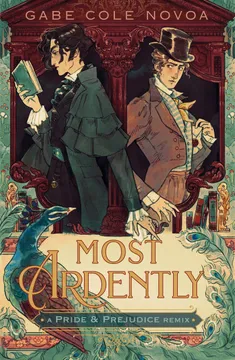
Most Ardently is a Pride and Prejudice retelling featuring a trans male protagonist named Oliver. Reviews are mixed, with some praising the queer representation and innovative premise, while others criticize historical inaccuracies and lack of depth in character development. Many readers enjoyed the romance between Oliver and Darcy, though some found it underdeveloped. The book's handling of gender identity and societal expectations in Regency-era England sparked debate among reviewers. Overall, opinions varied widely on the success of this queer reimagining of a classic.
People Also Read





Characters
Oliver Bennet
A son in borrowed skirtsOliver is a thoughtful, book-loving seventeen-year-old who has been raised as one of the Bennet daughters but knows himself to be a boy. He is careful about when and where he can dress and move as Oliver, relying on hidden clothes, trusted friends, and the rare kindness of strangers. His sharp wit often masks fear, especially when people discuss marriage as though his consent were irrelevant. Oliver wants more than escape from dresses: he wants an ordinary future in which he can be recognized, loved, and addressed as himself. His courage is uneven but practical. He takes small risks, learns from the people who support him, and gradually begins to imagine a life larger than the one others have planned.
Fitzwilliam Darcy
A guarded gentlemanDarcy is a wealthy, intelligent young man whose reserve can look like contempt, especially in public settings governed by expectations he cannot comfortably meet. Books offer him a more natural way to connect than parties, and his friendship with the sociable Bingley often lets him avoid initiating conversation. He is perceptive but not infallible; his confidence in his own judgments can hurt people he means to protect. Beneath the formal manners is someone wary of exposure and unused to speaking plainly about desire. Oliver unsettles him because Oliver is lively, honest, and difficult to dismiss. Their connection asks Darcy to distinguish safety from avoidance and to consider what his choices cost others.
Jane Bennet
Oliver’s steady confidanteJane is Oliver’s eldest sister, gentle and socially careful, with a warmth that is easy to underestimate. She knows Oliver’s identity and offers him the most consistent private affirmation in the family, helping him create the clothing that lets him bind his chest and go out as himself. Jane’s shyness is not indifference; she often feels deeply while showing little in public, a difference others may misread. Her affection for Bingley develops alongside her loyalty to Oliver, and she tries to protect both without making herself the center of attention. Jane’s quiet steadiness gives Oliver a model of care that does not demand he justify who he is.
Charles Bingley
The openhearted newcomerBingley is a cheerful, sociable young gentleman who makes acquaintances easily and tends to assume the best of people. His warmth draws Jane into conversation and gives Oliver a welcoming first experience of being treated as a young man in public. Bingley is generous with invitations and quick to include others, though his trust in Darcy can leave him vulnerable to advice that is confident but mistaken. He is less guarded than Darcy and more comfortable showing affection, which makes his connection with Jane feel possible even when their circumstances are uncertain. His openness is a strength, but the story also asks him to make his own judgments rather than rely entirely on a friend’s conclusions.
Mrs. Bennet
A mother chasing securityMrs. Bennet is animated, anxious, and intensely focused on securing her children’s futures through advantageous marriages. Her schemes can be intrusive, as when she hopes Jane’s illness will keep her near Bingley, but they arise from genuine fear about the family’s limited security. She reads Oliver’s discomfort with dresses and suitors as a problem to correct, not as evidence of a deeper truth. This makes her both loving and hurtful: she wants to protect the child she believes she has, yet her assumptions can close around Oliver like another layer of clothing. Her certainty about social rules is a defense against the vulnerability of having few resources.
Mr. Bennet
The watchful fatherMr. Bennet is dryly humorous, observant, and more emotionally attentive than his occasional detachment suggests. He recognizes that his children need room to become themselves, and his quiet interventions often create the space Oliver lacks elsewhere. His support is practical as well as affectionate: he listens, protects Oliver’s timing, and thinks about the family’s legal and financial position. Mr. Bennet’s calm can appear passive, but when a boundary is crossed he is capable of decisive action. He understands that love must sometimes become visible in public and consequential in the world, particularly when social customs threaten a child’s autonomy.
Charlotte Lewis
Oliver’s pragmatic friendCharlotte is Oliver’s closest friend, perceptive and practical about the economic limits facing women without independent wealth. She helps him keep men’s clothes safely hidden and supports his need to live as himself, yet she also urges him to consider how he will survive in adulthood. Her bond with Lu gives her a private happiness that society cannot easily recognize, and her choices reflect a clear-eyed response to that constraint. Charlotte can hurt Oliver by treating compromise as inevitable, but she is not indifferent to his pain. She believes security is a form of survival and wants him to think beyond immediate relief, even when her own path differs sharply from his.
George Wickham
The charming opportunistWickham is a handsome soldier whose easy manners make him seem trustworthy to people who have just met him. He knows how to flatter, create a sense of intimacy, and present himself as the injured party. His attention to Oliver is shaped by conventional assumptions about women and marriage, and he treats Oliver’s objections as youthful confusion rather than meaningful refusal. Wickham’s charm is therefore difficult to separate from his appetite for influence. He watches how others react, adapts his story to the audience, and uses private information as leverage. His polished surface makes him a useful contrast to Darcy, whose awkwardness can look worse than it is.
Mr. Collins
The calculating cousinMr. Collins is the Bennets’ cousin and the expected heir to Longbourn under the family’s existing arrangements. He is ceremonious, self-important, and preoccupied with rank, propriety, and the approval of Lady Catherine. He treats marriage as a reasonable settlement between households and assumes that a woman’s future should fit the plans of her family. His awkwardness can make him seem harmless, but his confidence in conventional rules allows him to overlook other people’s wishes. Collins represents the pressure of inheritance and respectability made personal: his decisions can reshape the Bennets’ future even when he barely understands their inner lives.
Lu
A keeper of safe roomsLu is Charlotte’s lover and a married woman whose husband is often away with the army. She understands the compromises required to maintain a private life in a society that offers few legitimate choices to women like her. Lu is warm with Oliver and helps him see that secrecy can sometimes create protection rather than shame. She also urges him to visit Avery’s, where queer young people gather. Her counsel is generous but grounded: she wants Oliver to pursue joy while recognizing how precarious safety can be.
Caroline Bingley
The status-conscious sisterCaroline is Bingley’s socially ambitious sister, attentive to class, appearance, and the advantages of a good marriage. She judges the Bennets harshly and sees their manners and resources as evidence that they are unsuitable company. Her efforts to attract Darcy reveal how strongly she values the approval of a wealthy, well-connected man. Caroline is polished and strategic, but her social certainty makes her unkindness easy to excuse in her own mind.
Louisa Bingley
Caroline’s approving allyLouisa is Bingley’s other sister and Caroline’s companion in judging the Bennet family. She joins in private mockery rather than challenging her sister’s snobbery. Her presence helps make Netherfield feel socially inhospitable even when Bingley himself is welcoming. Louisa is less central than Caroline, but she reinforces the class expectations that shape the family’s treatment of Jane and Oliver.
Kitty Bennet
A younger Bennet sisterKitty is one of Oliver’s younger sisters, eager for excitement and easily swept into the social pursuit of handsome soldiers. She shares the family’s crowded home and its assumptions about marriage, but she is not defined by the same anxieties as Oliver. Her enthusiasm helps reveal how ordinary courtship looks to the sisters who accept the roles prepared for them.
Lydia Bennet
The impulsive youngest sisterLydia is the youngest Bennet, bold, excitable, and fascinated by soldiers and romantic attention. She often acts before considering the consequences, which makes her a source of energy in the family’s social life. Her confidence contrasts with Oliver’s guardedness, though both are navigating expectations set by their mother and by polite society.
Mary Bennet
The studious Bennet sisterMary is the Bennet sister most devoted to the pianoforte and to disciplined study. Her quieter presence helps complete the crowded family dynamic at Longbourn. She is less involved in Oliver’s secret life, but her ordinary place in the household shows the varied paths Mrs. Bennet imagines for her daughters.
Mrs. Gardiner
Oliver’s protective auntMrs. Gardiner is Oliver and Jane’s aunt, a kind and attentive presence who offers a welcome outside Longbourn. She provides a place where Oliver can be heard without his mother’s matchmaking anxieties dominating the conversation. Her home gives him respite and a chance to think through difficult choices.
Mr. Gardiner
Oliver’s steady uncleMr. Gardiner is the Bennet siblings’ uncle, generous with his time and welcoming in his home. He supports Oliver’s visits and provides a calmer setting than Longbourn. His practical kindness helps Oliver feel connected to a wider family network, rather than dependent on a single person’s approval.
Lady Catherine de Bourgh
The formidable social arbiterLady Catherine is Darcy’s wealthy aunt, a forceful woman accustomed to having her judgments treated as authority. She prizes education, rank, and obedience to established social forms, and she speaks as though her preferences should guide other people’s futures. Her influence reaches beyond her own household because others depend on her approval and connections.
Georgiana Darcy
Darcy’s protected sisterGeorgiana is Darcy’s younger sister, quiet and vulnerable to the pressures of wealth and social expectation. Darcy is deeply protective of her, and her safety shapes his distrust of Wickham. Though she appears mostly through other characters’ accounts, her circumstances reveal the risks young women face when charm and status are used to manipulate them.
Dr. Henry Marsh
The family physicianDr. Marsh is an eccentric physician who delivered the Bennet children and maintains a practice in both England and Paris. His professional history connects him to Oliver’s birth and gives the family a witness with knowledge of Oliver’s earliest circumstances.
Plot Devices
Clothing and false names
A guarded double lifeOliver’s dresses and stays mark the identity his family and society impose, while his hidden menswear lets him move through London as himself. At Charlotte’s home he can change without drawing suspicion; in crowds, strangers usually accept the identity his clothes suggest. The contrast lets the narrative show how recognition can depend on small, visible cues, while also making every encounter risky. Oliver’s borrowed surname, Blake, helps him meet Darcy and Bingley without exposing his family. The disguise becomes more precarious as Wickham observes his movements and connects his two lives.
The binding cloth
A body made bearableJane helps Oliver create a cloth binder that flattens his chest beneath his shirt. The garment offers comfort and a sense of alignment, allowing him to see a reflection closer to how he understands himself. Its snug embrace becomes a private source of relief, in contrast with the stays Mrs. Bennet laces around him in dresses. The binder also makes Oliver’s outings possible, though he must manage its fit carefully and conceal it from people who do not know his identity. Its role is intimate and practical rather than magical: it changes how Oliver experiences his body without changing the danger surrounding him.
Avery’s coffeehouse
A refuge for queer youthAvery’s appears to be an ordinary tavern, but a discreet upstairs room welcomes queer young people. Lu introduces Oliver to the coded way of requesting entry, and the room offers books, conversation, music, and dancing outside the rules of public society. Oliver finds other people whose lives do not fit conventional gender and romantic expectations, then encounters Darcy there. The coffeehouse makes their first kiss possible in a setting where boys can dance together without immediate condemnation. It does not erase the danger of exposure, as Wickham’s later threat proves, but it gives Oliver a concrete glimpse of community and safety.
The Longbourn inheritance
Property drives coercionBecause the Bennets have no legally recognized son, Collins expects to inherit Longbourn. This prospect shapes his self-importance and gives his marriage proposal a financial and family dimension. It also gives Wickham a means to pressure Oliver: Collins offers him money to secure a marriage that would keep Oliver from challenging the expected inheritance. Mr. Bennet’s plan to revise his will, supported by testimony from Dr. Marsh and the family, turns a private identity conflict into a contest over legal recognition. The property is not only wealth; it represents who the family believes belongs in its future.
Wickham’s letters and rumors
Truth used as leverageWickham tells Oliver a damaging account of Darcy, presenting himself as a trustworthy source while concealing his own motives. Darcy’s letter later corrects key claims, revealing Wickham’s attempt to exploit Georgiana and clarifying that Darcy was not formally engaged to Wickham’s cousin. Eventually Wickham discovers Oliver’s identity and uses the possibility of exposure to demand a meeting and marriage. Letters therefore move both truth and danger through the story: they can correct a false account, announce affection, or threaten to strip Oliver of control over his own story.
Download PDF
Download EPUB
.epub digital book format is ideal for reading ebooks on phones, tablets, and e-readers.








