

Plot Summary
The Violinist Sees Ash
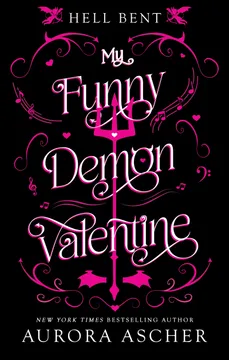
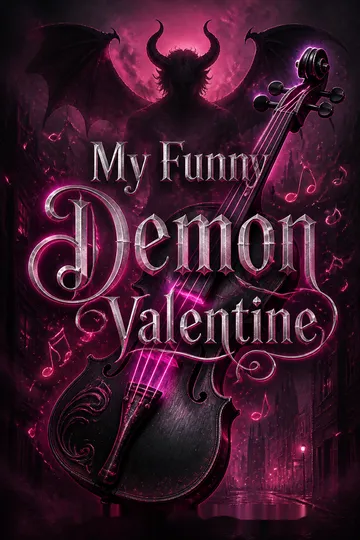
Asmodeus, known as Ash, has escaped Hell with three demon brothers, but freedom has not lifted the curse that leaves him numb to most sensations and invisible to potential lovers. At a Montreal nightclub, he waits apart while his brothers chase human company. A violinist named Eva takes the stage, layering live strings over electronic beats.
Ash listens as if the music has opened a door in his long, muted existence. After the set, Eva crosses the crowd and addresses him directly, first thanking him for paying attention, then inviting him to a jazz club. She finds him striking; he cannot understand why she is attracted to him. Their unlikely connection begins with a simple fact: Eva sees what everyone else misses.
The opening makes Ash’s curse more than a romantic obstacle. It has separated him from ordinary sensation and from the social recognition that his former identity as a lust demon should guarantee. Eva’s attention therefore carries two meanings: desire, and evidence that the world may not be as sealed off from him as he believes. Music is the first force to reach him without manipulation or appetite. Eva, meanwhile, approaches from confidence and curiosity, not supernatural knowledge. Their meeting begins as an asymmetry of perception: she recognizes his beauty, while he experiences recognition itself as almost unbelievable.
Bullets, Wings, and Ash
Before Eva and Ash can leave the club together, gunfire scatters the crowd. Ash shields Eva, takes bullets without stopping, and carries her outside with impossible speed. He then returns to find his brothers, leaving Eva convinced he is badly wounded. She goes back into the emptied club and sees the truth: Ash and his brothers have taken monstrous forms, complete with wings, while they face a gargoyle sent to drag them back to Hell.
Ash kills it, and Belial burns its remains to ash. The brothers escape through a hidden exit before police can question them. Eva gives no account of the creatures in her statement, but she cannot dismiss what she saw. The night that began with attraction ends with a secret she cannot explain.
The shooting converts a flirtation into a test of action. Ash’s decision to return for his brothers, even after protecting Eva, shows that his escape has not loosened his responsibility toward them. Eva’s choice to reenter the club matters just as much: fear does not prevent her from searching for the man who saved her. Her glimpse of the supernatural is not a revelation she can readily accept; she protects herself by withholding it from police and later questions her own mind. The brothers’ escape remains precarious, and the scene establishes that Earth offers them refuge only so long as Hell cannot find them.
Jazz, Questions, and Desire
Unable to stop replaying the club shooting, Eva calls her open-minded mother, Jacqui, who advises her to meet Ash in public and test his story. When Ash calls, Eva brings him to Bootleg, where she questions his missing family history and learns that his senses are impaired. He avoids explaining why. Eva plays flute with the jazz musicians, then persuades Ash to join her at the piano.
Their improvised duet leaves them exhilarated, and they leave together. At her apartment, their attraction turns into a night of sex, followed by more music and another encounter on her grand piano. Eva inspects his hands, back, wallet, and phone while he sleeps, finding no proof of wings, but his evasions deepen her suspicion even as intimacy grows.
Eva’s investigation is a practical response to an experience that threatens her confidence in her own perception. Yet the date complicates the tidy division between evidence and desire: Ash is evasive, but he is also attentive to her music and unusually candid about his sensory limitations. Their duet gives them a form of intimacy that neither can produce through conversation alone. Eva’s snooping reveals how fear can turn closeness into surveillance, while Ash’s openness about bodily difference invites care without explaining its cause. Their sexual connection arrives before trust has caught up, creating the central tension between what Eva feels and what she can safely believe.
The Curse Loses Its Grip
A week later, Ash returns to Bootleg with Belial, Mephistopheles, and Raum. Eva introduces him to her best friend, Skye, who barely registers him until he plays piano onstage. As he and Eva perform with the house musicians, the curse that makes women overlook him briefly falters. After the set, women approach Ash, touch his hair, and openly flirt.
Instead of enjoying the attention he has been denied for centuries, he panics and searches for Eva. She kisses him, calms him, and takes him home. Meanwhile, Belial meets Skye and, prompted by her effort to abstain from sex, vows to avoid women for six months. Eva sees that music has changed how others perceive Ash, but she does not yet know why.
The curse’s temporary failure reverses Ash’s expected reward. He has spent millennia wanting to be noticed, yet when attention arrives, it feels invasive rather than liberating. His relief at finding Eva shows that desire has become particular, not merely an appetite for any available partner. The scene also makes music consequential: performance changes Ash’s social visibility, suggesting that creative expression can alter the supernatural condition imposed on him. Belial’s vow introduces a parallel struggle with self-command. Both demons begin to imagine that life on Earth might involve chosen limits, not simply the indulgence or domination their former roles encouraged.
Mist Enters Eva’s Home
After a night together, Eva’s father, Dan, calls in alarm and demands that she avoid Ash, but he refuses to explain why. Moments later, a winged, gray-skinned demon appears in her apartment. The creature, Mishetsumephtai, called Mist, reveals that he tracked Ash to Eva’s home and has been waiting for him.
Ash refuses to return to Hell and fights Mist while Eva watches their hidden forms become undeniable. Their battle crashes through her window; Ash drives Mist away, then returns injured and insists they flee.
Eva takes her cat, Thelonious, and a bag of clothes, choosing Ash over the danger Mist may bring back. The broken apartment window becomes the immediate cost of her choice, while Dan’s warning begins to look less like overprotectiveness than foreknowledge.
Mist’s arrival collapses the distance Eva has tried to keep between her memories and reality. Ash no longer has the option of letting her remain uncertain, and Eva’s choice to leave is made under pressure rather than romantic fantasy. Her insistence on bringing Thelonious gives the escape a grounding detail: even amid a supernatural crisis, she protects the familiar life she has built. Dan’s warning gains significance only after Mist arrives, making the family’s silence another source of danger. The broken window marks a boundary violated twice, by the demons’ fight and by Eva’s forced entry into a world that had been hidden from her.
Blood Opens the Escape Route
Driving Eva to the brothers’ warded apartment, Ash explains that he and his brothers fled Hell because they no longer wanted to serve its rules. He also reveals why Raphael cursed him: Ash once helped tempt a woman, then killed an entire village when its men attacked him. The curse stripped away his senses and made potential partners overlook him.
At the apartment, Belial learns Mist has found them and erupts in fury. Ash collapses from his wounds, and Eva offers her blood to help him heal. Once he recovers, the brothers learn their refuge has failed. To travel through a hellgate, Eva must drink demon blood, so she swallows Ash’s blood despite her revulsion. Belial secures a destination through Eva’s mother, Jacqui.
Ash’s confession refuses to turn his past into a clean redemption story. He explains the curse as punishment for real violence, while also admitting that his current desire to escape comes from rejecting a life built around coercion. Eva’s blood donation and later decision to drink Ash’s blood are acts of trust, but they occur before she knows their full consequences. Blood functions as both bodily vulnerability and magical passage. Belial’s volatile anger makes the group’s dependence on his leadership uneasy, while his resourcefulness keeps them moving. The escape plan solves an immediate threat by binding Eva more deeply to the supernatural world she has only just discovered.
Jacqui Opens the Gate
While the demons prepare to leave Montreal, Jacqui finds Dan’s occult books and sketches bearing the demons’ names. She contacts Eva, who confirms the supernatural is real and explains why the group needs refuge. Jacqui agrees to draw a gate sigil at her Vancouver Island home. Eva drinks Ash’s blood so she can cross the gate, and the journey carries them briefly through a terrifying landscape of Hell before they arrive at the family property.
Jacqui welcomes her daughter and the four demons, despite her shock. Belial and the others settle into the artists’ home, while Eva and Ash play together in the studio. Unbeknownst to them, Dan has trapped Mist in Eva’s Montreal apartment and is preparing to confront the fugitives himself.
Jacqui’s response contrasts with Dan’s secrecy: she treats Eva’s account as information requiring action, not as a reason to dismiss her. The journey through Hell makes the demons’ escape emotionally legible to Eva, rather than merely an abstract rebellion. At the same time, her parents’ home is not a neutral sanctuary. Jacqui has occult knowledge without understanding its full implications, while Dan’s private preparations point to a history he has kept from his family. The warm domestic setting gives the approaching confrontation sharper stakes. Music briefly restores intimacy between Eva and Ash, but the danger has crossed provincial distance with them.
The Grigori’s Ambush
Dan attacks Ash with a sword as Eva and Ash play music in the studio. Ash shifts into demon form and tries to protect her, but Dan lures him into a binding sigil and handcuffs Eva to a staircase. At the studio entrance, Dan has also trapped the demons inside with powerful wards. When Mephistopheles tries to negotiate, Dan throws a consecrated knife into his chest.
The blade burns Meph from within, and Belial’s rage breaks loose, filling the building with hellfire as Raum struggles to remove the weapon. Jacqui punches Dan, escapes his hold, and reaches Meph. She tears the knife free, stopping the immediate torment. Meanwhile, Eva’s fear and fury awaken a strength she did not know she possessed, and she breaks the banister to free herself.
The ambush turns family protection into a conflict over who has the right to decide what safety means. Dan acts from fear, but his secretive methods reproduce the coercion he claims to oppose. Meph’s attempt to negotiate exposes the cost of treating these demons as irredeemable threats: the first move toward peace is answered with a weapon meant to kill. Jacqui’s punch and rescue of Meph are decisive actions, not passive mediation. Eva’s emerging strength also begins as refusal. She breaks what physically restrains her before she understands what her power means, making self-knowledge inseparable from resistance.
Eva Claims Her Blood
Eva reaches Ash and helps him escape his sigil, then returns with him to the burning studio. Dan reveals that he is a fallen angel and had hidden Eva’s angelic ancestry beneath a binding spell. Because Eva drank Ash’s blood and he drank hers within the required period, that protection has broken: she is Nephilim, a being hunted for her blood.
Her newly awakened power heals Ash, Meph, and Raum. When Dan threatens Ash, Eva protects him and demands that the demons help her understand and defend herself. Ash finally names his attachment as love, and Eva answers in kind. The admission overwhelms Ash, who passes out. The immediate battle ends, but Eva’s identity and safety can no longer be restored to the life her father arranged.
The blood exchange transforms a practical act of care into an irreversible revelation. Dan’s protection had preserved Eva’s ordinary life, but it also deprived her of knowledge and agency. Her power becomes visible precisely when she refuses to let others decide who may be harmed in her name. She does not simply accept Ash’s protection; she offers reciprocal protection and makes a bargain on her own terms. The love confession matters because it follows conflict over truth, commitment, and choice, not because affection erases danger. Ash’s collapse underscores how unfamiliar love is to him, while Eva’s awakening gives her a selfhood that safety through ignorance could never provide.
Dan Leaves the House
After the fighting, Dan explains that he bound Eva’s powers when she was a child to hide her from those who hunt Nephilim. The demons’ blood exchange has permanently broken the spell, and he cannot replace it. He also warns that using her new powers may expose her location. Later, Dan tells Jacqui the truth about his identity, his immortality, and the decades of concealment behind their marriage.
Jacqui cannot immediately accept that the man she loves has withheld so much, especially when she understands that she will age while he will not. Dan leaves rather than force forgiveness. Before departing, he asks Ash to protect Eva and tells him where Mist remains trapped in Montreal. The family gains honesty, but not an easy reconciliation.
Dan’s secret was meant to protect his wife and daughter, yet its consequence is a loss of trust precisely when they most need to act together. Jacqui’s hurt is not simply shock at the supernatural; she must reassess the time, intimacy, and future she believed she shared with an immortal partner. Dan recognizes that explanation cannot undo the choice to conceal. His departure avoids demanding immediate absolution, though it also leaves Jacqui alone with the consequences. By entrusting Eva to Ash, Dan acknowledges the demon’s care without absolving him or himself. The separation keeps the family plot emotionally unresolved even as the immediate threat recedes.
Mist Chooses a New Life
Back in Montreal, the group finds Eva’s apartment repaired and mysteriously restored. Dan’s binding sigil still holds Mist, but a smudged line has allowed him to escape; he has been living in the apartment and even arranged for the window to be fixed. When he sees Eva, he recognizes her as Nephilim.
Rather than alert Hell, Mist asks to remain on Earth and learn how to form a relationship with a human. He admits that watching Ash care for Eva stirred his curiosity. The brothers debate whether he can be trusted, then propose a blood contract to prevent betrayal. Eva agrees, but insists Mist learn that humans are equals, not possessions, and practice a human form. The Hunter accepts her terms.
Mist’s request reframes the antagonist as someone constrained by a role he has never questioned, yet his wish to imitate Ash begins in a troubling idea of humans as pets. Eva’s intervention matters because she neither dismisses his longing nor accepts its hierarchy. She requires a change in how he understands other people before offering help. The blood contract translates trust into a concrete safeguard, reflecting the demons’ limited vocabulary for ethical commitment. Mist’s choice does not erase the danger he represents; it makes his potential for change conditional on practice, accountability, and recognizing human agency.
A Home Beyond Hell
A few days later, Ash plays piano at Eva’s apartment and realizes his curse has lifted without a performance. Thinking about his love for her has restored color, smell, and sensation. The discovery gives him a path toward freedom that does not depend solely on music.
Belial plans to rent another apartment in Eva’s building with the other demons, while Ash asks whether he can live with Eva. She welcomes him, and the two commit to sharing a home rather than treating their relationship as a temporary refuge.
They remain surrounded by threats and unfinished questions, but the ending gives them a chosen household: Eva, Ash, her cat, and the unruly family of demons close enough to help. Ash’s escape from Hell becomes the beginning of a life built by choice.
The resolution answers the opening’s deprivation with more than restored senses. Ash first becomes visible through Eva’s attention and music; now love itself loosens the curse, linking recognition to a transformation he could not force through appetite or power. The move into Eva’s home makes commitment material: shared space replaces a series of secret meetings and emergency escapes. The other demons’ decision to live nearby preserves the story’s comic, crowded family texture while making care a collective practice. This is not a victory over every supernatural institution. It is a more modest and consequential achievement: the characters create a home in which none of them has to pretend to be alone.
Analysis
My Funny Demon Valentine uses paranormal romance to ask whether identity is destiny or a habit sustained by institutions. Ash has been defined by Hell as a lust demon, punished by Raphael for violence, and then left in a curse that makes intimacy nearly impossible. His escape does not erase what he has done; instead, Eva’s questions require him to live beside the consequences without reducing himself to them. Music becomes a practical alternative to Hell’s fixed categories: when Ash plays with Eva, the curse loosens, suggesting that creative collaboration makes room for capacities his demonic role cannot name.
The book also distinguishes protection from control. Dan hides Eva’s heritage to keep her safe, but his secrecy denies her knowledge of her own body and leaves her unprepared when danger arrives. Ash initially withholds the truth for similar reasons, and Eva’s insistence on honesty becomes a condition of their relationship. Her choice to exchange blood and use her new power is not passive devotion. She negotiates reciprocal protection and accepts risk because self-knowledge matters to her as much as survival.
Family appears in several forms: the brothers’ chosen pact, Eva’s affectionate bond with Jacqui, and the marriage damaged by Dan’s concealment. These relationships resist easy moral sorting. Belial’s rage is dangerous, yet he tries to build a gentler life through cooking; Mist enforces the rules but begins to question them; Dan loves his family and still harms them through unilateral decisions. The ending does not cure every conflict or guarantee safety. It offers a provisional alternative: a household formed through consent, honesty, shared art, and the difficult work of treating others as equals.
Review Summary
My Funny Demon Valentine receives overwhelmingly positive reviews, averaging 3.78/5 stars. Readers praise its humor, steam, and heartfelt romance between cursed demon Ash and musician Eva. Many highlight the entertaining brotherly banter among the four demons and Eva's mother as a standout character. The unique premise, strong characterization, and fast pacing are frequently celebrated. A few critics cite issues with writing quality, editing, and uncomfortable implications around consent. Overall, most readers eagerly anticipate future installments in the Hell Bent series.
People Also Read



Characters
Eva Gregory
Musician with sharp instinctsEva is a Montreal musician and DJ whose violin, flute, and piano are not hobbies but ways of understanding the world. Curious and direct, she asks questions even when the answers frighten her, and her humor helps her stay oriented when reality breaks open. Her attraction to Ash begins with his attention to her performance, but she does not let chemistry silence her need for honesty. She is close to her unconventional parents and fiercely attached to her cat, Thelonious. Eva’s defining strength is not fearlessness; she is often scared, yet continues to choose, investigate, and care. Her artistic confidence and emotional candor make her a natural counterweight to Ash’s guardedness.
Asmodeus, Ash
Cursed demon pianistAsh is an ancient demon who has spent an immense stretch of time cut off from ordinary sensation and romantic recognition. His curse has made him withdrawn, sardonic, and unsure how to navigate human closeness, although his loyalty to his demon brothers gives him a practical, protective center. Music reaches him where other pleasures cannot, and playing with Eva exposes a capacity for joy he has nearly stopped expecting. Ash is blunt about his history but initially evasive about his nature, partly from caution and partly because he has no experience building trust. Beneath his intimidating strength is a person learning how to identify his own feelings and accept that care can be mutual.
Belial
Fugitive demon cookBelial is a towering, powerful demon and the informal leader of the brothers. His instinct is to protect the group, but his enormous strength and volatile temper make that role dangerous when he loses control. Cooking gives him a constructive outlet and reveals a gentler, more domestic side that sits uneasily beside his fearsome reputation. Belial is not simply a tyrant or a benevolent guardian; he is trying to build a different life while carrying habits shaped by Hell. His loyalty is fierce, and he expects his brothers to survive even when his methods make them walk carefully around him.
Jacqui Gregory
Open-minded artist and motherJacqui is Eva’s loving, unconventional mother, a successful artist whose openness to the occult makes her a calm first confidante when Eva questions what she saw. She trusts her daughter enough to take an impossible account seriously, then acts to help rather than dismiss it. Jacqui is warm and curious, but not naïve: she notices that the people around her carry secrets and asks for explanations. Her creativity gives her a language for interpreting the demons’ struggle to change, while her marriage and family are central to her sense of home. She balances hospitality with perceptiveness, offering care without surrendering her own judgment.
Dan Gregory
Protective father with secretsDan is Eva’s devoted father, an artist with a serious interest in occult knowledge. His protectiveness is intense, and he tends to act first when he believes his family is in danger. That instinct gives him resolve but also makes him secretive and controlling, particularly when fear persuades him that others cannot be trusted with the truth. Dan’s private knowledge of the supernatural sits in tension with the ordinary family life he has built with Jacqui and Eva. He is intelligent, prepared, and capable of tenderness, yet his desire to prevent harm can blind him to the harm caused by withholding agency from the people he loves.
Raum
Brooding demon with a soft spotRaum is one of Ash’s demon brothers, a muscular, quiet presence with golden eyes and a habitual scowl. He is less talkative than Meph and less explosive than Belial, often taking the practical role of watching the room and managing a crisis. Beneath his reserve, he is gentle with animals and capable of careful kindness. Raum’s steadiness makes him useful when the others are arguing or injured, though he rarely explains what lies behind his guarded manner.
Mephistopheles, Meph
Tattooed chaos brotherMeph is the youngest of the demon brothers, heavily tattooed, pierced, irreverent, and almost always ready with a joke. His humor can aggravate his family, but it also helps puncture fear and keep tense situations from becoming unbearable. He is impulsive and physically imposing, yet more vulnerable than his clowning suggests. Meph has endured enough to make self-destruction a genuine risk, and his tattoos function as a way to channel that impulse into chosen expression. He is loyal to his brothers, even when his loyalty arrives wrapped in teasing and bad timing.
Mishetsumephtai, Mist
Hell’s relentless HunterMist is a formidable demon tracker whose unusual ability to dissolve into vapor makes him difficult to escape. He takes orders and rules seriously, approaching his work with the focus of someone who believes duty is the only stable purpose available. His encounters with Ash and Eva unsettle that certainty, drawing his attention toward forms of connection he has never experienced. Mist is observant, literal, and socially inexperienced; he often interprets human relationships through the language of ownership and hierarchy. That unfamiliarity makes him both dangerous and capable of change, provided he learns to see people as individuals rather than extensions of his desires.
Skye
Eva’s impulsive best friendSkye is Eva’s beautiful, outspoken best friend, known for an appetite for sex and a recurring hope that casual encounters might become lasting love. Her impulsiveness is a source of affection and frustration for Eva, who often tries to steer her toward better boundaries. Skye is not merely comic relief: she recognizes her own habits and makes a serious effort to change them. Her encounter with Belial gives her a new challenge, while her frankness also forces him to consider self-control.
Naiamah
Belial’s dangerous former loverNaiamah is a powerful succubus with an old bargain binding her service to Belial. She is seductive, calculating, and adept at identifying the vulnerabilities others would rather conceal. Their history makes her useful to him and emotionally dangerous at the same time. Naiamah understands how desire, shame, and dependence can become forms of leverage, and she has little interest in pretending otherwise.
Thelonious
Eva’s discerning catThelonious is Eva’s gray cat and familiar companion in her Montreal apartment. He reacts warily to most demons, making his responses an amusing counterpoint to Eva’s attraction and curiosity. His comfort with Raum hints at the demon’s gentler instincts, while his presence keeps Eva connected to her everyday home even when supernatural danger forces her to leave it.
Plot Devices
Ash’s sensory curse
Isolation made visibleRaphael’s curse strips Ash of color, taste, smell, and much of his ability to feel, while making him register as uninteresting to potential sexual partners. It turns his former role as a lust demon into a prolonged experience of exclusion. Eva’s ability to see and desire him establishes their connection, while the curse’s temporary changes during musical performance suggest that Ash’s condition is not immutable. Its eventual response to love gives the romance a supernatural mechanism, but also makes emotional recognition materially consequential.
Nephilim blood
Power at a priceNephilim blood can conceal demons from tracking and allow a human to pass through a hellgate. Its use connects several otherwise separate dangers: the brothers’ need to hide, Eva’s journey to her mother’s home, and the discovery of her ancestry. The exchange between Ash and Eva has consequences beyond the characters’ immediate intentions, because blood serves as a catalyst in the binding that has concealed her nature. It represents care and trust, but also makes Eva valuable to forces that would exploit her.
Music as revelation
Art interrupts the curseEva’s violin and Ash’s piano create the first bond between them and repeatedly draw Ash out of his numb isolation. Their performances do more than deepen attraction: when Ash plays, the curse that makes him invisible briefly weakens, allowing others to notice him. Music also gives them a form of communication that precedes their ability to speak honestly about trust and love. The story treats artistic expression as an action with supernatural effects, linking creativity to the characters’ capacity to change rather than using it as atmosphere alone.
Sigils and hellgates
Magic makes refuge conditionalDemons use Sheolic sigils to ward spaces, summon or bind beings, and travel through hellgates. The wards protect the brothers in their Montreal apartment but do not solve the problem of leaving safely. Gates require a matching sigil at the destination, so escape depends on someone trustworthy beyond the group. Dan’s binding sigils later turn the same symbolic system into a weapon, trapping both Mist and Ash. Magic therefore works through preparation and knowledge, but a single broken line or hidden design can reverse who is protected and who is trapped.
The blood pact
Chosen family, made bindingAsh and the demons call one another brothers because they made a pact of shared blood and loyalty rather than relying on biological kinship. The arrangement gives their escape from Hell an emotional foundation: they protect one another even when their tempers, habits, and fears make living together difficult. Blood pacts also echo the story’s other exchanges, where bodily ties create practical obligations and magical consequences. Unlike a family bond imposed by birth, this one begins as a chosen promise, though the group still has to learn how to honor it without controlling one another.
Hell Bent Series

Download PDF
Download EPUB
.epub digital book format is ideal for reading ebooks on phones, tablets, and e-readers.








