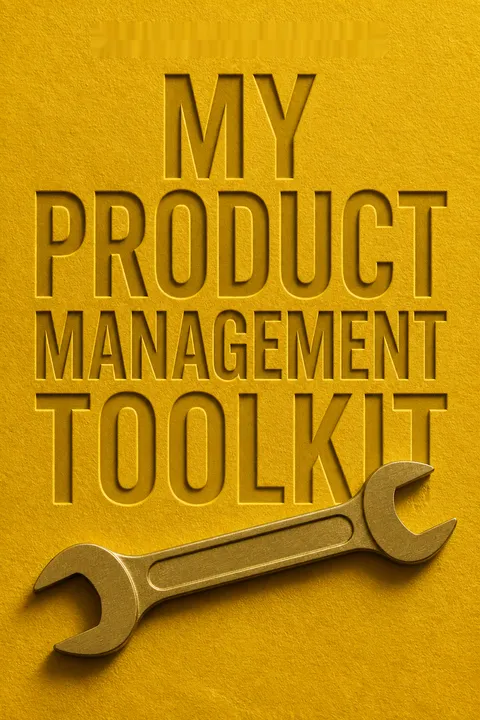


Key Takeaways
Treat products as evolving promises, not projects that end at launch.
Products keep changing. A physical item, a digital tool, or a service can be a product when it creates value for customers. A hammer is an object; using someone else to hammer for you is a service. Product managers work across customer experience, business needs, and technical possibilities to help create that value.
Think beyond delivery. Projects typically have a defined scope, budget, and end date. Products keep evolving until they are retired. The iPod, for example, changed through successive versions from its 2001 launch to its discontinuation in 2013. Product management means taking responsibility for a product’s direction and performance across that life, not merely delivering a launch.
The distinction between product and project is more than a naming preference. It changes what counts as success: delivery is an event, while customer value is an ongoing outcome. This resembles systems thinking, where an intervention must be assessed through its effects over time, not only by whether it was implemented. The product manager’s broad accountability can sound like executive authority, but the role often lacks the power to command every contributor. That tension makes clear goals, evidence, and relationships essential parts of the work, rather than optional soft skills.
Start with a customer problem, then balance value, business, and feasibility.
Features are not value. A product may contain many functions and still feel incoherent if they do not work together or address a meaningful need. The book contrasts an awkward palm gesture for capturing a phone screen with Amazon’s wish list, which helps customers remember books and share gift ideas. The feature matters only insofar as it improves the larger experience.
Resist build mode. The build trap is a pattern in which teams measure progress by what they ship while neglecting why it should exist. A product manager helps discover a solution that customers can use, the business can sustain, and the technology can support. Start by naming the customer problem and asking why it matters before debating features.
This approach aligns product work with the distinction between outputs and outcomes. A shipped feature is an output; a customer task made easier is an outcome. That distinction helps teams avoid mistaking activity for impact. It also prevents customer focus from becoming literal obedience: customers can describe frustrations or request features without knowing the best remedy. The product manager’s task is to interpret evidence and make trade-offs, not to turn every request into a specification. The three-way balance is productive precisely because no single perspective can define a good product alone.
Study what customers do, not only what they say they want.
Learn continuously. Customer discovery means repeatedly investigating who uses a product, what they need, and how their circumstances change. Segments and personas can help teams describe their audience, but they become misleading when invented from assumptions and never checked against real people. A problem statement, written around a person’s need and the reason it matters, gives a team focus without prescribing a solution.
Find the job beneath the request. The jobs-to-be-done framework asks what progress a customer is trying to make, and what gets in the way. A company once invited customers to vote for an API, only to discover that some voters misunderstood the term and expected a tool for managing orders. Interviews, observation, and prototype use can reveal such gaps. Five conversations may expose recurring themes, but they are not proof of how an entire market behaves.
The contrast between stated preference and observed behavior is central to sound research. Memory, social pressure, and unfamiliar terminology can all distort what people report, so observing a task can provide context that a survey cannot. The jobs lens is especially useful because it shifts attention from customer categories to the situation and desired progress. Still, qualitative interviews are best at revealing mechanisms and possible explanations, not estimating prevalence. Teams need to pair rich stories with broader evidence when the decision depends on how common a need is.
Give the team a north star before debating features or interfaces.
Separate direction from tactics. A product vision describes the purpose and future the product is aiming toward. It is not a detailed plan for getting there. IKEA’s commitment to making useful home furnishings affordable, for instance, shapes product decisions without dictating every design choice. A useful vision is concise, connected to company values, grounded in customer needs, and strong enough to guide trade-offs.
Tell the customer story. Before building, write a short account of the problem, the customer benefit, and what makes the proposed product different. Amazon’s internal press release practice does this by describing the finished product from the customer’s perspective, then working backward. Assess the opportunity too: check the market, alternatives, timing, likely customer demand, and how the product could reach its users. A compelling story is a starting point for scrutiny, not evidence of demand.
A shared vision reduces coordination costs: people in design, engineering, sales, and leadership can make local decisions that point in the same direction. The customer-facing press release also acts as a test of clarity. If the benefit is difficult to explain, the team may not yet understand the problem. But persuasive language can create false confidence. A polished narrative is not market validation, so vision and storytelling work best when they organize inquiry rather than replace it.
Test the riskiest assumption with the smallest useful experiment.
Learn before committing. A prototype is a quick representation of a product idea, used to explore problems or test a proposed solution. A minimum viable product, or MVP, goes further: it should provide genuine customer value while testing an important assumption. It is not a license to ship a broken or unpleasant experience. A simple scooter can provide useful transport before a fully featured bicycle; one missing wheel cannot.
Let evidence change direction. Airbnb’s founders began by hosting guests in their own apartment, a small test of whether people would pay for that kind of accommodation. The author’s HipHopListings app took a different path: roughly 100 people downloaded it, use remained low, and about half of the initial users uninstalled it within a month. The evidence did not justify continuing, so the app was retired. A pivot changes direction while preserving useful learning; perseverance should also depend on evidence.
Small experiments reduce the cost of being wrong, a principle shared with scientific inquiry and staged investment. The essential design question is not simply how little can be built, but what uncertainty the experiment can resolve and whether participants receive something usable. Early tests can mislead if they measure curiosity rather than sustained behavior, or if the recruited users differ from the intended market. Good experimentation therefore specifies a learning goal in advance and treats results as evidence with limits, not as automatic instructions.
Own the what and why, then build the how with your team.
Stay close to the work. Product managers are accountable for what a product is trying to achieve and why. The how is developed with designers and engineers, who bring expertise the product manager should not replace. This does not mean standing back from daily decisions. Product managers help teams understand the customer outcome, challenge assumptions, and discuss how a design or technical choice supports the goal.
Turn direction into shared work. Story mapping organizes a customer journey from broad activities into smaller tasks, helping a team see both the overall experience and what matters first. User stories describe a user’s goal and its benefit; acceptance scenarios spell out conditions that make the result testable, including ordinary paths and edge cases. These are prompts for collaboration, not documents to throw over a wall. The conversation around the work is part of the work.
This division of responsibility avoids two familiar failures: the product manager dictating implementation without technical understanding, and the team building efficiently without a shared reason. It also reflects distributed expertise: good decisions often emerge through discussion among people who hold different pieces of the problem. Written requirements can preserve decisions and expose ambiguity, but they cannot substitute for conversation. When story maps or acceptance criteria become paperwork detached from customer outcomes, the method has survived while its purpose has disappeared.
Make trade-offs visible so saying no protects the product's direction.
Choose deliberately. Prioritization is not a contest to fit in the most work. MoSCoW sorts requirements into essential, important, desirable, and excluded for now. A value-versus-risk comparison adds another question: what is gained, and what could go wrong? Story maps can show how individual tasks fit into the larger customer journey, making it easier to compare requests against the outcome the team is pursuing.
Explain the refusal. A product manager who accepts every request risks becoming a product janitor, absorbing leftover tasks while losing time for strategy and customer learning. Instead of dismissing a stakeholder’s feature request, make the costs and alternatives clear. A custom feature for one client might generate near-term revenue but create maintenance costs and delay other work. A small test, a later slot, or a different implementation can offer a constructive alternative. Do not promise “later” if the work is unlikely to happen.
Saying no is often described as an individual courage problem, but it is also a governance problem. Transparent criteria make prioritization less dependent on whoever has the loudest voice or highest status. Explicit trade-offs can turn conflict into a discussion about shared goals and opportunity cost. Yet a framework cannot eliminate politics, and a neat scoring system may hide uncertain assumptions. The best use of prioritization tools is to make reasoning inspectable, then allow informed disagreement rather than pretending the ranking is mathematically inevitable.
Use data as evidence, not as a substitute for judgment.
Combine kinds of evidence. Quantitative measures can show what users do, such as downloads, conversion, or retention. Qualitative research can help explain why a measure changed. If an app’s downloads fall, store statistics identify the decline, but customer conversations may reveal what is discouraging people. A data-driven process lets a chosen metric strongly govern decisions; a data-informed process considers data alongside strategy, user experience, technology, regulation, and judgment.
Read metrics in context. A 3 percent conversion rate means little without a comparison point. Seasonal demand, the frequency of the customer’s need, and relevant industry or historical benchmarks can change its interpretation. Data are especially useful for testing assumptions and tracking whether a product change produces a desired outcome. They do not remove uncertainty, and a metric should not be mistaken for the full value of a product.
The distinction between data-driven and data-informed is crucial because measurement is selective: teams choose what to count, over what period, and for which users. A metric can sharpen attention while narrowing it. This is a version of Goodhart’s law: when a measure becomes a target, people may optimize the measure rather than the underlying goal. Qualitative evidence helps restore meaning, while quantitative evidence can challenge vivid but unrepresentative anecdotes. Strong decisions use both, and make the assumptions behind each visible.
Retire confusing, unwanted features as carefully as you launch them.
Notice when value has faded. A feature may be ready to retire when customers stop using it, the product becomes confusing from accumulated functions, revenue or margins deteriorate, or nobody can explain why the feature exists. Old, unused functions can become zombie features: still present, but disconnected from the product’s current purpose. Removing them can restore clarity and reduce support and maintenance costs.
Close responsibly. Retirement affects users and other systems, so it needs planning. Check contractual commitments, communicate timelines, prepare customer support, identify dependencies, and offer migration or data-export options where possible. The music service This Is My Jam did not simply disappear: users could still access saved tracks and descriptions, and had a period to export information. Ending a product is part of product management, not an administrative afterthought.
Product retirement is a useful corrective to the assumption that innovation always means adding. In software, each retained feature can impose cognitive, technical, and support costs, even when few people use it. But low usage alone is not a sufficient reason to remove something: a rarely used function may be essential to a smaller group or to a critical task. Usage data should be paired with customer impact and dependency checks. Thoughtful exits protect trust by recognizing that users have built routines and records around a product.
Influence without authority by listening before asking for commitment.
Treat product work as human work. Product managers depend on sales, leadership, customers, designers, engineers, and compliance colleagues, often without authority over them. The author recounts joining a company with strong opinions, dismissing existing practices, and alienating colleagues before understanding their reasoning. Shared goals can unite people who otherwise focus on separate teams or customers, as happened when travel product groups aligned around common traveler problems.
Understand what people value. Active listening means attending to both the words and the speaker’s meaning before responding. Reflective listening checks that meaning rather than merely repeating a sentence. The Cohen-Bradford model of influence adds that cooperation often depends on an exchange: a colleague may value recognition, information, support, challenge, or a chance to shape the work. Understanding those priorities can make requests collaborative rather than coercive.
Influence through listening has a strong basis in organizational behavior: people are more likely to engage when their concerns are understood and their contribution is respected. The idea of exchange is useful when authority is distributed, but it should not become a technique for manipulating colleagues by identifying and exploiting their preferences. A healthier interpretation is reciprocal: make the shared objective clear, learn what each person needs to contribute, and offer support honestly. The product manager still has to challenge decisions, but listening improves the accuracy and legitimacy of that challenge.
Analysis
This book is best understood as a field guide to product judgment, not a grand theory of product creation. Its practical tools address recurring uncertainties: which customer matters, what problem deserves attention, whether a proposed solution works, what to build next, and how to enlist people who do not report to the product manager. The organizing logic is a cycle of inquiry and action. Define a direction, investigate customer behavior, make a limited intervention, measure consequences, and revise the product or the belief behind it.
The strongest contribution is the insistence that product management is neither feature administration nor miniature executive rule. The product manager is responsible for direction and outcomes but relies on specialists and stakeholders to shape implementation. That makes curiosity and communication operational skills, not personality extras. The book’s stories make this tangible: misunderstanding what customers meant by an API, the author’s low-usage app, and the difficult arrival at a new organization each show how confidence can outrun understanding.
The toolkit’s breadth is also its limitation. Frameworks can structure attention, but they cannot guarantee good evidence or resolve conflicts among customer benefit, commercial viability, and technical constraints. Interviews may expose a problem without measuring its prevalence; metrics can clarify behavior while obscuring motives; a vision can align a team while hardening into an untested assumption. The best reading is therefore experimental rather than prescriptive. Use each method to make a decision more explicit, identify what remains unknown, and choose the next useful test. Outstanding product management is not mastery of a fixed checklist. It is disciplined adaptation across a product’s life, with customer value as the anchor and evidence as a guide, not an oracle.
Review Summary
My Product Management Toolkit receives positive reviews, with an average rating of 4.13/5. Readers appreciate its structured approach, practical tools, and techniques for both novice and experienced product managers. The book offers a comprehensive overview of product management, drawing from well-known sources. Reviewers highlight its digestible format, valuable insights, and potential for further expansion. Some find it particularly useful for setting up new product management teams, while others value its recommendations for additional reading and professional development.
People Also Read





Glossary
Continuous discovery
Ongoing customer learningThe repeated process of learning about customers, their problems, and their behavior throughout a product’s life. It is not a one-time research phase before development. The purpose is to update a team’s understanding as customer needs and contexts change, and to use that learning to guide product decisions.
Jobs-to-be-done framework
Customer progress lensA way to understand customers by examining the progress they are trying to make in a particular situation. Rather than beginning with a requested feature or a demographic profile, the framework asks what task or outcome matters, what steps surround it, and what obstacles or existing alternatives shape the experience.
Problem statement
A focused user needA concise description of a particular person’s need and the insight explaining why that need matters. It helps a team agree on the problem, keeps attention on the customer, and leaves room to explore different solutions. A problem statement should describe the need, not disguise a preferred feature as a problem.
Product vision
Long-term product directionA concise description of the purpose and future direction of a product. A vision should connect to customer needs and company values, help people make decisions, and provide motivation. It differs from a strategy or roadmap, which describe approaches, choices, and steps for pursuing that direction.
Product opportunity assessment
Structured opportunity checkA method for deciding whether a customer or business problem is worth solving before selecting a solution. It examines the problem, intended customers, market size, competitors, timing, differentiation, route to market, success measures, and requirements. Comparing opportunities through shared questions makes prioritization more reasoned.
Build-measure-learn feedback loop
Iterative learning cycleA cycle in which a team builds a limited product change, measures what happens, and uses the result to learn and decide what to do next. Its purpose is not simply to ship frequently, but to test whether an intervention changes customer behavior or produces a desired outcome.
Minimum viable product
Smallest value-delivering productA limited version of a product designed to test important assumptions while delivering genuine value to customers. It should be usable and functional enough for the intended test. An MVP is not merely an incomplete first release, nor should it offer a poor experience in the name of speed.
Product janitor
Unfocused task collectorA product manager who becomes occupied with unwanted or miscellaneous tasks, or agrees to every request, leaving too little time for customer learning, product direction, and prioritization. The label warns that helpfulness without clear boundaries can reduce the role to maintaining other people’s backlogs.
Story mapping
Journey-based work planningA collaborative way to arrange product work around the activities and tasks a customer completes. Teams first outline the broad journey, then break it into smaller steps and decide what matters most. The map helps preserve the overall experience while making scope, priorities, and risks visible.
MoSCoW
Requirement priority categoriesA prioritization method that groups requirements as essential, important but not essential, desirable, or excluded for the current scope. It gives teams a shared language for discussing what must be included and what can wait, but it does not determine priorities automatically or replace judgment.
Cohen-Bradford model
Reciprocal influence approachA model for influencing people without relying on formal authority. It encourages a person to clarify the goal, understand what potential collaborators value, and consider a reciprocal exchange that supports the work. Possible currencies include information, recognition, assistance, challenge, and inclusion.
FAQ
1. What is "My Product Management Toolkit" by Marc Abraham about?
- Practical Product Management Guide: The book is a hands-on toolkit offering tools, techniques, and real-world advice for product managers at all levels, especially those with 1-2 years of experience.
- Focus on Day-to-Day Practice: It emphasizes practical, tactical aspects of product management, such as customer engagement, prioritization, and managing product life cycles.
- Supplement to Classic PM Books: Abraham positions his book as a supplement to foundational works like "Inspired" by Marty Cagan and "Lean Startup" by Eric Ries, focusing on actionable methods.
- Covers Full Product Lifecycle: The book walks through foundational concepts, customer research, product vision, prototyping, MVPs, day-to-day management, and people skills.
2. Why should I read "My Product Management Toolkit" by Marc Abraham?
- Real-World, Actionable Tools: The book is filled with practical tools and techniques that can be immediately applied to product management challenges.
- Focus on Continuous Learning: Abraham encourages readers to experiment, iterate, and learn from both successes and failures, reflecting the realities of modern product management.
- Addresses Common PM Challenges: It tackles issues like stakeholder management, saying no, prioritization, and balancing strategic with tactical work.
- Suitable for All Levels: While especially useful for early-career PMs, the book also offers value to experienced managers seeking to refresh or expand their toolkit.
3. What are the key takeaways from "My Product Management Toolkit" by Marc Abraham?
- Customer-Centric Mindset: Always start with understanding customer problems and needs before jumping to solutions.
- Iterative and Data-Informed Approach: Use build-measure-learn cycles, prototypes, and MVPs to validate assumptions and reduce risk.
- Balance Strategy and Execution: Product managers must own both the "what/why" (vision, goals) and collaborate on the "how" (execution with teams).
- Soft Skills Matter: Effective communication, active listening, and influencing without authority are as critical as technical skills.
4. How does Marc Abraham define the role of a product manager in "My Product Management Toolkit"?
- Intersection of Business, Tech, UX: Product managers operate at the crossroads of user experience, business needs, and technical feasibility.
- Accountable for Product Success: PMs are responsible for defining and delivering products that are valuable, usable, and feasible throughout their lifecycle.
- Not a Mini-CEO: Abraham dispels the myth that PMs are "mini-CEOs," emphasizing influence without authority and collaboration.
- Avoiding the "Product Janitor" Trap: Good PMs focus on strategy and customer value, not just cleaning up tasks others avoid.
5. What are the foundational concepts of product management according to "My Product Management Toolkit"?
- Product vs. Service: A product is a tangible output (physical or digital), while a service is the act of using or enabling the product.
- Value Creation: Products must deliver tangible value to customers, regardless of being digital or physical.
- Product vs. Project Management: Products evolve continuously and are never "done," unlike time-bound projects.
- Focus on Problems First: Start with customer problems and use problem statements to clarify what needs to be solved.
6. What traits make a good product manager according to Marc Abraham?
- Customer Focused: Engages with customers early and often to understand their needs and validate solutions.
- Value Driven: Strives to deliver both customer and business value, recognizing their interdependence.
- Curiosity and Learning: Constantly asks "why," uses the 5 Whys technique, and embraces iterative learning.
- Avoids Product Janitor Role: Maintains focus on vision and strategy, and is comfortable saying no when necessary.
7. How does "My Product Management Toolkit" recommend engaging with and learning from customers?
- Continuous Discovery: Customer research is an ongoing process, not a one-off activity.
- Segmentation and Personas: Use customer segmentation, personas, and empathy maps to understand who your customers are.
- Problem Statements and Jobs-to-be-Done: Identify and communicate customer problems and desired outcomes using structured frameworks.
- Cost-Effective Research: Conduct interviews, observations, and simple surveys—expensive research is not always necessary.
8. What frameworks and tools does Marc Abraham suggest for defining product vision and strategy?
- Product Vision Statements: Craft clear, concise vision statements that align with company values and provide direction.
- Storytelling and Press Releases: Use storytelling techniques and Amazon-style internal press releases to clarify product benefits and customer value.
- Trend Analysis: Apply tools like the Trend Canvas to assess market trends and their relevance to your product.
- Opportunity Assessment: Use structured templates (e.g., Marty Cagan’s) to evaluate and prioritize product opportunities before building.
9. How does "My Product Management Toolkit" approach prototyping, MVPs, and validating assumptions?
- Rapid Prototyping: Build low- or high-fidelity prototypes to quickly test assumptions and gather user feedback.
- Minimum Viable Product (MVP): Launch the smallest product that delivers real customer value and tests your riskiest assumptions.
- Hypothesis-Driven Development: Formulate measurable hypotheses and validate them through experiments and data.
- Iterate or Pivot: Use learnings from MVPs and prototypes to decide whether to persevere, iterate, or pivot.
10. What are the key day-to-day responsibilities and challenges for product managers in "My Product Management Toolkit"?
- Prioritization and Trade-Offs: Use methods like MoSCoW, value vs. risk, and story mapping to prioritize work and make tough decisions.
- Saying No: Develop strategies for constructively declining requests, focusing on transparency, cost-benefit analysis, and providing alternatives.
- Data-Informed Decisions: Combine quantitative and qualitative data to guide product choices, avoiding both analysis paralysis and gut-feel decisions.
- Writing User Stories: Collaboratively create clear, testable user stories and acceptance criteria to guide development.
11. How does Marc Abraham advise product managers to manage people and stakeholders?
- Collaboration is Key: Product management is a team sport, requiring close work with sales, developers, designers, compliance, and customers.
- Shared Goals: Use clear, SMART goals to align teams and drive effective collaboration.
- Active and Reflective Listening: Practice empathy, minimize biases, and truly understand others’ perspectives to build trust.
- Influence Without Authority: Apply the Cohen-Bradford model—trade in "currencies" valued by others to gain buy-in and cooperation.
12. What are the most memorable quotes from "My Product Management Toolkit" and what do they mean?
- "A great product isn’t just a collection of features. It’s how it all works together." (Marco Arment) – Emphasizes holistic product experience over feature lists.
- "We are not competitor-obsessed, we are customer-obsessed. We start with what the customer needs and we work backwards." (Jeff Bezos) – Highlights the importance of customer-centricity in product management.
- "Focusing is about saying NO." (Steve Jobs) – Underlines the necessity of prioritization and the discipline to decline distractions.
- "You are accountable for the what and why and jointly responsible for the how." (Marc Abraham) – Clarifies the PM’s role in setting direction and collaborating on execution.
- "Don’t talk, just listen. Empathy is a critical (soft) skill for any product manager." (Marc Abraham) – Stresses the value of listening and empathy in stakeholder management.
Download PDF
Download EPUB
.epub digital book format is ideal for reading ebooks on phones, tablets, and e-readers.








