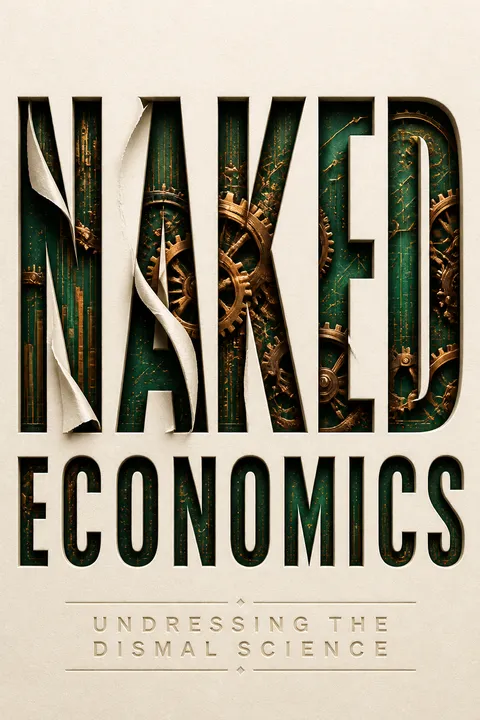


Key Takeaways
Let prices coordinate millions of choices, but never mistake demand for justice.
Coordination without a commander. When the Berlin Wall opened, Coca-Cola sent representatives to East Berlin with free drinks, betting that new customers would follow. No central planner had to organize factories, shops, or deliveries. Prices and the pursuit of profit help coordinate those decisions, directing resources toward what people want and helping raise productivity. The result can be remarkable: a color television that once cost an average worker 174 hours of pay later cost about 23.
But markets are amoral. Prices reflect willingness and ability to pay, not human need. A dog bakery can sell expensive pet cakes while people sleep outside. Markets can generate abundance, but they do not decide how its benefits should be shared.
The market’s coordinating power is easiest to see in ordinary abundance: products appear where buyers want them without a single authority mapping every step. That insight also clarifies why market outcomes cannot settle moral questions. A price is evidence of effective demand, not a referendum on worth. The important distinction is between using prices to coordinate production and treating the resulting distribution as ethically self-justifying.
Write incentives into the rules, or people will optimize around them.
Behavior follows payoffs. Poachers could earn a fortune from a black rhino’s horn, while nearby villagers often bore the costs of living alongside the animals. Asking communities to protect rhinos without giving them a benefit was unlikely to work. Tourism can change the calculation when local people share its income. The same principle explains why London’s congestion charge reduced traffic, while Mexico City’s rule barring cars one day a week prompted some households to keep older second cars, undermining the goal.
Good intentions are not enough. A policy changes the rewards and costs people face, sometimes in ways its designers did not anticipate. The test is not what a rule intends, but how people can respond to it.
This is a practical form of institutional design: predict the response to a rule, not just its stated purpose. The rhino example makes the point especially clearly because conservation depends on the choices of people living closest to the animals. Still, incentives cannot explain every choice. Attachment to place, identity, and moral commitments can matter too. Durable policies usually make responsible behavior feasible, rather than assuming people will bear costs indefinitely for benefits enjoyed elsewhere.
Use government to repair markets, then scrutinize the repair itself.
Markets need rules. An externality occurs when a private decision imposes costs or benefits on people outside the transaction. Drivers pay for fuel, but not necessarily for the pollution and congestion they cause. A tax can make that social cost part of the driver’s decision. Public goods, such as national defense, are difficult for private businesses to provide because people can benefit without paying, encouraging free riding. Governments also establish property rights, enforce contracts, and build infrastructure that markets rely on.
Public action has limits. Regulation can correct real failures, but excessive rules can block useful activity or protect incumbents. The choice is not simply government versus markets. It is which problem needs collective action, and whether the proposed intervention improves on the problem it addresses.
The most useful contribution here is refusing the false choice between an ideal market and an ideal state. Markets rely on enforceable rules, while public agencies face their own information and incentive problems. The same analysis should be applied to both: identify the failure, name who gains and pays, and compare plausible alternatives. A policy can be justified in principle yet still fail through poor implementation or political capture.
When one side knows more, markets need trust-building or safeguards.
Hidden information changes choices. Adverse selection occurs when people use private information to decide whether to enter a deal, leaving the other side with a riskier pool. In the book’s example, graduates expecting low incomes would favor income-based college loans, while future high earners would avoid them. Used-car buyers face a related problem: sellers know more about a car’s condition, so buyers become wary of every car.
Reputation can bridge the gap. A traveler may choose McDonald’s over an unknown roadside restaurant because the familiar brand promises predictable food, prices, and service. In health insurance, however, a company may struggle if people who expect high medical costs are much likelier to enroll. Information problems call for credible signals, carefully designed contracts, or rules that spread risk.
Information is not merely another product feature. It shapes whether a transaction can happen at all. Brands, credentials, and warranties act as shortcuts for judging quality, which is essential when inspection is costly or impossible. Yet a signal can be expensive without proving excellence, and an insurance rule that protects access can create new selection pressures. Sound design must ask both what information is missing and who has an incentive to reveal it.
Build human capital: productivity creates wealth, not a fixed stock of jobs.
Skills raise productive capacity. Human capital is the education, training, health, and abilities that help people produce valuable work. The book contrasts a high-school dropout with Bill Gates: losing material wealth would leave Gates with valuable skills and connections, while the dropout might have fewer options. A college education is presented as an investment with an estimated return of about 10 percent a year in higher earnings.
Work is not a fixed pie. New technology can eliminate jobs, but new products and greater productivity also create work elsewhere. The economy has produced jobs in industries that scarcely existed decades ago. The transition can be painful, especially for workers whose skills are tied to a declining industry. Education and adaptable skills help people weather that change, though they do not guarantee equal gains.
Productivity connects personal opportunity to national living standards: a society can consume more when people can make more from the same time and resources. The argument also resists the idea that one worker’s job must come at another’s expense. But aggregate job creation does not erase concentrated losses. Training helps when it matches real demand; it cannot instantly restore a closed factory or replace a community’s economic base.
Treat finance as useful risk-sharing, not a machine for guaranteed riches.
Capital serves real purposes. Financial markets help people and firms raise money, save for later, and insure against risks. Futures contracts can help a farmer lock in a crop price or an airline stabilize fuel costs. These tools can also become bets on price movements. The book’s account of the financial crisis shows how mortgage loans were packaged and resold, while dealmakers earned fees without bearing the full consequences when borrowers defaulted.
Simple investing has a strong case. The efficient markets theory says asset prices generally incorporate public information, making consistent stock-picking difficult. In the book’s cited figures, 55 percent of actively managed funds underperformed the S&P 500 over twenty years. Saving early, diversifying, and accepting that higher expected returns bring greater risk are more credible principles than promises of easy riches.
Finance is valuable when it moves savings toward productive uses or spreads risks that one household or firm cannot bear alone. Complexity is not proof of social value, however, and the mortgage example shows how fees can reward activity even when risk is passed onward. A useful question for any financial product is who benefits if it works, who absorbs losses if it fails, and whether the risk is understood by both sides.
Small groups win favors when each citizen's share of the bill feels trivial.
Concentrated gains organize. Mohair farmers once continued receiving federal support decades after the military stopped using mohair in uniforms. Each farmer had a strong reason to defend the subsidy. The cost, spread across millions of taxpayers, was too small to command much attention from any one person. Ethanol support follows a similar political logic: a focused benefit can persist even when its wider value is disputed.
Politics rewards attention, not just numbers. A small, organized group can influence policy more effectively than a much larger group with little reason to mobilize. The book also distinguishes helping workers harmed by competition from preventing competition itself. Temporary aid or retraining can soften disruption without preserving an outdated industry indefinitely.
This framework explains why policies with modest public costs can survive for decades: political incentives do not mirror social costs. It also suggests a useful reform principle. Make benefits and their funding visible, then direct support toward people rather than entrenched producers where possible. The tradeoff is that some concentrated interests represent genuine needs, not merely rent seeking. Organization alone does not prove a policy is wasteful; scrutiny still has to examine its purpose and effects.
Measure prosperity in output, but also ask who benefits and what gets missed.
GDP is useful, not complete. Gross domestic product measures the value of goods and services produced. It helps compare economies and track growth, but it misses unpaid work, leisure, environmental damage, and how income is distributed. A country can raise GDP by producing goods while also creating pollution whose costs do not appear in the headline number. GDP per person is more informative than total GDP when comparing living standards across countries.
Recessions spread through connections. When households lose wealth, they spend less; businesses then cut output and jobs, further reducing spending. In the 2007 downturn, falling home values and mortgage defaults weakened banks and credit, carrying distress across industries and borders. Governments can respond with spending, tax changes, or monetary policy, though timing and effectiveness are uncertain.
A statistic becomes dangerous when it quietly turns into a definition of success. GDP tracks production well enough to reveal serious contractions, but it cannot answer whether growth is humane, sustainable, or broadly shared. The recession account also shows why private caution can become a collective problem: individually sensible cuts in spending reduce other people’s incomes. Good measurement pairs output with distribution, environmental costs, and lived conditions.
Protect money's credibility: inflation quietly taxes savings and distorts decisions.
Money works through confidence. Modern currency is not redeemable for gold; its value depends on people trusting that others will accept it for goods and services. Inflation weakens that purchasing power. In Germany after World War I, prices rose so dramatically that a newspaper that cost a fraction of a mark later cost millions of marks. Even moderate inflation can mislead people about real income and erode savings that earn less than prices rise.
Central banks manage a difficult balance. The Federal Reserve changes the supply of money and credit to influence interest rates and economic activity. Too little credit can deepen a downturn; too much can push demand beyond the economy’s capacity and fuel inflation. Its decisions operate with uncertain delays, so independence from short-term political pressure helps preserve credibility.
The chapter’s essential insight is institutional: money is valuable partly because people expect its value to remain usable. Credible monetary policy therefore depends not only on technical decisions but on trust in the institution making them. Yet low inflation is not the only economic goal. A central bank that focuses narrowly on consumer prices can miss dangers building in asset markets, so monitoring broader financial conditions matters too.
Trade expands the pie, but displaced workers need more than promises.
Specialization creates mutual gains. Comparative advantage means people or countries benefit by focusing on what they give up least to produce, then trading for the rest. Seattle engineers may be capable of sewing shirts, but making airplanes uses their skills more productively; importing shirts frees them for that work. Trade can make goods cheaper and open markets to poorer countries. The book’s account of Bangladesh describes workers trained by a South Korean firm who later started garment businesses of their own.
The gains are uneven. Trade can close factories and damage communities, even when the country as a whole gains. Sweatshop jobs may be harsh, but boycotts can remove workers’ best available option. Policies should improve alternatives and support displaced people, rather than assume that blocking trade makes everyone better off.
The strongest argument for trade is not that every person wins, but that specialization can increase what societies can produce. The strongest challenge is that national gains do not automatically reach the workers who bear transition costs. Treating compensation as part of trade policy is therefore both ethically serious and politically practical. Local environmental and labor protections still matter, but standards imposed without regard to local alternatives can worsen the conditions they aim to improve.
Poor nations need institutions that turn people's effort into lasting productivity.
Effort needs an enabling system. A family in Malawi may build a home and run a small business yet lack formal title to its land. Without enforceable property rights, the home cannot easily serve as collateral for a loan. Weak courts, corruption, excessive regulation, and conflict can similarly block investment. Human capital matters too, but skilled workers may leave when a country lacks the complementary institutions and jobs that let their skills pay off.
There is no universal development recipe. Trade has helped countries such as China, India, and the Asian tigers expand opportunity, while resource wealth has failed to guarantee prosperity in places such as Angola. The book presents a real debate over aid: large interventions may address poverty traps, while smaller, measurable projects may avoid ineffective spending. Local conditions and accountable government shape the difference.
Development is best understood as a system of complements. Education has less economic value where firms cannot invest, property is insecure, or violence makes long-term plans impossible. That makes institutional reform crucial, but it also complicates outside intervention: outsiders may misread local constraints or reward governments for announcements rather than outcomes. The book’s disagreement between ambitious aid and cautious experimentation is productive because it keeps both urgency and evidence in view.
Analysis
Naked Economics is best understood as an introduction to economic reasoning, not as a defense of markets in every circumstance. Its central method is to follow consequences: identify what is scarce, notice the incentives people face, and ask who pays for effects that prices leave out. The Coca-Cola expansion in East Berlin, poaching of rhinos, mortgage lending, and trade disputes are different stories, but each makes the same analytical move. Replace vague claims about motives with a map of costs, benefits, information, and alternatives.
The book is especially effective at showing that economics is not confined to money. Opportunity cost includes time, risk, and forgone choices. Human capital links education to productivity and resilience. Externalities explain why private bargains can harm outsiders, while public goods explain why collective provision can be necessary. These concepts make everyday decisions and public policy legible without requiring mathematical formalism.
Its most important restraint is also a boundary: economic analysis can clarify consequences, but it cannot determine which distribution is fair or which values deserve priority. Efficiency is not the same as justice. The book recognizes that distinction, though its compact examples sometimes make difficult empirical questions sound more settled than they are. Whether a policy works depends on institutions, behavior, and context, and the history of failed interventions shows that good intentions and clean models are insufficient.
The strongest reading is therefore neither “markets solve everything” nor “government should replace markets.” Markets coordinate dispersed choices, while public institutions establish rules, provide certain shared goods, and address harms that voluntary transactions do not capture. Both systems can be distorted by power and poor incentives. The enduring lesson is to ask what mechanism is doing the allocating, which consequences it ignores, and whether a proposed correction creates better incentives than the arrangement it replaces.
Review Summary
Naked Economics receives mostly positive reviews for making complex economic concepts accessible and engaging. Readers praise Wheelan's clear explanations, real-world examples, and humor. Some criticize his pro-capitalist stance and perceived oversimplification of issues. The book is recommended as an introduction to economics for beginners, though some find it too basic or ideologically biased. Overall, reviewers appreciate Wheelan's ability to make economics interesting and relevant to everyday life, despite occasional disagreements with his conclusions.
People Also Read



Glossary
utility
a person's perceived well-beingUtility is the broad measure economists use for how well an outcome serves a person's preferences. It includes more than pleasure or material consumption: paying taxes or getting a vaccination may be worthwhile because of their consequences. People can value different things, so utility does not imply that everyone wants the same outcome or acts selfishly.
opportunity cost
the best forgone alternativeOpportunity cost is the value of what must be given up to make a choice. It includes more than money. A cheaper purchase may consume valuable time, while working longer hours may reduce leisure. The concept encourages comparison with the best realistic alternative, rather than treating a price tag as the full cost.
externality
a cost or benefit imposed on othersAn externality occurs when an action affects people who are not part of the transaction and whose interests are not reflected in its price. Pollution from driving is a negative externality; a business that improves a neighborhood may create a positive one. Governments may respond with regulation, taxes, subsidies, or other arrangements.
public goods
shared benefits hard to restrictPublic goods are difficult to provide through ordinary private sales because people can benefit without paying, and adding users often costs little. National defense and lighthouses are examples: protecting one person or guiding one ship can benefit many others. The resulting free-rider problem can leave society with too little of a valued good.
adverse selection
private information skews participationAdverse selection occurs when people use information they possess but other parties lack to decide whether to enter a transaction. For example, people expecting high medical costs may be especially eager to buy insurance at a common price. Their participation can make the insured group costlier than the insurer originally expected.
principal-agent problem
an agent's interests divergeA principal-agent problem arises when one party hires another to act on its behalf, but the agent has incentives that differ from the principal's. A cashier may conceal sales, or a corporate executive may favor a merger that increases personal status without improving shareholder value. Monitoring and compensation can reduce, but not automatically eliminate, the conflict.
human capital
skills and abilities embodied in peopleHuman capital is the accumulated education, training, health, experience, and other abilities that make a person more productive. It helps explain why workers with scarce or specialized skills can earn more and why education can be an investment. A country's collective human capital also supports innovation and economic growth.
creative destruction
innovation replaces older workCreative destruction is the process by which new products, technologies, or business methods displace existing firms and jobs while creating new forms of production. It can raise productivity and living standards over time, yet cause concentrated losses for workers and communities whose skills or industries become less valuable.
comparative advantage
specialize by relative opportunity costComparative advantage describes a situation in which people or countries can gain from specializing according to what they give up least to produce, even if one party is more productive at everything. By specializing and trading, each side can use its resources more efficiently and consume a broader range of goods.
purchasing power parity
currency comparison by buying powerPurchasing power parity, or PPP, compares currencies by asking how much each can buy in its own country. It offers a way to compare living standards that adjusts for differences in local prices, especially for goods and services that cannot be traded internationally. Actual exchange rates can diverge from PPP for long periods.
efficient markets theory
prices reflect available informationThe efficient markets theory holds that asset prices generally incorporate publicly available information. If many investors can see the same facts and act on them, obvious bargains are quickly bid away, making persistent market-beating stock selection difficult. The theory does not mean prices are always correct or that markets cannot form bubbles.
Dutch disease
resource wealth weakens other exportsDutch disease describes how a boom in natural resource exports can raise a country's currency value and make other export industries less competitive. Resource revenues can also draw workers and investment away from manufacturing and trade. The term refers to the Netherlands' experience after a major natural gas discovery.
FAQ
What's Naked Economics: Undressing the Dismal Science about?
- Accessible Economics: Naked Economics by Charles Wheelan simplifies complex economic concepts, making them understandable for a general audience without the need for technical jargon.
- Real-World Applications: The book connects economic theories to everyday life, illustrating their impact on personal finance, global trade, and societal issues.
- Critical Perspective: Wheelan challenges traditional economic views, encouraging readers to think critically about market efficiency and the role of government.
Why should I read Naked Economics?
- Engaging and Informative: Charles Wheelan uses humor and anecdotes to present economics in an engaging way, making it enjoyable to learn about important concepts.
- Practical Insights: The book offers practical advice on personal finance and investment strategies, enhancing financial literacy.
- Broad Appeal: Whether you're a student, professional, or curious about economics, the book provides valuable insights relevant to everyone.
What are the key takeaways of Naked Economics?
- Incentives Matter: Incentives drive human behavior, influencing decisions in both personal and professional contexts.
- Role of Government: Government can correct market failures but can also create inefficiencies if not managed properly.
- Human Capital Importance: Investing in education and skills is crucial for personal and societal economic success.
What are the best quotes from Naked Economics and what do they mean?
- “It’s the economy, stupid!”: Highlights the importance of economic issues in political discourse and public sentiment.
- “Economics is the art of making the most of life.”: Emphasizes optimizing choices to improve well-being through economic understanding.
- “The market is amoral.”: Reflects that markets operate without moral considerations, potentially leading to negative social outcomes.
How does Naked Economics explain the concept of externalities?
- Definition of Externalities: Externalities occur when actions have unintended consequences for others, like pollution affecting nearby residents.
- Market Failure: Externalities can lead to market failure, where costs or benefits are not reflected in market prices.
- Government Intervention: Government can address externalities through taxes or regulations, aligning private costs with social costs.
What is the significance of human capital in Naked Economics?
- Definition of Human Capital: Refers to the skills, knowledge, and experience that determine a person's economic value and productivity.
- Impact on Income: Higher education and skills lead to better job opportunities and wages, highlighting the importance of investing in human capital.
- Societal Benefits: Investing in human capital drives innovation and productivity, contributing to overall economic growth.
How does Naked Economics address the role of government in the economy?
- Government as a Facilitator: Government creates the legal framework necessary for markets to function, such as defining property rights.
- Correcting Market Failures: Government can intervene to correct market failures, enhancing economic efficiency and protecting public interests.
- Potential for Inefficiency: Poorly designed regulations can stifle innovation and growth, highlighting the need for balanced government intervention.
What does Naked Economics say about globalization and trade?
- Benefits of Trade: Globalization and free trade lead to increased economic growth and improved living standards.
- Displacement of Workers: Globalization can lead to job losses in certain sectors, necessitating policies for retraining and education.
- Global Interdependence: Economies are interconnected, meaning events in one part of the world can impact others significantly.
How does Naked Economics explain the concept of productivity?
- Definition of Productivity: Measures how efficiently inputs are converted into outputs, with higher productivity leading to more goods and services.
- Importance for Economic Growth: Productivity growth is essential for improving living standards and producing more wealth.
- Factors Influencing Productivity: Technology, education, and capital investment are key factors that enhance productivity.
What is the relationship between financial markets and personal wealth in Naked Economics?
- Raising Capital: Financial markets allow individuals and businesses to borrow money for investments, crucial for economic growth.
- Risk Management: Markets provide tools like insurance and derivatives to manage risk and protect against unforeseen events.
- Long-Term Investment Strategy: Advocates for a disciplined, long-term approach to investing, emphasizing market fundamentals and diversification.
How does Naked Economics address the issue of income inequality?
- Understanding Income Disparities: Factors like education and skills contribute to income inequality, with human capital playing a significant role.
- Economic Growth vs. Equality: Economic growth can lift many out of poverty but may also widen income gaps.
- Policy Implications: Addressing inequality requires policies promoting education and skill development to create a more equitable society.
What is the efficient markets theory discussed in Naked Economics?
- Market Prices Reflect Information: Asset prices incorporate all available information, making it hard to consistently outperform the market.
- Challenges Stock-Picking: Picking winning stocks is often a matter of luck, similar to choosing the fastest checkout line.
- Index Funds as a Solution: Advocates for investing in index funds for broad market exposure and lower costs, offering a reliable strategy for most investors.
About the Author
Other books by Charles Wheelan

Download PDF
Download EPUB
.epub digital book format is ideal for reading ebooks on phones, tablets, and e-readers.








