

Key Takeaways
Treat screen support as editorial leverage, not a neutral equipment rental.
The scale is substantial. The authors count 814 films and 1,133 television titles that received Pentagon support between 1911 and 2017, for 1,947 screen productions in total. Support could mean equipment, locations, personnel, script advice, or some combination. It did not mean that every supported production was rewritten or that the military controlled every film. The central claim is more specific: when a production depends on government resources, the government can negotiate over how it appears onscreen.
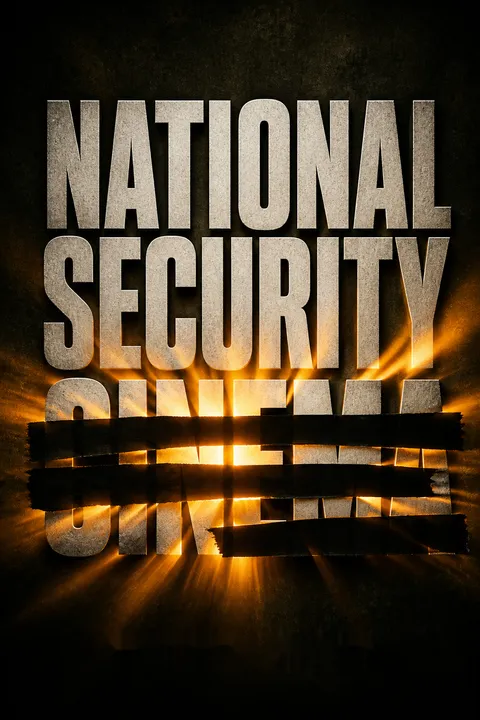
The evidence is documentary. The book draws on Freedom of Information Act releases, agreements, scripts, interviews, and earlier research. Its subject, which the authors call national security cinema, is entertainment shaped by national security agencies in ways that tend to affirm their interests.
The numbers establish reach, but not the extent of influence in each case. A production listed in a government record might have received routine assistance, while another may have undergone consequential script revisions. That distinction matters for readers assessing a large database: participation is not automatically proof of propaganda. The authors’ strongest contribution is showing how an apparently ordinary exchange of resources can create editorial leverage. This resembles a broader problem in institutional research, where a measurable contact is easier to count than its causal effect on a final product.
Count the bargain: expensive military access can buy script influence.
Access has a price. The Pentagon can offer filmmakers aircraft, bases, vehicles, technical advisers, and uniformed extras at a fraction of their commercial cost. In return, projects seeking substantial assistance may need to submit scripts, accept requested changes, and allow government review during or after filming.
Transformers shows the scale. The military began advising on the second and third films while their scripts were still being developed. For the second film, the production’s military wish list contained more than 50 requested items, with an estimated cost above $600,000. The Pentagon also connected the franchise’s marketing staff with an Army advertising agency. Its own records describe the films as a chance to showcase soldiers and equipment to a global audience. The arrangement was not merely technical: the military saw promotional value in the partnership.
This is a classic exchange of scarce resources for influence. A filmmaker does not need to receive a direct order for the relationship to shape a project. The practical question is whether access becomes so valuable that producers anticipate objections and revise before anyone asks. At the same time, the Transformers example is unusually dependent on military spectacle, so it should not be treated as a model for every supported production. The distinction between a technical contribution and an editorial bargain is precisely what transparent records could help audiences examine.
A refusal to lend hardware can kill a story without banning it.
Production costs become a veto. The Pentagon does not need legal authority to prohibit a film if a production cannot afford to recreate the military resources it needs. The book describes Fields of Fire, a Vietnam War project based on James Webb’s novel, as a case in which the military refused support after objecting to scenes involving crimes by Marines. The film was never made.
A carrier mattered, too. In Countermeasures, a Navy psychiatrist uncovers a criminal scheme aboard an aircraft carrier. The Navy rejected the script, and the production needed a carrier for its story. The authors argue that the refusal effectively ended the project. These cases show how control can operate through access and expense, even when there is no formal ban or public censorship order.
This is a useful way to broaden the idea of censorship. Control can arise from a dependency, not just from a censor crossing out a line. The same mechanism appears wherever a project requires a scarce resource controlled by a powerful institution. Still, a rejected project may also fail for ordinary commercial reasons, and the book cannot establish that every unrealized film would otherwise have reached screens. Its evidence is strongest where records show the refusal and explain the production’s dependence on government access.
Small script edits can shift blame without changing the spectacle.
A scene can carry the argument. In the book Lone Survivor, the SEALs debate whether to kill unarmed goat-herders who could reveal their position. The account includes discussion of the liberal press and even the possibility of concealing a war crime. The film removes those elements and changes who argues for releasing the herders. Pentagon notes identify the scene as a concern, and the authors report that the filmmakers used the notes when revising it.
The action remains, the moral frame changes. The audience still sees the same dangerous mission, but the film presents the decision in less politically charged terms. In Contact, the Pentagon’s requested changes included replacing military roles with civilian ones and removing some criticism of military thinking. The underlying adventure remained intact.
A narrative’s politics often live in the reasons characters give, not only in its visible action. Changing a motive can make the same event feel tragic, necessary, or morally uncomplicated. This connects to framing research, which studies how selection and emphasis guide interpretation without dictating what every viewer believes. The Lone Survivor example is especially revealing because the source account and film offer different versions of a consequential choice. Yet no single change proves how audiences interpreted it, so claims about effects should remain distinct from evidence of script intervention.
Track CIA influence at story inception, not just on the set.
The relationship can start early. The CIA created an Entertainment Liaison Office in 1996. Its liaison, Chase Brandon, described pitching ideas and advising writers during development, when characters and plotlines were still malleable. The authors report his involvement in films and television series including The Recruit, The Agency, and Charlie Wilson’s War. Research cited in the book found that Brandon wrote the treatment and early drafts of The Recruit, despite not being publicly presented as its screenwriter.
Zero Dark Thirty offers a paper trail. Released records show that screenwriter Mark Boal shared his script with the CIA and incorporated requested changes. The agency sought what its records called an appropriate portrayal. It objected to some details of the torture scenes, yet did not remove the film’s suggestion that torture helped locate bin Laden.
Influence during development can be less visible than edits made during production, because the result may look like the writer’s original idea. This is why a paper trail matters: it allows audiences to distinguish consultation from substantive creative input. The book also documents shortcomings in the CIA’s own records, which makes the full scope hard to establish. Its case studies support scrutiny of specific relationships, but do not justify assuming that every spy story has been directed by the agency. Suspicion is a reason to investigate, not a substitute for evidence.
Read political films for the history and people left outside the frame.
Omission can simplify responsibility. The book contrasts Charlie Wilson’s War with earlier drafts and George Crile’s account of the operation to arm Afghan fighters against the Soviet Union. The film largely removes the involvement of extremist leaders who received support, as well as scenes linking the policy to possible consequences such as 9/11. The result makes the operation look more like a clever American victory followed by a failure to fund reconstruction.
The same lens applies elsewhere. The authors argue that Thirteen Days depicts the Cuban Missile Crisis while sidelining covert US efforts against Cuba that helped shape the crisis. Black Hawk Down, they argue, gives far less attention than its source book to earlier US raids and civilian deaths. In each case, what is excluded can make intervention appear more innocent or less politically complicated.
This is a powerful reading practice: ask not only whether a film’s stated facts are accurate, but which causes and affected people are absent. Historical accounts are always selective, so omission alone does not establish deliberate deception. The more persuasive cases are those where drafts, documents, or source materials allow comparison with the finished story. That comparison turns a vague accusation into a testable question: what changed, who requested it, and how does the change redirect responsibility? Viewers can apply the same method to news, documentaries, and official statements.
Antiwar images can still preserve American heroes as the moral center.
A film’s politics exceed its slogans. Avatar condemns resource extraction and military violence on Pandora, where a corporation uses soldiers to displace the Na’vi. Yet the story’s central hero is a former Marine, and other human characters help lead the resistance. The Na’vi fight for their home, but the film’s emotional viewpoint remains closely attached to human characters. The ending also resolves the conflict more cleanly than many real struggles against corporate or colonial power.
Support complicates the picture. The Marine Corps described its help as limited to dialogue advice, but records cited by the authors show meetings with Cameron and script notes. This does not erase Avatar’s criticism. It does show why a film’s apparent message and its production relationship need to be assessed separately.
Narrative identification is a subtler tool than explicit political language. A movie can condemn an invasion while asking viewers to experience events through the invader who changes sides. That choice may make criticism accessible to a broad audience, but it can also keep the colonized characters from becoming the story’s full moral center. This is not a simple verdict on Avatar, which offers a forceful critique of exploitation. It is a reminder that political interpretation should examine point of view, character agency, and the ending, not just the film’s most quotable message.
Hollywood's market incentives can echo state propaganda without state orders.
Government is not the only pressure. The authors stress that studios, corporate owners, advertisers, and financing partners also shape what gets made. They describe an industry in which marketing tie-ins and product placement can influence decisions that once focused more directly on scripts and casts. The book cites Man of Steel as generating an estimated $170 million through more than 100 product placements.
The result can resemble official messaging. A film may favor military power, avoid offending investors, or reduce a complex conflict to a safe adventure without any government script notes. The book also describes political projects that struggled to find distribution or promotion, including Michael Moore’s TV Nation and the animated film The Iron Giant. Market pressure can narrow what reaches audiences, even without a coordinated censorship plan.
This broader account helps avoid a one-cause explanation of Hollywood. Public relations, profit, and state interests can reinforce one another without requiring a secret agreement. That is a form of structural influence: firms select projects they expect to finance, market, and distribute successfully. The book’s examples make the mechanism plausible, though an individual film’s weak marketing does not by itself prove political suppression. A careful analysis distinguishes documented intervention from the quieter pressure of risk aversion, brand management, and concentrated ownership.
Dissent reaches screens when creators gain unusual control or financing.
Creative freedom has conditions. The book presents director Paul Verhoeven’s Robocop, Total Recall, and Starship Troopers as popular films that criticize corporate power, imperialism, or militarism. Their production circumstances were unusual. Arnold Schwarzenegger used his star leverage to help secure Verhoeven and preserve creative choices on Total Recall. Starship Troopers benefited from a period of instability among Sony’s executives, who, according to Verhoeven, did not closely monitor production.
Independence can be costly. Oliver Stone’s Snowden was made without a US studio backing, with financing from France and Germany and production in Germany. The book’s point is not that dissent is impossible, but that critical work may depend on exceptional bargaining power, sympathetic financing, or institutional oversight that fails to constrain it.
These cases complicate any claim that Hollywood is a unified propaganda machine. Commercial cinema can contain sharp dissent, and audiences may find political meaning that financiers did not intend. But the circumstances described here are not easy to reproduce: a major star’s leverage or foreign financing is not available to every filmmaker. The more useful inference is about conditions. Creative independence increases when a project has alternatives to a single gatekeeper, whether that means bargaining power, multiple funders, or a route to distribution beyond the largest studios.
Demand public records and on-screen disclosure instead of censorship.
The proposed remedy is transparency. The authors reject bans and censorship. They argue that government records of entertainment-industry cooperation should be public, and that films, television programs, and games should disclose government assistance in their opening credits. Their concern is not simply that an agency might help a production, but that audiences may not know when an agency has influenced the story.
Disclosure makes the relationship legible. A credit could tell viewers that a production received military equipment or agency consultation, while public records could show whether officials reviewed scripts or requested changes. The book notes that a 2017 intelligence authorization law required public guidance and annual reporting on intelligence-agency engagement with entertainment companies. The authors argue that disclosure would help audiences judge a film’s claims without limiting what filmmakers are allowed to create.
Transparency is a stronger democratic response than trying to decide which political stories may be told. It also supports more precise debate: viewers can evaluate the nature of assistance rather than treating every government contact as equivalent. Disclosure alone is not enough, since a brief credit may not explain which scenes changed or why. Useful reporting would distinguish equipment loans, technical advice, and editorial requests. The principle remains sound: audiences should be able to see the institutional relationships behind a story while retaining the freedom to decide what the story means.
Analysis
National Security Cinema is a documentary-driven argument about how state power enters popular entertainment through access, advice, and the economics of production. Its most convincing evidence is concrete: script notes, assistance agreements, agency records, and comparisons between drafts and finished films. These materials establish that government offices sometimes seek changes, and that access can make those changes consequential. They also reveal a less obvious form of influence: a production may be shaped at the point where a story is first conceived, before a visible conflict over edits ever occurs.
The book is less definitive when it moves from evidence of contact to broad claims about propaganda, intent, or audience impact. A list of supported titles establishes the scale of government participation, not that every listed production carries a political message. Likewise, a changed scene may demonstrate a request without proving how viewers understood the final version. The strongest analysis therefore keeps three questions separate: Did contact occur? Did it alter the work? What effect, if any, did that alteration have on audiences?
The case studies also offer a useful correction to the idea that political bias requires explicit slogans. Point of view, character agency, omitted context, and the shape of an ending can make an intervention seem humane, inevitable, or politically uncomplicated. Those choices can arise from government pressure, commercial caution, or a filmmaker’s own convictions. The book is most valuable when it documents which mechanism was at work rather than treating every familiar narrative as evidence of a single coordinated effort.
Its proposed remedy follows from that distinction. Public records and clear credits would not guarantee neutral art, nor should neutrality be the goal. They would let viewers judge who helped make a story and what conditions accompanied that help. The larger lesson is methodological: treat films as both works of art and products of institutions, then test claims about influence against the documents that connect the two.
Review Summary
Readers generally praise National Security Cinema for exposing the influence of U.S. government agencies on Hollywood productions. Many appreciate the book's detailed documentation of how the Pentagon and CIA shape entertainment content. Some reviewers find the book's insights shocking and valuable for understanding propaganda in media. Critics note occasional editing issues and repetitive content. The book is seen as an important resource for those interested in the intersection of politics and entertainment, though some readers find the latter half less engaging.
People Also Read

Glossary
national security cinema
Security-state-shaped screen entertainmentThe authors’ term for films and television that follow or reinforce self-serving official accounts of national security and foreign policy. The term also covers productions shaped by security agencies through direct assistance or influence. It is a critical category, not a claim that every production with military support has the same politics or degree of government involvement.
Entertainment Liaison Office
Agency contact with entertainmentAn office or designated liaison through which a government agency works with film and television producers. The Pentagon’s entertainment offices coordinate access to equipment, locations, personnel, and technical advice, often alongside script review. The CIA established its own Entertainment Liaison Office in 1996 to advise writers and productions and to promote its preferred public portrayal.
production assistance agreement
Terms for government production supportA written agreement governing a production’s use of Department of Defense assistance. When such an agreement applies, the production may need to accept requested script revisions, use the approved script during filming, and allow post-production review. The arrangement makes support conditional, although the book notes that some cooperation is informal and may not require a written agreement.
civilianization
Replacing military roles with civilian onesA script change that transfers an action, institution, or character from the military to a civilian setting or authority. The authors use the term for revisions that can reduce the military’s visible connection to controversial events. In Contact, for example, military elements were replaced or recast as civilian, making the military less prominent in the story.
Download PDF
Download EPUB
.epub digital book format is ideal for reading ebooks on phones, tablets, and e-readers.








