

Key Takeaways
Practice leadership first as a listener, not a claimant to status.
A childhood lesson in power. Born into a minor branch of the Thembu royal family, Mandela grew up in a rural village and later became a ward of Regent Jongintaba. At tribal meetings, he watched the regent hear criticism without interruption, then summarize competing views and seek agreement. That model of leadership stayed with him. It was learned by observation, not from a political manual.
Education opened doors, but not minds. Mission schools gave Mandela rare access to professional life, while teaching that British culture and government were superior. A speech by Chief Meligqili challenged that assumption, and the poet Samuel Mqhayi later stirred his pride in African history. Mandela initially dismissed the chief’s warning about white rule. His outlook changed through experience, argument, and political work.
What's striking is that Mandela's later preference for negotiation had roots in a childhood model of authority that made space for disagreement. Political leadership is often treated as forceful decision-making, but listening can be a practical way to gather information and build legitimacy. The limitation is equally visible: inherited rank and mission schooling gave Mandela opportunities unavailable to most Africans. His story shows how personal discipline matters, but also how institutions decide who gets the chance to lead.
Treat apartheid as a designed system, not a collection of insults.
Law organized inequality. Apartheid expanded older controls into a state-wide system governing where people could live, work, study, travel, and vote. Pass laws restricted African movement; land laws confined ownership; job rules reserved skilled work for whites. The 1948 National Party victory gave these policies a sharper direction. By the 1950s, racial classification and forced removals reached into homes, schools, and family life.
The machinery had economic roots. African workers were needed in mines, farms, and cities, but the state tried to keep them politically temporary and socially subordinate. Verwoerd’s Bantu education policy was explicit about limiting African opportunity to the jobs white rule assigned. This was not simply personal prejudice expressed in public. It was a system of laws, labour controls, and institutions that made white advantage durable.
The distinction between prejudice and infrastructure matters. Discriminatory systems persist not only because people hold biased views, but because rules distribute land, schooling, mobility, and employment unequally. That insight travels beyond South Africa: changing attitudes without changing institutions leaves many incentives intact. Yet naming a system does not by itself explain every person’s conduct. Meredith’s account is strongest when it shows how policy, economic interests, and individual choices reinforce one another.
Broaden the coalition when exclusion leaves you politically outnumbered.
African leadership came first. The Congress Youth League, shaped by Anton Lembede’s Africanism, rejected dependence on white allies and worried that communists or Indians might dominate African politics. Mandela shared much of that suspicion. But joint resistance became harder to dismiss as Indian campaigners endured arrest and African mineworkers staged a major 1946 strike.
Action changed the argument. The 1952 Defiance Campaign brought African and Indian volunteers together to break discriminatory laws through nonviolent civil disobedience. Nearly 8,000 people went to prison, and ANC membership grew from roughly 7,000 to as many as 100,000. Mandela, once hostile to joint action, became a central organiser. The campaign did not force the government to repeal apartheid laws, but it made the ANC a mass movement and showed the practical value of cooperation.
Coalitions are not just declarations of goodwill. They can combine people, skills, and constituencies that an isolated movement cannot mobilize on its own. The Defiance Campaign also shows how participation can change the participants: Mandela’s strategy shifted after he saw cooperation produce action at scale. Still, alliances carry real costs. Groups may disagree about goals, leadership, and whose priorities come first. A durable coalition needs shared rules for managing those differences, not just a common opponent.
Let repression change your tactics, but test the new strategy.
Nonviolence met a closed door. The ANC’s 1950s campaigns relied on protest, strikes, and civil disobedience. After Sharpeville in 1960, the government banned the ANC and PAC and imposed emergency rule. Mandela concluded that peaceful action alone could not protect the movement or stop the state’s violence. In 1961 he helped establish Umkhonto we Sizwe, an armed organization whose first campaign focused on sabotage and sought to avoid deaths.
The calculation failed. Mandela believed attacks on infrastructure could frighten investors and persuade white voters to accept reform. Instead, sabotage had limited economic impact, while the government intensified repression. The 1963 Rivonia raid exposed the movement’s plans and documents, and Mandela and his colleagues were sentenced to life imprisonment. The shift had a rationale, but it rested on a weak estimate of the state’s power and the likely political response.
The choice of tactics is a problem of political judgment, not merely courage. A tactic should be assessed by its likely effects, the opponent’s capacity to retaliate, and the risks imposed on civilians and the movement. Meredith’s account makes the pressure behind the turn to sabotage understandable without presenting its outcome as success. One caution: nonviolent campaigns can also expose participants to severe violence. No tactic is safe simply because it is morally attractive.
Make confinement a school for discipline, education, and collective strength.
Routine resisted isolation. Mandela spent eighteen years on Robben Island under harsh conditions, including years of hard labour in a lime quarry. Prisoners faced censorship, segregated food, limited visits, and punishment for defiance. Mandela challenged the rules through persistent complaints, seeking practical gains such as better clothing, study privileges, and fairer treatment. He preferred negotiation with warders when it could improve daily life, while refusing degrading demands such as calling them master.
The prison became a political community. Inmates passed news through hidden messages, organized committees, taught one another, and debated politics while working. Mandela’s insistence on study helped turn the prison into an informal university. The discipline was not effortless or uniformly popular: he could be dogmatic, and rivalries between political groups persisted. But shared routines gave prisoners purpose and helped them sustain organizational life under an attempt to break it.
The prison chapters connect political resistance to organizational maintenance. Movements depend on people who can preserve communication, teach skills, and negotiate small improvements while larger goals remain blocked. Such work rarely looks heroic, but it can keep collective capacity alive. There is a limit to the lesson: strategic patience can become accommodation if authorities use minor concessions to weaken demands for broader change. The key question is whether each practical gain strengthens people’s agency or merely eases control.
Negotiate from principle, but make room for a workable transition.
Talks began before freedom. Mandela opened secret discussions with government officials while still imprisoned, arguing that talks had to address political power, not just his release. He rejected P. W. Botha’s offer to free him if he renounced violence while the ANC remained banned. After de Klerk lifted the ban and released Mandela in 1990, the two sides entered a long, volatile negotiation.
Compromise made majority rule possible. The ANC wanted an elected assembly and a rapid transfer of power. The National Party sought guarantees against being excluded from government. Joe Slovo proposed a temporary power-sharing arrangement, the sunset clause, to protect jobs and reduce fear during transition. The final agreement created a five-year government of national unity, followed by majority rule. Mandela accepted compromise without giving up the central democratic principle of equal political rights.
Negotiation works when parties distinguish core goals from the routes used to reach them. The temporary coalition addressed a real fear among whites while leaving the electorate, rather than permanent racial privilege, as the source of political authority. That is a carefully bounded compromise. Yet transitional guarantees can preserve old power under new names if they are not time-limited and accountable. The design matters: reassurance can support a peaceful handover, but it must not become a permanent veto.
Make reconciliation visible, but never confuse symbolism with repair.
Public gestures changed expectations. Mandela’s release in 1990 became an international image of hope, and as president he repeatedly treated former enemies with courtesy. During the 1995 Rugby World Cup, he wore the Springbok captain’s jersey and urged black South Africans to support a team long identified with white rule. South Africa’s victory became a rare shared celebration. Such gestures helped make national belonging imaginable across a deep racial divide.
Symbols could not erase inequality. Mandela’s government inherited a country where white incomes averaged eight times black incomes, and poverty, unemployment, and poor services remained widespread. The administration faced an empty treasury, including a budget deficit of 8.6 percent of GDP and foreign reserves covering less than three weeks of imports. Reconciliation helped stabilize the transition, but it could not substitute for material change or effective public institutions.
The rugby moment illustrates the political power of shared rituals. A team can become a temporary, visible symbol of a community that does not yet exist in everyday life. But symbolism is most credible when paired with changes people can feel in housing, income, health, and education. The contrast between national celebration and inherited deprivation is not a flaw in reconciliation; it is a test of whether reconciliation can support redistribution and institutional reform without reigniting fear.
Audit private loyalties as rigorously as public claims.
Love narrowed Mandela’s judgment. After release, he hoped to rebuild family life with Winnie, who had endured years of harassment and banishment. His gratitude and guilt made him reluctant to confront her growing misconduct. The Mandela United Football Club, initially presented as a football team and bodyguard, became a vigilante gang. Members abducted and assaulted youths; one of them, fourteen-year-old Stompie Seipei, was killed. A court convicted Winnie of kidnapping and being an accessory to assault.
The personal became political. Mandela continued supporting Winnie’s ambitions despite warnings from colleagues and evidence of harm. He eventually separated from her, but only after the damage to his credibility and the ANC had grown. Meredith presents this as a blind spot in a leader otherwise known for self-control. Loyalty can honour sacrifice, but when it blocks scrutiny, it protects power rather than people.
This is a useful counterweight to the public image of Mandela as an almost unerring reconciler. Private obligation can distort judgment precisely when a leader believes loyalty is owed for past suffering. Organizations need independent processes for investigating allies, especially when personal affection, political symbolism, and public office overlap. The account also demands care: Winnie’s persecution was real, but it cannot excuse the abuse of others. Context explains conduct; it does not erase responsibility.
Hold your own movement to the same standards as its enemies.
The truth process tested the victors. Mandela supported the Truth and Reconciliation Commission, which heard testimony about killings, torture, and abductions by both apartheid security forces and liberation movements. Perpetrators could seek amnesty only by making full disclosure and showing a political motive. The process uncovered state crimes, but the ANC also faced findings about civilian deaths, assassinations, and abuses in its camps.
The ANC resisted equal scrutiny. Senior figures argued that its armed struggle was a just war and objected when the commission treated abuses by the liberation movement as human rights violations. Mandela publicly backed the commission’s work, while ANC leaders tried to block its report. The episode exposed a danger in liberation politics: moral authority earned in resistance can be squandered if it becomes immunity from accountability once power is near.
Transitional justice asks a difficult question: can a society acknowledge wrongs without making every political actor equivalent? The commission’s legal process treated violations as violations, while its historical inquiry could still explain the unequal context in which they occurred. That distinction is essential. A movement’s just cause does not make every tactic just, and demands for accountability should not be used to erase the larger structure of oppression. Both truths can be held at once.
Build institutions that survive the hero who opens the door.
A leader can unify, but cannot replace governance. Mandela’s presidency helped steady the transition and made the first democratic election possible. Yet his government struggled to meet ambitious promises amid recession, unemployment, fiscal constraints, and a shortage of trained staff. Basic services expanded, but many black South Africans remained poor, while a new black elite gained wealth and influence.
The succession exposed institutional weakness. Mandela’s preferred successor, Cyril Ramaphosa, lost the ANC leadership contest to Thabo Mbeki. Under Mbeki, debate narrowed, parliament weakened, and denial of the HIV and AIDS crisis delayed treatment. Mandela eventually spoke out, but the party’s loyalty to its leader often outweighed evidence and public accountability. The biography’s closing warning is concrete: democratic gains depend on institutions capable of checking leaders, not on one leader’s character alone.
Charismatic leadership can help societies cross a threshold, but it is a poor substitute for routine accountability. Strong institutions make it possible to correct mistakes without relying on a revered individual to intervene. The post-Mandela account also shows how liberation credentials can shelter damaging policy, as happened during the AIDS crisis. The challenge is not to diminish Mandela’s achievement, but to separate the success of a transition from the health of the system built afterward.
Analysis
Meredith’s biography is difficult to compress because Mandela’s life is both an individual arc and a history of institutions. His political identity changes repeatedly: royal ward, ambitious lawyer, Africanist, multiracial organizer, advocate of sabotage, prisoner, negotiator, and president. These shifts are not simple conversions from one doctrine to another. They emerge from pressure, argument, strategic failure, and contact with people whose experiences challenge his assumptions. The book’s strongest narrative thread is the tension between disciplined self-command and imperfect judgment. The same stubbornness that helps Mandela endure prison and hold a negotiation line also damages relationships and sometimes encourages overconfidence.
The biography also resists a purely heroic account. Mandela’s charisma mattered, but so did Walter Sisulu’s judgment, Oliver Tambo’s diplomacy, the organizing labour of thousands, and political openings created by economic and international pressures. The negotiated settlement required choices by de Klerk, a changing white electorate, and a broad network of activists. Mandela’s contribution was distinctive not because he acted alone, but because he could make compromise appear compatible with struggle and could reassure opponents without abandoning majority rule.
The presidency complicates the triumph. Reconciliation helped prevent a feared racial war and made shared citizenship visible, yet it did not rapidly undo economic inequality or build a consistently effective administration. Mandela’s loyalty to Winnie, defence of party colleagues, and eventual conflict with Mbeki show that personal virtue cannot reliably police political power. The account of the Truth and Reconciliation Commission further challenges any easy moral division between a pure liberation movement and a guilty state, while preserving the vast asymmetry between apartheid’s institutional violence and resistance to it.
The book’s enduring argument is therefore about political transition: moral authority can open doors, but durable democracy requires restraint, accountability, capable institutions, and leaders willing to accept limits. Mandela helped make a peaceful transfer imaginable. The unresolved question is whether a movement formed in opposition can learn to govern without treating its history as a permanent exemption from scrutiny.
Review Summary
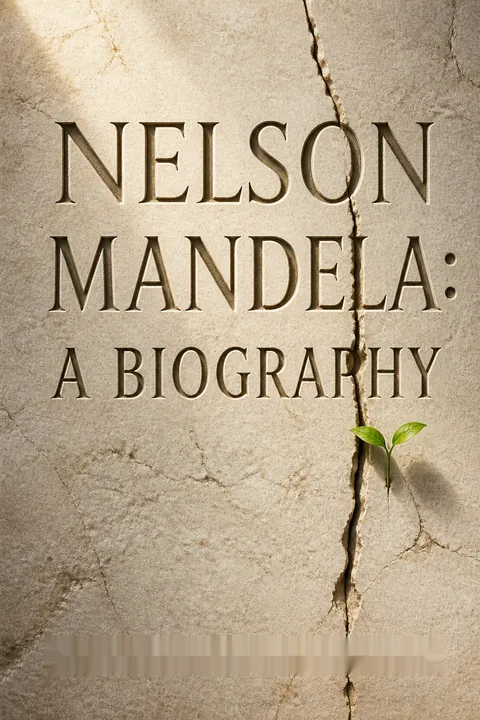
Nelson Mandela: A Biography receives mostly positive reviews, praised for its comprehensive and balanced portrayal of Mandela's life and South Africa's history. Readers appreciate Meredith's objective approach, detailing both Mandela's achievements and flaws. The book is lauded for its thorough research and readability, offering insights into Mandela's personal life, political career, and the complexities of apartheid. Some reviewers found the start slow, but overall, it's considered an essential read for understanding Mandela and South African history.
People Also Read






Glossary
Africanism
African-led nationalismA political outlook associated in the 1940s with Anton Lembede and the Congress Youth League. It stressed African unity, self-reliance, pride in African identity, and African control of liberation politics. Its more exclusive forms opposed cooperation with white liberals, Indian activists, and communists, fearing that such alliances would subordinate African interests.
Defiance Campaign
Mass civil disobedienceThe ANC-led campaign launched in 1952 against discriminatory laws. Volunteers deliberately violated rules governing race-separated facilities, permits, curfews, and movement, accepting arrest as protest. Conducted jointly with Indian organizations, it drew thousands of arrests, enlarged the ANC’s membership, and demonstrated the reach of coordinated nonviolent resistance, although the government did not repeal the targeted laws.
‘M’ Plan
Underground ANC organizationA plan associated with Mandela for reorganizing the ANC into small local cells, zones, and wards. It aimed to maintain communication and political activity without public meetings, which had become dangerous under police surveillance and banning orders. Implementation remained limited because local branches lacked time, money, and volunteers, and some leaders resisted changes to their authority.
Umkhonto we Sizwe
ANC-linked armed organizationMeaning Spear of the Nation, Umkhonto we Sizwe, often shortened to MK, was established in 1961 as an armed organization connected to the ANC and Communist Party. Its initial campaign targeted government facilities and infrastructure through sabotage, with instructions to avoid loss of life. The state’s crackdown, weak organization, and poor strategic assumptions contributed to its early defeat.
Operation Mayibuye
Contested guerrilla-war planA 1963 memorandum proposing a large-scale guerrilla campaign in South Africa, including trained fighters, local recruitment, and weapons production. Its authors argued that limited sabotage could not defeat white rule. ANC and MK leaders disputed whether the plan had been formally adopted. Police seized a copy in the Rivonia raid, and prosecutors used it as evidence of a conspiracy.
Freedom Charter
Democratic political programmeA document adopted by the Congress of the People in 1955 after volunteers gathered proposals from communities across South Africa. It called for equal citizenship, voting rights, non-discrimination, and redistribution of national resources. Its multiracial vision became central to the Congress movement, while its economic provisions, including public ownership of key industries, drew criticism from liberals and Africanists.
sunset clause
Temporary power-sharing guaranteeA proposed transitional arrangement offering a government of national unity for a fixed period after apartheid. It addressed white fears of immediate exclusion by guaranteeing political participation while allowing the country to move toward majority rule. The negotiated settlement used a five-year unity government, after which cabinet power would no longer be permanently reserved for minority parties.
Truth and Reconciliation Commission
Human-rights inquiry and amnesty processA post-apartheid commission established to investigate gross human-rights violations committed between 1960 and 1994. It heard testimony from victims and perpetrators, examined abuses by state and liberation forces, and could grant amnesty to individuals who fully disclosed politically motivated crimes. It was not a criminal court, and its findings became controversial when the ANC resisted criticism of its own conduct.
third force
Alleged covert violence networkA term used during the transition to describe suspected covert activity by security personnel and other actors intended to fuel violence and disrupt negotiations. Evidence emerged of police and military support for some violent operations and political rivals. The extent and control of these networks were contested, and investigations exposed abuses without establishing that every outbreak of violence followed a single centrally directed plan.
FAQ
1. What is "Nelson Mandela: A Biography" by Martin Meredith about?
- Comprehensive life story: The biography traces Nelson Mandela’s journey from his rural childhood in Thembuland, through his education, political awakening, decades of activism, long imprisonment, presidency, and retirement.
- Historical and political context: It situates Mandela’s life within the broader history of South Africa, detailing the rise and fall of apartheid, the evolution of the ANC, and the country’s social and political upheavals.
- Focus on character and leadership: The book explores Mandela’s complex personality, leadership style, and the personal and political challenges he faced, offering a nuanced portrait beyond the myth.
2. Why should I read "Nelson Mandela: A Biography" by Martin Meredith?
- In-depth and balanced analysis: The biography provides a richly detailed and balanced account, acknowledging Mandela’s flaws and contradictions as well as his achievements.
- Insight into South African history: Readers gain a thorough understanding of apartheid, the anti-apartheid struggle, and the transition to democracy, making it essential for those interested in global history and justice.
- Humanizing perspective: The book delves into Mandela’s personal relationships, sacrifices, and resilience, offering a human dimension to a global icon.
3. What are the key takeaways from "Nelson Mandela: A Biography" by Martin Meredith?
- Mandela’s evolution: The book charts Mandela’s transformation from a traditional rural upbringing to a revolutionary leader and statesman, shaped by personal and political trials.
- Complexity of the anti-apartheid struggle: It highlights the internal debates, alliances, and strategic shifts within the ANC and its partners, including the move from non-violence to armed resistance.
- Challenges of leadership and reconciliation: The biography underscores the difficulties Mandela faced in balancing reconciliation, economic realities, and the expectations of a divided nation.
4. How does Martin Meredith describe Nelson Mandela’s early life and education?
- Royal lineage and rural upbringing: Mandela was born into the Thembu royal family, raised in a traditional setting that emphasized tribal discipline and the influence of Christianity.
- Mission school and university: He attended mission schools and Fort Hare University, where he was exposed to British educational values and began forming political ideas.
- Formative influences: Early experiences with authority, injustice, and education shaped his worldview and future activism.
5. How did Nelson Mandela’s political consciousness and activism develop according to Martin Meredith?
- Johannesburg awakening: Mandela’s move to Johannesburg exposed him to urban poverty, racial discrimination, and political activism, especially through mentors like Walter Sisulu.
- Formation of the ANC Youth League: He helped found the Youth League, advocating for more militant, mass-based resistance and challenging the ANC’s conservative leadership.
- Early activism: Mandela participated in key protests and began to navigate complex alliances, gradually recognizing the necessity of multiracial cooperation.
6. What were the major turning points in Nelson Mandela’s political struggle as described in "Nelson Mandela: A Biography"?
- Defiance Campaign and Treason Trial: Mandela’s leadership in mass civil disobedience and his role in the high-profile Treason Trial established him as a national figure.
- Formation of Umkhonto we Sizwe: The shift to armed resistance after the Sharpeville massacre marked a strategic and moral turning point for Mandela and the ANC.
- Rivonia Trial and imprisonment: Mandela’s famous speech and subsequent life sentence made him a global symbol of resistance.
7. How does Martin Meredith explain the evolution of apartheid and its impact on black South Africans?
- Legal framework and repression: The National Party’s apartheid laws enforced racial segregation in all aspects of life, including housing, education, and employment.
- Forced removals and economic displacement: Policies like the elimination of ‘black spots’ and the Bantu education system uprooted communities and entrenched poverty.
- Resistance and government response: The book details the harsh repression faced by activists and the resilience of black communities in the face of systemic injustice.
8. What was the significance of the Black Consciousness Movement and the Soweto uprising in "Nelson Mandela: A Biography"?
- Emergence of black pride: Led by Steve Biko, the Black Consciousness Movement emphasized psychological liberation and self-reliance, inspiring a new generation of activists.
- Cultural and political impact: The movement influenced literature, music, and community projects, rejecting white liberal involvement and promoting black unity.
- Catalyst for resistance: The Soweto uprising, sparked by opposition to Afrikaans in schools, marked a turning point in mass resistance and shaped the future of the anti-apartheid struggle.
9. How does "Nelson Mandela: A Biography" portray Mandela’s imprisonment and its effects on him and the anti-apartheid movement?
- Harsh prison conditions: Mandela endured isolation, hard labor, and limited contact with family, but used prison as a site for political education and leadership.
- Symbol of resistance: His imprisonment galvanized international support and kept the anti-apartheid cause alive during years of repression.
- Personal sacrifices: The book details the emotional toll on Mandela and his family, including separation, loss, and hardship.
10. What role did Winnie Mandela play during Nelson Mandela’s imprisonment and in the anti-apartheid struggle, according to Martin Meredith?
- Militant activism: Winnie was a prominent leader, organizing community support and welfare projects despite repeated detentions and banishment.
- Controversies and scandals: Her involvement with the Mandela United Football Club and criminal activities, including kidnapping and assault, caused divisions within the movement and personal strain for Mandela.
- Political ambitions and fallout: Despite her leadership roles, scandals led to her resignation from ANC posts and a painful separation from Mandela.
11. How does Martin Meredith describe the negotiations and transition to democracy in South Africa?
- Complex negotiations: The book details the roles of P.W. Botha, F.W. de Klerk, and Mandela in initiating and navigating talks amid violence and political rivalry.
- Key challenges: Issues included power-sharing, constitutional deadlocks, and managing expectations of different groups, with violence and mistrust threatening progress.
- Compromises and outcomes: Concepts like the ‘sunset clause’ and government of national unity were crucial in achieving a peaceful transition and dismantling apartheid.
12. What are the most memorable quotes from "Nelson Mandela: A Biography" by Martin Meredith and what do they mean?
- On reconciliation: Mandela’s inaugural address, “Never, never and never again shall it be that this beautiful land will again experience the oppression of one by another…” symbolizes his vision for a united, just South Africa.
- On leadership: “I was not a messiah, but an ordinary man who had become a leader because of extraordinary circumstances,” reflects Mandela’s humility and the extraordinary context of his rise.
- On sacrifice and struggle: His courtroom declaration, “It is an ideal for which I am prepared to die,” encapsulates his commitment to freedom and justice, inspiring generations worldwide.
Download PDF
Download EPUB
.epub digital book format is ideal for reading ebooks on phones, tablets, and e-readers.








