

Key Takeaways
Read history as the repeated conversion of interdependence into shared gain
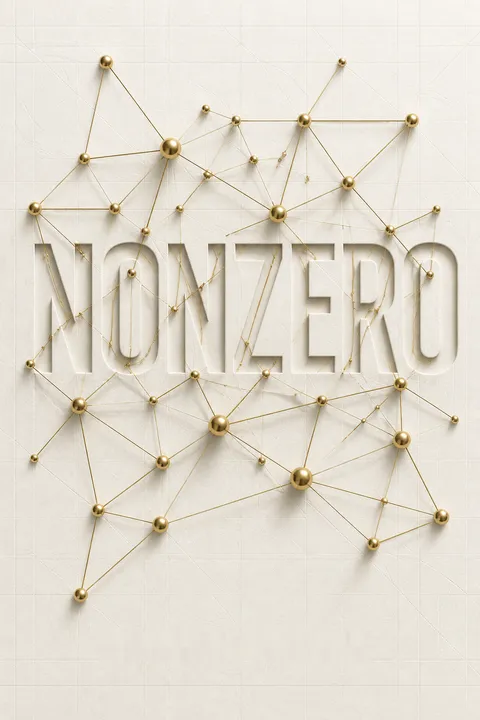
The central pattern. A zero-sum encounter makes one side’s gain the other’s loss. In a non-zero-sum situation, interests overlap: people can gain together, or lose together. Wright calls the potential created by such shared interests non-zero-sumness. His argument is that new technologies repeatedly create opportunities for interdependence, and social arrangements then develop to capture some of the possible gains. A hunter’s surplus can feed a neighbor today, earning help in a future shortage; a modern company can coordinate work across continents.
A direction, not a script. Over time, these exchanges connect more people and support larger, more elaborate societies. This does not mean every exchange is fair, or that history guarantees a happy ending. The broad trend may be likely while particular outcomes remain contingent, including catastrophe.
The framework is memorable because it distinguishes the possibility of mutual gain from the fact of fair distribution. That distinction helps explain why cooperation can grow alongside exploitation: a system may enlarge the total pool of benefits while allowing powerful actors to claim a disproportionate share. It also guards against treating interconnection as moral progress by itself. In economics, a positive-sum outcome says that the total can grow; it does not say who receives the growth. The framework is most useful when paired with a second question: what institutions ensure that shared gains are broadly shared?
Competition can build cooperation, but it never makes power harmless
Conflict can consolidate. War puts neighboring groups in a shared predicament: people who coordinate may survive, while divided groups may be defeated. Wright describes how villages, tribes, and states have joined forces against common enemies. The Iroquois League, for instance, united five previously warring tribes as European threats grew. An outside danger can thus push people into cooperation, even when relations between them were hostile.
Cooperation has costs. The same process can require hierarchy, taxation, and obedience. Chiefs organized public works and shared stores, but also diverted resources to themselves and their allies. Their authority was not unlimited: people could resist, withdraw support, or overthrow an oppressive ruler. War may encourage larger political units, but it does not make those units just, peaceful, or safe from abuse.
This account connects collective action to a classic problem in political science: groups often accept central authority because coordination is valuable, not because leaders are inherently trustworthy. A common threat can solve a coordination problem quickly, but it can also grant emergency powers that persist after the danger fades. The book’s attention to both motives is important. Still, conflict is not the only source of cohesion, and treating war as a regular engine of integration risks making violence sound historically necessary. The stronger lesson is that cooperation needs institutions, whether pressure comes from an enemy or from shared economic interests.
Dense populations become better collective brains, not smarter individual minds
Ideas need a network. The Shoshone of the Great Basin generally lived in small family groups, but large rabbit nets briefly brought many families together under a leader. On North America’s Northwest Coast, abundant resources and dense settlements supported larger-scale specialization, trade, and shared projects. The difference was not individual intelligence. More people in regular contact meant more chances to exchange skills, information, and inventions.
Population and culture reinforce each other. A larger network can produce and spread more innovations; better tools and organization can then support more people. Wright calls the connected population an invisible brain: a distributed system that processes information through people and their exchanges. He points to correlations between population size and technological development in Polynesia, and to the New World’s slower population growth alongside later technological thresholds.
The collective-brain metaphor captures a key feature of innovation: ideas depend not only on inventive individuals, but on the networks that let knowledge circulate and combine. Modern research on innovation similarly emphasizes collaboration, accumulated knowledge, and access to diverse expertise. Yet density is not an automatic advantage. Crowding can intensify competition, strain resources, and spread harm as readily as useful ideas. Wright acknowledges both pressures, but the broad pattern should not be mistaken for a universal law that every larger population becomes more innovative. The relevant conditions include communication, ecological limits, and institutions that let people contribute and learn.
Farming spread because status, security, and scarcity all rewarded it
No single trigger explains it. Early agriculture may have demanded more labor and produced worse health than hunting and gathering. Wright argues that this does not make its spread mysterious. People cultivated wild plants long before full domestication, sometimes to secure food, sometimes to trade, and sometimes to gain status. In some societies, successful food producers could attract followers, prestige, and additional wives. Growing populations and the threat of conflict added further incentives to produce and store more food.
Small steps made a large shift. Farming did not require a prehistoric committee to choose agriculture over leisure. Cultivation developed gradually through countless practical decisions. The fortified settlement at Jericho illustrates how farming could support a larger population and major construction, including a wall. Agriculture arose independently at least five times, which Wright treats as evidence that multiple forces made it a recurring possibility.
The chapter’s strength is its rejection of the idea that societies act as unified planners. Individuals can adopt a practice for personal advantage even when its long-term effects are mixed for the community. That insight fits broader evolutionary thinking, where changes spread through local incentives rather than through foresight. A caution is needed, though: explaining why farming spread is not the same as showing that it improved everyone’s lives. Greater food production can support population growth and political power while worsening health or inequality. The useful distinction is between an innovation’s ability to spread and its ability to produce a better life.
Writing made distant cooperation reliable by recording promises and enforcing rules
Writing began with practical needs. The earliest surviving examples of writing in Mesopotamia record goods, payments, and obligations, not poetry. Clay tokens used to track quantities gradually gave way to marks on tablets. Written records let people document loans and payments rather than relying only on memory or public ritual. A written law code could also specify penalties for cheating, making urban exchange more dependable among people who were strangers.
Information supports institutions. Writing helped governments track labor, taxes, supplies, and public works. It also strengthened diplomacy by preserving agreements between rulers. But access was unequal: Mesopotamian literacy was rare, and scribes formed an influential class. Writing could help coordinate cooperation while giving those who controlled records and administration an advantage over everyone else.
The history here resonates with the idea of institutions as technologies for making expectations dependable. Contracts, records, and courts reduce the cost of coordinating with strangers, a necessary condition for complex economies. The crucial point is that information does not merely reveal reality; it also changes who can act on it. A written account can protect a borrower, but control over records can also empower officials and creditors. This double effect remains relevant in digital systems, where searchable records can make services more reliable while concentrating surveillance and decision-making. The question is not whether data help, but who can create, interpret, and contest them.
Markets and information spread prosperity by forcing rulers to share power
Economic freedom gathered force. In medieval Europe, merchants needed predictable laws, secure roads, and freedom to make contracts. Towns organized into guilds and pressed for self-government. As trade expanded, rulers gained revenue by protecting commerce, while merchants gained room to invest and coordinate without asking permission for every decision. Wright calls this dynamic capitalism making the world safe for itself.
Communication changes political balance. The printing press made it cheaper to circulate arguments and organize dissent. Luther’s challenge to church authority spread rapidly through print, while newspapers helped strengthen national identities. Information technologies can therefore both unite people across a region and divide empires along linguistic or religious lines. They do not guarantee democracy: rulers can use media for propaganda, and organized interest groups can defend their own privileges at society’s expense.
This argument gives political freedom a material mechanism: a government may loosen control not from sudden virtue, but because innovation and commerce work better when information and initiative circulate widely. That is a compelling correction to explanations that attribute economic change mainly to national character or religion. It is not a complete account, however. The same market institutions can generate concentrated wealth, and political competition can empower exclusionary movements as well as reformers. The book’s own examples of guild protectionism point to this tension. Information access is a condition for pluralism, not a guarantee that pluralism will serve the public.
Treat global chaos as pressure to build governance beyond nations
Interdependence creates shared risks. Trade and finance now connect countries closely enough that a crisis in one place can spread elsewhere. The same is true of problems such as terrorism, disease, environmental damage, and cybercrime. Wright argues that when these problems cross borders, governance tends to follow: countries create common rules, monitoring, courts, or emergency lending arrangements to protect shared interests.
Integration and fragmentation can coincide. Communication technologies help global businesses coordinate, but they also help regional or cultural groups organize. Wright calls attention to the apparent contradiction between these forces, then argues that both arise from cheaper communication. The European Union shows how economic agreements can lead to shared regulations and institutions. None of this makes world government inevitable in one particular form. The transition can bring conflict, surveillance, and trade-offs over sovereignty and security.
The central insight is that governance often grows in response to coordination failures that markets cannot solve alone. Climate risks and financial contagion, for example, create incentives for cooperation because unilateral action cannot reliably protect one country from consequences elsewhere. But the argument needs a democratic test: cross-border authority may solve shared problems while becoming distant from the people subject to its rules. Effective global governance therefore requires more than institutional reach. It needs transparency, accountability, and ways for less powerful communities to challenge decisions. Coordination is valuable, but legitimacy determines whether it can endure.
Evolution repeatedly builds complexity by linking information, energy, and cooperation
Life organizes against decay. The second law of thermodynamics describes the tendency for order to dissipate. Living things do not escape that law; they use energy from their surroundings to maintain local structure while releasing disorder elsewhere. Information guides this work, from DNA regulating a cell to social signals coordinating human labor.
Cooperation scales through evolution. Genes on a chromosome, specialized parts of a cell, and cells in a body can all benefit from coordinated activity. Some cells even sacrifice their own reproductive role for the benefit of genetically similar neighbors. Wright argues that natural selection repeatedly favored such arrangements, while competition and arms races also encouraged new capabilities. Human culture extends this process through learning, teaching, tools, language, and shared knowledge. The specific path is contingent, but complex life and intelligence, he argues, were increasingly likely.
The synthesis is powerful because it treats information as more than a description of living systems: it is part of how they coordinate matter and energy. This connects evolutionary biology with cybernetics, the study of systems that use feedback to regulate behavior. The claim that complexity tends to rise is more controversial than the account of local adaptation. Evolution has no general obligation to make organisms more complex, and many lineages remain simple or become simpler. Wright’s more defensible point is narrower: once organisms interact, competition and cooperation can create recurring opportunities for greater complexity, without making any particular outcome inevitable.
Use interdependence to widen moral concern, then consciously restrain its harms
Connection can change moral boundaries. As people trade, ally, and share risks with distant groups, they gain practical reasons to avoid treating those groups as less than human. Wright sees this widening tolerance as a real, if incomplete, form of moral progress. Yet interdependence can also create new powers of surveillance and control. People may surrender privacy for security, while new technologies can make destructive actions available to smaller groups.
Direction is not destiny. The book argues that social organization is likely to keep expanding, but it does not claim that peace or justice will arrive automatically. A transition to global governance could be turbulent, and the same systems that enable shared prosperity can deepen inequality or constrain freedom. Wright’s closing challenge is to use human self-awareness to guide instincts that once advanced societies blindly, including status seeking, rivalry, and material ambition.
The book’s moral conclusion is strongest when treated as a responsibility, not a forecast. Interdependence may enlarge the circle of practical concern, but empathy does not automatically keep pace with supply chains, financial systems, or shared ecological risks. Research on moral psychology likewise suggests that people can feel concern for distant strangers, yet often prioritize close groups. Institutions can extend protection beyond the limits of spontaneous sympathy. The harder question is whether global rules can be built without erasing local autonomy. The adaptation’s answer is open: better outcomes depend on deliberate choices, not on a historical force that guarantees goodness.
Analysis
Nonzero’s great achievement is to give a single analytic lens to subjects often kept apart: biological evolution, economic exchange, war, political institutions, and moral change. Its core move is to distinguish the existence of shared interests from the institutions that let people realize them. A rabbit hunt, a written contract, and a global financial system are very different, but each creates coordination problems and opportunities for mutual benefit. This makes the book unusually good at explaining why social complexity can grow without assuming that people became wiser or kinder.
The framework is most persuasive when it explains mechanisms, not destiny. Population density can increase the circulation of ideas; written records can support trade among strangers; cross-border risks can prompt shared rules. These are plausible, concrete causal links. The argument grows less secure when it treats the long-run trend toward complexity as nearly inevitable or reads moral improvement as its likely accompaniment. History offers reversals, and complexity can support coercion as easily as freedom. Nor does more interdependence necessarily mean more equal distribution of its rewards.
A second limitation is measurement. The book uses social complexity to describe size, specialization, hierarchy, information processing, and integration. These features often travel together, but they are not interchangeable. A highly networked society may be politically decentralized; a powerful state may be economically brittle. The conceptual bundle is useful for broad comparison, but it can obscure which dimension is changing and who benefits.
The deepest contribution is therefore not a confident prediction that humanity is headed toward a benevolent world system. It is a practical warning: technologies expand the range of possible cooperation and possible harm at the same time. Institutions must convert shared exposure into shared gains, while keeping power answerable. The book’s evolutionary story gives that task historical depth, but its ethical outcome remains a human choice.
Review Summary
Nonzero receives mixed reviews, with praise for its thought-provoking ideas about cultural evolution and non-zero-sum interactions driving human progress. Readers appreciate Wright's optimistic view of history and future possibilities. However, some criticize the book for oversimplification, selective interpretation of evidence, and overly speculative conclusions. The writing style is generally considered engaging, though some find it repetitive. While many readers find the core concepts intriguing, opinions vary on the book's overall persuasiveness and scientific rigor.
People Also Read







Glossary
Non-zero-sumness
Potential for shared gainThe extent to which participants’ interests overlap, allowing their interaction to produce mutual benefit or mutual loss. Non-zero-sumness describes potential, not a guaranteed cooperative outcome. In Wright’s account, technologies and institutions repeatedly create new opportunities for shared gains, while communication failures, mistrust, cheating, and unequal bargaining power can prevent people from realizing them.
Invisible brain
Distributed social information networkWright’s metaphor for the people and connections that collectively process information in an economy or society. Just as an invisible hand coordinates exchange, an invisible brain gathers knowledge about needs, skills, resources, and opportunities. Greater population density and cheaper communication can make this distributed system more capable, though its effectiveness depends on who can participate and how information moves.
Cultural lag
Institutions trailing technologyA mismatch in which material technologies change faster than the social rules, governance, and norms needed to manage their effects. The gap can produce instability because people gain new powers before institutions adapt. Wright argues that societies can reduce the danger either by speeding up institutional adjustment or by moderating disruptive change through regulation and coordination.
Gene-meme co-evolution
Mutual shaping of genes and cultureThe process by which genetic evolution supports capacities for learning, imitation, teaching, language, and social life, while cultural practices alter the conditions under which genes succeed. Wright argues that this feedback helped expand human intelligence and culture. Once useful cultural information could spread, it became an increasingly important way for humans to adapt, alongside biological change.
Meme
Culturally transmitted informationA unit or pattern of information passed between people through learning rather than genetic inheritance. It may be a word, practice, belief, design, or technique. Memes vary in how easily they spread and how well they serve the people who adopt them. Wright uses the concept to track how cultural elements persist, compete, and move between groups.
Noosphere
Planetary network of thoughtA term associated with Pierre Teilhard de Chardin for a human sphere of thought and communication layered over the biosphere. In Wright’s discussion, it describes the possibility that communications technologies link human minds into an increasingly global system. The term captures a historical trend toward connection, but claims that such a network forms a literal conscious mind remain speculative.
FAQ
What's Nonzero: The Logic of Human Destiny about?
- Exploration of evolution: The book examines both biological and cultural evolution, arguing that they are driven by non-zero-sum dynamics, where cooperation leads to mutual benefits.
- Complexity and interconnectedness: Wright discusses how societies evolve towards greater complexity and cooperation, drawing parallels between the evolution of organisms and human societies.
- Purposeful directionality: The author suggests that evolution has a direction and purpose, indicating that the growth of complexity in life forms is not random but a result of adaptive strategies.
Why should I read Nonzero: The Logic of Human Destiny?
- Unique historical perspective: The book offers a fresh lens on human history, emphasizing cooperation and non-zero-sum interactions in shaping societies.
- Interdisciplinary insights: Wright combines biology, sociology, and history, providing a comprehensive understanding of human development.
- Optimistic outlook: It challenges readers to consider the implications of evolution on morality, consciousness, and the future of humanity.
What are the key takeaways of Nonzero: The Logic of Human Destiny?
- Non-zero-sum dynamics: Human progress is driven by interactions where cooperation leads to greater overall benefits for all parties involved.
- Cultural parallels biological evolution: Wright argues that cultures evolve through similar processes of adaptation and cooperation as organisms do.
- Potential for global consciousness: The book raises the possibility of humanity evolving into a collective consciousness as interconnectedness increases.
How does Robert Wright define non-zero-sum games in Nonzero: The Logic of Human Destiny?
- Basic definition: Non-zero-sum games are situations where one party's gain does not necessarily mean another's loss, allowing for mutual benefits.
- Examples in human interaction: Wright illustrates these games through trade and cooperation, leading to outcomes that benefit all parties involved.
- Historical implications: The concept is central to understanding how societies evolve from simple to more complex structures through cooperation.
What role does technology play in Nonzero: The Logic of Human Destiny?
- Facilitating cooperation: Technological advancements create opportunities for non-zero-sum interactions, promoting social complexity.
- Historical examples: Technologies like agriculture and writing have transformed societies, allowing for greater organization and collaboration.
- Future trends: Wright suggests that as technology evolves, it will further enhance non-zero-sum interactions, shaping human societies.
How does Nonzero: The Logic of Human Destiny address the concept of cultural evolution?
- Cultural evolution defined: Wright sees it as a process where societies develop and become more complex over time, driven by technology and cooperation.
- Patterns of development: The book outlines transitions from hunter-gatherer to agricultural and state-level societies, each increasing in complexity.
- Interconnectedness of cultures: Cultural evolution is not isolated; cultures influence each other through trade, conflict, and communication.
What are the best quotes from Nonzero: The Logic of Human Destiny and what do they mean?
- “The more closely we examine...”: This quote encapsulates Wright's thesis that evolution and history have a purposeful direction toward complexity and cooperation.
- “Non-zero-sumness is a kind of potential...”: Wright emphasizes the dual nature of non-zero-sumness and the importance of managing interactions for mutual gain.
- “The arrow of human history...”: Suggests that human history is inherently progressive, building on previous achievements and complexities.
How does Nonzero: The Logic of Human Destiny relate to current global issues?
- Global interconnectedness: The book's exploration of non-zero-sum interactions is relevant in today's globalized world, where cooperation is essential for addressing issues like climate change.
- Potential for conflict: While emphasizing positive aspects, it acknowledges potential conflicts, informing strategies for resolution and cooperation.
- Future implications: Wright's arguments suggest humanity can overcome challenges through increased cooperation and innovation.
What is the significance of non-zero-sum interactions in Nonzero: The Logic of Human Destiny?
- Foundation of cooperation: These interactions are crucial for understanding how societies thrive through collaboration, leading to shared benefits.
- Cultural evolution: Cultures embracing non-zero-sum dynamics tend to be more successful and resilient, fostering trust and cooperation.
- Future societies: As global interdependence increases, engaging in non-zero-sum interactions will be essential for addressing global challenges.
How does Nonzero: The Logic of Human Destiny address the idea of purpose in evolution?
- Teleological perspective: Wright argues that evolution has a direction and purpose, as evidenced by the increasing complexity of life forms.
- Cultural and biological alignment: Both types of evolution pursue complexity and cooperation, hinting at an overarching purpose.
- Critique of nihilism: By positing purposeful evolution, Wright counters nihilistic views, advocating for a more optimistic outlook on human progress.
How does Nonzero: The Logic of Human Destiny connect to the future of humanity?
- Global interconnectedness: As the world becomes more interconnected, the potential for non-zero-sum interactions increases, leading to a more cooperative global society.
- Moral evolution: Humanity has the opportunity to evolve morally, fostering a sense of global citizenship and shared responsibility.
- Hope for progress: Understanding and embracing non-zero-sum dynamics can help navigate future challenges and create a more harmonious world.
What criticisms or counterarguments does Nonzero: The Logic of Human Destiny address?
- Skepticism of teleology: Wright acknowledges skepticism about purpose in evolution, addressing views that see it as a random process.
- Complexity of human behavior: The book recognizes that not all interactions are non-zero-sum and that competition still plays a role.
- Historical misinterpretations: Wright critiques narratives focused solely on conflict, advocating for a nuanced understanding of human history.
About the Author


Download PDF
Download EPUB
.epub digital book format is ideal for reading ebooks on phones, tablets, and e-readers.








