

Key Takeaways
A return home can become chosen ground, not proof you failed.
The detour begins accidentally. In his late twenties, after university and several years in Toronto, Reid has little money, unstable work, and no clear career. When a temporary summer job reviewing books for radio appears in Ottawa, he agrees before figuring out where to live. The answer is his parents’ farm, Lilac Hill, where he once swore he would never return. He arrives with a few boxes, a worn suit, and a degree that has not opened the doors he expected.
The stopover takes root. The radio work leads to a casual producing job, then dwindling shifts and long stretches without work. Meanwhile, he writes, helps around the farm, and finds that living with his parents is more than retreat. His story does not make returning home a universal solution. It shows that an unplanned pause can become useful without being the life one planned.
What's striking is how the book separates a change in address from a judgment of character. Social expectations often treat leaving home as a one-way test of adulthood, even though work, debt, and housing shape what independence is actually possible. The memoir gives that tension a lived setting: a capable, educated person can still need practical support. Its generous portrait of the parents also matters. Returning home is easier when the household is welcoming, so the story should not be read as evidence that every family can offer the same refuge.
Let an unexpected bond change your definition of family.
A bird joins the household. After predators and careless drivers reduce the farm’s guinea fowl flock to one, the remaining bird, Lucius, has no fellow guinea fowl. Rather than leave, he begins staying close to Reid’s parents. His mother feeds him, talks to him, and treats his decision to stay as a family event. Reid returns to find that the bird has effectively become a new sibling.
Affection arrives with chores. Lucius blocks the car on the driveway, interrupts work, supervises the cleaning of his droppings, and sometimes attacks Reid. The narrator does not instantly find him charming. Yet the bird’s presence becomes part of the farm’s daily life, and Reid gradually stops treating him as an intrusion. The title’s choice belongs to Lucius, but it also invites Reid to reconsider who can belong.
The bird makes family membership visible as a practice rather than a pedigree: feeding, shelter, attention, and repeated presence. Research on human-animal relationships similarly finds that daily interaction can provide companionship and structure, especially when human social contact is thin. The comedy keeps the bond from becoming sentimental. Lucius is not a symbolic cure for loneliness; he is noisy, inconvenient, and occasionally dangerous. That friction strengthens the point: care can become meaningful without becoming effortless, and affection need not depend on finding someone adorable every minute.
Measure your work by its substance, not by your job title.
A title cannot guarantee security. Reid’s weekly radio book review gives him a chance to do work he enjoys, but the segment is temporary. He later becomes a casual associate producer, pitching stories and preparing interviews, yet the shifts grow scarce. Eventually the producer he had covered returns, and no one clearly tells Reid that his employment has ended. His professional identity fades through silence rather than a dramatic dismissal.
Status shapes the conversations. At a pub, he avoids explaining how little work he has and calls himself a farmer. In a bookstore, an old acquaintance asks about his career, hours, and access to famous broadcasters. Reid’s awkward answers show how quickly people use occupations to assess adulthood. But he keeps writing, sends work to a professional writer, and receives a possible path toward an agent. The work’s value and its market recognition do not arrive together.
The memoir captures a familiar problem in contemporary labor: identity is often tied to jobs that are temporary, fragmented, or poorly paid. Career psychology distinguishes a person’s occupational status from the meaning and skill found in the work itself; the distinction is useful here because Reid cares about writing and radio even when employment is unstable. Still, personal meaning cannot pay rent. The book’s humor exposes status anxiety, but it does not erase the material cost of insecure work or turn precarious employment into a lifestyle choice.
Contribute to the household instead of treating help as borrowed shelter.
Participation changes the arrangement. Returning home initially makes Reid feel like a guest in his childhood bedroom, where old posters remain on the walls and his framed degree serves as a drying rack. But the farm needs work. He helps prepare for winter, collects eggs, tends animals, and joins his parents in clearing years of accumulated manure from the sheep barn.
Shared labor is unglamorous. The barn is hot, foul, and difficult to clean by hand. Reid breaks up the packed floor with a pickaxe while his parents shovel and push wheelbarrows. He gets blisters, wears his sister’s tiny old shorts, and endures commentary about his skinny legs. When the job is done, the three celebrate with champagne. The work does not make him instantly independent, but it gives his presence a practical shape: he is not only being housed, he is helping sustain the place.
This episode makes visible a form of care that is often hidden inside families: maintenance. Household labor is not merely a transaction, and it can create belonging by giving each person a role in shared life. The barn’s physical discomfort also counters the idea that dependence is necessarily passive. At the same time, contribution should not be used to justify unequal arrangements or erase the value of emotional support. The scene works because Reid’s parents offer welcome first, then invite participation without turning the home into a ledger.
Notice small details before demanding a dramatic turnaround.
A sandwich becomes a revelation. During a visit to his aunt’s grade-one classroom, Reid struggles to connect with the children. In gym class, he becomes too competitive, scores a goal, and is corrected by the young players for ignoring the usual rules. At lunch, he sits beside a slow-eating boy who carefully opens his ham-and-cheese sandwich to show him what is inside. The child treats an ordinary lunch as something worth sharing.
Attention shifts the day’s meaning. Reid leaves the school thinking less about his awkward performance and more about the child’s curiosity. The scene does not solve his employment worries or make him suddenly confident. It gives him a different measure of what can make a moment worthwhile. His days at the farm often work the same way: noticing animals, food, weather, and family habits turns apparently uneventful time into material for thought and writing.
The scene resembles the practice of savoring, a psychological approach that involves attending closely to a positive experience rather than rushing past it. The child’s fascination with lunch is not childish foolishness; it is an example of attention unburdened by the demand that every moment prove something. That perspective can widen experience, especially during periods when conventional markers of progress are absent. The necessary caution is that noticing beauty does not replace income, healthcare, or social connection. Attention enriches a life, but it cannot repair every condition that constrains one.
Use daily duties to give uncertain time a shape.
Winter removes the usual schedule. Reid loses his radio shifts and spends much of the cold season at home. The family’s large calendar tracks his parents’ plans in red and blue, but his green marker has little to record. The empty space makes his uncertainty visible. What remains is the farm’s routine: feeding animals, carrying water and hay, tending the fire, and helping with chores.
The seasons offer another clock. When Reid’s parents leave for a conference, he stays behind to care for the animals. Spring brings birds back, muddy ground, lambs, and longer days. His father connects a quiet moment after the barn cleanup to Wordsworth’s idea of “spots of time,” moments that make a person feel unusually awake to the world. The work does not settle Reid’s career, but routine and seasonal change make his days less shapeless.
Routines can serve as scaffolding when motivation and external structure weaken. Behavioral research often finds that repeated cues and predictable actions reduce the effort required to begin; the farm’s animal-care schedule supplies that structure without requiring Reid to feel ambitious each morning. Seasonal time also differs from the calendar’s appointments and deadlines: growth and change become observable in the land. Neither form of rhythm guarantees psychological recovery, and routine can become confinement. Here, its value lies in giving an uncertain period texture rather than pretending the uncertainty has disappeared.
See your parents as changing people, not permanent fixtures of home.
The family roles begin to shift. In winter, one of the farm’s ducks disappears. Reid and his father search through deep snow, then sit by the fire with his mother, trying to understand what happened. The parents suspect the wind carried the small bird away. When neighbors later find the duck, the father is visibly relieved. The incident makes his attachment to the animals, and his vulnerability, hard for Reid to miss.
Help starts moving both ways. Reid accompanies his father to collect hay and notices that their hands resemble each other. He begins helping with work that once belonged to his parents, while they still offer advice, food, and care. Their sore backs and his own aches blur the boundary between the sturdy adults he remembers and the people they are now. The shift is not a clean reversal: he remains their son, but he can also be useful to them.
Adult development is often described as a gradual renegotiation of parent-child roles, not a sudden switch from dependence to independence. The memoir gives that abstract idea a tangible form: shared chores, aging bodies, and concern over a missing duck. Such moments can deepen intimacy because practical help makes affection observable. They can also be emotionally complicated. A child may recognize parental vulnerability before feeling prepared to respond, and not every family can divide care fairly. The book’s quietness respects that ambivalence instead of presenting role reversal as a tidy lesson.
Leave home when you can choose the next step, not to satisfy a timetable.
The ending resists a deadline. During the year at Lilac Hill, Reid repeatedly assumes he should return to Toronto, find an apartment, or prove he is an adult. By spring, he has been writing more and sends some work to a friend, who likes it and suggests contacting literary agents. Reid tells his father that he may start looking for a place. His father leaves the decision to him rather than insisting on a date.
Departure becomes possible without becoming a verdict. The memoir closes with Reid still on the farm, making plans for tea, books, chores, and a walk. The author’s note adds that he did eventually move into an apartment and returned to the farm as a visitor. That outcome matters: staying was not permanent failure, and leaving was not a repudiation of his family. The year changes the meaning of home before changing his address.
The ending distinguishes autonomy from mere distance. Self-determination theory treats autonomy as acting with a sense of ownership, not simply acting alone; Reid’s eventual move matters because the decision follows reflection rather than panic about appearing grown-up. His parents’ lack of pressure helps make that choice possible. The narrative also avoids claiming that time at home automatically produces clarity. Some readers face unsafe households, financial obligations, or no viable place to return. The useful principle is narrower: a socially approved timetable is not, by itself, evidence that a decision is right.
Analysis
One Bird’s Choice is a memoir built from comic domestic episodes rather than a conventional argument. Its apparent plot is a young man’s return to his parents’ farm, but its deeper movement is a gradual change in what he counts as progress. At first, adulthood means leaving home, earning a living, and possessing an answer when someone asks what he does. The year at Lilac Hill makes those measures feel both understandable and insufficient. Reid remains anxious about money and work, yet he learns to see contribution, attention, and connection as real parts of a life rather than consolation prizes.
The book’s humor performs important analytical work. A toilet tutorial, an attack by a chicken, or a failed attempt to replace a sink part can make dependence look ridiculous. But the jokes do not humiliate the parents or turn the narrator into a triumphant outsider. They reveal the intimacy of shared space: people know one another’s habits, anticipate needs, and remain together through irritation. Lucius, the guinea fowl, extends this idea beyond human kinship. His choice of the parents gives the title its image of belonging, while Reid’s reluctance and eventual acceptance make that belonging reciprocal rather than automatic.
The farm also supplies a countermeasure to the career calendar. Animals need feeding regardless of whether Reid has a shift; seasons change whether or not he feels ready. This rhythm gives the memoir a structure that its protagonist lacks professionally. The contrast should not be mistaken for a claim that rural life cures unemployment or that family support is available to everyone. The book’s strongest insight is more modest and more credible: a stalled career does not suspend all meaningful activity, and an apparently backward step can create space for work, care, and self-understanding.
The ending is deliberately ordinary. Reid does not discover a grand calling or reject the farm. He eventually moves out, but the year’s significance rests in the attention and relationships formed while he was there. That makes the memoir less a guide to what adults should do than a reappraisal of how adulthood is recognized: not solely by departure, but by the capacity to participate, choose, and notice.
Review Summary
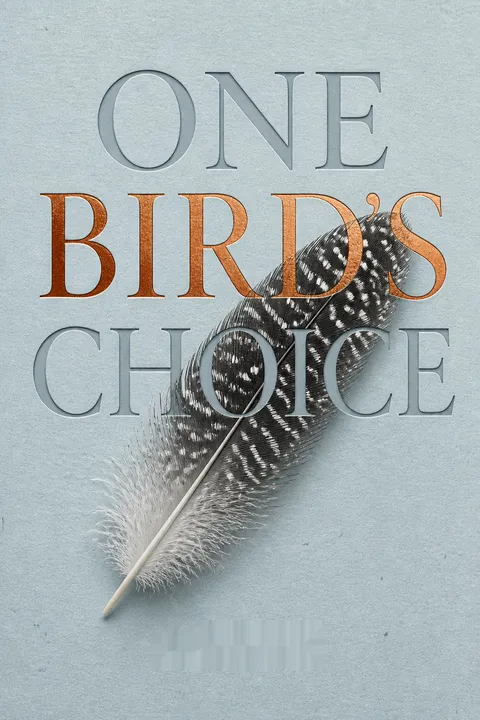
One Bird's Choice is a memoir by Iain Reid about moving back to his parents' farm as an unemployed 27-year-old. Reviews praise Reid's humorous writing style and his portrayal of his quirky, eccentric parents. Many readers found the book relatable, heartwarming, and laugh-out-loud funny. Some appreciated the insights into farm life and the author's personal growth. However, a few critics found the book dull or lacking substance. Overall, most reviewers enjoyed the lighthearted, slice-of-life narrative and Reid's observations on family dynamics.
People Also Read






Glossary
spots of time
moments of heightened awarenessA phrase from Wordsworth’s poetry that Reid’s father uses for moments when experience seems unusually vivid and revealing. After the family clears the sheep barn, he points to the surrounding fields as an occasion for seeing ordinary life more clearly. In the memoir, the idea names brief moments of attention rather than a formal method or a promise of lasting insight.


Download PDF
Download EPUB
.epub digital book format is ideal for reading ebooks on phones, tablets, and e-readers.








