Key Takeaways
1. Understand and Experience Your Core Belief
The core belief is always a negative belief we have about ourselves, an opinion so painful that we will do almost anything to avoid feeling our abject sense of unlovability and worthlessness.
The core belief is foundational. It forms early in childhood and shapes our perception of ourselves and the world. This negative self-perception drives our behaviors, emotions, and relationships. Understanding and experiencing this belief is crucial for personal growth and transformation.
Recognizing the core belief is challenging but essential. It often manifests as a feeling of unworthiness, inadequacy, or unlovability. To uncover it, we must pay attention to our thoughts, emotions, and bodily sensations, especially during times of stress or conflict.
Experiencing the core belief means:
- Acknowledging its presence without judgment
- Feeling the associated emotions and physical sensations
- Resisting the urge to escape or avoid the discomfort
- Gradually weakening its hold through repeated exposure and awareness
2. Practice Awareness Through Regular Sitting Meditation
Sitting is simply to maintain awareness. It's not something fancy. To maintain awareness is to be alive as a human being.
Sitting meditation is the foundation of practice. It provides a structured environment to develop awareness and observe our thoughts, emotions, and bodily sensations. Regular practice builds the capacity to stay present and experience life fully.
Key aspects of sitting practice:
- Consistency: Sit daily, even if only for a short time
- Posture: Maintain an upright, dignified position
- Attention: Focus on breath, bodily sensations, or a specific object
- Labeling: Note thoughts and emotions without engaging with them
- Patience: Accept that progress is gradual and non-linear
Benefits of regular sitting practice:
- Increased self-awareness
- Improved ability to handle difficult emotions
- Greater clarity and focus in daily life
- Enhanced capacity for compassion and empathy
3. Embrace Difficulties as Opportunities for Growth
The struggle isn't pointless. The struggle is, in fact, absolutely important.
Challenges are catalysts for growth. Rather than avoiding or resisting difficulties, we can view them as opportunities to deepen our practice and understanding. This shift in perspective allows us to engage with life more fully and authentically.
Approaching difficulties:
- Acknowledge the discomfort or pain
- Stay present with the experience without trying to change it
- Observe thoughts and emotions without judgment
- Look for the lesson or growth opportunity in the situation
Benefits of embracing difficulties:
- Increased resilience and adaptability
- Deeper self-understanding and personal growth
- Greater capacity to handle future challenges
- Enhanced ability to support others in their struggles
4. Move from Self-Centered to Life-Centered Perspective
Practice is about moving out of a life that's falsely driven into one that has a genuine motivation.
Shifting perspective is transformative. Moving from a self-centered view driven by our core belief to a life-centered perspective allows us to engage with the world more authentically and compassionately. This shift is gradual and requires consistent practice.
Characteristics of a life-centered perspective:
- Recognizing interconnectedness with all beings
- Acting from genuine motivation rather than fear or desire
- Responding to situations with openness and flexibility
- Experiencing joy and sorrow without attachment or aversion
Steps to cultivate a life-centered perspective:
- Practice awareness of self-centered thoughts and behaviors
- Challenge assumptions about separateness and fixed identity
- Engage in acts of kindness and service to others
- Cultivate gratitude for the present moment and all experiences
5. Experience Emotions Without Judgment or Reaction
To experience pain produces transformation. It doesn't necessarily mean the pain goes away, but it's as though it has a big space around it.
Experiencing emotions fully is liberating. Rather than suppressing, avoiding, or reacting to emotions, we can learn to experience them directly. This approach allows for greater emotional intelligence and resilience.
Steps to experience emotions:
- Recognize the emotion as it arises
- Feel the physical sensations associated with the emotion
- Observe thoughts without engaging or identifying with them
- Allow the emotion to be present without trying to change it
- Notice how the emotion changes and passes naturally
Benefits of experiencing emotions:
- Reduced reactivity and impulsiveness
- Increased emotional intelligence and self-understanding
- Greater capacity for empathy and compassion
- Enhanced ability to handle difficult situations calmly
6. Cultivate Authentic Relationships by Letting Go of Demands
We can't have real relationships with other people when we place demands on them. If I have a demand on you, I'm not interested in you. I'm more interested in getting something.
Authentic relationships require openness. By letting go of demands and expectations, we create space for genuine connection and understanding. This approach allows for more fulfilling and dynamic relationships.
Characteristics of authentic relationships:
- Mutual respect and acceptance
- Open communication without judgment
- Willingness to be vulnerable and honest
- Absence of manipulation or hidden agendas
Steps to cultivate authentic relationships:
- Recognize and release personal demands and expectations
- Practice active listening without formulating responses
- Express genuine feelings and needs clearly and respectfully
- Embrace differences and allow others to be themselves
- Cultivate empathy and compassion for others' experiences
7. Transform Your Life Through Continuous Practice and Patience
Practice is about the growth of your life such that it's bigger, more spacious. It has more room for you and for the person you're in difficulty with.
Transformation is a lifelong journey. Consistent practice and patience are essential for meaningful change. As we continue to practice awareness, experience emotions, and cultivate authentic relationships, our lives become more spacious and fulfilling.
Key aspects of continuous practice:
- Consistency: Maintain regular sitting practice and daily mindfulness
- Patience: Accept that growth is gradual and non-linear
- Curiosity: Approach all experiences with openness and interest
- Compassion: Be kind to yourself and others throughout the process
Signs of transformation:
- Increased ability to stay present in difficult situations
- Greater emotional resilience and equanimity
- More authentic and fulfilling relationships
- Enhanced sense of purpose and connection to life
- Reduced reactivity and attachment to fixed ideas or outcomes
Last updated:
FAQ
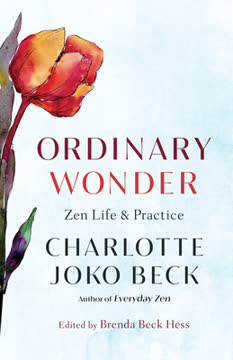
1. What is "Ordinary Wonder: Zen Life and Practice" by Charlotte Joko Beck about?
- Practical Zen for Daily Life: The book distills Zen teachings into practical advice for living with awareness, honesty, and compassion in everyday situations.
- Focus on Core Belief: Beck explores the concept of the "core belief"—a deep-seated, negative self-view formed in childhood that shapes our reactions and suffering.
- Experiencing the Present: The central message is to fully experience whatever arises in the present moment, including pain, joy, and discomfort, as the path to transformation.
- Ordinary Life as Practice: Rather than seeking mystical experiences, Beck emphasizes that ordinary life—relationships, work, emotions—is the true ground of Zen practice.
- Accessible, Down-to-Earth Teaching: The book is known for its clear, direct, and sometimes wry approach, making Zen accessible to Western readers.
2. Why should I read "Ordinary Wonder: Zen Life and Practice" by Charlotte Joko Beck?
- Real-Life Application: The book offers concrete methods for integrating Zen practice into the messiness of daily life, not just on the meditation cushion.
- Emotional Transformation: Beck provides tools for working with difficult emotions like anger, fear, and resentment, leading to greater freedom and peace.
- Unique Zen Perspective: Her approach bridges traditional Zen with psychological insight, focusing on self-awareness and the dismantling of self-centered patterns.
- Encouragement for All Levels: Whether you’re new to Zen or a long-time practitioner, Beck’s teachings are relevant, compassionate, and non-dogmatic.
- Inspiration for Authentic Living: The book encourages readers to live more honestly, compassionately, and with a sense of wonder, regardless of life’s challenges.
3. What are the key takeaways from "Ordinary Wonder: Zen Life and Practice"?
- Awareness is Central: True transformation comes from honest, ongoing awareness of thoughts, emotions, and bodily sensations.
- The Core Belief Drives Suffering: Most of our suffering stems from a negative core belief about ourselves, formed in early childhood, which we unconsciously defend or avoid.
- Practice is Experiencing, Not Escaping: Zen practice is about experiencing life as it is, including pain and discomfort, rather than seeking escape or comfort.
- Ordinary Life is Sacred: There is no separation between the sacred and the ordinary; every moment and task is an opportunity for practice and awakening.
- Compassion Emerges Naturally: As we become less self-centered and more life-centered, compassion and appropriate action arise spontaneously.
4. How does Charlotte Joko Beck define the "core belief" in "Ordinary Wonder: Zen Life and Practice"?
- Early Childhood Origin: The core belief is a negative self-view (e.g., "I am unlovable" or "I am not enough") formed in response to unmet needs in early childhood.
- Unconscious and Painful: It operates unconsciously, driving our strategies and reactions to avoid the pain of feeling unworthy or unsafe.
- Foundation of Suffering: This belief is at the root of most emotional suffering and self-sabotaging behaviors.
- Practice Reveals and Weakens It: Through meditation and honest self-inquiry, we can become aware of the core belief, experience its pain directly, and gradually loosen its hold.
- Not a Psychological Fix: Beck emphasizes that understanding the core belief intellectually is not enough; transformation comes from experiencing and resting in the pain it generates.
5. What is Charlotte Joko Beck’s approach to Zen practice in "Ordinary Wonder: Zen Life and Practice"?
- Experiencing Over Escaping: Practice is about fully experiencing whatever arises—thoughts, emotions, sensations—without trying to fix, analyze, or escape them.
- Labeling Thoughts: Beck recommends labeling thoughts as they arise to develop awareness and reduce their power.
- Resting in Sensation: She encourages returning to bodily sensations, especially those associated with pain or discomfort, as a gateway to transformation.
- Everyday Mindfulness: Zen is not limited to formal sitting; washing dishes, walking, and interacting with others are all opportunities for practice.
- No Special Attainment: The goal is not to become "enlightened" or special, but to live more honestly, compassionately, and with less self-centeredness.
6. How does "Ordinary Wonder: Zen Life and Practice" by Charlotte Joko Beck address working with difficult emotions?
- Emotions as Practice Points: Difficult emotions like anger, fear, and resentment are seen as opportunities for practice, not obstacles.
- Pause and Experience: Beck teaches pausing to feel the emotion in the body, rather than reacting or suppressing it.
- Anger and Core Belief: She explains that anger often arises from the pain of the core belief and is fueled by helplessness and fear.
- Steadiness Through Practice: Regular meditation builds the steadiness needed to experience strong emotions without being overwhelmed or acting out.
- True Remorse and Forgiveness: The book discusses the importance of genuine remorse (not self-condemnation) and the gradual process of forgiveness, both for others and oneself.
7. What practical methods or exercises does Charlotte Joko Beck recommend in "Ordinary Wonder: Zen Life and Practice"?
- Labeling Thoughts: Regularly label thoughts during meditation to develop awareness and detach from repetitive mental patterns.
- Resting in Sensation: Practice sitting with uncomfortable bodily sensations, especially those linked to emotional pain, without trying to change them.
- Three Lists Exercise: Make three lists—how you were trained as a child, what you require of yourself now, and the emotions behind those requirements—to uncover self-constructed patterns.
- Mindful Daily Activities: Bring full attention to ordinary tasks (e.g., washing dishes, walking, eating) as a form of meditation.
- Noticing Complaints: Become aware of complaints and underlying emotions as a way to see self-centered patterns and open to life-centered action.
8. How does "Ordinary Wonder: Zen Life and Practice" by Charlotte Joko Beck redefine enlightenment and awakening?
- Not a Special State: Enlightenment is not a mystical or extraordinary state, but the natural result of being present with life as it is.
- Already Who We Are: Beck suggests that enlightenment is our true nature, obscured by the false constructs of the core belief and self-centered strategies.
- Ordinary Wonder: The "ordinary wonder" is the simple joy and peace found in experiencing each moment fully, without judgment or expectation.
- No Final Arrival: Awakening is not a one-time event but an ongoing process of becoming less stuck, more spacious, and more compassionate.
- Freedom from Self-Centeredness: The measure of awakening is the degree to which we are free from the self-centered dream and able to respond appropriately to life.
9. What does Charlotte Joko Beck say about relationships in "Ordinary Wonder: Zen Life and Practice"?
- Relationships as Teachers: Close relationships are seen as the primary ground for practice, revealing our core beliefs and strategies.
- Demand vs. Authenticity: Many relationship problems stem from unconscious demands we place on others to fill our inner sense of lack.
- Three Circles Model: Beck describes three concentric circles—core belief, strategies/identities, and relationships with others—showing how inner pain shapes outer interactions.
- True Relatedness: Authentic relationships arise when we drop demands and meet others (and ourselves) as they are, with openness and curiosity.
- Patience and Holding: Deep transformation in relationships requires patience, honesty, and the willingness to "hold" discomfort without rushing to fix or escape.
10. How does "Ordinary Wonder: Zen Life and Practice" by Charlotte Joko Beck address the role of daily sitting meditation?
- Foundation of Practice: Daily sitting is presented as essential for developing the awareness and steadiness needed to face life’s challenges.
- Builds "Muscle": Regular sitting builds the "muscle" to stay with discomfort, pain, and difficult emotions, both on and off the cushion.
- Not an Escape: Beck warns against using meditation as a strategy to avoid life or build a spiritual identity; the point is to experience, not escape.
- Stillness and Dignity: Sitting with stillness and good posture creates a container for honest self-exploration and transformation.
- Practice Destroys Itself: Over time, genuine practice erodes the illusions and self-centered patterns that motivated us to practice in the first place.
11. What are some of the best quotes from "Ordinary Wonder: Zen Life and Practice" by Charlotte Joko Beck, and what do they mean?
- "At least let me rest on that icy couch." — Emphasizes the importance of resting in the pain of the core belief, rather than escaping or covering it up.
- "Sesshin is controlled suffering. The only thing worse than doing sesshin is not doing sesshin." — Highlights the paradox that facing suffering directly in practice is both difficult and ultimately liberating.
- "If you love the sacred and despise the ordinary, you are still bobbing in the ocean of delusion." — Reminds us that true Zen is found in ordinary life, not in seeking special or mystical experiences.
- "You’re fine." — Beck’s distilled teaching, pointing to the fundamental okayness of our true nature beneath all self-judgment and striving.
- "Are you tasting or are you judging?" — Encourages direct experience over mental commentary, as the path to freedom from self-centeredness.
12. How can readers apply the teachings of "Ordinary Wonder: Zen Life and Practice" by Charlotte Joko Beck to their own lives?
- Start with Awareness: Begin by noticing and labeling thoughts and emotions, especially in moments of discomfort or conflict.
- Practice Resting in Sensation: When pain or strong emotion arises, pause and feel it in the body without trying to change or analyze it.
- Bring Mindfulness to Daily
Review Summary
Ordinary Wonder receives high praise from readers for its practical wisdom and clear insights into Zen practice. Many find Beck's straightforward approach refreshing and accessible. Readers appreciate her emphasis on identifying core beliefs and daily meditation. Some note the book's repetitive nature, while others view it as a masterclass in Buddhist psychology. Many reviewers express gratitude for Beck's teachings, finding them life-changing and applicable to everyday life. The book is often described as thought-provoking, inspiring, and a valuable resource for those interested in Zen philosophy.
Similar Books




Download PDF
Download EPUB
.epub digital book format is ideal for reading ebooks on phones, tablets, and e-readers.





