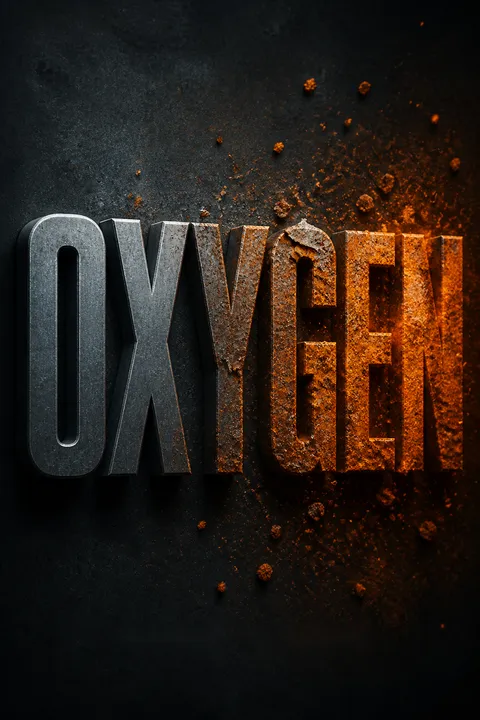


Key Takeaways
Treat oxygen as life’s engine and its slowest poison
One molecule, two roles. Oxygen lets cells extract energy from food through respiration, a controlled chemical process akin to slow combustion. But that process also produces reactive oxygen compounds, which can damage DNA, proteins, and cell membranes. At high concentrations, oxygen’s toxicity is unmistakable: it can injure lungs or trigger seizures, depending on dose and pressure. Lane’s larger claim is that ordinary respiration may contribute to gradual ageing through the same chemistry.
A useful distinction. Oxygen is neither simply beneficial nor simply harmful. Its effects depend on where it is, how much is present, how long exposure lasts, and how effectively an organism controls its reactions. The book uses this paradox to connect Earth’s deep history with metabolism, evolution, disease, and death.
The central strength is its refusal to divide biology into clean categories of good and bad. Oxygen is a resource whose usefulness depends on containment, much like fire: controlled in a furnace, destructive when it escapes. That perspective helps readers understand why the body needs oxygen while also investing heavily in systems that regulate it. The caution is that the same chemical pathway does not prove every outcome has the same cause. Acute oxygen poisoning is established in the book’s account; oxygen as the primary driver of normal human ageing is a broader, more contestable interpretation.
Trace oxygen history through burial, not just photosynthesis
A tiny imbalance matters. Early Earth had almost no free oxygen in its atmosphere. Photosynthesis eventually began releasing it, but respiration by animals, fungi, and microbes consumed nearly all of that supply. Oxygen accumulated only when some organic matter escaped consumption and was buried in sediments. Lane estimates that the buried share was a mere 0.01 percent of what photosynthesis produced, yet this small imbalance built the atmosphere we depend on.
A pulsed history. Geological clues, including carbon and sulphur isotope patterns, iron-rich formations, and fossil soils, suggest oxygen rose in distinct episodes rather than settling smoothly at today’s level. Major rises preceded important expansions of life. The evidence, Lane argues, does not show the oxygen-driven mass extinction once widely proposed.
This account makes a powerful systems point: the atmosphere is not simply a product of photosynthesis, but of the balance between production, consumption, burial, weathering, and geology. Tiny annual differences can transform a planet when they persist over geological time. It also shows why environmental history must be reconstructed from imperfect proxies rather than direct observation. Those proxies can establish broad patterns more confidently than exact concentrations or causal sequences, so the story is strongest when it describes oxygen pulses and more tentative when it assigns each pulse a single biological consequence.
Use oxygen as an enabling condition, not evolution’s sole driver
More energy, longer food chains. Lane contrasts oxygen-based respiration, which he estimates can extract about 40 percent of food’s available energy, with anaerobic pathways that often extract less than 10 percent. More usable energy can support larger bodies, active movement, and predators. Oxygen is also needed to make structural materials such as animal collagen and plant lignin, which help large organisms support themselves.
Opportunity arrives in waves. Oxygen increases preceded the rise of eukaryotic cells, early animals, and the Cambrian expansion of diverse body forms. Lane also argues that atmospheric oxygen may have reached roughly 35 percent during the Carboniferous, helping explain giant insects such as the half-metre-winged Bolsover dragonfly. That estimate came from models and indirect evidence, and remains a claim to treat cautiously.
The most convincing version of this argument is not that oxygen caused evolution, but that it changed which evolutionary solutions were energetically possible. Energy supply can alter the scale of movement, feeding, and competition, while development and ecological relationships determine what organisms actually evolve. That distinction prevents a geological variable from becoming a cartoon puppet-master. The Carboniferous oxygen estimate is a good case study in scientific inference: multiple lines of evidence can reinforce a model without making every detail certain. The dragonfly is vivid evidence of the question, not by itself proof of the answer.
Look for defenses before the poison appears
Stress before atmospheric oxygen. Ultraviolet radiation can split water and generate reactive compounds even when the air contains little free oxygen. Lane argues that these compounds could have created oxidative stress in early shallow waters, favoring organisms with protective enzymes before photosynthetic life filled the atmosphere with oxygen. Genetic comparisons also suggest that LUCA, the last universal common ancestor of known life, may have had both antioxidant defenses and genes for using oxygen in respiration.
A proposed evolutionary bridge. Lane suggests that catalase, an enzyme that breaks down hydrogen peroxide, may have helped give rise to the oxygen-evolving complex that splits water during photosynthesis. This is a hypothesis, not an established account. Its appeal is that life could have adapted to oxygen-related chemistry before oxygen became abundant.
This is evolutionary thinking at its most productive: a trait can be recruited for a new job because an earlier environment already favored related capacities. The argument turns adaptation from a reaction to a sudden catastrophe into a history of preparation and reuse. It also connects atmospheric chemistry with the molecular machinery of living cells. Yet the reconstruction depends on reading ancient genes and biochemical similarities backward through billions of years. Such evidence can make a scenario plausible without uniquely identifying it, so the proposed route from catalase to photosynthesis should remain a carefully labeled hypothesis.
Treat antioxidants as a network, not a shopping list
Vitamin C does more than scavenge. It donates electrons in many reactions, helping the body build collagen, make carnitine for fat metabolism, activate certain hormones, and absorb iron. It also helps immune cells survive the chemical assault they launch against bacteria. Under some conditions, however, vitamin C can help iron generate damaging radicals rather than neutralize them. Its effect depends on its surroundings, not just its label as an antioxidant.
Food is not a pill. The book describes evidence linking fruit and vegetable consumption with better health, but argues that this does not prove isolated antioxidant supplements produce the same benefit. Lane cites an estimated 200 to 400 milligrams of vitamin C in a diet containing five portions of fruit and vegetables, and argues that high-dose supplements cannot simply be assumed to extend life.
The important conceptual shift is from treating an antioxidant as a heroic molecule to treating it as one participant in a regulated chemical economy. A molecule that donates electrons can protect one process and promote another, depending on the available metals, enzymes, and cellular location. This also explains why whole foods cannot be reduced neatly to their most famous nutrient: they contain mixtures that act through several pathways. The book’s skepticism toward supplement claims is sound, but its specific dietary estimates and health interpretations belong to the evidence available in its own period, not to a universal prescription.
Read oxidative stress as both damage and information
Five layers of defense. Lane groups protection against oxygen-related damage into a broad system: organisms can avoid exposure, use enzymes to control reactive compounds, use scavengers to interrupt damage, repair injured molecules, and activate stress responses that strengthen defenses. Superoxide dismutase, for example, converts superoxide into hydrogen peroxide, which other enzymes must then handle. The defenses work in networks, not as isolated shields.
A warning signal. Oxidation can also change proteins that regulate genes. The cell may respond by making protective proteins, repairing DNA, or changing its metabolism. This makes oxidative stress both a threat and a message that conditions have changed. Too little response leaves damage unchecked; a prolonged response can itself disrupt normal cellular work.
This framework makes a useful distinction between preventing harm and responding to it. Biological defenses are not passive filters: they sense conditions and change the cell’s behavior. That is why indiscriminately suppressing every reactive molecule could interfere with a useful alarm as well as reduce damage. The same idea applies beyond oxygen chemistry: many regulatory systems depend on signals that are beneficial in a brief, controlled burst but harmful when sustained. The challenge is calibration. A system can be protective in the short term and costly when its emergency mode becomes the new normal.
See lifespan as an evolutionary budget, not a fixed clock
Maintenance competes with reproduction. The disposable soma theory describes ageing as a trade-off between resources invested in reproduction and resources spent maintaining the body. A body must last long enough to reproduce, but evolution does not automatically reward maintenance beyond the likely lifespan in a particular environment.
The balance can shift. In a study discussed by Lane, Virginia opossums on predator-free Sapelo Island aged more slowly than mainland opossums, while producing smaller litters. In fruit flies, selection for late-laid eggs produced flies that lived more than twice as long, with fertility shifted toward later life. Lane also connects food signals, insulin, and insulin-like growth factors with decisions about growth and reproduction. Calorie restriction extends lifespan in many animals, but its effects in people are not established by these examples.
The theory reframes ageing as an allocation problem shaped by ecology, rather than a universal program with one predetermined expiry date. Predation, food supply, and the value of caring for offspring all change what level of bodily upkeep is advantageous. This offers a compelling explanation for why lifespan varies widely across species. It should not be mistaken for a literal energy ledger or a claim that individuals consciously choose reproduction over longevity. The animal studies show evolutionary flexibility; translating that flexibility into safe, reliable interventions for humans is a separate and much harder question.
Protect mitochondrial performance, not simply lower metabolism
Respiration has a price. Mitochondria generate much of a cell’s usable energy, but some oxygen can escape the respiratory process as reactive compounds. Lane argues that gradual mitochondrial damage can create a feedback loop: weaker energy production makes cellular repair harder, while continued damage further undermines the mitochondria. His MARS model describes interactions among mitochondria, abnormal proteins, radicals, and scavengers.
Birds complicate the simple rule. Pigeon mitochondria in the cited experiments used about three times as much oxygen as rat mitochondria but released about one-third as much hydrogen peroxide. Pigeons can live roughly ten times longer than rats. The contrast suggests that leakage and repair matter, not just metabolic speed. Calorie restriction and exercise may affect these systems in animals, but the book does not establish a simple human longevity recipe.
The comparison between birds and mammals sharpens the question from how fast an organism burns energy to how cleanly it manages that energy. In engineering terms, efficiency is not merely output per unit of fuel; it also includes heat, waste, and maintenance costs. That is a more useful model than a fixed quota of heartbeats. Still, mitochondrial damage is difficult to measure, and the MARS model is a way to organize plausible interactions, not a definitive account of human ageing. The evidence supports taking mitochondrial quality seriously without reducing every disease to mitochondrial failure.
Ask whether sex protects mitochondrial inheritance, not just reproduction
A problem passed between generations. Mitochondria carry their own DNA and usually come from the egg, not the sperm. Lane presents an evolutionary hypothesis: sperm mitochondria are damaged by the energy demands of motility, so excluding them from the next generation may protect inherited mitochondrial function. Some evidence described in the book shows sperm mitochondria tagged for disposal, while mitochondria in eggs can be kept relatively inactive during early development.
A provocative explanation. If mitochondrial damage accumulates during oxygen respiration and mitochondrial genes cannot be repaired through ordinary sexual recombination, then specialized egg and sperm roles might help reset the inherited supply. Lane suggests this could help explain the evolution of two sexes. The proposal links sex to oxygen and cellular ageing, but it is not a settled explanation for why sexes evolved.
This hypothesis is memorable because it connects an organism-level feature, sexual reproduction, to a persistent problem inside cells. It also illustrates how an evolutionary explanation can generate testable predictions about which organelles are inherited and when they are active. But a striking story is not the same as a complete account of sex. The source itself notes variation in mitochondrial inheritance and uncertainty about what happens to sperm mitochondria. The idea is best treated as a possible contribution to the evolution of sex, not a singular answer to a longstanding biological puzzle.
Treat chronic oxidative signaling as a shared pathway to age-related disease
One signal, different outcomes. The double-agent theory of ageing and disease argues that oxidative stress helps activate defenses against infection, including inflammatory pathways involving the transcription factor NF-kappa B. In youth, a temporary response can help contain an infection. With age, Lane argues, persistent mitochondrial stress may activate related pathways without a removable infection to resolve, encouraging chronic inflammation.
Shared vulnerability. The book applies this model to conditions including Alzheimer’s disease, cancer, and cardiovascular disease. For example, it describes oxidative changes to amyloid and tau proteins, followed by inflammation that can amplify injury in the brain. This shifts attention from individual susceptibility genes toward the processes that shape their effects. Lane’s practical emphasis is modest: avoid smoking, eat a varied diet, stay active, and do not expect antioxidant pills to halt ageing.
The model’s most useful insight is that disease risk can emerge from a change in the cellular environment, not only from a defective gene. It offers a coherent explanation for why inflammation and oxidative damage appear across many conditions, and why a protective response can become harmful when it persists. Its limitation is the familiar one in complex biology: a shared marker may be a cause, a consequence, or both. The framework therefore supports investigating common mechanisms, but not abandoning disease-specific research or treating oxidative stress as a single master explanation.
Analysis
The book’s unifying move is to make oxygen a historical actor and a cellular problem at the same time. This creates a strong narrative bridge: photosynthesis changes planetary chemistry; planetary chemistry opens energetic possibilities; oxygen-dependent metabolism then creates new costs for individual cells. The result is not merely a history of a gas, but an argument about how biological opportunity and biological damage can arise from the same chemistry.
Its best insights are relational. Oxygen levels matter alongside burial, geology, organism size, energy use, repair, and ecological pressure. Antioxidants matter as coordinated systems rather than a list of beneficial substances. Ageing becomes more intelligible when reproduction, maintenance, and environmental risk are considered together. These ideas resist simple slogans and explain why a molecule can be essential without being harmless.
The narrative also risks making a single molecule too powerful an explanation. Several major claims rely on indirect evidence: ancient atmospheric concentrations, the early metabolism of LUCA, the origin of oxygenic photosynthesis, and the proposed connection between mitochondrial damage, ageing, and disease. Lane often distinguishes evidence from speculation, but the vividness of the unified story can make hypotheses feel more settled than they are. The same caution applies to linking oxidative markers with particular diseases, since association alone cannot establish causal order.
The lasting value is therefore not a verdict that oxygen explains everything. It is a way to ask better questions: what does a biological system gain from oxygen, what does it risk, and what compensations make the bargain workable? That approach joins geology, chemistry, evolution, and medicine without pretending their evidence has equal certainty. The book’s most durable lesson is that life is built through trade-offs, and that successful adaptations can carry costs long after the original environmental problem has changed.
Review Summary
Oxygen is praised as a comprehensive exploration of oxygen's role in Earth's history and biology. Readers appreciate Lane's synthesis of diverse scientific fields, from geology to biochemistry. The book covers oxygen's impact on evolution, aging, and diseases. While some find it challenging, many commend its depth and engaging writing. Critics note speculative elements and potential oversimplifications. The book's discussions on antioxidants, mitochondria, and aging theories are highlighted. Overall, it's considered an informative, thought-provoking read for those interested in science and biology.
People Also Read

Glossary
LUCA
Shared ancestor of known lifeLUCA means Last Universal Common Ancestor, the most recent ancestor shared by all known organisms, including bacteria, archaea, and eukaryotes. It was not necessarily the first living thing. Lane reconstructs its likely traits by comparing features shared across modern life, and argues that LUCA may have been metabolically versatile and able to use oxygen before oxygen accumulated in the atmosphere.
oxidative stress
Imbalance in cellular oxidationOxidative stress is a disturbance in a cell’s chemical balance caused when the formation of reactive oxygen compounds exceeds their control, removal, or repair. These compounds can damage DNA, proteins, and membrane lipids. In Lane’s account, oxidative stress is also a signal that can change gene activity and trigger protective responses, so its effects depend on degree, duration, and cellular context.
oxygen-evolving complex
Water-splitting photosynthesis machineryThe oxygen-evolving complex is the protein machinery in oxygen-producing photosynthesis that extracts electrons and protons from water and releases oxygen. The reactions involve reactive intermediates, so the complex must hold the water and reaction products in a controlled structure. Lane proposes that it may have evolved from catalase-like enzymes, an intriguing but uncertain account of how water-splitting photosynthesis originated.
disposable soma theory
Maintenance trades off with reproductionThe disposable soma theory explains ageing as an evolutionary trade-off between maintaining the body, or soma, and investing in reproduction. Natural selection favors enough bodily maintenance for an organism to reproduce successfully, but does not necessarily favor costly repair beyond the lifespan likely in its environment. The theory helps explain why lifespan can vary with predation, fertility, and resources.
antagonistic pleiotropy
Early benefit, late costAntagonistic pleiotropy describes a gene with multiple effects that pull in different directions. A variant may improve survival or reproduction earlier in life while increasing disease risk or decline later. Because early effects can influence reproduction more strongly than late effects, natural selection may preserve a gene whose later consequences are harmful.
MARS model
Model of interacting ageing processesThe MARS model describes ageing through interactions among mitochondria, aberrant proteins, radicals, and scavengers. It proposes that modest mitochondrial decline can reduce cellular energy, increase damaging reactive compounds, and impair the systems that repair or remove damaged molecules. These processes can reinforce one another over time. Lane presents the model as a plausible framework, not a final proof of how ageing works.
double-agent theory of ageing and disease
Stress signal helps, then harmsThe double-agent theory argues that oxidative stress has opposing roles across life. A temporary increase can activate inflammation and cellular defenses that help fight infection. Persistent oxidative stress, which Lane links to ageing mitochondria, may activate related pathways without a removable infection, contributing to chronic inflammation and age-related disease. The theory proposes a shared mechanism, while leaving causal details open to testing.
photorespiration
Oxygen-linked drag on photosynthesisPhotorespiration is a plant process that occurs in light when the enzyme Rubisco binds oxygen instead of carbon dioxide. It consumes oxygen and releases carbon dioxide without producing useful energy, reducing the efficiency of photosynthesis. Lane discusses the possibility that photorespiration also protects plants under high-oxygen conditions and may affect atmospheric oxygen, while noting that its function and regulatory importance are not fully resolved.
FAQ
What's Oxygen: The Molecule That Made the World about?
- Exploration of Oxygen's Role: The book examines oxygen's dual nature as essential for life and a contributor to death, shaping life on Earth over billions of years.
- Historical Context: Nick Lane provides a narrative tracing the discovery of oxygen and its implications, from early microbial life to complex organisms.
- Interconnection of Life and Oxygen: It connects various scientific disciplines, showing how oxygen influences energy production, health, disease, and aging.
Why should I read Oxygen: The Molecule That Made the World?
- Engaging Scientific Writing: Lane's writing is praised for making complex topics accessible and engaging for a general audience.
- Interdisciplinary Insights: The book bridges biology, chemistry, and geology, offering a comprehensive understanding of oxygen's impact on life.
- Relevance to Modern Issues: It addresses contemporary concerns about health, aging, and environmental issues, making it relevant to science enthusiasts.
What are the key takeaways of Oxygen: The Molecule That Made the World?
- Oxygen as a Double-Edged Sword: While vital for life, oxygen also poses risks, contributing to aging and diseases.
- Evolutionary Significance: The rise of atmospheric oxygen was crucial for the evolution of complex life forms, including the Cambrian explosion.
- Antioxidants and Health: The book challenges the notion that consuming antioxidants can significantly extend life, emphasizing a balanced approach.
What are the best quotes from Oxygen: The Molecule That Made the World and what do they mean?
- “Oxygen, an essential element of life, is also an agent of death.”: This highlights the paradox of oxygen's role in sustaining and threatening life.
- “The poison is in the dose.”: Illustrates that while oxygen is necessary, excessive exposure can lead to toxicity and damage.
- “Life, Death and Oxygen: Lessons From Evolution on the Future of Ageing.”: Suggests that understanding oxygen's historical role can provide insights into health and aging.
How did the discovery of oxygen impact our understanding of life?
- Historical Controversy: The book discusses the contentious history of oxygen's discovery, involving figures like Joseph Priestley and Antoine Lavoisier.
- Shift in Scientific Paradigms: Realizing oxygen's role in combustion and respiration transformed scientific thought and understanding of metabolism.
- Foundation for Modern Biology: Lane argues that the discovery laid the groundwork for modern biology, influencing evolutionary theories.
What is the free radical theory of aging mentioned in Oxygen: The Molecule That Made the World?
- Oxidative Damage: The theory posits that free radicals, reactive forms of oxygen, cause cellular damage over time, leading to aging.
- Role of Antioxidants: Antioxidants can neutralize free radicals, but excessive supplementation may not significantly extend lifespan.
- Implications for Health: Understanding this theory can inform lifestyle choices related to diet and health, emphasizing balance.
How does Oxygen: The Molecule That Made the World connect oxygen to evolution?
- Oxygen and Multicellularity: Rising oxygen levels were crucial for the evolution of multicellular organisms, enabling complex life forms.
- Cambrian Explosion: Lane links increased atmospheric oxygen to the Cambrian explosion, marked by rapid life diversification.
- Environmental Changes: Geological events, like snowball Earth, influenced oxygen levels and evolutionary pathways.
What evidence does Lane provide for high oxygen levels during the Carboniferous period?
- Fossil Record: The abundance of fossilized giant insects, like the Bolsover dragonfly, suggests higher oxygen levels supported larger body sizes.
- Coal Formation: Massive burial of organic matter as coal during the Carboniferous contributed to elevated oxygen levels.
- Isotope Analysis: Studies of carbon and strontium isotopes indicate fluctuations in oxygen levels, supporting a high-oxygen atmosphere.
How does Oxygen: The Molecule That Made the World address the paradox of oxygen being both essential and toxic?
- Oxygen's Dual Nature: Oxygen is necessary for life processes but can lead to oxidative stress and cellular damage.
- Historical Context: Early life forms adapted to oxygen, developing mechanisms to cope with its toxic effects.
- Modern Implications: Understanding this paradox can inform health practices and antioxidant use in diets.
What role do antioxidants play according to Oxygen: The Molecule That Made the World?
- Defense Against Free Radicals: Antioxidants neutralize free radicals, reducing oxidative damage to cells.
- Dietary Sources: Consuming fruits and vegetables rich in antioxidants is emphasized for overall health.
- Caution Against Over-Supplementation: Excessive antioxidant supplementation may not provide expected benefits and could be harmful.
How does Oxygen: The Molecule That Made the World relate to current environmental issues?
- Impact of Oxygen Levels: Fluctuations in atmospheric oxygen levels can affect ecosystems and biodiversity.
- Human Influence: Human activities alter oxygen levels, with potential health and environmental consequences.
- Call for Awareness: Lane encourages considering oxygen's historical significance and preserving the environment for future generations.
What is the mitochondrial theory of ageing as discussed in Oxygen: The Molecule That Made the World?
- Mitochondrial Damage: Damage to mitochondrial DNA from free radicals leads to a decline in function, contributing to aging.
- Free Radical Leakage: Mitochondria produce energy but leak free radicals, causing cellular damage and accelerating aging.
- Implications for Longevity: Improving mitochondrial efficiency could extend lifespan and reduce age-related diseases.
About the Author
Download PDF
Download EPUB
.epub digital book format is ideal for reading ebooks on phones, tablets, and e-readers.








