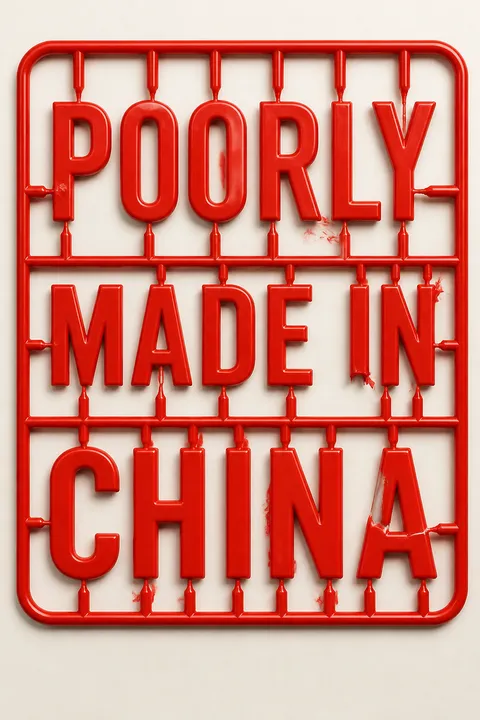


Key Takeaways
Treat first-order bargains as customer-acquisition costs, not proof of a safe supplier.
The welcome is part of the sale. At King Chemical, Paul Midler’s first tour looked reassuring: workers wore white coats, washed their hands, and hurried to fill pink bottles. When he returned unannounced around three o’clock, the factory floor was nearly empty. The owner, Sister, said the workers were resting. Importer Bernie saw the sparse warehouse not as a warning, but as evidence the factory badly wanted his business.
Starting was deliberately easy. Chinese suppliers offered free samples, inexpensive setup, and fast prototypes. One inventor was quoted $60,000 for a prototype in the United States, then about $4,500 by a Chinese factory. Such offers made entry feel low-risk. But an attractive opening price could be an investment in winning future orders, not a reliable guide to long-term costs or conduct.
What's striking is that low prices and generous attention can be rational customer acquisition without being fraudulent. A loss leader buys access to future revenue; the danger is mistaking the introductory price for the full cost of dependence. Bernie's interpretation also illustrates confirmation bias: an empty warehouse becomes proof of bargaining power rather than a reason to investigate. A sound assessment compares savings with the costs of inspection, defects, delays, and supplier lock-in. One staged tour cannot establish intent, but it can justify independent verification.
Inspect production reality, not the showroom built to impress you.
A display is not proof. When an American store-fixture company visited potential suppliers, its first stop was an agent’s nearly empty warehouse. The second factory made exercise machines, yet its showroom displayed an impressive range of retail fixtures. Shipping boxes from American companies suggested that some samples had been collected from prospective customers or competitors. A third factory looked capable and polished, but already served the importer’s larger competitor.
Appearance can be manufactured. King Chemical later built a larger, shinier plant, even though the company had not shown a need for the extra capacity. The new facility reassured visitors and suggested success, but it did not automatically improve hygiene, workmanship, or honesty. Tours and certificates reveal what a supplier can present during a visit. They reveal much less about what happens during ordinary production.
The chapter’s factory visits expose a classic problem of signaling: buyers use visible clues, such as polished floors and impressive equipment, to infer qualities that are difficult to observe. Those clues can be informative, but they can also be staged. In auditing, attention to what is easy to see can crowd out checks on what matters most, including actual output and process controls. A strong evaluation asks for evidence tied to the buyer’s product, not a generic display of capability. A modest factory may be competent, while an elaborate showroom may be theater.
Assume product specifications can quietly change after the first successful shipment.
Quality can drift by increments. Midler calls the gradual degradation of a product without the buyer’s approval quality fade. At King Chemical, bottles became thinner over several months, so a container that had once felt sturdy could collapse under a light squeeze. The factory had altered the molds, which the importer had paid for and legally owned.
Small changes accumulate. Other problems included underfilled bottles, labels reduced in size, shampoo that thickened into jelly, and fragrances switched without permission. Each change could be presented as minor or blamed on a supplier. The pattern mattered more than any single defect: the factory could save money while the importer inherited the risk. The buyer’s original approval did not guarantee that later production would match the sample or written specification.
Quality fade is a principal-agent problem: the buyer pays for an outcome but cannot continuously observe the supplier’s choices about materials and process. Repeated orders can make this worse if the supplier learns which deviations escape detection. The concept also resembles gradual change in software or financial risk, where small adjustments appear harmless until their cumulative effect becomes visible. Not every variation signals deliberate manipulation; process capability and unclear specifications can also cause drift. That makes baseline samples, measurable tolerances, and documented approvals essential, rather than assuming either innocence or bad faith.
Test random production samples, because certificates and handpicked samples can mislead.
Inspection can miss the product. A retailer’s factory visit focused on worker conditions and outward signs, including a tree near the warehouse that might attract insects. It did not test bottles of shampoo. The plant displayed a “No Animal Testing” label, but that did not establish that the product had been tested for bacteria or harmful substances.
Sample selection matters. King Chemical’s antibacterial soap failed initial laboratory tests. The factory then prepared ten versions with different amounts of the active ingredient. Nine failed; one passed, and that successful sample went to the retailer. Third-party testing could therefore provide useful information while still missing what ordinary production contained. Certification described procedures, not a guarantee that every product met specifications. Tests also had to target specific substances, and the factory often controlled which sample was submitted.
The key issue is not whether laboratories are useful, but whether the sampling design represents the goods customers will receive. This is a familiar problem in statistics: a carefully measured sample can produce a misleading conclusion when selection is biased. Certification also has a narrower scope than many buyers assume. It may confirm that procedures exist without demonstrating that each batch meets safety or performance requirements. Independent, randomly selected samples strengthen the evidence, although testing cannot detect every unknown risk. A credible quality system combines product testing with process oversight and clear responsibility for failures.
Build exit options before a dispute, because changing suppliers is costly.
A contract does not erase dependence. When King Chemical sent underfilled body-wash bottles, Bernie insisted that the factory correct them. Sister organized workers to refill the bottles, but the factory then refused to provide Midler a ride back to town. Soon afterward, King Chemical said it might stop making body wash altogether. Johnson Carter needed the product, had retailers waiting, and could not replace the supplier immediately.
Switching takes time. A new factory would need to learn formulations, packaging, and production requirements. Meanwhile, orders had deadlines. King Chemical also controlled molds and product knowledge, and the parties had accumulated years of operating history. These dependencies made it difficult for the importer to enforce standards or credibly threaten to leave. Midler’s account shows that leverage is shaped before negotiations begin, by the availability of alternatives and control over essential assets.
This is a textbook switching-cost problem. A buyer may appear powerful because it places orders, yet become vulnerable when a supplier holds specialized knowledge, tooling, or the only capacity ready to meet a deadline. The practical response is to reduce single points of failure before conflict: preserve technical records, clarify ownership of molds, qualify alternatives, and allow realistic lead time. Those measures do not eliminate dependence, and duplicating suppliers can add expense. They do, however, make quality negotiations less like an ultimatum issued from a stranded position.
Ask what a supplier gains beyond the margin on your invoice.
A low margin can buy access. Midler uses “profit zero” for a strategy in which a factory accepts little or no immediate profit because the relationship offers other benefits. King Chemical could learn formulations and packaging from Johnson Carter, gain credibility with major retailers, and display its products to future customers. The importer’s orders could function as an unpaid apprenticeship for the factory.
The wider market matters. Midler describes large buyers from the United States and other wealthy economies as the “first market,” where original designs and business knowledge were especially valuable. Smaller buyers from markets with weaker intellectual-property protection could pay higher prices for copied or surplus goods. The book notes that the United States received about one-fifth of China’s exports at the time, while a major retailer’s reputation could be worth more to a supplier than its direct sales. Low quoted prices may serve a broader strategy.
This reframes price as one component of a supplier’s total return. In strategic management, firms may accept thin margins to acquire knowledge, credibility, distribution access, or a foothold in a valuable market. That can create real gains for both sides, but it changes the meaning of a bargain: the buyer may be contributing assets beyond cash. The book’s model is useful for asking what each party learns and gains. Its categories should not be treated as universal descriptions of entire countries or customer groups; they are the author’s account of incentives in the export sector he observed.
Protect designs and customer access as carefully as the finished product.
A sample can teach a competitor. Kevin, a pottery manufacturer, guarded his own factory’s designs while sending people to collect competitors’ samples. He could copy an attractive design, offer it to buyers, and sometimes have another factory make it. Midler saw a similar risk at King Chemical: Johnson Carter’s samples, formulations, and packaging helped the factory demonstrate new capabilities to other importers.
Overproduction creates a second channel. A supplier might make more units than the original order required, then sell the surplus elsewhere. Midler describes how a factory could accept a large order at close to cost and earn much higher margins from unauthorized extra production. These practices made the customer’s design and market knowledge valuable inputs. The buyer could lose not only control of a product, but also the advantage of being first to sell it.
The examples point to an information-leakage problem as much as a counterfeit-goods problem. Product samples, specifications, and retailer relationships are productive assets, even when they do not appear on a factory invoice. In innovation economics, the expected return on design helps determine whether firms keep investing in new products. If a partner can freely appropriate that work, the original designer bears the cost while others capture part of the value. Contracts and confidentiality rules matter, but practical controls also matter: limit access, track tooling and quantities, and assess where a design may circulate.
Write every unit, tolerance, and approval down before production begins.
Shared words can hide different meanings. One supplier quoted metal tubing at 1.9 renminbi per foot, then invoiced 1.99. The difference erased nearly half the importer’s expected gross margin. The factory also supplied three-meter lengths instead of the requested ten-foot ones, arguing that the measures were close enough. They were not identical, and the shortfall further reduced the buyer’s margin.
Names and assumptions fail too. Factory workers identified products by five-digit codes, not by terms such as “bubble bath,” which they did not recognize. At King Chemical, Sister told a visiting buyer workers had two days off, meaning two days per month, while he assumed a more generous schedule. Spoken agreement, politeness, and apparent comprehension did not ensure a shared specification. Numerical details, units, labels, and approval steps needed to be explicit.
These episodes show that cross-cultural communication is not simply a matter of translating sentences. People can share a language while attaching different meanings to units, product names, and implied commitments. Behavioral research on coordination emphasizes the value of shared reference points; in manufacturing, those points should be measurable and written down. The account also cautions against explaining every dispute as cultural misunderstanding. The 1.9-to-1.99 change may reflect opportunism, not confusion. Clear records help distinguish mistakes from strategic ambiguity, and make either easier to address.
Count the risks outsourced along with the savings on the invoice.
Cheap production moves risk. Johnson Carter paid factories in advance, while its retailers could take months to pay and could charge the importer for handling defective goods. Returning products to China was often impractical. The factory might remake a defective order, but the importer could still absorb shipping, lost sales, and reputational damage.
Savings were not the whole calculation. Economists cited in the book estimated that sourcing from China saved a U.S. family about $300 a year. Yet testing could cost hundreds of dollars for a single test, and a low-margin importer could not test every product for every possible contaminant. Midler’s conclusion is that trade policy and business decisions should account for safety, enforcement, and information gaps, not just the low price at the port. The book’s central warning is about opening markets faster than the safeguards needed to manage their risks.
The book’s strongest policy question is who pays when a low price depends on transferring uncertainty to buyers, retailers, workers, or consumers. This resembles externality analysis: a transaction can look efficient to the contracting parties while leaving important costs outside the price. The author makes a persuasive case for stronger verification and enforceable standards, but his account is based on difficult supplier relationships, not a representative sample of all trade. The estimate of household savings and the safety examples also concern the book’s 2009 setting. The enduring lesson is to compare total social and commercial costs, not purchase price alone.
Analysis
Poorly Made in China is best read as an account of incentives under weak verification, rather than as a catalogue of national character. Its central pattern is visible in the recurring King Chemical relationship: an importer brings orders, designs, and access to retailers; the manufacturer learns, expands, and gains alternatives; then the importer discovers that its ability to enforce the original bargain has weakened. The stories of thin bottles, selected laboratory samples, and last-minute price increases make a strong case that a signed agreement is not self-enforcing when one side controls production information and the other cannot switch quickly.
The book’s most useful conceptual move is to ask what a factory earns besides the unit margin. A low-priced order may generate reputation, technical knowledge, political access, or opportunities to sell surplus and copied goods. This helps explain behavior that seems irrational if judged only by the immediate invoice. It also connects the narrative to incomplete-contract theory: no written document can specify every future production choice, so trust, monitoring, bargaining power, and exit options determine how the relationship works in practice.
The evidence is vivid but selective. Midler worked with importers who called him when projects were already in trouble, which likely makes dysfunction more prominent than successful, routine production. His account also sometimes treats tactics he encountered as expressions of Chinese culture. That can obscure differences between factories and confuse national habits with institutional conditions, such as weak remedies, information asymmetry, and intense price competition. The book was published in 2009, so its observations should not be mistaken for a current survey of Chinese manufacturing.
Its lasting value lies less in predicting the fate of China than in teaching buyers to ask harder questions: What does the supplier gain beyond this order? Who chooses the samples? Who owns the tooling and product knowledge? What happens if the goods fail, or if the buyer wants to leave? Those questions turn an evocative memoir into a practical framework for evaluating outsourced production anywhere.
Review Summary
Poorly Made in China offers an insider's view of Chinese manufacturing practices, revealing widespread quality issues, unethical business tactics, and cultural misunderstandings. Readers praise Midler's engaging writing style and firsthand experiences, finding the book both informative and entertaining. Many express shock at the extent of quality fade and corner-cutting in Chinese factories. While some readers note potential bias or outdated information, most recommend the book for its valuable insights into global trade dynamics and Chinese business culture.
People Also Read










Glossary
Quality fade
Gradual, unapproved quality declineQuality fade is the quiet reduction of a product’s quality over successive production runs, often through less material, cheaper ingredients, or altered specifications. In the book, a factory gradually made plastic bottles thinner without the importer’s permission. Because each change could be small, buyers might not detect the cumulative decline until products failed.
Profit Zero
Low margin for wider gainsProfit Zero describes a supplier’s willingness to accept little or no immediate profit on an order because the relationship may create other benefits. These can include learning a product, gaining a reputable customer, displaying samples to future buyers, or accessing a new market. The term explains why an unusually low quote may serve a longer-term business strategy.
First market
Design-rich, high-volume buyersIn Midler’s account, the first market consists mainly of wealthy economies where intellectual-property protections are stronger and importers invest in product design and marketing. These buyers may place large orders, but their products can also teach suppliers new techniques and trends. A factory may value the relationship for the knowledge and reputation it provides, not only for the immediate margin.
Second market
Higher-priced, lower-design marketsThe second market refers to economies where intellectual-property protections are weaker and importers are less likely to supply original designs. Midler argues that these buyers could pay more for goods than large buyers from wealthy economies. Suppliers might use designs or capabilities learned through first-market work to sell products into these markets, sometimes without the original customer’s approval.
Chabuduo
Close enoughChabuduo is a Chinese expression meaning approximately or nearly enough. In the book, a factory uses it to justify treating a requested ten-foot length of metal tubing as equivalent to three meters. The example shows how approximate language can create a measurable commercial loss when orders depend on exact units and tolerances.
Guanxi
Relationship-based connectionsGuanxi refers to the personal connections and reciprocal relationships that can help people obtain information, access, or assistance. Midler describes business networks in which contacts among suppliers, factory owners, and officials matter alongside formal contracts. Such ties can make coordination faster, but they may also make outside monitoring and accountability more difficult.
Face
Social standing and dignityFace is the social standing or dignity a person seeks to maintain in interactions with others. In the book’s business stories, concern about face affects how people respond to criticism, mistakes, and requests to redo work. An appeal to preserving the relationship can encourage compromise, but it can also pressure a buyer to accept a defect rather than insist on correction.
FAQ
What's Poorly Made in China about?
- Insider's Perspective: The book offers an insider's view of the manufacturing practices in China, focusing on the challenges faced by importers and the tactics used by Chinese manufacturers.
- Cultural Insights: It delves into the cultural differences that affect business practices, emphasizing the importance of understanding these nuances for successful international trade.
- Quality Control Issues: The narrative highlights frequent quality control problems, including the manipulation of product specifications and the challenges of ensuring compliance with international standards.
Why should I read Poorly Made in China?
- Real-World Examples: The book is filled with real-life anecdotes and experiences that illustrate the pitfalls of doing business in China, making it a practical guide for importers.
- Cultural Understanding: It offers valuable insights into Chinese business culture, which can help readers navigate the complexities of international trade more effectively.
- Critical Lessons: Readers can learn about the importance of vigilance in quality control and the need for strong communication between manufacturers and importers.
What are the key takeaways of Poorly Made in China?
- Quality Manipulation: The prevalence of quality fade in Chinese manufacturing, where factories often cut corners to save costs, is a major takeaway.
- Cultural Nuances: Understanding cultural differences in business practices is crucial for successful negotiations and partnerships in China.
- Importance of Relationships: Building strong relationships and trust with Chinese manufacturers is emphasized to mitigate risks and ensure quality.
What are the best quotes from Poorly Made in China and what do they mean?
- “To me, this place smells like money.”: Reflects the mindset of prioritizing profit over environmental concerns, illustrating value contrasts between Western and Chinese perspectives.
- “All we need is your sample.”: Captures the eagerness of Chinese manufacturers to start production, often without fully understanding quality and compliance implications.
- “If you give these people an inch, they’ll take a mile.”: Highlights the risks of leniency with manufacturers, which can lead to exploitation and quality issues.
How does [Author] describe the manufacturing environment in China?
- Diverse and Complex: The environment is diverse, with a wide range of products, but complex due to varying quality and reliability among factories.
- Cultural Disconnect: There is a cultural disconnect between Western expectations and Chinese practices, leading to frustration and misunderstandings.
- Competitive Landscape: Factories are in a highly competitive landscape, constantly looking for ways to cut costs, often at the expense of quality.
What challenges do importers face in Poorly Made in China?
- Quality Control Problems: Importers often encounter issues with product quality, including defects and inconsistencies, leading to financial losses.
- Communication Barriers: Misunderstandings due to language and cultural differences can complicate negotiations and lead to unmet expectations.
- Supplier Manipulation: Factories may manipulate product specifications without informing the importer, causing discrepancies between orders and deliveries.
How does Poorly Made in China address the issue of quality control?
- Lack of Testing: Many manufacturers do not conduct rigorous testing, leading to safety issues and falling short of international standards.
- Third-Party Inspections: These inspections often fail to catch quality issues, as manufacturers can manipulate samples sent for testing.
- Cultural Attitudes: A cultural attitude prioritizing appearance over substance can compromise quality control, posing challenges for importers.
What specific methods does [Author] suggest for ensuring quality in manufacturing?
- Regular Inspections: Surprise inspections are advocated to catch quality issues before products are shipped, emphasizing vigilance.
- Clear Communication: Establishing clear lines of communication and setting explicit expectations with manufacturers is crucial.
- Building Relationships: Developing strong relationships with factory owners can provide better insights into production processes and foster accountability.
How does Poorly Made in China illustrate the concept of "quality fade"?
- Gradual Deterioration: "Quality fade" refers to the gradual decline in product quality as manufacturers cut corners to save costs.
- Impact on Importers: This decline can lead to significant risks, including customer complaints and product recalls, affecting brand reputation.
- Cultural Factors: Cultural attitudes toward face and appearance contribute to quality fade, with manufacturers prioritizing outward appearances over intrinsic quality.
What role does cultural understanding play in Poorly Made in China?
- Navigating Relationships: Cultural understanding is essential for navigating relationships with Chinese manufacturers, helping avoid misunderstandings and build trust.
- Adapting Strategies: Importers need to adapt strategies to align with Chinese business practices, which often differ from Western norms.
- Long-Term Success: A deep understanding of cultural nuances can lead to long-term success in international trade, fostering better communication and collaboration.
What are the common tactics used by Chinese manufacturers in negotiations?
- Last-Minute Price Increases: Manufacturers often announce price increases after orders are confirmed, exploiting time-sensitive retail agreements.
- Quality Manipulation: Changing product specifications without informing clients leads to discrepancies and undermines trust.
- Emotional Pressure: Manufacturers use emotional tactics to gauge reactions during negotiations, adjusting strategies to maximize advantage.
What strategies does [Author] suggest for navigating the challenges of working with Chinese manufacturers?
- Building Relationships: Emphasizes the importance of building strong relationships to foster trust and open communication.
- Thorough Research: Encourages thorough research on suppliers, including factory visits and capability verification.
- Clear Communication: Stresses the need for clear and direct communication regarding product specifications and expectations to prevent misunderstandings.
Download PDF
Download EPUB
.epub digital book format is ideal for reading ebooks on phones, tablets, and e-readers.








