

Key Takeaways
Build positivity as a practiced default, not a demand to feel happy
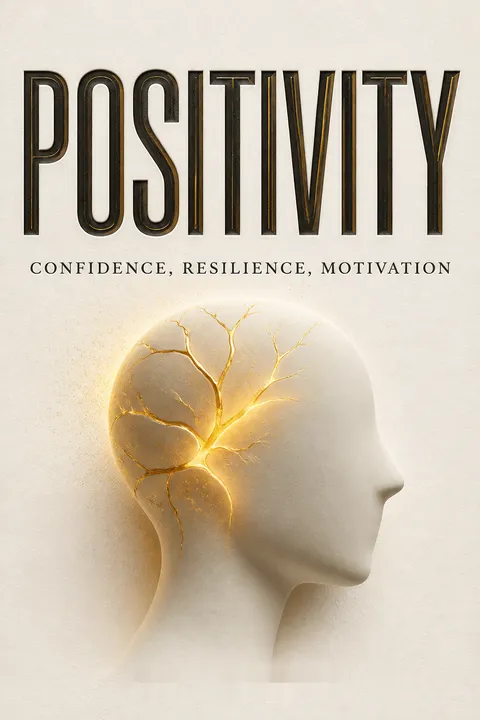
A usable definition. McKenna’s Positivity is a cultivated tendency toward confidence, resilience, and motivation. It does not mean staying cheerful through grief or danger. The book proposes that repeated thoughts, inner speech, and imagined scenes help shape how people respond, so these patterns can be practised and adjusted rather than treated as permanent identity.
Practice beats slogans. McKenna describes being told as a schoolboy that he would not amount to much. He says he turned the insult into a spur to prove otherwise, illustrating how interpretation can change an event’s effect. The book organizes its exercises around calming stress, building confidence, adapting to setbacks, and finding motivation. It also presents the written exercises alongside guided audio as a complete system.
The distinction between positivity and compulsory happiness is important. It leaves room for grief, anger, and fear while asking whether those feelings have become a permanent home. This resembles psychological flexibility: making space for difficult experience while choosing actions that serve one’s aims. The book’s emphasis on practice is also more useful than simply repeating affirmations. Still, its claims about changing deep-seated beliefs quickly are stronger than the material presented can establish. A more grounded expectation is that exercises may help some people shift attention or emotional intensity, with results varying by person and problem.
Change the mental picture, then choose a response to the real problem
Thought shapes feeling. McKenna argues that memories and imagined futures arrive as inner pictures, sounds, and self-talk, which influence emotion and action. Imagine being invited to a party: picturing yourself isolated may prompt avoidance, while imagining a relaxed conversation can make attendance feel possible. The external event is the same; the mental rehearsal differs.
Step back from distress. For a mild upsetting memory, the book suggests viewing the scene from outside oneself, draining its colour, and allowing it to recede. For a positive memory, it suggests entering the scene and making its details vivid. The point is to reduce needless replay while keeping useful lessons. These exercises change how a memory is experienced, not what happened or the practical conditions surrounding it.
This is a vivid account of cognitive reappraisal, the process of changing how a situation is understood so its emotional impact can change. Mental rehearsal is used in performance settings for a similar reason: imagining a response can make it easier to attempt. The caution is that reframing should not become a way to talk someone out of recognizing genuine danger, injustice, or loss. Nor is changing a memory’s vividness equivalent to resolving trauma. The useful question is whether the new perspective supports an effective next action, not whether it makes every painful feeling disappear.
Let difficult emotions deliver information without handing them the controls
Feelings have messages. The book treats emotions as signals: fear may prompt preparation, anger may point to a crossed boundary, frustration may call for reassessment, guilt may encourage repair, and sadness may mark loss. A signal deserves attention, but it need not dictate a response.
Two named exercises. The Havening Technique combines gentle arm stroking with counting, imagined settings, and side-to-side eye movements. The exercise asks users to rate distress before and after, then repeat if they choose. The Apex Technique asks them to imagine a troubling feeling in one hand and a contrasting resourceful feeling in the other, then attend to both together. McKenna presents these as ways to reduce emotional intensity. The book does not establish that either is a substitute for professional care.
Treating emotion as information rather than a command can create room for choice. It also fits the broader idea that emotions help prioritize attention, although their messages are not always accurate: fear can overestimate danger, and guilt can arise from unfair expectations. The techniques offer structured attention and soothing, which some people may find calming. Their precise neurological explanations and rapid effects should be regarded cautiously, since the book supplies no detailed evidence for readers to evaluate. For severe distress, persistent symptoms, or trauma, self-guided exercises are not a replacement for qualified support.
Rehearse confidence with your body, inner voice, and an imagined example
Confidence is a state to practise. McKenna defines it as feeling at ease with oneself, not acting boastful. His exercises invite readers to imagine a more confident version of themselves, borrow the posture of a role model, and reshape their inner voice into a calmer, firmer one. An upright posture is another cue: the book recounts actor Roger Moore being told to stand as tall as he was, after which he reportedly began getting more work.
Body and mind interact. McKenna also describes Amy Cuddy’s power-pose experiment, in which participants held expansive or constricted poses before a job interview. He presents the expansive group as more confident and cites changes in stress and testosterone measures. These claims are not equally secure, especially the hormonal interpretation.
The practical strength here is treating confidence as more than a private belief. A steadier posture, rehearsed language, and a clear image of competent action can change how someone enters a demanding situation. That may also affect how others respond. The power-pose story deserves more caution than the book gives it: subsequent research has challenged the claim that brief poses produce reliable hormonal changes, even as posture can influence felt confidence or behavior for some people. The exercise is best treated as preparation, not a biological switch or a guarantee of success.
Turn worry into preparation, then stop replaying the alarm
Find the useful warning. McKenna’s Negative Thought Fast starts when a person notices feeling bad and identifies the image, sound, or self-talk attached to it. The next step is to ask what the feeling may be pointing toward. If an upcoming meeting is the source of worry, for example, the warning might be to prepare more carefully.
Close the loop. After taking a practical step, the exercise asks the reader to make the distressing image smaller, less vivid, and more distant, then picture the desired outcome. If the worry returns, the book suggests checking whether something still needs attention. This approach treats repetitive worry as a message that can be heard and acted on, rather than a problem to solve by endlessly replaying the feared scenario.
This sequence has a useful behavioral logic: convert vague anxiety into a specific task, then stop giving the threat unlimited attention. It resembles problem-solving approaches that distinguish actionable concerns from abstract rumination. The distinction matters because repeated mental rehearsal can feel like preparation while producing no new information. At the same time, not every uncomfortable feeling contains a solvable warning, and trying to shut it down too quickly can become avoidance. A sensible test is whether a concrete action would help. If not, acknowledging the feeling without treating it as a forecast may be more appropriate.
Meet setbacks with more options, not just more force
Flexibility is resilience. McKenna defines resilience as persistence combined with adaptability and creative thinking. He draws on the Law of Requisite Variety, a cybernetics principle that a system with more possible responses can better manage changing conditions. In everyday life, the practical lesson is to generate alternatives rather than repeat a failed approach.
Ask better questions. The book’s problem-solving prompts include identifying anything useful in the problem, naming what is still missing, deciding what to do or stop doing, and choosing one step for today. It also recommends borrowing another person’s perspective. A comedian worried about hosting an awards ceremony imagined the event against the full span of his life and saw it as a much smaller challenge. Edison’s repeated attempts to develop a light bulb illustrate persistence, though they also show why setbacks need interpretation, not just endurance.
Flexibility is a stronger model of resilience than sheer toughness because real problems change shape. Generating options is also a practical antidote to tunnel vision, especially when stress makes one response feel inevitable. The perspective exercise helps distinguish a serious problem from one that has become psychologically enormous. However, examples of famous persistence can hide survivorship bias: many people persist without succeeding, and sometimes stopping or changing direction is the intelligent move. Resilience is not endless effort. It is the capacity to learn from feedback and choose a response proportionate to the situation.
Protect attention with clear priorities and a less fatalistic self-story
Sort the demands. After sudden fame left him overwhelmed with requests, McKenna adopted an ABC list inspired by Stephen Covey’s work. A items are urgent and carry serious consequences if ignored; B items matter but can wait; C items are the rest. He recommends reviewing the list each morning and starting with the A items. The aim is to reduce overload and reserve attention for what matters.
Question the label. McKenna also argues that people can mistake a repeated story about themselves for an unchangeable fact. His exercise is to imagine the critical inner voice coming from a distance, lower its volume, and write a more open-ended account. This does not erase the past; it loosens the assumption that past behavior determines every future choice.
The priority list is a useful defense against urgency masquerading as importance. It makes decisions visible and reduces the mental cost of repeatedly reconsidering the same tasks. The self-story exercise works in a related way: language can turn a temporary difficulty into an identity, which narrows the actions a person considers possible. But rejecting labels wholesale would be a mistake. A clinical diagnosis can guide treatment and access to support, even when it does not define a whole person. The distinction is between using a description as useful information and treating it as a complete forecast.
Build goals from your values, not borrowed definitions of success
Find the reason beneath the goal. McKenna distinguishes short-lived pleasure from a steadier sense of satisfaction that comes from living in line with personal values. Someone who says they want money might discover, by asking what money would provide, that the underlying value is security, freedom, or status. He recommends listing several important areas of life, then repeatedly asking what matters about each until the core value becomes clear.
Move toward, not only away. Fear of failure can motivate action, but living mainly to escape bad outcomes is exhausting. McKenna contrasts that with having something meaningful to pursue. He recounts a story about writer Joseph Heller, who felt that knowing when he had enough was a kind of wealth a billionaire could not simply buy. The point is to define success from the inside, rather than inherit someone else’s scoreboard.
Values provide a durable way to evaluate goals because they describe qualities of living, not just possessions or milestones. This resembles values-based approaches to behavior change, where a person can make progress even when a particular outcome remains uncertain. The questions about what a goal will provide are especially useful for detecting proxy goals: money may stand in for safety, and recognition for belonging. Still, values can conflict, and no exercise produces a perfectly settled hierarchy. The practical test is whether a goal makes room for the relationships, health, or freedom it was supposed to serve.
Turn mixed motives into a values-based plan you can test
Treat resistance as information. In the Easy Way to Stop Self-Sabotage, McKenna asks readers to identify two opposing motives, such as wanting a relationship and fearing the pain of rejection. The exercise invites each side to name what it is trying to protect or achieve, then looks for a plan that respects both needs instead of letting them cancel each other out.
Make the next move concrete. For important choices, McKenna recommends rating the possible downside and upside from 1 to 10. He also suggests imagining a satisfying year ahead, then working backward in three-month steps to identify what could happen next. Together, these ideas turn a broad ambition into a testable decision and a sequence of nearer actions. The ratings are prompts for judgment, not precise measures of risk.
The strongest insight is that resistance may contain a legitimate concern, even when its strategy is counterproductive. Asking what a hesitant part is protecting can lead to safeguards that make action more tolerable. The downside and upside ratings can similarly force an attractive opportunity into clearer view. Their limits matter: people may misjudge probabilities, and a single score cannot capture who bears the risk or whether the consequences are reversible. A useful decision process therefore pairs imagined futures with concrete evidence, small experiments, and attention to the costs of being wrong.
Write ten gratitudes and tomorrow’s purpose to train attention
Make the good visible. The book closes with a 30-day gratitude journal. Each day, readers record ten things they appreciate and write a purpose for the next day. The examples range from family, health, and work to ordinary comforts such as a morning drink or clean water. McKenna’s point is that writing and rereading the list can direct attention toward resources that are easy to overlook when mood is low.
Add a reason to act. The purpose prompt can be modest or broad: being a good friend, creating something, or contributing to others. McKenna also offers a visualization for recalling times when luck seemed favorable and strengthening the associated positive feeling. He presents this as a way to notice opportunity, not as a method for controlling chance. The central habit is deliberate attention, repeated often enough to become familiar.
A gratitude practice can counter the mind’s tendency to give vivid problems more attention than ordinary sources of support. Pairing appreciation with a next-day purpose also links reflection to action, making the journal more than a list of pleasant thoughts. Its value is likely to depend on fit: a rigid demand to find ten items may feel alienating during acute grief or hardship. Likewise, a luck visualization can change expectation and attentiveness, but it cannot establish that chance itself has shifted. The most credible benefit is noticing and using opportunities that a pessimistic frame might miss.
Analysis
Positivity is a practical self-help book organized as a sequence of exercises rather than a sustained argument. Its governing premise is that inner images, self-talk, and bodily posture influence emotional states, and that rehearsing more useful patterns can improve how a person responds. The progression from calming, to confidence, to resilience, and finally motivation gives the material a coherent arc: regulate, act, adapt, and choose a direction. Stories about a childhood insult, a comedian’s performance anxiety, and professional success make the method feel concrete, while the repeated exercises invite immediate participation.
The book’s most useful contribution is its insistence that insight should lead to a different response, not merely a more elaborate explanation of a problem. Its prompts for identifying a worry’s practical message, sorting tasks, considering values, and planning backward are accessible forms of self-observation. It also avoids equating positivity with uninterrupted cheerfulness, a distinction that prevents the central idea from collapsing into denial.
The weaknesses arise when useful exercises are presented as stronger evidence than the book supplies. Claims about hypnosis, Havening, rapid emotional change, early childhood beliefs, and posture-related hormones receive confident treatment, but the text does not provide enough evidence for readers to assess their reliability or scope. Some criticisms of talk therapy and diagnosis are also too sweeping. Understanding causes is not sufficient for change, but psychotherapy can combine understanding with behavioral practice, and diagnosis can be helpful without defining a person.
The best reading is therefore neither literal acceptance nor wholesale dismissal. Treat the visualizations and lists as experiments in attention and action. Keep what improves functioning, measure outcomes in real life, and seek qualified care for persistent or serious distress. The book offers a compact toolkit for ordinary self-management, not proof that every psychological problem can be quickly reprogrammed.
Review Summary
Positivity receives mostly positive reviews, with readers praising its practical exercises and audio downloads for boosting confidence and motivation. Many find it helpful and easy to use, appreciating its updated content addressing post-pandemic life. Some criticize it as superficial or repetitive of McKenna's previous works. Readers value its short length and ability to revisit techniques. While most find it effective for improving mindset and dealing with stress, a few skeptics question its depth and scientific basis. Overall, it's seen as a quick, accessible guide to enhancing positivity.
People Also Read






Glossary
Positivity
Practiced resourceful mindsetMcKenna’s term for a cultivated tendency toward confidence, resilience, and motivation. It does not mean feeling happy at all times or denying painful events. In the book, positivity is developed through exercises that alter inner imagery, self-talk, emotional responses, and plans for the future.
Havening Technique
Touch-based calming exerciseA psycho-sensory exercise described in the book that combines gentle stroking of the arms with counting, imagined scenes, and side-to-side eye movements. The user first notices and rates a distressing memory, performs the sequence, and rates the feeling again. McKenna presents it as a way to reduce emotional intensity.
Apex Technique
Emotion-balancing visualizationA visualization exercise in which a person imagines a troubling emotion in one hand and a contrasting resourceful feeling in the other. The person then attends to both feelings at once, with attention imagined above the head. McKenna describes the process as a way to lessen emotional intensity while retaining the signal the feeling may carry.
Negative Thought Fast
Worry-to-action processA sequence for responding to distressing thoughts. The person notices the inner image or dialogue, asks what useful warning it may contain, takes a practical step if needed, reduces the vividness of the distressing representation, and imagines a preferred outcome. It aims to limit repetitive worry without ignoring actionable concerns.
Law of Requisite Variety
Flexibility manages complexityA principle from cybernetics stating that a system needs enough possible responses to manage the variety of conditions it encounters. McKenna applies it to personal resilience: someone who can adapt their behavior and generate alternatives is better equipped to handle changing challenges than someone relying on one rigid response.
ABC List Exercise
Daily task-prioritization methodA way to sort tasks into three groups. A tasks are urgent and have serious consequences if neglected, B tasks are important but can wait, and C tasks are lower priority. The exercise recommends reviewing the list regularly and completing the highest-priority work before moving to less consequential items.
The Easy Way to Stop Self-Sabotage
Align competing motivesA visualization for addressing internal conflict. The person identifies two opposing motives, considers what each is trying to achieve or protect, and looks for a way for both concerns to support a workable choice. The method frames hesitation as potentially protective rather than simply as laziness or lack of discipline.
Gradual Confidence Booster
Stepwise confidence rehearsalAn exercise that asks a person to imagine progressively more confident versions of themselves and mentally step into each one. Attention is directed to posture, breathing, expression, and felt self-belief. The technique is intended to make confidence easier to access through repeated imaginative rehearsal.
FAQ
What's "Positivity: Confidence, Resilience, Motivation" about?
- Comprehensive System: The book by Paul McKenna is a guide to developing positivity through confidence, resilience, and motivation. It combines reading with audio sessions for a holistic approach.
- Transformative Techniques: It offers psychological techniques and guided hypnosis to help readers achieve lasting change by tapping into their unconscious mind.
- Structured Approach: The content is divided into sections focusing on reducing stress, building confidence, enhancing resilience, and boosting motivation.
- Practical Exercises: The book includes exercises and thought experiments designed to help readers reframe their mindset and improve their emotional intelligence.
Why should I read "Positivity: Confidence, Resilience, Motivation"?
- Life-Changing Potential: The book promises to positively change your life by providing tools to enhance your mental and emotional well-being.
- Dual Approach: It combines reading with audio hypnosis sessions, offering a unique, immersive experience that mimics personal coaching.
- Proven Techniques: The methods are based on years of research and practice, tested on thousands of people, ensuring their effectiveness.
- Holistic Benefits: It addresses various aspects of life, from stress reduction to motivation, making it a comprehensive guide for personal development.
What are the key takeaways of "Positivity: Confidence, Resilience, Motivation"?
- Mindset Shift: The book emphasizes the power of suggestion and how changing your internal dialogue can transform your life.
- Emotional Control: Techniques like the Havening and Apex methods help manage stress and recalibrate emotions.
- Confidence Building: Exercises are provided to boost self-belief and confidence, essential for personal and professional success.
- Goal Setting: It encourages aligning goals with core values to ensure a fulfilling and purpose-driven life.
How does Paul McKenna define "Positivity" in the book?
- Mindset and Behavior: Positivity is described as a mindset and way of behaving that involves confidence, resilience, and motivation.
- Not Constant Happiness: It doesn't mean being happy all the time but having a default setting of positive emotions.
- Emotional Balance: Positivity allows for natural emotional responses to negative events but prevents living in fear or sadness.
- Transformative Power: By embracing positivity, every aspect of life, from work to relationships, can be improved.
What is the "Havening Technique" mentioned in the book?
- Psycho-Sensory Method: Havening is a psycho-sensory technique involving touch, eye movements, and visualization to reduce stress and trauma.
- Rapid Results: It produces quick and significant changes in emotional states by altering brain chemistry and neural pathways.
- Scientific Backing: Developed by Dr. Ronald Ruden, it is used by military and emergency services for its effectiveness.
- Practical Application: The book provides a step-by-step guide to practicing Havening for personal stress management.
How does the book suggest building resilience?
- Flexibility and Adaptability: Resilience is not just about toughness but also about being adaptable and creative in problem-solving.
- Law of Requisite Variety: The book explains that the most flexible person in a system will control it, emphasizing the need for behavioral flexibility.
- Problem-Solving Techniques: It offers questions and exercises to shift perspectives and generate creative solutions to challenges.
- Role Model Strategy: Readers are encouraged to adopt the mindset of successful problem-solvers to enhance their resilience.
What are the best quotes from "Positivity: Confidence, Resilience, Motivation" and what do they mean?
- Albert Einstein Quote: "Everything should be made as simple as possible, but no simpler." This emphasizes the book's approach to simplifying complex psychological techniques for practical use.
- Mark Twain Quote: "I’ve lived through some terrible things in my life – some of which actually happened." This highlights the concept of catastrophizing and the importance of focusing on reality.
- Goethe Quote: "The greatest thing in this world is not so much where we stand as in what direction we are moving." It underscores the importance of having a clear direction and purpose in life.
- Bob Marley Quote: "Some people are so poor all they have is money." This reflects the book's message about the importance of aligning goals with core values for true fulfillment.
How does the book address self-sabotage?
- Internal Conflict Resolution: The book provides a technique to align conflicting parts of the self that may lead to self-sabotage.
- Positive Intentions: It encourages understanding the positive intentions behind conflicting desires to integrate them harmoniously.
- Practical Exercise: A step-by-step method is offered to resolve internal conflicts and focus on unified goals.
- Empowerment: By resolving self-sabotage, readers can move forward with confidence and clarity in their pursuits.
What is the "Negative Thought Fast" and how does it work?
- Mind Rewiring: The Negative Thought Fast is a process to rewire the brain by starving it of negative thoughts.
- Awareness and Action: It involves recognizing negative thoughts, understanding their messages, and taking action to address them.
- Positive Reprogramming: The technique encourages replacing negative imagery with positive outcomes to change emotional responses.
- Habit Formation: By consistently practicing this fast, readers can develop a habit of focusing on positive thoughts and feelings.
How does the book suggest using "Power Poses" for confidence?
- Physiological Influence: Power poses are physical stances that influence mental and emotional states, boosting confidence.
- Scientific Validation: Research by Amy Cuddy shows that power poses can alter hormone levels, increasing confidence and reducing stress.
- Practical Application: The book describes specific poses like "Wonder Woman" and "Winner" to practice before important events.
- Behavioral Impact: Regular use of power poses can lead to more assertive and confident behavior in various situations.
What role do "Core Values" play in goal setting according to the book?
- Foundation for Goals: Core values are the underlying principles that should guide goal setting to ensure alignment with personal fulfillment.
- Clarity and Direction: Identifying core values helps clarify what truly matters, preventing pursuit of goals that don't resonate personally.
- Value-Driven Life: Living in accordance with core values leads to genuine happiness and satisfaction, beyond material achievements.
- Practical Exercise: The book provides a method to identify and prioritize core values before setting goals.
How does the book propose increasing one's luck?
- Mindset Shift: The book suggests that believing in one's luck can actually increase it, supported by scientific research.
- Visualization Technique: A visualization exercise is provided to recall and amplify feelings of luck, spreading this energy to all life areas.
- Positive Reinforcement: By focusing on past lucky experiences, readers can enhance their perception of being lucky.
- Daily Practice: Regular practice of the luck exercise can lead to noticeable improvements in opportunities and outcomes.
About the Author
Other books by Paul McKenna



Download PDF
Download EPUB
.epub digital book format is ideal for reading ebooks on phones, tablets, and e-readers.








