

Key Takeaways
Treat confidence as a practiced response, not a personality you lack.
Confidence is trainable. McKenna defines natural confidence as feeling at ease with yourself, even when circumstances are uncertain. It is not a fixed trait, and it is not the same as acting superior. His central idea is that repeated mental and physical habits shape how a person responds to challenge. Someone who has practiced anticipating embarrassment can learn to rehearse steadier responses instead.
Practice before pressure. The book's five-minute daily routine combines imagining success, viewing oneself with kindness, strengthening supportive self-talk, recalling a confident state, and choosing a small risk to take within a day. The point is not to wait until confidence arrives fully formed. Rehearse the response, then gather evidence by acting.
What's useful here is the shift from identity to skill. A person who says, “I'm not confident,” can treat that as a description of a practiced response, not a permanent diagnosis. This aligns with behavioral approaches that build capability through manageable repetitions and feedback. The limit is that mental rehearsal alone cannot resolve every barrier: discrimination, illness, financial constraints, or unsafe conditions are not simply confidence problems. The strongest version of the idea pairs internal practice with real opportunities to act and learn.
Replace the inner heckler with a coach who gives believable instructions.
Self-talk shapes anticipation. Before a presentation, date, or difficult call, a person may mentally predict failure and then behave as if that outcome is already decided. McKenna asks readers to notice this internal commentary, write down recurring put-downs, and replace them with supportive alternatives. He argues that privately hearing a message can affect feelings more directly than repeating a public affirmation while an inner voice rejects it.
Make the replacement usable. The goal is not to claim perfection or deny a real weakness. A more useful inner response names a next move: prepare the opening, ask one question, or try again after a mistake. That distinction matters. A credible prompt can guide behavior; an implausible slogan may only create another argument inside the head.
This resembles cognitive behavioral therapy, which helps people identify automatic thoughts and examine how those thoughts shape emotion and action. Its more grounded form tests a thought rather than simply replacing every negative statement with a positive opposite. “I may stumble, and I can return to my notes” is more actionable than insisting that a presentation will be flawless. The book's emphasis on the inner voice is memorable because it directs attention to a private influence people often mistake for objective fact.
Mentally rehearse the performance you want, not the disaster you fear.
The mind runs previews. McKenna argues that imagined scenes influence emotion: picturing a speech going badly can increase dread, while picturing a composed delivery can make the task feel more manageable. His Success Highlight Films exercise has readers review moments of past competence and imagine handling future situations well. He also recounts Green Bay Packers coach Vince Lombardi choosing successful game footage for players to study, emphasizing effective execution rather than repeated mistakes.
Rehearsal needs reality. The technique is meant to prepare the mind for action, not replace learning the material or practicing the skill. Before a presentation, for instance, imagine speaking clearly, noticing the audience, and recovering if a sentence goes wrong. That final detail makes the rehearsal more useful than a perfect fantasy.
Mental rehearsal has practical value when it simulates the process of doing a task, especially its difficult moments. Sports psychology often distinguishes that from merely imagining a triumphant outcome. The latter can feel rewarding without improving preparation. McKenna's focus on successful examples offers a constructive alternative to replaying errors, but a balanced review still asks what went wrong and what to adjust. The best rehearsal is not a highlight reel detached from effort. It is a low-cost practice run for behavior that will happen in the world.
Use posture and attention to interrupt fear's grip on the body.
Body and mind interact. McKenna describes a two-way loop: thoughts affect posture and physical tension, while posture and movement can influence how a person feels. He suggests standing or sitting upright without becoming rigid. His One Point exercise directs attention to the lower abdomen, about an inch below the navel, as an anchor for steadiness. In his account, focusing there while thinking about a mild stressor helps restore calm and balance.
Use it as an anchor. Before a tense conversation, notice the breath, settle the shoulders, and place attention on the lower abdomen. The book associates this location with the Japanese concept of hara and with ideas of life energy. Readers can use the attentional cue without needing to accept a special-energy explanation.
Posture, breathing, and attention are concrete levers because they can be adjusted in the moment, unlike an external audience or a difficult colleague. Research on embodied emotion supports some links between bodily state and feeling, though popular claims about dramatic effects from a single posture are contested. The lower-abdomen focus is best understood as an attentional anchor, not proof of a hidden energy center. That interpretation preserves the exercise's practical accessibility while keeping its physiological claims in proportion.
Treat difficult emotions as information, then decide what action they warrant.
Feelings may carry clues. McKenna presents emotions as signals that deserve attention rather than sensations to suppress. Anger may point to a crossed boundary, fear to a possible threat, frustration to a mismatch between a goal and a strategy, guilt to a violated personal standard, and sadness to a loss. He suggests first changing self-talk, mental images, or posture. If the feeling remains, ask what situation or need it may be pointing toward.
Listen without obeying blindly. His Emotional Wisdom exercise asks readers to locate the feeling in the body, notice when it appears, consider its message, and identify any action to take. The book suggests that relief can follow when the message is understood. In practice, a feeling can be informative without being a reliable verdict about what is happening.
This approach usefully separates emotional awareness from emotional suppression. Naming a feeling and examining its context can create space between an impulse and a response, a principle also found in emotion-regulation research. Yet emotions are not always accurate reports: fear can arise without present danger, and guilt can reflect unfair expectations. The productive question is not simply, “What is this feeling telling me?” but also, “What evidence supports that interpretation?” That keeps emotional curiosity from becoming unquestioned obedience.
Test your beliefs against behavior, because expectations can quietly manufacture evidence.
Belief changes choices. McKenna draws on psychologist Albert Bandura's work to argue that a person's sense of capability can influence performance. Someone who assumes an attractive person could never be interested may avoid starting a conversation, act tense, and then treat the awkward result as proof. The expectation helps create the behavior that appears to confirm it.
Beliefs defend themselves. The book recounts Marion Keech's followers, who expected rescue by flying saucers on a predicted date. When nothing happened, the group reframed the failure as evidence that its faith had saved the world. Psychologist Leon Festinger used cognitive dissonance to describe the discomfort of holding conflicting beliefs and the pressure to reconcile them. The practical lesson is to test assumptions through small actions rather than treat them as settled facts.
The self-fulfilling loop is a powerful mental model because it shows how beliefs can shape the evidence later used to defend them. Self-efficacy, the belief that one can perform a particular task, is more precise than global confidence and points toward a useful experiment: attempt a manageable version of the task and observe what happens. The caution is that outcomes have many causes. A failed attempt does not prove personal incapacity, just as success does not prove a belief universally true.
Choose an ambitious destination, then schedule one concrete step within 24 hours.
A goal needs direction. McKenna recommends choosing goals large enough to feel meaningful, focused on one's own actions, and described in terms of what is wanted rather than what must be avoided. A request that another person change is not fully under the goal-setter's control. He also tells readers to break a large ambition into pieces small enough to act on soon. A friend who faced learning a three-hour play divided it into halves and then individual scenes.
Make progress visible. The book recommends recording daily actions toward a small number of major goals. Its daily tracker turns an intention into something observable, while the next-day deadline helps prevent planning from becoming procrastination. The useful sequence is a motivating destination, a manageable next move, and a visible record of follow-through.
This combines a compelling direction with a short feedback loop. Goal-setting research generally finds that clear, challenging aims can focus effort, while proximal steps make progress easier to monitor. The actor's scene-by-scene approach illustrates how reducing the size of a task can reduce overwhelm without shrinking the overall ambition. One safeguard is to keep goals revisable. A large goal can energize, but if evidence changes or circumstances shift, persistence should include reassessing the destination, not only pushing harder.
Take small, assessed risks before certainty arrives, then learn from the result.
Action weakens avoidance. A friend launching a business idea began by speaking with five people a day. He initially felt uncomfortable, but repeated calls became easier, and he secured a deal before reaching fifty contacts. McKenna uses the story to show how daily action can reduce hesitation and produce information that waiting cannot provide. He argues that successful people often move forward before they feel completely ready, then adjust as they learn.
Risk still needs judgment. The book proposes comparing a possible reward with a possible downside on a simple 1-to-10 scale. Asking someone out may carry a low cost if the answer is no, while a reckless financial or physical gamble can have serious consequences. It also cites James Dyson's thousands of attempts to develop a working product. Persistence is useful when each attempt teaches something, not when it ignores mounting harm.
Small experiments are a practical antidote to the demand for certainty. They resemble exposure-based learning, where a person approaches a manageable feared situation and discovers that the predicted outcome is not inevitable. The friend's calls are especially instructive because action generates both skill and market feedback. But perseverance is not automatically wisdom. Dyson's persistence is memorable because it led to iteration; the transferable principle is to act, measure, and adapt, rather than to treat every obstacle as a command to continue indefinitely.
Prepare your message, then give your attention to the audience.
Performance is not self-surveillance. McKenna describes an actress whose fear of stage criticism grew as she imagined negative judgments, tensed up, and made mistakes that seemed to confirm her fears. He helped her rehearse a more supportive interpretation, including the possibility of recovering well after an error. For public speaking, he emphasizes three ingredients: manage one's state, know the material, and speak with genuine interest in the subject.
Look outward. In social and dating situations, the book recommends reducing the inner monitoring of how one appears and paying more attention to the other person. Preparation still matters: a speaker who understands the subject need not memorize every sentence. Rehearsing a clear purpose and then responding to the actual audience can be more flexible than reciting a script while mentally grading every gesture.
The shift from self-monitoring to audience attention connects performance confidence with social cognition. People often communicate more naturally when attention is directed toward the task or the person in front of them, rather than toward constant evaluation of their own image. That does not mean ignoring useful feedback or assuming the audience is friendly. The book's strongest advice is to prepare enough to free attention for listening. Passion can help a talk feel alive, but clarity and relevance remain the speaker's responsibility.
Demonstrate the behavior you want from others before asking them to follow.
Leadership sets a pattern. McKenna uses psychologist Robert Cialdini's idea of social proof: when people are unsure how to behave, they often look to others for cues. In an anecdote, a car left intact in a neighborhood was later vandalized after a window was broken; the visible damage appeared to invite further damage. The business application is to model the behavior a team needs, such as admitting mistakes when experimentation is desired.
Sell without pretending. The book warns that neediness can make a business pitch feel desperate and argues that a company should be clear about what it offers instead of trying to appeal to everyone. It suggests contacting potential customers directly and learning who is genuinely interested. Rejection then becomes useful sorting information, not a verdict on the seller's worth.
Social proof explains why a leader's visible actions can establish norms more convincingly than a memo about values. Modeling candor, experimentation, or customer focus makes those behaviors easier to recognize and imitate. Still, example alone cannot overcome incentives that punish the behavior being requested. Leaders also need to shape systems so that the norm they demonstrate is safe to follow. The advice on selling has a similar strength: fit matters more than universal approval, though a rejected offer can also reveal a product that needs improvement.
When a relationship is harmful, prioritize safety and supported exit planning.
Harm can become normalized. McKenna describes how small, repeated injuries can gradually make an unhealthy situation feel ordinary. He recounts a technique intended to reduce attachment by bringing several painful memories into focus together. Because this involves deliberately intensifying distressing recollections, it is not a casual confidence exercise and should not be treated as a substitute for professional support or practical safety planning.
Make safety the priority. The book's account of women leaving abusive partners underscores how attachment and danger can coexist. A person facing abuse may need trusted support, specialist services, and a plan suited to the risks in their circumstances. The relevant principle is not to become confident enough to endure mistreatment. It is to recognize harm, seek help, and make a safer path forward.
This subject requires a different standard from ordinary performance anxiety. In coercive or abusive relationships, the problem is not merely a fearful internal story; the danger may be real, and leaving can itself increase risk. A safety plan should be shaped with knowledgeable support rather than improvised from a motivational exercise. The book is right to distinguish serious trauma from everyday discomfort, but that caution belongs at the center of the advice. Confidence can support agency, while practical protection and specialist help address the danger.
Analysis
Instant Confidence is best read as a practical toolkit, not a unified scientific theory. Its organizing claim is that confidence can be rehearsed through self-talk, imagery, bodily attention, and repeated action. That claim has a useful behavioral core: people can learn to approach situations they once avoided, and action supplies feedback that private worry cannot. The book's examples make that sequence concrete, from daily calls to speaking onstage and approaching a potential date.
The methods do not all have equal evidential footing. Goal breakdown, behavioral rehearsal, and gradual approach to feared situations have clear analogues in established psychological practice. Other explanations, such as a special energetic center or the claim that imagined and real events are effectively indistinguishable to the nervous system, should be treated as the author's framing rather than settled fact. Visualization can help rehearse a process, but imagining an ideal result is not equivalent to practicing the task or managing its real constraints.
The book also presents confidence as an individual skill, which is empowering but incomplete. A person may feel inhibited because of trauma, unequal power, discrimination, health, or material pressures. Those conditions cannot be solved by changing an internal picture. Its chapter on harmful relationships implicitly reveals this limit: psychological exercises must not replace safety, professional care, or practical support.
The most durable synthesis is modest and strong: use mental techniques to make action more possible, take a manageable step, and judge progress by what the step teaches. Confidence then becomes neither bravado nor a prerequisite for beginning. It is a working capacity built through preparation, feedback, and choices that remain responsive to reality.
Review Summary
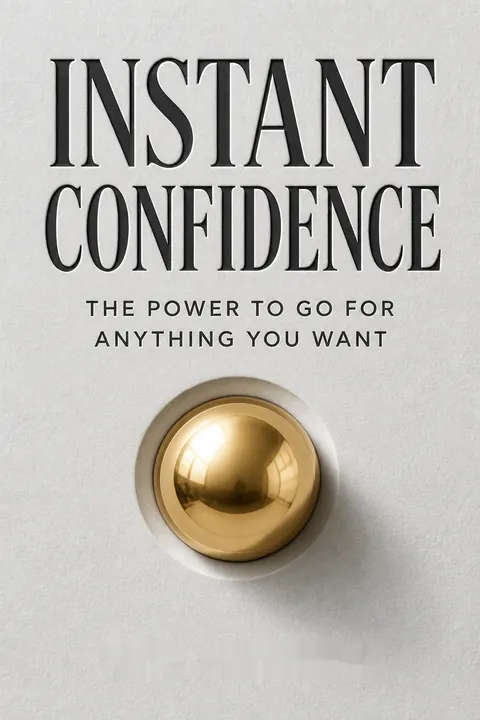
Instant Confidence by Paul McKenna receives mixed reviews, with an average rating of 3.62/5. Many readers find the techniques helpful for boosting confidence and overcoming anxiety, praising the included hypnosis CD. Some report significant personal improvements. Critics argue the content is repetitive and lacks scientific backing. The book's strengths include its practical exercises, visualization techniques, and easy-to-read format. However, some readers feel the information is not original and can be found in other self-help books. Overall, it seems most beneficial for those new to self-improvement literature.
People Also Read









Glossary
Natural Confidence
Ease with oneselfMcKenna's term for feeling comfortable with oneself while meeting challenges and uncertainty. He distinguishes it from arrogance, showiness, or pretending to be someone else. In his account, it is not an inborn trait but a response strengthened through repeated mental habits, physical cues, and action.
One Point
Lower-abdomen attention anchorA focus point McKenna places about an inch below the navel, roughly halfway between the navel and spine. The exercise uses attention on this area as a way to feel centered while recalling a mildly stressful situation. The book connects the point to the Japanese term hara and traditional ideas of life energy.
Success Highlight Films
Imagined success rehearsalA visualization exercise in which a person imagines a sequence of past successes and possible future successes, then mentally experiences the scene from within. McKenna encourages vivid sensory detail and uses the exercise to rehearse a more confident response. It is presented as mental practice, not a replacement for learning or performing the real skill.
5-Minute Daily Confidence Workout
Daily confidence practiceA short routine combining imagery, self-regard, confidence recall, and a planned action. It asks readers to picture success, view themselves through a loving perspective, offer themselves supportive comments, associate a remembered confident feeling with a physical cue, and choose a small risk to take soon. The purpose is to make confidence practice regular rather than occasional.
Motivation Switch
Cue for motivated actionA physical cue, created by pressing the thumb and middle finger together, that McKenna associates with recalled feelings of motivation. The exercise has readers strengthen the association by recalling energetic past experiences, then imagine bringing that state to a task they want to begin. It is intended as a reminder cue, not a guarantee of motivation.
Action habit
Repeated goal-directed actionMcKenna's term for the pattern of taking action toward a goal regularly, including before complete confidence or certainty arrives. Repetition is meant to reduce avoidance and create momentum, while small steps provide opportunities to learn and adjust. The book presents daily action as the bridge between feeling confident and changing circumstances.
Thought Field Therapy (TFT)
Tapping-based distress techniqueA method attributed in the book to psychologist Roger Callahan. It asks a person to focus on a distressing situation, rate its intensity, and tap specified points on the body in a sequence while maintaining attention on the feeling. McKenna presents it as a way to reduce emotional overwhelm. The book's description is not a substitute for clinical assessment or care.
Threshold Technique
Memory-based attachment exerciseA technique attributed to Richard Bandler and described as a way to weaken attachment to a harmful former relationship. It involves bringing painful relationship memories into focus alongside a positive memory of the relationship. Because the exercise deliberately intensifies distressing recollections, it should not be treated as a general self-help procedure or as a substitute for specialist support and safety planning.
Cognitive dissonance
Discomfort from conflicting beliefsThe psychological tension associated with holding inconsistent beliefs, attitudes, or actions. In McKenna's example, followers who expected a predicted rescue reframed the failed prediction rather than abandon their shared belief. The concept helps explain why people may reinterpret evidence to protect an existing view of themselves or the world.
Self-fulfilling prophecy
Belief shaping confirming behaviorA process in which an expectation influences behavior in ways that help bring about an outcome that appears to confirm the expectation. For example, believing that rejection is inevitable may lead someone to avoid approaching another person or behave tensely when they do. The result can then be mistaken for proof that the original belief was accurate.
Timeline
Mental map of timeMcKenna's term for the way a person mentally arranges images of past and future events in space. The exercise asks readers to locate memories and anticipated events at different distances or directions, then imagine them connected. The book uses this personal mental map to place a desired future and the steps leading toward it.
FAQ
What's "Instant Confidence" by Paul McKenna about?
- Overview: "Instant Confidence" by Paul McKenna is a self-help book designed to help readers develop a strong sense of self-confidence. It combines psychological techniques with guided hypnosis to instill lasting change.
- Structure: The book is divided into four main sections: developing confidence, motivating oneself for success, applying confidence in real-world scenarios, and a confidence clinic with FAQs.
- System Approach: McKenna emphasizes that the book is part of a system that includes audio and video sessions, which are essential for achieving the desired results.
- Goal: The ultimate aim is to help readers become more confident, motivated, and successful in various aspects of their lives.
Why should I read "Instant Confidence" by Paul McKenna?
- Practical Techniques: The book offers practical exercises and techniques that can be easily integrated into daily life to boost confidence.
- Comprehensive System: It provides a complete system, including audio and video resources, to ensure a holistic approach to building confidence.
- Expert Guidance: Paul McKenna is a renowned expert in personal transformation, having worked with celebrities and high achievers, which adds credibility to his methods.
- Life-Changing Potential: The book promises to help readers unlock their full potential and achieve success in personal and professional areas.
What are the key takeaways of "Instant Confidence" by Paul McKenna?
- Confidence as a Habit: Confidence is not innate but can be developed through consistent practice and habit formation.
- Mind-Body Connection: The book emphasizes the link between mental states and physical posture, suggesting that changing one can influence the other.
- Visualization and Self-Talk: Positive visualization and self-talk are powerful tools for reprogramming the mind towards confidence and success.
- Action-Oriented: Taking daily action, even before feeling ready, is crucial for building momentum and achieving goals.
How does Paul McKenna suggest using the mind-body connection to boost confidence?
- Cybernetic Loop: McKenna explains that the mind and body are connected in a cybernetic loop, meaning changes in one can affect the other.
- Posture and Movement: Adopting a confident posture and moving with purpose can influence mental states, making one feel more confident.
- One Point Technique: The book introduces the "One Point" technique, focusing attention on the body's center to enhance physical and psychological strength.
- Daily Practice: Regularly practicing these techniques can reset muscle memory, making confident posture and movement habitual.
What is the "5-Minute Daily Confidence Workout" in "Instant Confidence"?
- Daily Routine: The workout is a short, daily routine designed to reinforce confidence through visualization, self-talk, and physical exercises.
- Components: It includes running through success highlight films, using a mirror for self-compliments, and activating a confidence switch.
- Purpose: The workout aims to interrupt negative patterns and establish new, positive habits that promote confidence.
- Consistency: Regular practice of this workout, along with the hypnotic trance, accelerates the development of natural confidence.
What role does visualization play in "Instant Confidence" by Paul McKenna?
- Mind Movies: Visualization involves creating "mind movies" where one imagines themselves succeeding, which influences feelings and behaviors.
- Emotional Intensity: McKenna suggests making these visualizations vivid and emotionally intense to enhance their impact.
- Success Highlight Films: The book includes exercises like "Success Highlight Films" to reinforce positive outcomes and boost confidence.
- Scientific Basis: Visualization is supported by research showing that the brain cannot distinguish between real and vividly imagined experiences.
How does Paul McKenna address overcoming fear in "Instant Confidence"?
- Reframing Fear: Fear is reframed as a natural response to stepping outside one's comfort zone, not something to be avoided.
- Adrenaline as Fuel: The book suggests using the adrenaline from fear as a source of energy and motivation.
- Self-Talk and Visualization: Techniques like positive self-talk and visualization are used to transform fear into confidence.
- Action Before Readiness: McKenna encourages taking action even when fear is present, as this builds resilience and confidence over time.
What are the best quotes from "Instant Confidence" and what do they mean?
- "What you practice, you become." This quote emphasizes the importance of consistent practice in developing confidence and other desired traits.
- "The journey of a thousand miles begins with a single step." It highlights the significance of taking the first step towards change, regardless of how daunting the journey may seem.
- "Failure is part of the process of success." This quote reframes failure as a learning opportunity and a stepping stone to achieving one's goals.
- "You don’t have to believe a single word I say." McKenna encourages readers to try the techniques and experience the results for themselves, rather than taking his word for it.
How does "Instant Confidence" by Paul McKenna suggest setting and achieving goals?
- BIG Goals: The book advocates for setting BIG goals that are inspiring and motivating enough to drive action.
- Focus on Positives: Goals should be framed positively, focusing on what one wants rather than what they want to avoid.
- Actionable Steps: Goals should be broken down into small, actionable steps that can be taken daily to build momentum.
- Self-Responsibility: Goals should be about personal actions and changes, not dependent on others' behaviors or circumstances.
What is the "Motivation Switch" in "Instant Confidence" by Paul McKenna?
- Instant Motivation: The Motivation Switch is a technique to instantly trigger feelings of motivation by associating them with a physical action.
- Creating the Switch: It involves recalling a time of high motivation, intensifying the feelings, and linking them to a gesture like squeezing fingers.
- Application: Once created, the switch can be used to generate motivation on demand, especially in situations where action is needed.
- Reinforcement: Repeated use of the switch strengthens the association, making it a reliable tool for overcoming procrastination.
How does Paul McKenna address resilience in "Instant Confidence"?
- Resilience as a Skill: Resilience is presented as a skill that can be developed through practice and mindset shifts.
- Learning from Failure: The book encourages viewing failure as a temporary setback and an opportunity for learning and growth.
- Positive Reframing: Techniques like positive reframing and building resilience exercises help in bouncing back from adversity.
- Self-Perception: Changing self-perception from a victim of circumstances to a proactive agent of change is key to building resilience.
What is the "Threshold Technique" in "Instant Confidence" by Paul McKenna?
- Breaking Attachments: The Threshold Technique is designed to help individuals break emotional attachments to negative situations or relationships.
- Intensifying Negative Memories: It involves recalling negative experiences in quick succession to intensify their emotional impact.
- Crossing the Threshold: The goal is to reach a point where the cumulative negative feelings outweigh any positive associations, making it easier to move on.
- Immediate Change: This technique is intended to create a rapid shift in feelings, enabling individuals to leave harmful situations behind.
About the Author
Other books by Paul McKenna




Download PDF
Download EPUB
.epub digital book format is ideal for reading ebooks on phones, tablets, and e-readers.








