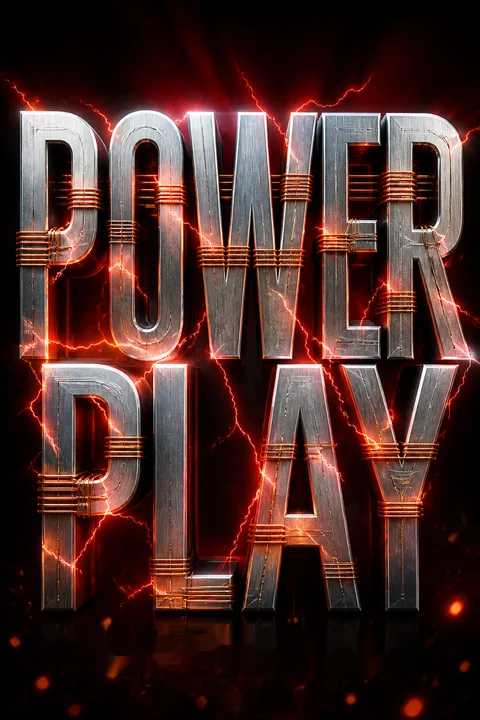


Key Takeaways
Use premium products to finance the mass market, but price the bridge honestly
The ladder began high. Tesla's early founders and Elon Musk converged on a strategy that started with a fast, expensive electric sports car, then aimed for a luxury sedan, and finally a car for ordinary buyers. The 2006 Secret Tesla Motors Master Plan made that sequence explicit. The Roadster would prove electric cars could be desirable and attract money and attention for the next steps. It was a deliberate alternative to earlier efforts that tried to sell electric cars as cheap, compromised appliances from the outset.
The bridge was costly. The Roadster's price rose, and the Model S landed far above its promised roughly $50,000 starting point. The Model 3 was announced with a $35,000 target and drew more than 500,000 reservations within weeks, yet the cheapest version available in 2018 started around $49,000. The ladder created demand, but making the promised affordable car remained difficult.
The strategy resembles a familiar pattern in technology markets: sell first to customers who value novelty and can tolerate imperfections, then use experience and scale to broaden access. That can work, but prestige demand is not proof of mass-market demand. A reservation is a signal of interest, not a completed purchase, and a low target price is not a cost structure. The useful test is whether each premium product builds capabilities that genuinely reduce the cost of the next one, rather than merely extending the promise.
Make battery safety a core capability before battery scale becomes a promise
Tiny risks multiplied. Tesla planned to put about 7,000 lithium-ion cells in each Roadster. Consultants estimated that a defective cell might occur once in a million to ten million cells. Gene Berdichevsky calculated that, across thousands of cells in a car, the chance of encountering a defect could be roughly one in 150 to one in 1,500 cars. A defect could overheat and ignite nearby cells.
Containment mattered. This self-accelerating overheating is called thermal runaway. JB Straubel and his team tested different cell spacing and cooling methods, then developed a pack design intended to carry heat away and prevent one failure from setting off a chain reaction. Battery suppliers initially feared the liability of working with a startup. Tesla's safety engineering, and persistence in building supplier relationships, helped secure cells from Sanyo and later Panasonic.
The episode illustrates a basic principle of safety engineering: a system must be designed for foreseeable failures, not merely for ideal operation. When a device contains thousands of components, rare defects become relevant at the system level. Redundant barriers and heat management can limit the consequences even when they cannot eliminate every faulty cell. The calculation is a warning, not a precise forecast: it relies on assumptions about cell failure and independence. Still, Tesla treated containment as a product requirement, not an afterthought, which helped make a risky technology usable.
Treat the factory as a cash-flow system, not an oversized workshop
Scale has a price. A car factory is viable only when it runs at high volume. The book cites about 5,000 vehicles a week as a common benchmark, while the average car might generate only about $2,800 in operating profit. Tesla's first Roadster plan underestimated the challenge: its original unit-cost estimate of $49,000 rose to about $120,000 before overhead, and early cars could cost roughly $150,000 with overhead included.
Timing can sink you. Tesla also had to pay suppliers long before cars reached customers. Batteries could travel from Japan to Thailand, then to the United Kingdom for assembly, and finally to California. That long cycle tied up cash the company did not have. A factory can lose money even when the product attracts buyers, if parts, production, and payment arrive in the wrong order.
This is the difference between a promising product and an industrial business. In accounting, the cash-conversion cycle measures how long money is tied up between paying for inputs and collecting from customers. A company can show demand and still run out of cash if that interval is too long. Scale may improve per-unit economics, but it also enlarges the inventory and supplier obligations that must be financed. The practical lesson is to model cash timing as carefully as manufacturing cost, especially when each production delay keeps expensive assets idle.
Move quickly on reversible decisions, cautiously on tooling and safety
Speed was an advantage. Musk favored making decisions quickly, even if some later had to be reversed. Peter Rawlinson proposed restarting the Model S design rather than continuing a cost-focused plan built around existing parts. Musk agreed. Rawlinson's smaller engineering group relied heavily on computer simulations and designed a new platform around the battery pack, rather than forcing the technology into an unsuitable car structure.
Some choices harden quickly. A late design change can require new parts, tools, tests, and supplier schedules. The Model X's elaborate rear doors became a costly example: engineers warned about their complexity, but development continued. When such decisions arrive late, reversing them is expensive. Tesla repeatedly benefited from speed, but rushed design and production also left teams fixing problems after manufacturing had begun.
The useful distinction is not fast versus slow, but reversible versus consequential. A sketch, test, or software change can often be undone cheaply. A factory tool, safety decision, or public production commitment is harder to reverse. Product-development disciplines often use staged testing to preserve speed in early exploration while increasing scrutiny before costly commitments. That approach does not eliminate risk; it concentrates review where mistakes have the largest downstream effects. Tesla's experience shows why a culture of decisiveness needs a matching system for identifying which decisions deserve a pause.
Control the customer experience where legacy channels undermine the product
Direct sales fit the pitch. Tesla wanted to sell cars through company-owned stores rather than traditional franchise dealerships. The founders worried that dealers could misrepresent an unfamiliar electric car or have little incentive to promote it alongside gas-powered models. Tesla's stores, often in shopping malls, acted partly as education centers. In states that restricted direct sales, the company used galleries that explained the cars without completing sales on site.
A test drive closed the gap. Tesla had hundreds of thousands of potential leads but struggled to turn interest into orders. Antonio Gracias and Tim Watkins found that driving the Roadster was often the decisive moment. They built a mobile sales team around test-drive events, and quarterly bookings tripled after the approach began. The strategy gave Tesla more control, but it also meant the company had to build its own retail and service operations.
A distribution channel is not neutral. It shapes which products get demonstrated, what customers learn, and who owns the relationship after purchase. Direct retail can align the sales pitch with a novel product, while a franchise network can offer local reach and established repair capacity. Each model shifts costs and incentives rather than removing them. Tesla's test-drive results support a focused insight: when a product's advantage is hard to explain, let customers experience it. But a channel that educates well must also be equipped to deliver financing, repairs, and follow-up.
Stabilize the process before adding robots
Automation magnified disorder. For the Model 3, Tesla packed the Fremont factory with roughly a thousand robots, including machines mounted overhead to save space. The company hoped automation would make production faster and more efficient. Instead, the line became difficult to configure and repair, while the Gigafactory struggled to automate battery assembly. Cells and parts accumulated faster than teams could turn them into finished vehicles.
People restored flow. Tesla eventually added a less automated assembly line, and human workers helped the company reach its goal of producing 5,000 Model 3s in a week. Musk acknowledged that excessive automation had been a mistake. The proposed Alien Dreadnought represented the ambition to build a radically automated factory, but Tesla's experience showed that machines did not compensate for unstable processes, cramped work areas, or designs that kept changing.
Automation is an amplifier. In a stable process, it can reduce repetitive work and improve consistency. In a process still changing, it can reproduce mistakes at speed and make troubleshooting harder. Manufacturing systems such as Toyota's emphasize standardized work and continuous improvement before expanding automation. That does not mean machines are the problem, or that human assembly is always superior. It means the sequence matters: understand the task, make it repeatable, then automate the parts where machinery adds dependable value.
A coveted car still needs dependable service to earn everyday trust
Praise did not erase friction. The Model S won Motor Trend's Car of the Year and scored 99 out of 100 in Consumer Reports testing. At the same time, owners reported mechanical problems, and the Model X's fit, finish, and complicated doors created further complaints. Tesla's early customers were unusually willing to tolerate defects because they were buying a new technology and believed in its promise.
Mainstream buyers need more. In Norway, where subsidies made Tesla popular and many owners used their cars as daily transportation, average repair times reached about 60 days. That exposed the limits of a service network built for a smaller fleet. Jon McNeill's team used vehicle data to identify many problems remotely and planned to send technicians to customers' homes for repairs that did not require a shop. The ownership experience had to scale along with production.
A product is not only what happens at the moment of purchase. For a car, reliability, repair access, and clear communication are part of the value customers actually receive. Early adopters may forgive rough edges because novelty is itself rewarding; ordinary buyers usually have less patience and fewer alternatives for daily transportation. The distinction matters when a company interprets enthusiasm as proof of readiness. Strong reviews establish that a product can be excellent. Consistent service establishes whether the company can support it at scale.
A mission cannot substitute for worker voice, safety, or operational truth
The shop floor sees problems first. Tesla bought the former NUMMI factory, where Toyota had trained workers in standardized tasks and empowered them to stop the line when they saw a defect. At Tesla, workers described changing procedures, parts that did not fit, and pressure to send flawed vehicles onward for repair. In 2015, Tesla recorded 8.8 injuries per 100 workers, above the industry's 6.7 average cited in the book.
Silence carries a cost. Workers Richard Ortiz and Jose Moran supported union organizing as production demands and injuries mounted. Management opposed the effort, and Ortiz was fired after an investigation tied him to a social-media post. The book shows a company able to inspire employees with its environmental ambition, while also creating conditions where raising concerns could be risky.
Manufacturing quality depends on information moving upward, not merely orders moving downward. In high-risk organizations, people closest to the work often detect weak signals before senior leaders can see them in aggregate. If reporting a defect or injury invites punishment, the organization loses an early-warning system. Mission can make difficult work feel worthwhile, but it cannot replace fair treatment or safe design. The more consequential the work, the more valuable it is to separate criticism of a process from disloyalty to the purpose.
A founder's public narrative cannot replace credible governance and disclosure
Attention financed the bet. Musk used public appearances, social media, and ambitious forecasts to attract customers, employees, investors, and suppliers. That narrative helped Tesla raise money when conventional measures made it look like a risky carmaker. It also made the company unusually dependent on the founder's credibility.
Public words became corporate acts. In 2018, Musk announced on Twitter that he was considering taking Tesla private at $420 a share and asserted that financing was secured. The proposal was not fully arranged. The Securities and Exchange Commission sued, and the settlement required Musk and Tesla to pay $20 million each, Musk to give up the chairman role for three years, and Tesla to review certain material public statements. The episode showed how personal improvisation could create company-wide legal and financial risk.
Founder-led companies often use a leader's reputation as a substitute for the institutional trust they have not yet built. That can attract capital quickly, but it concentrates risk in one person's judgment and communication habits. Public markets require symmetry: information that moves a share price must be accurate, available, and governed by rules. The strongest version of Musk's approach is that bold claims can mobilize action. Its limitation is that confidence cannot make an uncompleted financing deal complete. Governance is not a brake on ambition; it is a way to keep ambition legible and credible.
The breakthrough was learning to reproduce the factory, not merely unveil a car
A car became an industrial system. The Model 3 reveal generated hundreds of thousands of reservations, but Tesla initially built cars by hand while its automated lines fell behind. After a bruising production ramp, the company delivered the first China-built Model 3s in late 2019, following a rapid factory build in Shanghai. The new plant used simpler construction and less automation than the troubled Fremont ramp, drawing on lessons Tesla had learned the hard way.
The contest widened. Tesla's battery costs fell, and the company reported its first full calendar year of profitability in 2020. Major automakers shifted toward fully electric vehicles and invested in battery production. Tesla had not ended the competitive race, and its results still depended on financing, execution, and demand. But by 2020, it had shown that an electric car could be built and sold at a scale that forced incumbents to respond.
The industrial achievement is more durable than a dramatic launch because it depends on routines that can be repeated across shifts, suppliers, and locations. Shanghai mattered not only as a new market but as a test of whether Tesla could transfer learning into a different operating environment. That is a deeper form of innovation than a striking prototype. The caution is that one successful replication does not settle long-term economics or quality. Manufacturing capability is an accumulated competence, measured by reliable output over time, not by the ambition of a target.
Analysis
Power Play is best read as an account of industrial learning under extreme financial and personal pressure, not as a simple celebration of a visionary founder. Its central drama is the collision between two systems: Silicon Valley's preference for speed, software-like iteration, and confidence, and automotive production's dependence on safety, suppliers, repeatable processes, and enormous working capital. Tesla's advances came from translating between those worlds. Lithium-ion cells, a premium-first product sequence, direct retail, and a new battery factory mattered because they connected technical possibility to a business that could eventually manufacture at scale.
The book also resists a clean hero story. Musk's conviction and willingness to risk his fortune repeatedly helped keep Tesla alive, especially when financing disappeared. The same force could become a liability: missed forecasts, late design changes, public outbursts, and a culture in which employees sometimes learned to manage the CEO rather than surface unwelcome facts. These are not merely personality details. They affect information quality, decision speed, employee safety, and the company's access to capital.
The narrative's strongest insight is that a product breakthrough does not automatically create an industrial company. Tesla's Roadster proved electric performance could be compelling. The Model S demonstrated a broader luxury market. The Model 3 forced the harder test: whether the company could combine affordability, volume, and dependable execution. The book's repeated near-crises show that each stage required a different capability, and success at one stage did not guarantee the next.
The reporting is built from interviews, records, and reconstructed scenes, and the author acknowledges that some participants had personal grievances or imperfect memories. That matters in a story where motives and control are contested. Still, the convergence of financial documents, production events, and firsthand accounts makes the operational pattern persuasive. Tesla's rise was neither a one-person miracle nor an inevitable triumph. It was a sequence of high-risk bets whose outcomes depended on teams, suppliers, customers, governments, and investors as much as on the founder's will.
Review Summary
Power Play: Tesla, Elon Musk, and the Bet of the Century receives mixed reviews, with an average rating of 4.09/5. Readers appreciate the detailed account of Tesla's history and Musk's leadership, praising the book's research and engaging narrative. However, some criticize potential inaccuracies and bias against Musk. The book is commended for its insights into Tesla's challenges, financial struggles, and eventual success. Readers find it informative about the electric vehicle industry and Musk's controversial management style, though some wish for more depth on certain topics.
People Also Read






Glossary
Secret Tesla Motors Master Plan
Premium-to-mainstream product sequenceTesla's 2006 strategy for moving from an expensive electric sports car to a lower-priced luxury sedan, then to a car aimed at the mass market. The Roadster would demonstrate that an electric vehicle could be desirable and help fund later products. The plan made the premium-first approach central to Tesla's identity.
thermal runaway
Self-accelerating battery overheatingA battery failure in which overheating triggers further heat and can ignite a cell. In a tightly packed lithium-ion battery pack, heat or fire may spread from one cell to its neighbors. Tesla's early engineers tested spacing and cooling approaches intended to contain a failing cell and prevent a chain reaction.
Gigafactory
Large-scale battery production facilityTesla's name for the enormous Nevada battery facility planned with Panasonic. It was intended to produce cells and assemble battery packs at a scale that could support the Model 3 and lower battery costs. The factory's plan joined Panasonic cell production with Tesla pack assembly, while requiring substantial investment and coordination.
first principles thinking
Reason from basic constraintsA problem-solving approach Tesla associated with Elon Musk. Instead of accepting customary industry practices as fixed, teams are asked to identify the basic physical or economic constraints and reason outward from them. In vehicle development, this meant questioning inherited assumptions about parts, design, engineering teams, and manufacturing methods.
Alien Dreadnought
Highly automated factory conceptElon Musk's label for an ambitious vision of a densely automated Model 3 production system. The factory was meant to use tightly arranged robots and an elaborate flow of parts to increase output while reducing reliance on people. Tesla's production problems exposed how difficult that vision was to implement before processes and equipment were stable.
Autopilot
Tesla driver-assistance softwareTesla's system of driver-assistance features, including lane-keeping and adaptive cruise control. The book describes it as requiring drivers to remain attentive and ready to take control, despite public excitement about more advanced automated driving. A fatal 2016 crash raised questions about driver monitoring, system limits, and how the technology was presented.
the wave
Quarter-end delivery surgeTesla employees' name for the practice of concentrating vehicle deliveries near the end of a reporting quarter. Cars were scheduled to arrive just before the period closed so they could count toward that quarter's results. The approach made performance difficult to assess until the final days and placed heavy pressure on transport, delivery centers, and staff.
FAQ
What's Power Play: Tesla, Elon Musk, and the Bet of the Century about?
- Tesla's Journey: The book chronicles Tesla's rise, focusing on the challenges and triumphs it faced in the electric vehicle market.
- Elon Musk's Vision: It explores Musk's ambition to revolutionize the automotive industry and his commitment to electric vehicles as a solution to climate change.
- Behind-the-Scenes Insights: Readers get an insider's perspective on Tesla's corporate culture, including conflicts, innovations, and strategies.
Why should I read Power Play: Tesla, Elon Musk, and the Bet of the Century?
- In-Depth Analysis: The book provides a comprehensive look at the complexities of launching a car company in a competitive industry.
- Understanding Musk's Leadership: It offers insights into Musk's unique leadership style and decision-making processes.
- Lessons on Innovation: Readers learn about innovation, risk-taking, and perseverance in the face of adversity.
What are the key takeaways of Power Play: Tesla, Elon Musk, and the Bet of the Century?
- Visionary Leadership: Musk's vision for Tesla was about changing the world and addressing climate change.
- Overcoming Challenges: The book illustrates how Tesla navigated financial struggles and production delays to grow.
- Team Dynamics: It emphasizes the importance of team dynamics and leadership in a startup environment.
What are the best quotes from Power Play: Tesla, Elon Musk, and the Bet of the Century and what do they mean?
- “This is really important for the future of the world.”: Reflects Musk's commitment to sustainability and electric vehicles.
- “It is hard to overstate just how crazy this would sound coming from anyone other than Elon Musk.”: Highlights Musk's unique position and ambitious goals.
- “If you like space, you’ll like this talk.”: Underscores Musk's passion for innovation across industries.
How did Elon Musk's leadership style impact Tesla's development in Power Play: Tesla, Elon Musk, and the Bet of the Century?
- Bold Decision-Making: Musk's quick, risky decisions drove innovation but also led to challenges.
- Hands-On Approach: He was deeply involved in product development, pushing for high standards.
- Visionary Thinking: Musk's vision inspired his team and investors, securing support for Tesla's goals.
What challenges did Tesla face during its early years as described in Power Play: Tesla, Elon Musk, and the Bet of the Century?
- Financial Struggles: Tesla faced severe cash flow issues while ramping up production.
- Production Delays: Delays in bringing the Roadster to market threatened its reputation.
- Supplier Relationships: Building relationships with battery suppliers was difficult for Tesla.
How did Tesla's Model 3 play a crucial role in its success according to Power Play: Tesla, Elon Musk, and the Bet of the Century?
- Mass Market Appeal: The Model 3 was designed to be affordable, targeting a broader audience.
- Production Goals: Meeting production targets was critical for proving Tesla's viability.
- Investor Confidence: The Model 3's success bolstered investor confidence and funding.
How did Tesla overcome its financial challenges in Power Play: Tesla, Elon Musk, and the Bet of the Century?
- Strategic Partnerships: Collaborations with Daimler and Toyota provided financial support and credibility.
- Going Public: Tesla's IPO in 2010 raised capital and stabilized finances.
- Innovative Marketing: Relying on word-of-mouth and social media helped build a loyal customer base.
What role did Elon Musk's personality play in Tesla's success?
- Intense Drive: Musk's relentless pursuit of excellence fueled Tesla's mission and growth.
- Controversial Management Style: High expectations led to achievements but also employee burnout.
- Visionary Thinking: Musk's forward-thinking approach set Tesla apart from traditional automakers.
How did Tesla's production challenges affect its growth?
- Scaling Issues: Difficulties in scaling production led to delays and quality control issues.
- Resource Allocation: Inefficient resource allocation created bottlenecks in production.
- Impact on Reputation: Production challenges threatened Tesla's reputation as a leader in EVs.
How did Tesla's partnerships with other automakers impact its development?
- Access to Resources: Collaborations provided funding and manufacturing expertise.
- Knowledge Sharing: Tesla learned best practices in manufacturing and supply chain management.
- Market Validation: Endorsements from reputable automakers validated Tesla's technology and business model.
What lessons can entrepreneurs learn from Power Play: Tesla, Elon Musk, and the Bet of the Century?
- Embrace Risk: Taking calculated risks is crucial for innovation and growth.
- Adaptability is Key: Be prepared to pivot strategies in response to challenges.
- Build a Strong Culture: Balance ambition with employee well-being for long-term success.
About the Author
Other books by Tim Higgins
Download PDF
Download EPUB
.epub digital book format is ideal for reading ebooks on phones, tablets, and e-readers.








