

Key Takeaways
Treat the Red Sea plot as a hypothesis about traded policy, not a proven pact.
The book's organizing claim. In fall 2015, Emirati adviser George Nader brought Middle Eastern leaders together on a yacht in the Red Sea. The author argues that Saudi Arabia, the UAE, Egypt, Bahrain, and Israel sought a new regional order, with Russia also involved. The proposed bargain: help elect Donald Trump, gain a friendlier U.S. policy toward Russia, and persuade Moscow to reduce its support for Iran. The plan also aimed to isolate Qatar and Turkey and build a pro-Israel Arab alliance.
Evidence versus conclusion. The book assembles reporting about meetings, contacts, and policy proposals into this broad theory. Some parts are documented, while other links are circumstantial or inferred. The phrase Red Sea Conspiracy is the author's label for the alleged arrangement, not a finding by a court or investigator.
The argument is most useful as a map of incentives: several governments had reasons to prefer Trump, and some of his advisers pursued policies those governments favored. In political science, this is a principal-agent problem: public officials may serve private or foreign interests when oversight is weak. But aligned interests do not, by themselves, prove a coordinated pact. The strongest reading keeps two questions separate: whether these actors wanted similar outcomes, and whether they secretly agreed to exchange election assistance for policy.
Audit the business ties before trusting a president's claim of disinterest.
Private interests, public power. The book traces Trump's business connections to Saudi Arabia and other countries long before his campaign. Saudi investor Prince Alwaleed bin Talal bought Trump's yacht for $20 million in 1991 and acquired his stake in the Plaza Hotel in 1995, transactions that helped Trump through financial trouble. Trump also pursued a Moscow tower while running for president. He repeatedly praised Saudi customers and said he liked them because they bought his properties, while later denying meaningful Saudi business ties.
Why disclosure matters. Trump did not release his tax returns, leaving the public unable to assess the full scale of his foreign business interests. The book treats these ties as potential conflicts, not automatic proof that any particular policy was purchased. Its point is that opaque finances make it harder to tell where business ends and government begins.
The issue is not simply whether a president owns a business abroad. It is whether the public can identify who benefits when policy changes. Political ethics relies on disclosure because voters cannot observe private motives directly. A visible financial connection does not prove a quid pro quo, but undisclosed or continuing interests make credible oversight harder. The book's case is strongest when it asks who could gain from a decision, and weaker when it treats a suspicious transaction as evidence of a specific bargain without a documented exchange.
Follow intermediaries, because influence often travels through unofficial channels.
A cast of connectors. The book follows operators who linked foreign governments to Trump's circle. Nader served as an adviser to UAE ruler Mohammed bin Zayed and met with Trump campaign and transition figures. Erik Prince, a private security contractor with UAE ties, advised Trump allies and arranged a 2017 Seychelles meeting with Russian investment official Kirill Dmitriev. Elliott Broidy, a Republican fundraiser with Middle East business interests, worked with Nader. Meanwhile, Paul Manafort brought years of work for pro-Russian Ukrainian politicians into the campaign, and Russia adviser Dimitri Simes helped shape its foreign policy message.
The route matters. These connections did not always run through official diplomatic channels. The author argues that private advisers, business partners, and deniable intermediaries could advance agendas while obscuring who was speaking for whom.
Networks are often more revealing than a single dramatic meeting. Organizational sociology calls this brokerage: a person who connects otherwise separate groups can move information, favors, and access between them. That makes intermediaries important even when they hold no formal office. It also makes inference difficult. A shared contact can indicate coordination, but it can also reflect overlapping professional circles. The useful investigative question is not merely who met whom, but what each participant knew, what they conveyed, and whether any exchange can be independently corroborated.
Separate documented contacts from the stronger claim of criminal coordination.
What the record describes. The Mueller Report documents contacts between Trump campaign figures and Russian-linked individuals. George Papadopoulos was told that Russia had damaging information on Hillary Clinton. At the June 2016 Trump Tower meeting, Donald Trump Jr., Jared Kushner, and Manafort met people offering opposition research described as coming from the Russian government. Manafort also directed campaign polling information to Konstantin Kilimnik, whom investigators assessed as having ties to Russian intelligence.
What it did not establish. Mueller did not prove beyond a reasonable doubt that the campaign conspired with either the Internet Research Agency or Russian military intelligence. That narrow conclusion does not erase the contacts, the campaign's interest in assistance, or the documented Russian interference. Nor does it resolve every possible crime involving foreign actors, because the investigation had a limited mandate.
Legal categories are not interchangeable. A meeting can be politically troubling without satisfying every element of a criminal conspiracy charge, which demands proof of an agreement to pursue an unlawful goal. Conversely, failing to prove that charge beyond a reasonable doubt does not establish that no improper conduct occurred. This distinction is central to reading investigations responsibly. It also matters for public debate: treating every suspicious contact as a conviction weakens credibility, while treating the absence of a conviction as a clean bill of health mistakes a legal threshold for a complete account.
Treat voter data and online influence as foreign-policy infrastructure.
The campaign's digital machinery. The book describes Cambridge Analytica's use of Facebook data to build voter profiles. About 270,000 people reportedly took the survey that enabled data collection, while the company obtained information associated with more than 50 million profiles. The campaign also received proposals from Psy-Group, an Israeli business intelligence firm, for social media manipulation and intelligence gathering under the code name Project Rome. Separately, the Russian Internet Research Agency ran fake accounts and political content; the Mueller Report estimated its Facebook activity reached 29 million to 126 million Americans.
A crucial uncertainty. The author presents evidence that campaigns solicited or received offers of foreign assistance, but the extent to which particular proposals were executed remains disputed. The distinction between a pitch, a contract, and completed work matters.
Digital persuasion is not a decorative layer of politics. Data profiles can shape which messages people see, which groups are targeted, and which voters are discouraged from participating. That makes privacy rules and campaign transparency part of democratic infrastructure, much like ballot security. Yet influence operations are difficult to measure: reach does not prove persuasion, and sophisticated targeting does not guarantee changed votes. The more precise concern is that voters may not know who funded a message, what data shaped it, or whether a foreign actor helped design it.
A transition team can bargain over policy before it legally holds power.
Diplomacy in the gap. The transition period brought a series of unusual contacts. Jared Kushner and Michael Flynn met Russian ambassador Sergey Kislyak; Kushner also met the head of a Russian state-owned bank. In the Seychelles, Prince met Dmitriev after Nader helped arrange the contact. The book links these meetings to discussions of sanctions, Syria, and a possible new U.S.-Russia relationship. Flynn was also involved in private proposals for U.S., Russian, and Saudi cooperation on nuclear power and Middle East investment.
Unsettled authority. A president-elect's team prepares to govern, but it does not yet hold the government's diplomatic authority. The book argues that secret negotiations and private business proposals blurred that boundary. Some reported conversations were not themselves ruled illegal, but they raised questions about who authorized them and whose interests they served.
Transitions are a vulnerable period because power is changing hands while policy expectations are already shifting. The civil service, diplomatic protocol, and records requirements exist partly to preserve continuity and accountability during that gap. Private channels can sometimes help diplomacy, but they become risky when participants conceal them from the institutions responsible for policy. A sound assessment distinguishes informal contact from unlawful negotiation, while recognizing that even legal conversations can create expectations abroad that elected officials later feel pressured to honor.
A blockade can serve private leverage as well as stated security goals.
Qatar under pressure. In June 2017, Saudi Arabia, the UAE, Bahrain, and Egypt cut diplomatic ties with Qatar and imposed air, sea, and land restrictions. Their demands included curbing Qatar's relationship with Iran and closing Al Jazeera. Qatar hosted the largest U.S. military base in the region, making the blockade a direct challenge to a longstanding American partnership. The book notes that Kushner's family had sought Qatari investment to ease the strain of 666 Fifth Avenue, a heavily indebted Manhattan property. Qatar declined to provide the requested rescue financing shortly before the blockade.
A conflict of interest, not a proven motive. Kushner supported the pressure campaign and used private communications with MBS. The timing raises concern that personal interests shaped policy, but the book does not establish that Qatar's refusal caused the blockade.
This episode illustrates why conflict-of-interest safeguards matter even when a direct trade is unproven. A policymaker's family business can create incentives that foreign governments may exploit, or simply make impartial decisions appear compromised. In international relations, coercive measures also have spillover effects: Qatar's isolation risked pushing it closer to Iran and Turkey, the opposite of the blockade's stated aim. A careful analysis therefore tests both the public rationale and the strategic consequences, rather than assuming either one explains the whole decision.
Judge alliances by the harms they enable, not their security slogans.
Policy has human costs. The book tracks U.S. support for Saudi and Emirati actions in Yemen, where airstrikes and restrictions contributed to a severe humanitarian crisis. It also describes MBS's domestic purges, including detentions and torture, and the killing of Washington Post journalist Jamal Khashoggi in a Saudi consulate. U.S. intelligence concluded that MBS was responsible, while Trump defended the relationship and emphasized arms sales and investment. The book argues that the administration's close ties to Riyadh and Abu Dhabi repeatedly outweighed concerns about human rights and civilian harm.
The alliance's trade-offs. Trump cited a $110 billion Saudi arms package, although much of it was not new or finalized. The Senate later voted to end U.S. support for the Yemen war, but Trump vetoed the measure.
Security partnerships should be judged by observable conduct as well as declared intent. Arms transfers, intelligence sharing, and diplomatic protection can change what an ally is able to do, even when the supplier does not control every operation. The principal-agent problem appears again: a powerful partner may use shared resources in ways the sponsor cannot easily monitor. Strategic cooperation can be valuable, but claims that it prevents a greater threat require evidence, especially when civilian harm is substantial and the supposed gains remain uncertain.
Read Mueller's narrow conclusion as narrow, not as an all-clear.
A bounded investigation. Mueller's 2019 report did not find proof beyond a reasonable doubt that the Trump campaign conspired with the IRA or GRU. It also said the report did not exonerate Trump on obstruction of justice. The investigation faced missing records, deleted or encrypted communications, witnesses who lied or could not recall, and evidence outside its mandate. It referred fourteen matters to other jurisdictions, while omitting counterintelligence findings from the public report.
The practical lesson. The report is not a verdict on every alleged foreign relationship described in this book. Its legal standard, scope, and available evidence were limited. Readers should distinguish what investigators documented, what they could not prove, and what remains a hypothesis requiring further evidence.
The report demonstrates how legal process produces disciplined but partial answers. Criminal prosecution asks whether admissible evidence proves specific statutory elements beyond a reasonable doubt; counterintelligence asks whether a person may be vulnerable to foreign influence, a different question with a different threshold. Neither standard should be smuggled into the other. The book's broadest claims remain contested, but its attention to missing records and hidden channels raises a serious institutional question: how can public accountability work when the evidence needed to evaluate it is fragmented or classified?
Analysis
Proof of Conspiracy is a work of political and investigative synthesis, not a conventional history built from a single archive or a prosecutor's complete case file. Its narrative moves from a 2015 gathering of Middle Eastern leaders to campaign contacts, transition diplomacy, and policy choices on Russia, Iran, Qatar, Yemen, and Saudi Arabia. The organizing idea is that private business interests, foreign influence, and a shared anti-Iran agenda converged around Trump. The book's chief contribution is to make readers notice how influence might operate through intermediaries, financing, data services, and informal channels rather than a signed agreement.
Its strongest evidence concerns specific contacts, financial relationships, offers of assistance, and policy decisions. Its more ambitious claims connect these events into a single coordinated conspiracy. That distinction matters. A timeline can establish proximity; it cannot by itself establish causation, intent, or agreement. The book sometimes moves quickly from an alignment of interests to an inference of coordination, particularly when evidence is circumstantial or the actors deny the account. Its own discussion of legal proof and the limited scope of Mueller's inquiry gives readers tools to keep those categories apart.
The story also clarifies why process is substantive, not bureaucratic decoration. Disclosure rules, security clearances, campaign-finance laws, diplomatic channels, and records retention all make it harder for private interests to quietly steer public decisions. When they fail, even an unproven conflict can damage trust, and a proven policy choice may be impossible to audit. The book is most persuasive when it asks who had access, what was offered, what was decided, and who benefited. It is least conclusive when it treats those questions as already answered. The best reading is neither dismissal nor conviction by narrative, but a carefully graded map of documented events, reasonable concerns, and unresolved allegations.
Review Summary
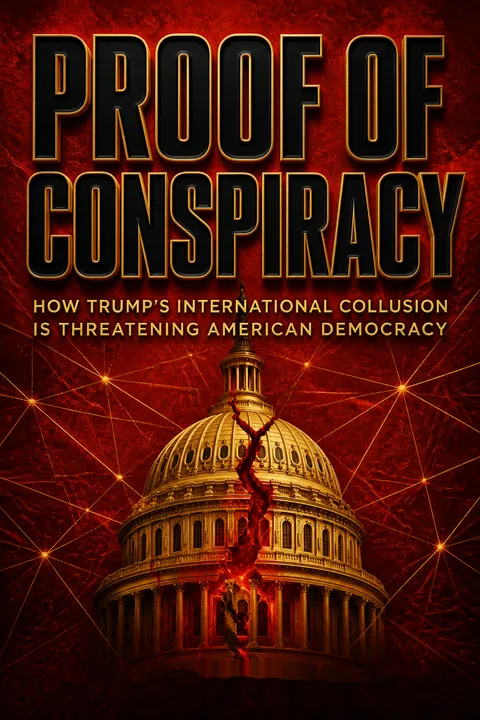
Proof of Conspiracy is a meticulously researched book exposing Trump's alleged collusion with Middle Eastern countries and Russia. Readers praise Abramson's thorough analysis and compelling narrative, highlighting the book's importance in understanding current geopolitical events. Critics note the dense writing and occasional repetition but acknowledge the work's significance. The book details a complex web of relationships and deals involving Trump, his administration, and foreign powers, painting a disturbing picture of corruption and self-interest. Many reviewers express shock at the revelations and emphasize the book's relevance to contemporary politics.
People Also Read





Glossary
Red Sea Conspiracy
Alleged regional election bargainThe author's label for an alleged plan discussed at a 2015 meeting of Middle Eastern leaders on a yacht in the Red Sea. The book argues that participants sought a new regional alliance, a Trump victory, and a shift in U.S.-Russia policy that would weaken Iran. It is the author's organizing hypothesis, not a court finding.
grand bargain
Proposed sanctions-for-policy exchangeA proposed U.S.-Russia understanding described in varying forms throughout the book. The central idea is that a Trump administration would ease or remove sanctions on Russia, while Moscow would limit its support for Iran or cooperate on Syria. The book links this proposal to broader plans for Middle Eastern investment and a new Arab-Israeli alignment.
collusion
Coordinated or responsive conductThe author uses collusion in a broad, nonlegal sense for purposeful conduct in response to, or in concert with, another party. It can exist without an explicit agreement and is not automatically a crime. Whether conduct is criminal depends on the underlying actions and the elements of a specific law, such as bribery or illegal campaign contributions.
conspiracy
Agreement toward an unlawful goalThe book distinguishes an everyday secret agreement from criminal conspiracy. In the legal sense it describes, two or more people agree to pursue an unlawful objective and at least one participant takes an act to advance it. A conspiracy charge concerns the alleged agreement and action, not simply suspicious contacts or similar political preferences.
Middle East Marshall Plan
Proposed regional investment programA set of proposals associated with Michael Flynn, ACU Strategic Partners, IP3, and other Trump advisers. The plans envisioned investment and infrastructure development in the Middle East, including nuclear power projects involving U.S., Russian, Saudi, and other regional interests. The book argues that sanctions relief was important to some versions of the proposal; the plans were proposals, not an enacted program.
Project Rome
Psy-Group campaign proposalsA code name used for proposals from Israeli business intelligence firm Psy-Group to assist the Trump campaign in 2016. The proposals reportedly included social media manipulation and intelligence gathering aimed at influencing voters and targeting Hillary Clinton. The book describes evidence that the campaign considered the offers, while noting that the extent to which the proposed work was carried out remains disputed.
Middle East Strategic Alliance (MESA)
Proposed Arab security coalitionA proposed regional security and political alliance, sometimes described as an Arab NATO, intended to coordinate Gulf states with Egypt, Jordan, and the United States on Iran, counterterrorism, and defense. Its membership and purpose remained unsettled. The book presents it as a later institutional expression of the anti-Iran alignment associated with the Red Sea plan.
FAQ
What's Proof of Conspiracy about?
- Focus on Collusion: Proof of Conspiracy by Seth Abramson investigates the alleged collusion between Donald Trump and foreign powers, particularly focusing on the "Red Sea Conspiracy" involving Russia, Saudi Arabia, the UAE, Israel, Bahrain, and Egypt.
- Historical Context: The book provides a detailed historical backdrop, tracing events from late 2015 through the 2016 election and beyond, highlighting how these international relationships shaped U.S. foreign policy.
- Evidence and Analysis: Abramson presents extensive evidence, including over 3,350 endnotes, to substantiate his claims about the collusion and its implications for American democracy.
Why should I read Proof of Conspiracy?
- In-depth Investigation: Readers interested in political intrigue and international relations will find Abramson's thorough investigation compelling, as it delves into the intricate web of relationships and motivations.
- Understanding Current Events: The book provides context for understanding contemporary political dynamics, particularly regarding U.S. foreign policy in the Middle East.
- Critical Perspective: Abramson offers a critical perspective on the events surrounding the Trump administration, encouraging readers to think critically about the intersection of politics, business, and international relations.
What are the key takeaways of Proof of Conspiracy?
- Geopolitical Manipulation: The book illustrates how foreign powers can manipulate U.S. politics for their own ends, raising questions about the integrity of American democracy.
- Corruption and Complicity: Abramson argues that the collusion represents a significant breach of ethical and legal standards, emphasizing the dangers of corruption at the highest levels of government.
- Impact on Foreign Policy: The narrative highlights how the conspiracy has influenced U.S. foreign policy, particularly towards Iran and the Gulf states, reflecting foreign interests over American citizens.
What is the Red Sea Conspiracy in Proof of Conspiracy?
- Origin and Goals: The Red Sea Conspiracy is a geopolitical plot initiated in late 2015, where leaders from several countries convened to ensure Trump's election, aiming to alter U.S. foreign policy to benefit these nations.
- Meeting Details: This meeting took place on a yacht in the Red Sea, symbolizing the clandestine nature of their collaboration.
- Long-term Implications: The conspiracy's implications extend beyond the election, affecting U.S. relations with various countries and shaping the political landscape in the Middle East.
Who are the main players in the Red Sea Conspiracy according to Proof of Conspiracy?
- Key Leaders: The conspiracy involves figures such as Donald Trump, Mohammed bin Salman (MBS) of Saudi Arabia, Mohammed bin Zayed (MBZ) of the UAE, and Vladimir Putin of Russia.
- George Nader's Role: George Nader, an adviser to MBZ, is portrayed as a central figure in orchestrating the meetings and agreements among these leaders.
- International Context: The book also discusses the roles of other nations, including Israel and Egypt, in shaping the conspiracy.
What evidence does Seth Abramson provide in Proof of Conspiracy?
- Extensive Citations: The book includes over 3,350 endnotes and 4,300 individual citations, providing a robust foundation for its claims.
- Interviews and Reports: Abramson draws on interviews, news reports, and official documents to construct a detailed and persuasive narrative.
- Legal and Historical Analysis: The author combines legal analysis with historical context to illustrate the significance of the events discussed.
How does Proof of Conspiracy address the issue of media and journalism?
- Investigative Journalism: Abramson underscores the critical role of investigative journalism in exposing corruption and holding power accountable.
- Khashoggi’s Legacy: The author uses Khashoggi’s murder to discuss the risks journalists face when reporting on powerful figures.
- Media’s Role in Democracy: The book posits that media is essential for informing the public and fostering democratic discourse.
What are the implications of Khashoggi’s murder as discussed in Proof of Conspiracy?
- Symbol of Authoritarianism: Khashoggi’s assassination is portrayed as a symbol of the lengths to which autocratic regimes will go to silence dissent.
- Impact on U.S.-Saudi Relations: The murder has strained U.S.-Saudi relations, raising questions about America’s commitment to human rights.
- Call for Accountability: The author emphasizes the need for accountability in the wake of Khashoggi’s death.
How does Proof of Conspiracy explore the theme of corruption?
- Corruption as a Central Theme: The book delves into corruption at multiple levels, from personal dealings to international relations.
- Personal Gain vs. National Interest: Abramson argues that Trump’s actions often prioritize personal gain over national interest.
- Consequences for Democracy: The author warns that unchecked corruption can have dire consequences for democracy.
What are the best quotes from Proof of Conspiracy and what do they mean?
- Foreign Influence Concerns: "If a foreign country is putting money in the president’s pocket on an ongoing basis, how in the world can we trust that the decisions he makes will be based on the best interests of the United States?" raises ethical questions about political integrity.
- Audacious Plot: "The Red Sea Conspiracy is as audacious a plot as the world has seen in half a century." emphasizes the gravity and complexity of the conspiracy.
- Evidence and Truth: "Proof exists, in a given situation, if there is evidence that helps establish something as true." reflects Abramson's approach to evidence and truth in politics.
How does Proof of Conspiracy connect to current political events?
- Ongoing Investigations: The book's exploration of collusion and foreign influence is relevant in light of ongoing investigations into election interference.
- Impact on U.S. Foreign Policy: Abramson’s analysis provides insight into the current state of U.S. foreign policy, especially regarding relations with Middle Eastern countries.
- Understanding Political Dynamics: The book helps readers understand the complex dynamics of international relations and how they intersect with domestic politics.
Download PDF
Download EPUB
.epub digital book format is ideal for reading ebooks on phones, tablets, and e-readers.








