

Key Takeaways
Read CRT as an activist account of power, not merely a school curriculum
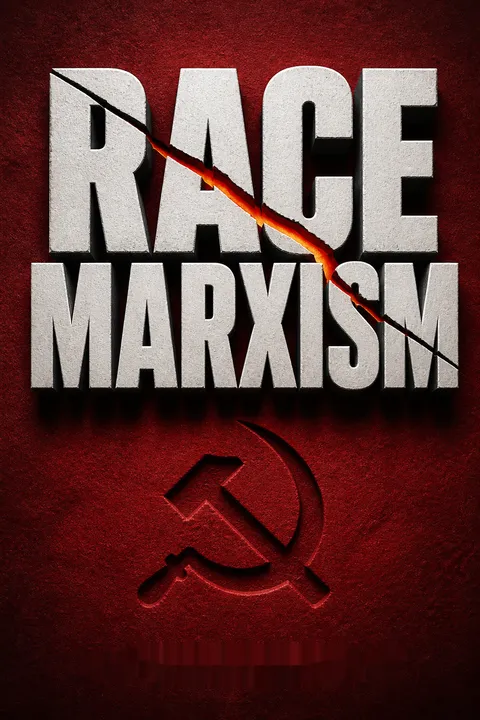
A movement and a lens. Lindsay begins with Critical Race Theory as its advocates describe it: a movement of scholars and activists seeking to change how race, racism, and power relate. It began in legal scholarship, but the book emphasizes its spread into education and other fields. Lindsay’s central label for this project is Race Marxism: a conflict analysis that makes race, rather than economic class alone, the main frame for interpreting inequality.
A contested interpretation. The book argues that CRT is not just a way to study society but a political project meant to transform it. That claim draws on CRT authors’ own descriptions of its activist dimension, alongside Lindsay’s reading of its intellectual history. The label Race Marxism is his interpretation, not a neutral or universally accepted definition.
The distinction between an academic theory and an activist movement is useful: a framework can shape not only what researchers ask, but also what institutions do. Yet calling a broad field one unified political project risks flattening differences among scholars, legal arguments, and workplace or classroom programs. A careful reader can retain Lindsay’s central question, what political commitments accompany a theory, without assuming that every use of CRT has identical aims or effects. The label is a thesis to assess, not a settled classification.
Check what outcome gaps can show before calling them proof of racism
The default explanation. Lindsay describes CRT as treating racism as ordinary and enduring, rather than an unusual departure from an otherwise neutral system. In his account, racial disparities in outcomes often become evidence that a policy or institution is racist. He points to Ibram X. Kendi’s formulation that racial inequity indicates racist policy as a clear example of this approach.
The author’s objection. Lindsay argues that this reasoning can become circular: a disparity is taken as proof of racism, and racism is then used to explain the disparity. He accepts that past and present discrimination can affect material conditions, but argues that outcomes alone do not establish the cause. His critique is aimed at treating racial gaps as a sufficient diagnosis, not at denying that discrimination can occur.
Outcome gaps are valuable signals because they can reveal patterns that individual cases conceal. But a signal is not a causal explanation. Researchers need to examine mechanisms, compare relevant groups, and consider variables such as income, geography, and access to education. The reverse error is also possible: explaining away a disparity with other factors before testing whether discrimination contributes to it. The strongest version of this debate treats unequal outcomes as a reason to investigate, then lets evidence determine which explanations survive.
Separate a policy’s effects from claims about its hidden motives
A theory of shared interests. Derrick Bell’s Interest-Convergence Thesis holds that white support for racial progress tends to occur when it also serves white interests. Lindsay describes Bell applying this idea to Brown v. Board of Education, arguing that school desegregation helped the United States present a better image during the Cold War. The book treats this as an example of CRT interpreting an apparently progressive legal change through the interests it may also have served.
The risk of overreach. Lindsay criticizes the thesis as deeply cynical because it can reinterpret apparent progress as a way of preserving racial advantage. He argues that this makes it difficult to recognize genuine change. The distinction matters: a policy’s consequences can be analyzed without claiming certainty about the private motives of everyone who supported it.
Political reforms often have mixed motives, and a policy can benefit several groups at once. Historical analysis is strongest when it separates documented intentions, political incentives, and measurable consequences rather than treating any one as a proxy for the others. Bell’s approach usefully asks who benefits from reform and whether benefits are durable. Its weakness appears when that question becomes an unfalsifiable assumption that every gain must conceal a self-serving purpose. Motive claims need evidence just as outcome claims do.
Use intersectionality to detect overlap without reducing people to identity scripts
Where categories meet. Intersectionality, developed by Kimberlé Crenshaw, examines how discrimination can affect people through overlapping identities. Crenshaw’s legal example is that a company might hire Black men and white women yet still discriminate against Black women in ways that neither race-only nor sex-only analysis detects. Lindsay recognizes the value of this problem-solving insight.
From diagnosis to politics. The book argues that intersectionality also became a broader framework for analyzing linked systems of power and organizing political solidarity. It describes positionality, a person’s relationship to those systems, as central to this expanded approach. Lindsay worries that group identity can then be treated as a script for what someone may understand or credibly say. His challenge is to preserve attention to overlapping barriers without making group membership determine a person’s views.
The original legal insight is powerful because single-axis categories can hide cases that fall between them. That does not require assuming that identity fixes a person’s beliefs or that every unequal outcome stems from a single system. In research and policy, intersectional analysis is most useful when it specifies the group, mechanism, and setting under discussion. It is least useful when it becomes a ranking of who has authority to speak. A framework can illuminate neglected cases while leaving room for disagreement within groups.
Treat testimony as evidence to examine, not a verdict beyond question
Stories reveal what statistics miss. Lindsay says CRT often favors storytelling, personal experience, and counterstories, which are accounts intended to challenge prevailing narratives. He discusses a hypothetical story by Derrick Bell in which a magic pill stops young Black men from committing crimes. The imagined improvement then threatens businesses and institutions that depend on crime, which ultimately act to restore the old conditions. The story is designed to dramatize the possibility that institutions benefit from the problems they claim to solve.
A method with limits. Lindsay argues that such stories can persuade without proving that the imagined events or motives are real. He objects when narrative is treated as a substitute for empirical evidence, especially in law or policy. His point is not that personal testimony is worthless, but that the reader should distinguish an account of experience from a demonstrated explanation of cause.
Narrative can expose questions that conventional measurement overlooks: what a policy feels like to live under, or which assumptions an institution takes for granted. In that sense, testimony can generate hypotheses and improve research design. But a compelling story cannot establish how common an event is or what caused it. The most productive approach combines lived accounts with independent evidence, while taking care not to dismiss testimony simply because it is subjective. Different kinds of evidence answer different questions.
Notice when an analytical theory also prescribes institutional action
Theory joined to practice. Critical Race Praxis means putting CRT’s analysis into action. Lindsay stresses that CRT authors describe the movement as seeking both to understand social arrangements and to change them. He lists examples such as training, curriculum changes, institutional guidelines, and activism. The book connects this approach to the wider Marxist idea of praxis, in which theory and practice are understood as intertwined.
Follow the actual proposal. Lindsay sees these activities as efforts to raise racial consciousness and reshape institutions, and he warns that a framework can spread beyond its original academic setting. That makes it important to examine what a particular program teaches, who decides its rules, and how it handles disagreement. The label alone cannot tell a reader whether a specific initiative is well-supported or fair.
A theory’s practical commitments deserve scrutiny, especially when institutions adopt it through hiring, training, or policy. This does not make activism inherently illegitimate: scholarship has long informed reform movements, and some forms of research explicitly aim to solve social problems. The important questions concern accountability and method. Are claims testable? Can participants challenge the framework without penalty? Are decisions reviewed against clear standards? Those questions distinguish an evidence-informed intervention from an ideological loyalty test without presuming that every program belongs to either category.
Demand stable definitions when equity vocabulary shifts between audiences
Words carry policy. Lindsay argues that terms such as racism, antiracism, diversity, and inclusion can have specialized meanings in CRT contexts that differ from ordinary usage. He uses the motte-and-bailey strategy to describe a possible rhetorical shift: a broad, familiar meaning reassures an audience, while a narrower or more demanding meaning is applied when policy is implemented. For example, a general promise of inclusion might later be used to justify excluding speech or people considered harmful to a group.
Ask for the rule. The book recommends requiring clear definitions before agreeing to policies. That advice is especially relevant when a term could mean either equal access or a specific program of group-based remedies. Lindsay interprets shifts in meaning as potentially strategic, but the practical test is concrete: identify the policy’s criteria, decision-makers, and consequences before judging it.
Ambiguous language can produce real conflicts in institutions, particularly when a broad moral aim is translated into enforcement rules. Requiring operational definitions makes debate more transparent and helps people notice when a policy changes in practice. Still, changing language does not by itself prove deliberate manipulation. Terms evolve, and different communities may use them differently in good faith. The remedy is not to freeze vocabulary, but to state what a policy requires, what evidence supports it, and how someone can appeal its application.
Trace intellectual influence without treating genealogy as a verdict
A layered history. Lindsay traces CRT through Critical Legal Studies, Black Feminism, Critical Pedagogy, neo-Marxism, and postmodern thought. He highlights the 1989 workshop where the movement took shape, Crenshaw’s work on intersectionality, and W.E.B. Du Bois’s account of double consciousness. He also connects these ideas to Hegelian dialectics and Herbert Marcuse’s search for political movements beyond the traditional working class.
Influence is not identity. The book presents this lineage as evidence that CRT is a form of Race Marxism. That is a substantive interpretation: it links shared concepts and activist aims into a continuous project. A reader should distinguish documented influence from analogy, and intellectual ancestry from the conduct of every present-day program. The history helps explain the author’s argument, but it does not alone settle whether his broad classification is accurate.
Intellectual history can clarify why a movement uses particular concepts, especially when its founders openly describe their influences. Yet genealogy is not proof that later practitioners share every aim or conclusion of earlier thinkers. Ideas travel selectively, change meaning, and enter institutions with different constraints. A convincing account therefore needs both textual history and evidence about contemporary practice. Lindsay offers a forceful genealogy, but readers should test each link rather than letting a lineage label decide the argument in advance.
Protect equal treatment while investigating real structural obstacles
The proposed response. Lindsay recommends resisting what he sees as CRT’s institutional expansion through transparency, public participation, legal challenges, and clear language. He also argues for a shared liberal sensibility grounded in individual rights, equality before the law, and judging people by conduct rather than identity. In his view, institutional safeguards and a wider cultural commitment to those principles must work together.
Apply the standards consistently. The book warns readers not to accept policy claims without examining their definitions and effects. A constructive version of that advice asks whether a measure addresses a demonstrated barrier, uses fair criteria, and permits disagreement and review. Lindsay’s institutional recommendations are more sweeping, but his emphasis on scrutiny can be separated from his larger political claims. Public decisions should be judged by their evidence and by the rights they protect.
A durable response to ideological pressure needs more than counter-mobilization. It needs procedures that protect people from discrimination and also from coercive orthodoxy: clear rules, due process, viewpoint-neutral standards, and evidence-based review. Universal principles can provide common ground, but they do not automatically reveal whether a barrier is real or how a remedy should work. Conversely, group-based analysis need not require abandoning individual rights. The challenge is to investigate structural patterns without turning identity into destiny or dissent into misconduct.
Analysis
Race Marxism is a polemical intervention, not a neutral survey of a diverse academic field. Its clearest contribution is to make readers attend to CRT’s activist dimension and to the way concepts such as systemic racism, standpoint, narrative, and praxis can shape institutional decisions. The book supports its case with primary texts and traces intellectual connections, giving the reader material to assess rather than relying only on a popular definition of CRT.
Its central weakness is compression. Lindsay turns varied legal scholarship, educational work, and political activism into a unified project, then interprets that project through Marxism and dialectical theory. Some connections are documented through authors’ stated influences; others depend on analogy or on reading similar language as evidence of a common political purpose. Those are not equivalent forms of proof. Nor does identifying a Marxist influence establish that a present-day training, policy, or legal argument is Marxist in its aims or effects.
The book is strongest when it asks readers to distinguish a disparity from its explanation, a personal account from causal evidence, and a policy’s stated intention from its actual operation. These distinctions are useful whether or not the reader accepts Lindsay’s account of CRT. Its case is less persuasive when it treats disagreement with liberal principles, activism, or identity-based analysis as evidence of a single totalizing ideology. Such claims need to be tested against actual programs and outcomes, not inferred from labels alone.
A fair assessment therefore keeps two questions separate. What does a particular CRT argument claim, and does the evidence support it? What rules should govern institutions when people disagree about race and justice? The first calls for empirical and textual analysis. The second calls for rights, transparency, and accountable decision-making. Treating both as questions rather than as settled conclusions helps preserve the book’s diagnostic value without adopting its entire polemic.
Review Summary
Race Marxism receives mixed reviews, with supporters praising its in-depth analysis of Critical Race Theory's origins and critics arguing it misrepresents the subject. Many readers find it informative but dense, requiring careful study. Supporters view it as an essential critique of CRT's impact on society, while detractors claim it pushes a biased narrative. The book's central argument, that CRT is a form of Marxism focused on race, sparks debate. Some appreciate Lindsay's writing style, while others find it difficult to follow.
People Also Read






Glossary
Race Marxism
Marxist analysis centered on raceLindsay’s name for his central interpretation of Critical Race Theory. He argues that CRT adapts Marxian conflict analysis by placing race at the center of explanations of inequality, rather than treating economic class as the primary axis. The term is his thesis about CRT, not a neutral label accepted by all scholars.
Critical Race Praxis
Theory put into actionThe application of Critical Race Theory to institutions, policy, education, and activism. In the book’s account, praxis is not separate from theory: putting the analysis into practice is part of what makes CRT a movement rather than only an academic framework. Lindsay focuses on activities such as training, curriculum design, and institutional advocacy.
Interest-Convergence Thesis
Progress follows aligned interestsDerrick Bell’s argument that racial progress is most likely when it also serves the interests of the socially dominant group. Lindsay discusses Bell’s reading of school desegregation as partly serving United States interests during the Cold War. The thesis directs attention to who benefits from reform, though claims about historical motives require evidence.
intersectionality
Overlapping identity-based barriersA framework associated with Kimberlé Crenshaw for analyzing how forms of discrimination can overlap and produce experiences missed by examining race or sex in isolation. Crenshaw’s example concerns Black women who may face discrimination not captured by analyses focused separately on Black men or white women. Lindsay distinguishes this legal insight from broader political uses.
structural determinism
Social structures shape group outcomesIn Lindsay’s account of CRT, the idea that social structures associated with identity shape group-level experiences and outcomes, even when individual outcomes cannot be predicted. The concept is presented as an alternative to claims that race has fixed biological traits. Lindsay argues that it can still treat group identity as determining a person’s authentic perspective.
unique voice of color
Authority from racial experienceA CRT concept, as presented by Lindsay, that people from racialized minority groups may have particular knowledge of racism because of their experiences. The book argues that this claim can become a rule for deciding whose views count as authentic. It also notes the tension between assigning a shared voice to a group and rejecting racial essentialism.
motte and bailey
Shift between strong and modest claimsA rhetorical pattern in which a controversial claim is advanced when conditions are favorable, then defended by retreating to a more modest and easier-to-defend claim when challenged. Lindsay applies the term to debates over equity-related language, arguing that familiar meanings can make a policy seem uncontroversial before more specific meanings guide its implementation.
critical constructivism
Social construction framed by powerLindsay’s term for the synthesis he sees in CRT between postmodern claims that categories are socially constructed and neo-Marxist claims that power structures shape social life. In his account, this approach treats racial categories as socially created yet consequential because institutions impose meanings and effects on them.
FAQ
What is Race Marxism: The Truth About Critical Race Theory and Praxis by James Lindsay about?
- Core argument: The book contends that Critical Race Theory (CRT) is essentially a form of "Race Marxism," a neo-Marxist ideology that centers race, rather than class, as the primary axis of social conflict and revolution.
- Historical and philosophical roots: Lindsay traces CRT’s origins to Marxism, Hegelian dialectics, Rousseau’s social contract, and W.E.B. Du Bois’s double consciousness, showing how these ideas are synthesized into CRT.
- Purpose and urgency: The author frames CRT as a civilization-threatening ideology that must be understood in depth to be effectively resisted.
- Critical perspective: Lindsay positions CRT as a religious-like belief system with revolutionary ambitions, manipulating language and institutions to achieve its goals.
Why should I read Race Marxism by James Lindsay?
- Comprehensive CRT analysis: The book offers a detailed, scholarly breakdown of CRT’s philosophical, historical, and practical foundations, going beyond surface-level explanations.
- Revealing ideological roots: Lindsay connects CRT to broader Marxian and Hegelian traditions, exposing its revolutionary and religious-like ambitions.
- Practical implications: Readers learn how CRT operates in institutions and culture, and how to recognize and counteract its influence.
- Guidance for resistance: The book provides strategies for both institutional and cultural pushback, making it valuable for educators, policymakers, and concerned citizens.
What are the key takeaways from Race Marxism by James Lindsay?
- CRT as Race Marxism: CRT is presented as a neo-Marxist theory that replaces class with race, aiming for revolutionary change through racial conflict.
- Totalizing belief system: Lindsay argues CRT functions as a fundamentalist, religious-like worldview that demands conformity and rejects alternative perspectives.
- Activist dimension: CRT is not just theoretical; it insists on praxis—activism to transform society and institutions according to its vision.
- Call to action: Understanding CRT’s true nature is essential for effective resistance and the preservation of liberal values and social order.
How does James Lindsay define Critical Race Theory in Race Marxism?
- Three-part outsider definition: CRT is defined as (1) labeling everything one wants to control as “racist” until it is under control, (2) a Marxian conflict theory of race, and (3) the belief that racism created by white people is the fundamental organizing principle of society.
- Movement, not just theory: CRT is described as a movement of activists and scholars seeking to transform the relationship among race, racism, and power.
- Marxian and activist roots: The book emphasizes CRT’s origins in Marxism and its activist, revolutionary aims.
- Hidden agenda: Lindsay claims CRT’s ultimate goal is to seize power under the guise of antiracism.
What are the core beliefs or tenets of Critical Race Theory according to Race Marxism by James Lindsay?
- Racism as ordinary and permanent: CRT holds that racism is deeply embedded and systemic, not an aberration.
- Interest-Convergence Thesis: Whites only support racial progress when it aligns with their interests, often perpetuating racism.
- Material and structural determinism: Racial categories are seen as determining material conditions and social structures.
- Unique voice of color and storytelling: Marginalized groups are believed to have unique epistemic authority, with narrative and counterstorytelling as valid knowledge forms.
- Critique of liberalism: CRT rejects colorblindness and meritocracy, viewing “whiteness” as a form of property to be abolished.
How does Race Marxism by James Lindsay connect Critical Race Theory to Marxism and other ideological traditions?
- Race replaces class: CRT is described as a neo-Marxist theory that substitutes race for class as the central axis of oppression.
- Dialectical method: CRT inherits Hegel’s dialectical approach, applying it to race and identity politics.
- Fusion with postmodernism: CRT combines neo-Marxist Critical Theory with postmodern social constructivism, creating a “critical constructivism.”
- Historical lineage: The book traces CRT’s roots to Marx, Hegel, Rousseau, and Du Bois, highlighting its revolutionary and dialectical nature.
What is Critical Race Praxis according to Race Marxism by James Lindsay?
- Raising critical consciousness: Praxis is the process of instilling a critical racial consciousness in individuals and institutions.
- Institutional transformation: CRT seeks to convert every institution into a mechanism for producing and empowering CRT adherents.
- Divide and conquer: Praxis involves exploiting social contradictions to polarize groups and marginalize dissenters.
- Language manipulation: CRT uses redefined terms and rhetorical traps to silence opposition and enforce conformity.
How does Race Marxism by James Lindsay describe the role of language and rhetoric in Critical Race Theory?
- Redefinition of terms: CRT deliberately redefines common words (e.g., “racism,” “antiracism”) to serve its ideological goals.
- Motte and bailey strategy: CRT shifts between defensible and radical positions to evade criticism and advance its agenda.
- Kafkatraps: Denial or questioning of CRT accusations is taken as proof of guilt, silencing dissent.
- Epistemic authority: CRT uses complex jargon and systemic thinking to undermine critics’ confidence and portray them as morally deficient.
What is the relationship between Critical Race Theory and Critical Whiteness Studies in Race Marxism by James Lindsay?
- Focus on whiteness: Critical Whiteness Studies examines whiteness as a social construct and source of systemic privilege.
- Anti-white orientation: It aims to induce negative white racial consciousness and assign moral responsibility for systemic racism to whites.
- Integral to CRT: Despite being portrayed as separate, it shares CRT’s neo-Marxist roots and ideological goals.
- Racist by its own standards: Lindsay argues that both CRT and Critical Whiteness Studies fulfill their own definitions of racism by imposing negative racial identities.
How does Race Marxism by James Lindsay describe Critical Race Theory as a belief system or religion?
- Totalizing worldview: CRT demands interpreting all social phenomena through its lens, rejecting alternative views as complicit in racism.
- Fundamentalist faith: The book claims CRT exhibits fundamentalist characteristics, including rigid orthodoxy and resistance to critique.
- Legal and moral religion: CRT is said to address fundamental questions of existence and morality, qualifying as a religion under U.S. law.
- Conspiracy theory nature: CRT is described as a conspiracy theory alleging white people created and maintain systemic racism to preserve power.
What practical advice does James Lindsay offer in Race Marxism for resisting Critical Race Theory?
- Reject benefit of doubt: Do not assume CRT has good intentions; demand clear definitions and reject equivocations.
- Discern and expose: Recognize CRT’s tactics, call out linguistic manipulations, and expose its spread in institutions.
- Institutional and cultural resistance: Remove CRT adherents from power legally and foster a cultural renewal based on liberal values.
- Promote common sensibility: Advocate for individual liberty, merit, and equality before the law as alternatives to CRT’s identity politics.
What is the “common sensibility” proposed by James Lindsay in Race Marxism as a solution to Critical Race Theory?
- Rooted in reality: Emphasizes accepting reality and human nature, valuing truth and shared humanity.
- Decentralization of power: Supports liberal principles like free inquiry, property rights, and democratic governance to resist ideological capture.
- Opposition to Marxian Theory: Rejects CRT’s divisive, power-centered worldview in favor of merit, excellence, and responsibility.
- Americanism as example: Highlights American founding values—equality, inalienable rights, and rule of law—as practical embodiments of this sensibility.
About the Author
Other books by James Lindsay

Download PDF
Download EPUB
.epub digital book format is ideal for reading ebooks on phones, tablets, and e-readers.








