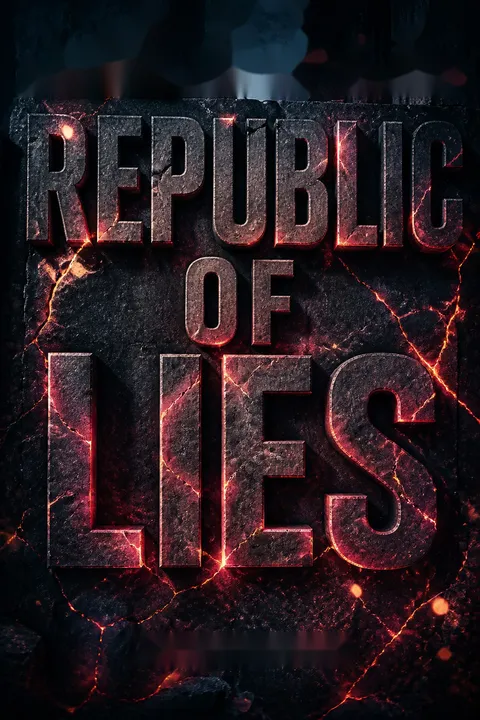


Key Takeaways
Treat conspiracy theories as political weather, not a fringe sideshow
A hidden plot, in brief. A conspiracy theory claims that a small group is secretly acting against the public good. The book uses Frank Mintz’s term “conspiracism” for a broader outlook: conspiracies are treated as the main force shaping history. Merlan first encountered this world as a strange subculture, then watched its language enter national politics. Alex Jones, once easy to dismiss as a radio provocateur, became an ally of Donald Trump, whose campaign echoed themes of a rigged system and a corrupt media.
Stress makes plots persuasive. Conspiratorial thinking has deep American roots, from colonial suspicions of British designs to fears of communist subversion. It gains force during upheaval, when social change, economic insecurity, or lost influence makes a hidden enemy feel like a satisfying explanation. The danger is not simply that unusual beliefs exist. It is that they can shape who gains power and what citizens accept as true.
What's striking is that conspiracism offers more than an explanation. It supplies a cast of villains, a threatened community, and a reason to act, a structure familiar from political mobilization and religious narratives. That structure can make a complicated crisis feel legible, especially when ordinary institutions seem remote. The useful distinction is between recognizing this emotional function and treating every believer as irrational. Still, emotional coherence is not evidence. A satisfying story can explain a grievance while misidentifying its cause, and political entrepreneurs can exploit the gap.
Demand evidence without dismissing communities trained by real betrayal
Suspicion has a history. After Hurricane Katrina, some New Orleans residents believed the levees had been deliberately bombed. There was no evidence of bombing during Katrina, but the suspicion had roots: in 1927 officials dynamited a levee to protect New Orleans, flooding poorer, predominantly Black communities. After Katrina, many Black residents were displaced while some neighborhoods and public housing were not rebuilt for their return.
Real abuses matter. The FBI’s COINTELPRO program targeted civil rights and other activist groups with surveillance and disruption. The Tuskegee syphilis study left Black men untreated for decades, even after penicillin became available. Such histories make distrust understandable, not every new allegation accurate. Merlan’s point is that dismissing suspicion as madness ignores the record that helped produce it.
This distinction resembles a central problem in public health and social epistemology: trust is not merely a personal attitude, it is a judgment built from past institutional conduct. Communities that have experienced unequal treatment have reason to demand stronger evidence and more accountable investigators. That does not make a particular claim true, but it changes what a credible response must include. A blunt debunk can confirm the experience of being ignored. Conversely, treating historical injustice as proof of any present accusation can make people vulnerable to new exploitation. Respect and verification belong together.
Trace a rumor's distribution network, not just its loudest believer
Online sleuthing becomes self-confirming. Merlan calls the amateur pursuit of a hidden story “self-investigation”: people search online for evidence, often beginning with a conclusion they already favor. Pizzagate grew from claims that hacked Democratic emails used food words as codes for child abuse. Online investigators named Comet Ping Pong as the center of a trafficking ring, despite no evidence and no basement at the restaurant. Edgar Welch drove there with guns, hoping to investigate in person.
Many sites can echo one source. A study of alternative media found that identical stories appeared across multiple websites, creating the impression of independent confirmation. Bots and high-profile accounts helped circulate Pizzagate, which was shared about 1.4 million times by more than a quarter-million accounts. Counting repetitions is not the same as counting evidence.
The key information problem is not only false content, but false independence. In statistics, several measurements support a conclusion only when they are not all copies of the same original observation. A dozen sites repeating one rumor can look like a dozen witnesses while functioning as one source. Platform design intensifies this confusion because popularity and repetition are visible, while provenance is harder to inspect. A practical habit is to trace a claim backward: find its earliest source, check whether later reports add independent evidence, and separate evidence from interpretation.
Ask who gains when an unsolved tragedy gets a ready-made villain
A death became political currency. Seth Rich, a twenty-seven-year-old Democratic National Committee employee, was shot and killed in Washington in 2016. Police suspected a robbery, but his wallet was not taken and the case remained unsolved. Online speculation quickly claimed that Rich had leaked party emails to WikiLeaks and had been murdered by political enemies. The family said the allegations turned their grief into a public argument and attracted harassers and self-appointed investigators.
Amplification changed the story. Julian Assange hinted that Rich had been a source, and Fox News aired a claim based on a private investigator that it later retracted. Conservative figures and websites continued to promote the story. Merlan shows how entrepreneurs and political actors can turn uncertainty into a partisan narrative, while the original, unanswered question of who killed Rich gets crowded out.
Unsolved cases create a genuine vacuum: people want explanations, and families deserve serious efforts to find them. That need can be hijacked when speculation is packaged as investigation and distributed by actors who benefit from attention or political distraction. A useful test is whether a theory generates verifiable leads or merely expands suspicion toward convenient enemies. The risk is not only reputational harm. When a family is treated as an accomplice because it cannot validate a theory, ordinary grief becomes evidence in a closed argument.
Treat medical distrust as a trust failure, not merely a knowledge gap
A fragile study gained a vast life. In 1998, physician Andrew Wakefield and colleagues published a paper based on twelve children that suggested a possible link between the MMR vaccine and autism. The claim was not confirmed by later research, the paper was retracted, and Wakefield lost his medical license after an investigation found misconduct. But the story spread among parents seeking answers for their children. Vaccine rates fell, and measles cases rose sharply in Britain and the United States.
The market rewards fear. A 2014 survey found that 49 percent of Americans believed at least one medical conspiracy, including the idea that officials suppress natural cancer cures. Some distrust reflects high healthcare costs, past medical abuses, and confusing systems. Yet sellers of supplements and unproven treatments can turn that distrust into profit, sometimes at serious risk to patients.
Medical misinformation is especially potent because it attaches to intimate decisions made under uncertainty. Parents often search for a cause after a diagnosis, while scientific explanations may be probabilistic and emotionally unsatisfying. That does not excuse fabricated claims, but it suggests that fact sheets alone are weak defenses. Trustworthy communication must explain how evidence is tested, disclose conflicts, and acknowledge real uncertainty without implying that every possibility is equally likely. The challenge is to improve institutional accountability without allowing grief or distrust to become a market for dangerous substitutes.
Watch for apocalyptic child-abuse stories that turn suspicion into targets
Old fears return in new costumes. Pizzagate resembled what historian Norm Cohn called a “nocturnal ritual fantasy”: a story that secret enemies gather to abuse or sacrifice children as part of a plot against society. Similar accusations appeared in medieval blood-libel myths and in the Satanic Panic of the 1980s, when people were falsely accused of ritual abuse. These stories cast the alleged enemy as so evil that ordinary standards of proof seem inadequate.
A false flag claim says an attack was staged or engineered by a government or other hidden actor, often to justify new powers. After shootings, survivors and grieving families have been accused of being “crisis actors,” meaning paid performers pretending to be victims or witnesses. Such allegations have led to harassment, threats, and armed confrontations. The emotional charge of protecting children can make false accusations seem like urgent moral duty.
The pattern resembles moral panics studied by sociologists: public anxiety becomes concentrated on a vivid, supposedly monstrous threat, while the accusation itself helps authorize punishment. Child protection is a real and urgent concern, which makes false claims unusually difficult to challenge without seeming indifferent to abuse. The distinction must be carefully maintained: investigate credible evidence of harm, but do not treat symbolic clues, odd artwork, or a victim’s public response as proof. When suspicion identifies private individuals as villains, the move from story to coercion can be frighteningly short.
Test Deep State claims even when they flatter your political side
The same suspicion crosses the aisle. The term “Deep State” can describe durable, secretive networks of security agencies and powerful industries that operate with limited public oversight. Merlan distinguishes that real concern from the claim that a hidden cabal secretly controls every unwanted event. In 2017, some liberals treated routine mishaps as evidence of Russian control, while Trump allies portrayed investigations and leaks as a plot by Obama-era officials to overthrow the president.
History complicates easy dismissal. The United States has documented covert operations, including CIA-backed coups and domestic surveillance. Russian interference in the 2016 election was also supported by intelligence assessments. But evidence for one conspiracy does not establish every adjacent claim. Conspiratorial language also overlaps with white nationalist scapegoating, especially stories about Jews, immigrants, or Muslims secretly controlling government and society.
This is a useful case for separating institutional critique from totalizing suspicion. A complex bureaucracy can preserve policies across elections without being a unified secret command. Political science often calls this path dependence: past decisions and organizations constrain what current leaders can change. That mundane explanation can be less dramatic, but it is testable. The danger grows when every institution is treated as either wholly innocent or wholly captured. Such all-or-nothing thinking makes real oversight harder and gives authoritarian leaders a pretext to attack independent checks.
Rebuild trust with transparency, fairness, and room for dissent
Belief can immobilize as well as mobilize. QAnon promised that President Trump was secretly preparing to arrest a hidden network of government pedophiles. In 2018, a Nevada man armed with a rifle and handgun blocked a bridge near the Hoover Dam, demanding release of a report he believed concealed the truth. The episode shows how online suspicion can move into physical action. Research cited by Merlan also found that exposure to conspiracy claims can reduce people’s willingness to vote or take action on climate change.
The remedy is broader than debunking. Merlan argues for transparent reporting, media and science education, more accountable government, and a fairer society with meaningful political representation. UFO research offers a useful contrast: a classified government program did investigate unidentified aerial sightings, but that disclosure did not prove alien contact. Institutions must reveal what they can, while citizens keep evidence and inference distinct.
A healthy response must protect both free inquiry and the conditions that let inquiry converge on facts. Content moderation alone cannot repair distrust, and official statements cannot substitute for independent scrutiny. At the same time, an information system that rewards outrage while obscuring sources makes careful judgment unusually difficult. The strongest interventions are therefore layered: transparent records, credible local journalism, accessible science education, and institutions that respond fairly to communities. Structural reform cannot guarantee agreement, but it can make disagreement less fertile ground for exploitation.
Analysis
Merlan’s central argument is not that Americans believe too many strange things. It is that conspiratorial thinking is woven into the country’s political life, and that its consequences depend on who deploys it, who is targeted, and how much institutional trust remains. The book’s strongest distinction is between genuine secrecy and an unsupported story about secrecy. Watergate, COINTELPRO, Tuskegee, and covert foreign interventions make blanket appeals to trust untenable. Yet historical wrongdoing cannot validate every new allegation, and a narrative that treats disconfirmation as further proof has no reliable way to correct itself.
The reporting builds this tension through people rather than abstractions. Edgar Welch’s armed trip to Comet Ping Pong shows how an online accusation can become physical danger. The Rich and Pozner families show that the damage also falls on people who have already suffered profound loss. The account of Black American suspicion adds a necessary correction to the idea that conspiracism is simply a pathology of the political right: distrust can be a rational response to documented abuse, even when a particular claim is wrong. The chapters on white nationalism and the Deep State show a different transformation, as conspiracy stories become tools for organizing power and excusing political attacks.
A useful extension is to distinguish three questions that often collapse into one: Did a secret action occur? What evidence supports this specific allegation? Who benefits from treating the allegation as settled? Keeping those questions separate protects both skepticism and accountability. The book also leaves an important measurement caution. Believing one conspiracy claim, repeating it for entertainment, and threatening a grieving family are not equivalent behaviors. Broad survey figures can show that suspicion is common, but they cannot tell how deeply a belief is held or whether it motivates action.
The book’s conclusion is therefore more structural than therapeutic. Better fact-checking matters, but so do fairness, transparency, and a political system people can meaningfully influence. Conspiracy claims thrive where evidence is hard to access, institutions have earned distrust, and powerful actors profit from confusion. Rebuilding trust does not mean asking citizens to become less skeptical. It means making skepticism more productive by giving people credible ways to investigate, challenge, and correct claims without turning accusation into a verdict.
Review Summary
Republic of Lies explores the rise of conspiracy theories in America, examining their origins, spread, and impact on society. Merlan investigates various conspiracies, from UFOs to anti-vaxxers, providing historical context and analyzing their appeal. Readers appreciate her balanced approach and insights into the dangers of these beliefs. The book is praised for its timeliness and thorough research, though some critics desired more analysis. Overall, it's seen as an important work highlighting the growing influence of conspiracy thinking in American politics and culture.
People Also Read




Glossary
Conspiracism
History explained by plotsA broad outlook that treats secret conspiracies as a primary force shaping history. In the book, the term describes more than belief in one particular plot. It helps explain how suspicion can organize political grievances, identify hidden enemies, and promise that removing those enemies will restore a better social order.
Motivated reasoning
Beliefs steer evidenceA pattern in which people give greater weight to information that supports their existing beliefs and are more likely to reject information that threatens their values or identity. Merlan uses this concept to explain why conspiracy claims often align with political commitments and why contradictory evidence may strengthen, rather than weaken, a believer’s certainty.
Self-investigation
Amateur online fact-findingThe process of searching online for evidence about a suspected conspiracy, usually outside professional reporting or formal investigation. In the book, self-investigators often describe their activity as independent research, but the search can begin with a settled conclusion and draw from an insular stream of repeated claims rather than independent, verifiable evidence.
False flag
An attack blamed on othersA claim that an attack or crisis was secretly staged or carried out by one actor and then attributed to another, often to justify political action or expand government power. Merlan notes that false-flag accusations frequently arise after mass casualty events, where survivors, witnesses, and families may be falsely portrayed as actors in a fabricated event.
nocturnal ritual fantasy
Secret enemy ritual-abuse mythA recurring story, identified by historian Norm Cohn, in which a hidden group meets in secret to abuse or kill innocents, often children, as part of a plot against society. Merlan connects this pattern to medieval accusations against Jews, the Satanic Panic, and modern claims that political elites run secret child-abuse networks.
crisis actor
Alleged staged-event performerA person falsely accused of being a paid performer pretending to be a victim, witness, or responder during a real disaster or attack. The accusation emerged in conspiracy coverage of mass shootings and has been directed at survivors and grieving families, including people who publicly advocate for policy changes after experiencing violence.
Deep State
Hidden permanent power networkA term that can refer to durable government and security institutions with substantial power and limited public oversight. In the book, Merlan distinguishes this legitimate concern from claims that a unified secret cabal controls events or sabotages a president. The phrase became a partisan accusation used to explain investigations, leaks, and political opposition.
QAnon
Online pro-Trump conspiracy movementA conspiracy movement that grew from anonymous online posts claiming that President Trump was secretly fighting a hidden network of enemies, including government officials and alleged child abusers. Followers treated cryptic messages as clues to decode. The book describes how this story of coming arrests and justice inspired offline activism, including armed confrontations.
FAQ
What's Republic of Lies about?
- Exploration of Conspiracy Theories: Republic of Lies by Anna Merlan examines the rise of conspiracy theories in America, focusing on their increasing influence in culture and politics.
- Personal Experiences: Merlan shares her firsthand experiences with conspiracy theorists, providing a personal perspective on their beliefs and motivations.
- Cultural Context: The book situates these theories within a broader cultural and historical framework, highlighting societal factors like distrust in institutions and the digital age.
Why should I read Republic of Lies?
- Understanding Modern America: The book offers insights into how conspiracy theories shape public opinion and policy, crucial for understanding the current U.S. political and social climate.
- Engaging Narrative: Merlan's blend of personal anecdotes and thorough research makes the book accessible and engaging for a wide audience.
- Critical Examination: It encourages readers to critically evaluate the information they consume and reflect on their own beliefs.
What are the key takeaways of Republic of Lies?
- Conspiratorial Thinking is Common: Merlan emphasizes that such thinking is widespread and not limited to fringe groups, affecting various demographics.
- Impact of Social Media: The book highlights how social media amplifies conspiracy theories, allowing them to spread rapidly and gain legitimacy.
- Historical Roots: Conspiracy theories have deep historical roots in America, persisting and evolving over time.
How does Anna Merlan approach the topic of conspiracy theories in Republic of Lies?
- Personal Narratives: Merlan uses her own experiences to provide a unique perspective, helping readers connect with the subject matter.
- Research and Interviews: The book is grounded in extensive research and interviews, offering a comprehensive view of conspiracy theorists' motivations.
- Cultural Analysis: Merlan analyzes societal factors contributing to the rise of conspiracy theories, such as distrust in government and media.
What role does social media play in the spread of conspiracy theories according to Republic of Lies?
- Amplification of Misinformation: Social media platforms allow misinformation to spread quickly, often prioritizing sensational content.
- Community Building: These platforms enable like-minded individuals to form communities, reinforcing their beliefs and creating echo chambers.
- Challenges to Traditional Media: Social media challenges traditional media, often viewed skeptically by conspiracy theorists, leading them to seek alternative sources.
How does Republic of Lies explain the historical context of conspiracy theories in America?
- Longstanding Tradition: Merlan traces conspiracy theories back to the founding of the U.S., showing a historical suspicion of government and elites.
- Cultural Events: The book discusses events like the Red Scare and Kennedy assassination, illustrating how societal upheaval fuels conspiratorial thinking.
- Evolution of Beliefs: Conspiracy theories adapt to new social and political contexts, remaining relevant across generations.
What are some examples of conspiracy theories discussed in Republic of Lies?
- Pizzagate: The book details this theory, which falsely claimed a pizzeria was involved in a child trafficking ring, leading to real-world violence.
- Sandy Hook Denial: Merlan covers the denial of the Sandy Hook shooting, where theorists claimed it was staged, impacting victims' families.
- Anti-Vaccine Movement: The resurgence of anti-vaccine theories is explored, highlighting distrust in the medical establishment and social media's role.
What psychological factors contribute to belief in conspiracy theories as discussed in Republic of Lies?
- Cognitive Biases: Cognitive biases like confirmation bias lead individuals to seek information that supports their beliefs, creating a self-reinforcing cycle.
- Need for Control: Belief in conspiracy theories can stem from a desire for control in an unpredictable world, offering comfort in perceived hidden forces.
- Community and Identity: Conspiracy theories provide a sense of community and identity, fulfilling social needs and creating a sense of belonging.
What impact do conspiracy theories have on society, as discussed in Republic of Lies?
- Erosion of Trust: Conspiracy theories contribute to a broader erosion of trust in institutions, leading to societal fragmentation and polarization.
- Real-World Consequences: The book illustrates how these theories can lead to violence and public health crises, highlighting their potential harm.
- Political Manipulation: Conspiracy theories can be exploited by political actors, using fear and suspicion to rally support or distract from issues.
How does Republic of Lies connect conspiracy theories to political movements?
- Political Mobilization: Conspiracy theories can mobilize individuals and groups, leading to real-world actions and political movements.
- Influence on Elections: The book discusses how these theories have influenced electoral outcomes, such as the 2016 presidential election.
- Mainstream Acceptance: Some conspiracy theories have moved from the fringes to mainstream political discourse, reflecting broader acceptance.
What are the best quotes from Republic of Lies and what do they mean?
- “Falsehood flies, and truth comes limping after it.”: This quote highlights the rapid spread of misinformation compared to the slower emergence of truth.
- “We are the suspicious and the conspiracists are us.”: It suggests that the tendency to believe in conspiracies is a shared human trait, encouraging self-reflection.
- “The things that everyone thinks are crazy now, the mainstream will pick up on them.”: This warns about the potential normalization of extreme beliefs.
How does Republic of Lies address the consequences of conspiracy theories?
- Real-World Violence: Merlan highlights instances where conspiracy theories have led to violence, such as the Pizzagate shooting.
- Impact on Victims: The book discusses the emotional toll on individuals targeted by conspiracy theories, emphasizing the human cost.
- Erosion of Trust: Conspiracy theories contribute to a decline in trust in institutions, with far-reaching implications for democracy and social cohesion.
Download PDF
Download EPUB
.epub digital book format is ideal for reading ebooks on phones, tablets, and e-readers.








