

Key Takeaways
See Islamist resistance as a dispute over what human beings are for
The central divide. Crooke begins with an Iranian cleric’s argument that the conflict between Islamism and the West is not only about territory, policy, or power. It concerns competing ideas of human nature. The Western model, as Crooke describes it, organises society around individual choice and personal welfare. The Islamist vision treats people as morally connected to one another and to a wider order, with justice and compassion shaping what counts as welfare.
A political disagreement. From this starting point, Islamism challenges the claim that secular modernity automatically serves humanity. Crooke presents this as a broad intellectual conflict, not a claim that all Muslims think alike. The cleric’s account supplies the book’s lens for interpreting resistance and the Iranian Revolution.
What's striking is how this framing moves analysis from stated policy goals to underlying assumptions about people. Political theory often turns on whether individuals are best understood as rights-bearing choosers, members of communities, or both. That distinction affects everything from welfare policy to the limits of state power. The contrast is useful, but Crooke risks making two diverse traditions look tidier than they are. Western thought includes strong communal and egalitarian currents, while Islamist movements can disagree sharply about rights, authority, and public life.
Measure modernity by its human costs, not its promises alone
A darker record. Crooke traces Islamist resistance partly to the violence accompanying efforts to build Western-style nation-states and open markets in the Ottoman world. He describes pressure for political and economic reform alongside the creation of ethnically defined states. He cites historian Justin McCarthy’s estimate that about five million European Muslims were displaced between 1821 and 1922, and recounts the mass killing and deportation of Armenians during the First World War.
The author’s connection. Crooke argues that these events taught many Muslims not to expect Western powers to acknowledge their suffering or defend them. The Young Turks’ drive to homogenise the new Turkish state, and Ataturk’s abolition of the Caliphate, became especially potent examples. In his account, the promise of modernisation concealed a record of coercion and exclusion.
The chapter insists that political projects be judged by consequences, not only stated ideals. That is a valuable corrective to accounts of modernisation that treat upheaval as an unfortunate but necessary stage of progress. Historical causation is less simple, however: nationalism, imperial rivalry, local politics, and religious identity interacted in different ways across the region. Crooke’s broad indictment of Western policy can clarify recurring patterns, but it can also flatten distinctions among governments, periods, and communities.
Treat Islam as a public ethic of justice, not private belief
Belief in practice. Crooke presents Islam as a demand to build a community in which people treat one another with justice, compassion, and respect. In this account, religion is not confined to private devotion. Everyday social and political conduct is part of the religious task, and the community’s wellbeing matters because it shapes how people live together.
Striving and responsibility. The Arabic term jihad means striving. Crooke stresses that it can refer to effort in service of justice and faith, not simply warfare. The Qur’an, he argues, calls for practical conduct rather than speculation alone. The Prophet’s early community serves as an example of people changing their lives and social relations in response to that message. This ethical understanding helps explain why Islamist movements treat social provision and resistance as politically significant.
This account makes religious commitment legible as a form of public ethics rather than a private preference. It also illuminates why charitable work, social organisation, and political action can belong to one project. Comparable debates arise in secular traditions whenever moral principles are expected to shape institutions, rather than remain personal convictions. The difficult question is how a shared ethic becomes law without suppressing disagreement. Crooke identifies the aspiration clearly, but the practical settlement between religious authority, pluralism, and individual rights remains contested.
Recognize how secular nation-building helped make Islamism revolutionary
A rupture in authority. Ataturk’s abolition of the Caliphate in 1924 and the Turkish state’s campaign to secularise public life shocked many Muslims. Crooke argues that this severed a major symbol of Sunni unity and weakened institutions that had linked religious learning to ordinary practice. The attempt to marginalise Islam did not simply make it disappear. It also created room for new interpretations outside the old institutional order.
From critique to mobilisation. In Egypt, Sayyid Qutb’s experience of imprisonment and torture helped turn his critique of Westernised society into a revolutionary call. In Iraq, Mohammad Baqir Sadr and other thinkers developed new political ideas from within Shi’i learning. Crooke’s account therefore treats modern Islamist activism partly as a response to enforced secularisation, not merely as a survival of ancient tradition.
The history illustrates a familiar political paradox: suppressing an institution can weaken its authority while encouraging new, less predictable forms of organisation. That does not make repression the sole cause of religious revival, nor does every crackdown produce revolution. Economic pressures, existing networks, charismatic figures, and regional events also matter. Crooke’s account is strongest when it shows how institutional disruption opened space for reinterpretation, rather than treating secularisation as a single cause with a uniform result.
Distinguish defensive resistance from movements seeking collapse through terror
Different meanings of struggle. Crooke rejects the idea that every armed Islamist movement follows the same doctrine. He describes a classical tradition of defending the faith and community, and distinguishes it from a minority current that seeks to provoke a wider collapse through spectacular violence. In his account, movements such as Hamas and Hesballah frame resistance as a response to occupation and injustice, while al-Qaeda’s strategy aims to provoke the West into costly overreach.
A contested inheritance. Sayyid Qutb’s writing helped shape Islamist activism, but his ideas were interpreted in different ways. Crooke notes that Qutb challenged purely defensive accounts of jihad, while mainstream movements did not thereby adopt a general war against the West. The distinctions matter: treating every Islamist movement as equivalent obscures its aims, constituencies, and methods.
Careful distinctions are essential in security analysis because broad labels can turn very different actors into one imagined enemy. The book’s contrast helps explain why Islamist movements may oppose al-Qaeda while also resisting Western policy. Yet the categories are not self-evident: actors may describe their own violence as defensive while others experience it as aggression. A sound assessment therefore needs evidence about targets, tactics, political accountability, and the movement’s actual programme, not only its chosen vocabulary.
Put markets under ethical rules that protect communities from domination
Economics with obligations. Crooke presents Mohammad Baqir Sadr’s Islamic economics as an ethical framework, not a complete technical alternative to every Western model. It accepts private property and trade, but argues that economic life must serve justice and community welfare. Sadr assigns government a role in setting broad objectives and regulating economic relations, without requiring it to manage every business directly.
Distribution matters. The book emphasises charitable giving, inheritance rules, and limits on concentrations of wealth. It also criticises a financial system that, in Crooke’s account, encourages debt and advantages large firms over small enterprises. The central objection is not that markets exist, but that unchecked accumulation can produce dependence and domination. Economic activity should be assessed by its effects on human relations as well as by its efficiency.
This approach belongs to a wider family of moral-economy arguments, which ask what obligations accompany ownership and exchange. It usefully makes distribution and power visible in debates often framed only around growth. Its challenge is institutional: ethical intentions do not by themselves determine workable rules, nor guarantee fair enforcement. Crooke also risks treating a diverse set of Islamic economic proposals as more unified than they are. The core question remains productive: which arrangements prevent economic power from becoming social power over others?
Build resistance by strengthening local agency and community resilience
A social foundation. Crooke describes Hesballah as more than an armed organisation. Its social programmes, local networks, and community services helped build trust and a shared culture of resistance among Lebanon’s Shi’i, a population long marginalised in Lebanese politics. The movement also emphasised self-reliance, critical thought, and personal responsibility. Crooke reports that military commanders studied philosophy as part of developing independent judgement.
Organisation and strategy. Hesballah’s military structure relied on small, locally rooted units with considerable autonomy, rather than a large visible chain of command. Crooke interprets the 2006 conflict with Israel as evidence that this structure could frustrate a much stronger conventional force. He presents the outcome as a political and psychological victory, not a conventional military defeat of Israel. For him, community cohesion and military organisation were parts of the same resistance project.
The account connects organisational design to political legitimacy: people are more likely to sustain a movement when they have meaningful roles and local capacity, not merely orders from above. This resembles principles found in community organising and resilient networks, where trust and decentralised initiative can help groups adapt under pressure. But decentralisation is not automatically democratic or accountable. The book’s sympathetic reliance on movement insiders also leaves questions about internal dissent and coercion less examined than the movement’s effectiveness.
Use resistance to restore dignity and bring neglected rights into negotiations
More than battlefield aims. Crooke presents Hamas’s resistance as a response to occupation, displacement, and the erosion of Palestinian identity. He draws on Frantz Fanon’s analysis of colonial rule to explain how domination can damage a people’s sense of agency, while resistance can restore a feeling of dignity and purposeful action. This account does not mean every tactic is justified; it explains why resistance can carry psychological and political meanings beyond immediate military results.
Changing the terms. Hamas opposed the Oslo Accords and argued that Palestinian rights and the history of 1948 had been sidelined. Crooke notes that Hamas said it could accept a Palestinian state on the 1967 borders while refusing to recognise Israel. It used resistance to challenge what it saw as an unequal negotiating framework and to insist that Palestinian claims be acknowledged.
The distinction between resistance as a means of coercion and resistance as a claim to dignity is analytically important. Movements often use symbols and actions to establish who counts as a political interlocutor. At the same time, symbolic refusal can harden positions and expose civilians to further harm. Crooke’s account helps explain Hamas’s rationale, but understanding that rationale is not the same as endorsing its methods or predicting that they will produce a just settlement.
Question language that disguises power as neutral policy
Labels shape debate. Crooke argues that describing Islamist actors simply as terrorists can erase differences among movements and foreclose questions about their goals and origins. He traces some Western assumptions to the idea of an open society threatened by closed, supposedly backward cultures. In his account, terms such as “moderate,” “terrorist,” and “democratic” can become political instruments rather than neutral descriptions.
Politics and power. Crooke draws on Carl Schmitt’s theory that politics centres on the distinction between friend and enemy, and on the use of power. He argues that this lens helps explain policies that prioritise security and strategic advantage while presenting themselves as universal moral principles. His concern is that language can make coercive choices appear inevitable, while making the people affected by them nearly invisible.
Political language does more than describe events: it sets the boundaries of what can be debated and whose claims receive a hearing. That insight is useful across conflicts, including those in which insurgent groups use labels to legitimise their own actions. Crooke’s critique is persuasive when it asks readers to examine who benefits from a category. It is less persuasive if it assumes that every Western use of a term is cynical or that Islamist self-descriptions are transparent. Both require scrutiny.
Begin renewal by dissenting from your society’s settled assumptions
A small act of doubt. Crooke closes with J. M. Coetzee’s story of a magistrate at the edge of an empire. The magistrate is no revolutionary, but he becomes troubled by the torture of people labelled barbarians. His decision to return an abused prisoner to her community is a modest act that the authorities treat as disloyalty. The story illustrates how criticism can begin inside a system, before it becomes a full political break.
Thinking again. Crooke connects this kind of dissent to Michel Foucault’s call for people to question the limits imposed by their own traditions of thought. He argues that Western societies need to examine how ideas of progress and scientific management have justified human suffering. Renewal, in this view, begins not with a slogan or a new policy, but with the courage to question what established thinking has made seem normal.
The magistrate’s importance lies in his ordinary position: he is not a heroic outsider but someone whose private unease becomes a public refusal. That is a useful model for ethical dissent in institutions, where people can challenge harmful routines without pretending to stand outside the system. Still, personal conscience rarely changes institutions alone. Its force grows when joined to collective inquiry, transparent evidence, and organisations capable of sustaining disagreement.
Analysis
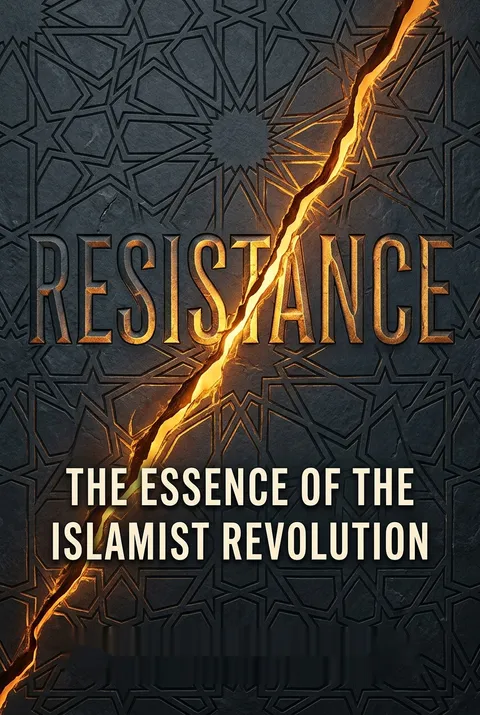
Resistance is a political interpretation of Islamist revival, not a comprehensive history of Islam or a neutral survey of every movement. Its organising claim is that conflict with the West is rooted in competing accounts of human nature and social purpose. Crooke links the Western emphasis on individual choice, markets, and secular state power to Protestant history and to the injuries caused by imposed modernisation. He then follows the emergence of Islamist thought through Qutb, the Najaf intellectual circle, the Iranian Revolution, and the distinct practices of Hesballah and Hamas.
The book’s strongest contribution is its insistence that religiously framed movements have ideas about social order, political legitimacy, and economic life. Treating them only as security problems makes their appeal and their resistance harder to understand. Its account of community-building also connects political theory to concrete institutions, from welfare provision to local military organisation.
Its central weakness is the scale of its contrasts. “The West” and “Islamism” are each internally diverse, yet the book sometimes presents them as coherent opposites. Its historical argument also risks drawing a direct line from Western state-building to Muslim resistance without sufficiently separating imperial policy, local agency, and the many other forces shaping events. The sympathetic focus on Hamas and Hesballah illuminates their stated aims, but leaves less room for scrutiny of internal power and the costs of armed struggle. Crooke acknowledges that the book is selective, including its limited treatment of gender. Read with those limits in mind, it offers a provocative lens: resistance is not simply a demand for power, but a contest over who defines justice, dignity, and the good life.
People Also Read

Glossary
Jahiliyya
Modern ignorance of divine guidanceOriginally associated with the period of ignorance before Islam, jahiliyya is used by Sayyid Qutb to describe modern societies that displace God’s authority and organise life around materialism and self-interest. Crooke explains that this extension helped frame secularised Muslim societies as targets for Islamist reform, though Islamist thinkers do not all use the term in the same way.
Umma
Muslim community of believersThe Umma is the community of Muslims, understood in Crooke’s account as extending beyond national borders. Islamist thinkers described in the book recast it as an ethical and political community, not merely a population under one government. The term supports an alternative to the nation-state as the sole source of identity and political belonging.
Political Shi’ism
Activist Shi’i political thoughtCrooke uses Political Shi’ism for the activist, revolutionary current shaped by thinkers and leaders including Mohammad Baqir Sadr, Ali Shariati, Ruhollah Khomeini, and Hassan Nasrallah. It draws on Shi’i traditions of resisting injustice and develops ideas about popular mobilisation, social justice, and political leadership. It is not a process of Sunni conversion to Shi’ism.
wilayat al-fiqih
Guardianship by an Islamic juristWilayat al-fiqih is the principle of guardianship or rule by a qualified Islamic jurist, associated in the book with Ruhollah Khomeini’s political thought. Crooke stresses that Khomeini’s conception was not simply a fixed legal constraint: he presents it as a form of leadership intended to guide a revolutionary political project. The idea has been interpreted and debated in different ways.
Instrumental rationality
Efficient means to chosen endsInstrumental rationality is reasoning focused on selecting efficient means to achieve a given goal, without necessarily examining whether the goal is morally sound. Crooke argues that its dominance in Western political and economic thought can turn science, law, and language into tools of control. He contrasts it with reasoning aimed at understanding values and the nature of human life.
Communities of capability
Resilient local networksCommunities of capability is a phrase used in the book for connected local groups able to organise, support members, and resist domination. The idea contrasts with a highly centralised state structure. In Crooke’s account, shared values, practical cooperation, and local agency make communities more resilient and can provide a basis for political mobilisation.
Defence of Islam
Protection of faith and communityDefence of Islam refers to a tradition of armed struggle understood as protecting the Muslim community from attack. Crooke distinguishes this tradition from indiscriminate violence or a general offensive war against non-Muslims. He argues that mainstream movements such as Hamas and Hesballah frame their armed resistance as a response to occupation, while other groups have developed markedly different doctrines.
Download PDF
Download EPUB
.epub digital book format is ideal for reading ebooks on phones, tablets, and e-readers.








