

Key Takeaways
Treat feeling special as a human need, not a diagnosis.
A need with two faces. Psychologist Craig Malkin’s mother could be warm, generous, and active in her community, yet increasingly relied on status and appearance to steady herself. After moving into a smaller apartment, she reached for expensive heels to feel better. The same drive to feel special had once helped her encourage a struggling shopkeeper. Malkin’s point is that narcissism is not simply vanity or cruelty. In healthy form, it is the ability to value oneself, pursue meaningful aims, and enjoy recognition without losing interest in other people.
The danger is dependence. Feeling special can help people withstand hardship, take creative risks, and invest in relationships. It becomes destructive when superiority is the main defense against fear, shame, loneliness, or sadness. The practical question is not whether someone ever seeks attention, but whether self-worth can survive without constant proof of being exceptional.
The useful shift is from judging a trait to asking what job it performs. A desire for recognition can support ambition and social contribution, while the same desire can become brittle when it must conceal painful feelings. This functional lens makes room for change without excusing harm. It also cautions against treating visible confidence as evidence of inner security: the loudest performance may be protecting the most fragile self-image.
Aim for flexible self-worth, not permanent humility or constant superiority.
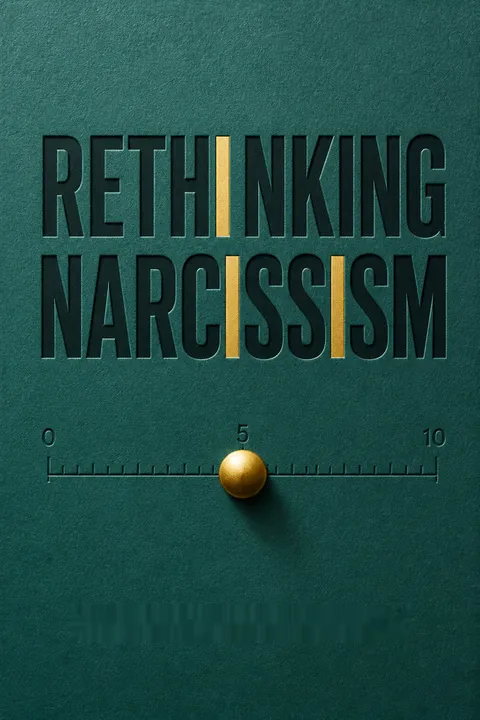
A spectrum, not a switch. Malkin maps narcissism from 0 to 10. At the low end, people refuse praise, help, or special care; at the high end, they feel entitled to dominate and exploit others. The healthier middle, roughly 4 to 6, allows ambition and pride while staying responsive to other people. The position can shift with age and circumstance: adolescence, illness, grief, or competition may temporarily intensify self-focus. Research reviewed in the book links modestly positive self-views with well-being, resilience, and relationship satisfaction.
Measure with caution. The Narcissistic Personality Inventory, used in claims of a generational narcissism epidemic, counts some assertive or leadership preferences as narcissistic. Malkin argues that this makes rising scores hard to interpret. His Narcissism Spectrum Scale separates deficits, healthy traits, and extreme traits, but it is a self-report aid, not a clinical diagnosis. The book estimates narcissistic personality disorder affects only about 1 to 3 percent of the US population.
A continuum is valuable because it replaces moral sorting with questions about degree, context, and flexibility. Yet a single line can hide important differences: self-erasure and entitlement are not simply opposite amounts of one behavior. Malkin’s separate score categories acknowledge that limitation. The measurement dispute also matters beyond narcissism: when a scale bundles confidence with exploitation, a score can sound more alarming than the behavior it actually captures.
Build security by making love dependable, not conditional on performance.
Two routes from insecurity. Malkin describes echoism as a pattern of shrinking one’s needs and avoiding special attention for fear of seeming selfish or becoming a burden. Narcissistic patterns move the other way: a person tries to secure importance through attention, praise, or superiority. Temperament may influence the style, but childhood relationships help shape the direction. Jay, naturally boisterous, learned to command attention in a home ruled by an explosive father. His quieter sister Carol learned to disappear. Both developed unhealthy patterns, despite sharing a household.
Secure love makes room. Children need caregivers who notice their feelings and offer comfort, not only applause for achievement or obedience. Praise that depends on being brilliant can make worth feel conditional; emotional neglect can teach a child that needs are unwelcome. The book calls dependable care secure love: a child can rely on connection while still being allowed a distinct voice, ordinary flaws, and changing ambitions.
The sibling contrast makes a strong point about adaptation: the same family climate can produce different coping strategies rather than identical personalities. That is a more realistic account than blaming either genes or parenting alone. The framework also directs attention toward emotional contingencies, not just how much praise a child receives. A caveat is essential: a family story can explain a pattern without proving its cause in any individual case.
Look past bragging for the ways someone evades vulnerability and demands rank.
Narcissism has quieter disguises. Extroverted narcissists seek visible attention. Introverted narcissists may retreat from scrutiny while privately believing their gifts go unrecognized. Communal narcissists pursue distinction through claims of exceptional generosity or empathy. Across styles, Malkin’s central clue is repeated avoidance of ordinary vulnerability, paired with a need to feel superior or specially treated.
Watch for recurring tactics. Emotion phobia means steering away from feelings, one’s own or another person’s. Emotional hot potato means disowning a feeling and provoking someone else to carry it. Stealth control gets a preferred outcome without asking directly. Pedestal-setting idealizes another person, then risks turning ordinary imperfection into disappointment. A twin fantasy treats similarity as proof that two people should want the same things. A single episode proves little; the warning is a persistent pattern that leaves others anxious, diminished, or responsible for the person’s self-esteem.
This account improves on the stereotype of the boastful show-off by directing attention to interaction patterns. Someone can sound modest yet still demand that others organize themselves around an unspoken hierarchy. The relational aftermath is often more informative than a self-description: do people feel heard, or managed? Still, these behaviors can also appear during stress or conflict. Pattern, repetition, and impact are more responsible guides than armchair diagnosis.
Share the softer feeling, then judge change by the response.
Make vulnerability observable. Malkin calls empathy prompts a way to test whether a relationship can become more mutual. The person names the relationship’s importance, then describes the tender feeling beneath anger or withdrawal. For example, a partner might explain that repeated lateness brings sadness and a sense of not mattering, rather than opening with accusation. The aim is not to flatter or excuse; it is to make the emotional cost clear enough for the other person to respond.
Look for genuine engagement. In experiments discussed in the book, reminders of care and prompts to imagine another person’s perspective increased reported commitment or empathic response among narcissistic participants. The results suggest that empathy is not always absent, but they do not establish permanent change. If the other person listens, validates, or apologizes, continued effort may make sense. If they retaliate, manipulate, or repeatedly dismiss the concern, prioritize safety. A connection contract can state what behavior ends contact or a conversation.
The approach turns hope into a test rather than an indefinite promise. That is psychologically useful because it asks for observable reciprocity, not a perfect apology or instant transformation. Its limit is that vulnerability is not equally safe in every relationship. A person facing coercion or retaliation should not be asked to disclose more as a route to reforming the other party. Safety and choice must outrank the experiment.
Document workplace harm and set limits before attempting to change a boss.
Protect the record. Jane, a designer, dreaded work because her project manager dismissed her ideas and later took credit for one. Malkin recommends keeping private, dated records of contributions, instructions, insults, and witnesses. When possible, redirect criticism toward the task: ask what specific change would move the project forward. This can set a boundary without turning every exchange into a public contest.
Nudge, but do not carry the burden. The book also suggests recognizing specific collaborative behavior, contrasting it with less constructive moments, and making clear requests. In an informal survey of 400 workers cited by Malkin, only 1.7 percent reported an employer both investigated fairly and protected the target while disciplining the bully. The figure underscores a larger point: persistent bullying is an organizational responsibility, not a problem an employee must solve through perfect communication. If the system will not protect workers, leaving may be necessary.
The advice combines interpersonal skill with evidence preservation, a useful correction to the idea that every toxic workplace can be repaired one conversation at a time. Its emphasis on organizational responsibility is particularly important: a manager’s conduct is shaped by what leaders tolerate and reward. The cited survey is informal, so its percentage should not be treated as a universal rate. Its broader warning, however, is clear: assess the institution, not just the individual.
Raise children with warmth, firm limits, and respect for their growing autonomy.
Balance care with guidance. Malkin contrasts four parenting styles: authoritarian parenting controls without enough warmth; permissive parenting offers warmth without enough direction; neglectful parenting offers little of either; authoritative parenting combines affection with age-appropriate expectations. The last approach teaches children that their feelings matter, but do not erase the needs of others. Tommy, a gifted six-year-old, began putting classmates and his sister down. His mother learned to address the harm without humiliating him or letting it pass.
Teach the replacement behavior. The book recommends listening to a child’s fear while keeping reasonable plans, noticing moments of kindness, naming emotions, setting predictable limits, and modeling apologies. Parents should also let children choose how to show affection as they grow more independent. These practices help a child feel valued without requiring constant praise or exemption from rules. The aim is not to suppress confidence, but to join confidence with empathy and accountability.
The parenting model avoids two common traps: confusing warmth with permissiveness, and confusing discipline with emotional coldness. Its strongest feature is developmental flexibility. A limit can communicate safety when it is predictable and explained, while a child’s autonomy still deserves respect. The framework is guidance, not a guarantee; temperament, stress, and circumstances matter. Still, it gives parents a concrete alternative to either indulgence or shaming.
Use social media to deepen real connection, not audition for attention.
Platforms reward different habits. In one experiment described by Malkin, students who spent 15 minutes editing Myspace profiles showed higher narcissism scores than students using maps. A similar Facebook exercise raised self-esteem without raising narcissism, which the researchers linked to the platform’s more communal use. These findings do not mean one site is inherently harmful; they point to the difference between self-display and social connection. Passive comparison can make other people’s carefully selected lives seem more enviable than one’s own.
Move from SoMe to SoWe. Malkin’s term SoWe means using social media with relationships and shared purpose at the center. He advises connecting with real friends, sharing more than polished highlights, joining well-moderated communities, reducing image-churning, posting intentionally, and choosing whom to follow with care. The #whyIstayed discussion offered an example: survivors shared experiences of abuse and challenged simplistic judgments about leaving. Online attention can support belonging when it becomes conversation, not merely a score.
The key distinction is not screen time versus no screen time, but participation versus surveillance. Sharing with people who know the context of a life can strengthen connection; endlessly inspecting polished updates invites ranking without intimacy. The platform studies are brief experiments and cannot settle the effects of every service or user. Their practical value lies in redirecting attention toward what an online interaction enables people to do together.
Let secure love support ambition, desire, and a more vivid life.
Passion needs room and safety. Malkin argues that pursuing a dream requires temporary self-focus: a person must attend to curiosity and desire instead of constantly anticipating everyone else’s preferences. But passion can become isolating when connection is treated as a threat. A young child absorbed in building towers can play freely when a trusted caregiver remains present without taking over. Adults, too, can explore more boldly when they feel valued without having to perform.
Choose excitement you can share. Romantic uncertainty can intensify attraction, which helps explain why a turbulent partner may seem thrilling. But excitement need not depend on fear of rejection. Malkin suggests that partners bring novelty into a secure relationship and speak more honestly about desire. Lisa, an ambitious community leader, enjoys her own interests while also making room for her husband’s. In the book’s final argument, healthy self-regard makes room for both genuine passion and genuine intimacy.
This ending connects self-development to attachment rather than treating them as competitors. Secure connection can provide a base for exploration, while autonomy keeps closeness from becoming self-erasure. The distinction also clarifies why drama can masquerade as chemistry: intensity alone does not establish intimacy. The claim should not imply that every passion must be shared or relationally approved. The deeper point is that desire becomes more sustainable when it does not depend on abandoning either self or others.
Analysis
The book’s most consequential move is to recast narcissism as a strategy for regulating worth, not merely a fixed collection of obnoxious traits. That shift makes room for both ends of the problem: the person who demands the spotlight and the person who cannot bear to receive it. It also changes the practical question from “Is this person a narcissist?” to “What happens when their sense of importance feels threatened, and what does that do to people around them?”
The model has useful affinities with attachment theory, which examines how early patterns of care shape expectations of closeness, and with self-determination theory, which distinguishes autonomous aims from behavior driven by approval or control. Malkin’s account is especially persuasive when it treats confidence as compatible with care, and when it distinguishes self-worth from entitlement. That distinction avoids the false choice between praising children into arrogance and suppressing their pride.
The spectrum is a teaching device, not a complete clinical map. Echoism and extreme narcissism differ in behavior, harm, and possible intervention, so placing them on one axis may imply more symmetry than exists. The book partly addresses this by separating deficits, healthy traits, and extreme traits in its assessment. Its research examples are also heterogeneous: brief laboratory priming, self-report questionnaires, and relationship observations answer different questions. Evidence that a prompt shifts a response in an experiment is not proof that a deeply ingrained pattern has changed for good.
The strongest practical safeguard is therefore behavioral rather than diagnostic. Notice repeated entitlement, exploitation, emotional evasion, and the effects on others. Offer a clear opportunity for reciprocity where safe, but do not turn empathy into an obligation to endure mistreatment. The book’s most durable insight is that healthy self-regard is neither self-denial nor domination. It is the ability to matter without needing everyone else to matter less.
Review Summary
Rethinking Narcissism offers a balanced view of narcissism, presenting it as a spectrum rather than a purely negative trait. Many readers found the book insightful, praising its nuanced approach and practical advice. Some appreciated the emphasis on healthy narcissism and strategies for dealing with narcissists. However, a few critics felt the book was too lenient on narcissists or lacked sufficient guidance for those at the lower end of the spectrum. Overall, readers found the book informative and thought-provoking, with many recommending it for its fresh perspective on a complex topic.
People Also Read










Glossary
Healthy narcissism
Balanced self-regardMalkin’s term for a flexible capacity to feel valuable, pursue ambitious goals, enjoy recognition, and accept care while remaining responsive to other people. It is not a diagnosis. The defining feature is that feeling special can be enjoyed without becoming a constant requirement or a reason to disregard others.
Echoism
Fear of taking spaceA pattern in which a person suppresses needs, avoids attention, and worries that expressing preferences will seem selfish or burdensome. Malkin names it after Echo in the Greek myth, whose voice could only repeat another’s words. Echoism primarily harms the person through self-neglect and difficulty receiving support.
Narcissism Spectrum Scale
Three-part self-assessmentA measure developed by Malkin and colleagues to assess narcissism deficits, healthy narcissism, and extreme narcissism separately. The book presents a shortened version as a way to reflect on patterns, not to diagnose personality disorder. Its self-report scores should be interpreted cautiously and alongside behavior and other people’s perspectives.
Emotion phobia
Avoidance of vulnerable feelingsMalkin’s label for a recurring discomfort with acknowledging ordinary vulnerable emotions, such as sadness, fear, loneliness, or worry. A person may divert the conversation, respond with anger or superiority, or avoid another person’s feelings because those feelings evoke their own. Repeated avoidance can obstruct apology and intimacy.
Emotional hot potato
Passing unwanted feelingsA pattern in which someone disowns a difficult feeling and attributes it to another person, sometimes provoking that person to experience it. For example, a person who is angry may accuse a partner of being angry until the partner becomes upset. The term highlights emotional displacement in an interaction.
Stealth control
Indirectly getting one’s wayA way of controlling an interaction without making a direct request. Someone may repeatedly cancel plans they dislike, buy tickets only for preferred events, or become displeased when another person suggests an alternative. Over time, the other person’s choices narrow while the controller can deny having demanded anything.
Twin fantasy
Assumed sameness in intimacyThe belief that two people are essentially alike in their preferences, needs, and outlook. It can create intense early closeness, but may also protect someone from the risk of depending on a separate person with independent wishes. Conflict often grows when real differences appear and are treated as betrayal.
Entitlement surge
Sudden demand for special treatmentA burst of demanding or self-centered behavior in someone who may usually seem considerate. Malkin describes it as emerging when a person fears that their special status or hoped-for success is threatened. If the pattern becomes persistent and is paired with exploitation, it can signal more severe narcissistic behavior.
Empathy prompts
Vulnerability-based relationship appealA communication approach that combines reassurance about a relationship’s importance with a clear description of a softer feeling caused by another person’s behavior. Rather than accuse or withdraw, the speaker explains the emotional impact and gives the other person an opportunity to respond with understanding, repair, or dismissal.
Connection contract
Boundary for continued contactA clear statement of the behavior required for a conversation or visit to continue, and what action will follow if that behavior occurs. It focuses on the speaker’s presence and limits, rather than trying to control the other person’s feelings. Malkin recommends it when closeness is unsafe or change is unlikely.
Authoritative parenting
Warmth with age-appropriate limitsA parenting approach that combines affection and close attention with clear, flexible guidance. Expectations change as a child’s maturity and circumstances change. In Malkin’s account, this style helps children develop confidence and empathy by treating their feelings as important while teaching them to consider other people and accept limits.
SoWe
Relationship-centered social mediaMalkin’s name for using social media to support connection and shared purpose rather than treating other users as an audience for self-promotion. The approach favors meaningful interaction, openness, purposeful communities, and intentional posting over constant comparison or the pursuit of likes and followers.
Image churning
Repeated self-presentation updatesMalkin’s term for frequent social media activity devoted to refining or promoting one’s image, such as repeatedly changing profile photographs, posting new self-portraits, or updating personal descriptions. These behaviors can turn friends into an audience and consume time that might otherwise support direct conversation.
Firm empathy
Understanding without surrendering limitsA parenting practice that recognizes a child’s feelings while maintaining a reasonable rule or plan. A parent might acknowledge that a child is frightened of a trip without canceling it automatically. The approach aims to convey both emotional understanding and confidence that the child can face a difficult experience with support.
The Metamorphosis of Narcissus
Study of care and commitmentThe name of a research program reviewed in the book, testing whether activating communal, caring ideas could affect narcissistic participants’ relationship commitment. Experiments used nurturing images and relationship-focused measures. The reported results suggest that caring responses can be elicited, but the book notes that short follow-up periods do not establish lasting personality change.
FAQ
What's Rethinking Narcissism about?
- Dual Nature of Narcissism: The book explores both the negative and positive aspects of narcissism, challenging the notion that it is solely destructive. Craig Malkin argues that a certain level of narcissism is essential for personal growth and fulfillment.
- Narcissism Spectrum: Malkin introduces the concept of narcissism existing on a spectrum, from healthy to unhealthy, rather than as a binary condition. This perspective allows for a more nuanced understanding of narcissistic behaviors.
- Personal Insights: The author shares personal anecdotes, particularly about his mother, to illustrate the complexities of narcissism in familial relationships, providing relatable context for the theoretical concepts discussed.
Why should I read Rethinking Narcissism?
- Understanding Relationships: The book offers valuable insights into how narcissism affects personal relationships, both romantic and platonic. Readers can learn to identify narcissistic behaviors in themselves and others, improving their interactions.
- Promoting Healthy Narcissism: Malkin emphasizes the importance of healthy narcissism for self-esteem and personal success, empowering readers to embrace their self-worth without falling into destructive patterns.
- Practical Advice: It provides practical strategies for coping with narcissistic individuals in various aspects of life, including family, friendships, and work, helping readers navigate challenging relationships more effectively.
What are the key takeaways of Rethinking Narcissism?
- Narcissism is a Spectrum: The book emphasizes that narcissism exists on a continuum, with healthy narcissism being beneficial and unhealthy narcissism being harmful. Understanding this can lead to better self-awareness and personal growth.
- Healthy Narcissism is Vital: Malkin argues that feeling special is crucial for happiness and success. Healthy narcissism can enhance creativity, leadership, and relationships, while too little can lead to feelings of worthlessness.
- Coping Strategies: The author provides strategies for recognizing and coping with narcissistic behaviors in others, including understanding warning signs and employing empathy prompts to foster healthier interactions.
What is the Narcissism Spectrum Scale (NSS) in Rethinking Narcissism?
- Assessment Tool: The NSS is a new assessment tool created by Malkin and colleagues to measure narcissism across a spectrum, helping individuals identify their level of healthy and unhealthy narcissism.
- Three Factors: The scale breaks down into three factors: Narcissism Deficits (ND), Healthy Narcissism (HN), and Extreme Narcissism (EN), each reflecting different patterns of behavior and emotional responses.
- Self-Reflection: Taking the NSS encourages self-reflection, helping individuals understand their own narcissistic tendencies, which is the first step toward achieving a healthier balance on the spectrum.
How does Craig Malkin define healthy narcissism in Rethinking Narcissism?
- Positive Self-View: Healthy narcissism is characterized by a positive self-image and the ability to feel special without needing to diminish others, allowing individuals to pursue their goals with confidence and resilience.
- Empathy and Connection: Unlike extreme narcissism, healthy narcissism includes the capacity for empathy and genuine connection with others, fostering fulfilling relationships and a sense of community.
- Emotional Resilience: Malkin highlights that healthy narcissism contributes to emotional resilience, enabling individuals to cope with setbacks and challenges while embracing their uniqueness.
What are the warning signs of unhealthy narcissism according to Rethinking Narcissism?
- Emotion Phobia: Unhealthy narcissists often avoid acknowledging their own vulnerabilities, leading to a lack of empathy for others and defensive reactions to emotional topics.
- Emotional Hot Potato: This involves projecting their own feelings onto others, creating confusion and frustration in relationships by making it seem like the other person is the one with the problem.
- Stealth Control: Unhealthy narcissists may exert control over situations without making direct requests, manipulating circumstances to get what they want, leading to resentment in those around them.
What strategies does Rethinking Narcissism suggest for dealing with narcissists?
- Empathy Prompts: Malkin suggests using empathy prompts to express your feelings and needs clearly, helping narcissists become more aware of their impact on others and encouraging emotional connection.
- Setting Boundaries: Establishing clear boundaries is essential when dealing with narcissistic individuals, protecting your emotional well-being and preventing the relationship from becoming one-sided.
- Seeking Support: It’s important to seek support from friends, family, or professionals when navigating relationships with narcissists, providing perspective and helping maintain self-esteem.
How does Rethinking Narcissism address the concept of echoism?
- Definition of Echoism: Echoism is described as a personality trait characterized by a lack of self-assertion and an excessive focus on others' needs, often leading to feelings of worthlessness.
- Impact on Relationships: Echoism can lead to unfulfilling relationships, as echoists may become overly accommodating, while narcissists may become exploitative, creating unhealthy dynamics.
- Strategies for Change: Malkin provides strategies for echoists to reclaim their voices and desires, such as practicing self-assertion and recognizing their worth, moving toward a healthier balance on the narcissism spectrum.
What is the relationship between social media and narcissism as discussed in Rethinking Narcissism?
- SoMe as a Stage: Malkin describes social media as a platform where individuals seek attention and validation, often leading to increased narcissistic behaviors through self-promotion and comparison.
- Impact on Self-Esteem: Excessive time on social media can negatively affect self-esteem, particularly when users compare themselves to others, leading to feelings of inadequacy and loneliness.
- Healthy Use of SoMe: Malkin suggests strategies for using social media in a way that promotes genuine connections rather than superficial validation, focusing on meaningful interactions and community engagement.
How can I promote healthy narcissism in my children according to Rethinking Narcissism?
- Authoritative Parenting: Malkin advocates for an authoritative parenting style that combines warmth with appropriate control, helping children feel secure while teaching them to consider others' feelings.
- Catching Good Behavior: Parents are encouraged to recognize and praise moments of empathy and kindness in their children, reinforcing the importance of caring for others and reducing entitlement.
- Modeling Vulnerability: By openly sharing their own feelings and vulnerabilities, parents can teach children to express their emotions healthily, fostering emotional intelligence and secure attachments.
What are the emotional barriers to leaving a relationship with a narcissist as outlined in Rethinking Narcissism?
- Fear of Change: Individuals often fear the unknown when considering leaving a narcissistic relationship, leading to feelings of helplessness and reluctance to take action.
- Self-Blame: Many people in these relationships may internalize the narcissist’s behavior, blaming themselves for the issues, creating a powerful emotional barrier to leaving.
- Emotional Attachment: The emotional bonds formed in relationships with narcissists can be difficult to break, but recognizing these attachments is crucial for understanding that they do not define one’s worth or future happiness.
What are the best quotes from Rethinking Narcissism and what do they mean?
- “Narcissism isn’t all bad.”: This quote encapsulates Malkin's central thesis that while narcissism can lead to destructive behaviors, it also has positive aspects vital for personal success and happiness.
- “Feeling special can make us better lovers and partners.”: This highlights the idea that a healthy sense of self-worth enhances relationships, allowing deeper connections with others.
- “Danger lurks toward the ends of the narcissism spectrum.”: This serves as a cautionary reminder that both extreme narcissism and echoism can lead to unhealthy dynamics, emphasizing the importance of balance.
Download PDF
Download EPUB
.epub digital book format is ideal for reading ebooks on phones, tablets, and e-readers.








