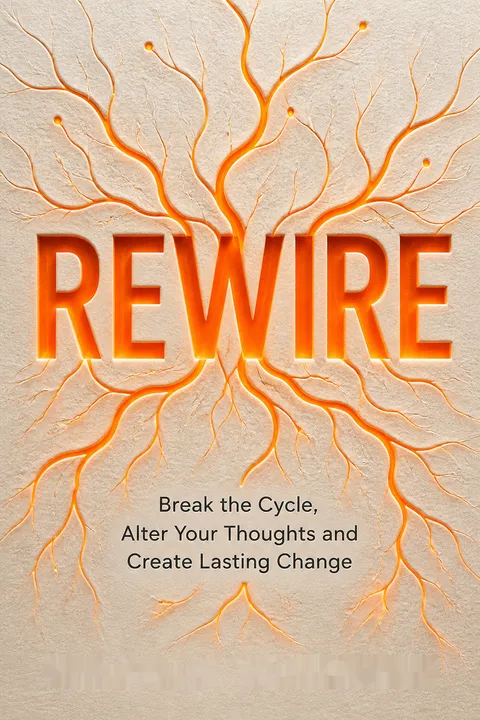


Key Takeaways
Treat your brain's habits as learned routes, not permanent identity
A brain keeps changing. As a neuroscience student, Nicole Vignola held a human brain and imagined the memories and choices contained in its tissue. The moment crystallizes her central question: are people shaped by chance or by design? Her answer is both. Experience, upbringing, and repeated thoughts help shape the brain, but neuroplasticity, its capacity to alter connections and functions, means many learned patterns can also change.
Practice makes pathways. Repeated thoughts and actions become easier to repeat, like a footpath worn into a road. The reverse is possible too: a pattern can weaken when it is no longer reinforced. This is not unlimited reinvention. Some abilities depend on developmental windows, and changing a deeply practised habit takes attention and time.
The book's hardware-and-software metaphor makes an abstract scientific idea intuitive: brain health supports mental change, while repeated experience shapes the patterns being changed. Its strongest implication is that a familiar response is not proof of an unchangeable self. Still, neuroplasticity is a capacity, not a promise that every trait can be remade at will. Biology, disability, resources, and circumstance matter. The most useful reading is neither fatalism nor limitless self-invention, but agency with realistic constraints: identify what is learned, then test whether practice and support can shift it.
Regulate chronic stress before asking yourself to rewrite old patterns
Stress has different forms. Vignola distinguishes alertness that sharpens focus, short-term stress that helps meet a challenge, and maladaptive stress that persists when demands overwhelm a person's capacity to cope. Chronic stress can disrupt attention, memory, emotional regulation, and decision-making. In this depleted state, the brain tends to fall back on familiar responses rather than spend energy building new ones.
Recover before you rewire. The author describes breaking down over a car-rental problem during a turbulent period in her life. With hindsight, the reaction made sense as part of a larger load, not a personal defect. She recommends first reducing demands where possible, restoring sleep, moving, using hobbies and boundaries, and trying a physiological sigh: two short inhales followed by a slow, longer exhale.
This section usefully replaces moral judgment with a question about capacity. A person who cannot focus or follow through may need recovery and fewer demands, not another lecture on discipline. The low-power metaphor is memorable, although it should not be mistaken for a literal model of the brain or a diagnosis. Reframing stress can change how a challenge is approached, but it cannot remove financial strain, unsafe relationships, illness, or other external pressures. Regulation tools are supports, not substitutes for practical help or professional care when distress is severe.
Catch negative self-talk, then ask what the evidence actually supports
The mind overweights threats. Negativity bias is the tendency to notice and retain negative information more strongly than positive information. One critical comment can eclipse many kind ones; an awkward moment can become the day's headline. Repeated self-criticism can then shape how a person interprets new events, reinforcing the story that they are inadequate or disliked.
Make the story testable. Vignola suggests noticing the thought, calming the body if needed, and asking whether the conclusion is fact or fear. A person who leaves a work discussion convinced they sounded foolish might consider whether there is evidence for that judgment, or whether insecurity is doing the interpreting. Naming the emotion and recording small successes can make the account more balanced without pretending that real problems do not exist.
The approach resembles cognitive reappraisal: identifying an interpretation and comparing it with available evidence. That distinction matters because positive thinking can become denial if it requires ignoring genuine harm or disappointment. The book's small-wins exercise is more persuasive as an attention correction than as a demand to feel grateful. It asks the mind to count information it routinely discards. The goal is not to replace every negative thought with a cheerful one, but to prevent a threat-focused first impression from being treated as a complete account of reality.
Interrupt the cue-response chain with a pause and a planned alternative
Notice what sets it off. Automaticity describes behavior that runs with little conscious effort after repetition. A cue might be a place, time, person, or feeling. Vignola recalls being told by a friend that she complained frequently; once she paid attention to each complaint, she could begin changing the response. Awareness made a previously invisible pattern available for choice.
Build a new route. Adults often need to deliberately attend to a new behavior and repeat it until it becomes familiar. The book cites research estimating that habit formation can range from 18 to 254 days, with an average near 66 days, not a fixed deadline for everyone. Identify a cue, decide what response to practise, and use reminders or environmental changes to make that response easier to remember.
The shift from blaming character to examining cues is practical because behavior is often context-dependent. A phone within reach, a particular social group, or the end of a stressful workday can make one response more likely than another. That insight connects personal change with behavioral design: changing the setting can reduce reliance on willpower. The habit timeline also counters the common expectation of rapid transformation. Its wide range is important, though; it means averages should guide patience, not become a new standard for judging whether someone is changing correctly.
Rehearse setbacks before they arrive, then take fear in manageable doses
Practise the difficult version. Visualization is mental rehearsal of an action or situation. Swimmer Michael Phelps imagined races going well and anticipated problems too, so an unexpected setback would be less destabilizing. During a 2008 race, water filled his goggles; he was able to rely on rehearsed stroke counts and still finish successfully. The lesson is not that imagination guarantees victory, but that preparing for obstacles can make a response less novel.
Pair rehearsal with action. Mentally practise the behavior, including the moment when anxiety or fatigue appears, then carry it out in real life. For fear, Vignola describes gradual exposure: approach a challenging situation in tolerable steps, as she did when helping her reactive rescue dog grow more comfortable around people. A large leap may suit some situations, but it is not the only route.
This is a useful bridge between intention and execution. Rehearsal can make a response more available under pressure, while contingency planning turns vague worry into a problem with possible next steps. The dog example also highlights an important condition: exposure should remain within a manageable range, not overwhelm the learner. Mental practice cannot replace real-world experience, and successful athletes have resources and training most readers do not. Its transferable value lies in preparing for likely friction, not expecting perfect control over what happens.
Give your brain sleep, movement, and screen-free recovery time
Change needs a working body. Sleep helps stabilize memories and learning, while insufficient rest can undermine concentration and emotional balance. Vignola describes deep sleep as restorative and REM sleep as important to processing emotional experiences. Exercise also supports brain health: contracting muscles releases signaling molecules called myokines, and activity is associated with neuroplasticity and better mood. The book recommends combining aerobic activity with resistance training, rather than treating exercise only as weight control.
Take real breaks. Scrolling during a work break can keep attention occupied instead of allowing it to recover. The author recommends short, intentional pauses away from screens, such as walking, stretching, or closing the eyes. Her broader point is that behavior change is harder when a person is exhausted, overstimulated, and continually interrupted.
The book's useful contribution is to place sleep, movement, and attention alongside mindset, rather than treating change as a purely verbal exercise. This fits a broader biopsychosocial view: cognition depends on bodily state, surroundings, and social demands as well as deliberate thought. The mechanisms described in the book vary in how firmly they are established, and exercise is not a stand-alone treatment for every mental-health condition. Still, modest, accessible movement and protected rest are sensible supports. A walk or a genuine break can be valuable without being framed as a cure.
Stop postponing happiness until the next achievement or dopamine hit
Wanting is not contentment. Dopamine is involved in motivation and pursuing rewards, not simply in feeling happy. Vignola connects this to the arrival fallacy, the belief that reaching a goal will finally produce lasting satisfaction. A promotion, a target weight, or a social-media milestone may feel good, but the feeling can fade as attention turns to the next prize.
Make reward less automatic. Repeated quick rewards, such as endless scrolling, can make effortful activities feel less appealing by comparison. The author encourages rewards linked to effort, including exercise, focused work, creative activities, and time spent learning. She also recommends tolerating some boredom instead of reflexively seeking another burst of stimulation. The point is not to abandon ambition, but to notice the life and learning that happen while pursuing a goal.
Separating the drive to pursue from the experience of satisfaction gives readers a sharper way to understand why achievement can disappoint. It also helps explain why a stream of effortless stimulation may crowd out slower rewards. Yet dopamine is not a single happiness meter, and everyday motivation cannot be reduced to one chemical. The practical insight survives that simplification: constant novelty can train attention toward immediate reward. Enjoying progress and relationships along the way is not complacency; it is a way to avoid making every present moment merely a waiting room for success.
Let grief alter your routines without treating pain as personal failure
Loss disrupts more than feelings. Vignola recounts moving to a new city for university just after a painful breakup. She was also mourning an old life and a long-held ambition to become a doctor. The distress became physical, and a clinician explained that a stress-related heart condition can mimic a heart attack. Her experience illustrates how loss can involve a person, a dream, routines, and an imagined future.
Give the brain time to adjust. When a relationship ends, familiar habits and expectations remain even though the person is gone. The author recommends rebuilding safety through routine, supportive relationships, and creative expression, such as dance, writing, or art. During a breakup, reducing contact may help; after a death, the task is different. Grief is not a timetable, and seeking support is appropriate when pain becomes unmanageable.
Treating grief as a disruption to a whole pattern of life helps explain why ordinary tasks can suddenly feel unfamiliar. The distinction between losing a relationship and losing someone to death is especially important: healing does not require erasing every bond or memory. Creative expression can offer a form for experience that is difficult to explain directly, while social support can make distress less isolating. The account should not be used to diagnose chest symptoms as emotional. Sudden or severe physical symptoms deserve medical attention, even when a person is grieving.
Separate your identity from performance so mistakes can teach you
Ability can develop. A growth mindset is the belief that skills and abilities can improve through effort, learning, and practice. Vignola contrasts this with a fixed mindset, in which a mistake feels like proof of low ability. Her example is Martha, a high-achieving student who struggled at work because she feared that difficulty would expose her as unintelligent.
Praise the process. In a study described in the book, children praised for being smart later tended to choose easier problems, while children praised for their effort were more willing to choose challenges that offered learning. The useful move is to treat errors as information about a strategy, not a verdict on identity. This does not mean every setback is secretly good; it means a setback can still teach something that informs the next attempt.
Separating identity from performance makes experimentation psychologically safer. It can help people persist, accept useful feedback, and seek challenges without turning each outcome into a measure of personal worth. The distinction also has limits: effort alone cannot overcome every structural barrier, and some environments punish mistakes rather than support learning. A growth mindset should not become another demand to work harder regardless of conditions. Its strongest use is more precise: ask what can be learned, what support is missing, and what part of the method can be changed.
Build self-trust with small promises that reflect your actual values
Reliability starts small. Self-trust grows when actions match realistic commitments. Vignola recommends setting goals that fit a person's values, keeping promises where possible, and acknowledging small wins. A promise to move for ten minutes may build more confidence than an ambitious plan repeatedly abandoned. Consistency is not perfection; after a lapse, examine what made the plan difficult and return without turning the lapse into a judgment of character.
Choose your own direction. The book argues that family labels and gradual criticism can become beliefs about who a person is allowed to be. Reconnecting with personal values can help distinguish those inherited stories from chosen aims. Vignola also advocates forgiveness toward people who shaped those beliefs, while emphasizing responsibility for one's own next steps. Forgiveness need not mean denying harm or staying close to someone unsafe.
Self-trust is framed here as accumulated evidence: a person learns that their intentions can be translated into action. Small commitments make that evidence attainable and protect against the all-or-nothing cycle. Values add an important filter, because keeping a promise that was never genuinely one's own is not necessarily a victory. The intuition discussion in the book also merits balance: gut feelings can summarize past experience, but they can carry old fears and biases too. Self-trust is strongest when intuition is heard, checked against evidence, and paired with boundaries and support.
Analysis
Rewire is a popular neuroscience and self-help book organized as a three-part progression: reduce the influence of negative patterns, practise a new narrative, then support change through daily life. Its organizing metaphor is that the brain is hardware and habits are software. The metaphor is memorable because it links sleep, stress, attention, movement, and thought, but it can suggest a cleaner separation between biology and mind than the book's own examples support. Those systems continuously shape one another.
The book's central strength is its translation of plasticity into usable behaviors: identify a trigger, notice an automatic response, create a pause, rehearse an alternative, and repeat it. Personal stories give this sequence emotional credibility, especially accounts of chronic stress, grief, and learned self-limitation. The recurring emphasis on practice also corrects the popular fantasy that insight alone transforms behavior. The practical value lies less in any one breathing technique or visualization exercise than in making change observable, specific, and repeatable.
Its main risk is presenting complex neuroscience with more certainty than the evidence warrants. Brain regions do not operate as simple switches, and popular accounts of dopamine, stress hormones, or single neural mechanisms can make broad psychological processes seem easier to explain than they are. Neuroplasticity does not mean that every constraint is removable, nor that difficulty reflects insufficient effort. The author's explicit recognition of neurodivergence is therefore important: change should serve the individual, not enforce conformity to a neurotypical standard.
The most balanced reading treats neuroscience as a source of possibility, not a guarantee. Personal practice matters, but so do material conditions, relationships, health, and access to professional support. The book is most persuasive when it reduces shame and helps readers experiment with one response at a time. Its promise is not total control over the brain, but greater participation in shaping patterns that once felt automatic.
Review Summary
Rewire by Nicole Vignola receives high praise from readers for its accessible approach to neuroscience and behavior change. Many reviewers appreciate the practical tools and insights provided, noting improvements in their personal and professional lives. The book is commended for its balance of scientific knowledge and real-world applications, covering topics like social media's impact on dopamine and the benefits of gratitude. While some readers find the tools too vague, most consider it an informative and transformative read, particularly for those seeking to break negative patterns and develop healthier habits.
People Also Read









Glossary
Neuroplasticity
The brain's capacity to adaptNeuroplasticity is the brain's capacity to alter its connections, functions, and sometimes structures in response to experience. Repeated activity can strengthen communication between neurons, while pathways that are used less can weaken. In Rewire, the concept explains why learned habits and thought patterns can change, while recognizing that some capacities are shaped by developmental periods.
Automaticity
Behavior with little conscious effortAutomaticity is the tendency for a frequently repeated action or response to occur with little conscious attention. It helps conserve mental effort for new or demanding tasks, as when a familiar route or routine is carried out without deliberate planning. The same efficiency can preserve unwanted habits, which is why changing them requires noticing their cues and practising another response.
Allostatic load
Accumulated cost of ongoing stressAllostatic load refers to the cumulative physiological wear associated with repeated or prolonged stress responses. When the body has insufficient opportunity to recover, systems involved in stress regulation can remain activated or become less responsive. In the book, the term helps explain why ongoing demands may affect energy, attention, mood, and the ability to cope with additional stress.
Negativity bias
Greater attention to negative informationNegativity bias is the tendency to give negative events, information, or emotions more attention and weight than comparable positive ones. It can make one critical remark dominate a day despite many supportive comments. Vignola presents it as a common pattern that can be counterbalanced by noticing positive evidence and questioning negative conclusions, not by ignoring genuine problems.
Metacognition
Awareness of one's thinkingMetacognition is the ability to notice and reflect on one's own thoughts. Rather than automatically accepting a thought as fact, a person can observe it, identify a recurring pattern, and examine its assumptions. In Rewire, metacognition supports reframing and journalling by helping readers distinguish an emotional interpretation from evidence about a situation.
Creeping normality
Gradual harm accepted as normalCreeping normality describes a slow, incremental change that becomes accepted because its negative effects are difficult to notice in isolation. Vignola applies the idea to repeated criticism, invalidation, or subtle pressure that can gradually shape someone's self-beliefs. Seeing the accumulation can help a person recognize that an experience matters even if no single incident seemed severe.
Confirmation bias
Seeking evidence for existing beliefsConfirmation bias is the tendency to search for, interpret, or remember information in ways that support existing beliefs. Someone who expects rejection may notice ambiguous signs of disapproval and overlook evidence of welcome. The book connects this process with self-fulfilling behavior and encourages readers to look for evidence that could challenge their established story.
Physiological sigh
A breathing pattern to reduce arousalThe physiological sigh is a breathing technique involving two short inhales, followed by a slow, extended exhale. The book presents it as a way to help reduce physical arousal and return attention to a calmer state after stress. It is offered as a brief self-regulation tool, not as a replacement for medical or psychological treatment.
Growth mindset
Belief that abilities can developA growth mindset is the belief that abilities and intelligence can develop through effort, strategies, feedback, and learning. It contrasts with a fixed mindset, which treats ability as largely unchangeable and can make mistakes feel like personal verdicts. In the book, this perspective encourages challenge and persistence while separating a person's identity from any single result.
Muscle-brain axis
Communication between muscle and brainThe muscle-brain axis describes communication between active muscles and the brain. Vignola focuses on myokines, signaling molecules released by muscle tissue during movement, and their potential effects on brain function and mental health. The concept supports the book's broader claim that exercise can influence mood and brain health through more than changes in fitness or appearance.
Arrival fallacy
Expecting a goal to ensure happinessThe arrival fallacy is the expectation that reaching a particular milestone will produce lasting happiness. A person may anticipate contentment after a promotion, a purchase, or a personal achievement, then find that satisfaction fades and a new target takes its place. The book uses the idea to redirect attention toward the experience, learning, and relationships involved in pursuing goals.
Cognitive triangle
Thoughts, feelings, and behavior interactThe cognitive triangle represents the reciprocal influence of thoughts, emotions, and behaviors. A belief can shape how someone feels, which can affect their actions; those actions may then reinforce the original belief. Used in cognitive behavioral therapy, this model helps identify points where a person can test an interpretation or practise a different behavior.
FAQ
What's Rewire: Break the Cycle, Alter Your Thoughts and Create Lasting Change about?
- Focus on Neuroplasticity: The book delves into neuroplasticity, the brain's ability to change and adapt through experiences, emphasizing that thoughts and behaviors can be reshaped with intentional practice.
- Three Phases of Change: It outlines a structured approach to transformation: Ditch the Negative, Shift Your Narrative, and Boost the Positive, each offering actionable strategies.
- Empowerment Through Science: Nicole Vignola makes neuroscience accessible, empowering readers to take control of their mental health and well-being, serving as a toolkit for mindset and life improvement.
Why should I read Rewire?
- Practical Neuroscience: The book translates complex neuroscience into practical advice for everyday life, helping readers understand and leverage brain functions for personal growth.
- Overcoming Negative Patterns: It offers tools to break cycles of negative self-talk and limiting beliefs, providing insights into reframing thoughts and developing a positive narrative.
- Holistic Approach: Addressing mental and physical health, it emphasizes sleep, exercise, and emotional regulation, making it a comprehensive resource for self-improvement.
What are the key takeaways of Rewire?
- Neuroplasticity is Key: The brain's malleability allows for changes in thought patterns and behaviors at any age, forming the foundation for the book's strategies.
- Three Phases of Transformation: A clear path for change is outlined: eliminate negative thoughts, reframe your narrative, and reinforce positive behaviors, each building on the last.
- Empowerment Through Awareness: Understanding brain functions enables control over mental processes, encouraging awareness and active response to thoughts.
What are the best quotes from Rewire and what do they mean?
- “Our life experience will equal what we have paid attention to, whether by choice or by default.”: This highlights the power of focus and intention in shaping experiences, suggesting control over attention can direct life positively.
- “You are the most wonderful project you’ll ever work on.”: A reminder that personal growth is a lifelong journey, encouraging investment in self-development.
- “Neurons that fire together, wire together.”: Encapsulating neuroplasticity, it indicates that repeated thoughts and actions strengthen neural connections, stressing the importance of positive habits.
How does neuroplasticity work according to Rewire?
- Brain Adaptation: Neuroplasticity involves the brain reorganizing itself by forming new neural connections, meaning experiences and thoughts can change its structure.
- Repetition and Strengthening: Repeated thoughts or behaviors strengthen neural pathways, explaining why negative self-talk can become ingrained if unaddressed.
- Creating New Pathways: Intentional practice of new thoughts and behaviors creates and strengthens positive neural pathways, allowing mindset shifts and mental health improvement.
What are the three phases of change in Rewire?
- Phase 1: Ditch the Negative: Focuses on identifying and eliminating negative thought patterns and behaviors, using techniques like stress regulation.
- Phase 2: Shift Your Narrative: Teaches readers to rewire their subconscious with a new narrative through visualization, repetition, and overcoming self-sabotage.
- Phase 3: Boost the Positive: Emphasizes reinforcing positive behaviors and building resilience, covering sleep, self-trust, and a growth mindset.
How can I apply the concepts from Rewire to my daily life?
- Daily Reflection: Reflect on thoughts to identify negative patterns, using journaling or mindfulness to become aware of internal dialogue.
- Set Intentions: Daily intentions focus on positive thoughts and actions, using affirmations or reminders to redirect attention towards desired outcomes.
- Practice Self-Care: Incorporate routines supporting mental and physical health, like exercise and adequate sleep, to reinforce positive changes.
What is the significance of stress management in Rewire?
- Understanding Stress: Stress is categorized into alert, acute, and maladaptive, with recognition of type crucial for effective management.
- Physiological Responses: Chronic stress affects brain function and decision-making, leading to exhaustion and hindering positive change.
- Tools for Regulation: Practical tools like the physiological sigh technique and hobbies help manage stress, restoring balance for change.
How does Rewire address the concept of grief and loss?
- Emotional Pain: Grief manifests as emotional and physical pain, activating similar brain regions, aiding in processing feelings effectively.
- Neuronal Adjustments: The brain adjusts to new realities post-loss, emphasizing the importance of time for healing and adaptation.
- Coping Strategies: Strategies like creative expression and social support help navigate feelings and find a path forward.
What role does self-talk play in Rewire?
- Influence on Behavior: Self-talk impacts mood, self-worth, and actions, with negative self-talk reinforcing limiting beliefs.
- Reframing Thoughts: Encourages challenging and reframing negative thoughts into positive affirmations, weakening negative thinking pathways.
- Creating New Narratives: Changing self-narratives reshapes identity and future, with tools provided for empowering self-dialogue.
How does Rewire address negative self-talk?
- Identifying Negative Patterns: Encourages acknowledgment of negative thought patterns as a first step toward change, essential for breaking self-criticism cycles.
- Reframing Thoughts: Techniques for reframing negative thoughts into positive affirmations shift the mindset from defeat to empowerment.
- Utilizing Neuroplasticity: Leveraging neuroplasticity, readers can create new positive thought pathways, replacing old negative ones through practice.
What methods does Rewire suggest for managing triggers?
- Environmental Awareness: Recognizing environmental cues that trigger negative thoughts or behaviors prepares individuals to respond differently.
- Social Influences: Discusses the impact of social situations on mental health, encouraging positive influences and limiting toxic relationships.
- Sensory Triggers: Highlights sensory experiences' role in triggering negative comparisons, urging mindful management of sensory inputs.
Download PDF
Download EPUB
.epub digital book format is ideal for reading ebooks on phones, tablets, and e-readers.








