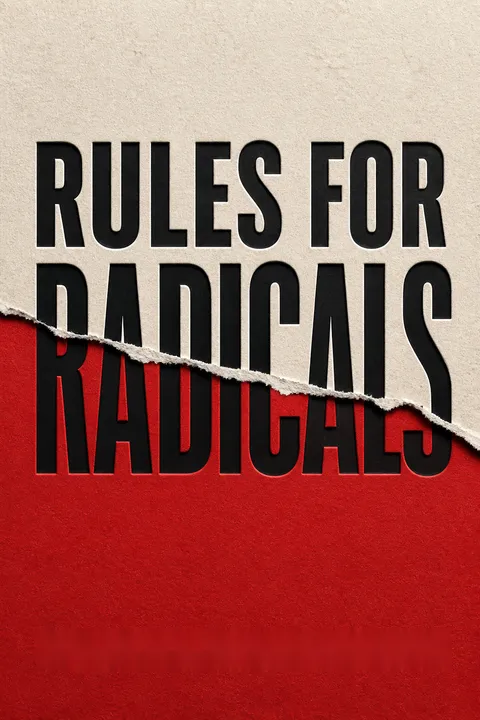


Key Takeaways
Radical change starts by organizing people into power, not denouncing the system
Power needs a vehicle. Alinsky writes for people shut out of political and economic decisions. His central claim is practical: people can change the conditions around them only when they organize into a force capable of acting. Power is the ability to make action effective, and organizations are how people pool their numbers, skills, and influence. For the Have-Nots, who lack money, numbers are their main resource.
Participation makes democracy real. Alinsky rejects both passive faith in institutions and dramatic gestures that leave people unorganized. A campaign should give people a way to act together, win something tangible, and gain confidence that collective effort can matter. The goal is not simply to replace one group in charge with another, but to let more people shape decisions that affect their lives.
The argument treats organization as civic infrastructure, not just a vehicle for protest. A crowd can communicate anger; a durable group can negotiate, remember commitments, and keep applying pressure after public attention moves on. That distinction remains useful wherever people face institutions with more resources and staying power. A difficult question follows: who controls the organization once it gains influence? Alinsky's emphasis on participation points toward an answer, but collective power needs internal accountability as well as external leverage.
Begin inside people's present reality, then build a bridge toward change
Start where people stand. Alinsky argues that organizers must work with the world as people experience it, rather than demand that they leap toward an ideal future. Large changes require a prior shift in what the public will tolerate: people may first become disillusioned with the old order and less likely to defend it, even before they agree on a replacement. He calls this preparatory change a reformation.
Build before the showdown. After police and National Guard violence at the 1968 Democratic Convention, students asked whether organizing inside the system still made sense. Alinsky urged them to build a stronger organization and return with the power to influence the convention. The point was not that institutions are fair, but that indignation without preparation can produce a brief confrontation and no lasting leverage.
This is a theory of political sequencing. People rarely abandon familiar institutions simply because a more just alternative has been described; they need credible allies, a sense of safety, and some evidence that change is possible. The approach also avoids mistaking visibility for momentum. Its risk is that working within existing institutions can normalize their limits. The useful test is whether engagement increases people's capacity to act, or merely asks them to accept a narrow menu of choices.
Turn a bad scene into a specific problem people can solve together
Make action imaginable. Alinsky distinguishes a painful condition from an issue. When people believe they have no way to change a condition, it may feel like an unavoidable bad scene. An issue emerges when there is a specific decision to contest and a possible path to action. Organizing links frustration to a shared target, a demand, and a group able to pursue it.
Let an early win teach. In Chicago's Back of the Yards, families had lost access to infant medical services after local opposition drove a clinic away. Alinsky helped residents organize a forceful visit to request the clinic's return. He knew the request was likely to succeed, but the residents did not. Their success showed that collective action could produce results and helped build confidence for harder campaigns. The lesson: early victories should increase a group's ability to act, not just decorate its record.
This approach turns agency into something people experience rather than something an organizer merely praises. The clinic campaign also exposes a tension: Alinsky withheld his confidence that the request would succeed, shaping the encounter to create a lesson. Strategic teaching can build confidence, but it risks treating participants as instruments if they are not told what is at stake. The distinction matters: a carefully chosen first campaign can invite people into power, while a manufactured victory can weaken trust.
Speak through lived experience, and let people own the conclusion
Communication is recognition. For Alinsky, communication has not occurred just because a speaker has delivered a clear argument. It happens when listeners understand the point through experiences they recognize, and when they can answer from their own lives. Abstract claims about injustice may remain distant; a concrete local example can make the same problem graspable.
Use familiar ground. Alinsky illustrates this with a restaurant order: when a waiter expects a standard menu item, an unusual request can create confusion even if the words are clear. The same principle applies to politics. Organizers learn local stories, concerns, and expressions, and avoid language that shuts people out. They also use questions to help residents examine options and choose a course themselves, rather than publicly instructing them.
The strongest insight is that persuasion depends on a shared frame, not simply on message quality. Asking questions can reveal what people value and help a group reason through its own choices. But guided questioning can shade into manipulation when the organizer has already decided what answer is acceptable. Respectful organizing therefore requires more than speaking in familiar language. It requires listening closely enough to change the plan when local knowledge challenges the organizer's assumptions.
Train organizers to create local leadership, not permanent dependence
The organizer builds creators. Alinsky distinguishes the leader, who seeks power to pursue goals, from the organizer, whose work is to help others develop power. Effective organizers need curiosity, imagination, humor, confidence, and the ability to function amid uncertainty. They must learn a community's experience rather than assume that one successful tactic can be copied everywhere.
Experience needs reflection. Alinsky found that training often failed when students memorized stories without understanding the general principle behind them. He tried to help trainees revisit ordinary events, analyze what happened, and connect those details to broader patterns. Organizing also means building local leaders who can sustain activity after the outside organizer steps back. The test of the work is not how indispensable the organizer becomes, but whether people can make decisions and act without depending on that person.
This model makes humility a practical skill: the organizer must be confident enough to enter a difficult situation, but willing to give up the spotlight and let others decide. It also explains why scripts travel poorly. A tactic detached from local relationships and power conditions is only an anecdote masquerading as a method. Alinsky's own account of training failures adds an important caution: traits such as curiosity and imagination may be cultivated, but they cannot be reduced to a checklist or guaranteed by a course.
Use tactics that fit your people and unsettle the opposition
Exploit the imbalance. Alinsky's tactical advice begins with an asymmetry: the establishment often has money and formal authority, while a community has people, attention, and the ability to disrupt routines. A tactic should feel understandable to participants but unfamiliar to the target, which can force the target into a visible reaction. He also urges organizers to identify a specific, vulnerable decision-maker instead of allowing responsibility to dissolve across offices and committees.
Keep pressure purposeful. A tactic loses force when it drags on, so organizers should vary their actions and prepare a constructive alternative in case the opposition accepts the demand. Alinsky contrasts a boycott of every department store, which asks too much of shoppers, with pressure focused on one store while customers can shop elsewhere. The rival's loss then creates an incentive to respond. Strategy is not provocation for its own sake; it is pressure attached to a winnable demand.
The tactical logic is a form of leverage: make an opponent's own incentives, procedures, or public claims matter to the conflict. Naming a target can also make diffuse institutional harm easier for people to understand and contest. Yet personalization can oversimplify systems and expose an individual to disproportionate abuse. Effective pressure needs a clear account of responsibility, a realistic demand, and a path to negotiation. Without those limits, a tactic may create spectacle while making a durable settlement harder.
Judge each means against its actual end, context, and human cost
Ethics happens in context. Alinsky rejects the abstract question of whether ends always justify means. He asks whether a particular goal warrants a particular method, given the available options, the urgency, and the people who bear the cost. He notes that the same act can be called resistance by one side and terrorism by another, as with underground campaigns against Nazi occupation.
Power changes moral judgments. Alinsky points out that India's Congress outlawed passive resistance after independence, even though it had helped oppose British rule. A tactic once used by a powerless movement looked different to people now responsible for governing. The example warns that moral language can follow shifts in power. It does not prove that any effective tactic is justified: organizers still have to ask what values an action serves, what damage it risks, and whether less harmful options exist.
The chapter's strength is its refusal to treat political actors as detached moral spectators. Urgency, unequal power, and proximity to consequences shape ethical judgment. Its danger is equally clear: once effectiveness becomes the dominant test, leaders can excuse nearly anything as necessary. A robust reading keeps Alinsky's contextual question but adds a safeguard: means should be judged not only by whether they win, but by whether they protect the people and democratic capacities the campaign claims to serve.
Recruit allies across class lines, especially the middle class
Power needs partners. Alinsky divides society into the Haves, the Have-Nots, and the Have-a-Little, Want Mores, his term for people who have some security but want more. The middle group can be cautious and divided, but it is too large to dismiss. He argues that groups with less money and influence need allies if they want to change institutions that reach far beyond one neighborhood.
Use an overlooked lever. In Rochester, the Black organization FIGHT faced Eastman Kodak, which a consumer boycott could not easily pressure because people depended on its film. Alinsky began collecting stockholder proxies, voting authorizations, from churches and other supporters. The point was not simply to win control of the company. The proxy campaign could draw middle-class institutions into the dispute and make corporate conduct a public and political concern. The book presents proxies as one route from private frustration to organized participation.
The coalition argument is stronger than a simple appeal for moderation: groups need allies because power is distributed across institutions, constituencies, and resources. The proxy campaign is a memorable attempt to turn ordinary financial ownership into civic leverage. Its limitation is that stock-based action favors people and institutions with assets, even when the campaign seeks broader participation. A coalition is most democratic when it does not confuse the resources of its best-connected members with the voice of everyone affected.
Expect victories to create new power structures, and keep participation alive
Every success can harden. Alinsky sees social change as a cycle: movements challenge an established order, win reforms, and may then become institutions that protect their own position. He points to labor, public projects, and housing programs that began as answers to real problems but later became part of arrangements with serious new failures. A victory is not the end of politics; it changes the conditions and creates new conflicts.
Keep the organization moving. Groups need multiple issues because a single campaign can end, leaving members without a reason to stay involved. Alinsky also treats participation as part of the goal, not just a technique for reaching it. When people help define problems and make decisions, they gain the experience and confidence needed to govern themselves. That ongoing involvement is what prevents a movement from merely replacing one distant authority with another.
This is a useful corrective to the fantasy of a final political settlement. Institutions can preserve hard-won gains, but the same stability can shelter new exclusions and failures. Alinsky's emphasis on continued participation offers a way to notice when a reform has stopped serving its original constituency. Still, constant mobilization can exhaust people. Durable participation needs periods of action and reflection, clear routes for dissent, and institutions that can revise themselves without requiring a crisis each time.
Analysis
Rules for Radicals is a field guide to building democratic leverage under unequal conditions. Its sharpest move is to connect means that are often separated: communication, organization, pressure, and civic learning. Communication is not ornamental persuasion; it is how an organizer discovers the terms in which a group can recognize a problem. Organization then gives that recognition a practical form. Tactics make power visible, while victories teach participants that their action has consequences. In this account, political education happens through doing, not simply through instruction.
The book also sees a persistent danger that idealistic politics can miss: power does not disappear when a movement wins. It changes hands, and the new holders may defend their position with the same habits they once opposed. That insight makes Alinsky's suspicion of fixed doctrines more than a preference for flexibility. It is a warning against treating any movement, including one organized in the name of equality, as permanently virtuous. His argument that tactics must fit their setting follows from the same realism. A method that works in one community, political system, or moment can fail badly in another.
The tension lies in the book's instrumental language. The organizer is urged to frame conflict, select targets, and guide decisions. Those tools can make a powerless group effective, but they can also concentrate authority in the organizer. The stated commitment to people's dignity therefore requires operational tests: Can members disagree safely? Do they understand the choices being made? Can they replace the organizer and revise the group's aims? Without those checks, participation can become a performance staged by an expert.
The book remains most useful when read as a discipline of practical questions, not a recipe book. Who has the power to decide? What can this group actually do? What will the other side do in response? What concrete gain would build capacity rather than merely win attention? And who bears the cost if the tactic fails? These questions preserve Alinsky's central contribution while placing democratic accountability alongside effectiveness.
Review Summary
Rules for Radicals receives mixed reviews. Some praise it as an essential guide for community organizers, highlighting Alinsky's practical tactics and insights. Others criticize its moral relativism and perceived manipulation of communities. Many reviewers note its influence on modern political figures and movements. The book's dedication to Lucifer and Alinsky's confrontational style are controversial. While some find it inspiring and thought-provoking, others view it as outdated or morally questionable. Overall, it remains a significant work in community organizing and political activism.
People Also Read




Glossary
Have-a-Little, Want Mores
The insecure middle groupAlinsky's name for people who possess some resources and security but want greater opportunity. They may favor change while fearing the loss of what they already have, making them hesitant and politically divided. He treats this group, especially in the United States, as a potential source of allies whose participation can substantially alter the balance of power.
reformation
Readiness before major changeAlinsky uses reformation for a shift in public attitudes that prepares the ground for political revolution. People may become dissatisfied with the existing order and less willing to defend it before they know what should replace it. Organizers help create that readiness by making problems visible and building support for change within the existing society.
mass political jujitsu
Turning opponents' strength against themA way for a less powerful group to use the established order's own interests, rules, divisions, or public claims as leverage. Rather than meeting superior force head-on, organizers create situations in which the opponent's response exposes contradictions or creates pressure. The tactic depends on understanding how the target is likely to react, not on assuming a predictable result.
proxy tactic
Organizing through voting authorizationsAlinsky's proposed method of gathering stockholder voting authorizations, or proxies, to create pressure on corporations over social and political issues. In the Rochester campaign against Eastman Kodak, proxies offered a way to involve churches and other supporters in a dispute that a consumer boycott could not readily advance. Alinsky presents the method as a means of organizing people, not merely gaining corporate control.
terminal tactic
An action that quickly peaksA tactic that reaches its greatest effect in a brief burst and then loses force, without creating a sustained cycle of response and counterresponse. Alinsky uses a one-day school boycott as an example of an action whose impact may fade once it ends. He argues that such tactics can finish a conflict but are weak tools for building pressure over time.
organized apathy
A stable pattern of nonparticipationAlinsky's term for a community that appears inactive but is still living within an established pattern of relationships and arrangements. People may have lost confidence that participation can change anything, yet their lives remain organized around that resignation. An organizer must disrupt the pattern and create practical opportunities for people to participate.
FAQ
What's "Rules for Radicals" about?
- Purpose of the book: "Rules for Radicals" by Saul D. Alinsky is a guide for community organizers and activists on how to effectively bring about social change. It provides strategies and tactics for those who want to challenge the status quo and empower the Have-Nots.
- Focus on power dynamics: The book emphasizes understanding and leveraging power dynamics to achieve social justice and equality. It offers insights into organizing mass movements and creating impactful change.
- Practical advice: Alinsky shares practical advice and real-world examples from his experiences in organizing communities, making it a hands-on manual for activists.
Why should I read "Rules for Radicals"?
- Understanding activism: The book is essential for anyone interested in activism, providing a foundational understanding of organizing and mobilizing communities.
- Strategic insights: It offers strategic insights into how to effectively challenge established power structures and create meaningful change.
- Historical context: Reading the book provides historical context on social movements and the evolution of community organizing tactics.
What are the key takeaways of "Rules for Radicals"?
- Power and organization: Power is central to effecting change, and organizing people is crucial to building that power.
- Tactics and flexibility: Effective tactics are adaptable and should be enjoyable for participants, keeping them engaged and motivated.
- Communication and experience: Successful communication requires understanding and operating within the experiences of the people you are trying to reach.
What are the best quotes from "Rules for Radicals" and what do they mean?
- "Power is not only what you have but what the enemy thinks you have." This quote emphasizes the psychological aspect of power, suggesting that perception can be as important as reality in strategic planning.
- "The threat is usually more terrifying than the thing itself." Alinsky highlights the power of fear and anticipation in tactics, suggesting that the mere threat of action can be a powerful tool.
- "Ridicule is man’s most potent weapon." This quote underscores the effectiveness of humor and ridicule in undermining opponents and gaining public support.
How does Saul D. Alinsky define power in "Rules for Radicals"?
- Essence of life: Alinsky describes power as the essence of life, necessary for achieving order, security, and morality.
- Organized energy: Power is seen as organized energy, which can be used constructively or destructively, depending on the goals.
- Dynamic and relational: Power is dynamic and relational, existing in the interactions between people and groups, and is essential for social change.
What is the significance of the "proxy tactic" in "Rules for Radicals"?
- Middle-class mobilization: The proxy tactic is a method to engage the middle class by using their stock proxies to influence corporate policies.
- Political leverage: It provides a way to exert political pressure on corporations by organizing stockholders to vote on social and political issues.
- Empowerment through ownership: The tactic empowers individuals by leveraging their financial investments for social change.
How does Alinsky suggest dealing with opposition in "Rules for Radicals"?
- Identify and personalize: Alinsky advises identifying and personalizing the target to focus efforts and create a clear adversary.
- Use their rules against them: He suggests making the opposition live up to their own rules, which can often be impossible, leading to their downfall.
- Maintain pressure: Continuous pressure and varied tactics keep the opposition off balance and unable to effectively counteract.
What role does communication play in Alinsky's organizing strategy?
- Within experience: Effective communication must occur within the experience of the audience to ensure understanding and engagement.
- Two-way process: Communication is a two-way process, requiring listening and adapting to the audience's responses and needs.
- Creating experiences: When necessary, organizers should create experiences that help the audience understand new concepts or issues.
What is the "education of an organizer" according to Alinsky?
- Curiosity and irreverence: An organizer must be curious and irreverent, constantly questioning and challenging the status quo.
- Imagination and humor: Imagination and a sense of humor are crucial for developing creative tactics and maintaining perspective.
- Organized personality: An organizer must be well-organized personally to handle the chaos and unpredictability of organizing efforts.
How does Alinsky address the concept of "means and ends" in "Rules for Radicals"?
- Contextual ethics: The ethics of means and ends are contextual, depending on the situation and the desired outcome.
- Pragmatic approach: Alinsky advocates for a pragmatic approach, where the effectiveness of means is judged by their ability to achieve the desired ends.
- Moral flexibility: He emphasizes the need for moral flexibility, understanding that rigid adherence to principles can hinder progress.
What is the importance of "tactics" in Alinsky's framework?
- Adaptability: Tactics must be adaptable to the situation and the resources available, allowing for creative and effective action.
- Engagement and enjoyment: Successful tactics engage participants and are enjoyable, sustaining interest and motivation.
- Pressure and reaction: Tactics should maintain constant pressure on the opposition, provoking reactions that can be leveraged for further action.
How does "Rules for Radicals" propose to engage the middle class in activism?
- Focus on common issues: Alinsky suggests focusing on issues that resonate with the middle class, such as pollution, taxes, and consumer rights.
- Utilize existing organizations: Engage with existing middle-class organizations like PTAs and consumer groups to build alliances and mobilize support.
- Bridge generational gaps: Use tactics that appeal to both older and younger generations, fostering unity and collective action.
Download PDF
Download EPUB
.epub digital book format is ideal for reading ebooks on phones, tablets, and e-readers.








