

Key Takeaways
Use financial upheaval as a prompt to rewrite your money education
Old promises have weakened. The book opens with a friend who lost his job, savings, and home after the 2007 crash. He and his wife returned to school, taking on more student debt because they hoped another degree would lead to better work. Their situation captures the book’s central premise: familiar advice about education, homeownership, retirement, and steady employment may not protect people when economic conditions change.
Kiyosaki calls for a second chance: not simply another credential, but a new way to understand money and make choices. His account begins with a visit to Buckminster Fuller’s geodesic dome at Expo 67, a symbol of looking beyond the present. The book moves from past crises, to an honest review of the present, to choices for the future.
The opening story makes financial insecurity concrete before introducing economic theory. It also raises a useful question: when a familiar path fails, does the answer lie in more schooling, or in learning something different? The friend’s return to education illustrates how people can double down on a strategy without checking whether it addresses the problem. Still, a single anecdote cannot show that education is futile or that financial training guarantees security. The stronger, more practical point is to evaluate what a learning investment is meant to change, and whether its costs and likely benefits make sense.
Learn cash flow before calling anything an asset
Follow the money. Kiyosaki defines an asset as something that sends money into a person’s pocket, and a liability as something that takes money out. In this framework, cash flow, the movement of money in and out, matters more than an item’s label or resale value. A home may build equity, but mortgage payments, taxes, repairs, and insurance also require cash; the book therefore challenges the automatic assumption that every home is an asset.
Kiyosaki says financial education begins with learning the language that makes these flows visible. He recalls learning the distinction through Monopoly, where houses generated rent. The game made a basic idea easier to grasp: an asset is not simply something owned, but something that produces income under the definition he is teaching.
This definition is memorable because it turns an abstract balance sheet into a question about monthly reality: what pays you, and what costs you? That is a useful complement to conventional net-worth accounting, which counts both income-producing property and valuable possessions. The distinction should not be mistaken for a complete accounting rule. A home can appreciate or provide housing value even while consuming cash, and a business asset can lose money. Cash flow is a powerful diagnostic, but it is one measure of financial value, not the only one.
Write your true financial position before choosing a new strategy
Start with the numbers. The book asks readers to make a personal financial statement listing assets that generate income and liabilities with their monthly costs. It presents this exercise as a way to face the present rather than plan around assumptions. The process can feel uncomfortable, but a clear picture makes it easier to decide what needs to change and what kind of asset or work might fit.
Kiyosaki describes his own starting point with Kim in 1984: they had no assets and about $820,000 in liabilities. A decade later, he says, they had reached financial freedom, with $120,000 in annual passive income from assets. The comparison is not offered as a guaranteed formula. It shows why he emphasizes tracking cash flow and progress, rather than judging wealth by appearances or salary alone.
A financial snapshot can interrupt avoidance, much as measuring a health marker turns a vague concern into something that can be acted on. The exercise also exposes mismatches, such as high monthly expenses supported by income that could disappear. Yet a cash-flow statement is not a full picture of financial resilience: liquidity, insurance, debt terms, dependents, and the reliability of income also matter. Kiyosaki’s before-and-after figures are a personal case, not evidence that the same timeline is generally attainable. The value lies in the diagnostic habit, not in treating his outcome as a promise.
Practice on many small decisions before risking money on one big bet
Experience teaches discernment. After a three-day real-estate seminar in 1973, Kiyosaki’s instructor assigned students to assess 100 properties over 90 days. The group learned to examine listings, talk with agents, visit properties, and record advantages and drawbacks. Two members quit; Kiyosaki continued and identified five possibilities. He later bought a Maui condominium for $18,000, using $1,800 as a down payment and seller financing for the rest. He reports that it produced $25 a month in positive cash flow.
The lesson is not that every beginner should buy property. It is that repeated, low-stakes evaluation can develop judgment before a large commitment. The author contrasts this practical work with classroom learning that rewards correct answers and discourages mistakes. In his view, mistakes become useful when they are noticed, recorded, and corrected.
The 90-day assignment resembles deliberate practice: repeated attempts, specific feedback, and gradually sharper recognition of what matters. That logic applies well beyond real estate, including sales, budgeting, and evaluating business ideas. But practice does not erase risk, and one successful deal can make a strategy look more repeatable than it is. Property markets, financing terms, repair costs, and local demand vary. The sound principle is to rehearse decisions and learn from evidence; the unsound leap would be to infer that persistence alone reliably produces profitable investments.
Choose education for the financial role you actually want to play
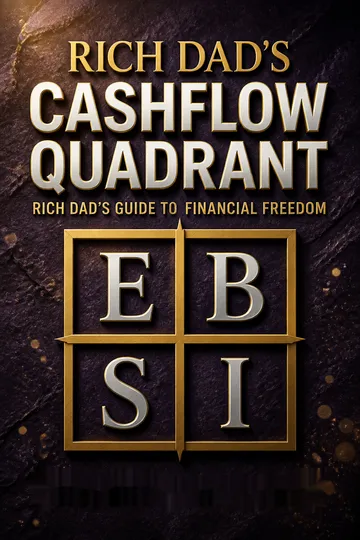
Different roles need different skills. The book’s CASHFLOW Quadrant sorts work into four positions: employee, self-employed worker, business owner, and investor. Kiyosaki argues that conventional schooling tends to prepare people for employment or specialist work, while building a business or investing requires additional financial and practical education. These paths involve different preferences and risks, so the book does not present entrepreneurship as the right choice for everyone.
For business owners, Kiyosaki uses the B-I Triangle to represent a business as a system rather than just a product. A viable enterprise needs a clear mission, leadership, a team, and multiple functions working together. The founder may begin doing everything but must learn enough across the business to hire and coordinate specialists. A compelling product alone cannot compensate for a weak business structure.
The quadrant model helps readers distinguish earning income through labor from owning systems that may produce income without the owner doing every task. That is a useful career-planning lens, especially for people who assume a higher salary and a business are simply larger and smaller versions of the same thing. The model is still a simplification. Employees can build wealth, business owners can be financially fragile, and investors can lose money. Its best use is to clarify what skills, responsibilities, and risks accompany a chosen path, rather than to rank people by quadrant.
Use debt only when cash flow and competence keep you in control
Borrowing magnifies outcomes. Kiyosaki distinguishes good debt, which he says finances an asset whose income covers its costs, from bad debt, which consumes the borrower’s own income. He illustrates the idea with a house bought for $50,000, improved with borrowed funds, then refinanced after its value rose. In his account, rental income covered expenses and the refinancing released cash. He treats the example as a way to show how knowledge, financing, and rental cash flow can work together.
The argument is not simply to borrow more. The book’s more careful advice is to study, practice, and understand a deal before committing. It also notes that real estate is illiquid, so a poor purchase can be difficult and costly to unwind. Debt can expand an opportunity, but the borrower remains responsible if income falls or expenses rise.
Debt is leverage in the literal sense: it increases the size of both gains and losses relative to the borrower’s own money. Kiyosaki usefully shifts attention from the loan itself to the cash flow supporting repayment. However, his examples can make financing seem more dependable than it is. Refinancing depends on lenders, valuations, interest rates, and market conditions; tax treatment varies by jurisdiction and personal circumstances. The general lesson is to understand the downside and repayment source before borrowing, not to treat debt as inherently productive or a tax strategy as guaranteed.
Build income-producing assets around problems worth solving
Purpose can guide enterprise. After meeting Buckminster Fuller, Kiyosaki began questioning whether his successful rock-and-roll merchandise business was the work he wanted to continue. He left manufacturing and, with Kim, moved toward teaching entrepreneurship and investing. Their CASHFLOW board game was designed to teach financial ideas through play. It was expensive to produce, so they paired it with seminars and helped local groups form clubs where people could learn together.
The principle guiding this shift was Fuller’s idea that increasing the number of people served can increase effectiveness. Kiyosaki turns that into a business question: instead of asking only how to make more money, ask what useful problem can be addressed and how more people can be reached. In the book, an asset is not only property; it can also be a business or intellectual property that generates income.
The story connects purpose to a concrete operating choice: the game and clubs let the company reach people beyond what the founders could teach individually. This is a useful reminder that scale can come from designing a repeatable service, not merely working longer hours. Still, serving more people is not proof that a product works or that a business is sustainable. Mission needs feedback, sound economics, and accountability to the people being served. The most persuasive version of the principle joins generosity with competence: create real value, then build a durable way to deliver it.
Study hidden changes, but treat every crash forecast skeptically
Look beyond visible markets. The book argues that technological and financial changes can reshape livelihoods before they are obvious. Kodak is its example: the company developed digital photography but, in Kiyosaki’s account, struggled to adapt its established business model and filed for bankruptcy in 2012. He also points to derivatives, financial contracts whose value depends on other assets or obligations, as a complex market that many investors may not understand. He connects credit-default swaps and collateralized debt obligations to the 2007 crisis.
Kiyosaki presents derivatives estimates of $700 trillion before the crash and $1.2 quadrillion in 2014, and recalls his earlier prediction of a major 2016 market crash. These claims reflect the book’s perspective, not settled measures or certainty about what will happen. His practical message is to notice complexity, ask what could change, and prepare rather than rely on a single forecast.
The strongest idea here is not the dramatic forecast but the distinction between visible events and hidden dependencies. A company, household, or government can look stable while relying on technologies, credit, or counterparties it barely understands. Scenario planning is useful because it asks what happens if assumptions fail. But precise crash dates and enormous market totals can create an illusion of predictive certainty. Good preparation should be robust across several futures, not depend on a headline forecast coming true. Skepticism should apply both to comforting assurances and to alarmist predictions.
Build a team that learns from mistakes without surrendering judgment
Cooperation expands capability. Kiyosaki contrasts his two father figures: his rich dad sought help from a team that included legal, accounting, banking, and business specialists, while his highly educated poor dad tried to handle financial problems alone. The difference is not that one person knew everything. It is that one assembled expertise and used it to make decisions.
The book extends this idea to learning. Schools may treat collaboration during a test as cheating, but businesses and real-world projects often depend on people combining different skills. A founder needs enough general knowledge to understand the enterprise, along with specialists who can handle details. Advisors should be chosen carefully: the book warns readers to distinguish independent guidance from a salesperson whose income depends on making a sale.
Teams distribute cognitive work. A lawyer can notice a legal risk, an accountant can test the numbers, and an operator can challenge whether a plan can be executed. This resembles the value of cognitive diversity: people with different expertise catch different errors. But delegation is not the same as transferring responsibility. Advisors can have conflicts, incomplete information, or mistaken assumptions. A useful team therefore needs both trust and verification, with the decision-maker able to ask basic questions and understand how each recommendation serves their interests.
Let adversity sharpen purpose without pretending hardship is a gift
A new direction can emerge. Kiyosaki’s turn toward education followed a period of uncertainty. He and Kim left established work in 1984, then struggled for money and housing. He describes 1985 as a severe test, before finding an audience in Australia for their teaching. The experience supports his interpretation of Fuller’s principle of emergence through emergency: disruption can force people to develop new capacities or pursue work they had not previously considered.
The book pairs this idea with a warning about identity and morality. A job loss or market crash can expose whether a person’s confidence depends entirely on status, income, or possessions. Yet hardship does not automatically produce growth. Kiyosaki argues that facing the present, learning, asking for help, and taking action can make a second chance possible. He also insists that wealth alone is not the measure of a meaningful life.
The memoir gives the book an emotional center: financial education is presented not only as a route to income, but as a way to reclaim agency and choose work with purpose. The story also resists a simple success formula because the transition involved hardship and uncertainty. Still, adversity should not be romanticized. Loss can narrow options, and many people lack the savings, health, or support that make reinvention feasible. Resilience is partly personal, but it is also shaped by material conditions. A humane account of second chances makes room for both responsibility and support.
Analysis
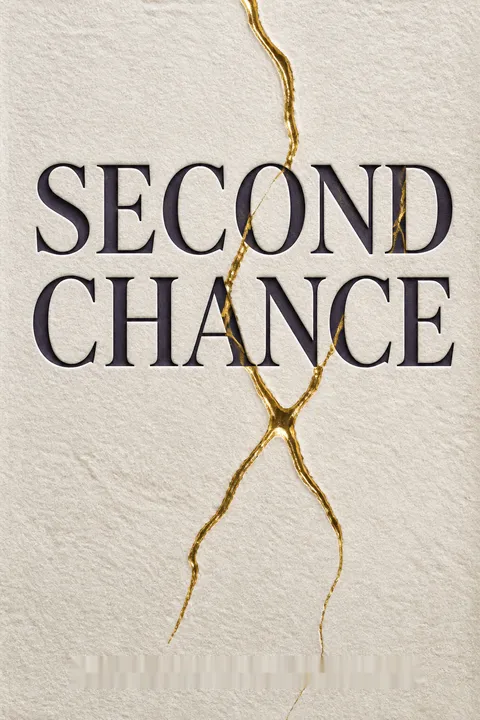
Second Chance is part financial primer, part memoir, and part indictment of institutions. Its organizing story begins with Kiyosaki encountering Buckminster Fuller’s vision of the future, then follows his move from manufacturing into financial education. That personal arc gives a human shape to an otherwise sprawling argument about money, schooling, banking, technology, and economic change.
The book’s most useful contribution is operational: inspect cash flow, distinguish income-producing property from expenses, practice evaluating decisions, and seek expertise instead of pretending to know everything. Its insistence that financial knowledge should be applied, not merely memorized, is stronger than its claim that vocabulary alone can make people wealthy. Knowing a definition helps, but wealth also depends on access to capital, markets, legal protections, time, and luck.
The book’s macroeconomic narrative is more contentious. It treats inflation, taxation, banking, and financial regulation as parts of a coordinated cash heist. That framing can motivate readers to question institutions, but it often collapses distinct mechanisms and interests into one controlling actor. Its explanation of fractional-reserve banking, for example, is a simplified account, and claims about deliberate institutional design should be separated from documented economic processes. Likewise, warnings about derivatives deserve attention without accepting a specific crash forecast as reliable.
A productive reading holds both parts in view. The systems critique can prompt useful questions about incentives, financial education, and who bears losses. The personal framework can help readers assess their own choices. Neither replaces careful evidence or professional advice. Most importantly, the book’s call for agency need not mean that every setback is self-inflicted or every entrepreneur will succeed. Its best message is to learn actively, build judgment, and pursue financial choices compatible with one’s resources, responsibilities, and values.
Review Summary
Second Chance receives mixed reviews, with some praising its financial insights and motivational aspects, while others criticize its repetitive content and lack of new ideas. Supporters appreciate Kiyosaki's perspective on financial literacy, investing, and preparing for economic crises. Critics argue the book rehashes concepts from his previous works and lacks actionable advice. Many readers find value in Kiyosaki's alternative views on money and the economy, but some question the practicality and accuracy of his teachings. The book's format and writing style receive both praise and criticism.
People Also Read




Glossary
GRUNCH
Fuller’s cash-heist conceptAn acronym for Gross Universal Cash Heist, a term Buckminster Fuller used for his argument that powerful institutions and individuals extract wealth through systems involving money, banking, government, and education. Kiyosaki adopts the term as a lens for financial inequality and institutional incentives. The book presents this as an interpretation, not a neutral accounting category.
Generalized Principles
Broad rules governing systemsBuckminster Fuller’s name for principles he believed applied across many situations and reflected how the universe operates. Kiyosaki highlights examples such as serving more people to become more effective and the idea that new possibilities can emerge from emergencies. In the book, these principles connect business decisions with a broader ethical vision of human cooperation.
ephemeralization
Doing more with lessA term Fuller used for increasing output or capability while using fewer resources. Kiyosaki applies it to technology, business, and education, arguing that scalable products, digital tools, and effective systems can serve more people without requiring a proportional increase in labor or cost. The idea also explains why organizations that fail to adapt may lose relevance.
CASHFLOW Quadrant
Four ways to earnKiyosaki’s framework divides income-producing roles into four categories: employee, self-employed worker, business owner, and investor. The first two generally involve earning through work, while the latter two focus on owning businesses or investments. The model is intended to show that each role requires different skills, risks, and forms of financial education.
B-I Triangle
Business system checklistKiyosaki’s diagram of the components needed to make a business function as an asset rather than a product or a job. It emphasizes that a business depends on multiple connected elements, including its mission, leadership, team, and operating functions. The triangle is used to diagnose why an enterprise may struggle when one part is weak or missing.
primary wealth
Natural resource ownershipIn the wealth classification presented in the book, primary wealth means resources themselves, such as oil, land, metals, forests, or fish. It is distinguished from producing goods from those resources and from holding financial claims to them. Kiyosaki argues that ownership of resources is closer to tangible underlying wealth than savings or publicly traded shares.
secondary wealth
Production from resourcesThe book’s term for wealth created by turning resources into useful products or services. A farmer producing food, a factory owner making goods, or an oil operator extracting petroleum represents secondary wealth. Kiyosaki contrasts it with owning the underlying resource and with holding paper investments that represent claims on companies or assets.
tertiary wealth
Financial claims on wealthA category in the book for paper or financial wealth, including stocks, bonds, mutual funds, savings, and money. These holdings represent claims connected to businesses or resources rather than direct ownership of the underlying productive asset. Kiyosaki considers them more vulnerable to market declines, while acknowledging that they are common investment vehicles.
assets and liabilities
Cash in, cash outKiyosaki redefines these basic financial terms by their cash-flow effect: assets put money into the owner’s pocket, while liabilities take money out. This differs from standard accounting usage, where an asset is generally a resource with economic value and a liability is an obligation. The book uses its simpler definitions to teach readers to track monthly income and expenses.
FAQ
What's Second Chance about?
- Focus on Financial Crisis: Second Chance by Robert T. Kiyosaki delves into the causes of the global financial crisis and offers strategies for individuals to navigate the evolving economic landscape.
- Three-Part Structure: The book is structured into three parts: The Past, The Present, and The Future, each focusing on different aspects of financial education and personal empowerment.
- Opportunity in Crisis: Kiyosaki emphasizes that every crisis presents an opportunity for growth and financial independence, encouraging readers to rethink their approach to money.
Why should I read Second Chance by Robert T. Kiyosaki?
- Importance of Financial Education: The book underscores the lack of financial education in traditional schooling, making it crucial for anyone aiming to improve their financial literacy.
- Empowerment Through Knowledge: Kiyosaki aims to empower readers to take control of their financial future by understanding money dynamics and investing.
- Challenging Conventional Wisdom: It challenges common beliefs about saving, investing, and job security, encouraging readers to adopt new perspectives on wealth creation.
What are the key takeaways of Second Chance?
- Crisis Equals Opportunity: Kiyosaki highlights that crises contain both danger and opportunity, urging readers to find growth opportunities in adversity.
- Knowledge is the New Money: The book stresses that financial education is crucial for achieving wealth, with knowledge being more valuable than traditional currency.
- Investing in Assets: Emphasizes the importance of investing in assets that generate cash flow rather than liabilities that drain resources.
What are the best quotes from Second Chance and what do they mean?
- "We are called to be architects of the future, not its victims.": Encourages proactive steps in shaping financial destinies rather than passively accepting circumstances.
- "Savers are losers.": Argues that traditional saving methods do not keep pace with inflation, leading to a loss of purchasing power over time.
- "Your house is not an asset.": Challenges the belief that homeownership is a guaranteed path to wealth, urging readers to rethink financial assumptions.
How does Robert T. Kiyosaki define money in Second Chance?
- Knowledge as Money: Kiyosaki suggests that understanding financial principles is more valuable than traditional currency, stating "Knowledge is the new money."
- Changing Nature of Money: Discusses how the definition and function of money have evolved, especially in the Information Age.
- Financial Literacy: Emphasizes that financial literacy is crucial for navigating modern money management complexities.
What is the CASHFLOW Quadrant mentioned in Second Chance?
- Four Types of Income Earners: Categorizes individuals into Employees (E), Self-Employed (S), Business Owners (B), and Investors (I), each representing a different income approach.
- Mindset Differences: Each quadrant has a distinct mindset and financial strategy, with E and S earning through active work, while B and I focus on passive income.
- Path to Financial Freedom: Encourages transitioning from E and S quadrants to B and I quadrants for greater financial independence and long-term wealth.
How does Second Chance address the concept of inflation?
- Wealth Erosion: Discusses how inflation erodes purchasing power, making it essential to invest rather than save.
- Investment Strategy: Suggests investing in assets that appreciate over time to combat inflation effects, emphasizing cash flow-generating investments.
- Financial Education: Understanding inflation is part of financial education, crucial for making informed investment decisions.
What is the significance of the past in Second Chance?
- Understanding Financial History: Examines the past to identify root causes of the current financial crisis, helping readers understand how we arrived at this point.
- Lessons from Mistakes: Analyzing past financial decisions and crises provides valuable lessons to avoid repeating mistakes.
- Foundation for Future Planning: The past serves as a guide for making informed future decisions, emphasizing historical context in financial planning.
How does Robert T. Kiyosaki define good debt in Second Chance?
- Debt that Generates Income: Good debt is used to acquire assets that produce cash flow, such as borrowing to invest in rental properties.
- Leverage for Growth: Allows individuals to leverage investments, potentially increasing returns, with wise debt use leading to greater financial success.
- Tax Advantages: Often comes with tax benefits, such as mortgage interest deductions, enhancing investment profitability.
What is the Cash Heist concept in Second Chance?
- Definition of Cash Heist: Refers to systematic ways the financial system and government policies erode individual wealth.
- Mechanisms of Theft: Outlines mechanisms like inflation, taxes, and the banking system contributing to this heist.
- Awareness and Action: Understanding the Cash Heist is crucial for individuals to protect their wealth and make informed financial decisions.
How can I apply the lessons from Second Chance to my life?
- Shift Your Mindset: Change your perspective on money, viewing it as a tool for creating wealth rather than just paying bills.
- Educate Yourself: Learn about personal finance, investing, and the economy, as financial education is key to achieving independence.
- Take Action: Seek investment opportunities and build your asset column, starting small and expanding as you gain confidence and knowledge.
What is the significance of the title Second Chance?
- Opportunity for Change: Reflects the idea that individuals can reinvent their financial futures, regardless of past mistakes or circumstances.
- Empowerment: Conveys a message of empowerment, encouraging readers to take control of their financial destinies through education and action.
- Hope and Possibility: Symbolizes hope and the possibility of achieving financial freedom, inspiring readers to pursue dreams and overcome obstacles.
About the Author
Other books by Robert T. Kiyosaki





Download PDF
Download EPUB
.epub digital book format is ideal for reading ebooks on phones, tablets, and e-readers.








