

Key Takeaways
Judge cannabis by evidence and lived experience, not by either camp's story
A family lesson. Grinspoon's starting point is personal: his teenage brother Danny, dying of leukemia, used cannabis to keep food down during chemotherapy. It did not stop the cancer, but it eased nausea enough for Danny to eat, play music, and spend time with his family. His parents broke the law to obtain it. That experience convinced Grinspoon that cannabis could relieve suffering, but he argues that personal testimony cannot settle every medical question.
Two realities collide. The book follows people who describe cannabis as medicine, pleasure, or support for well-being, and institutions that have often treated it as dangerous and useless. Grinspoon's proposed middle ground is neither blanket approval nor blanket rejection. Ask what a product does, for whom, at what dose, and with what risks.
What's striking is how the opening story makes the stakes concrete without proving more than it can. A family's experience can reveal a neglected treatment possibility and expose the human cost of rigid policy. It cannot establish how often a treatment works or whether it is safe across populations. That distinction is central to trustworthy medicine: testimony generates questions, while careful study tests them. Grinspoon's own disclosed commitments make his perspective easier to evaluate, though disclosure does not remove bias. The same standard should apply to institutions whose histories, funding, and professional incentives can also shape what they notice.
Treat prohibition's research record as biased, not as proof of either side
Two rival narratives. Grinspoon calls the prohibition-minded account "Reefer Pessimism": cannabis is framed chiefly as a threat. He calls the idealized pro-cannabis account "Cannatopianism": cannabis is framed chiefly as medicine, wellness, and liberation. Both grew in a political climate that discouraged shared facts. The plant had been used medically in the United States before its 1937 criminalization, which was pushed through amid racial fearmongering and commercial interests, despite medical opposition.
Research has a history. Federal agencies controlled much of the funding and research supply for decades. One analysis cited by the book found that research on possible harms received more than twenty times the funding allocated to therapeutic research. Meanwhile, millions faced arrest; in 2020, about 350,000 cannabis-related arrests occurred, and Black people were arrested at nearly four times the rate of white people despite similar use rates.
The useful insight is not that politically shaped research should be discarded, but that its production conditions belong in the interpretation. Funding priorities influence which questions get asked, which samples are available, and which findings become familiar. That is a general problem in science, not a reason to distrust every result. The book is strongest when it distinguishes historical distortion from the possibility of genuine harm. Its own account also invites scrutiny of the commercial cannabis sector, whose interests can favor optimistic claims. A credible evidence culture needs independence from both prohibitionist and industry incentives.
Match the evidence standard to the question and the cost of being wrong
No single test answers everything. Randomized controlled trials, or RCTs, compare assigned treatments under controlled conditions and can help separate a treatment effect from expectation. Cannabis complicates this method: participants may recognize whether they feel high, products vary, and a study may test only one formulation or delivery method. The book does not argue for abandoning RCTs. It argues that they are not the only useful evidence.
Look beyond the lab. Real-world evidence, or RWE, comes from non-interventional sources such as medical records, registries, and patient data. It can reflect ordinary use and longer-term outcomes, but it often shows association rather than cause. Grinspoon proposes matching the evidence threshold to the stakes: symptom relief for a migraine may justify a cautious trial more readily than replacing proven cancer treatment with an unproven remedy.
This is a practical lesson in decision science: evidence quality and decision stakes are related, but they are not identical. A low-risk, reversible choice can reasonably be tested with less certainty than a decision that could forfeit a life-saving treatment. RCTs reduce some biases, yet their controlled setting can miss how people actually use a complex product. Observational evidence captures that context but can confuse cause and consequence. The best approach is triangulation, comparing different methods and asking where each can mislead. The book's standard is sensible, provided that uncertainty is stated plainly rather than used to excuse weak claims.
Screen for psychosis vulnerability, then keep THC exposure modest
Risk is not evenly shared. Cannabis can produce temporary psychotic symptoms, and the book describes evidence that it may precipitate an earlier psychotic episode in people already vulnerable to psychosis. Family history matters because genetic risk may contribute both to psychosis and to heavier cannabis use. One analysis found that 34 percent of people with cannabis-induced psychosis later developed schizophrenia, compared with 25 percent across substance-induced psychoses generally. That statistic applies to people who already experienced psychosis, not to cannabis users overall.
Use caution where risk is high. Grinspoon recommends avoiding THC after a psychotic disorder or substance-induced psychosis, and strong caution for people with a family history of schizophrenia. He also advises avoiding very high THC exposure and considering CBD, which may mitigate some THC effects. The evidence does not establish that cannabis alone causes schizophrenia in the general population.
The section's most useful move is replacing a universal claim with a vulnerability model. Many health risks depend on interactions between exposure and predisposition, so advice can be more protective when it identifies who may be especially susceptible. The important caveat is that family history is an imperfect screen: relatives may not know or disclose diagnoses, and risk cannot be reduced to a simple checklist. The statistic also needs its denominator kept visible. A high transition rate among people who have already experienced psychosis is not an estimate of risk for everyone who uses cannabis. Clear communication prevents a warning from becoming another scare tactic.
Diagnose cannabis addiction by harm and loss of control, not use alone
Use is not automatically disorder. Cannabis use disorder, or CUD, is the clinical diagnosis for a pattern of cannabis use involving symptoms such as failed efforts to cut down, cravings, hazardous use, and continued use despite serious consequences. Estimates cited in the book range from about 9 to 31 percent of adult users. Grinspoon argues that the spread partly reflects different survey methods and definitions, and that some diagnostic criteria, such as tolerance and withdrawal, can also occur during appropriate medical use.
Real problems still exist. The author describes patients whose cannabis use displaced work, relationships, or other goals, and people unable to stop despite repeated episodes of severe vomiting. Those cases deserve treatment, not dismissal. But court-ordered rehab and stigmatizing chart labels can make ordinary or medical use look like addiction. The clinically useful question is whether use is causing meaningful harm and whether the person can change it.
This distinction reflects a wider diagnostic challenge: a behavior can be frequent without being disordered, while a less frequent behavior can be destructive in a particular person's life. Measuring impairment, control, and consequences is more informative than counting use alone. At the same time, subjective benefit should not erase functional costs; a person may experience relief and harm simultaneously. Grinspoon's skepticism about prevalence estimates is reasonable, but his own clinical experience cannot establish how common disorder is across the population. Better definitions and better clinical assessment are needed, with less reliance on labels generated by legal systems or blunt surveys.
Protect developing brains and pregnancies without punishing people who use
Be more cautious during development. The evidence about lasting cognitive effects in adolescents is mixed, but the brain is still developing, and some studies raise concern, particularly with heavy use that begins young. The book recommends that teens wait, ideally until adulthood, and emphasizes honest, non-stigmatizing conversations rather than exaggerated warnings. A teen who learns that adults have lied about cannabis may also dismiss accurate warnings.
Pregnancy calls for precaution. Research has not established whether cannabis is safe during pregnancy or breastfeeding. Observational studies report possible risks, but confounding factors such as tobacco use, poverty, and other substances make cause difficult to determine. Given the stakes and uncertainty, Grinspoon recommends avoiding or minimizing use where feasible, while opposing drug testing, family separation, or criminal penalties. Pregnant patients need open medical discussions, not fear of being reported.
These are cases where precaution and compassion should operate together. Uncertainty about fetal or adolescent effects can justify caution without turning a health recommendation into surveillance or punishment. Punitive responses may discourage people from sharing information with clinicians, making care less safe. The book also makes a strong case for communicating with teenagers as people capable of weighing reasons, rather than trying to preserve abstinence by denying cannabis's appeal. One limit deserves emphasis: evidence that is inconclusive does not establish safety, but neither does it justify confident claims of damage. Good guidance should make both limits explicit.
Never drive impaired, and distrust tests that mistake past use for impairment
Do not drive high. Cannabis can affect attention, memory, reaction time, and lane control. The book cites estimates suggesting cannabis increases crash risk, though the size of the increase varies across studies and can be distorted by alcohol use, age, and other factors. Alcohol generally carries a much larger crash risk, but that comparison does not make cannabis-impaired driving safe. Combining cannabis with alcohol can worsen impairment.
A positive test is not a roadside measure. THC can remain detectable for weeks after use, so a positive result does not prove that someone was impaired while driving. Unlike alcohol concentration, THC levels in blood or other fluids do not reliably track impairment across different users and patterns of use. The book offers rough waiting periods after inhaled, sublingual, or edible cannabis, but stresses that dose, person, and other medications change the timeline. When uncertain, do not drive.
This is where the book's balanced approach produces a firm rule. The limits of roadside testing matter for civil liberties and fair enforcement, but they do not erase the driver's responsibility to avoid endangering others. A sound policy must distinguish evidence of past exposure from evidence of present impairment. That is difficult, and uncertainty can invite both over-enforcement and under-protection. Clear public guidance should focus on behavior and impairment, while avoiding simplistic chemical thresholds that punish regular medical users who are not currently impaired. The practical choice remains straightforward: arrange another ride rather than trying to judge one's own performance while intoxicated.
Use cannabis for demonstrated symptom relief, not as a cancer cure
Some uses have firmer support. The National Academies report cited by the book found substantial evidence that cannabis or cannabinoids can help chronic pain in adults, and conclusive evidence that oral cannabinoids relieve chemotherapy-related nausea and vomiting. Patients also report improved sleep and reduced use of some pain or sleep medications. In one survey of nearly 3,000 medical cannabis patients, 97 percent agreed that cannabis helped them reduce opioid use. That self-report supports further study, but does not prove that cannabis can replace opioid treatment for everyone.
Separate comfort from cure. Laboratory and animal studies suggest cannabinoids may affect cancer cells, and a small trial in recurrent glioblastoma reported promising survival results. But no reliable human evidence establishes cannabis as a cure for cancer. Patients should not substitute cannabis for effective cancer treatment. Cannabis may help with symptoms and comfort, while drug interactions, especially during cancer immunotherapy, warrant discussion with the oncology team.
The distinction between palliation and disease modification protects patients from two opposite errors: dismissing meaningful relief because it is not curative, and mistaking relief for proof that a disease is being controlled. The opioid-substitution reports are encouraging because reducing exposure to more hazardous medicines can matter, but self-selected surveys cannot show what would have happened without cannabis. Likewise, laboratory activity is a reason to investigate cannabinoids, not a basis for abandoning established cancer care. This section models a useful clinical ethic: respect a patient's reported benefit, assess competing risks, and keep claims proportional to the evidence.
Treat the endocannabinoid system as promising biology, not a cure-all
The body has cannabinoid signaling. The endocannabinoid system, or ECS, is a network of receptors and internally produced chemicals involved in functions including pain, sleep, appetite, mood, memory, and immune activity. THC acts on cannabinoid receptors; CBD works through several mechanisms and can influence the body's own cannabinoid signaling. This biology helps explain why cannabinoids might affect many symptoms, but it does not by itself prove that a product treats a disease.
Products are not interchangeable. Cannabis contains hundreds of compounds, and their amounts vary across products. The proposed "entourage effect" is the hypothesis that plant compounds can work together in ways that differ from isolated THC, though the evidence is still limited. CBD has an FDA-approved prescription use for certain childhood epilepsies, while many over-the-counter CBD products have inconsistent contents and limited evidence. CBD can also interact with medications, so patients should tell their clinicians what they take.
A biological mechanism can make a treatment plausible, but plausibility is only the beginning of proof. The ECS offers a rich research map because it links systems that medicine often studies separately. Yet that very breadth can tempt marketers to treat a mechanism as a universal explanation. Product variability adds another layer: a finding about one preparation may not transfer to another. The section is most persuasive when it pairs scientific promise with practical limits, including uncertain formulations and drug interactions. The right response to promising biology is more precise research, not automatic confidence in every product bearing a cannabinoid label.
Make legalization safer through honest counseling, regulation, and repair
Bring care into the open. Many patients rely on dispensary staff because doctors often lack training or respond judgmentally. Grinspoon argues that clinicians should learn basic cannabinoid medicine, ask about use without shaming, and discuss dose, interactions, storage, and driving. He favors sensible safeguards such as child-resistant packaging, clear labeling, caution around concentrates, and limits on marketing to young people, rather than returning to criminalization.
Repair the damage. Legal access alone does not undo decades of arrests and unequal enforcement. The book calls for releasing people imprisoned for nonviolent cannabis offenses, expunging records, and addressing harms to communities disproportionately targeted by the drug war. Its closing family story returns to the opening: cannabis helped Danny endure chemotherapy, and later helped his father manage pain and sleep. Those experiences explain the author's commitment, while his policy argument rests on making access safe, affordable, and just.
The policy vision treats legalization as a design problem, not a binary victory. Legal markets can reduce some risks while creating others, especially when profit rewards heavy consumption or products appeal to children. Regulation therefore needs to protect public health without making legal products so costly or inaccessible that unregulated markets regain ground. Equity measures are not decorative additions: they address who paid the price of prohibition and who benefits from legal commerce. The book's personal ending gives this agenda moral force, but good policy also needs transparent data, independent oversight, and a willingness to revise rules when outcomes differ from expectations.
Analysis
The book's central achievement is to turn a polarized drug debate into a question about how knowledge is made, trusted, and used. Its organizing narrative moves from family experience, through the political construction of cannabis stigma, into contested medical evidence, and finally toward practical policy. That structure matters: a reader sees how Danny's relief can be both deeply credible as testimony and insufficient as population-level proof. The same discipline should apply to official claims of harm.
The most durable framework is not a verdict on cannabis but a method: identify the population, product, dose, route, and outcome; distinguish association from causation; ask who funded the research and what the study could actually establish; then weigh uncertainty against the cost of action or inaction. This framework transfers beyond cannabis to any treatment caught between patient experience, commercial promotion, and institutional skepticism.
The book also exposes a real asymmetry in public debate. Prohibition has inflicted measurable legal and social harms, while many medical risks remain uncertain or vary sharply by age, vulnerability, and use pattern. That asymmetry supports ending criminal penalties, but it does not make every optimistic medical claim true. The author's strongest arguments are those that preserve this distinction, such as caution for adolescents, pregnancy, impaired driving, and psychosis vulnerability alongside recognition of pain and chemotherapy symptom relief.
There is a tension in the author's own method. He rightly criticizes selective interpretation of observational studies, yet his confident clinical judgments and vivid personal anecdotes sometimes receive more rhetorical weight than the evidence he demands of opponents. That does not invalidate his case. It makes his closing appeal to humility especially important. A fair account must scrutinize both institutional warnings and patients' hopes, while refusing to confuse scientific uncertainty with either proof of safety or proof of danger.
Review Summary
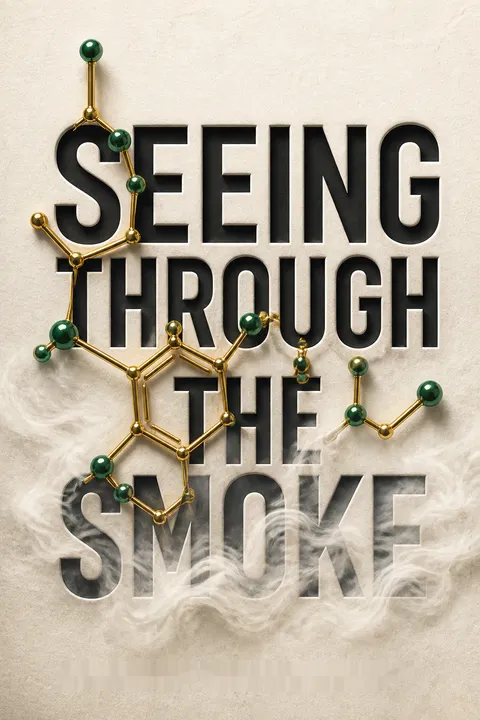
Seeing through the Smoke receives mostly positive reviews, with readers praising its balanced approach to cannabis, exploring both benefits and risks. Many appreciate the author's clear writing style, personal anecdotes, and scientific backing. The book is seen as informative for both medical professionals and laypeople. Some criticize the author's political views and the book's length. Overall, reviewers find it a comprehensive exploration of cannabis, its medical uses, and societal impact, though a few feel it's too detailed or biased.
People Also Read





Glossary
Reefer Pessimism
Cannabis risk-centered narrativeGrinspoon's label for the view that cannabis is chiefly a dangerous, addictive, socially harmful drug. In his account, this narrative developed alongside criminalization and was reinforced by government messaging, selective research priorities, and institutional stigma. It includes some legitimate concerns, but can become distorted when it dismisses medical benefit or treats uncertain associations as proof of causation.
Cannatopianism
Cannabis benefit-centered narrativeGrinspoon's label for the idealistic view of cannabis as medicine, wellness aid, and lifestyle enhancer, rather than chiefly a threat. It grew partly in opposition to prohibition and drew strength from users' experiences and the harms of criminal enforcement. The term also captures a risk: advocates may romanticize cannabis, minimize harms, or promote benefits that have not been demonstrated.
Endocannabinoid system
Body's cannabinoid signaling networkA system of receptors and internally produced signaling molecules that helps regulate functions including pain, sleep, appetite, memory, mood, and immune activity. Cannabis compounds interact with this system, though they do so in different ways. Its broad biological role helps explain why cannabinoids may affect multiple symptoms, but the existence of a mechanism does not establish that a particular cannabis product treats a particular condition.
Real-world evidence
Evidence from ordinary clinical useEvidence drawn from non-interventional sources such as patient registries, medical records, surveys, and insurance data. It can capture ordinary products, dosing, and longer-term experience that controlled trials may not reflect. Because researchers do not randomly assign treatment, real-world evidence often cannot establish causation by itself and can be affected by confounding, selection, and inconsistent measurement.
Cannabis use disorder
Problematic cannabis-use diagnosisA clinical diagnosis based on a pattern of cannabis use associated with symptoms such as difficulty controlling use, craving, hazardous use, or continuing despite significant consequences. The book notes that estimates of its prevalence vary widely and questions whether common screening methods properly distinguish harmful use from medical use. It emphasizes that frequent use alone does not establish a disorder.
Entourage effect
Possible synergy among plant compoundsA hypothesis that THC, CBD, and other cannabis compounds, including terpenes, can interact to produce effects different from those of an isolated compound. The idea is used to explain why some patients report that whole-plant cannabis works differently from synthetic THC alone. The book notes that the hypothesis is influential in clinical practice but is not yet supported by extensive definitive evidence.
Chemovar
Cannabis defined by chemical profileA term for a cannabis variety identified by its chemical composition, especially its cannabinoid profile, rather than by a familiar strain name. Grinspoon favors the term because strain names can be inconsistent across growers, locations, and batches. Knowing a product's measured contents may make its effects easier to discuss and compare, although chemical profiles do not guarantee identical experiences.
Download PDF
Download EPUB
.epub digital book format is ideal for reading ebooks on phones, tablets, and e-readers.








