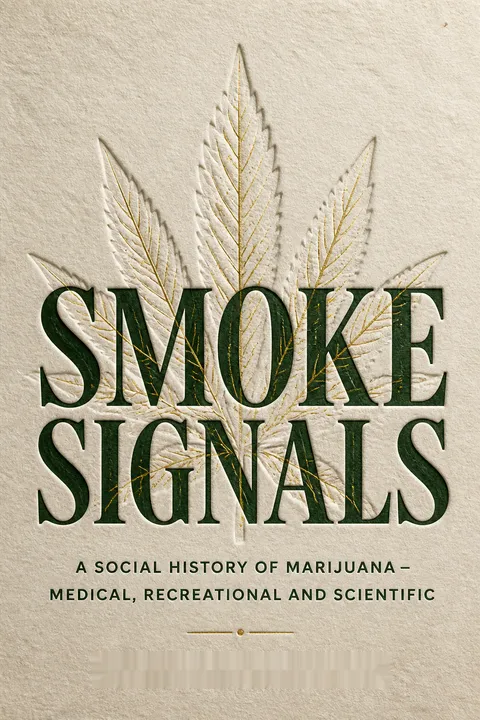


Key Takeaways
Treat cannabis as a plant with dual histories, not a single moral label
A many-purpose plant. Cannabis has served as fiber, food, medicine, and a psychoactive substance across cultures. The book traces its spread from Central Asia along two broad routes: cooler northern regions favored hemp fiber, while warmer southern regions cultivated resin-rich plants for ritual and intoxication. Ancient Chinese medical writing recommended cannabis, and a 2008 analysis of flower tops buried with a shaman in China found psychoactive THC in material about 2,700 years old.
Separate the uses. American hemp had practical value long before recreational smoking became widely known. George Washington grew hemp for fiber and seeds, not, as later folklore claimed, to get high. The history resists a simple split between a useful plant and a dangerous drug: climate, variety, preparation, and purpose all mattered.
What's striking is how readily a society turns a plant with several uses into a single moral symbol. That simplification makes regulation easier to explain, but harder to design well. The same challenge appears with poppies, coca, and medicines that can also intoxicate: a substance's risks depend partly on dose, route, and context. The book's historical sweep usefully disrupts the idea that cannabis has one timeless meaning. Its limitation is that a long record of use, by itself, cannot establish modern safety or effectiveness for every patient.
Ask who prohibition targets before accepting its claims about danger
A racialized campaign. The word marijuana gained prominence in the United States as officials and newspapers associated cannabis with Mexican immigrants and Black communities. In 1937, Harry Anslinger led a federal campaign portraying the plant as a cause of violence and social collapse. Newspaper magnate William Randolph Hearst amplified sensational stories about Mexican migrants, while Congress considered the Marihuana Tax Act in only two brief hearings.
Evidence took a back seat. The book argues that the campaign relied on racial prejudice and political ambition more than scientific evidence. The 1944 La Guardia Report, a New York City investigation, challenged claims that cannabis caused violence, insanity, or juvenile crime. Anslinger attacked its findings and threatened researchers, while cannabis was pushed out of medical practice.
The history illustrates a recurring problem in public policy: a group already viewed as threatening becomes a convenient explanation for broader anxieties. In that setting, claims about a drug can function as coded claims about race, class, and social order. This does not mean every concern about cannabis is fabricated. It means claims deserve scrutiny for both evidence and political function. The book makes a strong case that the 1937 campaign was compromised, though its focus on prejudice can leave less room for examining genuine risks associated with heavy use.
When official warnings contradict experience, prohibition breeds distrust
Lived experience challenged the script. In the early twentieth century, jazz musicians such as Louis Armstrong used cannabis as a source of relaxation and camaraderie. By the 1940s, marijuana circulated in jazz clubs and crossed racial boundaries that wider society still enforced. Later, Beat writers including Jack Kerouac and Allen Ginsberg linked cannabis to artistic experimentation and resistance to conformity.
A political identity formed. As marijuana use spread among white middle-class youth in the 1960s, many found that their experience did not match official claims of inevitable violence or ruin. The gap encouraged suspicion of government statements on other issues, including the Vietnam War. Smoking was not automatically political, but prohibition made ordinary use an act that could signal dissent and solidarity.
The mechanism here resembles a credibility crisis: once people directly test a public warning and find it exaggerated, they may discount messages that are more accurate. Health communication depends on trust as much as information, so overstatement can undermine even sensible prevention. At the same time, personal experience is a poor substitute for population-level evidence. A drug can feel benign to many users and still carry risks for some, especially with frequent use or particular vulnerabilities. The book is strongest when it explains how law transformed private conduct into public identity.
Expect bans to reorganize cannabis markets, not eliminate demand
Scarcity changed the business. In 1969, Operation Intercept subjected traffic at the Mexican border to intensive searches. The book argues that the operation did little to reduce supply, but pressured Mexico to suppress cultivation and raised the risks and costs of smuggling. Demand persisted, and cannabis arrived from other countries as well as Mexico.
Growers adapted. As interdiction and eradication increased, American cultivators developed domestic crops, including seedless sinsemilla and hybrids suited to indoor growing. By the 1980s, prohibition had helped make cannabis cultivation a major underground business. In 2005, more than 750,000 Americans were arrested on marijuana charges, most for possession, yet the market remained enormous. Enforcement reshaped where and how cannabis was produced without removing the incentive to buy it.
This is a classic unintended-consequences problem. When demand is durable, enforcement can shift production, raise prices, and reward people willing to take greater risks. Similar dynamics appear in black markets for other prohibited goods. The book also shows that enforcement can drive innovation, as growers move indoors and refine cultivation. That does not mean every control is futile: enforcement can disrupt particular suppliers or reduce access temporarily. The more useful question is whether those effects justify the costs, and whether policy is reducing harm or simply changing who profits.
Treat blocked research as a policy failure, not proof of safety
Investigations reached different conclusions. The 1944 La Guardia Report, the 1972 Shafer Commission, and Britain's Wootton Report reviewed evidence on cannabis and challenged claims that it inevitably caused violence, insanity, or progression to harder drugs. The Shafer Commission recommended removing criminal penalties for personal possession and casual, small-scale sharing. President Nixon rejected its recommendations without adopting its analysis.
Access to evidence mattered. The book describes how federal officials restricted research that might reveal medical uses while supporting studies aimed at finding harm. That history makes the official claim that cannabis lacked accepted medical use difficult to separate from the rules that prevented research. Still, older commissions and observational studies cannot answer every modern clinical question; their findings are a reason to investigate carefully, not a substitute for well-designed trials.
The distinction between absence of evidence and evidence of absence is central here. If institutions restrict the studies needed to test a claim, they cannot then treat the resulting uncertainty as a verdict against that claim. This is a problem of research governance, not just drug policy. The corrective is independent study with transparent methods and room for results that challenge either side. The book's account is persuasive about political interference, while its own confidence in some medical conclusions sometimes outruns the strength of the studies it describes.
Follow cannabis biology while separating mechanisms from proven treatments
A signaling system came into view. Raphael Mechoulam and colleagues isolated THC in the 1960s. Researchers identified a cannabinoid receptor in the brain in 1988, then discovered a second receptor and the body's own cannabinoid-like compounds. Together, these receptors and compounds form the endocannabinoid system, a signaling network involved in processes such as pain, appetite, mood, and immune response.
Promise is not proof. The book connects this biology to reports of relief for pain, nausea, muscle spasms, and other symptoms. THC and cannabidiol, or CBD, can act differently, and some researchers argue that the plant's compounds work together. Yet receptor studies, animal experiments, patient reports, and clinical trials provide different levels of evidence. A plausible biological pathway is a reason to test a treatment, not proof that it works for every condition.
The scientific story is compelling because research on one plant exposed a broader system in human physiology. That is a productive pattern in biology: studying an external compound can reveal the body's own signaling machinery. The caution is equally important. A mechanism can explain how an effect might occur without showing that a treatment improves meaningful outcomes in people. Clinical decisions require attention to dose, delivery, interactions, and individual variation. Keeping those evidentiary levels distinct strengthens the case for research rather than weakening it.
Turn patient stories into durable legal protection, not symbolic permission
Patients made the issue concrete. Robert Randall used cannabis to control glaucoma after other treatments failed, then fought for legal access to government-grown marijuana. During the AIDS crisis, Dennis Peron and Brownie Mary helped provide cannabis to patients coping with appetite loss, nausea, and pain. Their work helped build support for California's 1996 Compassionate Use Act, which allowed physician-recommended cannabis for a broad range of illnesses.
A vote was not a system. The law passed with 56 percent support, but it did not establish a clear statewide supply network. Dispensaries, patients, and growers faced raids, prosecutions, and conflicting local rules. The stories helped voters see the human cost of prohibition, but permission on paper did not ensure reliable access in practice.
Personal narratives are unusually effective in policy debates because they reveal what abstractions conceal: a patient choosing between legal obedience and symptom relief. They can also generate empathy across ideological lines. Yet a compelling case is not a substitute for general rules. Durable policy needs clear standards, accountable providers, and protections that do not depend on a patient's ability to attract media attention. The California experience shows why public approval matters, but also why implementation design determines whether a right can actually be exercised.
Treat state experiments as democratic tests, not federal insubordination
California became a test case. Proposition 215 created a conflict between state policy and federal prohibition. California officials varied in their support, and federal agents continued raids on dispensaries and growers. In 2005, the Supreme Court's decision in Raich v. Gonzales held that Congress could apply federal drug law to homegrown cannabis, even when a state permitted its medical use. The ruling did not erase state medical-marijuana laws, but it preserved federal enforcement power.
Uncertainty became policy. Patients could be protected under state law and still face federal prosecution. The book describes this divided authority as a practical threat to doctors, caregivers, and patients, not merely a constitutional puzzle. Raich shows how federal power can limit local experimentation even when voters approve a different approach.
Federalism can function as a learning system: jurisdictions test different policies, compare outcomes, and revise. That benefit disappears when national authority makes experimentation risky or merely symbolic. At the same time, state-level approval does not settle every question about public health or commerce. The deeper issue is institutional clarity. When people cannot tell which rule governs, uncertainty itself imposes costs, especially on patients and small providers who lack legal resources. The case makes the stakes of divided sovereignty unusually visible.
Compare cannabis with alcohol by harm, not inherited legal status
Legal status is not a risk ranking. The book repeatedly contrasts cannabis with alcohol, a legal intoxicant associated with addiction, violence, impaired driving, and substantial health harms. In the Netherlands, authorities chose a harm-reduction approach: from 1976, they tolerated limited cannabis sales in coffee shops while keeping hard drugs separate from that market. The aim was to reduce contact between cannabis consumers and sellers of more dangerous drugs.
Different rules, different tradeoffs. Dutch policy did not make cannabis risk-free, but the book argues that separating markets was more practical than pursuing a drug-free society. It also recounts patients who used cannabis to reduce alcohol consumption. These examples challenge the assumption that prohibition is automatically safer. Comparisons across countries remain difficult, however, because culture, enforcement, and health systems differ.
A consistent harm framework asks what a substance does, how it is used, and what its regulation produces. That is more informative than treating legal status as a proxy for danger. Harm reduction also shifts attention from moral purity to achievable outcomes, such as reducing exposure to violent markets or limiting high-risk consumption. The caution is that a comparison with alcohol can become a rhetorical shortcut: lower risk in one dimension does not mean no risk in another. Good policy compares specific harms rather than declaring a universal winner.
Legalization can free a market while creating new fights over who profits
Reform became an industry. By the 2000s, medical-marijuana dispensaries, testing labs, grow operations, and related businesses were creating jobs and tax revenue, especially in California and Colorado. The shift brought professional services and regulation, but also competition between established activists, small growers, and commercial operators. Some movement veterans worried that large firms would displace the independent cultivators who had built the market under prohibition.
The vote exposed the tension. California's Proposition 19 in 2010 proposed legal adult use and local taxation. It received 46.5 percent of the vote, falling short. Supporters emphasized revenue and reduced arrests; critics and some growers feared corporate dominance and restrictions on personal use. Legalization, the book suggests, is not a single finish line. It raises questions about ownership, access, taxation, and whether reform serves patients and communities or primarily investors.
The transition from protest movement to regulated industry is a familiar political-economic pattern. Formal markets can improve transparency, quality control, and tax collection, yet they can also concentrate ownership and turn a public-interest cause into a competition for market share. Neither outcome is automatic. Rules around licensing, scale, pricing, and patient access shape who benefits. The failed 2010 vote also shows that broad cultural acceptance does not guarantee agreement on a specific regulatory design. Reformers must decide not only what to legalize, but whose interests the new system protects.
Analysis
Smoke Signals is best read as a social and political history of cannabis prohibition, not as a neutral clinical handbook. Its organizing claim is that marijuana's contested status was shaped less by a stable assessment of pharmacology than by race, bureaucracy, electoral strategy, and the cultural conflict surrounding its users. The narrative makes that argument concrete by moving from ancient uses and nineteenth-century medicine to jazz, the Beats, the counterculture, medical-marijuana activism, and the emerging commercial sector. Its recurring figures, from Louis Armstrong to Dennis Peron and Robert Randall, give institutional history human stakes.
The book is especially strong at exposing policy feedback. Criminalization did not simply suppress consumption: it changed supply routes, encouraged domestic cultivation, gave law enforcement new powers, and made cannabis a symbol of dissent. The account also clarifies how a medical movement could win public sympathy yet remain vulnerable when state permission collided with federal enforcement. This is a valuable framework for understanding why formal legal change often fails without administrative rules, reliable access, and protection from selective enforcement.
Its evidentiary balance is less even. Lee presents a large body of historical and scientific material, but the book often treats disputed findings as stronger than the described evidence warrants. Receptor biology, animal models, patient testimony, and controlled clinical trials answer different questions; they should not be collapsed into a single proof of broad therapeutic effectiveness. Likewise, highlighting racialized origins of prohibition does not by itself settle the safety profile of cannabis or the best regulatory approach. The strongest reading preserves the book's central critique while applying the same skepticism to advocacy claims that it applies to government claims. That tension is productive. The book makes readers ask whether a policy is judged by its declared purpose or by its observable consequences, and whether science can remain credible when access to research is politically constrained. Its enduring insight is not simply that cannabis can help or harm. It is that institutions shape what can be known, who is punished, and whose experience counts as evidence.
Review Summary
Smoke Signals receives generally positive reviews for its comprehensive social history of marijuana in the US. Readers appreciate the detailed research and engaging writing style, though some note the author's pro-cannabis bias. Many find the book eye-opening regarding the government's role in cannabis prohibition and its impact on society. Critics praise the historical context but some desire more balanced perspectives. Overall, readers recommend it as an informative, thought-provoking work that challenges common assumptions about marijuana.
People Also Read




Glossary
Biphasic effect
Dose-dependent opposite effectsA response in which a substance can produce different, sometimes opposite, effects at lower and higher doses. The book describes early cannabis research in which small doses could stimulate, while larger doses could sedate or cause unwanted effects. The concept supports careful dose adjustment, but does not establish that every use is beneficial.
La Guardia Report
New York cannabis investigationA 1944 report commissioned by New York City Mayor Fiorello La Guardia and prepared by the New York Academy of Medicine. It combined clinical, pharmacological, and social research and disputed prominent claims that marijuana caused violence, insanity, or juvenile delinquency. Federal narcotics chief Harry Anslinger attacked its conclusions.
Shafer Commission
Federal marijuana policy inquiryThe National Commission on Marihuana and Drug Abuse, chaired by former Pennsylvania governor Raymond Shafer, was established under President Nixon. Its 1972 report reviewed marijuana's effects and the consequences of prohibition, recommended removing criminal penalties for personal possession and limited sharing, and called for further medical research. Nixon rejected its policy recommendations.
endocannabinoid system
Body-wide cannabinoid signaling networkA biological signaling system composed of cannabinoid receptors, the body's own cannabinoid-like compounds, and related enzymes. The book describes it as involved in regulating processes such as pain, appetite, mood, immune response, and stress. Plant cannabinoids such as THC can interact with this system, but a biological mechanism alone does not prove clinical benefit.
Compassionate Use Act
California medical cannabis lawCalifornia's Proposition 215, approved by voters in 1996. It protected patients and primary caregivers from state prosecution for possessing or cultivating marijuana for a patient's medical use when recommended or approved by a physician. It did not create a detailed statewide distribution system, and federal prohibition remained in force.
Compassionate Investigational New Drug program
Federal cannabis access for patientsA federal program that supplied government-grown marijuana to a small number of patients with serious medical conditions. It followed Robert Randall's successful legal challenge and remained available to a few grandfathered participants after new applications were halted in 1992. The program offered a narrow legal exception without changing marijuana's federal classification.
entourage effect
Combined action of plant compoundsThe proposed idea that cannabis compounds, including cannabinoids and aromatic terpenes, can interact so that the whole-plant preparation produces effects different from or greater than those of an isolated compound. The book contrasts this possibility with single-molecule pharmaceuticals. The concept is a research hypothesis, not proof that every whole-plant product is superior.
Schedule I
Federal category for restricted drugsThe most restrictive category in the U.S. Controlled Substances Act's drug schedules. In the framework described by the book, Schedule I substances are treated as having high abuse potential and no accepted medical use, and are not approved for routine medical prescribing. Cannabis was placed in this category despite ongoing disputes about its medical uses.
Operation Intercept
1969 border-search campaignA Nixon administration initiative that subjected traffic along the U.S.-Mexico border to intensive searches in an effort to reduce marijuana smuggling and pressure Mexico to suppress cultivation. The operation caused long delays and economic disruption, but the book argues that it did little to reduce supply and helped redirect trafficking and cultivation.
FAQ
What is Smoke Signals: A Social History of Marijuana by Martin A. Lee about?
- Comprehensive social history: The book traces marijuana’s journey from ancient times to the present, exploring its medical, recreational, and scientific roles across cultures and eras.
- Focus on U.S. prohibition: It details the rise of marijuana prohibition in the United States, highlighting the influence of law enforcement, media, and racial politics.
- Interdisciplinary narrative: Lee weaves together stories of key figures, government policies, scientific discoveries, and grassroots activism to provide a nuanced understanding of cannabis’s place in society.
Why should I read Smoke Signals by Martin A. Lee?
- Reveals hidden histories: The book uncovers lesser-known facts about marijuana’s cultural significance, medical uses, and the political forces behind its criminalization.
- Balances science and storytelling: Lee combines rigorous research with compelling narratives, making complex topics accessible to both general readers and scholars.
- Connects to current debates: By contextualizing ongoing legalization and medical marijuana movements, the book equips readers to engage knowledgeably in contemporary drug policy discussions.
What are the key takeaways from Smoke Signals by Martin A. Lee?
- Marijuana’s double life: Cannabis has been both revered and demonized, serving as medicine, menace, and symbol of rebellion throughout history.
- Prohibition’s social impact: The war on drugs has led to mass incarceration, racial disparities, and the suppression of scientific research.
- Medical and scientific breakthroughs: Discoveries like the endocannabinoid system and the isolation of THC have validated marijuana’s therapeutic potential and challenged prohibitionist narratives.
How does Martin A. Lee explain the origins and evolution of marijuana prohibition in Smoke Signals?
- Anslinger’s pivotal role: Harry Anslinger, head of the Federal Bureau of Narcotics, used sensationalist and racist propaganda to criminalize marijuana in the 1930s.
- Media manipulation: Collaboration with press barons like William Randolph Hearst fueled public fear through alarmist stories and misinformation.
- Suppression of science: Scientific reports contradicting prohibition, such as the La Guardia Report, were actively suppressed to maintain the anti-cannabis agenda.
What scientific concepts about marijuana are covered in Smoke Signals by Martin A. Lee?
- Endocannabinoid system discovery: The book explains how cannabinoid receptors (CB-1 and CB-2) and endogenous cannabinoids like anandamide regulate mood, pain, and immune response.
- Cannabinoid chemistry: Lee details the isolation and synthesis of THC and CBD, highlighting their distinct psychoactive and therapeutic effects.
- Medical research: The book discusses the neuroprotective, anti-inflammatory, and anti-cancer properties of cannabinoids, supported by studies on conditions like epilepsy and multiple sclerosis.
How does Smoke Signals by Martin A. Lee address the medical marijuana movement and its legal battles?
- Early medical recognition: Cannabis was widely used in 19th-century medicine and remained in the U.S. Pharmacopeia until 1942.
- Landmark legal cases: Patients like Robert Randall successfully sued for medical access, leading to the Compassionate IND program and setting legal precedents.
- Proposition 215 and activism: California’s 1996 Compassionate Use Act legalized medical marijuana, sparking further legal challenges and the rise of dispensaries despite ongoing federal opposition.
What are the social and racial implications of marijuana prohibition according to Smoke Signals by Martin A. Lee?
- Racialized enforcement: Marijuana laws have disproportionately targeted African Americans, Latinos, and other minorities, reinforcing systemic racism.
- War on drugs as control: Prohibition has served as a tool for political repression, mass incarceration, and disenfranchisement, especially in urban communities.
- Civil rights and reform: Activists have linked marijuana legalization to broader struggles for racial justice and social equity.
How does Smoke Signals by Martin A. Lee portray marijuana’s cultural significance in music, literature, and the arts?
- Jazz and early cannabis culture: Jazz legends like Louis Armstrong and Cab Calloway were prominent cannabis users, influencing early American cannabis culture.
- Beat Generation and counterculture: Writers such as Allen Ginsberg and Jack Kerouac embraced marijuana for creativity and rebellion, helping popularize it in the 1950s and 1960s.
- Rock, reggae, and hip-hop: The book traces marijuana’s role in shaping rock, reggae (notably through Bob Marley and Rastafari), and hip-hop, which became platforms for drug policy critique and cultural expression.
What role did law enforcement and government agencies play in marijuana prohibition, as described in Smoke Signals by Martin A. Lee?
- Law enforcement’s shifting stance: The book highlights both the aggressive enforcement of prohibition and the emergence of dissenting voices within police ranks, such as Law Enforcement Against Prohibition (LEAP).
- FBI and COINTELPRO: Marijuana laws were used to target political dissidents, activists, and minority communities, with undercover operations and surveillance.
- Policy contradictions: The government’s simultaneous criminalization and medical supply of marijuana exposed deep inconsistencies in drug policy.
How does Smoke Signals by Martin A. Lee explain the endocannabinoid system and its significance?
- Physiological discovery: The endocannabinoid system consists of cannabinoid receptors in the brain and body that interact with both plant-derived and endogenous cannabinoids.
- Regulatory functions: This system regulates pain, mood, appetite, immune response, and more, explaining marijuana’s wide-ranging therapeutic effects.
- Medical validation: Understanding the endocannabinoid system has legitimized cannabis as medicine and opened new avenues for pharmaceutical research.
What are the contradictions and hypocrisies in U.S. drug policy exposed in Smoke Signals by Martin A. Lee?
- Government’s dual role: The U.S. criminalized marijuana while simultaneously growing it for research and supplying it to select patients.
- Pharmaceutical inconsistencies: Synthetic THC (Marinol) was approved as medicine, while the natural plant remained illegal, often to the benefit of pharmaceutical interests.
- Selective enforcement: Drug laws disproportionately targeted minorities and activists, revealing the war on drugs as a tool for social and political control.
What are the best quotes from Smoke Signals by Martin A. Lee and what do they mean?
- “Marijuana prohibition is a horrible waste of good police time.” — Highlights the inefficiency and misplaced priorities of law enforcement in targeting marijuana users.
- “Marijuana has always lived a double life.” — Captures the paradox of cannabis as both medicine and menace, legal and illegal, across cultures and history.
- “Every time I smoke pot it is a revolutionary act.” — Reflects marijuana’s symbolic role as an act of political defiance and cultural rebellion.
- “The time for politicizing the marijuana issue is at an end.” — Advocates for rational, evidence-based drug policy over fear-mongering and punitive laws.
Download PDF
Download EPUB
.epub digital book format is ideal for reading ebooks on phones, tablets, and e-readers.








