

Key Takeaways
Let your child’s face unsettle the labels you inherited
A birth exposed a belief. Thomas Chatterton Williams entered the Paris delivery room assuming that his children would be Black, as he understood himself to be. His daughter Marlow arrived with blond hair and blue eyes. The sight did not weaken his love, but it shook the one-drop rule he had accepted without examining: the American convention that any known African ancestry makes a person Black. Suddenly, his child’s appearance seemed to contradict the category he had treated as certain.
A family made the contradiction intimate. Williams’s father, a Black man from Texas, could see no conflict between Marlow’s looks and her place in the family. Williams’s own discomfort showed how deeply a social rule can settle into self-understanding. His daughter’s birth became the beginning of a question: what do racial labels describe, and what do they merely train people to see?
What's striking is that the argument begins not with a theory but with a father confronting a child he cannot fit into his inherited map. The scene makes classification feel emotionally real before it makes it intellectually questionable. Yet one family’s experience cannot establish that racial categories have stopped shaping other people’s lives. Marlow’s appearance also gives her access to treatment Williams knows he would not take for granted. The story is most persuasive as a challenge to certainty, not as proof that everyone can simply step outside race.
Treat race as a political invention, not a biological destiny
The categories have a history. Williams traces modern racial classification to eighteenth-century European naturalists, including Carl Linnaeus, who divided humanity into color-coded groups. But the labels gained their lasting political force in the Americas, where slavery and unequal power attached freedom to whiteness and enslavement to Blackness. Laws governing the status of children born to enslaved women changed over time, revealing that racial boundaries were imposed and revised, not discovered in nature.
Invention did not mean harmlessness. At the Wannsee Conference site, Williams sees Nazi documents borrowing the United States’ obsessive rules for measuring ancestry. The histories differ, but both show how official categories can make arbitrary distinctions lethal. Race, in this argument, is not a biological essence. It is a human classification with profound effects because institutions and people act as if it were real.
This distinction between biological truth and social consequence is essential. A category can lack a sound natural basis and still shape law, opportunity, and danger. The historical examples also clarify that categories are not timeless: their boundaries shift when power needs them to shift. The useful question is not only whether race is scientifically fixed, but who benefits when a society treats it as fixed. Calling race invented should sharpen attention to the machinery that enforces it, rather than encourage indifference to its effects.
Notice how place changes the meaning others assign to you
Race changes with its audience. During Williams’s first years in France, an Algerian man assumed he was Arab and asked why he did not speak Arabic. When Williams said he was Black, the man rejected the label, using Michael Jordan as his idea of what Black meant. In the United States, Williams’s identity was read differently. The same body moved through different systems of recognition.
Local rules shape perception. In France, Williams was often understood first as American. In the United States, ancestry and skin color carried a different history and set of expectations. He also points to Brazil, where a trace of white ancestry can move someone away from Black classification, opposite to the American one-drop convention. These contrasts reveal that racial meanings depend on national histories, social customs, and the people doing the categorizing.
Travel acts here as a kind of comparative method: the body stays largely the same while the story attached to it changes. That makes identity’s social construction easier to see than abstract argument alone can. Still, shifting interpretation does not mean equal treatment across settings. Being misread as Arab in France is not equivalent to being classified as Black under American institutions. Context reveals that categories are contingent, while also reminding readers to ask what practical consequences each local category carries.
Separate inherited culture from behaviors mistaken for racial essence
Belonging was learned. As a teenager, Williams deliberately moved toward the people and styles he associated with Blackness. He chose a more racially diverse high school, absorbed popular music and fashion, and measured himself against an idea of authentic Black masculinity. He later recognized that the behaviors he had treated as natural expressions of race were learned through peers, place, and class. His father’s books and boxing lessons offered a different picture of Black life, shaped by his own Southern background.
Class often wore a racial mask. Williams recalls classmates calling his educated, book-loving father white, while another boy saw the family’s home and his blond mother as signs of wealth. Taste, manners, and money were repeatedly mistaken for racial essence. The lesson is not that culture is fake, but that culture cannot be reliably assigned to people by skin color.
The account makes identity formation look less like inheriting a fixed script and more like learning a repertoire of signals. That does not make the resulting attachments false: chosen and learned practices can become deeply meaningful. It does, however, expose the mistake of treating a style, taste, or temperament as proof of biology. The class dimension matters especially because racial language can conceal judgments about education and status. Williams’s account is strongest when it questions the stereotype without implying that communities lack distinctive histories.
Judge interracial love by the relationship, not a racial loyalty test
Romance became a test of self-definition. Before marrying Valentine, a French woman, Williams feared that choosing her might betray his father’s lineage. He recalls the Black nationalist Eldridge Cleaver’s claim that relationships across the color line represented racial self-rejection. But Williams’s parents had also built a loving marriage across that line, despite widespread opposition to interracial marriage when they met. Their experience showed both the real social cost of racial boundaries and the possibility of refusing them.
Personal choice has unequal patterns. Williams cites 2015 figures showing that 24 percent of Black men married non-Black partners, compared with 12 percent of Black women. Among college graduates, the figures were 30 percent and 13 percent. Those gaps raise genuine questions about unequal romantic options, but they do not establish why any particular couple formed. A relationship can cross a racial boundary without being either a political statement or a betrayal.
The section separates moral judgment of individuals from scrutiny of population patterns. That is a useful discipline: aggregate disparities can matter without serving as evidence about a couple’s motives. At the same time, love does not erase the advantages attached to proximity to whiteness, a tension Williams recognizes through his children. The argument avoids a loyalty test, but it leaves a harder civic question open: how can people honor group histories and unequal outcomes without making romantic choice an instrument of collective obligation?
Keep ancestral memory without inheriting an imposed racial guilt
The family record is uneven. Williams can trace German ancestors who built property and prospered in Baltimore, while his father’s family history disappears near the end of slavery. He finds a literate Black landowner in a 1910 census and scattered family memories, but many names and details remain lost. A DNA test adds percentages, including 39.9 percent Sub-Saharan ancestry and 58.7 percent European ancestry, but the chart cannot explain who he is or restore what the archive withholds.
Memory need not become a racial sentence. Williams worries that his children may inherit the benefits of a society that treats them as white while feeling little connection to Black ancestors. Artist Adrian Piper asks why he would want to pass on guilt if the children do not feel it. Williams concludes that remembrance and love can be transmitted without requiring children to accept a racial identity or inherited shame.
This distinction between remembering injustice and inheriting guilt is morally productive. Guilt can turn history into a burden passed down by ancestry, while memory can direct attention toward present obligations and missing records. The DNA result also exposes the limits of measurement: percentages describe genetic estimates, not the meanings of family bonds or historical loss. Still, abandoning inherited guilt should not become an excuse to abandon responsibility. The challenge is to preserve truthful memory while refusing the idea that ancestry alone determines either innocence or culpability.
Challenge racism without making racial categories permanent truths
Social harm remains real. While canvassing for Barack Obama in Baltimore, Williams and his friends met residents facing poverty, addiction, and permanent disenfranchisement. Their campaign materials offered no box for a man unable to vote because of a felony conviction. The encounter made their differences in class, access, and social experience more immediate than any simple claim of shared racial identity. Williams argues that injustice cannot be understood by treating ancestry as the sole measure of connection.
Rejecting labels is not denying bias. Williams acknowledges colorism, police violence, and unequal treatment. He nevertheless objects when anti-racist language makes racial categories seem permanent and all-defining. His challenge is to oppose discrimination without treating the labels used to administer it as natural human essences. This is difficult because the same categories that distort identity can also make patterns of discrimination visible.
The tension is real: abandoning racial categories may weaken the language used to document racialized harms, while treating them as fundamental can reproduce the very divisions being criticized. Williams’s distinction is between using a category to identify a social mechanism and accepting it as a complete account of a person. That distinction is valuable, but it requires care in practice. Institutions need reliable ways to measure unequal outcomes even when individuals reject the labels imposed on them. The strongest version of the argument challenges essentialism without making measurement or collective advocacy impossible.
Keep traditions alive without treating them as racial property
Culture can outlive the box. Williams’s father loved James Brown, and the family’s music, stories, and habits connect generations. Williams argues that these inheritances do not need to be called racial to remain precious. Traditions can belong to particular communities and histories while remaining open to anyone willing to learn them. Rejecting racial essence, he suggests, need not erase the art and achievements associated with Black Americans.
The future is not a fixed identity. In the epilogue, Williams considers the ship of Theseus, the philosophical puzzle about whether a ship remains the same after every plank is replaced. His children may look unlike the image others expect of his family, but their bonds and histories do not vanish with appearance. The goal is to notice difference without letting inherited categories decide who can belong, remember, or participate.
This closing move avoids a false choice between racial essentialism and cultural amnesia. A tradition can have a specific history without being biologically owned by a group, and participation need not require claiming an identity as an essence. The ship puzzle also shifts attention from purity to continuity: families and cultures persist through change, but not by remaining untouched. The political limit is that welcoming participation does not automatically repair unequal access or recognition. Shared culture matters most when it accompanies, rather than substitutes for, material fairness.
Analysis
The book’s central achievement is to keep two propositions in view at once: race is not a stable biological division, and racial classification has organized real power, memory, and danger. Williams makes that distinction through family scenes rather than detached exposition. His daughter’s appearance unsettles his one-drop assumptions; his father’s confidence in her belonging shows a lived alternative; the incomplete family archive reveals how slavery shaped what could be remembered. Each story turns an abstract claim into a problem of love, inheritance, and perception.
The most productive tension is between individual self-definition and social assignment. Williams insists that people need not internalize a label imposed by others. That claim protects agency, but it can sound easier for someone whose appearance and circumstances offer greater room to move across categories. Williams acknowledges his relative advantage, yet the gap between his freedom and the constraints facing darker-skinned people remains a central limit, not a footnote. Self-definition alone cannot alter how institutions classify people or distribute risk.
The book is also right to resist the idea that opposing racism requires treating racial identity as permanent essence. But categories can be politically useful without being metaphysically true. They can help reveal patterned treatment, organize demands, and preserve histories that would otherwise be obscured. The practical challenge is to use such labels provisionally and critically, without allowing them to become exhaustive accounts of individuals.
Williams’s proposed alternative is not a simple colorblindness. It asks for attention to concrete people, cultural inheritance, and shared civic values, while refusing to make ancestry destiny. That aspiration is compelling precisely because it is unfinished. The memoir offers a direction rather than a policy program: remember the past, confront present inequality, and leave room for identities that do not fit inherited boxes. Its lasting value lies in making readers ask whether a category helps explain a person, or merely lets the observer stop looking.
Review Summary
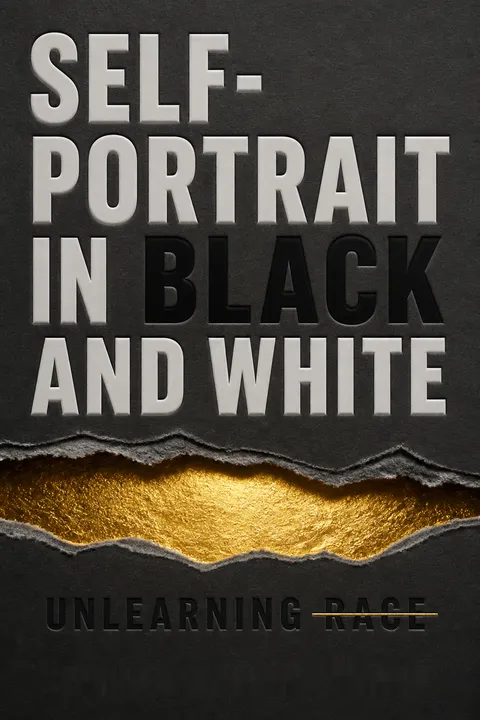
Self-Portrait in Black and White explores race, identity, and the author's personal journey as a biracial man. Reviews praise Williams' thoughtful approach and challenging ideas about transcending racial categories. Some readers found the book thought-provoking and well-written, while others felt it lacked practical solutions. Critics appreciated Williams' nuanced perspective on race relations but questioned the feasibility of his proposed "post-racial" vision. The book sparked debates about identity, racism, and the future of race in America, with readers divided on its ultimate message and impact.
People Also Read







Glossary
one-drop rule
ancestry determines racial classificationA U.S. convention that classified a person with any known African ancestry as Black, regardless of appearance or the proportion of ancestry involved. Williams describes it as central to his early understanding of himself and his expected children. The rule reflects a social and legal history, not a biological boundary.
hypodescent
assigning mixed ancestry downwardA rule of classification that assigns a person of mixed ancestry to the socially subordinated group. In the U.S. context discussed by Williams, children with African ancestry were often classified as Black, including when one parent was white. The rule helped preserve a rigid hierarchy despite widespread ancestry crossing its supposed boundaries.
racecraft
making race seem naturalA term associated with historians Barbara and Karen Fields for the everyday practices and assumptions that make race appear like a natural fact. Williams uses the concept to distinguish racism, which produces unequal treatment, from race, which is often treated as the explanation for that treatment. The term directs attention to how belief and practice sustain racial categories.
double consciousness
seeing oneself through hostile eyesA concept developed by W. E. B. Du Bois to describe the divided awareness of Black Americans who experience themselves as individuals while also seeing themselves through a society that devalues them. Williams uses it to explain how racial hierarchy can shape self-image and desire, including judgments about which partners seem desirable or socially valued.
colorism
bias favoring lighter skinPrejudice or unequal treatment based on skin tone, often operating within a racial or ethnic group as well as between groups. Williams recognizes that lighter skin can bring practical advantages and that this affects how people experience racial identity. Colorism shows that rejecting racial categories does not automatically remove inequalities organized around visible appearance.
sonderweg
a presumed special historical pathA German term meaning a special or separate path, used in historical discussion to explain Germany’s distinct national trajectory. Williams applies the idea by analogy to accounts of America that treat the country’s founding sins as determining every later outcome. He warns that a single historical essence can make people seem like puppets of the past.
retiring from race
refusing racial identity as essenceWilliams’s description of rejecting race as a defining identity while retaining affection for family, cultural traditions, and historical memory. He distinguishes this stance from passing, which seeks acceptance by pretending to fit a racial system. Retiring from race means refusing the system’s authority over self-definition, not claiming that discrimination or racialized institutions have disappeared.
Download PDF
Download EPUB
.epub digital book format is ideal for reading ebooks on phones, tablets, and e-readers.








