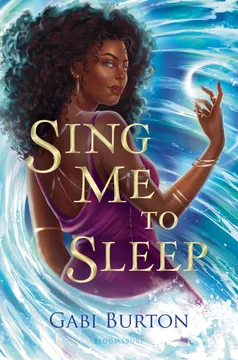


Plot Summary
A Siren Takes the Contract
In a Vanihail pub, seventeen-year-old Saoirse Sorkova uses her beauty and a wordless song to make a man drink poison, then disguises her face with a witch-made bead and collects her fee from a hidden employer. She kills for the Raze, an organization that targets powerful fae, though her work is credited to the famous assassin Spektryl.
At home, the money goes to her adoptive family, especially twelve-year-old Rain, whose human nature must stay concealed in a kingdom that punishes humans and despises creatures beyond its favored species. Saoirse has trained for years to become a soldier, but she also admits to herself that killing gives her a dangerous rush. Her new assignment and her private appetite already pull in opposite directions.
Saoirse’s first act establishes a contradiction rather than a simple secret identity: she can recognize the violence in her work and still crave it. Her family’s poverty makes the contract legible as care, but that explanation does not contain the pleasure she takes in control. The disguise bead turns identity into something managed minute by minute, while her ability to taste emotion makes other people’s vulnerability almost tactile. This opening makes the danger intimate. Saoirse is not merely hiding from a hostile regime; she is also trying to live with an appetite that her own love cannot reliably restrain.
First Place, Then Blackmail
Before graduation, Saoirse refuses to let Rain attend the brutal military Ranking and gives her a spare disguise bead. Her friend Carrik, a gifted soldier reduced to guarding trainees after his human mother was executed, brings Rain to watch anyway.
Saoirse wins the contest, disarming three rivals and reaching the finish first, but rejects the Prince’s personal guard position to keep her family away from the Royals. Then Rain reveals a silver envelope demanding five hundred ranis and threatening to expose that she is human.
The red seal bears the Royal insignia. Saoirse takes Rain home, promises to handle the threat, and decides she must enter the Palace to learn who can reach her sister. Her ambition finally wins the Ranking, but protecting Rain immediately forces her to surrender the safer future she wanted.
The Ranking is a public test of ability, but Saoirse’s refusal shows that achievement alone cannot make power safe. She wins precisely the position that could lift her family out of poverty, then rejects it because the Palace represents danger to Rain. The envelope changes that calculation: secrecy, once a shield, becomes a vulnerability someone else can exploit. Carrik’s decision to bring Rain is careless but rooted in affection, complicating Saoirse’s instinct to treat protection as a matter of control. Her choice to enter Royal service is therefore both sacrifice and self-assertion, driven by a threat she cannot ignore.
The Prince’s Dotted Line
Saoirse asks Enforcer Anarin Arkin to reconsider her rejection, and Prince Hayes personally approves her as his new guard. His salary can cover Rain’s costly schooling and replace the ransom money, but his questions about Saoirse’s supposed water sickness make her wary.
At the Palace, she meets head guard Zensen, the dismissive Erasmus, competitive Jeune, earth fae Devlyn, and witch Laa’el. After paying the blackmailer at the Kivren Waterfront, Saoirse works her first night shift during Hayes’s party.
Jeune breaks into her room as part of the guards’ initiation prank, and Saoirse catches her stealing a candle. The next night, Saoirse accepts a new Raze assignment and kills Felix Fleming in a river, unaware he is Hayes’s closest friend. A later investigation will make that kill impossible to keep separate from the Prince.
The Palace rearranges Saoirse’s private compromises into a daily job. Her contract offers a concrete form of care for Rain, yet the Prince’s attention threatens the careful boundary between service and intimacy. The guards’ prank exposes how the institution tests newcomers through intrusion, a practice Saoirse experiences not as harmless bonding but as a violation of the privacy she depends on. Meanwhile, killing Felix repeats her old routine inside a new moral landscape. She does not know whom he matters to, which reflects her deliberate refusal to know her targets. That refusal has consequences waiting just beyond her awareness.
Portraits of the Extinct
A new envelope orders Saoirse to investigate King Larster’s creature cullings. She questions Royal investigator Grisham Haverly, then follows him to a concealed tower in the Palace, where portraits depict giants, dryads, and other creatures once living inside Keirdre.
One painting shows a silver-eyed siren. Grisham explains that Larster ordered the creatures killed after they resisted the barrier. Saoirse’s auntie Drina confirms the purge and reveals that she and her partner Aiya once sheltered many orphaned creatures, who are now scattered across Keirdre in disguise.
Saoirse realizes the Royals’ official history has erased entire peoples, and the Royal seal on her blackmail notes appears to come from Hayes’s broken stamp. The knowledge makes her feel less alone, but it also draws her deeper into a Palace built on secrets.
The portrait tower makes historical erasure visible: the victims are present as images, preserved by the same palace whose official story denies their former lives. Saoirse’s discovery that other creatures survived changes isolation into a political fact. Her identity is no longer an exceptional mistake in a world of three species; it belongs to a hidden population shaped by state violence. Drina’s silence is protective, but it repeats the same concealment Saoirse resents. The gallery also complicates beauty: the siren portrait resembles Saoirse, yet the story attached to it reduces her kind to a threat. Evidence expands her sense of belonging while tightening the danger around her.
Hayes Reveals the Barrier
While pressing Hayes for information about the name Szeiryna, Saoirse learns that his dead older brother, Finnean, was lured to his death by a siren. Hayes explains that Szeiryna was a siren sector Larster burned, and that the barrier was not created by the earlier King as everyone was taught.
Larster tied his own life, Queen Ikenna’s, and Hayes’s to it, allowing the Royal family to sustain the prison surrounding Keirdre. The revelation gives Saoirse’s blackmailer the knowledge needed to threaten the Royals.
Soon afterward, Felix is found dead at the barrier, and Hayes’s grief becomes impossible for Saoirse to dismiss. She accepts his invitation to join the murder investigation, then learns the King’s investigators are considering a beautiful woman seen with two victims. Laa’el sketches that woman from a witness’s memory: Saoirse herself.
Hayes’s disclosure transforms the barrier from background mythology into a living political mechanism. The Royal family is not simply ruling inside a protected kingdom; its members are the supports of the structure that confines everyone. That knowledge explains why the Resistance seeks access to them, while also making each Royal death potentially catastrophic. Saoirse receives the secret through trust, not force, an important shift in their relationship. Yet she cannot honor that trust because Rain is being used against her. The investigation’s portrait of the unknown woman closes the distance between her two lives: the assassin she treats as a job is now the person Hayes is hunting.
The Case Points Home
Saoirse studies the King’s list of suspected Spektryl victims and notices that several had ties to Hayes’s birthday celebration. Brogan Nash was linked to the catering, Hayliss Velkner built ships, and other victims served as event planners or decorators.
Okkler and Henley also had connections to the Royal guards, suggesting the killings were not random contracts but preparations for an attack on the family. Hayes promotes Saoirse to junior guard and makes her lead investigator, trusting her analysis without knowing she killed the victims.
Their investigation brings them closer, even as each new connection deepens her guilt. Elsewhere, Saoirse kills Trellis Ruster after learning that he bullied Rain and called her family cursed. When Rain discovers the murder, she confronts Saoirse’s lies and leaves, while Saoirse’s parents learn what she has done.
The victim list turns the plot from a murder mystery into a logistical map. The dead were selected not only for who they were but for the access their jobs could provide to a future Royal gathering. Saoirse’s investigative skill is real, even as it exposes her own role in the pattern. Hayes’s promotion intensifies the irony: he entrusts the case to the person best positioned to solve it and most compromised by its evidence. Trellis’s murder marks a separate moral breach. Saoirse acts from protective rage, but the consequence is not relief. Rain’s departure strips away the story Saoirse has used to justify her violence as necessary care.
A Murder at Haraya
At Haraya Hall, Enforcer Anarin executes a young human, Aris Milner, for possessing Dreamweaving beads, staging the killing for an approving fae audience. Saoirse sees how law turns human suffering into public entertainment, and the spectacle sharpens her distrust of the system she once hoped to rise within.
Afterward, her blackmailer confronts her and demands the location of Szeiryna. Saoirse explains that it lies beyond the barrier and that the Royals’ lives sustain the boundary. She has promised Hayes to keep this secret, but the threat to Rain outweighs that promise.
The blackmailer leaves with the answer. Soon after, Hayes’s birthday rehearsal becomes a near-fatal attack: a water fae drags him from the ship, and Saoirse dives in to pull him back to shore. Her rescue earns her senior-guard status and Hayes’s trust.
Aris’s execution makes the kingdom’s hierarchy physical: a human is punished not in private but before spectators who treat death as civic reassurance. Saoirse’s anger is not abstract; it comes from watching someone young lose his life for a system that also forces her family to hide. Her decision to tell the blackmailer about the barrier is coerced, yet it remains an action with consequences. The ship attack then reverses the emotional direction of the section. Saoirse protects the Prince whose family embodies the regime, not because the regime deserves protection, but because Hayes himself has become someone she cannot let die.
The Face Beneath the Bead
On the Sea Queen, Saoirse takes a tiny dose of xaladran, a dangerous witch poison that quiets her urge to kill around open water. She dances with Hayes, whose growing affection she has tried to keep at a distance.
When her disguise bead unexpectedly fails, the guests see Saoirse’s unmarked face and a witness recognizes the woman linked to the murders. Hayes orders her arrested for murder, treason, and plotting against the Royals. Before guards seize her, Saoirse gives him a warning note and spots two conspirators breaking the ice sculpture to retrieve hidden blades.
She shoots them before they can reach the King and Queen, but Devlyn binds her and takes her belowdecks. Jeune frees Saoirse, believing she saved the Royals rather than attacked them. Laa’el then reveals she and Erasmus serve the Resistance and intend to kill the Royal family.
The bead’s failure collapses Saoirse’s two identities in the most public space available: the face she uses as a weapon becomes evidence against her. Her dance with Hayes is emotionally genuine, which makes the exposure more than a tactical setback. Yet she still chooses to protect the Royals from the hidden blades, acting against the political logic of the people who have manipulated her. Jeune’s decision to help her matters because it rests on observed action rather than a clean record of trust. Laa’el’s disclosure reveals the Resistance’s desired future as coercive too. Oppression by the Crown does not make every revolt liberating.
Rain Becomes the Bargain
Laa’el and Erasmus reveal that Saoirse’s employer was never the Raze. The Resistance used her assassinations to remove people connected to the birthday party, while allowing the Raze to take the blame. When they demand Hayes’s location, Saoirse escapes their pressure long enough to learn that Rain has been kidnapped.
In a Dreamweaving visit, Spektryl shows her the bound girl and demands Hayes’s death by midnight. Laa’el orders Saoirse to deliver the Prince’s corpse as proof. Saoirse finds Hayes hidden aboard the ship and finally admits she is a siren, that she killed Felix, and that she has lied throughout their relationship.
Though Hayes is furious, he agrees to help her save Rain. They seek Drina’s help, but unbinding his life from the barrier would take weeks. Instead, Drina prepares luneweed, a poison Saoirse can hold in Hayes’s throat to imitate death.
The revelation that Saoirse’s contracts served the Resistance reframes her complicity without erasing it. She was deceived about the employer, but she chose not to ask who her targets were. The threat against Rain turns that history into an immediate demand: kill the person Saoirse has grown to love. Her confession to Hayes is therefore not a bid for easy forgiveness; it is the minimum truth required to act together. Hayes’s willingness to help does not restore trust automatically. Instead, their alliance rests on a narrow, urgent fact: both of them want Rain alive, and the available plan carries a real risk of killing him.
The False Death Fails
At the dock, Carrik appears as Spektryl, holding Rain captive. Saoirse recognizes him by his mother’s distinctive dagger and learns he helped orchestrate the blackmail, the party attack, and the attempt to force Carrik into an Enforcer’s position.
Saoirse gives Hayes the luneweed, stopping it before it can reach his stomach, and he collapses as if dead. Carrik and Laa’el demand the hidden Royals’ location, threatening Rain with a blade. Saoirse reveals the secret tower in the Palace, then pushes Hayes into the sea as ordered.
Carrik throws Rain after him with a weight tied to her waist. Rain frees herself, removes the weight, and finds Hayes; Saoirse brings them both to the dock. Rain and Saoirse reconcile, and the survivors hurry toward the Palace before the Resistance can reach the King and Queen.
Carrik’s betrayal hurts because he did not enter Saoirse’s life as a stranger or a rival; he knew the shape of her loyalties and used that knowledge to control her. The staged death is a desperate attempt to satisfy the Resistance without sacrificing Hayes, but it cannot protect Rain from Carrik’s second demand. Rain’s escape is a decisive correction to Saoirse’s habit of treating her sister as helpless. The rescue becomes reciprocal: Saoirse reaches for both of them, but Rain has already acted on her own. Their reconciliation begins not with an absolution of Saoirse’s violence, but with Rain’s demonstrated agency.
A Song Commands Vanihail
With Carrik and Laa’el racing toward the Palace, Saoirse uses an amplified song to summon hundreds of Vanihail residents and orders them to protect the Royals and stop the attackers. She rides with Hayes toward the Palace, while Jeune runs ahead on foot.
Saoirse lets her power expand without surrendering to its murderous urge, even calling down a storm as the crowd floods the streets. At the hidden portrait room, her followers restrain Carrik and Laa’el, but Erasmus is already inside with King Larster and Queen Ikenna.
Saoirse and Hayes reach the tower as Erasmus fights the King. Because cotton blocks his ears, Saoirse cannot command him directly; instead, she uses water to distract and weaken him. Hayes and the Royals join her, drowning Erasmus long enough for Saoirse to strike him. Erasmus’s final blow kills Larster.
Saoirse’s song has previously operated as a private weapon, turning one susceptible person into an instrument of her will. Here, its scale changes the moral stakes: a city moves because she commands it, and she must choose what to ask of that power. She directs people toward protection rather than death, a meaningful act of control that is not simply suppression of her nature. The storm and the crowd are also practical, not merely spectacular. They buy time against a conspiracy already inside the Palace. Larster’s death comes through Erasmus’s final attack, so the old King falls not to Saoirse’s revenge but to the struggle his own regime and opponents have created.
She Spares the Traitors
After Saoirse kills Erasmus, the water around her reignites the urge to kill Carrik and Laa’el. She reaches the captured pair, but Hayes confronts her with the harm she has done, including Felix’s death. He argues that she cannot demand understanding for her own lies while treating Carrik’s betrayal as uniquely unforgivable.
Saoirse does not spare Carrik because she has forgiven him; she turns away because she cannot bear Hayes’s disappointment. Jeune and the others keep the captives alive for questioning. Three days later, Hayes has become King, while Saoirse and her family are hidden in a safe house.
At his first public meeting, Hayes declares stricter enforcement of his father’s laws and names Saoirse a fugitive, apparently preserving the old order. In private, he explains the political calculation and pardons her, admitting his choice is personal as well as royal.
The choice not to kill Carrik is an early form of responsibility, but the motive is deliberately imperfect. Saoirse is not suddenly free of rage or grief; she is moved by the prospect of Hayes’s judgment. That distinction keeps the scene from offering moral transformation as a clean victory. Hayes’s first public policy announcement similarly separates outward performance from private intention. He uses the language of continuity to prevent a fragile kingdom from fracturing, while privately accepting the cost of forgiving Saoirse. His pardon is loving and self-interested at once, a political decision shaped by attachment rather than an abstract claim that her victims do not matter.
Beyond the Barrier
After the coronation, Hayes gives Saoirse letters found in his father’s office, written by Reyshka Harker, the supposedly mythical woman who discovered a route beyond the barrier. Her correspondence proves that Keirdre’s boundary may not be the only way out, and Hayes wants Saoirse to find Harker and learn what waits outside.
The mission would help him judge the threat from the army the Resistance claims is gathered beyond Keirdre, while avoiding an immediate attempt to destroy the barrier and risk the lives tied to it.
Saoirse has spent the story hiding her identity and placing Rain’s safety above everything else. Now she accepts a journey that could offer Rain a life beyond secrecy. Her answer closes the book on a departure, not a completed escape: the next step is hers to take.
The ending replaces the false binary of preserving Keirdre or destroying it with a more difficult task: gather knowledge before deciding what freedom should cost. The letters suggest the barrier has a history more complicated than either Royal propaganda or Resistance certainty. Saoirse’s choice to leave is still framed through Rain, but it also marks a change in how she understands protection. Hiding her sister has kept her safe at a price; discovering another world might offer more than survival. The book ends with a promise of action rather than resolution, shifting Saoirse from an instrument used by competing factions into someone entrusted with investigating their claims.
Analysis
Sing Me to Sleep makes secrecy both a survival skill and a source of moral damage. Saoirse hides her face, her species, her murders, and the truth about Rain, each concealment intended to protect someone. Yet the habits that keep her family safe also isolate her and make it easier for others to use her. Her refusal to ask who the Raze’s victims are is not merely a plot oversight; it is a chosen narrowing of attention that lets appetite masquerade as duty. The story’s sharpest challenge to her self-image comes when Rain names the cost of being protected: love without trust can become control.
The novel also resists a simple opposition between corrupt monarchy and righteous rebellion. Larster’s regime has erased species, punished humans, and used law as spectacle. The Resistance correctly identifies Keirdre as unjust, but its willingness to kill indiscriminately and impose a new order repeats the coercion it claims to oppose. Hayes’s development matters because he must move from private decency to public responsibility. His first public posture preserves the old laws, while his private pardon and mission to learn what lies beyond the barrier suggest a slower, more strategic change. The tension between these positions remains unresolved at the ending.
Saoirse’s power is similarly double-edged. Her song offers command, but the narration insists that command can be intoxicating even when she believes her cause is just. The crowd scene becomes a test of whether power can be directed without becoming domination. Her growth is not a cure for violent instinct; it is the beginning of accepting that instinct does not erase choice. The conclusion extends that problem beyond romance or family. If freedom is possible, the characters must discover what waits beyond the barrier before they decide who should bear the cost of opening it.
People Also Read









Characters
Saoirse Sorkova
Hidden siren soldierSaoirse is a seventeen-year-old siren raised by an adoptive fae family in Vanihail. She conceals her true face with a keil bead and passes as an ikatus, a fae without elemental powers. Brilliant at combat, fiercely devoted to her younger sister Rain, and determined to rise through the military, she is also drawn to the lethal pleasure of her song and her control over water. She often describes dangerous choices as sacrifices for her family, though ambition and appetite complicate that story. Her sharpness protects her from pity and scrutiny, but it also keeps others at a distance. The central struggle for Saoirse is not whether she is good or bad, but whether she can accept responsibility without reducing herself to a monster.
Hayes Finnean Vanihail
Curious Crown PrinceHayes is the young heir to Keirdre, admired for extraordinary beauty and accustomed to being watched, obeyed, and kept apart from ordinary life. He uses parties, humor, and flirtation to distract from loneliness and from his strained relationship with his father. His curiosity about Saoirse is genuine, though he initially mistakes attention for connection and avoids confronting the kingdom’s injustices. As he learns what his privilege has concealed, he begins to use his authority in small but consequential ways. Hayes is neither an innocent bystander nor a copy of his father. His potential rests in whether he can turn compassion and personal conviction into durable political choices.
Rain Sorkova
Saoirse’s beloved sisterRain is twelve, human, and raised as Saoirse’s younger sister in a family where species and blood ties do not determine love. Her disguise bead lets her pass as fae, while her schooling demands secrecy and careful protection. Warm, imaginative, and eager for friendship, Rain has spent much of her life accepting Saoirse’s protection without always being allowed to choose her own risks. She admires her sister but is not blind to Saoirse’s evasions or controlling habits. Rain’s emotional strength comes from seeing beyond the identity Saoirse presents, even when that honesty hurts. Her desire is not simply to be kept safe; she wants to participate in the lives of the people she loves.
Carrik Solwey
Gifted fallen soldierCarrik is a skilled water fae and Saoirse’s closest friend from the Barracks. His mother was human, and the authorities punished her for having a child with a fae, leaving Carrik to watch over younger soldiers instead of pursuing the military career he had earned. He hides disappointment behind teasing and treats Saoirse as an equal, which makes their friendship one of the few places where she can relax. His family history gives him a personal understanding of prejudice, but it does not make his responses to injustice simple or predictable. Carrik is shaped by grief, ambition, and a powerful need to belong, especially after the kingdom stripped him of the future he expected.
Saoirse’s mother
Earth-fae adoptive motherAn earth fae from Kurr Valley, Saoirse’s mother helps run the family mill and gives Saoirse and Rain a home despite neither being her biological child. Her care is practical and expressive, often visible in the plants she tends. She fears Saoirse’s dangerous instincts and tries to protect Rain, sometimes creating painful distance between the sisters. Her love is firm, but it cannot erase the family’s anxiety about what Saoirse may do.
Saoirse’s father
Water-fae millerA powerful water fae who works the family mill, Saoirse’s father worries about her exposure and disapproves of her paid killings. He is protective of Rain and blunt about the danger Saoirse creates, yet his fear never cancels his love. His response to Saoirse’s violence makes clear that family acceptance does not mean pretending her choices are harmless.
Y’ddrina, Drina
Witch aunt and mentorDrina is a witch who helped raise Saoirse before the girl joined her adoptive family. She crafts the disguise beads and teaches Saoirse how to use Dreamweaving, while her illegal potion business with Aiya keeps them both afloat. Practical and affectionate, Drina withholds dangerous history in the belief that silence will protect Saoirse. Her protection is loving, but it repeats the secrecy that Saoirse is trying to outgrow.
Aiya
Witch’s earth-fae partnerAiya is Drina’s partner and a gifted earth fae whose garden supplies the herbs for their potion business. She offers Saoirse warmth and practical aid, including a dress and a dangerous remedy when the young woman needs help controlling her siren instincts. Because the law forbids witches and fae from forming recognized households together, Aiya and Drina live in the shadow of the same species rules they quietly resist.
Jeune
Competitive water-fae guardJeune is a talented water fae in Hayes’s guard, confident, competitive, and more observant than she first appears. She initially tests Saoirse with an intrusive initiation prank, then tries to build a friendship through running and sparring. Jeune respects skill and does not treat Saoirse’s apparent lack of affinity as weakness. Her blunt humor covers a private life shaped by laws that deny her relationship the recognition and safety granted to other couples.
Laa’el
Witch in the Prince’s guardLaa’el is a sharp-tongued witch serving in a Royal guard structure that bars her from senior rank. She is skilled in mental magic and refuses to pretend the hierarchy is fair. Her arguments expose the selective nature of laws that restrict witches while still relying on their craft. Laa’el is politically committed, forceful, and willing to challenge people who assume her presence is a favor rather than proof of ability.
Zensen
The Prince’s head guardZensen is a disciplined fire fae who leads Hayes’s personal guard. He values procedure, reliability, and clear command, and he often acts as the practical counterweight to Hayes’s impulsiveness. His reserve can make him seem inflexible, but he treats the protection of his people as a serious responsibility and expects guards to show restraint even when dealing with prisoners.
Devlyn
Earth-fae palace guardDevlyn is an earth fae in Hayes’s guard, sociable and eager to make the Palace feel less forbidding. He teases Saoirse and initially joins the guards’ intrusive initiation game, mistaking it for harmless fun. His loyalty to the Prince is strong, and he can become suspicious when Saoirse’s actions do not add up. Devlyn represents the ordinary guard culture Saoirse must learn to navigate.
Erasmus
Senior air-fae guardErasmus is an older air fae who serves in Hayes’s guard and distrusts the appointment of a young newcomer. He prizes rank, tradition, and what he regards as competence, often voicing the Palace’s species-based assumptions. His contempt makes him a source of tension for Saoirse, who must prove her ability while refusing to accept his definition of who deserves authority.
King Larster
Authoritarian rulerLarster is Keirdre’s long-reigning king, a powerful and calculating fae whose rule rests on strict species hierarchy and a carefully controlled account of the kingdom’s history. He treats dissent as a threat to order and keeps his son at a distance from real political power. His polished authority conceals a governing system that depends on exclusion, fear, and the suppression of inconvenient truths.
Queen Ikenna
Silent Royal presenceIkenna is Hayes’s mother and Keirdre’s queen. She shares her son’s striking beauty but rarely speaks in public, making her difficult for others to read. Her silence is part of the Palace’s atmosphere of restraint, where even the highest-ranking figures conceal what they know and feel. She remains a powerful presence in the political life surrounding Hayes.
Anarin Arkin
Vanihail’s EnforcerAnarin is the formidable Enforcer of Vanihail and the officer who oversees the military Ranking. She is accomplished, commanding, and accustomed to being obeyed. Her authority initially represents the career Saoirse hopes to earn, while her public role in the kingdom’s justice system exposes how official power can turn punishment into spectacle.
Grisham Haverly
Royal investigatorGrisham works for the King’s investigative team and handles cases involving disappearances and Royal concerns. His attraction to Saoirse makes him a vulnerable source of information, though he is still part of the machinery searching for the killer she is concealing.
Spektryl
Feared assassin’s nameSpektryl is the name attached to the Raze’s most prolific killer, a figure whose reputation allows others to claim or misdirect responsibility for assassinations. The Raze’s silence about the assassin’s identity makes the name useful as both a threat and a cover.
Sherri, Sherida
Jeune’s human-fae wifeSherida is Jeune’s longtime partner, half human and half fae. Their relationship is loving but hidden because the law refuses to recognize their union. She uses a disguise bead to pass as fully fae, sharing the daily danger Saoirse’s family knows well.
Rienna Kasselton
Saoirse’s rival soldierRienna is a fierce Delta who resents Saoirse’s success at the Barracks. Competitive and quick to use her water affinity, she treats the Ranking as a personal contest and sees Saoirse as the obstacle between her and first place.
Aris Milner
Human accused of magicAris is a young human brought before a public sentencing for possessing forbidden Dreamweaving beads. His case reveals how the kingdom turns human contact and communication into punishable offenses, and how little power a defendant has before a fae audience.
Plot Devices
Siren song and water
Compulsion with a costSaoirse can sense emotion, lure people with her voice, and command water with a strength beyond that of ordinary water fae. Near water, however, its call intensifies her urge to hunt and kill. Her song makes people unusually susceptible to her instructions, from a single mark to a crowd. The story uses this power both as an advantage and as an ongoing danger: Saoirse can manipulate others, but every use raises questions about consent, control, and whether she can resist the impulses that accompany her abilities.
Keil beads
A wearable disguiseWitches carve runes into clay beads that alter a wearer’s appearance for a limited time. Saoirse uses one to hide her siren face and pass as a scarred ikatus; Rain uses one to conceal that she is human. Beads are valuable, require replacement, and can fail when their magic fades or is interfered with. Their practical role in concealment makes identity a daily task rather than a stable fact. They also create a clear vulnerability: when a bead stops working, the person beneath it can become visible to a society that may punish what it sees.
Lairic Dreamweaving
A path into mindsA lairic bracelet allows Saoirse to enter the consciousness of anyone whose rune configuration she knows. She can observe and speak within that person’s dream or mental world, but she cannot physically affect the person there. A witch can draw her from the dream into the physical room, allowing them to interact directly. The bracelet lets Saoirse question people at a distance and later verify Rain’s presence, but it cannot replace real communication or protection. The method also depends on rare, illegal magic, which makes each use a risk as well as a source of information.
Xaladran and luneweed
A dangerous pauseXaladran temporarily dulls Saoirse’s siren instincts, giving her a short period of relative calm near water. Its dose must be measured carefully because too much can permanently strip away her abilities. Luneweed is a separate poison, fatal to fae and without an antidote. Drina’s plan uses Saoirse’s command over water to keep a small amount from reaching Hayes’s stomach, making him appear dead without killing him. Both substances turn bodily risk into a tactical tool, but neither offers a reliable or consequence-free escape.
The living barrier
Royal lives sustain KeirdreKeirdre’s barrier is tied to the lives of the Royal family, who provide its continuing protection. The public story credits a former king’s sacrifice and presents the barrier as permanent, while the hidden truth makes its strength dependent on living people. This mechanism drives the Resistance’s plan, forces Saoirse to weigh the Royals’ survival against the possibility of freedom, and gives Hayes’s life unusual political significance. The barrier is not simply a wall around the kingdom; it is a system linking captivity, royal power, and physical risk.
Download PDF
Download EPUB
.epub digital book format is ideal for reading ebooks on phones, tablets, and e-readers.








