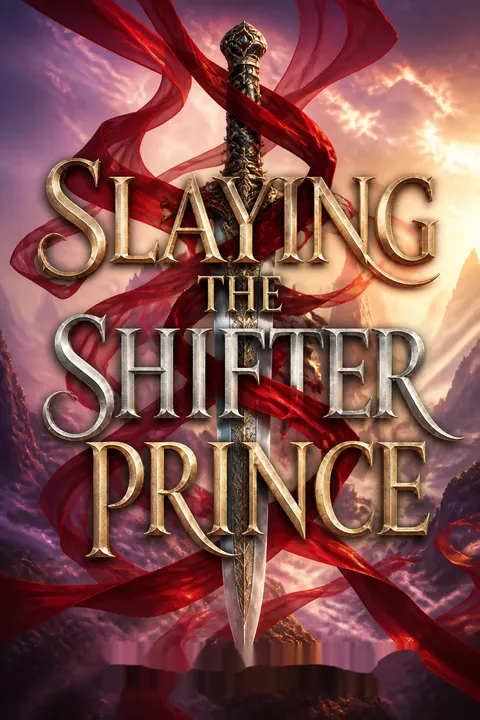


Plot Summary
A Decade in the Wings
Ten years after finding her sister Zinnia dead, Zita has built her life around one purpose: killing the fae prince she believes responsible. She has trained as an aerialist in the Gilded Suns, copied Zinnia's stage presence, and saved for an iron dagger, the one weapon that can kill a fae.
Her lover and fellow performer, Eric, knows the plan and has helped her prepare. At a performance before Prince Sepher and his Court of Monsters, Zita waits for the chance to draw him into a private show. She expects to die that night, but only after making him pay. The revenge that has kept her moving is also the only thing she expects to feel.
Zita has mistaken endurance for recovery. She has made her body skilled, beautiful, and useful, yet treats it chiefly as an instrument for reaching the man she blames. Reproducing Zinnia's stage image keeps her sister close, but also makes Zita's own identity harder to see. The planned assassination is therefore both a plot and a psychological wager: if violence can restore the feeling grief took from her, then she can keep living without facing the loss directly.
The Dagger Misses
Zita gives Sepher a dazzling aerial performance, then enters the private room where she has hidden her iron dagger above the silks. She draws the prince close, drops toward him with the blade, and finds both her wrists caught before she can strike. Sepher's guards bind her, and Eric confirms that she intended to murder him.
He says he acted to protect the troupe, though the prince pays him for the warning. Sepher sentences Zita under fae law, raises his sword, and cuts her shoulder instead of her head. He claims her life as his own, frees her hands, and tells her she will live as his captive. Her failure leaves her alive, but in the hands of the man she came to kill.
The scene turns Zita's expectation of a clean, chosen death into a captivity she never planned for. Eric's betrayal is especially destabilizing because he has been allowed inside the private machinery of her revenge. His stated concern for the troupe may be sincere, but the payment makes the act harder to trust. Sepher's reprieve is not kindness: by sparing her while claiming ownership, he converts the power imbalance into an ongoing game, forcing Zita to experience what she had intended to end in one stroke.
A Collar for the Court
Sepher takes Zita through his ruined palace to Celestine, his elegant, warm-hearted companion, who cleans her wound and questions the prince's judgment. The next morning, Celestine dresses Zita for the Court of Monsters, where Sepher publicly presents her as his pet and fastens a ruby collar around her neck. Zita accepts it without pleading, deciding that refusing his humiliations would give him the reaction he wants.
In the days that follow, he orders her to sit on the floor, serve him, and drink from a glass enchanted to refill until she chokes. She answers with calculated obedience and silence. Celestine's friends treat Zita with curiosity and occasional kindness, offering her a glimpse of community beyond the prince's punishments.
Sepher's court turns private captivity into a public identity, using the collar to make Zita's status visible and enforceable. Her response is not submission in any simple sense: she studies which reactions feed his pleasure and chooses how much of herself to give. The strategy protects her pride, but the court's warmth complicates her understanding of fae. The same world that permits Sepher's cruelty also contains Celestine's care and the friends' ordinary affection, so Zita cannot reduce every fae to a single enemy.
The Hunt Turns Feral
Sepher brings Zita into the forest with Roark, Cadan, and other members of his circle, then declares that they will hunt her. She runs through the pines, first hoping to escape, then hearing howls and finding Sepher pursuing her in a half-feline form. When he pins her, Zita throws dirt into his eyes, grabs a branch, and strikes him with it.
The wood splinters in his hand as he grows into a towering beast-man, revealing the full force of his shapeshifting magic. He corners her, savors her fear, then ends the hunt without letting his companions touch her. Cadan leaves a jar of healing salve where she can find it, an unexplained kindness that unsettles her assumptions.
The hunt makes the difference between Zita's practiced theatrical danger and actual bodily vulnerability impossible to ignore. Her ingenuity with dirt and a branch matters because it is small, immediate resistance, not a plausible victory over Sepher's strength. His decision to stop the others from claiming her keeps the threat intimate and possessive. Cadan's salve introduces a counterexample to the prince's cruelty, while leaving Zita unsure whether care from a fae can be accepted without hidden terms.
Celestine's Fever
After the hunt, Sepher rushes Zita to Celestine's rooms and discovers that his closest companion is dangerously ill. He cancels a long-planned ball, cools her brow, fetches water, and refuses to leave until a healer arrives. Zita helps care for Celestine, and the two share a temporary truce while they wait.
In the quiet, Sepher explains that Celestine has been like a sister since his twin sister died at birth. He describes the absence as a bond he never got to form, and Zita recognizes grief beneath his arrogance. Celestine recovers, but the vigil has shown Zita a loyalty and tenderness in Sepher that do not fit the monster she expects him to be.
Sepher's care for Celestine gives Zita evidence that his capacity for attachment is real, without erasing the harm he has caused her. The shared loss of siblings briefly links their emotional histories, but the parallel is not equivalence: Celestine's illness does not undo Zinnia's death or Sepher's role in Zita's life. The scene matters because it unsettles a defensive certainty. Zita can recognize his tenderness while still withholding trust, a distinction she will need as their relationship grows more dangerous and intimate.
Snow Nearly Takes Her
On a later winter morning, Sepher leaves Zita standing in thin slippers beside a frozen lake while he eats breakfast beneath a covered pavilion. He refuses Cadan's offer of a coat and waits for Zita to ask for mercy. She will not give him that satisfaction, but the cold overwhelms her and she collapses.
Sepher carries her inside, wraps her in his jacket, and uses his body heat and sabrecat form to warm her while healers treat her frostbite. When a courtier suggests putting her out of her misery, Sepher kills him and threatens anyone else who might harm her. Zita wakes alive in Sepher's bed, realizing that his possessiveness has become inseparable from a fierce fear of losing her.
The punishment exposes a limit Sepher has failed to understand: Zita's defiance cannot make a human body immune to the weather. His rescue is emotionally significant precisely because he caused the danger, so care does not absolve him. Killing a courtier to protect her reveals both attachment and the violence through which Sepher expresses it. Zita's survival interrupts her old assumption that death would be an acceptable price for revenge; for the first time, another person's alarm at her loss begins to matter.
The Beach Exposes Her
After Zita recovers, Sepher takes her by stag to a secluded beach, bringing food and blankets instead of arranging another punishment. She cannot relax because she keeps searching for the task hidden inside the outing. Sepher asks what she did for pleasure before the troupe, and Zita can name only work, training, revenge, and sketching the faces of Zinnia and the prince.
He calls the sketches an obsession rather than a hobby, forcing her to confront how little of her life belongs to her. Back at the palace, he supplies paints and new sketchbooks, then prepares a candlelit bath. His attention shifts from torment toward care, and Zita finds that unexpected gentleness more disarming than his cruelty.
The beach makes leisure feel unfamiliar rather than liberating. Zita's inability to rest shows how thoroughly revenge has organized her daily life, while Sepher's observation identifies the cost without yet giving her a way out. His gifts are not neutral, since he remains her captor, but they address a part of her that her revenge plan has neglected: the artist who once made images for memory and could make them for pleasure. His care both opens a possibility and intensifies the danger of attachment.
The Wrong Dead Man
During the bath, Sepher admits that nearly losing Zita made him unwilling to see her die, then gives her intense pleasure while she struggles to keep their intimacy separate from hatred. Afterwards, Zita finally tells him why she tried to kill him: ten years earlier, she saw him standing over Zinnia's body and cursed him so he could never hide his monstrous nature.
Sepher remembers the night and recognizes Zita as the witch who got him exiled. He insists he found Zinnia already dead and took an astrolabe from the scene because it could expose one of his friends. His claim devastates Zita, who has built her life around the certainty that he was the killer. Sepher's rage at the revelation leaves the palace strewn with the bodies of deer.
The revelation does not simply replace one culprit with another. It destroys the story that has given Zita's suffering direction, while showing that Sepher has concealed evidence for the sake of loyalty to his friends. His denial is credible within the fae world's strict limits on lying, but credibility is not comfort: Zita must now hold uncertainty where certainty once stood. Her curse also reveals that she is not merely a human victim of fae power. She changed Sepher's life, though she did not know what her action would cost either of them.
Diamonds Beneath Her Knees
With Zita no longer convinced that Sepher murdered her sister, the prince resumes punishing her and orders her to crawl across scattered diamonds to reach him. She does it on hands and knees, leaving blood in the stones, then kisses his boots and sits on his thigh while he feeds her.
The next day, he intensifies the humiliation with a private punishment involving candle wax and touch, and Zita finds that sensation can silence the guilt and confusion she cannot otherwise bear. She later tells Celestine how she and Zinnia became performers after a childhood spent as orphans, and how Zita's accidental curse drove them from home. Celestine cannot identify the killer, leaving Zita with her grief and no new answer.
The diamond crawl literalizes the relationship's unstable bargain: Zita obeys, but obedience does not mean surrender, and Sepher can still convert her resistance into part of his spectacle. Her responsiveness to pain is not presented as proof that the punishment is harmless; it is one of the ways she regulates feelings too large to manage directly. Telling Celestine her history shifts the story from solitary obsession toward witness and friendship. Yet Celestine's inability to name the killer preserves the central uncertainty rather than offering comfort as a substitute for justice.
She Flies Without Zinnia
Sepher's announced public example turns out to be a performance: he gives Zita a stage and silks, but no costume, expecting her to be shamed into lifting his curse. Instead, she performs naked before the Court of Monsters. As she climbs, spins, and drops through the air, the old training becomes something more than a tool for revenge.
Zita feels the exhilaration her sister once described and smiles without performing that smile for anyone. Sepher watches in open wonder, then closes his expression when she ends the act on her own terms. Once the theatre empties, their anger draws them into a fierce kiss and renewed intimacy. Zita has not forgiven his cruelty, but she has reclaimed the stage as a place where her own pleasure can exist.
The performance separates Zita's skill from the imitation that first shaped it. She can carry Zinnia's legacy without treating herself as a replacement, because the joy she discovers belongs to her body in the present. Nudity, which Sepher intends as humiliation, becomes a medium she controls through choreography and timing. His reaction matters, but it does not create the performance's meaning. For once, Zita's pleasure is not merely a weapon against him or a service for an audience; it is an experience she recognizes as her own.
A Bargain for the Killer
After the performance, Zita proposes that she and Sepher work together: he can help identify Zinnia's killer, and she will lift his curse once the killer is punished. She does not disclose that she has never learned how to undo a curse. Sepher accepts. He brings her old sketchbooks and the astrolabe he took from the alley, admitting that it could incriminate one of his friends.
Zita studies it, but its maker's mark identifies no owner. Sepher lists the friends who were with him that night, giving them a pool of suspects at last. When he notices Zita's filed teeth, he treats the mark she once hid as a sign of power, not a defect. His response lets her feel seen in a way her former lover never managed.
The bargain converts a relationship built on coercion into a shared investigation, but its foundation remains morally unstable: Zita promises a cure she cannot provide. Sepher's admission about the astrolabe also reframes his past loyalty as a choice with consequences for Zita, not simply an old misunderstanding. His admiration of her teeth counters the shame imposed by the human world, yet the scene is not a magical cure for her self-concealment. It is a new form of recognition, and recognition makes the lie harder to maintain.
The Suspects Return
To bring the suspects within reach, Sepher invites his former companions from Luminis to stay at the palace for a reunion. Zita studies the guests, including the formidable Roark, the human-looking brothers Tavin and Thurl, and Mayrie, whose selkie heritage shows in her sharp teeth. During a poker game, she uses flirtation and small touches to read opponents' cards, quietly guiding Sepher toward wins while hiding their cooperation.
She also publicly suggests that Sepher is obsessed with the witch who cursed him, baiting him and distracting the guests from the investigation. The gathering gives Zita access to everyone who might know what happened to Zinnia, but it also puts her within reach of the courtier who may have killed her.
The reunion turns a closed historical wound into a social experiment. Rather than interrogating every suspect at once, Zita and Sepher use their public roles to conceal cooperation and observe how people behave under familiar pressures. Zita's performance skills become investigative tools: she reads attention, posture, and appetite as carefully as she once read an audience. The party also shows the lovers beginning to work as partners without abandoning their antagonistic play. Their shared strategy depends on trust, yet they still perform distrust for the people they are trying to expose.
The Astrolabe Misleads
On the night of Zita's carefully staged performance, she performs before the gathered suspects, then waits alone in the theatre with Sepher's glass and the astrolabe hidden nearby. Cadan approaches and recognizes her as Zinnia's sister. When Zita shows him the astrolabe, he explains that he gave it to Zinnia after asking her to consider a relationship with him.
She had left to think and speak with her sister; he says he heard about her death the next morning. His grief appears genuine, and the fae cannot simply lie, so Zita orders him to leave. The clue she thought would identify the killer instead reveals an innocent connection. Cadan runs, and Zita is left with the old question still unanswered.
The false lead is painful because it turns an object she treated as hard evidence into a trace of Zinnia's own choices and relationships. Cadan's account restores some of Zinnia's life beyond the role of murdered sister: she had been courted, had been asked to make a decision, and intended to consult Zita. That does not settle the crime, but it gives Zita a sharper sense of what she has lost. Letting Cadan go is an ethical act under pressure, not a failure of resolve.
Hair Beneath the Ring
After Cadan flees, Zita climbs to the theatre catwalks to think. Eric appears there, claiming he has come to take her away, and reveals that his love for Zinnia turned to violence when she rejected him. He admits he killed her, then displays the lock of her hair hidden behind the sovereign ring he still wears. Zita draws her iron dagger and attacks.
They fight across the narrow rigging, swinging from bars and dodging each other's blows until both are left dangling above the stage. Zita presses the blade to Eric's throat, but killing him would send them both crashing down. Below, Sepher reaches for her, asking her to take his hand. Zita must decide whether to complete the revenge she has pursued for ten years.
Eric's confession exposes betrayal as more than a single act: he has used intimacy to keep Zita close while hiding the person she was seeking. The lock of hair makes possession tangible, linking his violence to the same desire to control that has shadowed Zita's past. The catwalk turns the moral choice into literal precariousness. Killing Eric would satisfy the old plan, but it would also make Zita's survival contingent on the death she has prepared herself to accept. Sepher's offered hand asks her to imagine a future before she feels ready to believe in one.
The Hand She Takes
Zita keeps the dagger at Eric's throat, but Sepher tells her he wants her alive more than he wants Eric's blood. He also admits he has learned that cursewitches cannot lift their curses, and that he has accepted the permanence of his changed form. When Zita finally lets the knife fall, she curses Eric to receive the justice he deserves and takes Sepher's hand.
He carries her down from the failing catwalks, then kneels and asks her to marry him. Zita tells him her birth name is Marigold and admits that she loves him. She accepts the proposal, not because revenge no longer matters, but because it no longer has to consume every life she might have had.
Zita's choice is not forgiveness for Eric or a denial of what he did. The curse keeps accountability in view while refusing the old equation between justice and self-destruction. Sepher's acceptance of his permanent form also changes the lovers' bargain: he no longer treats Zita as the instrument who must restore his public respectability. Naming herself Marigold marks a step beyond the stage identity built from Zinnia's memory. Love does not erase vengeance here; it gives Zita a reason to imagine surviving it.
Justice Takes the Sword
Sepher travels to Luminis, informs his family of the engagement, and hunts down Eric. He brings him to a Dawn Court dungeon, where Eric confesses to Zinnia's murder. Sepher offers Zita a magically empowered sword that can be wielded in the service of justice, and gives her the choice of execution or keeping Eric alive under her authority.
Eric begs her to spare him in Zinnia's name. Zita orders him to kneel, then kills him with one clean stroke. She tastes the blood, but the act does not restore her sister or provide the peace she once imagined. Instead, the obsession loosens its hold. Zita leaves the dungeon alive, with a future to build beside Sepher.
The ending gives Zita the agency her first assassination denied her, but refuses to pretend that killing can reverse loss. The sword's enchantment translates moral purpose into physical ability, allowing her to execute the decision herself rather than delegate it to Sepher. Eric's appeal to Zinnia cannot speak for her, and Zita refuses to confuse her sister's imagined wishes with her own judgment. Revenge concludes the plot, while the weakening of obsession marks a different resolution: Zita can remember Zinnia without making every remaining day an offering to her death.
Epilogue
Weeks later, Zita has cut her hair and grown back the sharp teeth she once hid. She is beginning to paint Zinnia from memory and to make a life that does not imitate her sister's. Sepher admires the new look, then turns their familiar contest into a private game about obedience and punishment.
Zita plans to visit the beach with him the next day. Her identity is no longer only a stage name or a promise of vengeance; she can choose when to remember, when to rebel, and what kind of pleasure to claim.
The epilogue makes recovery visible through small, bodily choices rather than a sudden cure. Zita cuts the hair she had grown to resemble Zinnia and allows her own teeth to show; painting her sister becomes an act of remembrance that does not require impersonation. Her continued erotic play with Sepher preserves the story's unruly bond, but the crucial change is consent and choice. She can enter the pet dynamic because she wants to, not because her life has been legally claimed. Living well becomes an answer to violence that does not depend on forgetting it.
Analysis
The novel builds its romance around a conflict between performance and recognition. Zita begins by performing a version of herself modeled on Zinnia, believing that a perfect imitation will make revenge meaningful. Sepher, in turn, initially treats her as a captive whose resistance can be turned into entertainment. Their attraction grows through the same contest that makes their relationship ethically dangerous: each reads the other's reactions, tests boundaries, and discovers that being seen can feel as powerful as being controlled.
The story does not treat Zita's grief as a problem solved by love. The revelation that Sepher did not kill Zinnia removes the certainty that has organized Zita's life, while the discovery that Eric was the killer makes her old intimacy with him newly suspect. Sepher's care helps Zita recognize that she has been living as a ghost, but she must still choose what justice means and what kind of life can follow it. Her decision to curse Eric and accept Sepher's hand preserves both accountability and survival.
The book also contrasts two forms of belonging. The human troupe made Zita useful by turning her body into a marketable act, while Sepher's court first makes her a pet through law and spectacle. Neither arrangement is automatically liberating. What changes is Zita's capacity to claim authorship: she chooses when to perform, when to speak her name, when to pursue vengeance, and when to leave the blade behind. The ending's promise is not that sharpness disappears, but that Zita no longer has to spend every part of herself proving she deserves to exist.
Review Summary
Slaying the Shifter Prince receives polarizing reviews (3.60/5 stars). Readers praise its dark, spicy enemies-to-lovers romance featuring genuine hatred between protagonists and creative, kinky scenes. Many enjoy the fast-paced plot, strong female lead seeking revenge, and the MMC's tail. However, critics cite rushed romance development, weak plot, inconsistent characterization, and cringe-worthy moments. The bully romance dynamic appeals to some but alienates others. Reviewers appreciate the Beauty and the Beast retelling and plot twists, though execution feels jumpy. The high spice level and dark themes require content warnings, making it polarizing but addictive for target audiences.
People Also Read










Characters
Zita
Avenging aerialistA human performer with a hidden cursewitch gift, Zita is physically disciplined, observant, and far more comfortable directing a performance than naming her own needs. Her stage persona lets her turn beauty and athletic skill into a means of survival, but it also blurs the boundary between her life and her sister's memory. She approaches danger with stubborn wit, often using compliance as a form of resistance. Beneath that control is a grief she has learned to manage through work and planning. Her central tension is not whether she can be sharp or tender, but whether she can claim an identity that is not defined by what she has lost.
Sepher
Cursed monster princePrince of the Dawn Court and ruler of the Court of Monsters, Sepher is a shapeshifter whose feline traits make him difficult to disguise or overlook. He is theatrical, imperious, and fond of testing people, especially when he senses they will resist him. His cruelty is real, but so are his loyalty to Celestine and his capacity for fierce attachment. He has spent much of his life judged for the nature he cannot conceal, and his pride often turns vulnerability into dominance. Zita challenges his assumption that every relationship is a contest he can control.
Zinnia
Beloved aerialist sisterZita's older sister, Zinnia was a gifted aerial performer who helped raise her after their parents died. She offered Zita practical protection as well as affection, including helping her conceal the signs of her magic. Zita remembers her through sketches, performance habits, and the care they shared backstage. Zinnia's importance lies not only in the loss that drives the plot, but in the example of a sister who made room for Zita when the world did not.
Eric
Performer and confidantA fellow member of the Gilded Suns, Eric is Zita's lover and one of the few people who knows how long she has been planning revenge. He is an accomplished trapeze performer whose physical confidence contrasts with Zita's more private intensity. His closeness gives him influence over her choices, while the troupe's survival weighs heavily on his view of risk. He represents the intimate world Zita has known beyond her sister, and the complicated loyalties that bind performers who travel and work together.
Celestine
Sepher's chosen sisterA graceful fae with dawn-colored eyes, Celestine is Sepher's closest companion and sister in all but blood. She is curious, socially perceptive, and capable of kindness without pretending that her loyalty is neutral. She offers Zita care at moments when the prince has reduced her to property, and she encourages a sense of community among the Court of Monsters. Her warmth is paired with a firm center: she will defend Sepher when she believes he is being judged unfairly, but she does not mistake his power for moral perfection.
Cadan
Sepher's old friendA silver-haired fae who moves between Sepher's court and the capital, Cadan belongs to the prince's older circle of companions. His appearance is comparatively human, and he often serves as a bridge between the Court of Monsters and Luminis. He is attentive to the people around him and sometimes offers help without asking for an obvious return. His connection to Zita is shaped by his knowledge of the past and by the difference between what he can offer her and what she needs to know.
Roark
Sepher's brutal courtierA huge, grey-skinned fae with backward-sweeping horns, Roark belongs to Sepher's inner circle and embraces the Court of Monsters' appetite for spectacle. He is openly predatory toward Zita and treats the prince's punishments as entertainment. His size and confidence make him a tangible threat, while his eagerness to exploit the prince's permission reveals how dangerous a ruler's casual cruelty can become when adopted by followers.
Anya
Horned court companionAnya is a fae woman with branchlike horns and bark-textured fingertips. She moves easily among Sepher's circle and has a frank, playful attitude toward desire. Her presence helps show that the Court of Monsters is a community of distinct people, not merely an audience for the prince's games.
Essa
Aspen-haired musicianAn androgynous fae with pale green hair, Essa is developing new music for a forthcoming ball. Their curiosity about Zita begins with the difference between human and fae bodies, but they also participate in the court's lively exchanges and support its members.
Mayrie, Tavin, Thurl, and Loy
The returning court circleThese fae are among the former companions Sepher gathers at the palace. Mayrie has selkie ancestry, while Tavin and Thurl are handsome brothers who still live in Luminis. Their arrival gives the investigation a defined social circle and shows how some members of the old court remained accepted in the capital.
Plot Devices
Zita's cursewitch gift
Magic with lasting consequencesZita can curse a person by directing her magic at them, a power she first unleashed as a child without understanding its lethal potential. A curse she places on Sepher prevents him from hiding his shapeshifter nature, altering his public standing and setting their conflict in motion. The gift is not a convenient weapon: Zita must be careful with her words, cannot simply undo what she has done, and faces the moral weight of directing harm at another person.
The iron dagger
A weapon against faeIron is forbidden in Albion but can be found through illicit trade, and it can injure or kill fae. Zita spends years acquiring a blade for her assassination attempt, then hides it among the performance rigging so she can strike while Sepher is distracted. Its practical importance makes it a measure of her preparation, while its later presence in the investigation keeps her revenge physically possible even after her original target changes.
The stolen astrolabe
A clue that misdirectsSepher takes a fae-worked astrolabe from the alley where Zinnia was found because he believes it could implicate a friend. Its maker's mark does not identify an owner, so Zita and Sepher use it to test the gathered suspects. It leads Zita to Cadan, who says he gave the instrument to Zinnia, not that he killed her. The object works as evidence of Sepher's past concealment and as a false lead that forces Zita to distinguish a connection to the victim from guilt.
Fae law and bargains
Power made bindingFae rules shape both Zita's captivity and the investigation. Sepher can claim her life after she attempts to kill him, while the fae's inability to lie outright makes testimony carry unusual weight, even though truth can still be withheld or framed. Later, Zita and Sepher seal a bargain to find Zinnia's killer in exchange for a promised cure. These rules give the romance practical stakes: words are not merely emotional declarations but can alter what each character owes the other.
Aerial performance
Art as bait and selfhoodZita's work on silks, hoop, and trapeze serves three purposes across the story. She uses performance to draw Sepher into reach, later takes the stage under the court's gaze, and finally recreates the kind of spectacle that may draw the killer out. The physical discipline behind each movement gives her a source of agency in spaces where she is otherwise controlled. Performance begins as imitation and strategy, then becomes one of the first ways she experiences pleasure that belongs to her.
About the Author
Other books by Clare Sager






Download PDF
Download EPUB
.epub digital book format is ideal for reading ebooks on phones, tablets, and e-readers.








