

Key Takeaways
Treat brain fog as a signal to investigate, not your identity
A personal turning point. Julie Morris opens with an audition she lost after forgetting her lines, part of a longer pattern of memory lapses, brain fog, anxiety, and low mood. Years later, while researching ingredients for a food project, she tried rhodiola and bacopa. She reports feeling more energetic and focused, and noticing a modest improvement in memory. Her experience led her to question whether some struggles she had considered fixed traits might be responsive to changes in brain health.
Change is possible, not guaranteed. The book connects this idea to neuroplasticity, the brain's capacity to adapt as it learns and responds to its environment. Morris does not claim food made her a genius, and her personal experiment is not proof that the same ingredients will help everyone. Persistent or severe cognitive or emotional symptoms still warrant professional evaluation.
What's compelling is the shift from judging a trait to asking what conditions might be affecting it. That resembles a useful approach in behavioral medicine: symptoms can be meaningful signals without being a person's whole identity. The limit is equally important. A single person's before-and-after experience cannot establish cause, and memory, mood, sleep, and stress change for many reasons. The book is strongest when its anecdote motivates curiosity rather than promising a nutritional cure. Food choices can support health, but they should not replace assessment or treatment when symptoms disrupt daily life.
Build cognition on plants, not a miracle ingredient
Three jobs for food. Morris organizes brain support around three aims: keeping ordinary brain function supplied, protecting against damage and decline, and supporting the brain's capacity to adapt. She argues that a varied, whole-food diet rich in plants can serve all three aims better than chasing a single fashionable nutrient. Plants contribute vitamins, minerals, fiber, and phytochemicals, while legumes, whole grains, nuts, seeds, and vegetables provide much of the diet's substance.
A pattern, not a prescription. The book draws on Dan Buettner's Blue Zones research, which identified five regions with unusually long-lived populations. Four populations ate mostly plant foods with small amounts of animal products; Loma Linda's studied community ate vegetarian. The shared pattern included more than food, such as activity and social connection, so longevity cannot be credited to plants alone.
The emphasis on dietary patterns is more defensible than treating a berry or supplement as a brain switch. Nutritional systems interact: a meal supplies many compounds together, and a plant-rich pattern can improve several aspects of diet at once. The Blue Zones comparison is memorable, but it is observational and bundled with culture, movement, and social life. Its best use is as a practical model for a broadly nourishing way of eating, not as proof that one dietary ratio guarantees long life or sharper thinking.
Feed the brain useful fats and protein, but curb refined sugar
Quality beats a single nutrient. The book's broad formula is to include some fat and protein, choose less refined sugar, and eat more plants. It favors monounsaturated fats from foods such as olives, nuts, and avocados, and highlights DHA and EPA, omega-3 fats used by the brain. Plant foods such as flax and chia provide ALA, but the book notes that conversion to DHA and EPA can be limited. Algae-derived oil is offered as a plant-based source of DHA and EPA.
Enough, not endless. Morris argues that most people need adequate, not excessive, protein, and favors plant sources such as lentils and soy. She distinguishes naturally occurring sugars in intact fruit and grains from added and refined sugars, which she recommends limiting. Her case is about overall dietary quality, not eliminating carbohydrates or pursuing a high-fat diet as a universal brain strategy.
This section is useful because it resists simple nutrient slogans: the brain needs energy and fats, but that does not make every high-fat diet beneficial. It also distinguishes whole fruit from a concentrated sweetener, a distinction that makes dietary advice easier to apply without fearing ordinary foods. Nutrient needs vary with health, age, and circumstances, and evidence for a particular macronutrient ratio is less certain than the general case for a balanced diet. The practical message is to improve food sources and patterns before optimizing numbers.
Treat micronutrients and the gut as brain infrastructure
Small nutrients, broad roles. The brain relies on micronutrients, including magnesium, B vitamins, choline, and vitamin D, to support energy use, cell maintenance, and communication between neurons. The book describes a two-year study in people with mild cognitive impairment in which B-vitamin supplementation was associated with half the rate of brain shrinkage. A later study combining B vitamins and omega-3s reported a greater slowing of atrophy. These findings concern studied groups and interventions, not a promise that supplements sharpen every healthy brain.
The gut is connected. The microbiome is the community of microorganisms living in and on the body, especially concentrated in the gut. Morris explains that gut and brain communicate through pathways including the vagus nerve, and that gut health influences immune activity and digestion. Fiber-rich plants and fermented foods are presented as ways to support this ecosystem. The book also specifically recommends B12 supplementation for people eating a fully plant-based diet.
The infrastructure metaphor helps explain why a deficiency can matter more than adding extra nutrients to an already adequate diet. It also places gut health within a larger network rather than treating the brain as isolated. The research examples need careful interpretation: changes in brain-volume measures do not automatically equal a noticeable cognitive benefit, and a small probiotic study cannot establish a general treatment. The strongest action is to eat a varied diet and address likely gaps, especially nutrients that may be difficult to obtain from a particular eating pattern.
Match natural nootropics to a goal, then test cautiously
A targeted food tool. Morris uses nootropic for a substance intended to enhance cognition, and natural nootropics for foods or food-derived products that may support functions such as focus, mood, memory, or calm. She contrasts them with prescription stimulants used without medical need, and presents natural options as additions to a sound diet rather than substitutes for it. Rhodiola is described as supporting energy and focus, ashwagandha as calming, and bacopa as a possible aid to memory, though its bitter powder makes capsules more practical.
Personal response varies. Morris says effects may take days or weeks, and encourages choosing a small number of ingredients rather than using everything at once. Start with a low amount, follow product guidance, and pay attention to the response. She also stresses sourcing, since active-compound levels and product quality can vary. People with health conditions or medications should consult a qualified clinician before using concentrated herbs or supplements.
The goal-matching approach is more sensible than assuming every brain needs the same intervention. It resembles individualized experimentation: define the outcome, change one variable, and observe rather than stacking products until the result becomes impossible to interpret. The caution matters because 'natural' does not mean risk-free, and concentrated extracts are not interchangeable with ordinary servings of food. Evidence also differs sharply across ingredients. The book's framework can guide questions to investigate, but its confident descriptions should not be mistaken for equally strong clinical proof.
Use colorful foods for distinct cognitive support, not magic
Four foods, different strengths. The book spotlights cacao, matcha, purple berries, and turmeric. Cacao provides magnesium and flavonoid antioxidants; matcha combines caffeine with the calming amino acid theanine; dark berries contain anthocyanins, pigments studied for effects on learning and memory; and turmeric contains curcumin, a compound studied for inflammation and cognition. These foods are easy to use in meals, drinks, or snacks, making them more accessible than a shelf of supplements.
Preparation can matter. Morris suggests pairing turmeric with fat and black pepper to improve curcumin absorption. Matcha's caffeine may be unwelcome for people sensitive to stimulants, especially near bedtime. The book describes berry research in older adults and children, and a curcumin trial reporting improved memory, but these studies do not mean that eating one serving will produce a dramatic or universal change.
The culinary approach is a genuine strength: a food has to be enjoyable and repeatable to become part of a routine. Color also works as a useful shopping cue for dietary variety, though it is not a precise measure of cognitive effect. The more exciting claims deserve restraint. Studies of extracts or specific doses cannot be translated directly into ordinary recipes, and findings in one population may not transfer to another. These ingredients are best understood as nutritious foods with plausible brain-related benefits, not edible substitutes for treatment.
Don't confuse stimulant intensity with lasting brain improvement
A temporary lift has costs. Morris warns that prescription drugs such as Adderall or Modafinil, when used without a medical diagnosis, are not equivalent to food-based brain support. The book cites a 2017 international survey in which 14 percent of respondents reported using cognitive-enhancing drugs in the previous year; the reported rate in the United States was 30 percent. It argues that stimulants can produce short-term alertness while carrying risks, including dependence and disruption of the brain's own neurotransmitter regulation.
Coffee is not a free pass. Coffee may improve alertness, but Morris treats caffeine as a stimulant rather than a true nootropic because it can also contribute to jitters, anxiety, and trouble relaxing. Matcha offers caffeine alongside theanine, which the book describes as moderating some unwanted effects. That pairing still contains caffeine, so sensitivity and timing matter.
The distinction between immediate performance and durable capacity is valuable in a culture that often rewards visible intensity. A short-term boost can feel like proof of improved cognition even when it mainly masks fatigue or encourages continued stimulation. The survey shows use, not benefit or harm, and cannot by itself establish how common medically risky use is. The practical point is sound: stimulants deserve respect, and persistent reliance on them may be a clue to examine sleep, workload, health, or medication with professional guidance.
Build a seasonal plate, not a brittle list of forbidden foods
Make the pattern workable. The book's 65 recipes use familiar plant foods across seasons, from lentils, greens, and berries to whole grains, mushrooms, nuts, and seeds. Morris encourages variety, whole ingredients, and colorful plates rather than a rigid menu. The recipes include optional additions such as lion's mane powder or goji berries, but the ordinary meal remains the foundation. A seasonal approach offers a practical way to rotate ingredients and keep that foundation interesting.
Preparation beats panic. The book discusses lectins, proteins in many foods that can interfere with nutrient absorption or cause problems in particular circumstances. It recounts an outbreak after hospital staff ate undercooked kidney beans, then argues that proper soaking and cooking can reduce risks. It rejects the idea that every lectin-containing food should be avoided, noting that beans and whole grains also provide useful nutrients. The larger rule is to avoid extremes and prepare foods appropriately.
This is where the book's nutrition advice becomes a usable kitchen practice rather than a purity test. Repeating simple meals and rotating ingredients can make a broad dietary pattern easier to sustain than tracking a long list of isolated compounds. The lectin discussion is a helpful reminder that dose and preparation matter, but individual sensitivities and medical conditions can require tailored advice. A flexible food routine is not an argument to ignore symptoms; it is a way to avoid letting speculative food fears crowd out nutritious staples.
Analysis
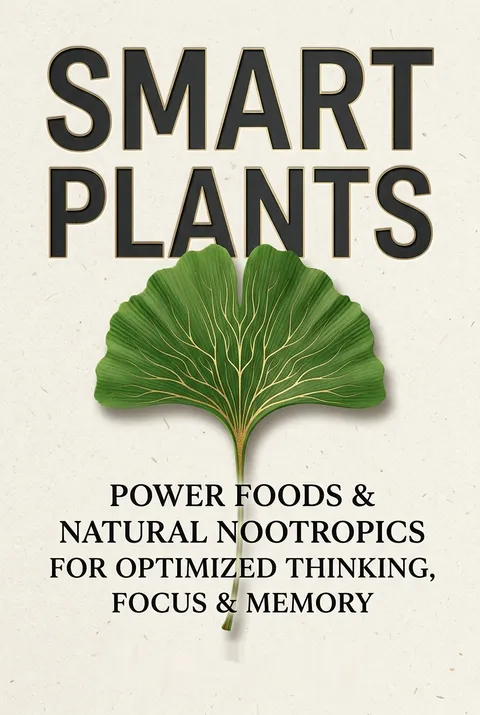
Smart Plants is best read as a practical food philosophy with a personal origin story, not as a clinical protocol. Its central contribution is to move the brain-health conversation away from the fantasy of a limitless pill and toward ordinary dietary patterns: plants, adequate fats and protein, less refined sugar, and attention to micronutrient gaps. The author's story of forgetting audition lines makes that shift emotionally concrete. The book's strongest reasoning appears when it treats cognition as part of whole-body health and argues that dietary variety is more dependable than a single superfood.
Its three-part model of everyday support, protection, and adaptability gives the material a useful organizing logic. So does the distinction between a basic plant-rich diet and optional nootropic ingredients. These frames help readers make choices without needing to memorize every nutrient pathway. The recipe section strengthens the argument by converting advice into meals, which is often where health intentions succeed or fail.
The main limitation is uneven evidence. The book brings together human trials, animal studies, traditional use, mechanistic hypotheses, and personal anecdotes, sometimes in language that makes the findings sound similarly settled. They are not. A study of an extract, a small group, or an impaired population may not predict benefits from a recipe in healthy adults. Likewise, an individual's improvement after starting an herb cannot show that the herb caused it. Several health claims in the source text are stated more categorically than the evidence described can support.
A careful reader can preserve the book's most useful ideas while scaling claims to evidence. Start with a varied, minimally processed diet; address likely deficiencies with suitable professional guidance; and treat concentrated herbs as optional, individually variable products. Track one change at a time rather than stacking several. Food can support brain health, but it cannot diagnose the source of memory problems, treat serious depression, or replace prescribed care. The book is most valuable when it inspires better meals and thoughtful experimentation, not when its strongest promises are taken literally.
Review Summary
Smart Plants receives praise for its clear, well-researched approach to brain-boosting nutrition and nootropics. Readers appreciate the comprehensive brain science explanations, practical plant-based recipes, and helpful reference materials including glossaries and food charts. The book's structured approach—covering everyday nutrition, nootropic ingredients, and supplements—resonates with health-conscious readers. However, some note that specialty ingredients may be difficult to source locally. Overall, reviewers value the accessible writing style and actionable guidance for optimizing cognitive function through diet, making it worthwhile even for non-vegans seeking healthier options.
People Also Read






Glossary
Three Ps of Brain Building
Three aims for brain supportThe book's organizing model for dietary brain health: maintain ordinary brain function, protect against damage and decline, and support the brain's ability to adapt. Morris uses the three aims to explain why a broad, nutrient-rich eating pattern matters beyond any one ingredient. The model is a practical framework, not a clinical measure of brain function.
natural nootropics
Food-based cognitive supportsFoods or food-derived products that Morris presents as potentially supporting cognition, mood, focus, memory, or calm while also benefiting overall health. Examples in the book include berries, cacao, matcha, turmeric, and certain herbs and mushrooms. The term is not a guarantee of safety or proven effectiveness; evidence and product quality vary by ingredient.
Five Nootropic Principles
Criteria for a nootropicPsychologist and chemist Corneliu Giurgea's proposed standards for nootropic substances. In broad terms, a substance should support learning and memory, help protect the brain, improve mental control, and avoid the typical impairments and toxicity associated with many psychoactive drugs. Morris uses these principles to distinguish the original ideal of a nootropic from casual use of the label.
adaptogens
Stress-response supporting foodsA group of herbs and foods that the book describes as helping the body's stress and hormone-regulating systems maintain or regain balance. This idea is used to explain why an ingredient might feel calming in one situation and energizing in another. The term reflects a traditional and complementary-health framework; it does not mean an herb treats every form of stress or is free of risks.
neuroplasticity
The brain's capacity to adaptThe brain's ability to change its organization and functioning in response to experience, learning, injury, or other conditions. Morris uses neuroplasticity to challenge the idea that adult cognition is permanently fixed. Change can be beneficial, such as acquiring a skill, or harmful, such as reinforcing an unwanted behavior. The concept does not imply that every impairment can be reversed.
neurogenesis
Growth of new neuronsThe formation of new neurons. The book presents neurogenesis as one possible part of the brain's capacity for maintenance and change, particularly in the hippocampus, a region involved in memory and learning. Morris connects some foods and lifestyle patterns with this process, but findings vary in strength and should not be interpreted as proof that a particular food regenerates a person's brain.
nutrient density
Micronutrients per calorieThe amount of vitamins, minerals, antioxidants, and other beneficial compounds a food provides relative to its calories. The book uses nutrient density to explain why vegetables, fruit, legumes, nuts, and seeds are central to its approach. It is a useful comparison of food composition, but no single measure of nutrient density captures every nutritional need or determines the quality of an entire diet.
microbiome
The body's microbial communityThe community of microorganisms, including bacteria, fungi, and viruses, that live in and on the body. The book focuses especially on the gut microbiome and its relationship with digestion, immune function, and communication between the gut and brain. It highlights fiber-rich plants and fermented foods as possible supports for gut health, while recognizing that illness, stress, and medication can also affect this ecosystem.
MIND diet
A brain-focused eating patternA dietary approach discussed in the book as a combination of elements from the Mediterranean and DASH eating patterns, designed around brain health and cognitive decline risk. Morris cites research reporting a lower Alzheimer's risk among people who followed it closely. The reported relationship supports interest in dietary patterns, but does not establish that the diet alone prevents disease for every individual.
Download PDF
Download EPUB
.epub digital book format is ideal for reading ebooks on phones, tablets, and e-readers.








