

Plot Summary
Blood on the Gibbet
Thanos wakes battered and chained inside a cage, accused of murdering King Claudius, his father. Before dying, Claudius told him that proof of Thanos’s true parentage lay in Felldust, where his mother had gone. Queen Athena privately admits that Lucious killed the king, but she will protect her son and let Thanos die rather than risk Lucious’s rule.
Guards prepare a prolonged execution, while the court treats Thanos’s death as a public spectacle. He writes an apology to his wife, Stephania, but learns she has already left the castle. With no evidence and no ally, he can only wait for the sentence to be carried out, determined that Lucious must be stopped if he gets the chance.
The cage makes Thanos’s political and bodily vulnerability the same problem: everyone can see the accusation, but he has no power to make anyone hear the truth. Athena’s choice is not simple maternal blindness. She understands Lucious’s violence and still treats proximity to power as safer than justice. Claudius’s last clue gives Thanos a future beyond the execution yard, but it also turns his identity into something that must be proved by a dangerous journey. His unsent apology to Stephania reveals how often duty, affection, and guilt have become tangled.
Delos Chooses Ceres
After the rebels defeat Lucious’s forces in the Stade, Ceres finds her father and brother alive, but the dead include Anka and many ordinary soldiers. The crowd looks to her for direction, so she orders Akila to secure the harbor and leads the rest toward the castle.
Imperial arrows kill attackers on the approach, but Ceres and the combatlords climb the walls, seize the gate mechanism, and let the city’s people pour inside. She tries to prevent looting and orders the nobles arrested rather than massacred. Then Athena tells her that Thanos is condemned for Claudius’s murder and is about to be executed. Ceres abandons the captured queen and races for the courtyard.
Ceres’s authority begins as a practical answer to a vacuum, not a claim to birthright. She sees that a victorious crowd without direction could become another instrument of terror, so she accepts leadership while trying to limit the harm her own side can do. The castle assault exposes the contradiction she must manage: liberation requires force, yet force quickly escapes the intentions of its leaders. Athena’s revelation then narrows Ceres’s political purpose into a personal emergency, testing whether her restraint survives when Thanos is at risk.
Stephania Turns on Felene
While Ceres fights for Delos, Stephania travels by sea with her handmaiden Elethe and the sailor Felene. Stephania is pregnant with Thanos’s child, though she has concealed it behind a lie about taking Lucious’s potion. She fears Felene will discover the truth and attack her first. As land comes into view, Stephania tries to poison the sailor with a hidden dart.
Felene blocks the strike and fights Elethe, but Stephania stabs her in the back. Rather than let them finish her, Felene throws herself overboard. Stephania assumes the wounded sailor will be eaten by sharks, then relies on Elethe’s newly learned sailing skills to reach Felldust and continue her search for a sorcerer.
Stephania treats trust as a resource to spend and people as risks to be managed. Felene’s loyalty to Thanos makes her useful, but also intolerable to Stephania, who cannot bear a witness she does not control. Elethe’s participation in the attack marks a shift from servantly obedience into complicity, though her hesitation hints that loyalty is not the same as conviction. Stephania’s pregnancy complicates her cold calculations: she calls the child a future weapon, yet protects it with an intensity that suggests attachment has already begun to exceed her plans.
The Noose Comes Down
Ceres reaches the south courtyard as Thanos hangs from the gallows, with executioners waiting to continue his torture. She jumps from an upper window, lands hard, and cuts through the guards between them. Unable to reach him in time, she throws her sword and severs the rope. Thanos drops onto the platform, frees himself enough to fight, and kills the guard poised over Ceres.
They stand back to back, combining her speed and powers with his steadier swordsmanship until rebels rush into the courtyard and overwhelm the remaining executioners. Once the danger passes, Ceres clings to Thanos and kisses him. Their reunion is real, but the many truths neither has yet shared remain between them.
The rescue reverses the image of Thanos’s helplessness, but it does not make Ceres a savior who acts alone. Her leap buys the opening; Thanos’s return to the fight keeps them both alive; the arriving rebels finish the battle. Their physical coordination suggests an intimacy built through shared danger, while their silence foreshadows the limits of reunion without honesty. The crowd’s victory and the lovers’ embrace happen together, forcing Ceres to hold private relief inside a public role that cannot pause for grief or desire.
Felldust Rejects Lucious
Lucious reaches Felldust filthy, bruised, and haunted by the remembered voice of his murdered father. The capital’s dust-choked streets expose how little his royal title means beyond the Empire. At the tower of the Five Stones, First Stone Irrien confronts him with what his spies know: Lucious killed Claudius and lost his throne through his own cruelty.
Lucious offers half the Empire’s treasury and years of tax revenue for military help. Irrien instead persuades the council to take the Empire for itself, arguing that the weakened kingdom is easier to seize than to support. Lucious protests, but he has arrived alone and cannot compel the council. Irrien leaves him with little choice but to serve the new plan.
Lucious expects inherited status to function as currency everywhere, but Felldust measures power by what a person can actually command. Irrien recognizes that Lucious’s desperation makes him valuable without making him trustworthy. Their encounter echoes Delos’s political struggle, yet replaces a fixed royal hierarchy with a council that can convert alliance into conquest. Lucious’s failure is not merely that he is defeated by a stronger ruler. He cannot imagine political cooperation without domination, so even his generous offer reads as another attempt to purchase obedience.
Truth at the Gangplank
After spending a night reunited with Ceres, Thanos avoids telling her that he married Stephania while believing Ceres was dead. Queen Athena supplies the missing truth, including Stephania’s pregnancy, and Ceres confronts Thanos just before he sails for Felldust. He confirms the marriage, explains that Stephania helped him after Ceres vanished, and admits he returned to Delos because he felt responsible for his wife and child.
His explanation cannot repair the concealment. Ceres leaves the ship, ending their relationship as Thanos watches her go. A former oar slave who captains the vessel helps Thanos recognize how suffering has strained his judgment, but cannot erase the consequences. Thanos continues toward Felldust to stop Lucious.
Thanos’s moral failure is not that he loved Stephania while grieving Ceres. It is that he decided Ceres could not be trusted with the full account of his life. By withholding the truth to protect their reunion, he makes intimacy dependent on her ignorance. Ceres’s anger therefore concerns more than romantic rivalry: she is confronting the possibility that Thanos’s picture of himself as honorable allows him to excuse decisions others must suffer. The captain’s counsel shifts Thanos from self-punishment toward action, but action cannot substitute for repairing the relationship he has damaged.
A Different Empire
With Thanos gone, Ceres begins turning rebellion into government. She refuses the throne and announces an end to the Stade’s Killings, freedom for the combatlords and enslaved people, and the return of land and wealth taken from commoners. The Empire’s stores and treasury will help repay excessive taxes and feed those harmed by its violence.
Ceres also insists that former imperial servants, soldiers, and nobles should not be killed without proof of crimes. She assigns Akila to protect the sea approaches, asks Yeralt to restore trade, and gives Sartes the task of carrying the new decrees to villages. Her reforms are ambitious, but the city is damaged, divided, and already hearing rumors that Felldust is gathering forces.
Ceres’s program makes justice material: land, grain, wages, and freedom matter more than a change of ruler alone. Her refusal to punish whole classes is ethically consistent but politically precarious, since many rebels have lost friends to the Empire and want revenge. By assigning distinct tasks, she tries to transform a coalition held together by opposition into an administration held together by obligations. The reforms also reveal the limits of symbolic victory. Ending the old system requires resources, records, enforcement, and people willing to remain in a city that still feels unsafe.
The Road Out
Rumors of invasion drive families and merchants through Delos’s gates despite Ceres’s warning that the countryside will be more exposed than the city. Some parents leave their children in Ceres’s care because they cannot risk the journey with them. As she tries to protect those who remain, Lord Nyel arrives with armed horsemen and declares himself the rightful ruler by noble blood.
When his soldiers shove a child aside, Ceres attacks, dismounts Nyel, and leads the combatlords and townspeople against his poorly arranged force. They drive the attackers off and imprison Nyel. Ceres invites the refugees to return, but many keep walking. She has won the immediate fight and cannot force frightened people to trust her walls.
The refugees expose a hard boundary in Ceres’s leadership: protection cannot be imposed without reproducing the coercion she opposes. She lets adults choose the road even when she believes it will endanger them, then takes responsibility for the children they cannot safely carry. Nyel’s claim shows how quickly old hierarchies can reappear under the cover of inherited legitimacy. Ceres defeats him through decisive violence, but the victory does not solve the deeper crisis of consent. A leader may win a city and still have to earn its people back.
Sartes Draws a Line
Sartes carries Ceres’s decrees through the countryside with former conscripts, returning soldiers to their families and distributing grain and money. On the road, he finds nobles murdered and a group of peasants preparing to attack another noble household.
They claim the rebellion gives them a right to seize wealth, but Sartes learns that three of them committed the killings without evidence that their victims were criminals. He executes those three rather than let the rebellion become another license for murder.
Later, at his brother Nesos’s grave, Sartes meets Leyana, whose family was killed by soldiers and bandits. He invites her to join the journey. Her grief and resolve help him see that justice requires protecting vulnerable people, not merely punishing the powerful.
Sartes’s road tests whether Ceres’s principles can survive beyond the capital, where no institutions yet exist to enforce them. He chooses accountability even when the killers claim the same cause he serves, accepting the moral cost of acting without a court. His grief for Nesos keeps this decision from becoming an easy performance of authority. Leyana’s history clarifies what is at stake: when each side calls its violence justice, the people left unprotected inherit the consequences. Sartes begins to lead by limiting the violence of his own allies.
Felene Crawls Ashore
Stephania’s knife leaves Felene bleeding in open water, but a floating mast keeps her above the sharks. Felene paddles toward shore with wreckage, reaches a black-sand beach, and kills a crocodilian predator with the dagger still lodged in her back. Weak and alone, she steals food and clothes, stitches the wound herself, and kills two men who come looking to capture her.
At an inn, she hears that Stephania has left Felldust and is heading back to Delos. Felene steals a small fishing boat before its crew can stop her. Her pursuit is driven by more than revenge against Stephania: she believes she helped bring Thanos back into danger and wants to face the consequences of that choice.
Felene’s survival depends on the same skills that make her vulnerable to betrayal: improvisation, appetite for risk, and a willingness to trust people who show her warmth. She does not transform into a conventional hero after being attacked. She steals, fights, and lies because those are the tools available to someone without protection. Yet her guilt over Thanos gives the journey an ethical center. She wants revenge, but also sees herself as answerable for having helped set events in motion.
The Sorcerer’s Price
Stephania follows cryptic directions to a hidden mountain sanctuary, where poison symbols open a magical doorway. The sorcerer Daskalos appears and offers a substance that can strip an Ancient One of her powers, making Ceres vulnerable. He demands Stephania’s child after birth as the price.
Stephania refuses, then stabs him and takes the vial, only to discover that killing the figure before her changes nothing: Daskalos has hidden his life elsewhere and closes the exit. Faced with imprisonment and the loss of the child on his terms, Stephania accepts his bargain. She leaves with the weapon she wanted, having surrendered the future she meant to shape for Thanos’s child.
Stephania’s ambition rests on a belief that every human bond can be converted into leverage. Daskalos gives that belief its most intimate cost: the child is both someone she claims to love and an instrument she intends to raise against Thanos. Her attempted murder of the sorcerer shows that she still expects willpower to overrule other people’s terms. When it fails, she chooses the bargain rather than lose control entirely. The scene does not resolve whether she loves the child; it shows how thoroughly her need for revenge has colonized that love.
Athena Escapes the Tower
Ceres keeps Queen Athena alive in a guarded tower cell, believing imprisonment is preferable to vengeance without trial. Athena listens to servants and guards, learns that some rebels resent the restraint, and waits. A small group of loyalists led by the young noble Har attacks the guards and enters her room.
Athena threatens one with a blunt eating knife, then joins the rescuers without hesitation. Har reports that Lucious has disappeared toward Felldust, leaving Athena to understand that her son has not come for her. She is free, but the city remains in rebel hands and an invasion is gathering. Athena now has to turn escape into a route back to power.
Athena’s release grows directly out of Ceres’s refusal to execute her, but the book does not present mercy as a mistake with a simple answer. Ceres’s choice protects the principle that political defeat should not erase due process; Athena exploits the opening because she understands loyalty as a network to activate. The rescue also reveals the former queen’s isolation: her son has abandoned her, and her remaining support consists of people who serve an idea of the Empire. Her survival depends on treating even a failed rescue as a new political opportunity.
Thanos Kills Lucious
Thanos searches Port Leeward for Lucious and rescues a boy whose father wagered him in the notorious Greatest Wager. The boy offers to connect Thanos with people who know the city’s hidden routes. After days of searching, Thanos finds Lucious at a filthy inn, disheveled and speaking to the dead father whose voice haunts him.
Their fight is vicious: Lucious uses fire, drink, and bystanders to gain advantage, while Thanos is burned and injured. When Lucious pauses to argue with the voice in his head, Thanos takes the opening and stabs him. As he dies, Lucious warns that Irrien’s invasion is coming and says Stephania has already returned toward Delos with a weapon for Ceres.
The duel denies Thanos the clean moral clarity he might want from killing his brother. Lucious is dangerous, but also visibly disintegrating, governed by the very guilt he tried to silence through murder. Thanos’s choice to save the gambling boy before pursuing Lucious establishes that his protective instinct remains active even in a city that treats people as stakes. Killing Lucious ends one immediate threat, yet his final information widens the danger beyond the brothers. The act is both necessary and insufficient, a recurring condition of Thanos’s attempts to do right.
The Fleet Appears
Akila’s naval patrol finds a damaged scout ship drifting toward the fleet. Its lone survivor has been blinded and whipped, then tied to the wheel as a messenger. He reports that First Stone Irrien has declared every man, woman, and child of the Empire a slave, with submission the only route to survival.
Before Akila can learn how much time remains, ships appear across the horizon: galleys, transports, and vessels built to ram. The scale of the fleet makes clear that Delos cannot treat the invasion as rumor. Akila has freed the oar slaves and turned captured imperial ships into a defense force, but now he must prepare them to face a vastly larger armada.
Irrien’s message converts conquest into a legal fiction: the invasion claims not merely territory but ownership of an entire population. The mutilated scout is evidence of both the message and the method by which it will be enforced. Akila’s earlier work freeing enslaved sailors gives this threat personal and political force; he is defending a fragile experiment in freedom with a fleet assembled from the Empire’s old machinery. The distant ships transform abstract warnings into a visible imbalance of power, shifting the story from internal revolution to survival against organized imperial expansion.
Stephania Strikes Ceres
Stephania slips back into Delos with Elethe and uses forgotten castle passages to enter the nearly emptied palace. Disguised as a servant, she carries food to Ceres in Thanos’s former chambers. Ceres recognizes that the supposed attendant is unfamiliar and refuses to eat or drink. Stephania reveals herself and blames Ceres for the collapse of her marriage, while Ceres keeps away from her sword because Stephania invokes Thanos’s unborn child.
The vial does not need to be hidden in the food: Stephania smashes it on the floor, releasing fumes that rob Ceres of her powers and leave her gasping and unable to reach her weapon. Stephania stands over her as the book ends, with Ceres incapacitated and the invasion still approaching.
The cliffhanger brings Stephania’s private revenge into direct contact with Ceres’s public responsibility. Ceres’s refusal to strike while the child may be endangered is ethically coherent, but Stephania uses that restraint as a tactical opening. The poison attacks more than physical strength: it removes the power that has helped make Ceres a symbol capable of holding the rebellion together. Stephania’s disguise also turns the palace’s scarcity of people into a vulnerability. The ending leaves both the personal conflict and the military crisis unresolved, with Ceres exposed at the moment Delos most needs her.
Analysis
The book measures political change not by who occupies a throne, but by what happens to people who previously had no leverage. Ceres’s decrees make that question concrete: land must be returned, slaves freed, food distributed, and former enemies judged as individuals rather than as a class. Her opponents are not only imperial loyalists. She must also resist those among the rebels who mistake victory for permission to retaliate. The resulting tension is not a debate between violence and peace, since the revolution itself depends on force. It is a struggle over whether force can be limited once a cause has declared itself just. The romantic plot gives this political problem an intimate counterpart. Thanos wants to be honorable, but his concealment of his marriage and child shows how a self-image built around good intentions can excuse withholding another person’s choice. Ceres’s response insists that love cannot be separated from truthful knowledge. Stephania offers a darker mirror: she reads desire accurately, then uses it to control others, even as her attachment to her child unsettles her plans. Her bargain with Daskalos makes the cost of revenge literal.
Felldust expands the novel’s argument rather than merely supplying a new enemy. Its council rejects Lucious’s inherited claim and still chooses conquest, showing that different political structures can reproduce domination by other means. Meanwhile, Akila and Sartes reveal that freedom requires both collective defense and restraint within one’s own ranks. The closing attack on Ceres brings these strands together. Her political authority, physical power, and private loyalties are all placed under pressure at once, while the approaching fleet makes clear that moral reconstruction will have to survive an external war.
Review Summary
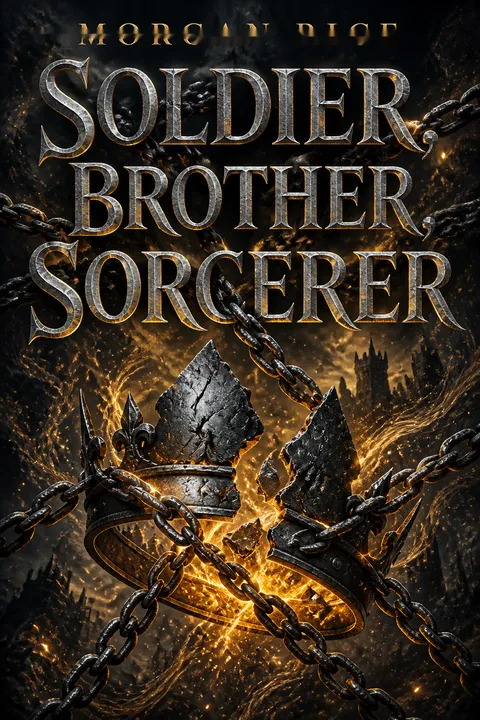
Soldier, Brother, Sorcerer receives mixed reviews averaging 3.92 stars. Critics praise the character development, particularly Ceres, Stephania, and Felene, and appreciate the political fantasy elements and unpredictable plot twists. However, many readers complain about increasingly shorter books, repetitive storylines, poor editing, inconsistencies, and dragging narratives. Some find the writing switches between perspectives confusing. Fans of Game of Thrones may enjoy the series' backstabbing and violence. While some readers remained invested despite flaws, others felt the quality declined with each installment. The cliffhanger ending compels continued reading.
Characters
Ceres
Reluctant rebel leaderA young woman whose combat skill and Ancient One ancestry make her formidable, but whose strongest instinct is to protect people with less power than she has. Ceres does not seek a crown; she takes command because the rebels and citizens need someone to prevent victory from becoming another massacre. Her central psychological conflict is how to use extraordinary force without turning moral certainty into permission for cruelty. She cares deeply for Thanos, but her loyalty to him does not erase her need for honesty. Her leadership grows through concrete choices about prisoners, land, slavery, and the frightened people who may not trust her.
Thanos
Heir seeking the truthA prince raised within the Empire who repeatedly finds himself opposing the cruelty of his own family. Thanos is brave and protective, yet his wish to act honorably often becomes entangled with guilt, obligation, and secrecy. He loves Ceres, but he has also made consequential choices in her absence and struggles to explain them without excusing himself. The revelation that his parentage may be disputed deepens his need to understand where he belongs. His loyalty is not merely to a title or bloodline; he is drawn toward people endangered by the systems around him.
Stephania
Ambitious imperial nobleA highborn strategist who studies what people want and treats that knowledge as a means of influence. Stephania prizes safety, status, and revenge, but her calculation is complicated by her attachment to the child she carries. She dislikes dependence and prefers to turn relationships into arrangements whose terms she can control. That instinct makes her perceptive and resourceful, while also narrowing her ability to trust anyone whose loyalty is not guaranteed. Her connection to Thanos leaves her caught between personal desire and the conviction that power is the only reliable protection.
Lucious
Dispossessed imperial princeThanos’s younger brother, raised to expect obedience and unable to distinguish authority from entitlement. Lucious wants the throne, but he also craves the recognition he believes others have withheld from him. His cruelty is often impulsive, followed by explanations that shift responsibility onto his victims or his family. In Felldust, where lineage carries little weight without practical power, his dependence on status becomes a dangerous weakness. His relationship with Thanos mixes childhood familiarity with rivalry, making their conflict more intimate than a contest between two claimants.
Felene
Resourceful sailor and thiefA hard-edged sailor with a history of theft, survival, and distrust earned through experience. Felene keeps her word to Thanos and agrees to help Stephania reach Felldust, even though she recognizes the noblewoman’s capacity for betrayal. Her humor and appetite for danger conceal a deeper loyalty than she readily admits. She is not guided by polished ideals, but she has a strong sense of what people owe one another after a shared risk. Her attraction to Elethe makes the voyage more emotionally complicated than she expects.
Sartes
Ceres’s younger brotherCeres’s younger brother, forced by war to grow into a leader while still carrying the grief of his family’s losses. Sartes is thoughtful and uneasy about violence, which makes him question his own decisions rather than mistake them for virtue. He supports Ceres but develops a responsibility beyond simply following her. His work among former conscripts brings him face to face with both imperial harm and revenge committed in the rebellion’s name. He is most effective when he accepts that protecting people may require difficult action without allowing that necessity to erase their humanity.
Queen Athena
Power-minded former queenThe queen of Delos and Lucious’s mother, skilled at reading political advantage and committed to keeping authority within her family. Athena sees power as the only dependable form of safety, a belief that shapes her choices even when she understands the danger posed by Lucious. She is protective of her son without being naïve about his nature. Her contempt for ordinary people helps her justify the harshness of imperial rule, while her composure allows her to survive rapidly changing political circumstances. She treats mercy as a strategic weakness, not a moral obligation.
Akila
Haylon’s rebel commanderA rebel leader from Haylon who has learned to balance tactical judgment with responsibility for the people who follow him. Akila is practical about the costs of battle and refuses to confuse a clever plan with a guaranteed outcome. He respects Ceres’s ability to unite people, but remains wary of any return to rule by royal blood, even blood associated with the Ancient Ones. His skepticism is a useful counterweight to personal loyalty. He thinks of military strength as a means to secure freedom, not as proof that its possessor deserves to govern.
Elethe
Stephania’s loyal handmaidenStephania’s handmaiden, raised to serve her mistress and trained in the practical skills that make her valuable on the journey. Elethe is capable with a blade and familiar with Felldust, but her feelings and loyalties are not as simple as Stephania assumes. She is drawn toward Felene, whose ease and independence contrast with the tightly managed life she knows. Elethe’s choices reveal the tension between devotion, attraction, and personal agency. She often follows Stephania, yet the story leaves room to question what she believes and what she has merely been taught to do.
Irrien
First Stone of FelldustThe charismatic leader of Felldust’s ruling council, known as the First Stone. Irrien combines political theater with a clear-eyed appetite for power, and he understands that alliances are useful only while they serve his interests. His own rise has required education, violence, and the ability to read competing factions. He recognizes Lucious’s value without accepting the prince’s claim to special treatment. Irrien represents a political order different from Delos’s monarchy, but not a gentler one: he has earned authority through force and intends to expand it when opportunity appears.
Cosmas
Royal scholar and adviserAn elderly scholar who has advised rulers and accumulated knowledge about the customs and political systems of many lands. Cosmas is more inclined to ask questions than to hand Ceres a ready-made plan, frustrating her when she wants certainty. His perspective helps expose how power depends on people agreeing, however reluctantly, to follow someone. He is not a simple repository of answers; he knows that historical wisdom can illuminate a choice without making it for the person who must live with the consequences.
Daskalos
Ancient sorcererA reclusive sorcerer whose hidden sanctuary contains knowledge and artifacts from the age of the Ancient Ones. Daskalos is difficult to deceive and regards knowledge as something to be traded on his own terms. His shifting appearance reflects his distance from ordinary identity, while his demands reveal that he sees human attachments as potential prices. He is neither a helpful mentor nor a simple monster: his power depends on control, and he uses bargains to expose what visitors value most.
Leyana
Grieving survivorA young woman Sartes meets while she is praying at a graveyard. Soldiers and bandits have destroyed her family, leaving her wary but still capable of fierce judgment. She sees that Sartes dislikes violence, yet understands why he cannot simply stand aside when others are threatened. Her choice to travel with him links private grief to the larger work of protecting survivors.
Ceres’s father
Blacksmith and steady allyCeres and Sartes’s father, a blacksmith whose practical work supports the rebellion and the rebuilding of Delos. He steadies Ceres when she doubts her right to lead and helps turn a damaged city into a defensible one. His counsel is grounded in trust earned through family life rather than rank.
Anka
Rebel leaderA leader of the rebellion whose courage and influence help drive resistance against the Empire. Her loss weighs heavily on Ceres and the rebels, reminding them that their victory has been purchased with lives they cannot restore.
Lord Nyel
Noble claimantA cousin of Lord West who believes noble ancestry entitles him to rule. Nyel is arrogant, dismissive of ordinary people, and willing to use armed force to turn his claim into reality. His behavior shows how quickly the old hierarchy can reappear after a revolution.
Plot Devices
Claudius’s Felldust clue
A trail to hidden parentageBefore dying, Claudius tells Thanos that Felldust holds evidence about his true parentage and that Thanos’s mother went there. The clue gives Thanos a reason to travel beyond the immediate conflict in Delos, while also pointing toward the same land Lucious seeks for political aid. It links a personal mystery to the larger threat of invasion. The information is incomplete by design: it creates a destination and raises questions without giving Thanos proof he can use immediately.
Ancient One blood
Power with political consequencesCeres’s descent from the Ancient Ones is expressed through extraordinary combat abilities and powers that can affect other people and objects. This inheritance helps explain why she can lead fighters who might otherwise distrust her, but it also gives critics a reason to fear that a new dynasty could replace the Empire. The possibility that her power can be neutralized becomes important to Stephania’s plans. The device therefore works both as a practical source of strength and as a political question about whether inherited power can serve a genuinely different order.
The power-stripping vial
An equalizer against CeresDaskalos possesses a rare substance that can suppress the powers of someone with Ancient One blood. Stephania acquires it through a bargain that demands her unborn child, then carries it back to Delos. It is not administered like an ordinary poison hidden in food. Stephania breaks the vial so its fumes disable Ceres, leaving her unable to draw on the abilities that normally protect her. The vial turns Stephania’s distant search for a weapon into the final immediate danger facing Ceres.
The Greatest Wager
Desperation made into spectacleA gambling den in Port Leeward accepts bets that reach beyond money, including the lives of people who have no say in the wager. Thanos enters seeking information about Lucious and is confronted with a contest that would force him to risk a child’s life. The den reveals how thoroughly Felldust’s social order turns vulnerability into entertainment and profit. Thanos refuses the terms, attacks the men running the contest, and frees the boy, who then offers help navigating the city.
Of Crowns and Glory Series



About the Author


Download PDF
Download EPUB
.epub digital book format is ideal for reading ebooks on phones, tablets, and e-readers.








