


Plot Summary
Blood in the Stade
Ceres enters Delos’s arena expecting a fight, not a sentence. She wounds a towering combatlord, then uses the shifting sand pits to bring him down. Before she can claim victory, the rulers release a spiny, bear-like beast. Her sword is knocked away, so she drives a broken spear into its heart, drawing on a mysterious surge of strength.
The crowd erupts, but the wounds across her back and shoulder catch up with her. As the cheering continues, Ceres collapses into the sand. Her triumph has made her a public favorite, while proving to the court that she is harder to kill than expected.
The arena turns survival into a spectacle: Ceres wins her life, but her victory belongs partly to the crowd that chants her name and partly to rulers who control the next fight. Her refusal to kill a helpless opponent distinguishes her from the violence around her, yet the beast shows how little mercy the state intends to offer. The power that rises in her is both rescue and warning, arriving before she understands what it demands.
A Prince Changes Sides
On Haylon, Prince Thanos is stabbed in the back by the Typhoon, one of his own soldiers, and left among the dead. Rebel leader Akila finds him alive and takes him prisoner. Thanos admits he opposed the invasion, then proposes disguising rebels in Imperial armor to seize the fleet that is helping besiege Haylon. The ruse works.
From captured ships, the rebels fire on the Imperial vessels and the forces attacking the city, then burn the fleet to deny the enemy its supplies. Thanos fights beside Akila’s people until they capture General Draco and the Typhoon. He kills both, then agrees to return to Delos as a spy, hoping to uncover who ordered his assassination and help the rebellion from inside the court.
Thanos’s choice is not simply a switch of allegiance. By fighting for Haylon, he accepts responsibility for the violence his own family’s Empire has carried to other people’s homes. His discomfort with killing remains, but he learns that refusing to act can protect the aggressor as surely as joining him. Akila’s suspicion gives the alliance its moral pressure: Thanos must earn trust through risk, not claim it through royal blood.
Home Finds Its Ruins
After months away seeking work, the blacksmith Berin returns to a silent home. His wife, Marita, tells him their eldest son, Nasos, is dead and that the Empire has taken young Sartes as a conscript. She also claims Ceres ran away, but Berin distrusts her account and leaves to find his children.
His search leads him to the castle, where old acquaintances help him reach Ceres, wounded and confined after the arena. Berin urges her to escape with him. Ceres refuses: she intends to keep fighting, and asks him to find Sartes instead. Far south, Sartes endures beatings, hunger, and dangerous training in the army, quietly looking for a way out. Berin leaves his daughter behind and follows his son’s trail.
Berin’s homecoming reverses the fantasy of return: the house is still standing, but the family he imagined is scattered by death, conscription, and betrayal. His guilt tempts him to treat protection as control, yet Ceres insists on choosing her own risk. Their separation is therefore painful but not a simple abandonment. Berin honors her agency by turning toward Sartes, while his craft and old friendships become tools for repairing what force has broken.
The Isle Instead of Death
Ceres learns from Anka that rebel leader Rexus is dead and that Thanos is believed to have fallen on Haylon. Grief leaves her ready to accept whatever the arena brings, but she still refuses Anka’s offer to help her flee. Meanwhile, Marita brings Stephania a ring from the dead slaver Lord Blaku and claims Ceres killed him while escaping enslavement.
Stephania uses the accusation to persuade King Claudius and Queen Athena to choose a secret punishment over a public execution. Ceres faces the Last Breath, a nearly unbeatable fighter with a double-bladed staff. Her sword breaks, and his blows leave her helpless. Stephania intervenes before Lucious can order her death, but has Ceres shackled and sent to the Isle of Prisoners.
Ceres’s defeat begins before the first blow: grief has narrowed her sense of possible futures until death seems almost welcome. The court exploits that vulnerability by turning a complicated history of enslavement into a convenient legal charge. Stephania’s intervention looks like mercy only in contrast with Lucious’s cruelty; in practice, it gives her control over a quieter punishment. The episode exposes how law, reputation, and spectacle can be rearranged to make political violence appear legitimate.
The Prison Ship Breaks
Below deck, Ceres meets Eike, a hungry child imprisoned with her family’s captors. When a sea monster tears into the ship, waves flood the hold and tentacles drag prisoners away. Eike squeezes through the barred hatch, steals keys, and returns to free Ceres. The guards try to stop them, but Ceres disarms one and uses her shackles as a weapon.
As the ship capsizes, she sheds her heavy armor underwater, then draws on her hidden power to force the creature to release Eike. The two reach an overturned boat and survive the attack, though everyone else appears lost. Days of thirst and drifting nearly finish them. At last, they spot an island and reach its shore.
The wreck strips away the Empire’s categories of punishment and rank: in the water, prisoner and guard alike are prey. Ceres’s bond with Eike grows through reciprocal rescue, not through a promise of safety she cannot guarantee. Her power emerges most clearly when she chooses to protect someone smaller than herself. The escape is a victory, but it leaves both girls bereaved and directionless, so survival becomes the beginning of another uncertain captivity.
A Forest That Fights
The islanders who meet Ceres and Eike bring them fresh water and food. Their leader, Eoin, explains that the Empire exiled them because a curse gradually joins their bodies to the forest. Ceres watches them defeat armed raiders with fluid, unarmed movements, then begins training in their methods.
At first she resists the slow exercises, but the islanders insist that fighting depends on attention and balance as much as strength. Eike, who lost her family on the prison ship, begins to find a place among the villagers. Ceres trains beneath a waterfall and climbs the village’s ancient ziggurat, learning from each fighter she meets. Their way of moving helps her sense the power she has repeatedly summoned under threat.
The forest community offers Ceres a striking alternative to the arena: skill without display, strength without armor, and belonging that does not depend on noble approval. Yet its refuge is not untouched by violence; the raiders show that exclusion leaves the islanders exposed to recurring threats. Eoin’s teaching asks Ceres to replace domination with responsiveness. Eike’s gradual inclusion matters too, because healing here means more than escaping danger. It means being allowed to stay.
Sartes Brings the Battle
Anka enters the Imperial camp disguised as a washerwoman, searching for Sartes without exposing him. She finds him just as he attempts to escape. Berin reaches his son first, striking down a guard, and the three flee with military plans Sartes stole from the command tent. Anka guides them to the rebellion, where the documents reveal the Empire’s intended attacks.
The rebels argue over whether to retreat or fight; Anka and Sartes help build a plan to ambush the army in a burial ground. Sartes sounds the signal, and hidden fighters bring down horsemen with tripwires, pits, arrows, and collapsing masonry. He urges the conscripts to join or flee. The victory frees many and establishes Anka as a leader the rebels can follow.
Sartes’s escape changes his role from someone the army uses to someone whose knowledge can protect others. His stolen maps matter because they convert close observation into collective strategy. Anka, meanwhile, earns authority not through inherited status or forceful self-promotion, but by organizing people who disagree and accepting the risks of a difficult plan. The ambush is a practical alternative to meeting Imperial power on its preferred terms: disciplined surprise over superior numbers.
The Heir Hidden in Ink
Thanos returns to a Delos under harsher rule. King Claudius has authorized nobles to seize property from ordinary people, and Lucious leads the violence, killing a vineyard owner and ordering his family abused or enslaved. The court tells Thanos that Ceres has been sent to the Isle of Prisoners. He investigates the attempt on his own life with Stephania’s help.
A stable boy links Lucious to the message sent to the Typhoon, but the boy is later murdered. Scholar Cosmas directs Thanos to a cryptic note in the royal genealogy; a former midwife then confirms that Thanos is Claudius’s son, not merely his nephew. The discovery gives Lucious a motive to eliminate him, since Thanos stands in the line of succession.
The clues make political identity feel less like a private truth than a dangerous public resource. A marginal note, a servant’s memory, and a dead messenger expose the fragile human chain behind a court’s official story. Thanos’s investigation also reveals that Lucious’s violence is not an isolated vice: the king’s orders authorize it, making the prince an instrument of a wider system. Learning his parentage clarifies the threat to him without resolving where his loyalties belong.
Power Behind the Waterfall
At the ziggurat’s summit, Ceres reaches Eoin and learns that her power can grow into a force that strikes anyone who touches her with malice, whether or not she intends to hurt them. She chooses to accept it, then drinks a ritual mixture and sees visions: Berin and Marita agreeing to raise an infant as their own, a battlefield where soldiers follow her, and a veiled woman who identifies herself as Ceres’s mother.
The vision gives her a destination, the Isle Beyond the Mist. Ceres wakes changed, with the power still present rather than fading after danger passes. The islanders help prepare a vessel from living wood. Eike has found a home among them, so Ceres prepares to leave alone.
Accepting the gift is a decision about responsibility as much as strength. Ceres wants the means to protect her family and challenge the Empire, yet Eoin has made the danger plain: a defensive power can become indiscriminate. The visions deepen that burden without settling her identity or future. They offer a possible origin, a possible crown, and a mother she has never known. Ceres leaves the island not with certainty, but with a direction.
A Crown, A Poisoned Cup
Thanos confronts Claudius, who admits the truth of his paternity and heirship but refuses to punish Lucious, despite Thanos’s evidence that Lucious arranged the assassination. Thanos prepares to hunt his cousin himself.
Stephania persuades him to trust her instead, and, believing Ceres dead, Thanos accepts her marriage proposal. In the palace garden, Stephania meets Xanthos, the agent behind the failed attempt on Thanos, and poisons him to erase the connection.
Her tenderness toward Thanos and her hidden role now sit side by side. Elsewhere, Ceres boards the forest folk’s living-wood vessel and sets out for the Isle Beyond the Mist, following the vision of her mother. Thanos remains in Delos, committed to Stephania and unresolved conflict.
The ending offers no clean reunion or settled victory. Thanos gains a father and a claim to rule, only to discover that royal recognition does not compel justice; Claudius protects Lucious because the regime finds him useful. Thanos’s engagement to Stephania grows from real comfort and trust, but the poisoned cup reveals that her care is entangled with calculation. Ceres’s departure moves the story toward a separate reckoning with her origins. Both characters choose a path while misunderstanding the forces closest to them.
Analysis
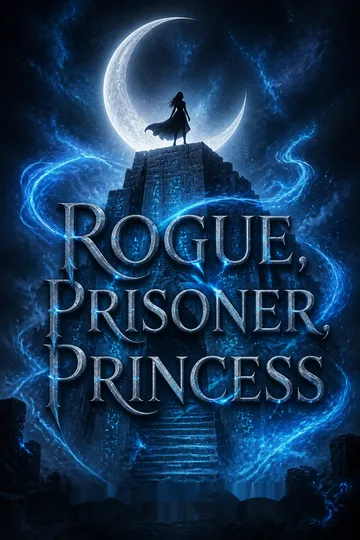
Rogue, Prisoner, Princess keeps returning to the question of who gets to name a person. The court calls Ceres a slave and a criminal; the crowd calls her a champion; the forest folk recognize a power she herself does not understand. Each label carries consequences because it can determine whether she is displayed, punished, sheltered, or feared. The story’s strongest counterforce is not a single hero but the exchange of practical care: Berin searches for his children, Eike returns with the keys, Anka organizes people who distrust one another, and Akila lets Thanos prove his intentions through action.
These acts of care do not make the world gentle. The rebellion wins by studying the Empire’s plans and exploiting its blind spots, while Thanos’s resistance requires him to use violence against the officers who serve his own side. The novel therefore complicates the difference between moral purity and moral responsibility. Refusing to fight can leave the powerful unchallenged, yet adopting their methods can reproduce their harm. Ceres’s emerging ability sharpens that dilemma: a force that protects her may strike beyond her intent.
Inheritance also becomes a political device rather than a guarantee of character. Thanos’s claim to the throne gives him leverage, but Claudius’s refusal to restrain Lucious shows that blood alone cannot make power just. Stephania’s final deception further unsettles the story’s courtly romances: intimacy can be real and instrumental at once. By ending with Ceres sailing toward an unknown mother and Thanos remaining inside the palace, the book leaves its leads on separate routes toward identity. Neither route promises a simple homecoming. Both demand that the characters decide what they will do with power once they possess it.
Review Summary
Rogue, Prisoner, Princess receives mixed reviews with an average 3.79/5 rating. Many readers find the plot predictable, especially reveals about Ceres's parentage and Thanos's royal lineage. Common criticisms include weak character development, rushed pacing, poor world-building, and shallow emotional depth. Readers express frustration with Thanos's poor judgment and quick romantic shift toward Stephania. However, some appreciate the expanded world, multiple perspectives, and Stephania as a compelling villain. The book is considered light entertainment with decent action, though most agree it's weaker than the series opener and shows questionable writing quality.
People Also Read


Characters
Ceres
The defiant arena fighterCeres is a blacksmith’s daughter whose courage and skill bring her from the margins of Delos into its most public arena. She wants to prove herself through combat, but her choices reveal that honor matters to her as much as victory: she refuses to kill a helpless opponent and repeatedly risks herself for people with less power. Her stubbornness can look like fearlessness, though grief and isolation sometimes narrow her sense of what futures are possible. Beneath her trained physical strength lies a mysterious power she does not yet understand. Ceres’s central tension is whether becoming strong enough to resist oppression can be separated from becoming dangerous to everyone around her.
Thanos
The conflicted princeThanos is a royal fighter who has tried to serve the Empire without surrendering his conscience. His discomfort with violence distinguishes him from Lucious, but it also makes him slow to recognize that neutrality can preserve cruelty. Ceres challenges his inherited assumptions, while his experience on Haylon forces him to earn trust among people his family’s government oppresses. Thanos prefers direct action and honest loyalties, which leaves him vulnerable to the court’s secrecy. His developing identity places private love, public duty, and political responsibility in conflict, and he must decide what kind of ruler his abilities might make him.
Berin
The searching blacksmithBerin is Ceres’s father, a working blacksmith whose skill has long been tied to providing for his family. He leaves home to find work, believing that sacrifice is a form of care, then returns to find the family altered by events he could not control. His guilt makes him want to protect his children from every danger, but Ceres’s insistence on choosing her own path forces him to respect her independence. Berin’s practical nature remains his strength: he uses old military connections, his knowledge of weapons, and his persistence to help the people he loves. He embodies care expressed through work, even when no craft can undo loss.
Sartes
The quick-minded conscriptSartes is Ceres’s younger brother, a boy forced into the Imperial army before he is ready for its brutality. He survives by observing rules, reading people, and making himself useful to officers. His caution is not cowardice; it is an intelligence shaped by a system that punishes the vulnerable for showing fear. Sartes longs to join the rebellion, but his experiences also teach him how the army moves and how conscripts might be freed. He grows from a boy trying to escape alone into someone able to contribute his knowledge to a collective struggle.
Stephania
The polished strategistStephania is a noblewoman whose beauty and cultivated innocence shape how others underestimate her. She understands court attention as a resource, using timing, restraint, and carefully chosen confidences to influence people more powerful than herself. Her attachment to Thanos is bound up with her hopes for status and security, but she is more perceptive and ambitious than her public manner suggests. Stephania can offer genuine warmth while keeping her motives guarded, making intimacy difficult to distinguish from strategy. She represents a court where influence often belongs not to the loudest person, but to whoever best controls what others believe.
Lucious
The entitled princeLucious is a prince who treats rank as permission to humiliate, exploit, and punish those beneath him. He resents Ceres because her popularity unsettles the hierarchy he assumes should favor him, and he sees Thanos as a rival rather than a relative to protect. His cruelty is not impulsive alone: he understands how spectacle and fear can be used to discipline the population. Yet his contempt for ordinary people blinds him to the loyalty and ingenuity they can build among themselves. Lucious is both a personal antagonist and a vivid expression of the Empire’s belief that power justifies its own abuses.
Anka
The rebel organizerAnka is a young woman whose freedom Ceres once helped secure. After the rebellion loses its leader, Anka takes on the difficult work of keeping its members coordinated, even when others doubt her judgment. She is willing to enter dangerous places, gather information, and make plans that protect people rather than merely win glory. Her loyalty to Ceres is personal, but she turns it into practical action by searching for Sartes and helping the wider resistance. Anka’s strength lies in patient organization and her ability to make a scattered group believe that acting together is still possible.
Eoin
The forest-born teacherEoin is a leader among the exiled forest folk, a community whose members are gradually changed by a curse. He teaches Ceres a form of combat grounded in attention, balance, and responsiveness rather than force alone. Eoin’s acceptance of his people’s limited future gives him a quiet urgency: he invests in music, shared safety, and the knowledge he can pass on. He is drawn to Ceres but does not try to make her stay or choose for her. His teaching asks her to see power as a relationship with the world, not simply a weapon she can wield.
Eike
The surviving childEike is a young prisoner who has learned to expect hunger, danger, and betrayal. She is wary of Ceres at first, yet she recognizes kindness when Ceres shares food and protects her. Eike is not merely someone to be rescued: she steals keys, helps Ceres escape, and begins to build a new sense of belonging among the forest folk. Her blunt observations keep the dangers of the prison ship in view, even when others might prefer reassurance. Through Eike, the story shows how safety begins with practical trust and grows through the chance to belong.
Akila
The island rebelAkila leads the resistance on Haylon, where the Empire’s invasion has left his people outnumbered and under siege. He distrusts Thanos for good reason: a prince is tied to the same system attacking his home. Akila is pragmatic enough to consider Thanos’s plan, but he makes clear that trust must be earned through shared risk. His leadership balances suspicion with a willingness to take an unexpected opportunity. He becomes the first person to treat Thanos as an ally because of what he does, rather than the bloodline he represents.
King Claudius
The iron-handed kingClaudius rules Delos through privilege, punishment, and calculated displays of authority. He can show affection toward Thanos, yet that tenderness does not erase his willingness to defend a regime that harms ordinary people. Claudius treats stability as a justification for cruelty and measures political choices by their usefulness to the throne. His relationship with Thanos is complicated by concealed history and competing ideas of responsibility. He illustrates how a ruler can feel personal love while continuing to protect the structures that make others suffer.
Queen Athena
The calculating queenAthena is a politically alert royal who helps weigh the risks of Ceres’s popularity and the rebellion’s growth. She understands that public punishments can turn a victim into a symbol, and she supports strategies that keep the monarchy secure. Her attention to appearances is not softness; it is a form of power practiced alongside her husband. Athena’s decisions reveal a court that can adapt its methods without questioning the inequality those methods preserve.
Marita
The resentful motherMarita is Ceres’s mother, shaped by hardship and by a resentment that has hardened her relationships with her family. She interprets care through what it costs her and feels overlooked when attention turns to Ceres or the boys. Her bitterness makes her susceptible to alliances that promise recognition or reward. Marita is not simply a foil to Berin’s devotion; she shows how deprivation can turn family bonds into contests over who has suffered most.
Cosmas
The keeper of recordsCosmas is an elderly scholar whose knowledge of the palace library reaches beyond the official histories. He believes that old documents and neglected details can expose truths powerful people would rather bury. His manner is patient and indirect, preferring to let Thanos examine evidence for himself rather than accept an answer on authority. Cosmas’s work makes memory and record-keeping consequential in a court that depends on controlling the past.
Rexus
The rebel leaderRexus is a central figure in Ceres’s connection to the rebellion and in the resistance’s earlier efforts against the Empire. His courage and leadership shape the expectations of those who carry on after him. For Ceres, his place in the struggle is personal as well as political, tying her choices to a cause larger than the arena.
Paulo
Ceres’s weapon keeperPaulo is responsible for preparing and passing weapons to Ceres in the Stade. He understands the fighters’ needs and offers practical advice when her survival depends on choosing the right tool.
Master Isel
The relentless trainerMaster Isel trains Ceres with punishing drills that force her to watch her opponent instead of trusting that a fight will pause for her. His lessons shape her discipline before she encounters the forest folk’s different approach to combat.
Xanthos
The court's quiet agentXanthos moves through the palace as a discreet intermediary, carrying out sensitive business beyond the view of the court’s most powerful figures. His role shows how political violence can travel through private arrangements and deniable messengers.
Plot Devices
The Stade
Public power and spectacleThe arena is where rulers stage combat as entertainment and signal who controls life and death. Ceres’s victories make her beloved among spectators, creating a political problem for the court: killing her openly could strengthen the resistance, while keeping her alive allows the rulers to manipulate her next fight. The Stade turns the crowd into a force that both threatens and protects her.
Ceres’s inner power
Protection with a costCeres experiences sudden surges of strength when she faces mortal danger. On the forest island, Eoin explains that this force can become a persistent defense against anyone who approaches her with malice, but may harm people she does not intend to hurt. The power links her survival to a moral choice: it can protect her against the Empire, yet it may also make closeness dangerous.
The prison ship
Punishment becomes escapeThe Empire uses the prison ship to transport Ceres to an island where few return. Its overcrowded hold concentrates the cruelty of the state into a single confined space. When a sea monster attacks, the ship becomes a different kind of trap, forcing Ceres and Eike to cooperate and escape together. The wreck carries Ceres away from Delos and into the forest folk’s hidden world.
The royal genealogy
A buried claim resurfacesA marginal reference in Cosmas’s genealogy leads Thanos toward an old play, a family secret, and eventually a former midwife. The records do not settle the danger by themselves; they give him a path to testimony that the court has tried to suppress. The genealogy makes inheritance a political mystery, revealing how a single hidden fact can change the balance of power.
Sartes’s stolen plans
Intelligence becomes resistanceSartes takes maps and orders from the Imperial command tent while trying to escape conscription. The documents show which rebel positions the army intends to attack and when. Once Anka and the resistance study them, the plans allow the rebels to choose the terrain, set an ambush, and offer conscripts a chance to flee or change sides. Sartes’s survival skills become military knowledge that can protect others.
Of Crowns and Glory Series



About the Author

Download PDF
Download EPUB
.epub digital book format is ideal for reading ebooks on phones, tablets, and e-readers.








