


Plot Summary
Delos Becomes Irrien's Prize
After Felldust's invasion, Irrien turns conquered Delos into a demonstration of his rule. He executes soldiers who loot without permission, orders the city's tunnels sealed, and keeps its former ruler, Stephania, chained beside his throne. When she offers useful knowledge and tries to turn his desire into influence, he rejects her and orders her unborn child sacrificed.
The priests cut the infant from Stephania, but before Irrien can kill it, the sorcerer Daskalos appears, stills the watching crowd with magic, and takes the baby as payment for an old promise. Irrien kills a priest who challenges his authority, then replaces him with a more obedient one. Stephania is carried away, gravely wounded and presumed expendable.
Irrien's rule is built from visible acts of possession: the stolen city, the chained former queen, and the child he intends to destroy. His refusal to let Stephania influence him exposes the insecurity beneath his insistence on strength. Daskalos disrupts that carefully staged authority without defeating it by ordinary force; the sorcerer's intervention proves that power has limits Irrien cannot simply command away. Stephania's body becomes the site where political succession, sexual control, and magical ambition collide. Her survival is not yet assured, but the infant's removal turns a private atrocity into a longer contest over who gets to shape the future.
The Harbor Escape
Ceres, Thanos, her father Berin, her brother Sartes, Leyana, and several rescued combatlords flee Delos in a small boat while archers fire from shore. Akila, the wounded leader of Haylon, warns them to row rather than raise their sail, keeping them hidden among Felldust's crowded ships.
When Thanos recognizes Jeva, a Bone Folk woman being tortured on a vessel, he jumps into the water to free her; Ceres follows and helps fight their way back. Surrounded by enemy boats, Ceres asks her Ancient One mother for help. Her mother lends her a painful, temporary veil that makes the boat and its passengers hard to see. The fugitives escape the harbor, but Ceres's own powers remain lost.
The escape makes Ceres's leadership physical: she rows, fights, and risks a rare gift to protect people who cannot repay her. Thanos's rescue of Jeva carries the same impulse, but it also creates danger for everyone aboard. Their difference from the invading forces is therefore not that they avoid violence, but that they accept personal risk to interrupt cruelty. Ceres's mother's aid is deliberately limited, so escape does not restore the protagonist to her former strength. The veil buys distance, not safety, and the group must choose its next destination while carrying the cost of their rescue with them.
Ulren Takes the Empty Seat
Back in Felldust, the aging Second Stone Ulren seizes the Five Stones' tower while Irrien is away. His fighters kill the guards and servants who resist, and Ulren claims the First Stone's seat as his long-awaited reward. Borion, the Fifth Stone, challenges him with a dueling blade; Ulren uses his cloak to foul Borion's attack, then kills him.
Kas and Vexa accept Ulren's elevation but refuse to move into the higher seats, leaving the council divided. When Ulren later appoints a new Second Stone, Kas and Vexa kill the candidate for claiming rank he has not earned. Their defiance shows Ulren that taking Irrien's chair has not made him secure. He hires the elusive Dozen Deaths to remove his rival.
Ulren's coup fulfills a private ambition, but the emptied chairs make the victory feel provisional. He has mastered the violence needed to take office, yet he cannot make other powerful people believe his authority is settled. Kas and Vexa's refusal is a calculated political act, not simple disloyalty: they leave room for Irrien's possible return while preventing Ulren from consolidating the council. Ulren responds by turning to professional assassins, another form of power he hopes to control. The scene makes leadership less a title than an ongoing negotiation among people who each possess enough force to deny it.
Queens Choose Different Wars
Stephania awakens among Delos's refuse, where scavengers strip her possessions and nearly throw her onto a corpse-burning pyre. Kaydn, an elderly healer, drives them away and works to save her, despite the severe wound and infection. Stephania learns that Irrien controls the city, her son is gone, and her scars mean she cannot bear another child.
Once strong enough to move, she drugs Kaydn, takes money and supplies, then kills the woman who saved her before seeking a smuggler to carry her to Felldust. She plans to enlist Ulren against Irrien and recover her son from Daskalos. Elsewhere in occupied Delos, Athena, the former queen, disguises herself as a slave and begins passing weapons and information to people who resist.
The two former queens answer occupation through radically different calculations. Stephania treats survival as a route back to personal power, and her killing of Kaydn shows how thoroughly she has converted dependence into danger. Athena also hides her identity, but uses that concealment to build a collective resistance rather than a private alliance. Neither woman is simply restored to a former status: Stephania's body bears an irreversible injury, while Athena's authority has to be rebuilt through small exchanges of trust. Their parallel paths complicate the idea that suffering automatically produces solidarity. In this world, the same loss can sharpen either a desire to dominate or a willingness to organize.
The Passage Takes Its Price
To reach Haylon without crossing Felldust's fleet, Ceres's boat takes the dangerous Passage of Monsters. Sirens lure one combatlord overboard and tear him apart; then a sea serpent rises, while tentacled creatures and flying predators attack the survivors. Ceres steers and fights at once, calling directions as the boat is battered and its oars break.
Akila, though badly wounded, helps guide them through the narrow rocks at the passage's exit. The serpent turns back rather than follow them into open water. The group reaches Haylon diminished but alive. At the docks, the wary defenders nearly attack Thanos and Ceres until Akila, collapsing from his injuries, orders his deputy Iakos to admit them and prepare for Felldust's advance.
The passage makes the group's choice brutally concrete: the political danger of Felldust is traded for an environment that kills without negotiation. Ceres's authority is tested through rapid decisions rather than speeches, while Akila's exhausted intervention shows that leadership can persist even when the body is failing. The dead combatlord is not a dramatic sacrifice chosen for meaning; he is lost because the passage is dangerous and the boat is vulnerable. That randomness distinguishes the sea's violence from the deliberate cruelty of Irrien's regime. Reaching Haylon is a reprieve, not a victory, and the wounded passengers arrive with less strength than the defense they hope to reinforce.
Haylon Gathers Its Defenders
Haylon prepares its harbor, hills, and tunnels for the invasion, while Thanos and Ceres help Iakos improve the defenses. In Lord West's northern lands, the inexperienced Sir Justin decides that isolated castles cannot stop Felldust and persuades the local fighters to join the island's defense.
Thanos also contacts General Haven, whose former imperial soldiers have been fighting Haylon. Haven agrees to oppose Felldust, though he refuses to recognize Thanos as king. Refugees and volunteers begin arriving, bringing ships, skills, and their own grievances against Irrien.
In occupied Delos, Athena quietly supplies weapons to former allies and disaffected rebels. Haylon becomes a meeting place for resistance, but its growing population also means more people to protect and feed.
The alliance forms without erasing the mistrust created by earlier wars. Haven's soldiers agree to fight alongside Thanos while withholding political allegiance, and Justin earns support by admitting fear rather than performing certainty. These imperfect commitments are more durable than a single heroic claim to rule because each group retains its own motives. Haylon's defenses likewise depend on collective labor, not Ceres's lost magic alone. The arriving refugees give the island greater strength but also expose the practical limits of sanctuary: every rescue creates new needs. Athena's small acts in Delos extend the resistance beyond the fortress, making opposition a network rather than a single battlefield.
A Proposal Cannot Mend
While touring Haylon's defenses, Thanos asks Ceres to marry him, convinced that their escape has cleared the way for a shared future. Ceres refuses. She still loves him, but she has not recovered from the abuse she endured in Delos, the loss of her powers, or the unresolved history between them. The elder Zaxos explains that the poison used against her was designed to block even the Ancient Ones from undoing its effects.
He points to a cursed island where the sorcerers who made such weapons may have left a countermeasure. Ceres decides the risk is necessary and prepares to go alone, while Thanos, her family, and Jeva stay behind to fortify Haylon and gather allies. Their farewell leaves their relationship unsettled.
Thanos's proposal treats survival as if it had already repaired the relationship; Ceres recognizes that physical reunion is not emotional resolution. Her refusal is therefore not a rejection of love so much as resistance to being hurried into permanence before she can judge what the past has done to her. Zaxos gives her a material problem to pursue, but the quest also creates distance in which she can think. Her departure is both strategic and personal: Haylon needs her powers, yet she also needs a choice that is hers alone. The unresolved goodbye preserves vulnerability amid the growing military crisis.
Daskalos Builds a Weapon
In his hidden chamber, Daskalos begins a dangerous working over Stephania's stolen infant. He considers the boy's royal parents a useful combination of strength, intelligence, and ambition, then feeds magic into the child while illusions form around the crib. Daskalos supplies an artificial history, complete with imagined teachers, friends, and experiences meant to shape the boy without the complications of a real childhood.
His aim is to make a loyal instrument quickly, before events in the Empire move beyond his control. The working risks both sorcerer and child, but Daskalos treats the infant as material to be shaped. He intends the finished weapon to kill Thanos, Ceres, and anyone else who obstructs his plans.
Daskalos's method turns nurture into an act of authorship. Rather than persuade or educate a child over time, he tries to manufacture the memories that will determine the boy's identity. This makes the sorcerer more than a powerful antagonist: he represents the extreme fantasy that a person can be designed without remainder. His calm attention to the spell contrasts with his refusal to recognize the infant as a subject with future choices. The working also echoes the political violence around Delos, where rulers claim that people belong to them. In both cases, control over the next generation is treated as a shortcut to control over history.
Thanos Chooses the Stranded
When a distant island sends word that Felldust's fleet is approaching, Thanos leaves Haylon with Jeva to evacuate its inhabitants. The villagers have few boats and no force capable of meeting the invaders, so he organizes them to gather supplies and reach the shore. Felldust scouts arrive before everyone can escape.
Thanos and Jeva fight the landing party while the villagers retreat, buying time until ships bearing Lord West's colors arrive and drive the attackers back with arrows. The survivors make it aboard. Jeva, who once regarded risking one's life for others as foolish, takes the available boat to rally other Bone Folk communities for Haylon's defense. Thanos swims to the rescuing ships and heads back to the island.
Thanos's choice to help people who cannot strengthen Haylon challenges the cold arithmetic of military survival. The rescue nearly fails because the villagers are vulnerable and the enemy arrives early, yet Thanos refuses to treat their small numbers as a reason to abandon them. Jeva's shift is especially significant because it grows from witnessing action, not from adopting Thanos's words as doctrine. She decides that sacrifice can serve a purpose she believes in and turns that insight toward her own people. Their alliance changes both the immediate odds and the moral shape of the coming defense: the island may gain fighters because someone chose compassion before calculating its return.
The Dozen Deaths Strike
Irrien advances through the North, finding villages emptied and castles poorly defended because Lord West's people have gathered at Haylon. After taking a northern stronghold, he learns that the island is preparing to resist him. Ulren's hired assassins, the Dozen Deaths, then attack Irrien's camp with arrows, explosives, traps, and blades.
Irrien suffers multiple wounds but kills most of the attackers through strength and quick observation. Their spokesman, N'cho, survives. Rather than kill him immediately, Irrien orders him to find a way to kill Ceres, whose Ancient One heritage has become a new threat. Irrien's easy northern victories now give way to a more difficult target: Haylon, where the scattered opposition is concentrating.
Irrien's campaign exposes the weakness of conquest by momentum. His armies can occupy territory quickly when defenders withdraw, but their success has driven surviving enemies toward a fortress where they can cooperate. The assassin attack punctures his cultivated image of invulnerability, even though he survives through combat skill. His bargain with N'cho is another attempt to convert danger into a tool, and his focus on Ceres shows how quickly he revises his strategy when he learns of a power beyond ordinary arms. Yet he still frames every problem as something to kill or possess, a habit that may blind him to alliances built on motives he cannot command.
Haylon's Sea Wall Breaks
Thanos returns to Haylon with the islanders he rescued just as Felldust's fleet closes in. The defenders bombard the ships with catapults and fire, while Lord West's fighters and Haven's former imperial soldiers help repel a landing on a nearby beach. The fleet then uses grappling hooks and sheer numbers to wrench open Haylon's sea gates.
Iakos is killed by a stone strike before he can stop the assault. Thanos joins the men trying to sever the ropes and chains, but arrows and the ships' combined pull overwhelm them; he falls into the harbor as the gates give way. Akila pulls him from the water and orders a retreat. The defenders must abandon the city and continue the fight from Haylon's hills and tunnels.
Haylon's carefully prepared defenses do not fail through a lack of courage; they fail because an immense fleet can apply force faster than defenders can answer it. Iakos's sudden death strips the island of an experienced organizer at precisely the moment coordination matters most. Thanos survives the breach, but survival does not make him master of events: he must accept Akila's retreat rather than pretend the harbor can still be held. The shift from city to hills changes the kind of war ahead, from defending a boundary to resisting occupation across familiar terrain. The fall of the gate is a severe loss, not the end of the defense.
Ceres Refuses the Dead
On the island between life and death, Ceres crosses a landscape where visions of an ancient war overlap with dangerous creatures that still attack. She reaches a hidden city beneath a waterfall and meets sorcerers trapped in a half-life.
They offer to restore her powers if she uses an Ancient One relic to release them. When she touches it, she sees what their return could bring: renewed conquest, torture, and devastation. Ceres refuses, even though she needs the power to defend Haylon.
The sorcerers attack her, and she flees through passages filled with lingering magic and collapsing stone. A section of floor gives way beneath her, dropping her into a pit. The trapped sorcerers gather above, leaving Ceres cornered and still without her powers.
The island offers Ceres a choice between recovering her former capacity and refusing to enable a new catastrophe. The sorcerers frame release as justice for their own imprisonment, but the relic reveals that their victimhood does not make them safe to unleash. Ceres's refusal is costly because she has no easy substitute for the power she needs at Haylon. It also clarifies her growing independence: she will not accept restoration on terms that require her to repeat the violence she opposes. The pit reverses her position from seeker to captive, ending the section with the immediate danger unresolved and her decision intact.
A Son Named Weapon
After spending vast stores of magic on the infant, Daskalos waits as the boy emerges from the spell as a young man. He names him Telum, meaning weapon, and tests him with an illusion of an attacker. Telum ignores the harmless phantom, then destroys a more substantial conjured foe with startling speed.
Daskalos reads this response as proof that the training has worked: Telum can distinguish a real threat from an empty appearance, while carrying a past that Daskalos invented for him. The sorcerer assigns him a mission against Thanos and Ceres, and Telum accepts Daskalos as his father. The book ends with the young man prepared to leave, while Ceres is trapped on the island and Haylon's defense has been breached.
The ending links the book's two forms of captivity. Ceres is physically confined after refusing to release the sorcerers, while Telum appears free but has been shaped through fabricated memory and a purpose selected for him. His ability to dismiss a harmless illusion suggests discernment, yet it cannot tell us whether he can question the larger story Daskalos has imposed on him. Calling him a weapon makes that contradiction explicit: his skill is real, but his identity is engineered. The cliffhanger leaves the central conflict unresolved, with the protagonists divided and Daskalos's constructed future moving toward them.
Analysis
The book's central contest is not simply between rival armies. It is a struggle over who gets to define another person's future. Irrien claims cities and people as spoils; Stephania seeks to recover her child and political position through bargains; Daskalos treats a child as a design problem. Against these forms of possession, Ceres and Thanos repeatedly choose acts that cost them something without guaranteeing a return. Their rescue of Jeva and the stranded villagers makes care a practical strategy, though never a safe one.
The book also refuses to treat power as a clean solution. Ceres's lost abilities force her to lead through judgment, while the possible cure demands that she weigh her own need against the lives her choice might endanger. Her refusal is a meaningful exercise of agency, even as it leaves her trapped. Similarly, Thanos's desire to marry Ceres cannot repair what war and betrayal have unsettled; his proposal meets a boundary rather than a reward. Intimacy requires time and mutual readiness, not merely devotion.
Political authority is shown as fragile even when backed by violence. Ulren takes Irrien's title but cannot secure the other Stones' recognition. Haylon's defenses hold until overwhelming force tears open the harbor, shifting the fight rather than ending it. Across these reversals, the story's strongest resource is coalition: former enemies cooperate without erasing their grievances, and people who once regarded sacrifice as foolish begin to see a cause worth serving.
The ending deliberately withholds resolution. Ceres is imprisoned, Haylon's city has fallen, and Daskalos sends forward a young man whose memories and purpose have been manufactured. Telum's emergence sharpens the book's concern with inherited identity: he is Thanos and Stephania's son, yet the life he remembers belongs to Daskalos's design. The next conflict is therefore already personal before the characters can meet.
Review Summary
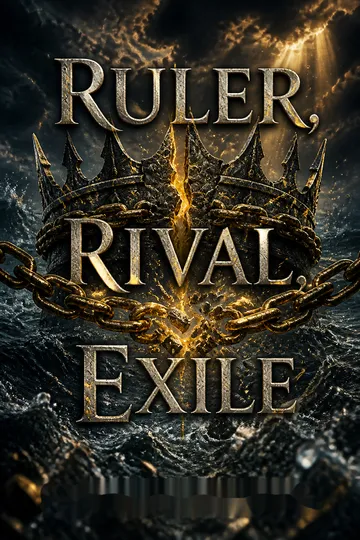
Ruler, Rival, Exile receives mixed reviews averaging 3.97/5 stars. Critics frequently note the series feels overly drawn out, with this penultimate installment serving primarily as setup for the finale. Common complaints include bland characters, predictable plotting, rushed pacing, and short length relative to price. Readers express frustration with characters who won't die and Ceres's continued distrust of Thanos. However, some praise the fantasy elements, battle sequences, and page-turning quality, particularly enjoying villain Stephania's scheming despite wanting her demise.
Characters
Ceres
Powerless island-born heirCeres is a resourceful young leader whose Ancient One heritage gives her unusual power, even as her judgment and courage matter when that power is unavailable. She is the daughter of Berin and sister to Sartes, and her complicated love for Thanos is shaped by both loyalty and a need to reckon with what they have done to one another. Ceres repeatedly notices people whom others would leave behind, then accepts the risk of acting on that attention. Her development in this story centers on choosing the limits of her power as carefully as its uses. She wants to protect others, but is learning that responsibility does not require surrendering every personal boundary.
Thanos
Reluctant prince and rescuerThanos is a former imperial prince trying to make a moral life out of a history of political violence. He loves Ceres and wants a lasting future with her, but his urgency sometimes outruns her need for time and trust. He repeatedly risks himself to save strangers, including Jeva and the inhabitants of a small island, because he cannot accept that their vulnerability makes them expendable. Thanos is also learning that people may fight beside him without recognizing him as their ruler. His strength lies in acting when others need help; his difficulty is accepting that love, leadership, and regret cannot be settled by one brave gesture.
Irrien
Conquering First StoneIrrien is the warlord who leads Felldust's invasion and treats victory as proof that the strong have the right to rule. He prizes discipline among his soldiers because he sees any unauthorized taking as a challenge to his own authority. His ambition reaches beyond plunder: he wants to remake the conquered Empire into a realm bearing his power. Irrien is physically formidable and tactically alert, yet his need to dominate makes him wary of attachment and intolerant of independent claims. He can recognize danger and adapt to it, but he interprets nearly every relationship as a contest over who controls whom.
Stephania
Dispossessed former rulerStephania is a brilliant political operator accustomed to making desire, beauty, and information serve her ambitions. She once ruled Delos and still believes she can convert even humiliation into leverage. Her relationship with Thanos is tangled with genuine attachment, possessiveness, and the memory of choices neither can simply erase. Stephania's instinct under pressure is to regain control before she can afford to trust anyone. That instinct makes her resourceful, but it also narrows her idea of loyalty to a bargain she can manage. She is at her most dangerous when she feels powerless, because she treats survival as permission to use whatever means remain.
Daskalos
Ancient sorcerer and teacherDaskalos is a powerful sorcerer who has lived through the ancient conflict between humans and the Ancient Ones. He approaches magic as a discipline of knowledge, preparation, and sacrifice rather than a simple act of will. His calm manner conceals an instrumental view of other people: he is willing to shape lives toward outcomes he considers necessary. Daskalos's self-image rests on seeing farther than ordinary rulers, but his certainty also lets him treat human autonomy as an inconvenience. He is connected to Stephania through an earlier offer of training and to the wider conflict through his history as a maker of weapons.
Ulren
A patient rivalUlren is an aging Felldust power broker who has spent years waiting for the First Stone's position. He relies on planning and political calculation more than Irrien's direct force, and he understands that a title is useless unless others accept it. His frustration grows when his fellow Stones refuse to acknowledge the new order. Ulren is not simply cautious; he is ambitious enough to act decisively once he believes the moment has arrived, even when the victory may be harder to hold than to win.
Jeva
Bone Folk fighterJeva is a Bone Folk warrior who reads life through the teachings of her ancestors and initially regards death as a natural end rather than something to resist at all costs. She is direct, lethal in combat, and difficult to persuade through abstract arguments. Thanos and Ceres earn her respect by risking themselves to save her, though she remains independent of their values. Her presence tests the difference between honoring the dead and letting the dead determine every choice made by the living.
Akila
Wounded island leaderAkila leads Haylon and joins the fight against the Empire and Felldust. He is a practical commander who understands both the island's defenses and the cost of sending its people into war. His severe wound does not erase his authority; even when he can barely stand, he continues to guide the people around him. Akila's relationship with Thanos combines friendship with the weight of military decisions that have brought danger to his home.
Berin
Ceres's steady fatherBerin is Ceres's father and Sartes's father, a practical craftsman and protector who supports his children through flight and war. He is wary of risks that might endanger the family, but does not dismiss Ceres's judgment merely because it frightens him. His skill with tools and weapons gives him a useful role in preparing Haylon, while his presence offers his children a connection to home amid upheaval.
Sartes
Ceres's devoted brotherSartes is Ceres's younger brother, a capable archer whose caution is often mistaken for timidity. He wants to do what is right but is alert to the dangers that Ceres sometimes accepts without hesitation. On Haylon he works alongside his family and grows close to Leyana. His grounded outlook offers a contrast to the urgent, high-stakes choices made by his sister and Thanos.
Leyana
Sartes's brave companionLeyana travels with Sartes and Ceres's group and contributes practical courage during their escape and defense. Her closeness with Sartes grows through shared danger and work rather than grand declarations. She is attentive to his self-doubt and willing to challenge the way he underrates his own bravery.
Justin
Unexpected northern leaderSir Justin is a relatively junior noble entrusted with Lord West's northern lands while more prominent leaders are absent. He has trained for battle but discovers that leadership also means settling disputes, feeding people, and making decisions without certainty. Justin earns support by speaking honestly about his fear and choosing to help Haylon rather than wait behind vulnerable walls.
General Haven
Displaced imperial commanderGeneral Haven commands imperial soldiers who have been fighting on Haylon. He is proud, disciplined, and deeply aware of the losses caused by Thanos's earlier decisions. With the Empire gone, he has to decide what his soldiers owe to one another and to the people they once fought. He can cooperate without granting Thanos the political loyalty Thanos might once have expected.
Iakos
Haylon's capable deputyIakos manages Haylon while Akila is away and oversees the island's preparations for invasion. He is knowledgeable about its weapons, hills, and defenses, and values practical planning over empty reassurance. His willingness to show Thanos the island's strengths makes him an important bridge between the returning allies and Haylon's defenders.
Zaxos
Keeper of old knowledgeZaxos is an elderly Haylon resident who knows the history of the Ancient Ones and the sorcerers who opposed them. He offers Ceres neither an easy cure nor false certainty, but a dangerous possibility grounded in the past. His knowledge helps connect the immediate crisis to the older conflicts that shaped the world's magic.
Athena
Queen turned covert organizerAthena is a former queen of the Empire who survives occupation by disguising herself as an ordinary slave. She understands how information and symbols can build political power, and she begins turning those skills toward resistance. Athena's approach is patient and covert, shaped by the loss of the court and resources that once protected her.
Kaydn
Healer of the heapsKaydn is an elderly healer who treats the poor and injured people living among Delos's refuse. She offers Stephania help without asking who deserves it, guided by a professional ethic that persists amid occupation and scarcity.
N'cho
Assassin spokesmanN'cho speaks for the Dozen Deaths, a band of killers whose members accept work for different reasons. He is composed and difficult to intimidate, treating assassination as a matter of personal code as well as payment.
Plot Devices
Ancient One heritage
Power and inheritanceCeres's blood connects her to the vanished Ancient Ones and gives her access to unusual powers. The heritage also makes her a symbol around which allies can gather and a target for enemies who fear what she might do. When a potion suppresses her abilities, she must still lead and fight through ordinary judgment and skill. The story therefore treats inherited power as both a resource and a political burden, not a simple solution to danger.
The silencing poison
Blocks inherited magicA specialized poison removes Ceres's access to her Ancient One abilities and prevents even her mother from simply undoing the effect. Zaxos traces its origins to the old conflict between sorcerers and the Ancient Ones, giving Ceres a reason to seek a possible remedy. The poison changes the terms of every later danger: she cannot rely on the power that once made her exceptional, and the proposed cure carries its own threat.
Passage of Monsters
Dangerous route to safetyThe sea passage offers a way around Felldust's fleet, but its sheltered waters contain sirens, a sea serpent, and other predators. The group's narrow boat cannot simply sail through at speed, forcing Ceres and the others to steer, row, and fight at once. The route makes escape costly and demonstrates that avoiding human enemies does not mean finding safety. It delivers the survivors to Haylon with fewer people and damaged equipment.
The half-life island
A bargain with consequencesThe island where Ceres seeks a cure holds overlapping traces of an ancient battle, dangerous creatures, and sorcerers trapped between life and death. Its central relic can potentially restore what the poison took, but the sorcerers demand release in return. Ceres's vision of what their return could unleash turns the cure into a moral test. The island makes the limits of restoration tangible: getting power back may require enabling a new catastrophe.
Daskalos's false memories
Manufactured identityDaskalos uses magic to give Stephania's infant an invented history of teachers, friends, and formative experiences. The fabricated past is meant to produce loyalty and skill without years of ordinary upbringing. The device turns memory into a tool of political design and raises the question of whether an identity built by another person can ever be fully controlled. Its consequences emerge as Daskalos presents the transformed young man as a weapon.
Of Crowns and Glory Series
About the Author

Download PDF
Download EPUB
.epub digital book format is ideal for reading ebooks on phones, tablets, and e-readers.








