


Plot Summary
The Pass Comes Down
Felldust's soldiers pour through Haylon while Thanos leads islanders, former Empire troops, and Northern warriors through trapped alleys, striking and withdrawing before their larger force can surround them. The harbor defenses fail, and enemy landings across the island make holding the city impossible.
At the mountain pass, Thanos refuses to seal the route while defenders are still escaping. General Haven takes up the hammer in his place, drives the wedges into the rock, and is buried when the cliff collapses into a barricade. The boulders slow the invaders, but they cannot save Haylon's city. Thanos has to keep retreating, uncertain whether Ceres can reach the island in time.
The opening makes leadership a problem of choosing who bears the cost, not merely who gives orders. Thanos delays a potentially lifesaving collapse because others are still in danger, while Haven takes the decision out of his hands and pays for it himself. Their exchange also marks a shift in Thanos's authority: he is followed not because everyone accepts his title, but because he makes practical choices under pressure. Yet the retreat leaves him with no illusion that courage alone can hold the island. The pass is a temporary answer to an overwhelming force, and its human price establishes the book's recurring question: what can be saved without turning people into expendable tools?
A Garden Beneath Stone
Trapped in a pit by the half-dead sorcerers, Ceres provokes them into dropping down to attack, then climbs over their bodies and escapes with her swords. Their magic brings down a section of tunnel behind her, buying time rather than ending the pursuit. A stream carries her by boat into a hidden meadow, where a golden dome shelters Lin, a sorceress, and Alteus, one of the Ancient Ones.
They recognize that Daskalos's poison has suppressed Ceres's inherited power. Restoring it will consume their lingering existence, but they agree after Ceres explains the invasion and admits that power must not become an excuse for destruction. Their potion rebuilds her channels of magic; Lin and Alteus dissolve into light, and Ceres turns toward the war.
Ceres's restoration is framed as an ethical examination rather than a prize for surviving the cave. Lin and Alteus ask her to account for the devastation caused when opposing sides treat overwhelming power as a license to erase one another. Her answer is not a claim that she can remain innocent while fighting, but a distinction between protecting people and pursuing annihilation. That distinction matters because her new abilities will make restraint harder, not easier. The couple's sacrifice also gives the scene an intimate counterweight to the battlefield: their centuries of shared life end in an act that enables Ceres to choose a future for strangers.
Jeva Chooses the Living
Jeva reaches a Bone Folk gathering place knowing she may have to invoke the dead to persuade its people to fight for Haylon. Instead, she tells the elders that she has come to speak for the living. After a young man attacks her over the deaths of their people in an earlier war, Jeva kills him and carries his body to the ancestral pyre.
The vision that follows is not a simple command: the dead show her that the Bone Folk can help save Haylon, but warn that many will die and their old way of life will end. Jeva tells the assembly the full cost. The people choose to go anyway, and Jeva sails back with them, committed to saving people rather than obeying ancestral authority.
Jeva's choice is more radical than a rejection of her people's rituals. She refuses to use sacred authority as a shortcut to obedience, even when that tactic might save her friend. By reporting a vision that frightens and divides the gathering, she treats her community as capable of making a moral decision for itself. The elders' eventual consent does not erase the prophecy; instead, it makes the choice genuinely theirs. Jeva's growing attachment to Thanos has altered what she can value, but the change exceeds private loyalty. She begins imagining a society in which the living are responsible for one another, rather than merely serving the dead.
Storm over Haylon
Jeva reaches a beach where Thanos's defenders are nearly cut off and brings her Bone Folk ships crashing into the Felldust attackers. Her fighters turn the battle long enough for Thanos to keep his people from being overwhelmed, though enemy ships soon close around the shore. Then Ceres arrives inside a storm, hurling lightning into the fleet and driving hail through ships and armor.
She joins the fighting on the sand, using her restored magic alongside her blades, while Thanos and Jeva clear enemies from her path. The invasion force breaks, and Haylon survives the first assault. Ceres's power also frightens the people she has saved; Akila asks her to lead the mixed defenders, since she is the one figure they can rally around.
This victory depends on coalition rather than a solitary champion, even though Ceres's arrival dominates the battlefield. Jeva's risky voyage and the defenders' earlier retreats have created the time and position that make Ceres's intervention useful. Her power ends the immediate danger but introduces a different problem: people may follow her from awe as readily as trust. Akila's request gives her a political role she did not seek, transforming magical capacity into public responsibility. The episode therefore refuses a clean equation between victory and legitimacy. Ceres can save the island in a moment, but she must still earn the right to shape what happens after the moment passes.
The Weapon Turns
Daskalos raises Telum from the infant he took from Stephania, using sorcery to accelerate his growth and train him into a lethal fighter. He intends to send the young man after Thanos, then Ceres, so grief will leave her vulnerable to capture.
Telum accepts the assignment only long enough to understand that Daskalos has built him for killing and control. He attacks the sorcerer, impales him, and follows the magical connection to a hidden stone container holding Daskalos's life force.
Telum consumes it, weakening the sorcerer's power, then sails toward Haylon. On the way, he kills a ship's crew and its enslaved rowers alike, believing death releases everyone from captivity. His idea of freedom is already tangled with the violence used to manufacture him.
Telum's rebellion is real, but it is not yet the same as moral independence. He rejects Daskalos's authority while carrying forward the sorcerer's central assumption that other lives are his to end. Even his mercy toward the enslaved crew reproduces the logic of control: he decides their fate without asking what they want. The hidden life force gives his revolt practical force, but its deeper function is to show how a person can escape a maker's command and remain shaped by the maker's categories. Telum reaches for selfhood through the only instrument he has been taught to trust, so freedom initially resembles a new form of compulsion.
Death Has a Leash
After finding the North nearly empty, Irrien rejects the easy killings as an unsatisfying victory and turns his attention to Haylon, where the defenders have gathered. His priest N'cho offers a weapon against Ceres: a creature from the ancient war, summoned at a place saturated with death. Irrien supplies enslaved people as sacrifices, and the ritual tears open a graveyard while bones are dragged into a pit.
A huge, one-eyed creature emerges, its claws and spines killing even the men ordered to restrain it. N'cho chains it long enough to guide its movement, but cannot truly command it. Irrien accepts the risk and sends the beast toward Haylon, trusting that its hunger for life will do what his army cannot.
Irrien's strength is inseparable from his contempt for limits, so the weapon he chooses is a literal extension of his political method. He spends other people's lives to secure power and assumes that a controllable chain can make any violence useful. N'cho's ritual complicates that confidence: the beast can be directed, not governed. This distinction foreshadows the danger of treating force as ownership. Irrien is not merely bringing a stronger fighter to the battlefield; he is unleashing a force whose appetite may exceed the purpose for which it was summoned. His strategic ingenuity remains subordinate to his inability to imagine restraint.
Stephania Buys an Army
Stephania escapes Captain Kang's ship by stabbing him after his attempt to strangle her, then reaches Felldust's capital with stolen gold and a plan. She circulates questions about Ulren until his agents bring her to him. When he orders her enslaved, she incapacitates his guards with powder and overpowers the woman holding her.
Stephania offers Ulren what he wants most: access to the Empire and a way to remove Irrien. In return, she demands marriage and the force needed to reclaim her position. Ulren accepts. As their fleet approaches Delos, Stephania lays out secret landing places and a plan to infiltrate the city in small groups, using its defenders' assumptions against them. Their alliance is built on mutual ambition, not affection.
Stephania's intelligence is tactical and relational: she reads how men use power, then makes herself valuable within their calculations. Her offer to Ulren is not a plea for rescue but a negotiated exchange, shaped by the belief that safety comes from controlling the terms of dependence. That belief is understandable after her captivity, yet it makes every alliance provisional. She expects Ulren to serve her ambitions and also anticipates the point when he may become a threat. The marriage's candor about its political purpose is more honest than a romance, but it offers no emotional trust to soften the eventual struggle over who will command.
A Crown Changes Hands
Stephania's plan gets Ulren's soldiers into Delos before Irrien can recognize the attack. In the throne room, she wounds Irrien with a poisoned knife while Ulren's forces overwhelm his guards. Irrien loses his left hand to stop the poison and escapes to his ships, still bent on attacking Haylon.
Ulren claims Delos, but his victory turns into a breach with Stephania when he announces that he will strip the Empire for wealth and slaves instead of ruling it as they had planned. Stephania poisons him in her rooms and kills him before his captains can settle the question of her authority. She inherits his position, but the city remains contested and the other Stones are already moving against it.
The conquest exposes the narrowness of Ulren's idea of victory. He can seize a capital, but he cannot imagine Stephania's claim to it as anything more than a temporary convenience. She, in turn, treats marriage as a contract whose usefulness ends when its terms change. Their violence is not a sudden collapse of intimacy; it is the logical result of an alliance that never contained trust. Irrien's escape ensures that the coup does not settle the larger war, while Stephania's murder of Ulren leaves her with authority but little security. Power changes hands faster than institutions can stabilize it.
The Queen's Street Army
Living disguised among Delos's poor, Athena learns from servants and the enslaved noble Matteius that Stephania now rules the city. She kills an abusive innkeeper, uses the moment to signal her network, and gathers prisoners, former nobles, and street survivors who have their own reasons to oppose Stephania.
As rival Stones' forces attack, Stephania sends Ulren's captains into battle by portraying the invaders as his murderers, then slips away when the city turns against her. Athena's followers enter the castle and free its prisoners, but Stephania escapes through blocked underground passages and reaches a boat. A current draws her toward Daskalos's island, where she hopes to find the child he took from her.
Athena's revolt grows from the social world she once ruled at a distance. Her disguise gives her access to people she would previously have encountered only as subjects, and their information becomes a form of collective power. Yet her cause remains vengeance as much as liberation. Stephania exploits the rival Stones' attack with the same political agility Athena uses to assemble the dispossessed, so neither woman achieves a clean moral victory. The escape to Daskalos redirects Stephania's ambitions toward her child, but she still approaches motherhood through the language of possession and recovery. The episode reveals how political identities persist even when their old institutions collapse.
Haylon Braces Again
With the first assault repelled, Ceres takes command of Haylon's mixed defenders and orders the beaches and abandoned city fortified. Thanos backs her, though he worries that her new power may fail as it did before. He asks her to marry him before another battle can separate them; Ceres refuses to make a vow out of fear, leaving their future unresolved.
News arrives that Irrien's forces have destroyed Lord West's lands, sharpening Sir Justin's guilt over those he could not evacuate. Justin drills shield formations while Sartes, Leyana, and their father help forge weapons and propose a harbor chain to trap landing ships. When Irrien's fleet appears, Thanos urges the defenders to hold their ground, and the ships begin unloading troops.
The preparations convert survival into shared labor. A blacksmith's fittings, a shield wall, a harbor chain, and an evacuation plan each matter alongside Ceres's magic because no single person can defend every beach. Thanos's proposal introduces a private future into a public crisis, but Ceres refuses to let imminent death dictate the meaning of commitment. Her refusal is not a rejection of him; it is an insistence that their relationship should be chosen under conditions other than panic. Justin's grief over the Northern Coast likewise turns responsibility into work rather than paralysis. The section's hope is practical and collective, though the arriving fleet tests whether that labor can withstand scale.
The Beast Eats Power
Irrien releases N'cho's creature into the fighting, and it tears through defenders while absorbing the life of those it kills. Ceres first attacks it with her magic, only to discover that the beast consumes the power and grows stronger. She changes tactics, draws out the death energy it has gathered, and keeps pulling until the monster's skin and bones collapse.
The stolen force is too dangerous to hold, so she hurls it into Irrien's ships. Crews, chained rowers, and soldiers die as the energy spreads across the fleet; vessels drift, collide, or break against the rocks. Ceres returns to the city battle with the invaders' support shattered, and the defenders surge forward against an army no longer backed by an armada.
Ceres's decisive insight is not that she can overpower the monster, but that she can understand the system sustaining it and reverse the flow. This is a different kind of mastery from simply striking harder. Yet the victory carries an unavoidable moral cost: the death force she releases kills enslaved rowers along with armed attackers, because it cannot discriminate among them. Her choice prevents a wider slaughter on Haylon, but it does not make the dead disposable or the decision pure. The episode places responsibility inside power itself. Knowledge can make force more effective, but it cannot remove the human consequences of using it.
Irrien Falls at Last
In the crush of the landing, Irrien kills Akila, the rebel leader who had wounded him earlier, and leaves Thanos to face him. Thanos takes up Irrien's old sword and defeats the one-armed First Stone after a brutal close fight. He kills Irrien, but the surviving Felldust soldiers surround him before the victory can become safety.
Jeva and the Bone Folk charge in to protect him. Jeva takes a sword wound while fighting at his side, and the allied defenders finally drive the remaining attackers back. As she dies, Jeva asks Thanos to protect her people and live rather than follow her into death. He promises both, holding the friend whose choice to help Haylon has transformed her tribe's future.
The duel makes Thanos confront the difference between defeating a tyrant and escaping the world the tyrant has damaged. Irrien dies, but Thanos is immediately surrounded, and the victory's cost is not erased by the enemy's fall. Jeva's final act completes her change in values: she protects the living, grieves the people who die, and asks Thanos to continue living rather than treating his own death as proof of loyalty. Her people have not escaped loss, but they have begun to imagine a future not governed solely by ancestral demands. The emotional center is a promise that must outlast the battlefield.
The Son's First Freedom
Telum reaches Thanos after Irrien's defeat and reveals that Daskalos sent him to kill his father and weaken Ceres. Thanos cannot make sense of the claim before Telum drives a blade into his chest. Nearby, Ceres fights the young warrior, whose crystal armor and runed sword absorb her attacks. Meanwhile, Stephania reaches Daskalos's mountain, demands her child, and stabs the sorcerer after learning that Telum has taken his hidden life.
Daskalos dies cursing her into a crystal prison. With his control gone, Telum's armor breaks apart and his imposed fury lifts. He recognizes Thanos as his father, but an archer shoots him before he can reach him. Thanos holds the dying young man as they briefly acknowledge the kinship stolen from them.
The parent-child revelation arrives through violence because Daskalos has arranged identity as a weapon: Telum has been trained to interpret his father as an enemy and his own life as a task. Stephania's attack ends the sorcerer's immediate control, but it does not restore the childhood he stole or undo the habits Telum acquired. The young man's sudden freedom is therefore fragile and tragically brief. Thanos's response rejects the easy judgment that Telum is only a killer, yet recognition comes too late for a shared life. The scene distinguishes biological kinship from care: a bond can be real, but it cannot substitute for the years of protection and choice denied to them.
Delos Has No Crown
After Stephania escapes the castle, Athena is left among Delos's fires, ruins, and scattered followers. Her attempt to reclaim the palace has brought down Stephania's rule, but it has not restored the Empire or returned Athena's family. She looks over the burned city and recognizes how her own household's arrogance and cruelty helped weaken the kingdom before the invasions ever arrived.
The crown she wears has become an emblem without a country; she throws it from the tower and sees no future in rebuilding alone. With her husband and son dead, her political cause exhausted, and no life she wants beyond the lost throne, Athena steps from the balcony and dies.
Athena's ending refuses to turn revenge into redemption. She has become capable of organizing people whom her former status kept invisible, but that capacity cannot repair the city or restore the relationships she has lost. Her reflection implicates her own rule in the Empire's collapse, making her grief more than nostalgia for power. The crown's fall is a concrete rejection of dynastic continuity, though Athena cannot imagine a personal identity outside the order it represented. Her death is neither presented as a solution nor as a political restoration. It marks the human cost of a world in which people have learned to understand themselves through possession and rank.
A Life for Thanos
With Telum dead and Thanos fading from his chest wound, Ceres tries to heal him but cannot repair the damage with ordinary magic. She reaches for the presence of her mother, Lycine, and learns that reversing death is possible only if Ceres spends the power that makes her an Ancient One. Ceres gives it all to Thanos.
For a moment, he remains still; then his body is restored and he breathes again, while Ceres is left human. The last Felldust fighters flee or surrender, and the battle ends. Thanos lives, but his survival is not a victory of limitless power. Ceres has chosen the person she loves over the authority and abilities that could have shaped a kingdom.
Ceres's final choice completes the book's argument about power by making its surrender more consequential than its display. Earlier, her abilities let her save an island and defeat a creature designed to kill beings like her. Here, the greatest use of that power is to relinquish it for one life. The decision is intimate, but it also rejects the political expectation that she preserve extraordinary capacity for the sake of future rule. Her mother warns that the choice will change what Ceres can do; Ceres accepts that loss without treating it as a sacrifice that entitles her to gratitude. Love becomes an action with irreversible material consequences.
Epilogue
A year after the battle, Haylon has become the center of a new kingdom, built by people from the lands that once fought one another. Thanos and Ceres marry in a crowded public celebration, while workers continue repairing the city and helping the poor. Sartes and Leyana look toward a quieter life beyond the square.
During the festivities, Ceres's mother, Lycine, appears briefly and gives her a white-gold amulet. She warns that Ceres and Thanos's future children may face a darkness neither parent can yet understand. The wedding closes one war, but the gift and prophecy leave the new family with a reason to prepare for what peace cannot guarantee.
The epilogue makes rebuilding visible through ordinary work: a statue is installed, damaged streets are repaired, and the wedding feast is open to people beyond the nobility. This is a deliberate contrast with Delos, where rulers repeatedly treated wealth and subjects as spoils. The new kingdom's legitimacy rests on participation and care, though the old divisions have not vanished completely. Thanos's thoughts about Telum keep the celebration from becoming uncomplicated triumph; the family he gains cannot restore the son he barely knew. Lycine's warning places uncertainty inside the future without undoing the emotional resolution. Peace is not a guarantee that history has ended, but a chance to meet its next demands differently.
Analysis
The novel's central struggle is not simply who should rule after the Empire falls. It is whether power can be separated from the habits of possession that made the old order cruel. Irrien treats people as lives to spend, Stephania treats alliances as contracts to discard, Daskalos turns a child into a weapon, and Athena discovers that a crown cannot restore the relationships or city it once signified. Their different ambitions share an assumption: safety comes from making other people answerable to one's will.
Ceres, Thanos, and Jeva offer alternatives, though none is painless. Ceres accepts leadership because a divided defense needs coordination, then gives up her exceptional abilities to save Thanos. Thanos earns loyalty by serving beside people whose origins once separated them. Jeva risks her standing among the Bone Folk by telling the truth about the cost of fighting, allowing her people to choose rather than using sacred authority to compel them. Their choices make community an active practice, built through shared risk and promises that survive loss.
The book is skeptical of victories that leave their victors untouched. Haylon survives, but General Haven and Jeva die; the fleet is broken, but Ceres's use of death energy kills captives as well as enemies. Telum briefly finds an identity beyond Daskalos's design, yet the recognition between father and son arrives after years have been stolen. These consequences prevent power from becoming a clean solution. The ending's hope rests instead on a change of scale: Ceres and Thanos build a kingdom through repair, public celebration, and inclusion rather than conquest. Their future is not guaranteed, but the epilogue suggests that people can inherit a damaged world without repeating its old arrangements.
Review Summary
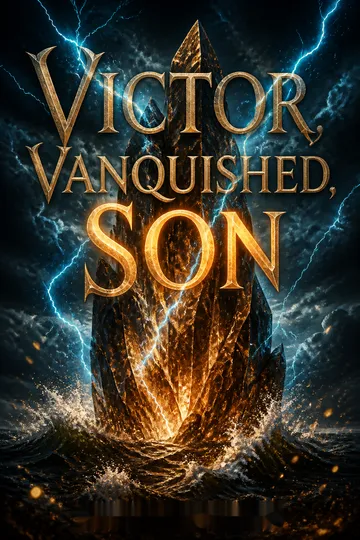
Victor, Vanquished, Son receives mixed reviews as the conclusion to the eight-book series. Many readers found it rushed, repetitive, and anticlimactic, criticizing weak character development, predictable plots, and constant battle sequences. Several noted loose plot threads, particularly regarding Thanos' mother. However, some appreciated the closure it provided and praised specific character arcs like Athena's. The audiobook format seemed more enjoyable than reading. Overall, opinions range from extremely disappointed to satisfied, with an average 4.04/5 rating reflecting the divided reception.
Characters
Ceres
Reluctant keeper of powerCeres is a fighter whose inherited connection to the Ancient Ones gives her extraordinary abilities, but she measures strength by what it can protect. Her relationship with Thanos offers tenderness without erasing the strain of their public responsibilities, while her family and the defenders of Haylon make her answerable to people beyond herself. She is wary of treating power as proof of wisdom. Encounters with ancient survivors force her to consider how easily even a just cause can become destructive. Ceres's central tension is between the reach of what she can do and the limits she accepts for herself.
Thanos
Prince turned defenderThanos is the former imperial prince who now fights alongside people who once stood outside his world. He earns loyalty through practical courage, including retreating when a position cannot be held and trusting others to make costly decisions. His bond with Ceres is sincere but tested by the demands of command and the fear that war may leave no time for a future. He carries the burden of choices made against his family and country, yet refuses to let inheritance dictate whom he protects. His strength is not invulnerability, but the willingness to keep responsibility personal.
Jeva
Voice for the livingJeva is a Bone Folk priestess and formidable warrior whose culture treats death as a sacred destination and ancestral guidance as authority. Her friendship with Thanos unsettles that inherited certainty because he risks himself for people who cannot repay him. Jeva begins to value the living not merely as instruments of ancestral wishes, but as people whose lives matter in their own right. She remains brave and direct, yet her changing beliefs make her more attentive to grief and individual choice. Her role joins a personal loyalty to a cultural challenge that reaches beyond one battle.
Stephania
Architect of her own ruleStephania is a political survivor who uses charm, intelligence, poisons, and calculated alliances to escape dependence on stronger people. Having experienced both royal privilege and captivity, she sees security as something that must be seized before another person can take it away. Her treatment of marriage as a bargain is not naivety but a defense against vulnerability, though it also prevents trust from taking root. Stephania can read a room quickly and turn an opponent's assumptions into an opening. Her ambition combines a genuine desire to recover what she has lost with a willingness to make others pay for it.
Irrien
Conqueror who trusts forceIrrien rules through personal violence and believes that survival belongs to whoever can take it. He values strength, victory, and obedience, treating the deaths of others as acceptable costs of his own advancement. His injuries do not soften him; they sharpen his need to prove that no defeat can diminish his authority. He can recognize tactical danger, but his contempt for restraint blinds him to the instability his methods create. Irrien is frightening not only because he is a skilled fighter, but because he sees other people as resources to spend rather than lives with claims of their own.
Athena
Dispossessed former queenAthena is the former queen of the Empire, reduced to scavenging and listening among the people her court once kept at a distance. She possesses political memory and an instinct for organizing information, which become more useful than her lost title. Her desire to reclaim power is deeply entangled with grief and resentment, and she struggles to separate justice from revenge. Athena's view of herself has been shaped by rank, family, and the expectations of rule. Life among ordinary people exposes the distance between the Empire's claims of greatness and the damage it left behind.
Telum
Sorcerer's crafted weaponTelum is a young warrior formed and trained by the sorcerer Daskalos, equipped with magical strength, crystal armor, and a weapon marked by runes. He is highly observant and capable of making choices, but his understanding of freedom has been distorted by a life organized around violence. He questions the purpose imposed on him even as he repeats the idea that killing can release others from suffering. His story asks how much agency a person can claim when their body, history, and sense of right and wrong have all been shaped by someone else's design.
Daskalos
Sorcerer who makes weaponsDaskalos is an ancient sorcerer who treats magic as a means to control people and arrange history to suit his plans. He has spent centuries protecting his own power and sees human beings as pieces in a larger design. His craft can reshape bodies, accelerate growth, and bind a person to a purpose, but it cannot guarantee obedience. Daskalos's confidence rests on secrets and magical safeguards, making any loss of control a threat to the identity he has built around mastery.
Akila
Rebel leader of HaylonAkila is a leader among Haylon's rebels, practical in battle and skeptical of rule based solely on blood or inherited status. He has been wounded in the struggle against Irrien, yet continues to help coordinate a defense that includes people from several rival communities. Akila recognizes that a shared cause requires more than a common enemy; it needs someone different groups can trust. His judgment helps turn Ceres's extraordinary abilities into a form of collective leadership.
Sir Justin
Northern Coast commanderSir Justin begins as a disciplined retainer shaped by the ranks and loyalties of the Northern Coast. Fighting alongside islanders, former imperial soldiers, and refugees changes what he understands command to mean. He helps organize defenses and teaches soldiers to rely on the person beside them, rather than fight as isolated heroes. News of the destruction in his homeland weighs on him, but he turns guilt into renewed work. Justin's arc reflects how duty can widen beyond the lord or territory that first defined it.
Ulren
Aging lord of FelldustUlren is a powerful Felldust ruler whose long climb through a violent hierarchy has taught him to prize force and possession. He is capable of recognizing a useful plan and appreciates Stephania's strategic intelligence, but he ultimately understands the Empire as a source of wealth and slaves rather than a country to govern. His ambition makes him both a partner and a danger to anyone seeking power beside him. Ulren's authority rests on the belief that strength entitles him to decide what others receive.
General Haven
Old soldier of HaylonGeneral Haven is an experienced commander who fights beside Thanos despite his age and physical limits. His blunt manner hides a growing willingness to recognize responsibility beyond his former role as a butcher. He understands Haylon's terrain and the cost of delay, making his judgment crucial during the retreat.
N'cho
Priest of the Dozen DeathsN'cho is a death priest and assassin who researches forbidden magic for Irrien. Patient and composed, he offers power without pretending it is safe. His ritual knowledge makes him useful to a conqueror, while his loyalty remains closely tied to the opportunities that dangerous secrets provide.
Lycine
Ceres's ancient motherLycine is Ceres's mother and one of the Ancient Ones, a figure connected to a history of immense power and devastating conflict. She cares deeply for her daughter but cannot simply remove every danger or consequence from Ceres's path. Her counsel balances affection with an understanding of what power can cost, giving Ceres a maternal connection that is also a link to a vanished civilization.
Lin
Sorceress of the golden domeLin is a sorceress preserved with Alteus in a hidden sanctuary beneath the island. Her long bond with him shapes the patience and tenderness with which she receives Ceres. Having witnessed the damage of an ancient war, she insists that power must be judged by what it does to the world around it.
Alteus
Ancient One in hidingAlteus is an Ancient One who remains with Lin in the sanctuary's golden dome. His memories of war make him cautious about restoring Ceres's abilities, but he is willing to judge her by her understanding of violence rather than her bloodline. He represents knowledge gained through failure as well as power.
Sartes
Ceres's brother and smithSartes is Ceres's brother, a practical young man who helps prepare Haylon for war beside his father and Leyana. He contributes through forging and defensive ideas rather than seeking command. His affection for Leyana and loyalty to Ceres give him a stake in the future beyond the battlefield. Sartes stands for the ordinary labor that makes resistance and rebuilding possible.
Leyana
Sartes's partnerLeyana is close to Sartes and works with him and his family to prepare Haylon's defenses. She offers practical ideas, including a chain to slow ships entering the harbor, and shares his hope that the people can survive the invasion. Her presence gives Sartes a personal future to protect amid the military preparations.
Plot Devices
Ceres's Ancient blood
Power with a priceCeres's inherited connection to the Ancient Ones allows her to shape elements of the physical world, move with extraordinary speed, and survive wounds that would kill an ordinary fighter. Daskalos's poison suppresses this ability, forcing her to seek help rather than assume it will always answer her. Lin and Alteus restore it through a costly act, after which Ceres must decide how to use it without reproducing the devastation of the ancient war. The power drives the military conflict and the ethical conflict together: the more effectively Ceres can protect others, the greater the consequences when she uses force.
The golden sanctuary
A test before restorationA meadow and golden dome hidden inside the sorcerers' tunnels separate Ceres from the shifting visions of the ancient war. The sanctuary holds Lin and Alteus, preserved as conscious remnants rather than ordinary living beings. Its peaceful stillness offers a sharp contrast to the trapped sorcerers and ruined landscape outside. Lin and Alteus make Ceres explain her motives before they restore her abilities, turning the place into both refuge and moral examination. Their decision also makes the return of her power inseparable from their own disappearance.
The Bone Folk pyre
Ancestors against the livingThe Bone Folk use ancestral ashes and sacred smoke to seek visions from their dead. Jeva's visit to the pyre forces her to confront the people her choices have already cost and to hear what further war may demand from her tribe. The vision does not offer an easy command; it shows the likely deaths and cultural loss alongside the chance of saving Haylon. Jeva reports the warning truthfully, letting the living decide whether to fight. The ritual makes her cultural break concrete: she respects the dead but no longer treats their authority as the only measure of a life.
Daskalos's life anchor
A hidden source of controlDaskalos conceals his life force in a stone container protected by illusion and magic. Telum follows the connection between maker and creation, finds the hidden source, and consumes it, weakening Daskalos and making the sorcerer vulnerable. The life anchor gives physical form to Daskalos's belief that control can be secured through secrecy. Its theft does not immediately undo the conditioning imposed on Telum, but it becomes essential to the later weakening of that grip. The device links personal rebellion to the larger magical conflict and gives Telum a means to challenge the person who shaped him.
The death creature
An anti-Ancient weaponN'cho summons a monstrous being from a graveyard saturated with death and uses chains and spells to direct it toward Haylon. The creature absorbs the life of those it kills, including the power Ceres sends against it, so ordinary attacks only feed its strength. Ceres survives by reversing that exchange, drawing the stored death energy out and casting it into Irrien's fleet. The creature converts Irrien's willingness to sacrifice others into a battlefield threat, while its defeat depends on Ceres understanding how it works rather than meeting its violence with greater force.
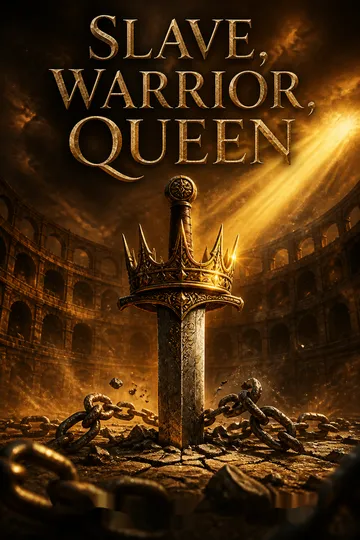
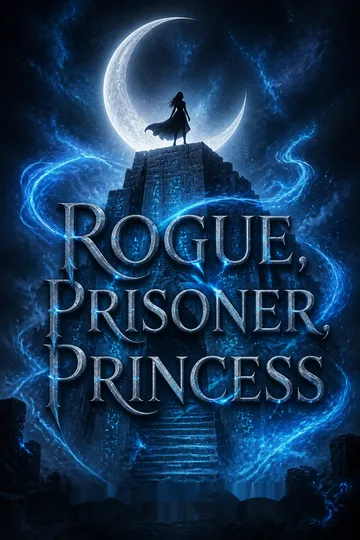
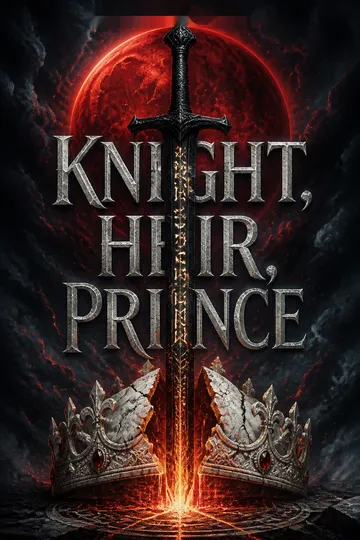
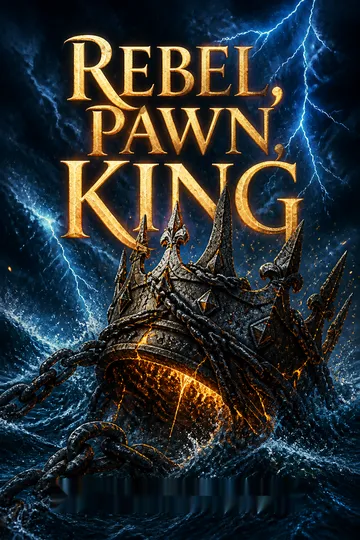
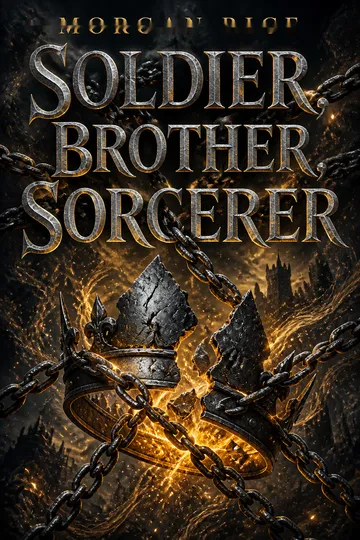
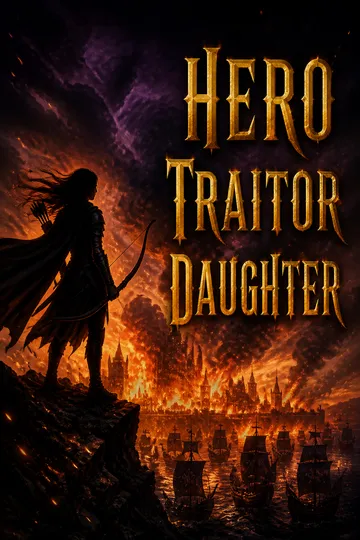
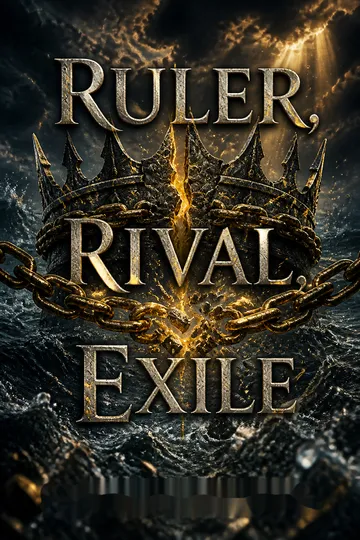
Of Crowns and Glory Series
About the Author

Download PDF
Download EPUB
.epub digital book format is ideal for reading ebooks on phones, tablets, and e-readers.








