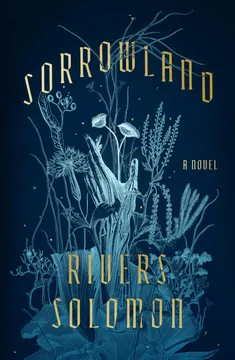


Plot Summary
Twins Beneath the Pines
At fifteen, Vern is living alone in the woods after fleeing the Blessed Acres of Cain, the Black separatist religious compound where she grew up. She has just delivered one baby when a stranger arrives carrying an animal dressed in infant clothes. As she escapes him, labor returns and she gives birth to a second child.
She calls the twins Howling and Feral, then realizes the wolf attack she experienced was a vision, not a real chase. The stranger has been following runaways, and his warning links him to the compound. Vern suspects that Reverend Sherman, her husband and the compound’s leader, has poisoned its people and planted the terrors in their minds. Her flight has not ended the danger.
The opening makes motherhood an immediate physical fact rather than a moral transformation. Vern cannot romanticize her children or the wilderness: she is exhausted, threatened, and still unsure whether she wants to keep either. Naming the twins on her own terms is a first act of authorship, but the planted haunting shows how thoroughly Cainland travels with her. Her escape has changed the setting without yet freeing her mind or body from the people who controlled them.
The Compound's Open Secret
Vern remembers how her closest friend, Lucy, twice tried to get away from Cainland. Lucy’s mother first lost a custody fight to Lucy’s abusive father, then arranged another escape. Vern watched the final departure from the temple attic and kept silent so the compound would not stop her.
Vern herself had been married as a child to Sherman after a police officer sexually exploited her and returned her to the compound. Pregnant and increasingly defiant, she refused the sedatives and nightly restraints Sherman imposed.
When he gave her cough medicine, she drank enough to loosen her judgment, then snapped a bed strap and walked into the woods. Her strength, already growing inside her, made escape possible. Lucy’s freedom had shown Vern what she wanted, but nobody came to rescue her.
The history complicates the language of rescue. Lucy has a mother willing to make repeated attempts, while Vern’s mother remains inside a community that has stripped away the means to leave. Vern’s escape is neither a clean declaration nor a carefully planned liberation; pregnancy, coercion, and a moment of intoxicated opportunity shape it. Her early strength appears as a tool before she understands its source. The contrast exposes how autonomy can depend on material openings, not simply courage.
A Stranger Named Ollie
Vern survives by hunting, foraging, and making clothes for the twins, while the fiend’s staged animal deaths keep warning her away from the compound. After finding a dead child in the river, she is lured from camp by a fire and follows its maker to a roadside bar. There she meets Ollie, a red-haired motorcyclist who gives her a first taste of speed, music, and adult attention.
Vern returns to her babies, but begins visiting Ollie secretly. Her strength grows alongside headaches, pain, and a strange rash spreading across her back. At the bar, she finally reaches her mother by phone. Ruthanne admits that Cainland’s hauntings are drug-induced, but defends the compound and cannot leave. Vern hangs up with their relationship newly broken.
Ollie’s appeal lies partly in what she seems to offer beyond the woods: a ride, a room, physical intimacy, and a world Vern has never been allowed to explore. Yet Vern’s longing is not uncomplicated desire. It grows beside abandonment, pain, and a learned habit of seeking intensity through danger. Ruthanne’s admission breaks the comforting possibility that her mother simply did not know. Vern now faces a more difficult truth: love can coexist with complicity, and naming the abuse does not automatically make a person able to leave it.
The Baby Clothes
At Ollie’s apartment, Vern finds a box of baby clothes and recognizes the same infant imagery used to dress the fiend’s dead animals. Ollie has been tracking her for Cainland, though she claims she meant only to bring her back. Vern fights her with a lamp, then races to camp and finds Howling and Feral suspended above a fire. She breaks free of Ollie’s grip, beats her, and throws her against a tree.
Certain she has stopped the threat, Vern cuts down the twins and leaves the forest before Cainland’s people can arrive. The storm that follows destroys their food stores and shelter. With her body weakening and nowhere left to remain, Vern straps both children to herself and sets out toward the distant home Lucy once described.
The baby clothes make Ollie’s earlier tenderness newly suspect, but they do not erase the intimacy Vern experienced. That contradiction is emotionally important: betrayal cannot be reduced to proof that every shared moment was false. Vern’s violence protects the twins, yet her belief that Ollie is finished proves premature. The flood then removes the wilderness refuge that has made survival possible. Her next movement is not toward a sure home, but toward the one place she has imagined as safe, a destination founded on Lucy’s remembered promise.
The Road Out
Vern walks for days with the twins, teaches them to read the North Star, and brings them to a highway they have never seen. After hitching a ride with a trucker, she reaches Sugar Mountain County and follows Lucy’s old address to Auntie’s Diner. It is not a home but a community kitchen run by Bridget, Lucy’s aunt.
Bridget recognizes Vern from an old photograph and takes her to a cabin, where Vern’s worsening pain and fever leave her barely able to stand. Bridget calls her niece Gogo, a trained paramedic. On the drive, a huge antlered creature appears to Vern and swallows her from sight. The vision feels more substantial than her earlier terrors. By the time Bridget reaches the cabin, Vern is collapsing.
Vern’s journey is driven by a borrowed map: she is following Lucy’s old address, not a reliable understanding of the world. The diner transforms that imagined refuge into something more practical. Bridget offers food and shelter, while Gogo brings medical skill without demanding that Vern first become an obedient patient. The antlered apparition marks a shift in the haunting. It does not merely repeat fear from the past; it seems to belong to the bodily change Vern is undergoing. Her survival now depends on accepting care from people she has only just met.
The Passenger Named Fungus
Gogo cools Vern through a dangerous fever while Bridget and the children stay beside her. Vern sleeps for ten days, then wakes alive despite a temperature and heart rate that should have killed her. Tests show that an unknown fungus is growing through her body and fruiting across her back as a hard, flexible exoskeleton.
The fungus has also given her strength, rapid healing, and access to frightening visions. As Vern recovers at Bridget’s cabin, Gogo helps her understand what is happening rather than dismissing it as madness. Vern learns that her body has adapted to the infection, not defeated it. For the first time, the impossible has a name, though neither Gogo nor Vern knows what the fungus will make of her.
The medical explanation offers clarity without restoring control. Vern is not cured, and the name fungus cannot neatly contain what it does. Its effects are simultaneously injury, adaptation, and capacity. Gogo’s response matters because she does not force a choice between wonder and evidence; she observes, tests, and stays present even when the results exceed her training. For Vern, this care challenges a survival ethic built on refusing dependence. Knowledge becomes a form of companionship, though not a guarantee of safety.
Cainland's Hidden Design
With Gogo’s help, Vern searches the computer she took from Ollie’s apartment. Its medical records suggest that people at Cainland were selected for their likelihood of surviving the fungus.
Gogo suspects that Eamon Fields, the compound’s original leader, may have been a government infiltrator who turned a Black mutual-aid movement into a controlled experiment. Vern recognizes how his rules, restricted phones, and isolation from outsiders also kept power in his hands.
She and Gogo grow closer as Gogo tends her pain and reads to her; their intimacy is tentative, complicated by Vern’s history with Ollie and her fear of being controlled. Vern’s body continues changing, while her son Howling’s curiosity and growing independence make her confront how much of her own past she has passed on.
The conspiracy reframes Cainland without making its original promise meaningless. The settlement began as collective protection, and that history helps explain why people accepted its discipline. Eamon’s methods exploited a real need for safety and community, turning those goods into instruments of confinement. Vern’s relationship with Gogo offers a contrasting form of care: it asks for trust but does not require surrendering judgment. Still, Vern’s fear of dependence remains active. Her protective strength can injure the very people she loves, as her changing body makes control an ethical problem, not merely a physical one.
Queen Comes Calling
Ollie reaches Bridget’s cabin with Queen, an older woman whose enormous bone armor marks her as another person changed by the fungus. Vern hides the twins, but Ollie burns her out of hiding with a hallucinated fire.
Howling and Feral attack with knives and a rifle, buying Vern time to flee into the woods. Queen pursues her, then collapses under electric shocks from the restraints Ollie has fitted to her. Two hunters arrive and threaten them both. When one attacks Queen, she tears him apart, giving Vern time to escape.
Queen communicates through images, revealing that the mysterious creature haunting Vern is connected to her and that she has been under Ollie’s control for decades. Vern leaves her behind, unsure whether Queen is enemy, victim, or both.
Queen makes Vern’s possible future visible, but the encounter refuses a simple monster-versus-hero division. Queen’s power is undeniable; so is the violence used to restrain her. Ollie’s electric collars turn an extraordinary body into a managed weapon, while the hunters respond to what they cannot classify with immediate aggression. Vern’s decision to run is practical, not a rejection of Queen’s suffering. She has two children to protect and no reliable way to free a woman whose strength exceeds her own.
The Motel Ambush
Wounded and alone, Vern reaches the Vital Springs Inn, where Linda and her daughter Michelle shelter her during a storm. Vern steals Linda’s phone and calls Gogo, but refuses to give away her location. After reporters identify her as a suspected murderer, Michelle helps her find a disguise.
Linda alerts the authorities, and Ollie arrives with soldiers and Queen. Queen releases fungal spores that make the soldiers turn their guns on themselves. Vern cannot stop the slaughter before Ollie shoots Gogo in the chest.
Ollie then tranquilizes Vern and takes both women. The twins remain hidden with Bridget, but Vern is bound in a transport vehicle beside Gogo’s wounded body. Queen, still restrained, is carried with them. Vern has lost her freedom again, and Gogo may not survive.
The motel’s brief refuge gathers ordinary vulnerabilities around Vern: Linda’s credulity, Michelle’s precarious family life, and a storm that blocks escape. Queen’s attack demonstrates the fungus as a power over other minds, not only a source of bodily strength. Vern recoils from the soldiers’ deaths even as she recognizes the danger they represent. Gogo’s shooting turns the conflict personal and immediate. Vern’s instinct to isolate herself has failed to protect the people she loves; it has left her to face captivity without them.
The Transport Breaks
Inside the moving transport, Ollie explains that she helped shape Cainland into a contained research community and recruited people whose bodies might host the fungus. Vern uses her expanding exoskeleton to rupture her glass restraints, then overturns the vehicle.
She escapes the nerve agent that incapacitates Ollie, frees herself, and carries Gogo outside. When Ollie fires at them, Vern attacks and kills her. Queen, freed from her restraints, grieves for Ollie and then shoots herself.
Vern takes Ollie’s phone and uses her severed head to unlock it, finding a way to get Gogo to a hospital. As they travel, Vern releases fungal spores into Gogo. Gogo’s chest wound disappears, and she wakes. Vern now understands she can transmit the fungus and heal, but that power has already cost Queen her life.
Vern’s victory is neither clean nor triumphant. She destroys the person who controlled Queen, yet cannot persuade Queen to imagine a life beyond that control. The killing is an act of defense shaped by years of being treated as a subject rather than a person, but it also reveals how easily power can become its own permission. Healing Gogo offers another use for the fungus, one grounded in care rather than domination. Vern has gained agency, but she must decide what kind of force she will be.
Cainland Under Fire
After getting Gogo to safety and learning that Howling and Feral are with Bridget’s contacts, Vern turns back toward Cainland. Gogo joins her, despite Vern’s warnings, and calls on her network to bring witnesses and reporters. At the compound gates, soldiers fire on them.
Vern shields herself and Gogo with her exoskeleton, then uses fungal spores to stop the assault. Inside the settlement, gunfire continues. Vern reaches the temple too late: her mother, her brother Carmichael, and the rest of the Cainites have been killed.
Police and news crews gather outside as Gogo tries to keep Vern upright. Vern blames her escape for bringing the attack, but Gogo reminds her that the state chose the massacre. The compound’s secret has become public, but Vern’s family is gone.
The return reverses Vern’s original escape: she enters the place that once confined her, now carrying a body that can withstand its guards. Yet strength cannot arrive in time to prevent the central loss. The public witnesses the violence, but visibility does not itself undo it. Vern’s self-blame echoes the logic of abusive institutions, which make victims responsible for the consequences of resistance. Gogo’s insistence that the state chose its actions pushes against that inherited guilt, even as Vern must face the real cost of having left people behind.
Ruthanne's Borrowed Eden
The fungal network floods Vern with memories of her mother, Ruthanne. She sees Ruthanne grow up amid poverty and neglect, then find structure and affection with strict relatives who later die. After losing her footing in the outside world, Ruthanne falls in love with Birdy, who dies of AIDS.
Ollie, then a social worker, offers Ruthanne a place at Cainland rather than letting her lose custody of Vern. Ruthanne enters believing the compound will give her daughter the stable childhood she never had.
Its gardens, food, schooling, and community fulfill that promise at first, even as Sherman’s rules and control tighten around them. Vern understands why her mother stayed, but the memories do not erase the harm Ruthanne allowed. Knowing her history deepens the wound without closing it.
Ruthanne’s memories make complicity legible without turning it into innocence. Cainland answered concrete needs that the surrounding world had failed to meet: food, childcare, safety, and a sense of being wanted. Its power came partly from making those provisions real. That history explains why Ruthanne defended the compound even after recognizing its drugging and abuse. Vern receives context where she once had only accusation, but context cannot substitute for accountability. The memory forces her to hold love, betrayal, and social abandonment together without simplifying any of them.
Lucy Never Escaped
Reverend Sherman appears to Vern as a living memory and tells her that the dead become part of the fungus’s network. He also reveals that Cainland’s security has tightened and that Carmichael had been left under the influence of a new preacher.
Vern realizes the visions may contain actual lives, not just hallucinations. She searches the memories for Lucy and learns that the girl never reached her mother after her final departure. Lucy’s father caught her near the compound and struck her dead, then buried her shallowly by the woods.
The truth devastates Vern, who had spent years imagining Lucy alive somewhere beyond Cainland. She can now understand why Lucy’s memories keep returning, but cannot undo the years she spent searching for a living friend.
The revelation changes the hauntings from symptoms into a form of testimony. The dead are not vague symbols summoned to frighten Vern; their memories preserve lives that powerful institutions and abusive families can erase. Lucy’s fate is especially painful because it overturns Vern’s sustaining fantasy of eventual reunion. Yet the fungus also gives her a connection to Lucy that survives ordinary distance. That connection is not a replacement for the life Lucy lost. It is a demand to remember her as a person rather than as Vern’s imagined rescue.
The Dead Breathe Again
Vern decides to use the fungus deliberately, not merely to defend herself. With Gogo and Bridget’s help, she opens the dead Cainites’ mouths and releases spores carrying their memories. The bodies do not respond until Gogo uses a defibrillator to restart each heart for an instant.
The fungal network takes hold during those brief beats, and the dead begin breathing again. Vern’s mother and Carmichael are among those revived. Ruthanne calls Vern’s name as paramedics carry her away, but Vern cannot answer with forgiveness.
She and Gogo do not pretend resurrection has repaired what happened or what divided them. Vern has brought her people back from the immediate violence, yet the future of Cainland and the consequences of its experiment remain unsettled.
Resurrection is presented as collaboration between biological knowledge and a power neither character fully understands. Vern supplies the fungus and the memories; Gogo supplies the defibrillator and the practical insight that a heartbeat may be enough. Neither alone can restore the dead. The scene also refuses a sentimental equation between survival and reconciliation. Ruthanne’s return does not erase her choices, and Vern does not owe instant forgiveness simply because death has been reversed. Life is recovered, but relationships remain morally unfinished.
The Woods Still Grow
After the survivors are taken for care, Vern leaves the compound’s ruined temple and walks with Gogo, Howling, and Feral to the woods. She finds the place where she buried Giovanni’s Room and digs the book out of the earth. Gogo names the land as Tonkawa land, and the group pauses to acknowledge that the ground beneath them has its own history.
The twins explore while Vern stays beside the people who have become her chosen family. She still grieves Lucy, remains unsure what to do with her mother, and knows the wider system that built Cainland has not been defeated. But she is no longer alone in deciding what comes next. The story closes with Vern joining the forest’s night sounds, claiming neither innocence nor dominion.
The ending returns Vern to the woods without pretending that retreat can undo the violence of the world. Her choice is different now: she returns with companions, knowledge, and a responsibility to land that Cainland’s ideology obscured. Recovering the book also links her to Lucy and to the literacy she fought to claim. Vern’s future remains uncertain, but it is no longer defined only by escape or endurance. Her final act is participation, a voice among other living things rather than a plea to be rescued.
Analysis
Sorrowland places a body under several competing claims. Cainland, the state, abusive men, and even the people who call themselves protectors all try to define what Vern is and what her body is for. The fungus complicates that struggle because it is simultaneously infection, adaptation, memory, and a source of power. It does not make Vern automatically free or good. It gives her new capacities that can shield, injure, dominate, or heal, leaving her responsible for choices that are harder than simply resisting an enemy.
The novel also refuses to dismiss the appeal of oppressive communities as mere gullibility. Cainland feeds people, educates children, and offers a refuge from racism and poverty. Those provisions matter. Their reality helps explain how leaders turn belonging into leverage, and why leaving can feel like abandoning the only available home. Ruthanne’s history makes this especially clear: her choice to stay grows out of need as well as denial. Vern’s anger is justified, but understanding the conditions around her mother prevents that anger from becoming a complete explanation.
Memory supplies another form of justice, though not an easy one. The fungus preserves people whose deaths might otherwise be hidden, allowing Vern to discover the truth about Lucy and to bring the murdered Cainites back. Yet recovery cannot return the lives taken or guarantee that survivors will reconcile. Vern’s final movement toward the woods is therefore not a declaration that nature is innocent or that the past has healed. It is a choice to build relationships and obligations beyond the systems that claimed her, while acknowledging the histories held by the land itself. The ending’s hope is active and unfinished: survival creates the possibility of a different future, not proof that the damage is over.
Review Summary
Sorrowland receives mixed but generally positive reviews, averaging 3.81/5. Many praise Rivers Solomon's lyrical, ambitious prose and the novel's unflinching exploration of race, gender, sexuality, religion, and America's history of experimenting on Black bodies. Readers frequently highlight protagonist Vern's compelling complexity and the haunting atmosphere of the first half. Common criticisms include an overambitious scope, a weaker final act where momentum falters, and conveniently plotted resolutions. Despite reservations, most reviewers consider it a memorable, genre-defying work blending horror, sci-fi, fantasy, and literary fiction.
People Also Read




Characters
Vern
Defiant wilderness motherA sharp-tongued, observant girl raised in the Blessed Acres of Cain, Vern resists the rules and explanations imposed on her. She has albinism, nystagmus, and low vision, and she understands the world through touch, sound, memory, and practical skill. Her skepticism protects her from some of Cainland’s rhetoric, but it does not make her immune to coercion or loneliness. As a mother, she is fiercely protective and often unsure how to express tenderness without turning it into control. Her queer and gender-nonconforming identity is another part of herself she refuses to treat as a defect. Vern’s central drive is to remain self-determining in a world that repeatedly claims ownership of her body.
Howling
The questioning twinVern’s firstborn twin is quick-witted, verbal, and intent on understanding everything he encounters. In the woods, his boldness makes him an eager climber and learner; beyond them, it often brings him into conflict with rules he has never had reason to obey. He tests Vern’s promises and notices what she tries to hide, including the ways her changing body affects those around her. His curiosity is not simply precocity. It is how he establishes some control over a world whose scale and customs are new to him.
Feral
The tender twinVern’s second twin is gentle, exuberant, and drawn to new foods, animals, and people. He speaks later than Howling and sometimes needs more time to see or understand, but his curiosity is no less strong. Feral watches Vern closely and often offers the care she struggles to give herself. His sweetness is not passivity: he explores, improvises, and joins his brother in defending their family. His outlook helps counter Howling’s suspicion and Vern’s instinct to meet every unknown with resistance.
Gogo
The steadfast healerBridget’s niece, Gogo is a trained paramedic whose experience in activism and community care has made her both capable and blunt. She approaches Vern’s illness with practical attention, treating the impossible as something worth examining rather than denying. Gogo is intellectually curious, politically committed, and more comfortable acting than discussing her own vulnerability. Her relationship with Bridget is loving but strained by disagreements about family, inheritance, and what it means to protect someone. With Vern, she offers care that makes room for resistance, and she expects honesty rather than obedience.
Ollie
The dangerous motorcyclistA red-haired woman with a motorcycle and a guarded manner, Ollie first offers Vern a glimpse of freedom beyond the woods. She is charismatic without being easy to know, and her history has taught her to rely on control and self-preservation. Ollie’s connection to Cainland gives her unusual access to Vern’s life, while her conviction that the project serves a larger purpose lets her rationalize harm. Her relationship with Vern is shaped by desire, secrecy, and competing ideas of what protection means.
Queen
The formidable elderAn older woman associated with Cainland’s earliest history, Queen possesses an imposing presence and a body that does not fit ordinary expectations. Her actions suggest both immense power and deep vulnerability. She communicates in ways Vern must learn to interpret, and her connection to Ollie makes care difficult to separate from control. Queen challenges Vern to imagine what a transformed body can become, while also showing how isolation and coercion can bend a person’s sense of loyalty.
Ruthanne
Vern's conflicted motherVern and Carmichael’s mother, Ruthanne is a woman who has known neglect, instability, and the comfort of being cared for. She seeks a stable home for her children and finds one in Cainland, where community and material security answer needs the outside world has left unmet. Her optimism can be generous, but it can also become a defense against truths she cannot bear to act on. Her bond with Vern is marked by love, dependence, and painful disagreement over what a mother should have done.
Lucy
Vern's restless best friendVern’s closest childhood friend, Lucy is witty, stylish, and unwilling to accept the compound’s rules as natural. She knows more about the outside world than Vern does and speaks openly about the dangers inside Cainland. Their friendship gives Vern a rare sense of recognition, including the possibility that her attraction to girls is not shameful. Lucy’s independence inspires Vern, though their different circumstances shape what each can risk and imagine.
Reverend Sherman
Cainland's persuasive leaderVern’s husband and the public leader of the Blessed Acres of Cain, Sherman is a gifted preacher who makes control sound like protection. He presents the compound as a refuge from racism and poverty, and his rhetoric draws on genuine historical grievances. His authority rests on isolation, discipline, and the ability to recast coercion as spiritual care. Though less openly brutal than his father, Eamon, Sherman remains invested in managing the people around him, especially Vern, whose skepticism threatens the certainty he cultivates.
Carmichael
Vern's curious younger brotherVern’s younger brother is an avid reader and collector of facts, with a gentleness that sets him apart in Cainland. As a child, he shares knowledge about animals, astronomy, and history with Vern, offering her a window onto subjects she cannot easily read for herself. His intelligence and softness are sources of affection for Vern, but they also make her worry about the people who shape him. He represents a family bond Vern carries with her even while she is away.
Bridget
The practical auntieLucy’s aunt and Gogo’s guardian, Bridget runs Auntie’s Diner as a cooperative kitchen and offers Vern food, shelter, and family support. She is resourceful, candid, and rooted in a relationship to land and community that is distinct from Cainland’s doctrine. Her care is practical rather than sentimental: she feeds people, makes space, and steps in when needed. Bridget and Gogo love each other, but their different experiences of family and cultural belonging sometimes put them at odds.
Eamon Fields
Cainland's founding reverendSherman’s father and predecessor, Eamon helped shape the Blessed Acres of Cain from a Black mutual-aid community into a tightly controlled religious settlement. He is remembered as stern and violent, and his influence lingers in Cainland’s institutions long after his time as leader.
Evelyn
Lucy's determined motherLucy’s mother tries to free her daughter from Cainland and seeks legal help after leaving. Her efforts show both the risks of challenging the compound from outside and the limits of institutions that are supposed to protect families.
Dr. Malcolm
Cainland's medical officerA doctor associated with the compound, Dr. Malcolm administers injections and monitors residents’ health. His clinical role gives Cainland’s control a respectable surface, while his presence becomes part of Vern’s suspicion that the community’s medical practices conceal something harmful.
Plot Devices
The fungal network
Memory across living bodiesAn unknown fungus alters Vern’s body, strengthening and healing her while producing an exoskeleton across her back. It also connects people who have carried it, allowing Vern to encounter memories and, eventually, the dead as conscious presences. The network can transmit spores and affect living minds, while its biological effects remain only partly understood. It links the novel’s personal mysteries to Cainland’s hidden experiments and gives Vern a means to resist, heal, and restore life. Its power is never morally neutral: what it enables depends on how its host chooses to use it.
The hauntings
The past presses into nowVern experiences wolves, drowned children, historical violence, and familiar people as vivid sensory events. Cainland teaches its residents to interpret such terrors as spiritual cleansing or withdrawal from the outside world, but Vern gradually learns that they are linked to the fungus and to memories held within it. The visions warn her of danger, expose truths she cannot otherwise access, and make the dead’s histories present. Their force also distorts her sense of safety, so learning to engage with them requires grounding, trust, and an understanding of what is memory and what is physically happening.
The Blessed Acres of Cain
Refuge turned laboratoryCainland begins as a Black community organized around mutual aid, education, and self-sufficiency. Under Eamon Fields and later Reverend Sherman, its promise of safety becomes a system of isolation, surveillance, discipline, and controlled access to the outside world. Its gardens and shared resources are real, which helps explain why residents remain loyal even as abuse and medical experimentation shape their lives. The compound is both a home and a mechanism of containment, making Vern’s departure emotionally and materially difficult rather than a simple escape from an obviously empty place.
Vern's exoskeleton
A body becomes armorThe fungus grows into a hard but flexible structure over Vern’s back and ribs. At first it appears as a painful, frightening growth; later Vern can unfold it into a shield and use it to withstand gunfire and break restraints. The transformation also creates risk. Vern’s increased strength makes ordinary touch dangerous, and she must learn control to keep from hurting her children. The exoskeleton turns the novel’s central question about bodily ownership into a physical problem: Vern gains protection, but must decide how to live in a body that can overpower others.
Books and reading
A route beyond imposed storiesVern grows up unable to read because her low vision makes print painful and difficult. Lucy reads aloud to her, and the memory of Giovanni’s Room becomes a lasting connection between them. At Bridget’s cabin, Gogo and the children bring books into Vern’s life again, while Vern works to read independently with magnification. Reading gives her access to stories beyond Cainland’s doctrine and helps her recognize how institutions shape the accounts people accept as truth. The books do not solve her problems, but they make it harder for others to claim that only one version of the world exists.
Download PDF
Download EPUB
.epub digital book format is ideal for reading ebooks on phones, tablets, and e-readers.








